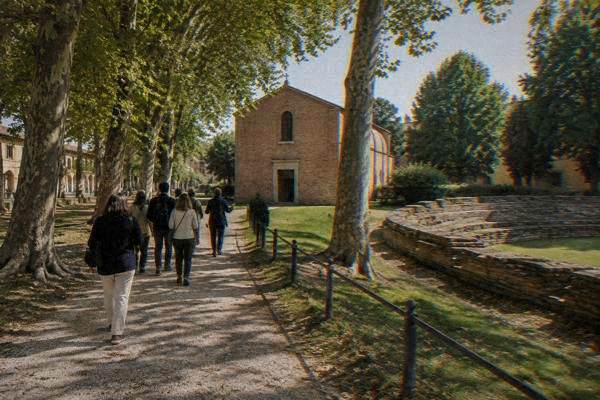
Palazzo Zuckermann: Applied Arts And The Bottacin Coin Collection
Palazzo Zuckermann stands on Corso Garibaldi in Padua, a few minutes from the Scrovegni Chapel, and holds the city's applied arts collections and the Museo Bottacin coin collection, all covered by the same daytime ticket as Giotto's frescoes.
Short answer
Palazzo Zuckermann, Corso Garibaldi 33, Padua, is open Tuesday to Sunday 10:00 to 19:00 (last entry 45 minutes before closing) and is included in the Musei e Cappella ticket that also covers the Scrovegni Chapel and the Musei Civici Eremitani.
Palazzo Zuckermann sits on Corso Garibaldi 33 in Padua (Padova), the inland Veneto city about 36 km in a straight line from Venice that travellers come to for Giotto's frescoes, the Basilica of Saint Anthony and one of Italy's oldest universities. The palace is the least famous of the three buildings that make up the city's civic museum ticket, and that is exactly its usefulness: the same daytime ticket that books you into the Scrovegni Chapel also admits you here, to the applied arts galleries and the Museo Bottacin, the coin and medal collection that Padua keeps across the road from the chapel itself. This guide sets out what the museums' own pages say about hours, tickets and what is inside, and how to fold a visit into a day in the city.
What Is Palazzo Zuckermann In Padua?
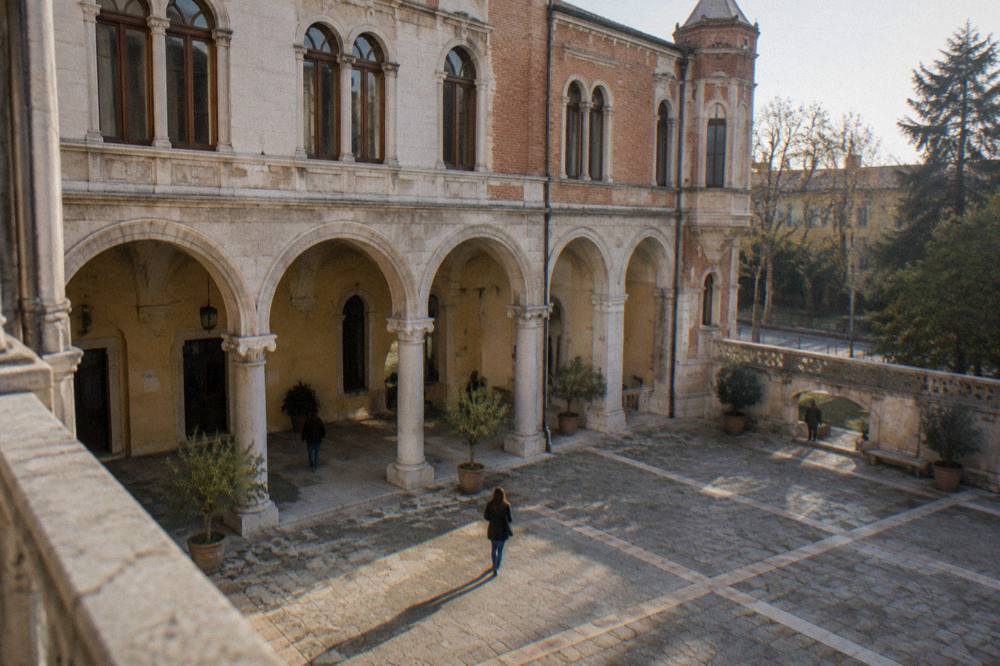
Palazzo Zuckermann is one of Padua's civic museum buildings, standing at Corso Garibaldi 33 directly beside the Scrovegni Chapel and the Musei Civici Eremitani, and it houses two collections: the applied arts galleries of the civic museums and the Museo Bottacin, the coin, medal and numismatic collection that shares the palace. It forms part of the same museum complex administered through the padovamusei.it ticket system as the Eremitani museums and the chapel, which is why one daytime ticket moves a visitor between all three. The palace faces the gardens and Corso Garibaldi side of the complex, roughly 100 m from the chapel ticket office, so the walk between the two is a matter of a couple of minutes along the same block.
The palace's role in the city's museum geography matters more than its individual fame. Padua's civic museums are grouped around Piazza Eremitani and Corso Garibaldi at the northwest edge of the historic centre, a short walk from Piazza delle Erbe and the heart of the centro storico. A visitor arriving from the train station reaches this cluster first, before the tighter lanes around Palazzo della Ragione and the Basilica of Saint Anthony further south. That position makes Palazzo Zuckermann a natural first or last stop on almost any walking route through the city.
What Are The Opening Hours And Ticket Prices At Palazzo Zuckermann?
Palazzo Zuckermann is open Tuesday to Sunday from 10:00 to 19:00, with last entry 45 minutes before closing, and admission is included in the combined civic museums ticket: the Musei e Cappella ticket costs 15 EUR full and 11 EUR reduced per the padovamusei.it price list, or 11 EUR full and 9 EUR reduced for the museums without the chapel, plus a 1 EUR booking fee when a chapel slot is reserved. The museums-only ticket covers Palazzo Zuckermann and the Musei Civici Eremitani; the full ticket adds the Scrovegni Chapel with its timed entry. Confirm current prices on the official museums ticket page before booking, since tariff revisions happen, as the Orto Botanico's 2026 increase showed.
The hours are the detail to plan around, because the palace opens an hour later than its neighbours. The Musei Civici Eremitani run Monday to Sunday 9:00 to 19:00, while Palazzo Zuckermann holds Tuesday to Sunday 10:00 to 19:00. The palace is therefore closed on non-holiday Mondays, the same day the Orto Botanico closes, which makes Monday a day to give the museum quarter a miss and head for the Basilica or the markets instead.
| Museum | Days | Hours | Last entry |
|---|---|---|---|
| Palazzo Zuckermann | Tue to Sun | 10:00 to 19:00 | 45 min before closing |
| Musei Civici Eremitani | Mon to Sun | 9:00 to 19:00 | per museum |
| Scrovegni Chapel (daytime) | daily | 9:00 to 19:00 | 18:45 |
| Scrovegni (evening, chapel only) | 25 Mar to 1 Nov | 19:00 to 22:00 | 21:20 |
The ticket structure, per the padovamusei.it table:
| Ticket | Full | Reduced | Covers |
|---|---|---|---|
| Musei e Cappella | 15 EUR + 1 EUR fee | 11 EUR + 1 EUR fee | Scrovegni Chapel, Musei Civici Eremitani, Palazzo Zuckermann |
| Musei only | 11 EUR | 9 EUR | Musei Civici Eremitani, Palazzo Zuckermann |
| Family card | 30 EUR (+1 EUR per person chapel fee) | Up to two adults and two under-18s |
One scheduling fact belongs on any Padua plan: the chapel closes completely from 16 to 27 November 2026 for its annual fresco inspection, and a trip in that window shifts the weight of a museum visit toward Palazzo Zuckermann and the Eremitani collections. If the combined ticket is what draws you, check the chapel's own booking page for the dates around your visit, because the timed-entry system has no same-day online booking at all.
What Is Inside The Museo Bottacin Coin Collection?
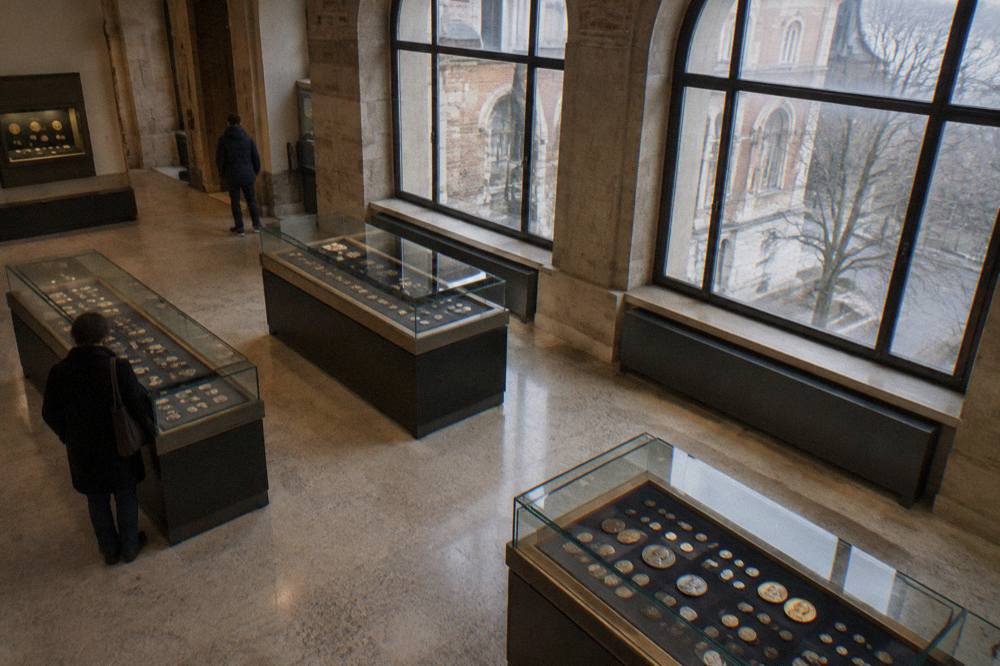
The Museo Bottacin is Padua's numismatic museum, a collection of coins, medals, banknotes and related material housed inside Palazzo Zuckermann, assembled around the legacy of the collector whose name it carries and displayed as part of the civic museums' applied arts floors. It is the kind of collection that rewards a slow hour: case after case of coinage, from ancient issues through the coinages of the Venetian Republic to modern medals, arranged so a visitor can trace the money that circulated in the Veneto across two millennia of trade. The museums' own pages describe the Bottacin as one of the components of the palace alongside the applied arts galleries.
For context that a coin case in Padua makes vivid: the city spent four centuries under Venice, from 1405 to 1797, and the coinage of the Republic, ducats and their fractions, was the currency of that whole period of Paduan commercial life. A few rooms away, the applied arts galleries carry the other half of the story, the furniture, textiles, ceramics and decorative objects that the same wealth filled homes with. Where the Scrovegni Chapel delivers painting at its most famous, Palazzo Zuckermann delivers the material culture around it.
How Does The Palazzo Zuckermann Ticket Work With The Scrovegni Chapel?
The daytime Scrovegni Chapel ticket (15 EUR full, 11 EUR reduced, plus the 1 EUR booking fee) is not a chapel-only ticket: it also covers the Musei Civici Eremitani and Palazzo Zuckermann, so a single booking gives you the frescoes, the archaeological and art collections at Piazza Eremitani 8, and the applied arts and Bottacin coins at Corso Garibaldi 33 on the same day or the days the ticket allows. The evening "Giotto sotto le stelle" visit, 19:00 to 22:00 between 25 March and 1 November, is chapel only and does not include Palazzo Zuckermann.
This bundling shapes how a day should run. The chapel visit is short, about 15 minutes inside, after a wait in the climate-control waiting room, with arrival required 5 minutes before the booked slot; latecomers are denied re-entry without a new paid booking. That leaves the rest of the morning or afternoon free, and the two museums on the ticket are the obvious fill. A workable sequence: book a late-morning chapel slot, arrive early, visit the Musei Civici Eremitani while waiting, see the frescoes, then cross to Palazzo Zuckermann for the applied arts and the Bottacin before lunch.
| Step | Where | Time to allow |
|---|---|---|
| Collect thoughts, waiting room | Corpo Tecnologico Attrezzato | 5 min before slot |
| Scrovegni Chapel | Piazza Eremitani side | about 15 min inside |
| Musei Civici Eremitani | Piazza Eremitani 8 | 60 to 90 min |
| Palazzo Zuckermann | Corso Garibaldi 33 | 60 to 90 min |
Because the chapel is timed entry only, at most 25 people every 15 minutes, and same-day online booking does not exist, the booking is the anchor of the whole plan. Slots run from 9:00 to 18:45 and are bookable in advance through the chapel's site or the call centre at +39 049 2010020. Visitors without a booking are told to check availability at the museum ticket office in person. A guided option that handles the chapel logistics exists: Check availability for the guided tour of Giotto's Scrovegni Chapel on its own page elsewhere on this site.
What Applied Arts Are On Display In Padua?
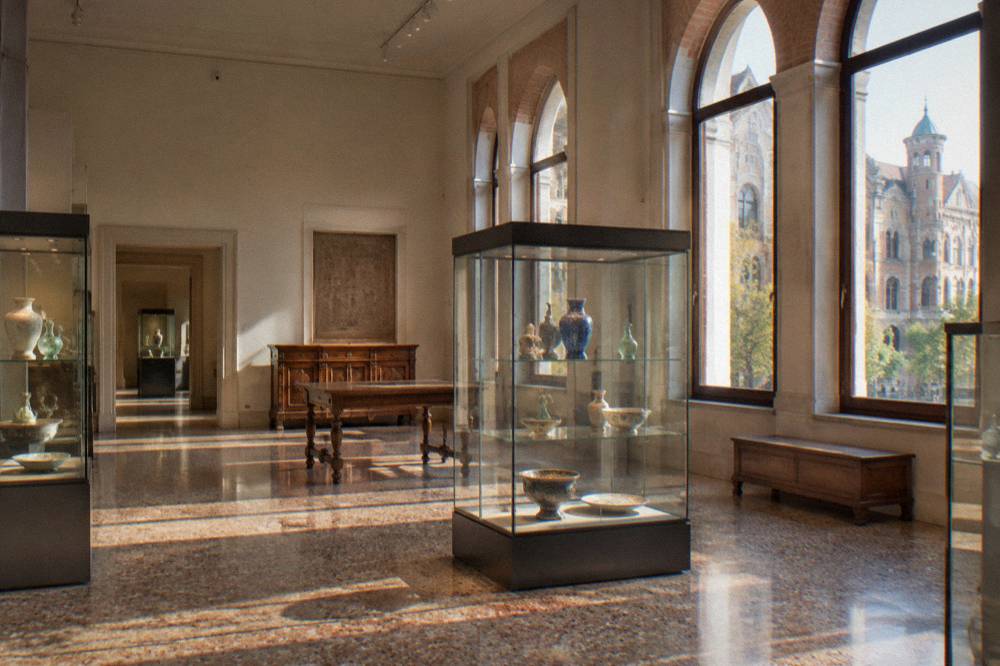
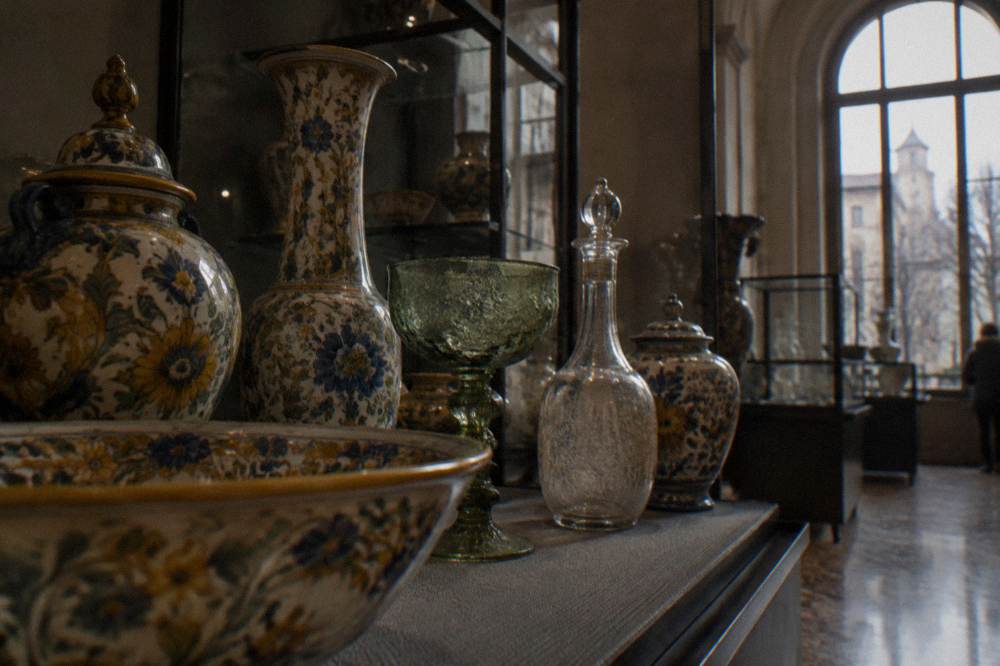
The applied arts galleries in Palazzo Zuckermann hold Padua's civic decorative arts collections, the furniture, ceramics, glass, metalwork, textiles and domestic objects through which the city's merchant and professional classes furnished their lives, displayed across the palace's floors as the counterpart to the paintings and frescoes in the Eremitani museums. Where the fourteenth-century fresco cycles that earned Padua its 2021 UNESCO inscription live in churches and chapels across the centre, this collection shows the movable world: the objects bought, used, inherited and eventually museum-ified.
The value of the galleries is comparative. A morning that takes in the Scrovegni Chapel, the Eremitani collections and then Palazzo Zuckermann moves from sacred painting to archaeology to the household, and the third stop is where the city stops being a set of monuments and starts being a society. The Bottacin coins tell what that society paid with; the applied arts tell what it bought. For a traveller with a free afternoon in the city, the palace is the calm half-day complement to the crowded chapel slots, and there is more in the same vein at Palazzo della Ragione in the centre.
Where Is Palazzo Zuckermann And How Do You Get There?
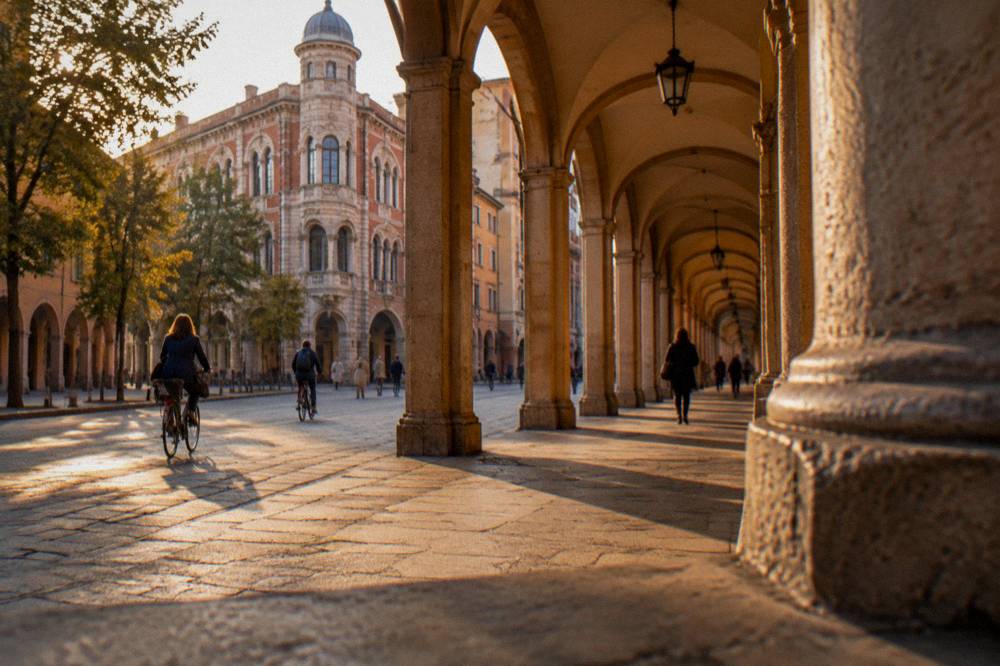
Palazzo Zuckermann is at Corso Garibaldi 33, on the northwestern edge of Padua's historic centre, directly opposite the Scrovegni Chapel and Eremitani complex, about a 10 to 15 minute walk from Padova train station and about 10 minutes on foot from Piazza delle Erbe in the other direction. The urban transport fare that applies anywhere in the city is the TU1 90-minute ticket at 1.70 EUR, valid on bus and the SIR1 tram, and a contactless bank card can be tapped on board for the same fare. The tram's north-south line does not serve the museum quarter directly; the walk from the station is simple and arcaded for much of the way.
From the station exit at platform 1, the route runs south through the station square and into the historic streets, with the tourist information office (IAT Stazione, Monday to Saturday 9:00 to 19:00, Sundays and holidays 10:00 to 16:00) at the exit if paper maps or questions are wanted. The IAT Centro at Piazza delle Erbe 52 is the second official information point, and it is also where Palazzo della Ragione tickets are sold, which makes it a useful second stop for anyone combining the museum quarter with the central squares. Luggage can be left at the station's left-luggage office on platform 1, daily 6:00 to 20:00 at 5 EUR per 6 hours, if the museum visit happens between arrival and hotel check-in.
What Can You See Near Palazzo Zuckermann In Padua?
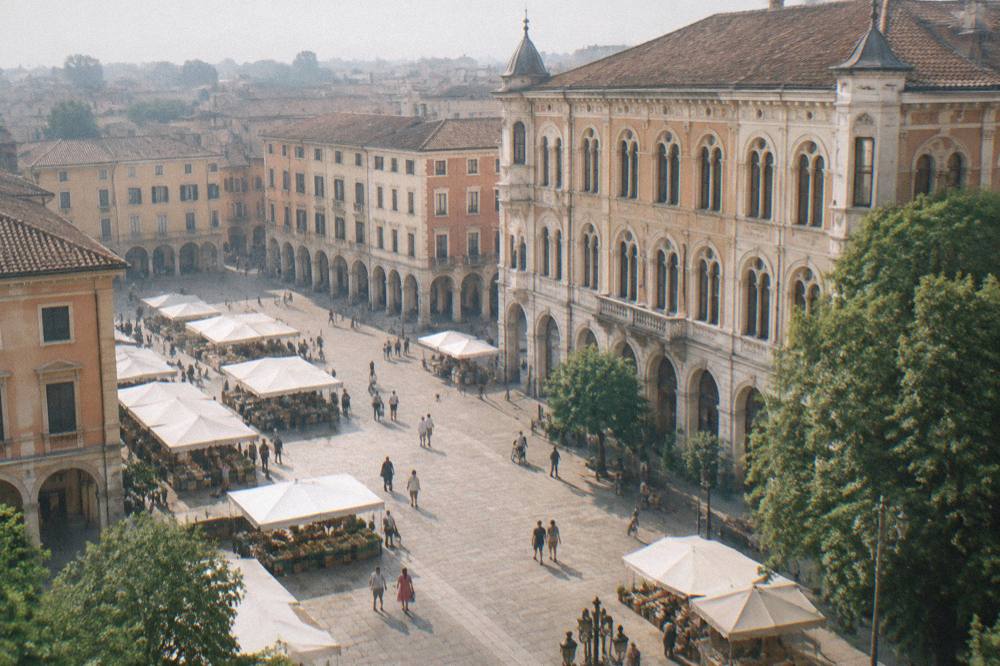
Within a five minute walk of Palazzo Zuckermann you reach the Scrovegni Chapel, the Chiesa degli Eremitani with its Mantegna-connected Ovetari chapel, the Musei Civici Eremitani and the Roman amphitheatre remains that gave the chapel its "Arena" nickname; within ten to fifteen minutes on foot you reach Piazza delle Erbe, Palazzo della Ragione, Caffe Pedrocchi and the university's Palazzo del Bo. The museum quarter is the densest cluster of sights in the city, and everything on the list below sits inside one continuous walk.
| Sight | Direction from Palazzo Zuckermann | Notes |
|---|---|---|
| Scrovegni Chapel | across the road, same block | timed entry, book ahead |
| Chiesa degli Eremitani | 2 min north | Ovetari frescoes, bombed 1944, largely destroyed |
| Musei Civici Eremitani | 2 min north | on the same ticket |
| Roman amphitheatre remains | adjacent | the "Arena" of Arena Chapel |
| Palazzo del Bo | 10 min south | university historic seat, guided "Giro storico" |
| Piazza delle Erbe | 12 min south | market Mon to Fri 7:30 to 13:30, Sat to 20:00 |
| Prato della Valle | 20 min south | canal and double ring of statues |
| Basilica of Saint Anthony | 20 min south | free entry, beside Prato della Valle |
The route south is the classic spine of the city: from the museum quarter down through the commercial streets to Piazza delle Erbe and Palazzo della Ragione, then on to the Basilica of Saint Anthony and Prato della Valle, with the Orto Botanico just beyond. Anyone planning the whole day can follow the sequence in the Padua in one day itinerary; two days allow the same walk at half speed plus the second-string museums, as set out in Padua in two days.
How Long Does A Visit To Palazzo Zuckermann Take?
A visit to Palazzo Zuckermann takes roughly an hour for the applied arts floors and another half hour to an hour for the Bottacin numismatic collection, so a slow unhurried pass covers the whole palace, and the last entry at 18:15 (45 minutes before the 19:00 close) sets the latest possible start. Visitors with a booked chapel slot should treat the palace as the flexible half of the pair: the chapel time is fixed to the quarter hour, and the palace is not, so the palace absorbs whatever the day leaves over.
That flexibility is worth planning around. A late-afternoon chapel slot, one of the last entries at 18:45, does not leave time for the palace afterwards, since its own doors shut to new visitors at 18:15; the workable order is palace first, chapel after, or chapel in a morning slot with the palace filling the time until lunch. The Musei Civici Eremitani, on the same ticket, run the same 9:00 to 19:00 day as the chapel, which makes it the fallback if the palace's Tuesday-to-Sunday calendar or the 10:00 opening clashes with a morning plan.
When Is The Best Time To Visit Palazzo Zuckermann And Padua?
Padua's climate, per the ERA5 reanalysis for 1991 to 2020, runs from a January mean high of 7.3 C with lows around freezing to July and August mean highs of 28.8 C, with November the month carrying the highest rain total at 114 mm and January the lowest at 53.6 mm, so a museum-heavy visit suits the cold months and the highest-rainfall months best, while late spring and early autumn give the most comfortable walking weather for the outdoor squares. A museum like Palazzo Zuckermann is the city's bad-weather insurance, and Padua's own climate table tells you when to cash it.
| Month | Mean high C | Mean low C | Rain mm |
|---|---|---|---|
| Jan | 7.3 | -0.2 | 53.6 |
| Mar | 13.7 | 3.9 | 67.2 |
| May | 22.1 | 12.4 | 99.7 |
| Jul | 28.8 | 18.9 | 62.1 |
| Sep | 23.6 | 14.9 | 105.5 |
| Nov | 12.6 | 5.5 | 114.0 |
The seasonal calendar matters too. The chapel's evening openings, chapel only, run 25 March to 1 November, which extends the fresco day in the warmer half of the year; the annual closure for fresco inspection falls on 16 to 27 November 2026; and the Prato della Valle Saturday market, the antiques market on the third Sunday of each month, and the feast of Saint Anthony on 13 June each give a different flavour to the same streets. The full rundown is in the site's Padua weather and best-time guides.
What Should You Know Before Visiting Palazzo Zuckermann With Children Or A Group?
Palazzo Zuckermann is a conventional civic museum: children pay the reduced or family-card rates on the same ticket as the chapel (the family card at 30 EUR covers up to two adults and two under-18s, plus the 1 EUR per person chapel booking fee), the palace shares its closing day with most of the city's museums on non-holiday Mondays, and no food, large bags or flash photography belong in the galleries, so plan the visit around a short, quiet, look-don't-touch hour rather than a playground. The Bottacin coins are genuinely child-friendly in one respect: money is a subject children already hold opinions about, and a case of ducats lands differently from another altarpiece.
Groups should note the palace's own last-entry rule, 45 minutes before closing, and the fact that the chapel next door requires groups to arrive at least 45 minutes before their slot. For a group combining the three ticket components, the chapel's group discipline sets the timetable for everything else. Nothing in the sources this site uses supports claims about lifts, ramps or step-free routes at the palace; travellers with mobility needs should ask the museums directly through the padovamusei contact channels or the IAT offices before planning.
How Does Palazzo Zuckermann Compare With Padua's Other Museums?
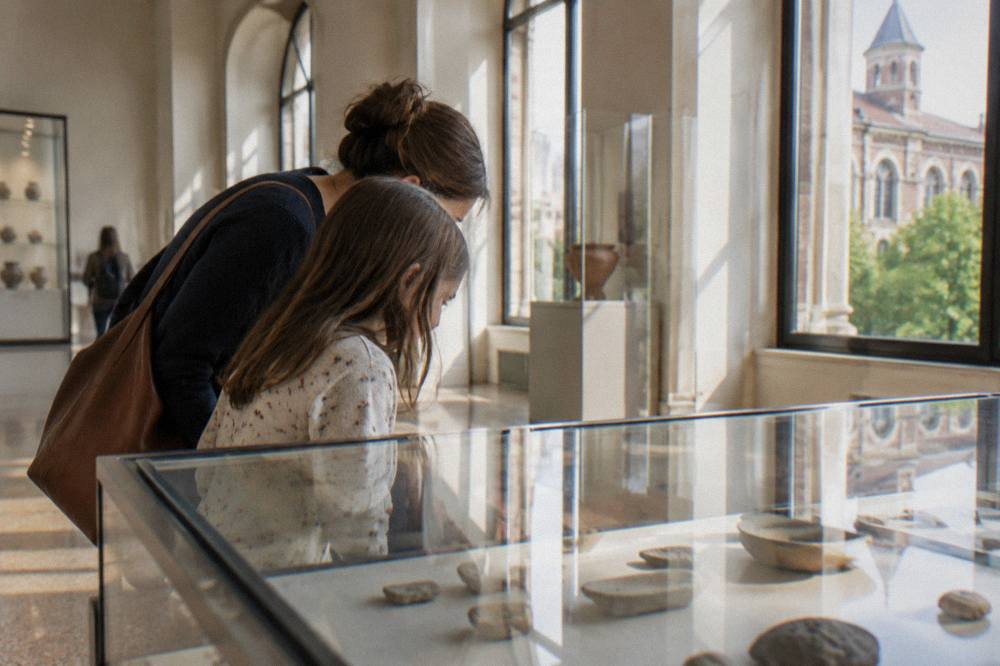
Palazzo Zuckermann is the applied-arts-and-coins member of a set: the Musei Civici Eremitani carry archaeology and painting, Palazzo della Ragione (8 EUR full, 6 EUR reduced) carries the great hall and its cycle, the Museo del Risorgimento at the Stabilimento Pedrocchi (5 EUR full, reported by padovamusei.it) carries the city's Risorgimento story, from the 8 February 1848 student uprising onward, and the university's Palazzo del Bo runs its own guided "Giro storico" at 10 EUR full with alternating Italian and English slots. The palace is the quietest of these and the only one bundled automatically with the Scrovegni Chapel daytime ticket.
| Museum | Reported price | Days (per sources) | Theme |
|---|---|---|---|
| Palazzo Zuckermann + Eremitani (musei only) | 11 EUR / 9 EUR | Zuckermann Tue to Sun | applied arts, Bottacin coins |
| Musei e Cappella combined | 15 EUR / 11 EUR + 1 EUR fee | chapel daily | adds Scrovegni |
| Palazzo della Ragione | 8 EUR / 6 EUR | Tue to Sun | great hall, fresco cycle |
| Museo del Risorgimento (Pedrocchi) | 5 EUR (reported) | Tue to Sun | Risorgimento |
| Palazzo del Bo Giro storico | 10 EUR / 8 EUR / 6 EUR | alternating IT/EN slots | university, anatomy theatre |
| Orto Botanico | 15 EUR full from 1 Sept 2026 | Tue to Sun (seasonal hours) | botanical garden, UNESCO 1997 |
Loggia and Odeo Cornaro (5 EUR full, seasonal hours, reported) and the Torre dell'Orologio (free with mandatory booking on set days, reported) complete the civic list. For prices and hours marked reported above, confirm on the official museum pages before locking an itinerary, since several Padua tariffs changed in 2026 and more can follow. The fuller picture across the whole civic system is in the site's Padua museums guide.
Why Pair Palazzo Zuckermann With A Guided Walk Of Padua?
Palazzo Zuckermann rewards context, and a guided walk supplies it: the coins document Venice's rule over Padua from 1405 to 1797, the applied arts show what that era's households owned, and a guide who walks you from the museum quarter to Piazza delle Erbe, Palazzo della Ragione and the Basilica of Saint Anthony connects the objects to the streets they came from, all within a compact centre that crosses on foot in half an hour. The city's whole story, from the 1222 university through Galileo's 1592 to 1610 chair to the 1848 student uprising, is legible in a single walking line, and the palace is the quiet start of it.
The site's own Padua walking tour page gathers the bookable options, and the chapel-focused pairings below sit naturally alongside a museum morning: one covers Giotto's frescoes themselves, one the wider city, one the kitchen side of Veneto life. If you are still assembling the whole trip, the root things to do in Padua page is the master list, and the broader sightseeing picture, from the Scrovegni Chapel through the Chiesa degli Eremitani next door to the Duomo and Baptistery a short walk south, is laid out attraction by attraction across this guide's Padua Travel Guide sibling pages.
Common Questions About Palazzo Zuckermann In Padua
What is Palazzo Zuckermann?
Palazzo Zuckermann is a civic museum building at Corso Garibaldi 33 in Padua, housing the applied arts collections and the Museo Bottacin coin and medal collection. It is administered with the Musei Civici Eremitani and the Scrovegni Chapel under the same civic museums ticket system.
Is Palazzo Zuckermann included in the Scrovegni Chapel ticket?
Yes. The daytime Musei e Cappella ticket (15 EUR full, 11 EUR reduced, plus a 1 EUR booking fee) covers the Scrovegni Chapel, the Musei Civici Eremitani and Palazzo Zuckermann. The evening chapel-only visit does not include the palace.
What are Palazzo Zuckermann's opening hours?
Tuesday to Sunday, 10:00 to 19:00, with last entry 45 minutes before closing, per the padovamusei.it listing. The palace is closed on non-holiday Mondays.
What is the Museo Bottacin?
The Museo Bottacin is Padua's numismatic collection, a museum of coins, medals and related material housed inside Palazzo Zuckermann, spanning coinage from antiquity through the Venetian Republic period to modern medals.
How long does a visit take?
Roughly an hour for the applied arts galleries and a further half hour to an hour for the Bottacin collection at a normal museum pace. The latest possible start is last entry at 18:15.
How far is Palazzo Zuckermann from Padua train station?
About a 10 to 15 minute walk through the station square and the historic streets to Corso Garibaldi 33, on the northwestern edge of the centre, directly opposite the Scrovegni Chapel.