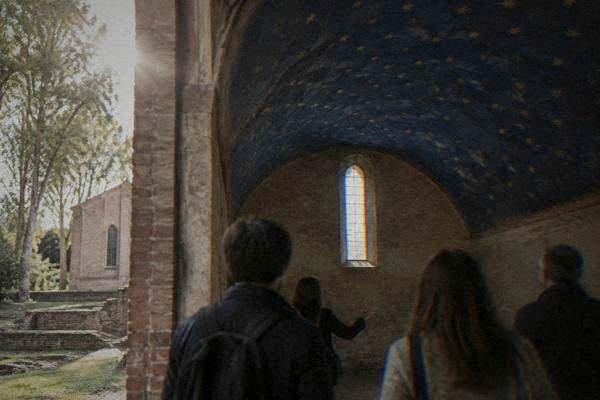
Scrovegni Chapel: Giotto's Fresco Cycle In The Arena Chapel
Padua's Scrovegni Chapel holds Giotto's fresco cycle of 1303 to 1305, entry is strictly timed, and this guide covers tickets, booking rules, the paintings themselves and the chapel's annual closure for inspection.
Short answer
The Scrovegni Chapel in Padua is open 9:00 to 19:00 with timed entries of at most 25 people every 15 minutes. A full daytime ticket costs EUR 15 plus a EUR 1 booking fee and also covers the Musei Civici Eremitani and Palazzo Zuckermann. The chapel is closed 16 to 27 November 2026 for its annual fresco inspection.
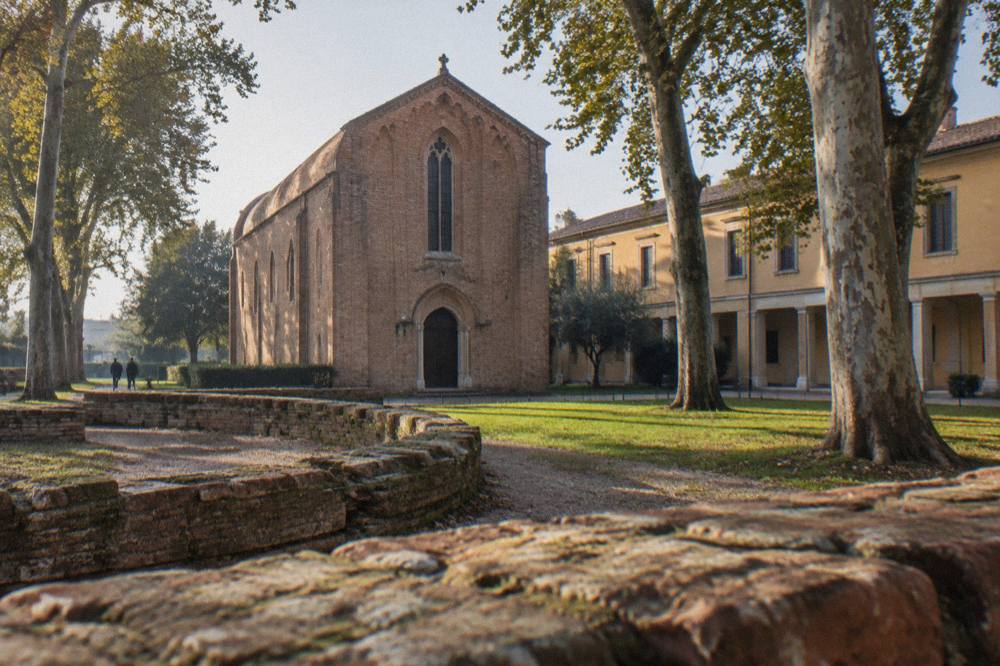
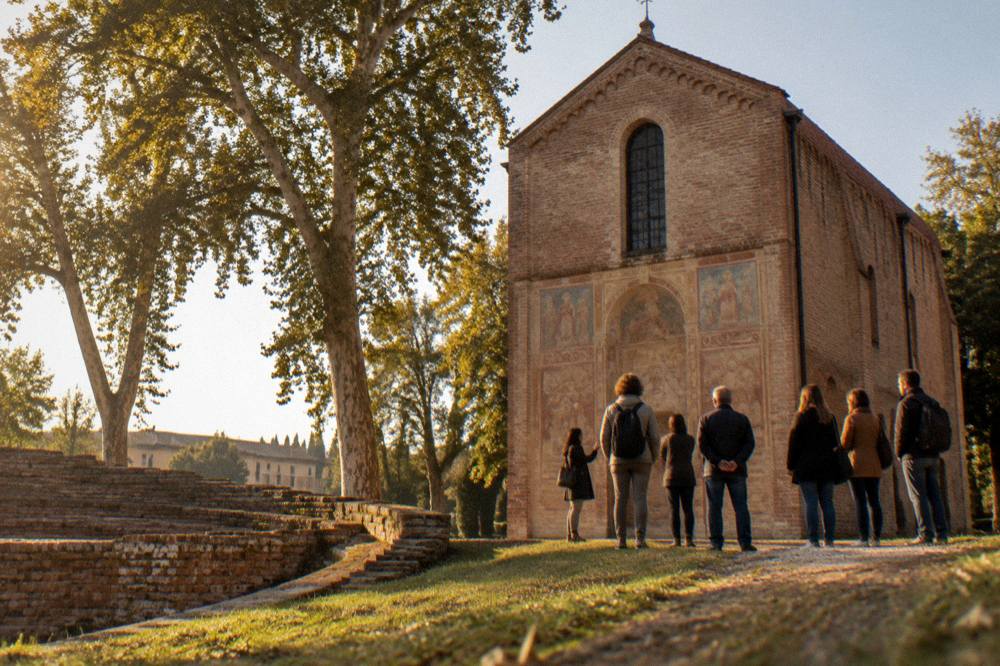
Padua, in the Veneto region of northern Italy, holds one of the defining monuments of European painting: the Scrovegni Chapel, a small brick building beside the former Eremitani convent whose interior Giotto frescoed, in the chapel's own words, "in just two years, between 1303 and 1305". The chapel stands on land the Scrovegni family bought in 1300, land that included the remains of Padua's Roman amphitheatre, which is why the building is also called the Arena Chapel. It is the anchor of Padua's fourteenth-century fresco cycles, inscribed by UNESCO in 2021 as "Padova Urbs Picta". This guide from the Padua Travel Guide editorial desk covers what the paintings show, how the strict timed-entry system works, what tickets cost, and the dates in 2026 when the chapel is closed altogether.
What Is The Scrovegni Chapel In Padua?
The Scrovegni Chapel is a small early-fourteenth-century private chapel in Padua, in the Veneto, northern Italy, whose interior Giotto painted in fresco between 1303 and 1305, and it is now the core of a UNESCO World Heritage listing that covers eight frescoed complexes in the city. Enrico Scrovegni bought the land in 1300, a site that included remains of the Roman amphitheatre, and the chapel is called the Arena Chapel after that amphitheatre, not after any building in Verona.
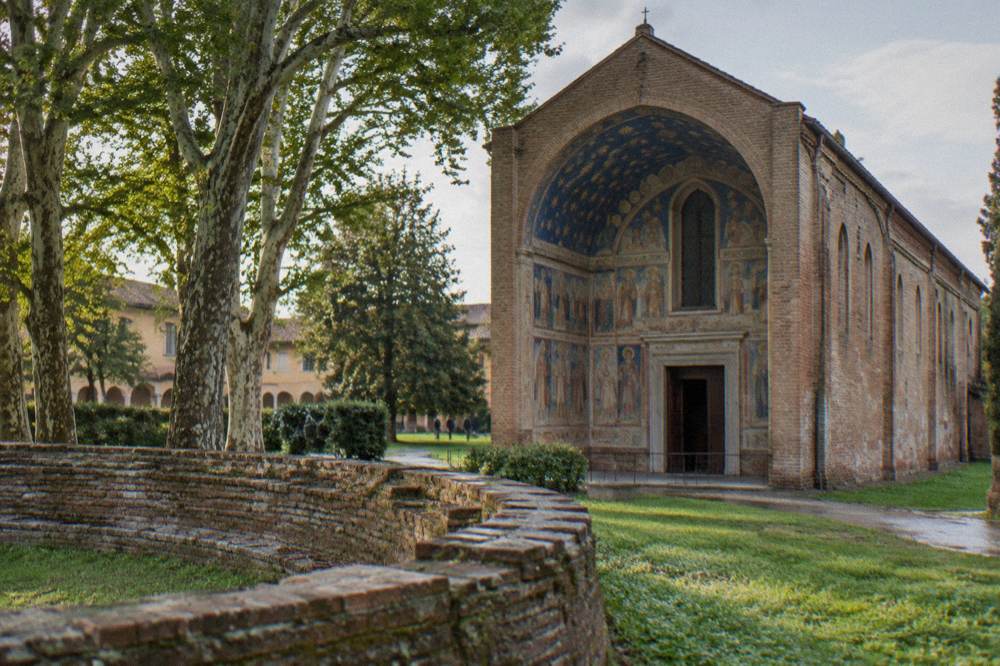
The chapel is deliberately small, a single rectangular hall with a barrel-vaulted ceiling, and that intimacy is part of why the paintings land so hard: the narrative bands run along both walls from the altar end to the entrance, and the whole cycle is visible from anywhere in the room. The chapel's own site describes the commission in plain terms, and the surrounding archaeological remains of the Roman arena gave the whole quarter its name. More on the naming question, and the common confusion with Verona's arena, is covered in why the chapel is also called the Arena Chapel.
The building belongs today to the City of Padua's civic museums, and a visit is never a casual drop-in. Entry is timed, capped and pre-booked, a system designed to protect the frescoes from humidity and carbon dioxide rather than to manage crowds in the ordinary tourist sense. Everything about how that works is in the booking section below. The attribution of the cycle to Giotto, and the two-year window, come from the chapel's own pages, and the question of authorship and workshop involvement is discussed at length in did Giotto paint the Scrovegni Chapel.
What Does A Scrovegni Chapel Ticket Cost In 2026?
A full daytime ticket costs EUR 15, a reduced ticket EUR 11 and a Padua resident ticket EUR 5, plus a EUR 1 booking fee for the chapel, per the museums' own price list at padovamusei.it. The daytime ticket covers the chapel, the Musei Civici Eremitani and Palazzo Zuckermann; a museums-only ticket without the chapel is EUR 11 full and EUR 9 reduced; a family card for two adults and two under-18s is EUR 30.
The EUR 1 booking fee applies to each chapel reservation regardless of ticket type, so the arithmetic is simple: a full adult daytime visit is EUR 16 all-in. Reduced rates carry conditions the price table prints beside the figures, and the museums advise reading them before booking. The family card, EUR 30 plus EUR 1 per person for the chapel slot, suits two adults travelling with children, and the residents' rate applies to people resident in Padua itself.
| Ticket | Price | What it covers |
|---|---|---|
| Full, museums plus chapel | EUR 15 (+ EUR 1 booking fee) | Scrovegni Chapel, Musei Civici Eremitani, Palazzo Zuckermann |
| Reduced, museums plus chapel | EUR 11 (+ EUR 1 booking fee) | Same three sites, reduced conditions apply |
| Padua residents | EUR 5 (+ EUR 1 booking fee) | Same three sites |
| Museums only, no chapel | EUR 11 full / EUR 9 reduced | Musei Civici Eremitani and Palazzo Zuckermann |
| Family card | EUR 30 (+ EUR 1 per person) | Up to two adults and two under-18s |
| Evening visit, chapel only | Separate ticket | Chapel only, 19:00 to 22:00 slots |
One structural detail saves money and misunderstanding: the daytime ticket is a combined ticket. The chapel cannot be bought alone in the daytime, and the two museums it includes sit within a few minutes' walk, the Eremitani museums immediately next to the chapel itself and Palazzo Zuckermann across the garden. The Chiesa degli Eremitani, a separate church that is itself part of the UNESCO listing, stands beside the complex and is covered in the Chiesa degli Eremitani guide.
How Does Scrovegni Chapel Booking And Timed Entry Work?
Entry is by timed slot only: at most 25 people enter every 15 minutes between 9:00 and 18:45, the last daytime entry, and each visitor spends about 15 minutes inside the chapel after a stop in a climate-controlled waiting room. There is no same-day online booking: slots are sold ahead, and anyone arriving unbooked should ask at the Museum ticket office, where remaining availability is released. Arrive 5 minutes before the printed slot.
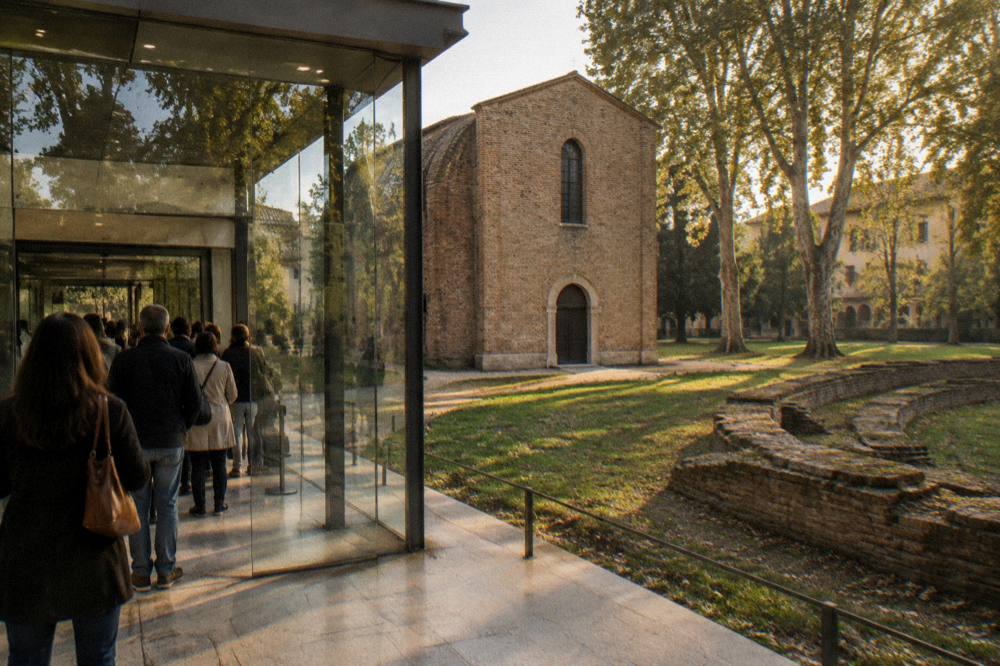
The sequence is fixed and the chapel's site describes it precisely. Visitors wait first in the climate-control waiting room, a structure built to stabilise the air before people enter the painted space, and the chapel visit itself follows. Latecomers are not slipped into a later slot: the chapel's rules state that a late arrival means rebooking and paying again. The ticket office sits about 100 metres from the chapel entrance, and groups are told to be present 45 minutes early. For anyone weighing the timing against a day's plan, the practical details are unpacked in how long it takes to visit the Scrovegni Chapel.
Advance slots are bookable far ahead, and the chapel's call centre number, +39 049 2010020, handles bookings by phone. Booking through the chapel's own site or call centre is one route; a guided tour product that includes the timed entry is another, and the two are different things, an important distinction before you pay. A full walk-through of ticket types and strategies is in the site's Scrovegni Chapel tickets guide.
| Entry rule | Figure |
|---|---|
| Opening hours | 9:00 to 19:00 |
| Last daytime entry | 18:45 |
| Group size per slot | At most 25 people |
| Slot frequency, daytime | Every 15 minutes |
| Slot frequency, evening | Every 20 minutes |
| Time inside the chapel | About 15 minutes |
| Arrival before slot | 5 minutes |
| Same-day online booking | Not available |
Two fixed closure patterns matter to a planner. The chapel closes on 1 May, 25 and 26 December and 1 January each year, and in 2026 it is additionally closed from 16 to 27 November for the annual fresco inspection by the central restoration institute. A trip built around those two November weeks will find the chapel shut, so check the dates against your travel window before booking anything else in the city.
What Are The Evening Visits, Giotto Sotto Le Stelle?
The evening programme, called Giotto sotto le stelle, runs from 25 March to 1 November with entries every 20 minutes from 19:00 to 22:00 and the last entry at 21:20, and it covers the chapel only, not the museums. Each evening slot admits at most 25 people. It is a separate ticket from the daytime museums-plus-chapel combination, and the evening light and the empty museums give it a different character.
The chapel's own hours page sets out the frame: evening visits exist inside that March-to-November window, on the 20-minute cadence, with the chapel as the sole site on the ticket. For travellers who spend their days in the museums' off-hours, or who arrive in Padua on a late train, the evening programme is the way into the building at all. The evening visit also suits anyone whose daytime ticket went to the museums earlier in the day and who wants the chapel twice.
An evening product on this site's roster bundles the admission with a guided walk, and the tour page prints the current price and dates: Check availability for the guided chapel options, evening and daytime, before locking a date. The listing carries its own terms, and the chapel's own booking site remains the source for straight tickets.
What Do Giotto's Frescoes Actually Show?
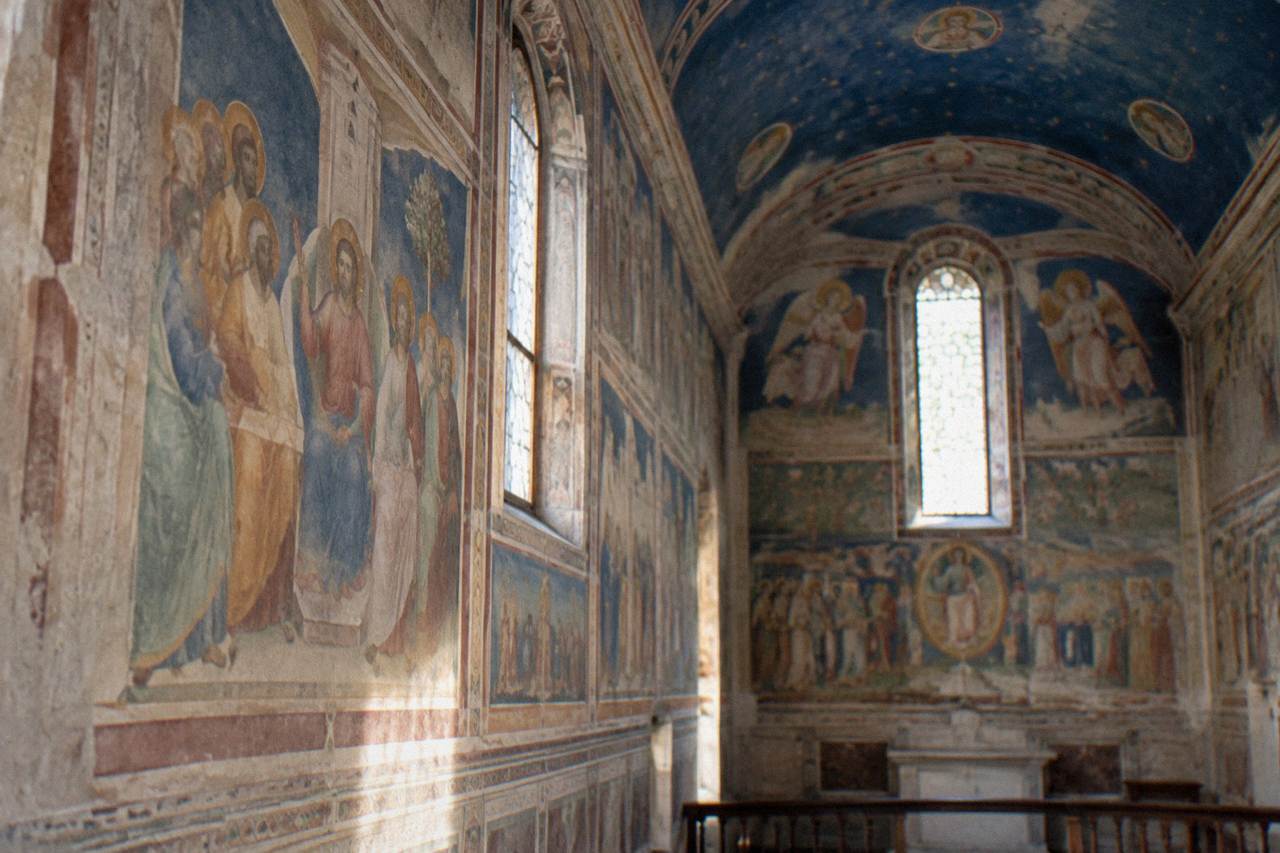
The cycle tells the Stories of Joachim and Anne, the Life of the Virgin and the Life of Christ in narrative bands along the walls, framed by the Vices and Virtues in medallions near the floor and closed by a vast Last Judgment on the entrance wall, per the chapel's own description of the programme. Giotto painted it between 1303 and 1305, and the scenes are ordered to be read sequentially around the room.
The storytelling is the revolution. Where earlier medieval painting arranged figures symbolically, the Scrovegni scenes behave like staged drama: bodies have weight, grief bends people forward, architecture frames the action. The Joachim and Anna scenes on one wall, the Marian and Christological scenes on the other, and the monochrome Virtues and Vices facing each other in imitation of sculpted relief, all of it reads as a single designed argument, finished with the Last Judgment facing the visitor on the way out. The chapel's site names each part of the programme, and the question of why the building and its paintings carry the fame they do is developed in why the Scrovegni Chapel is famous.
| Part of the cycle | Placement |
|---|---|
| Stories of Joachim and Anne | Upper band, right wall |
| Life of the Virgin | Middle and upper bands, right and left walls |
| Life of Christ | Central and upper bands, left wall |
| Vices and Virtues | Lower register, both walls, painted as imitation relief |
| Last Judgment | Entrance (counter-facade) wall |
Fifteen minutes inside sounds short, and the design anticipates exactly that: the room is small, the bands are legible from the centre, and the visit is long enough for a slow circuit. Visitors who want the scenes explained in the room itself, name by name, are the natural audience for a guided product; the roster's guided Giotto tour is built around that need. The patron behind it all, Enrico Scrovegni, and what the sources say about why he paid for it, are covered in who paid for the Arena Chapel.
Why Is The Chapel Part Of A UNESCO World Heritage Listing?
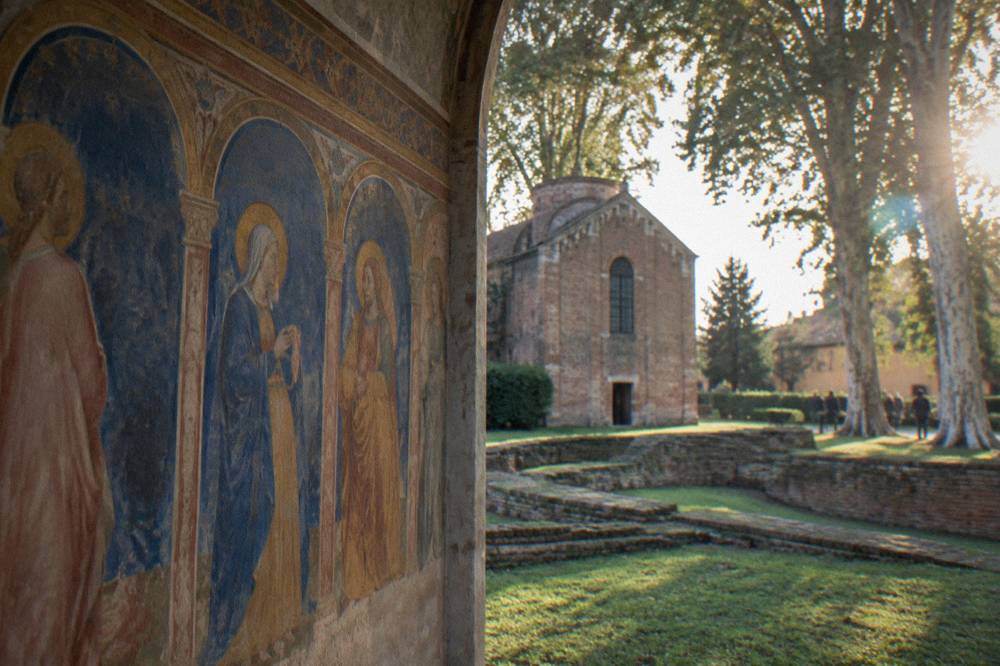
The Scrovegni Chapel is one of eight frescoed complexes in Padua inscribed together in 2021 as "Padua's fourteenth-century fresco cycles", or Padova Urbs Picta, under UNESCO criterion (ii), with the proclamation dated Saturday 24 July 2021. The eight sites sit inside the old centre and can be visited, in part, on the same combined civic tickets that include the chapel itself.
The listing, per UNESCO's own record, treats the cycle of painting that ran through fourteenth-century Padua as a single creative phenomenon, with the Scrovegni Chapel as its most complete expression. The other seven complexes are the Chiesa dei Santi Filippo e Giacomo agli Eremitani, Palazzo della Ragione, the Cappella della Reggia Carrarese, the Battistero della Cattedrale, the Basilica e Convento di Sant'Antonio, the Oratorio di San Giorgio and the Oratorio di San Michele. Each holds frescoes of the same period, and several are within a short walk of the chapel.
| Urbs Picta complex | Location relative to the chapel |
|---|---|
| Scrovegni Chapel | The chapel itself |
| Chiesa degli Eremitani | Next door |
| Palazzo della Ragione | South, between the two market squares |
| Cappella della Reggia Carrarese | Near Piazza dei Signori |
| Battistero della Cattedrale | East of Piazza dei Signori |
| Basilica e Convento di Sant'Antonio | South-east, toward Prato della Valle |
| Oratorio di San Giorgio | Beside the Basilica of Saint Anthony |
| Oratorio di San Michele | Near Piazza del Santo |
Padua's second UNESCO listing is separate and older: the Orto Botanico, founded 1545, inscribed in 1997. The city therefore carries two inscriptions, not one, and a full account of the frescoed eight is in the Urbs Picta UNESCO guide. A day built around the chapel can absorb the Eremitani church and Palazzo della Ragione without strain, and the wider plan is sketched in one day in Padua.
What Else Does The Scrovegni Ticket Include?
The daytime ticket includes the Musei Civici Eremitani, open 9:00 to 19:00 every day including non-holiday Mondays, and Palazzo Zuckermann, open Tuesday to Sunday 10:00 to 19:00 with last entry 45 minutes before closing, per the museums' published hours. The Eremitani museums hold archaeology and painting collections beside the chapel; Palazzo Zuckermann, on Corso Garibaldi, holds the applied arts and the Bottacin coin collection.
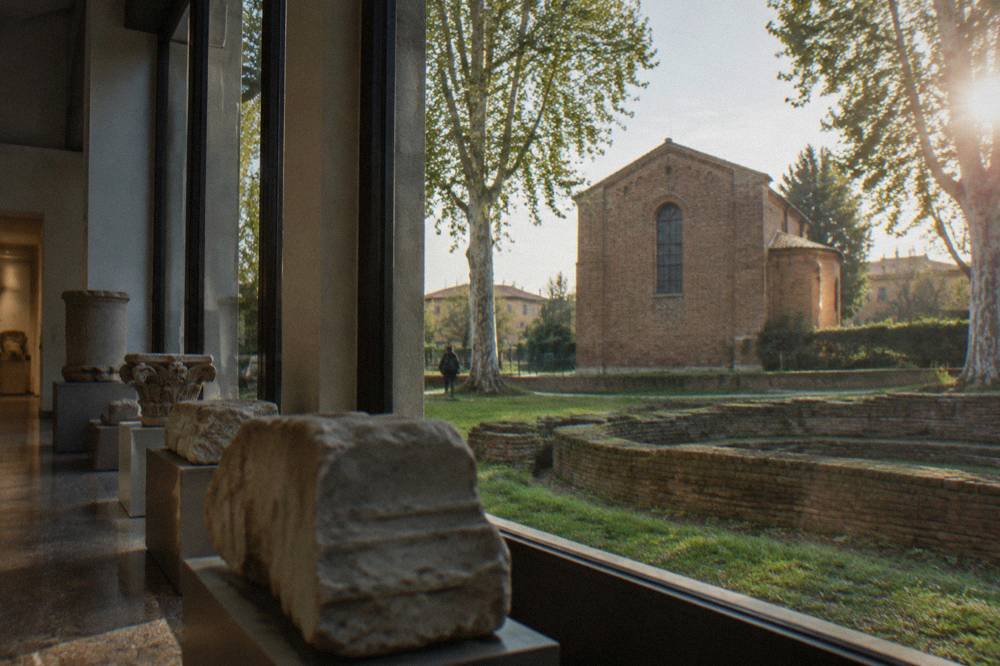
The practical effect is that a chapel visit and two museum visits fit inside one ticket and one morning or afternoon. The Eremitani complex is the natural first stop after the chapel, since its entrance is metres away, and its galleries frame the Roman arena remains that gave the chapel its other name. Palazzo Zuckermann rounds the visit off with decorative arts, and its Tuesday-to-Sunday week means a Monday visitor should sequence it on another day.
Nearby, and not on the ticket, stand several of Padua's other sights that fill a fuller day: the Basilica of Saint Anthony, whose construction began in 1232, a year after the Saint's death, Prato della Valle with its canal and double ring of statues, Palazzo della Ragione, the Piazza delle Erbe market square, the Orto Botanico founded in 1545, the university's Palazzo del Bo with its 1594 anatomical theatre, the Caffè Pedrocchi opened in 1831, the Duomo and Baptistery and the Basilica di Santa Giustina. The whole set is catalogued in the site's things to do in Padua overview.
What Are The Rules Inside The Chapel?
The operative rules are the timed slot, the 5-minute early arrival, the climate-room wait, the about-15-minute visit and the rebooking-and-repayment consequence for lateness, all published on the chapel's own how-to-visit page. Groups must arrive 45 minutes early. The chapel closes each year on 1 May, 25 and 26 December and 1 January, and in 2026 also from 16 to 27 November for the annual inspection of the frescoes.
The climate-control regime is the reason the system is so rigid. The waiting room exists to bring visitors' clothing and bodies to stable humidity before the painted space is entered, so the slot time governs the waiting room, not the chapel door. Anyone who treats the printed time as approximate risks the rebooking rule. Photography rules and bag policies are posted at the entrance and can change; check the current terms on the official booking page before visiting.
| Closure in 2026 and beyond | Dates |
|---|---|
| Annual fixed closures | 1 May, 25 and 26 December, 1 January |
| Fresco inspection closure 2026 | 16 to 27 November |
| Evening programme season | 25 March to 1 November |
For travellers who prefer to hand the logistics over, the ticket-and-audio-guide product on this site's roster is the budget option:
How Do You Fit The Chapel Into A Padua Day?
The chapel sits at the north-west corner of the old centre, next to the Eremitani complex and a short walk from the two market squares, which makes a natural loop: chapel and Eremitani museums first, Palazzo della Ragione and the Piazza delle Erbe market second, then the Basilica of Saint Anthony and Prato della Valle to the south-east. Book the chapel slot first and build the rest of the day around the printed time.
Because the slot is fixed and the museums on the same ticket close at 19:00, the order matters less than the anchor: fix the chapel time, then let the museums fill either side of it. A morning slot leaves the afternoon for the Santo and Prato della Valle, both free to enter, with the university's Palazzo del Bo in between if a guided-tour time is available. The itinerary on this site sequences the full day in detail.
| Stop | Booking need |
|---|---|
| Scrovegni Chapel | Timed slot, book ahead |
| Musei Civici Eremitani | On the chapel ticket |
| Palazzo Zuckermann | On the chapel ticket, Tue to Sun |
| Palazzo della Ragione | Ticket at IAT Piazza delle Erbe 52 |
| Basilica of Saint Anthony | Free entry |
| Orto Botanico | Ticket from EUR 15 full since 1 September 2026, EUR 12 winter |
Padua is inland, about 36 km in a straight line from Venice, and the chapel is the single sight that most often justifies the detour from a Veneto itinerary. Visitors arriving from Venice by train reach the chapel from the station on foot in well under half an hour, and the Euganean Hills town of Arqua Petrarca, the Palladian architecture of Vicenza and Verona and the walls of Castelfranco Veneto all sit within day-trip range afterwards.
Should You Visit The Chapel With A Guide?
A guided visit can bundle the timed chapel entry with an explanation of the fresco programme delivered in the room, which converts the fixed 15 minutes from a look into a reading of the cycle; the guided products on this site's roster carry their own prices, ratings and durations on their listings. The chapel's own booking site sells plain timed tickets, and the two routes are separate purchases. The trade-off is cost against interpretation, not access: neither route skips the timed-entry system.
The argument for a guide is the density of the paintings. The Joachim and Anne scenes, the Virtues and Vices, the Last Judgment: each band rewards knowing what is being looked at, and the 15-minute window leaves little time to work it out unaided. The argument against is that the audio-guide ticket covers the basics at a lower cost, and that the museums beside the chapel supply context at your own pace. Both positions are legitimate; the roster below carries the main guided options with their live figures.
Common Questions About The Scrovegni Chapel
How much does the Scrovegni Chapel cost?
The full daytime ticket is EUR 15, reduced EUR 11 and residents EUR 5, plus a EUR 1 booking fee for the chapel, per the museums' price list. The ticket also includes the Musei Civici Eremitani and Palazzo Zuckermann.
Can you walk into the Scrovegni Chapel without booking?
No. Entry is timed, with at most 25 people every 15 minutes, and there is no same-day online booking. Unbooked visitors should check remaining availability at the Museum ticket office.
How long do you spend inside the Scrovegni Chapel?
About 15 minutes inside the chapel itself, after a wait in the climate-controlled waiting room. Arrive 5 minutes before the printed slot; groups should arrive 45 minutes early.
When is the Scrovegni Chapel closed in 2026?
The chapel is closed on 1 May, 25 and 26 December and 1 January, and from 16 to 27 November 2026 for the annual fresco inspection.
What are the Giotto sotto le stelle evening visits?
Evening visits run from 25 March to 1 November, from 19:00 to 22:00 with entries every 20 minutes and last entry at 21:20, and they cover the chapel only on a separate ticket.
Why is it called the Arena Chapel?
Because Enrico Scrovegni bought land in 1300 that included the remains of Padua's Roman amphitheatre, and the chapel was built on that site. The arena in question is Padua's Roman one, not the Arena di Verona.
The Scrovegni Chapel rewards exactly the preparation this page describes: a booked slot, an early arrival, a read-through of the cycle's structure, and a day around it loose enough to absorb the two museums the ticket already pays for. Giotto's two years of work between 1303 and 1305 have held the room for seven centuries, and the timed door, the climate room and the November inspection exist to keep them holding it.