Why Is The Scrovegni Chapel Also Called The Arena Chapel?
The Scrovegni Chapel in Padua stands on the site of the city's Roman amphitheatre, and that buried arena gave the chapel its second name. Here is what the sources say about the arena, the Scrovegni family and the visit itself.
The Scrovegni Chapel in Padua (Padova), in the Veneto in northern Italy, carries two names, and the second one confuses readers constantly. The chapel's own site explains it plainly: Enrico Scrovegni bought the land on 3 February 1300, ground that included the remains of the Roman amphitheatre of Patavium, and the chapel raised there took the ancient arena's name. That is the whole answer, but the story around it, the Roman building, the family that paid for the chapel and the visit rules the arena site imposes today, rewards a closer look.
The distinction matters because the wrong "arena" travels fast. Padua is an inland city about 36 km in a straight line from Venice, and Verona, home of the Roman arena that still hosts opera, lies about 69 km away. Nothing about the Scrovegni Chapel connects it to Verona's building except the shared Latin word. Everything about the name connects it to ground inside Padua itself, ground the chapel still stands on. The pages below follow that ground from the Roman period to the booking rules of the present, in the voice of Padua Travel Guide's reporting desk, citing what the chapel, the city and UNESCO publish rather than traveller anecdote.
Why Is The Scrovegni Chapel Also Called The Arena Chapel?
The Scrovegni Chapel is called the Arena Chapel because it was built on the site of the Roman amphitheatre of Padua. Enrico Scrovegni bought the land on 3 February 1300, a plot that included the amphitheatre's remains, and the new chapel inherited the ancient building's name. The arena in question is Padua's own, and has no connection to the Arena di Verona, which is a different Roman structure in a different city about 69 km away.
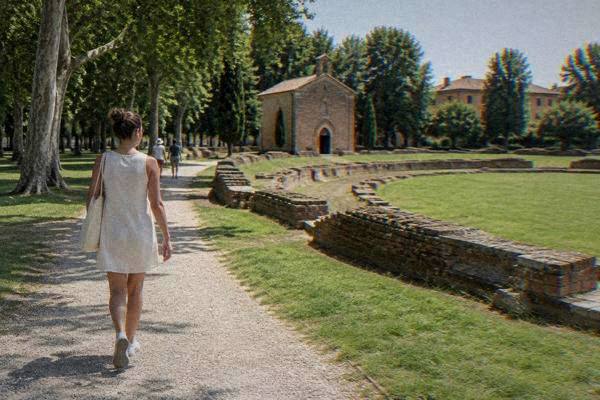
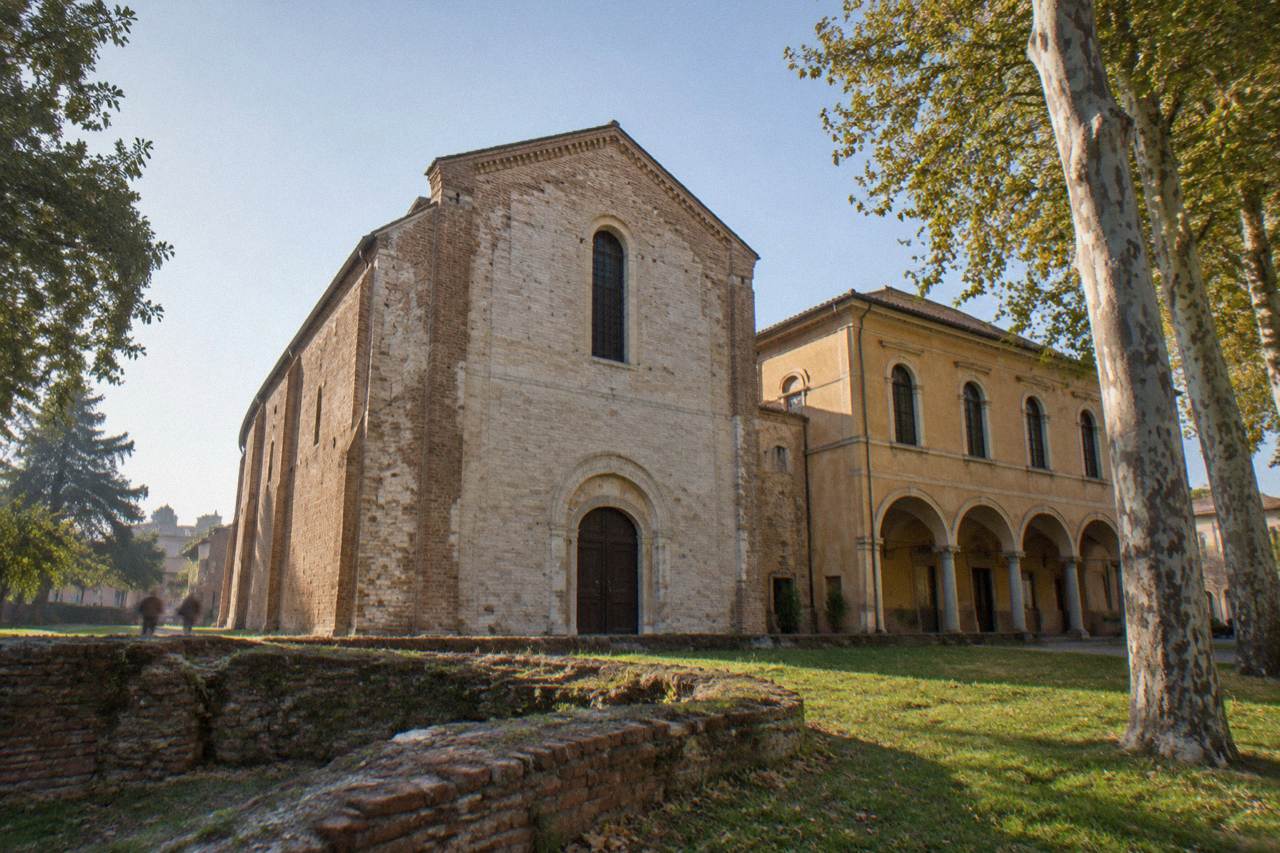
The chapel's own history pages carry the detail, and UNESCO's listing for Padua's fresco cycles repeats it. Roman Patavium had an amphitheatre of its own, and by the time Scrovegni bought the ground the ancient structure survived only as remains embedded in the site. The chapel rose directly over and beside them. Italians still call the whole area by the old name: the chapel is the Cappella dell'Arena in Italian sources as often as the Cappella degli Scrovegni, and the gardens opposite the chapel carry the arena name too.
So the double name is not a nickname invented for tourists and not a modern marketing label. It is a property record that survived. The land was arena land before it was chapel land, and both names describe the same plot at the edge of Padua's old centre, a short walk from the railway station and the Eremitani church.
Where Was Padua's Roman Amphitheatre And What Is Left Of It?
Padua's Roman amphitheatre stood on the ground now occupied by the Scrovegni Chapel and its surroundings, and only buried remains of it survive there today. The city's university history pages record Roman Patavium as a municipium, the birthplace of the historian Livy in 59 BC, and note that amphitheatre ruins remained on the site after the destructions that followed the invasion of 452. No standing Roman arch meets the visitor now.
What a visitor meets instead is the layering. The chapel's own site reports that the land Scrovegni purchased included the amphitheatre remains, and that the family's palace project and the chapel were raised on that ground after 1300. The ancient building survives as archaeology under and around the later construction, which is why the arena name stuck to the address rather than to a monument you can walk around.
| Layer | Period | What the sources say survives |
|---|---|---|
| Roman amphitheatre of Patavium | Roman period, city a municipium from 45 BC | Buried remains on the chapel site, reported by the chapel's own history pages |
| Destruction era | 452 and later | The university's history pages record the destructions after the invasion of 452 |
| Scrovegni land purchase | 3 February 1300 | Land bought by Enrico Scrovegni, including the amphitheatre remains |
| Chapel and frescoes | 1303 to 1305 | Giotto painted the cycle "in just two years", per the chapel's site |
The neighbourhood keeps other traces of the city's Roman and medieval past within a few minutes' walk. The Chiesa degli Eremitani stands close by, a church that belongs with the chapel inside Padua's UNESCO inscription, and its own page on this site covers the Ovetari frescoes and the building's story. For the wider frame, the guide to things to do in Padua places the chapel in the context of the Basilica of Saint Anthony, Prato della Valle and the Orto Botanico.
A guided visit is one way to hear the arena story on the ground, and the Guided Tour of Giotto's Scrovegni Chapel covers the chapel and its fresco cycle. The operator's live listing carries the current price and dates: Check availability.
Who Was Enrico Scrovegni And Why Did He Build On Arena Land In Padua?
Enrico Scrovegni was a wealthy Paduan banker who bought the arena site on 3 February 1300 and commissioned a palace project and a chapel there, dedicated to Santa Maria della Carita. The chapel's own site reports that he built it either to atone for the family's usury or to complete the family palace complex, and it dates Giotto's fresco cycle to 1303 to 1305. Why he paid remains stated only as reported, with no cost figure for the building.
The name of the chapel, Scrovegni, is the family's, and the name of the address, arena, is Rome's. Together they compress the whole history of the plot: a Roman entertainment building, then centuries of ruin, then a banking family's land purchase, then one of the most influential fresco commissions in European painting, executed in two years by Giotto and his workshop.
The frescoes themselves are the reason UNESCO came. Padua's fourteenth-century fresco cycles, the "Padova Urbs Picta" group of eight complexes, were inscribed on the World Heritage List in 2021, proclaimed on Saturday 24 July 2021, under criterion (ii). The Scrovegni Chapel is the first of the eight, alongside the Eremitani church, Palazzo della Ragione, the Reggia Carrarese chapel, the Cathedral Baptistery, the Basilica and Convent of Saint Anthony, the Oratorio di San Giorgio and the Oratorio di San Michele. The cycle inside covers the Stories of Joachim and Anne, the Life of the Virgin and Christ, the Vices and Virtues and a Last Judgment on the entrance wall.
The commissioning story has its own page in this site's answers section, covering the family's wealth and the reported motives in more depth: who paid for the Arena Chapel. The painting side has one too, on whether Giotto painted the Scrovegni Chapel, and the broader fame question is covered under why the Scrovegni Chapel is famous.
Does The Arena Site Change How You Visit The Chapel In Padua?
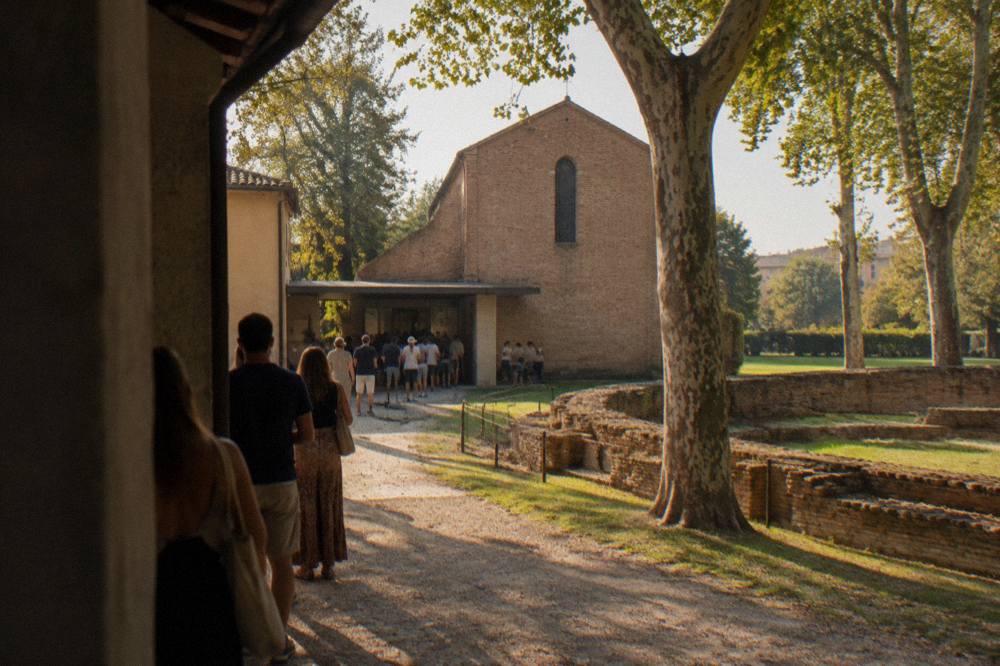
Yes, materially: the chapel is timed entry only, with groups of at most 25 people admitted every 15 minutes in the daytime and about 15 minutes inside after a wait in a climate-controlled waiting room, and visitors must be at the entrance 5 minutes before their slot. Late arrivals must rebook and pay again. The chapel is open 9:00 to 19:00 with last entry at 18:45, and it is closed 16 to 27 November 2026 for the annual fresco inspection.
The climate-control routine exists to protect the frescoes on the old arena ground, and it shapes every visit. There is no online same-day booking: unbooked visitors should check availability at the Museum ticket office. The daytime ticket, at EUR 15 full price plus a EUR 1 booking fee for the chapel, also covers the Musei Civici Eremitani and Palazzo Zuckermann, while the reduced ticket is EUR 11 and residents of Padua pay EUR 5. Evening visits under the "Giotto sotto le stelle" programme run from 25 March to 1 November, 19:00 to 22:00 every 20 minutes, and cover the chapel only.
| Visit detail | What the chapel's own site states |
|---|---|
| Daytime entry | Max 25 people every 15 minutes, last entry 18:45, open 9:00 to 19:00 |
| Time inside | About 15 minutes, after a wait in the climate-controlled room |
| Arrival rule | 5 minutes before the slot; latecomers rebook and pay again |
| 2026 closure | 16 to 27 November, annual fresco inspection |
| Ticket scope | Musei Civici Eremitani and Palazzo Zuckermann included in the daytime ticket |
| Evening visits | 25 March to 1 November, 19:00 to 22:00 every 20 minutes, chapel only |
Planning the booking around these rules has its own guide, with the ticket types set out in full: Scrovegni Chapel tickets. For the time budget, the visit-length question is answered on how long it takes to visit the Scrovegni Chapel, and the chapel's own attraction page collects the practical details in one place at Cappella degli Scrovegni.
Is The Arena Chapel The Same Building As The Arena Di Verona?
No. The Arena Chapel is the Scrovegni Chapel in Padua, a small early-fourteenth-century brick chapel frescoed by Giotto between 1303 and 1305, named for the Roman amphitheatre of Padua that once occupied its ground. The Arena di Verona is a Roman amphitheatre in Verona, about 69 km from Padua in a straight line, still standing and used as an opera venue. The two share one Latin word and nothing else.
The confusion is understandable, because both names circulate in travel writing about the Veneto, and Verona is a common day trip from Padua by train, about 43 to 60 minutes away per the reported schedules. But a reader who arrives in Verona looking for Giotto, or in Padua looking for a Roman facade, has mixed up two cities and two millennia.
| Scrovegni Chapel, Padua | Arena di Verona | |
|---|---|---|
| What it is | Chapel frescoed by Giotto, 1303 to 1305 | Roman amphitheatre, still standing |
| Name source | Roman amphitheatre of Padua, formerly on the site | The building itself |
| UNESCO status | Part of Padova Urbs Picta, inscribed 2021 | Separate listing, different city |
| Distance | In Padua's centre | About 69 km from Padua in a straight line |
Keeping the two apart also keeps the Padua story straight. The arena that named the chapel is invisible now, known through its remains and through the address it left behind. The chapel that carries the name is the most visited painted interior in the city, and the reason the site matters beyond Padua.
How Does The Arena Name Appear On Maps And In Italian Sources For Padua?
In Italian the chapel appears both as the Cappella degli Scrovegni, after the family, and as the Cappella dell'Arena, after the ancient site, and the surrounding gardens and the historic gardens opposite the chapel carry the arena name as well. English sources mostly use Scrovegni Chapel for the building and reserve "Arena Chapel" for the historical name, so a map search in Padua may return either. Both refer to the same building.
The double naming extends to how the visit is signed. The ticket office sits about 100 m from the chapel, the entrance routine runs through the climate-controlled waiting room, and the museums included in the daytime ticket stand in the same arena-named quarter. A reader who knows the name history reads the neighbourhood's signage more easily: the arena survives in the address, the gardens and the Italian name, while the amphitheatre itself survives only below ground.
For anyone weaving the chapel into a day around the city, the one-day itinerary at Padua in one day sequences it with the other UNESCO fresco sites, and the day-trip guide to Verona covers the other arena, the one people sometimes confuse it with, should the itinerary head that way.
Common Questions About The Scrovegni Chapel's Arena Name
Why Is The Scrovegni Chapel Also Called The Arena Chapel?
Because it was built on the site of the Roman amphitheatre of Padua. Enrico Scrovegni bought the land on 3 February 1300, a plot that included the amphitheatre's remains, and the chapel that rose there took the ancient arena's name.
Is the Arena Chapel in Padua or Verona?
In Padua. The Arena Chapel is the Scrovegni Chapel, in the Veneto in northern Italy, about 36 km in a straight line from Venice. The Arena di Verona is a separate Roman amphitheatre in Verona, about 69 km away.
Can you still see the Roman amphitheatre in Padua?
Only as buried remains. The chapel's own site reports that the land Scrovegni bought included the amphitheatre's remains, and no standing Roman structure from it meets the visitor today. The name survives in the chapel's Italian title, Cappella dell'Arena, and in the surrounding area.
Who named the chapel after the arena?
No single act of naming is recorded. The Italian name Cappella dell'Arena reflects the address: the chapel stands on what was the amphitheatre site, and the place name attached itself to the building, as Italian sources including the chapel's own site use both names.
Does the arena name affect visiting the chapel?
Only indirectly. The visit rules, timed entry of at most 25 people every 15 minutes, about 15 minutes inside and arrival 5 minutes before the slot, exist to protect Giotto's frescoes, and the chapel is closed 16 to 27 November 2026 for the annual inspection. Booking ahead is required; check availability at the Museum ticket office if you have not booked.
The arena under the chapel is gone, the name it left is not, and every booking for Giotto's frescoes is made under both.