Who Paid For The Arena Chapel?
Enrico Scrovegni paid for the Arena Chapel in Padua, buying the land in 1300 and hiring Giotto for the frescoes of 1303 to 1305. Here is what the sources say about the man and his money.
The Arena Chapel in Padua, in the Veneto of northern Italy, was paid for by Enrico degli Scrovegni, a member of a Paduan banking family who bought the land on 3 February 1300 and then commissioned Giotto to paint the interior. The chapel's own site and UNESCO's World Heritage listing both name him as the patron, and the fresco cycle he financed, painted between 1303 and 1305, is now the anchor of Padua's fourteenth-century fresco cycles, inscribed on the World Heritage List in 2021 as "Padova Urbs Picta". The question of who paid for it is not a footnote: the identity of the patron explains where the chapel stands, why it is called the Arena Chapel at all, and why the frescoes inside it look the way they do.
Who Paid For The Arena Chapel?
Enrico degli Scrovegni paid for the Arena Chapel in Padua. He bought the land, which included the remains of the city's Roman amphitheatre, on 3 February 1300, built his family palace beside it, and dedicated the new chapel to Santa Maria della Carità, per the chapel's own site and UNESCO's listing. Giotto then painted the fresco cycle in just two years, between 1303 and 1305, on Scrovegni's commission.
That single sentence carries three facts worth slowing down on, because each one comes straight from a primary source. The land purchase, dated 3 February 1300, is documented by the chapel's own history pages. The dedication to Santa Maria della Carità, Saint Mary of Charity, appears in the same material. And the dating of Giotto's work to two years, 1303 to 1305, is the chapel's own wording, repeated on its homepage and in UNESCO's inscription documentation for the Padova Urbs Picta serial site.
The name of the payer matters for another reason: it settles a confusion that trips up readers who know Italy's opera calendar. The "Arena" here is Padua's Roman amphitheatre, whose ruins were part of the land Scrovegni bought. It is not the Arena di Verona, the Roman arena about 69 km away in a straight line that hosts summer opera. Two Roman arenas, two cities, one easy mistake. This site covers the naming question in full on why the Scrovegni Chapel is also called the Arena Chapel.
Padua itself is an inland city about 36 km in a straight line from Venice, known for this chapel, the Basilica of Saint Anthony, one of Italy's oldest universities, founded in 1222, and the Orto Botanico, the botanical garden founded in 1545 that became a UNESCO World Heritage site in 1997. The frescoes Scrovegni paid for are the second of the city's two UNESCO listings.
Who Was Enrico Scrovegni Of Padua?
Enrico degli Scrovegni was a member of a wealthy Paduan banking family, the son of Rinaldo degli Scrovegni, and the man who bought the amphitheatre site in 1300, built a palace there and commissioned the chapel beside it, per the chapel's own history. The sources state only his name, his family, his role as patron and the dates of the land purchase and the frescoes. Nothing beyond that is needed to answer the question of who paid.
What the primary material supports is narrow and precise: a name, a family, a land deed date and a commission. The chapel's own pages record that Enrico Scrovegni bought the land on 3 February 1300 and that the site included the remains of the Roman amphitheatre. UNESCO's listing for Padova Urbs Picta repeats the attribution of the chapel and its fresco cycle to his patronage.
The question readers actually ask next is why a banker's son spent heavily on a private chapel, and here the sources are more careful than the retellings. The chapel's history pages present two possibilities for his motive: to atone for the family's usury, the lending of money at interest that the Church condemned, or simply to complete the family's palace complex. Both readings are reported by the chapel's site as explanations that have been offered, and this page keeps them that way, as reported motives, not settled biography. Assigning Scrovegni a fortune, a guilt or a plan beyond that is speculation the sources do not carry.
It helps to place him in the Padua of his moment. The city Scrovegni knew was a busy commercial centre with a university already eight decades old, and it stood roughly midway through the rule of the Carraresi family, the lords of Padua from 1318 to 1405 in the dating used by the standard references. His chapel rose in the years just before that lordship began. A short table of the dated facts around the commission, all of them from the constraints above, keeps the chronology honest:
| Date | Event | Source basis |
|---|---|---|
| 1222 | The Studium Patavinum, the University of Padua, is founded | University's own history |
| 3 February 1300 | Enrico Scrovegni buys the land including the Roman amphitheatre remains | Chapel's own site |
| 1303 to 1305 | Giotto paints the fresco cycle, in the chapel's own wording "in just two years" | Chapel's own site |
| 1318 to 1405 | The Carraresi lordship of Padua | Standard references |
| 1997 and 2021 | Padua's two UNESCO inscriptions: Orto Botanico and Padova Urbs Picta | UNESCO listings |
For readers who want the building itself rather than the biography, this site's full Scrovegni Chapel guide covers the interior room by room, and the question of whether Giotto painted the Scrovegni Chapel handles the attribution debate separately.
What Did Scrovegni's Money Buy In Padua?
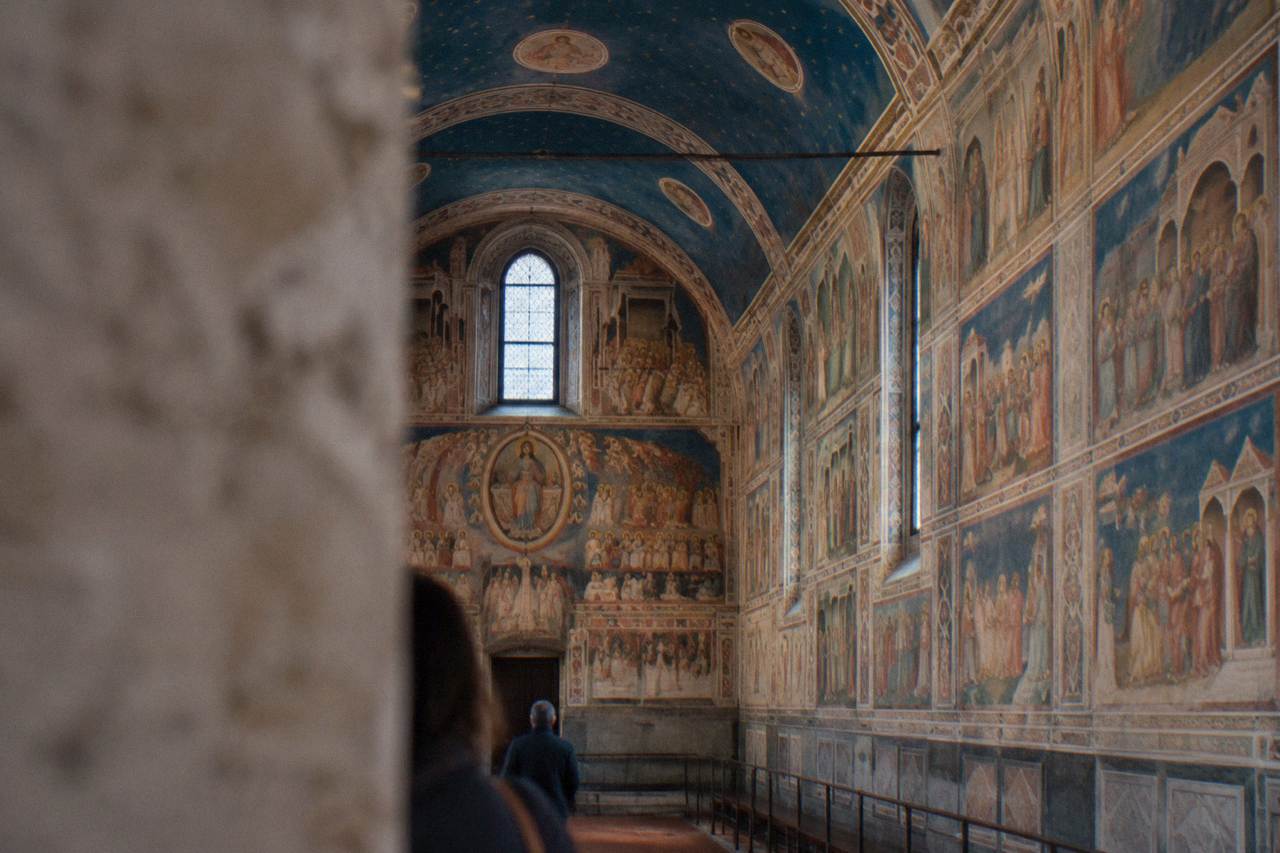
Scrovegni's money bought a private chapel frescoed end to end by Giotto's workshop: the Stories of Joachim and Anne, the Life of the Virgin and the Life of Christ running along the side walls, the Vices and Virtues in a band below, and a Last Judgment covering the entrance wall, per the chapel's own description and UNESCO's listing. The chapel was dedicated to Santa Maria della Carità.
The programme is the point. This is not a church decorated piecemeal over a century; it is a single commission, painted in one two-year campaign, with a narrative structure planned from the start. UNESCO's inscription recognises exactly that quality: the Padova Urbs Picta listing covers eight complexes of fourteenth-century frescoes in Padua's old centre, inscribed in 2021 under criterion (ii), and the Scrovegni Chapel is the first and most complete of them. The proclamation came on Saturday 24 July 2021, per the Comune di Padova. Other pages covering the same trip are gathered on Padua Travel Guide.
| Element of the cycle | Where it sits | Role in the programme |
|---|---|---|
| Stories of Joachim and Anne | Upper tier of the right wall | Opens the narrative before Mary's birth |
| Life of the Virgin | Upper tiers | Continues the story toward the Incarnation |
| Life of Christ | Central tiers | Carries the narrative through Passion and beyond |
| Vices and Virtues | Lower band | A moral counterpoint beneath the stories |
| Last Judgment | Entrance wall | Closes the cycle as the visitor turns to leave |
The other seven complexes of the UNESCO listing show how far Scrovegni's commission radiated: the Eremitani church, Palazzo della Ragione, the Reggia Carrarese chapel, the Cathedral Baptistery, the Basilica and Convent of Saint Anthony, the Oratorio di San Giorgio and the Oratorio di San Michele. Painters worked across the city in the same decades, and the listing treats them as one phenomenon. The question of why the Scrovegni Chapel is famous goes deeper into that legacy.
One practical note belongs here, because the chapel Scrovegni paid for is now visited under strict rules. Entry is timed only: groups of at most 25 people every 15 minutes in the daytime, about 15 minutes inside after a wait in a climate-controlled waiting room, and visitors must be at the entrance 5 minutes before their slot. Late arrivals must rebook and pay again. Online same-day booking does not exist; unbooked visitors should check availability at the Museum ticket office. The chapel is closed 16 to 27 November 2026 for the annual fresco inspection. Full ticketing detail, including the EUR 15 full-price daytime ticket that also covers the Musei Civici Eremitani and Palazzo Zuckermann, sits on the Scrovegni Chapel tickets page.
How Can You See Scrovegni's Chapel In Padua Today?
You see it on a timed entry booked in advance, with daytime slots from 9:00 to 19:00, last entry 18:45, and evening visits under the name "Giotto sotto le stelle" from 25 March to 1 November, 19:00 to 22:00, every 20 minutes, chapel only, per the chapel's own booking pages. The daytime ticket costs EUR 15 full plus a EUR 1 booking fee and also covers two museums.
The evening format is the one that pairs naturally with this page's subject, because it returns the chapel to something closer to the setting its patron knew, after dark and empty of the daytime flow. An evening tour with admission included is bookable as a product: Check availability. There is also a small-group walking tour that includes the chapel, and a golf cart tour of the city for visitors who want the layout of Padua explained between stops.
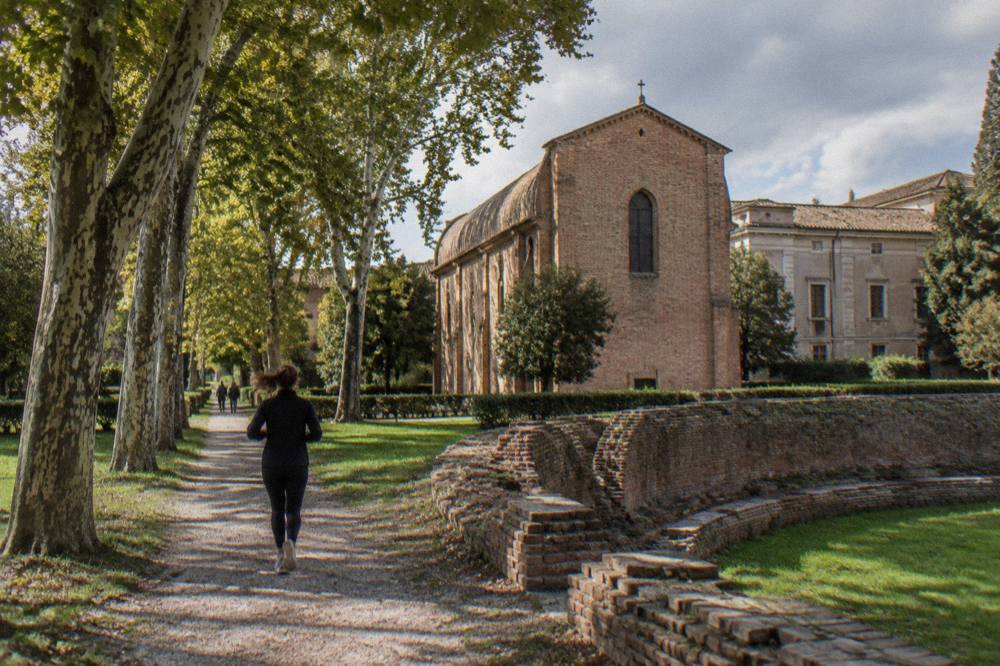
Planning around the visit is straightforward. The chapel stands beside the Musei Civici Eremitani near the station side of the centre, and a visit of about 15 minutes inside the chapel itself is the norm; the question of how long it takes to visit the Scrovegni Chapel is answered in full elsewhere on this site. The Eremitani church next door, part of the same UNESCO listing, is a separate stop covered on its own page at Chiesa degli Eremitani.
| Visit format | Hours | Entry rhythm | What the ticket covers |
|---|---|---|---|
| Daytime | 9:00 to 19:00, last entry 18:45 | 25 people every 15 minutes | Chapel plus Musei Civici Eremitani and Palazzo Zuckermann |
| Evening, 25 March to 1 November | 19:00 to 22:00, last entry 21:20 | Every 20 minutes, max 25 | Chapel only |
| Annual closure | 16 to 27 November 2026 | None | Fresco inspection |
Common Questions About The Arena Chapel's Patron
Who Paid For The Arena Chapel?
Enrico degli Scrovegni, a member of a Paduan banking family, paid for it. He bought the land, including the remains of the Roman amphitheatre, on 3 February 1300 and commissioned Giotto, whose fresco cycle was painted between 1303 and 1305, per the chapel's own site and UNESCO's listing.
Why did Enrico Scrovegni build the chapel?
The chapel's own history pages report two explanations that have been offered: atonement for the family's usury, or the completion of the family palace complex. Both are stated there as reported motives rather than documented intentions.
Is the Arena Chapel the same as the Scrovegni Chapel?
Yes. It is the same building in Padua, officially the Cappella degli Scrovegni, dedicated to Santa Maria della Carità. The "Arena" name comes from the Roman amphitheatre whose remains were part of the land Scrovegni bought.
Did Scrovegni pay Giotto directly?
The sources name Scrovegni as the patron of the chapel and Giotto as the painter of the cycle between 1303 and 1305. The terms and amounts of any payment are not in the primary material and no cost figure for the building exists on this page.
Can you see what Scrovegni paid for without booking?
No. Entry is timed only, at most 25 people every 15 minutes in the daytime, and online same-day booking does not exist. Unbooked visitors should check availability at the Museum ticket office, and the chapel is closed 16 to 27 November 2026.
Is the Arena Chapel the one in Verona?
No. The Arena Chapel is in Padua and takes its name from Padua's Roman amphitheatre. The Arena di Verona is a different Roman arena in a different city, about 69 km away in a straight line.
The man who paid, the land he bought, the painter he hired and the two years of painting that followed are all documented by the chapel's own site and by UNESCO, and that chain of records is what makes the Arena Chapel answerable in a single sentence: Enrico Scrovegni paid, and Giotto painted.