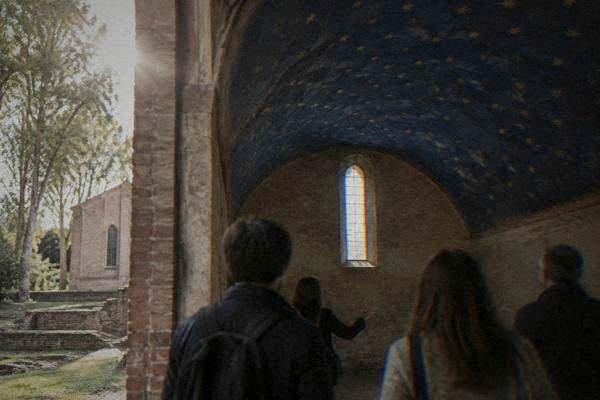
Why Is The Scrovegni Chapel Famous?
The Scrovegni Chapel in Padua holds Giotto's fresco cycle of 1303 to 1305, the core of the UNESCO Padova Urbs Picta listing. Here is why it matters and how to visit.
Padua (Italian: Padova), an inland city in the Veneto about 36 km in a straight line from Venice, keeps its most famous work of art inside a small brick chapel no bigger than a parish church. The Scrovegni Chapel, also called the Cappella degli Scrovegni, carries a fresco cycle Giotto painted "in just two years, between 1303 and 1305", in the words of the chapel's own site, and that cycle anchors a UNESCO World Heritage listing that covers eight monument complexes across the old centre. The chapel is also famous for how strictly it is visited: timed entry, at most 25 people every 15 minutes, and about 15 minutes inside.
This page lays out what the sources themselves say: what Giotto painted, why the chapel has two names, what UNESCO inscribed in 2021 and what the ticket and timing rules are. For the full sight-by-sight picture, see the Scrovegni Chapel attraction guide on Padua Travel Guide.
Why Is The Scrovegni Chapel Famous?
The Scrovegni Chapel is famous because Giotto frescoed its entire interior between 1303 and 1305 with a cycle that reshaped Western painting, because that cycle anchors Padua's UNESCO listing of fourteenth-century frescoes, and because visiting it is deliberately restricted: at most 25 people enter every 15 minutes, for about 15 minutes inside, after a stop in a climate-controlled waiting room.
Those three threads, the art, the UNESCO recognition and the strict visiting regime, feed each other. The frescoes earned the chapel its reputation among art historians long before heritage bodies formalized it. The inscription of "Padova Urbs Picta" in 2021 then gave the chapel a second, official kind of fame, as part of a group of eight decorated complexes in the old centre of Padua, listed under criterion (ii). And the timed-entry system, designed to protect the painted surfaces from humidity and crowding, has itself become part of what people know about the place: you do not wander in, you book a slot.
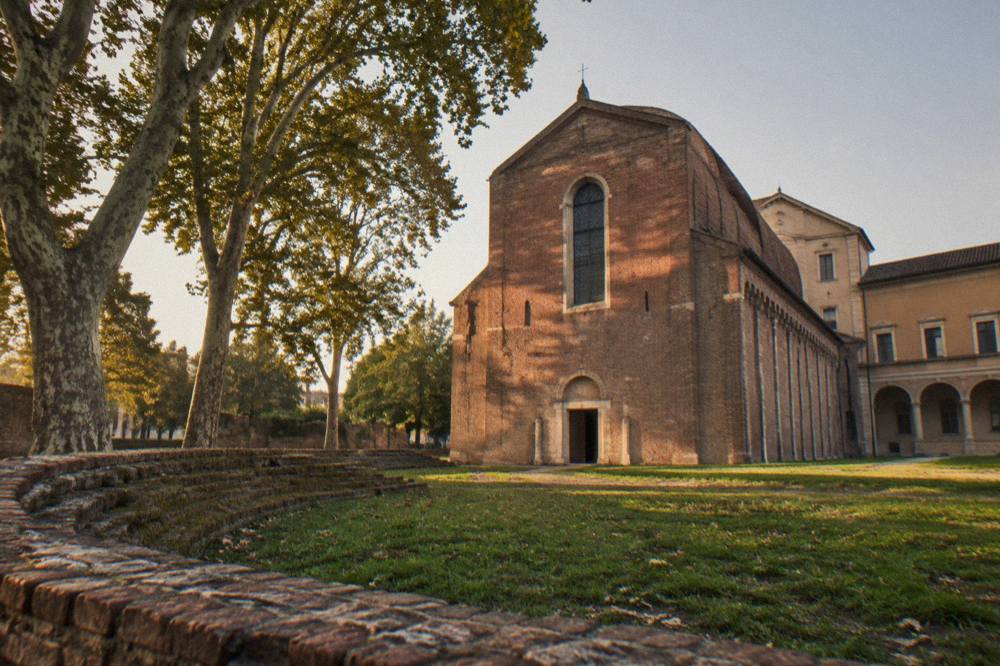
The chapel's own site reports that Enrico Scrovegni bought the land in 1300, land that included the remains of Padua's Roman amphitheatre, and built the chapel there, which is why it is also called the Arena Chapel. That amphitheatre is Padua's own Roman arena, not the Arena di Verona, a point the question of the chapel's second name returns to below. For the wider city context, read what Padua is famous for.
What Did Giotto Paint In The Scrovegni Chapel Between 1303 And 1305?
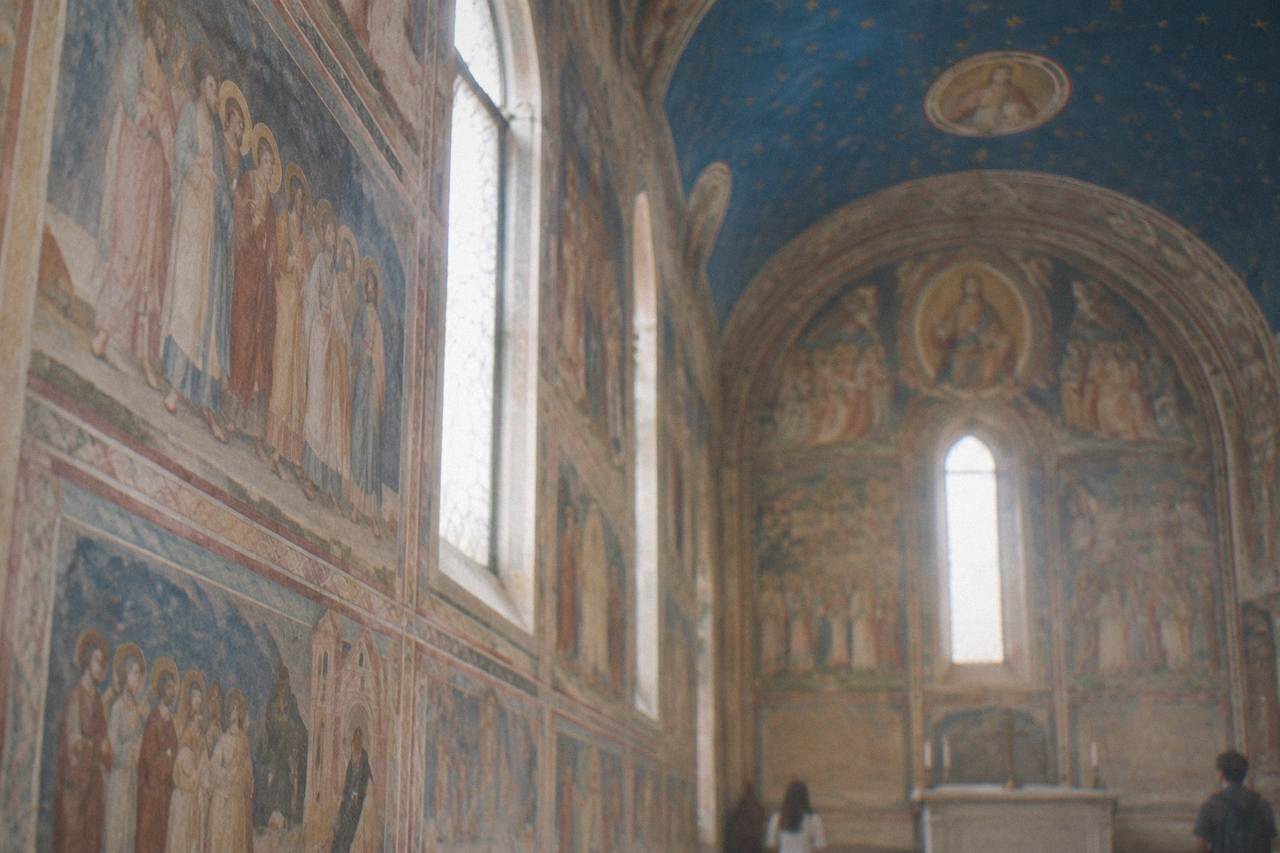
Giotto painted, on the chapel's walls and vault, the Stories of Joachim and Anne, the Life of the Virgin and the Life of Christ, a row of Vices and Virtues, and a Last Judgment on the entrance wall, completing the whole cycle between 1303 and 1305 according to the chapel's own site. The painted space reads as a single narrative program rather than a set of separate pictures.
The chapel's own page on its history is the source for the dating, and it is precise: the cycle took "just two years". The same page and UNESCO's listing describe the scheme. The scenes run along the side walls in stacked registers, the Vices and Virtues face each other in panels beneath the narrative, and the Last Judgment fills the counter-facade, the wall a visitor sees when turning to leave. The deep blue that dominates the vault has become one of the most reproduced color impressions in Italian art.
Why this work matters in the history of painting is a question art historians have written whole careers about, but the short version the sources support is this: the figures carry weight, emotion and placed volume in a way that moved fresco beyond the flatter conventions that came before, and later painters in Padua and beyond worked in its shadow. The separate question of attribution and authorship, including what the documents do and do not say, is covered on the page did Giotto paint the Scrovegni Chapel.
A guided visit is one way to hear the cycle explained scene by scene. The Guided Tour of Giotto's Scrovegni Chapel is built exactly around that, and you can Check availability alongside the official booking route.
How Do You Visit The Scrovegni Chapel In Padua?
Visiting is by timed entry only: at most 25 people every 15 minutes in the daytime, with the chapel open 9:00 to 19:00 and last entry 18:45, and each stay inside lasts about 15 minutes after a wait in a climate-controlled waiting room. You must be at the entrance 5 minutes before your slot, and late arrivals must rebook and pay again.
The system exists to protect the frescoes, and the chapel's own how-to-visit page spells out the mechanics. Every visit passes first through the climate-control waiting room, known as the Corpo Tecnologico Attrezzato, which stabilizes the air before visitors enter the painted space. There is no online same-day booking: the chapel's page states that visitors who have not booked should check availability at the Museum ticket office. Advance slots are bookable through the chapel's own site or its call centre up to the day before with a card.
One closure matters for 2026 planning: the chapel is closed 16 to 27 November 2026 for the annual fresco inspection by the Istituto Centrale per il Restauro. It is not open every day of the year, and any itinerary built around those two weeks needs a different anchor sight, perhaps the Basilica of Saint Anthony, whose significance is covered in is Saint Anthony buried in Padua.
| Visit rule | What the chapel's own site says |
|---|---|
| Entry slots (daytime) | Max 25 people every 15 minutes, 9:00 to 19:00, last entry 18:45 |
| Time inside | About 15 minutes, after the climate-controlled waiting room |
| Arrival | 5 minutes before the slot; latecomers must rebook and pay again |
| Same-day booking | Not online; check availability at the Museum ticket office |
| Evening visits | "Giotto sotto le stelle", 25 March to 1 November, 19:00 to 22:00, every 20 minutes, chapel only |
| 2026 closure | 16 to 27 November, annual fresco inspection |
The evening program deserves its own line: from 25 March to 1 November the chapel runs evening entries every 20 minutes from 19:00 to 22:00, and the evening ticket covers the chapel only, not the museums. How long a visit takes end to end, waiting room included, is answered in detail on how long does it take to visit the Scrovegni Chapel.
Why Is The Scrovegni Chapel Also Called The Arena Chapel?
The chapel carries a second name, the Arena Chapel, because Enrico Scrovegni bought land in 1300 that included the remains of Padua's Roman amphitheatre, and the chapel was built on that ground, per the chapel's own site and UNESCO's listing. The arena in question is Padua's Roman amphitheatre, not the Arena di Verona, which is an opera venue in a different city.
The double name is the single most common point of confusion around the building, and the sources are unambiguous about which arena it is. Padua was a Roman municipium, and ruins of its amphitheatre survive in the area around the chapel, which stands on the amphitheatre's site. The full story of the name, including how the land purchase is documented, is on the page why is the Scrovegni Chapel also called the Arena Chapel.
The person behind the commission raises the same kind of sourcing question. The chapel's own material reports that Enrico Scrovegni commissioned it, and reported explanations for why he paid for it, such as atonement for usury, are stated in the sources only as reported, not as settled record. The question of the commissioner and his motives is examined on who paid for the Arena Chapel. No cost figure for the building and no date for the consecration should be treated as established.
Why Did UNESCO List Padua's Frescoes In 2021?
UNESCO inscribed "Padua's fourteenth-century fresco cycles", named Padova Urbs Picta, on the World Heritage List in 2021, proclaimed on Saturday 24 July 2021, covering eight decorated complexes in the city's old centre with the Scrovegni Chapel at their core, under criterion (ii). The listing is city-wide, not chapel-only, and that is the point travelers often miss.
The eight complexes, per the Padova Urbs Picta organization, are these:
| The eight Padova Urbs Picta complexes |
|---|
| Cappella degli Scrovegni |
| Chiesa dei Santi Filippo e Giacomo agli Eremitani |
| Palazzo della Ragione |
| Cappella della Reggia Carrarese |
| Battistero della Cattedrale |
| Basilica e Convento di Sant'Antonio |
| Oratorio di San Giorgio |
| Oratorio di San Michele |
Two things follow from this for a visitor. First, Padua holds two separate UNESCO listings, not one: the Orto Botanico, inscribed in 1997, and Padova Urbs Picta, inscribed in 2021. Second, the fresco listing turns a chapel visit into a possible trail across the old centre, from the Eremitani church beside the chapel to the Baptistery near the Cathedral. The wider itinerary logic, including how to string the sites together, is laid out in Padua in one day.
What Tickets Cover The Scrovegni Chapel?
The daytime ticket costs EUR 15 full and EUR 11 reduced, plus a EUR 1 booking fee for the chapel, and it covers not only the chapel but also the Musei Civici Eremitani and Palazzo Zuckermann, while residents of Padua pay EUR 5 and the family card costs EUR 30 for up to two adults and two under-18s, per the museums' own price list.
The full breakdown from padovamusei.it:
| Ticket | Full price | Notes |
|---|---|---|
| Musei + Cappella | EUR 15 (reduced EUR 11) | Plus EUR 1 chapel booking fee; covers Musei Civici Eremitani and Palazzo Zuckermann |
| Musei only | EUR 11 (reduced EUR 9) | Without the chapel |
| Residents | EUR 5 | Padua residents |
| Family card | EUR 30 | Up to two adults and two under-18s, plus EUR 1 per person chapel booking |
| Evening visit | Separate ticket | Chapel only, 25 March to 1 November |
Two practical notes come with the table. The Musei Civici Eremitani are open on non-holiday Mondays too, so the daytime ticket has value on the day the chapel's neighbours may close. And the booking fee is charged per chapel reservation regardless of which ticket type you hold, a detail worth checking on the Scrovegni Chapel tickets guide before you commit to a slot. Prices and opening details do change, so confirm on the official museums page before booking.
How Does The Chapel Fit Into A Padua Visit?
The Scrovegni Chapel sits at the northwest edge of Padua's old centre, a short walk from the Eremitani church and the Piazza delle Erbe market quarter, which makes it a natural first or last stop in a day that also takes in Palazzo della Ragione, the Basilica of Saint Anthony and the Prato della Valle, all within the walkable historic core.
The chapel's location beside the Eremitani complex, whose own church is part of the UNESCO eight, means one corner of the city holds two inscribed sites plus two included museums. From there the arcaded streets run south into the market squares and the Salone under Palazzo della Ragione, and onward to the Santo and Prato della Valle. How much time the whole city needs is a separate question, answered on how many days do you need in Padua, and whether the city justifies the trip at all is weighed in is Padua worth visiting.
The chapel is also the reason some travelers base themselves in Padua rather than Venice, since Padua is about 36 km in a straight line from the lagoon city with regional trains taking about 26 to 40 minutes. That trade-off is examined in is Padua worth visiting from Venice.
Common Questions About The Scrovegni Chapel
Why Is The Scrovegni Chapel Famous?
Because Giotto frescoed its whole interior between 1303 and 1305, because that cycle anchors Padua's UNESCO Padova Urbs Picta listing of 2021, and because entry is strictly timed: at most 25 people every 15 minutes, about 15 minutes inside.
Can you walk into the Scrovegni Chapel without a booking?
No. Entry is timed only, with no online same-day booking. The chapel's own site says unbooked visitors should check availability at the Museum ticket office, and late arrivals for a booked slot must rebook and pay again.
How long are you inside the Scrovegni Chapel?
About 15 minutes, after a wait in the climate-controlled waiting room. You should be at the entrance 5 minutes before the time on your ticket.
Is the Scrovegni Chapel open every day?
No. It is open 9:00 to 19:00 with last entry 18:45, but it is closed 16 to 27 November 2026 for the annual fresco inspection, and closed on 1 May, 25 and 26 December and 1 January per the museums' calendar.
Does the Scrovegni ticket include other museums?
Yes. The daytime ticket (EUR 15 full, EUR 11 reduced, plus the EUR 1 chapel booking fee) also covers the Musei Civici Eremitani and Palazzo Zuckermann. The evening ticket covers the chapel only.
Why is it called the Arena Chapel?
Because it was built on land Enrico Scrovegni bought in 1300 that included the remains of Padua's Roman amphitheatre. The arena is Padua's own, not the Arena di Verona.
The chapel's fame rests on a compact set of facts: a two-year fresco campaign by Giotto between 1303 and 1305, a UNESCO inscription in 2021 that made it the anchor of eight decorated complexes, and a visiting system that protects the paintings by admitting at most 25 people every 15 minutes. Book the slot, arrive 5 minutes early, and the rest of painted Padua is a short walk away.