Is St. Anthony Buried In Padua?
Yes, Saint Anthony is buried in Padua, in the Basilica of Saint Anthony. Where the tomb sits, what the relics are, and how to visit the Santo.
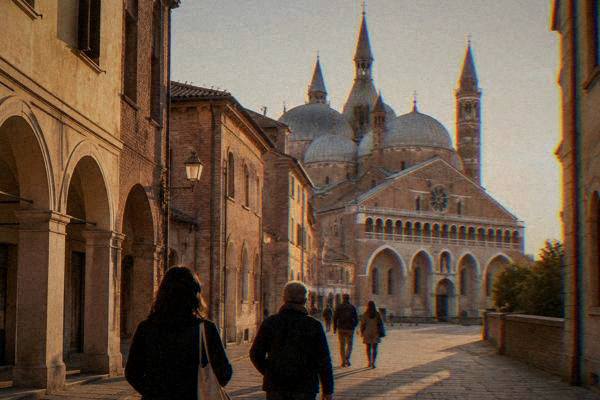
Yes, Saint Anthony is buried in Padua. He died in the city on 13 June 1231, in the Arcella district north of the centre, and his remains have rested ever since inside the Basilica of Saint Anthony, the monumental church Paduans call simply the Santo. The basilica stands in Piazza del Santo, in the eastern part of the old city, and entry is free. This page sets out what the sources say about the tomb, the relics kept beside it, and how a visitor to Padua plans a visit.
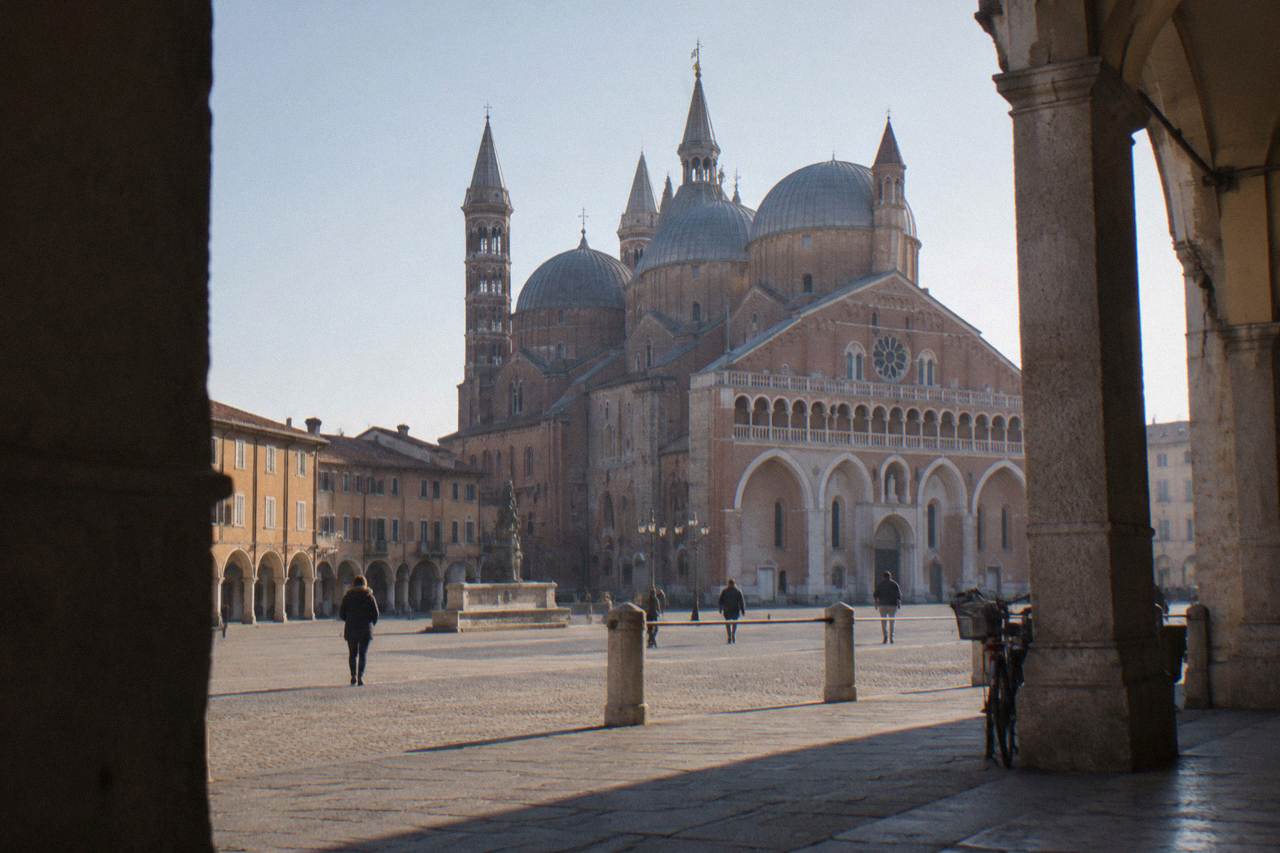
The question matters to the city's identity. Padua lies in the Veneto, northern Italy, an inland city about 36 km in a straight line from Venice, and the Santo is one of the two anchors of its religious and artistic life, alongside Giotto's frescoes in the Scrovegni Chapel. The basilica is also one of the eight complexes of the Padova Urbs Picta UNESCO listing, inscribed in 2021 for its fourteenth-century fresco cycles. If your trip connects the saint's story with the wider city, the Padua Travel Guide overview of things to do in Padua places the basilica in context with the other sights.
Is St. Anthony Buried In Padua?
Yes, Saint Anthony is buried in Padua. He died in the city on 13 June 1231, and his tomb stands inside the Basilica of Saint Anthony, the church whose construction began in 1232, one year after his death. The tomb chapel sits within the basilica in Piazza del Santo, and the basilica's own listing confirms free entry to the saint's tomb and the Chapel of the Relics beside it.
That is the short answer, and it is unusually firm for a medieval figure. Anthony was born in Lisbon, in Portugal, and his path to sainthood ran through Assisi and preaching tours across Italy, but he died on Paduan ground and was buried in Paduan ground. The church raised over his tomb became one of the great pilgrimage destinations of northern Italy, and it still functions as a working Franciscan basilica rather than a museum. Pilgrims come for the tomb; art historians come for Donatello's work in the sanctuary; the two crowds share the same nave.
The burial also explains the city's calendar. The feast of Saint Anthony falls on 13 June, the anniversary of his death, and the thirteen days of preparation before it, the Tredicina, ran from 31 May to 12 June in 2026 with the feast day itself on 13 June. The Feast of Saint Anthony in Padua is the city's principal religious event of the year, and the basilica is its centre of gravity.
Where Inside The Basilica Of Saint Anthony Is The Tomb?
The tomb of Saint Anthony stands in the Chapel of Saint Anthony, on the left side of the basilica's sanctuary as you face the high altar, and the Chapel of the Relics sits close by within the same complex. The basilica's pages describe both spaces as accessible to visitors during opening hours, with entry free of charge. The chapel containing the tomb is the devotional heart of the building.
The arrangement is worth understanding before a visit, because the basilica is large and the tomb is not in the nave itself. Pilgrims move to the sanctuary area, where the tomb chapel receives a constant flow of visitors who pray, leave notes or touch the marble. The Chapel of the Relics, in turn, holds objects associated with the saint: per the basilica's virtual tour, his skeleton rests in a crystal urn apart from the jawbone and left forearm, and the habit and vocal apparatus are preserved in the relics chapel. This desk reports what those sources state and adds nothing beyond it.
A visit usually pairs with the square outside. Piazza del Santo holds Donatello's equestrian statue of the condottiero Erasmo da Narni, known as the Gattamelata, which the basilica's pages list among the notable works at the site. From the square it is a short walk to the Orto Botanico, founded in 1545 and inscribed by UNESCO in 1997, and to the Prato della Valle, the sweeping oval square with its canal and double ring of statues that the Venetian Senate declared communal space in 1767. The Basilica di Sant'Antonio attraction guide covers the building room by room.
| What | Where | What The Sources Say |
|---|---|---|
| Tomb of Saint Anthony | Chapel of Saint Anthony, left of the sanctuary | Resting place of the saint who died 13 June 1231; free entry |
| Chapel of the Relics | Within the basilica complex | Crystal urn with the skeleton; jawbone and left forearm kept separately; habit and vocal apparatus preserved |
| Gattamelata statue | Piazza del Santo, outside | Donatello's equestrian monument to Erasmo da Narni |
| High altar works | Sanctuary | Donatello's altar and presbytery works |
| UNESCO status | Whole complex | One of eight sites of Padova Urbs Picta, inscribed 2021 |
Who Was Saint Anthony Of Padua?
Saint Anthony was a Portuguese-born Franciscan friar, born in Lisbon, who became one of the most celebrated preachers of his generation and died in Padua on 13 June 1231 at around thirty-six years of age. He was canonized within a year of his death, and the basilica's construction began in 1232 to house his tomb. The name Anthony of Padua reflects where he died and is buried, not where he was born.
The biographical outline that the constraints support is short and precise. He joined the Franciscan order after beginning religious life among the Augustinians, preached in Italy and France, and spent his final period in Padua, where his sermons drew large crowds. He died at Arcella, just north of the city centre, on 13 June 1231. The speed of his canonization, less than a year after his death, drove the decision to build a basilica worthy of the tomb, and construction began in 1232. The principal part of the church was completed toward the end of the thirteenth century.
This is where the naming question that trips people up gets its answer. Anthony was a Lisbon man by birth and an Italian saint by death and burial, which is why the Church names him for Padua. The city, in turn, took him as its own: the basilica is called the Santo, the saint, as if there were no other. For the fuller biography, the Saint Anthony of Padua guide walks through the documented life, and the question of what Padua is famous for shows how much of the city's identity the saint shares with Giotto, Galileo and the university founded in 1222.
How Do You Visit The Tomb Of Saint Anthony In Padua?
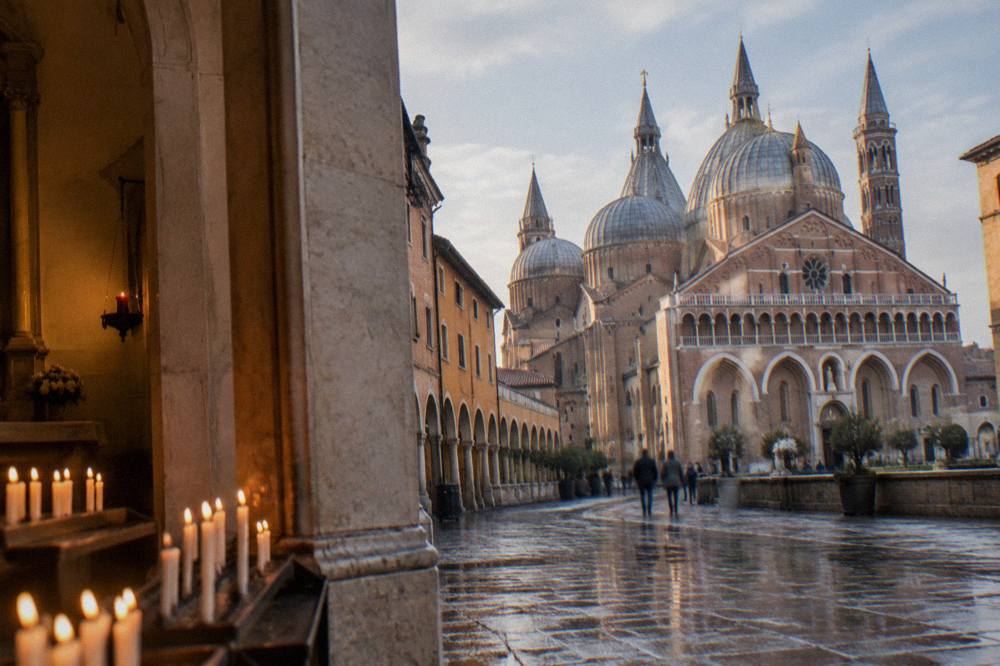
You visit the tomb by entering the Basilica of Saint Anthony in Piazza del Santo, on the eastern edge of the old centre, where entry is free and the tomb chapel and Chapel of the Relics are open to visitors outside service times. Hours change around religious functions, so check the basilica's own site before setting out, and dress in a way suitable for a church.
Those two practical points, free entry and a dress code described by the basilica as suitable for a church environment, are the ones the sources state. The basilica is a living place of worship: masses and functions close the tourist circuit at times, and the opening hours that circulate on third-party sites should not be relied on when the basilica's own pages are a click away. No ticket, no booking and no fee applies to ordinary visits.
The rest of the visit is easy to plan. Padua's old centre is compact, and the walk from the Scrovegni Chapel area to Piazza del Santo takes you through the market squares, Piazza delle Erbe with its stalls running Monday to Friday from 7:30 to 13:30 and Saturday to 20:00, and past the Caffè Pedrocchi, opened in 1831. Public transport in the city runs on a EUR 1.70 urban ticket valid for 90 minutes, which also covers the tram. A themed walk can help: the site's featured St Anthony's life tour traces the saint's Padua with a local guide, and you can Check availability on the operator's live listing. If the trip is short, the answer to how many days you need in Padua suggests how to fit the Santo with the frescoes.
What Else Should You Know About The Santo And The City?
The Basilica of Saint Anthony is one of two UNESCO threads running through Padua, part of the Padova Urbs Picta fresco listing of 2021 alongside the Scrovegni Chapel and six other complexes, while the Orto Botanico carries the city's other inscription from 1997. The saint's tomb is therefore both a pilgrimage site and a stop on an art-historical route through the old centre.
The practical tie-ins are worth a sentence each. The Scrovegni Chapel, frescoed by Giotto between 1303 and 1305, is timed entry only, with at most 25 people admitted every 15 minutes and about 15 minutes inside, booked in advance through the chapel's own site; it is closed 16 to 27 November 2026 for the annual fresco inspection. The daytime ticket, EUR 15 full price plus a EUR 1 booking fee, also covers the Musei Civici Eremitani and Palazzo Zuckermann. None of that affects the basilica, which needs no booking, but both sit in the same walkable centre, and the question is Padua walkable answers yes in practical terms.
| Site | Relation To Saint Anthony | Entry |
|---|---|---|
| Basilica of Saint Anthony | Holds the tomb and the Chapel of the Relics | Free |
| Prato della Valle | Square near the basilica, Saturday market and monthly antiques market | Free |
| Scrovegni Chapel | Separate site, same UNESCO listing, timed entry | EUR 15 full, plus EUR 1 booking fee |
| Orto Botanico | Separate UNESCO listing from 1997 | EUR 15 full from 1 September 2026 |
Common Questions About Saint Anthony's Tomb In Padua
Is St. Anthony Buried In Padua?
Yes. Saint Anthony died in Padua on 13 June 1231 and is buried in the Chapel of Saint Anthony inside the Basilica of Saint Anthony, known as the Santo. The basilica began construction in 1232, a year after his death, to house the tomb.
Can You See The Tomb For Free?
Yes. Entry to the Basilica of Saint Anthony is free, and the tomb and the Chapel of the Relics are described by the basilica's pages as accessible to visitors. No ticket is needed for an ordinary visit.
What Relics Of Saint Anthony Are In Padua?
Per the basilica's virtual tour, the saint's skeleton rests in a crystal urn, apart from the jawbone and left forearm, and his habit and vocal apparatus are preserved in the Chapel of the Relics.
When Is The Feast Of Saint Anthony In Padua?
The feast falls on 13 June each year, the anniversary of the saint's death in 1231. The Tredicina, thirteen days of preparation, ran from 31 May to 12 June in 2026, with the principal celebrations on the feast day itself.
Is The Basilica Of Saint Anthony Part Of The UNESCO Listing?
Yes. The basilica and convent are among the eight complexes of the Padova Urbs Picta inscription of 2021, which covers Padua's fourteenth-century fresco cycles.
Are There Opening Hours For The Basilica?
Hours change around religious functions, and this page prints none. Check the basilica's own site before a visit, and dress in a way suitable for a church.