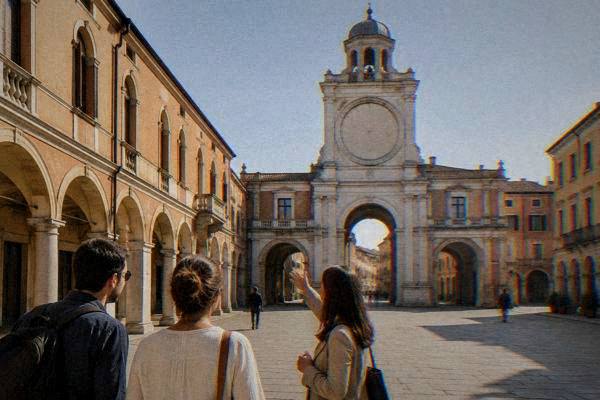
Piazza Delle Erbe, Della Frutta And Dei Signori: The Three Squares
Padua's market squares cluster around the Palazzo della Ragione, and the Comune di Padova's own market page lists exactly when each one trades. Here is what the sources say about the stalls, the halls and the streets around them.
Short answer
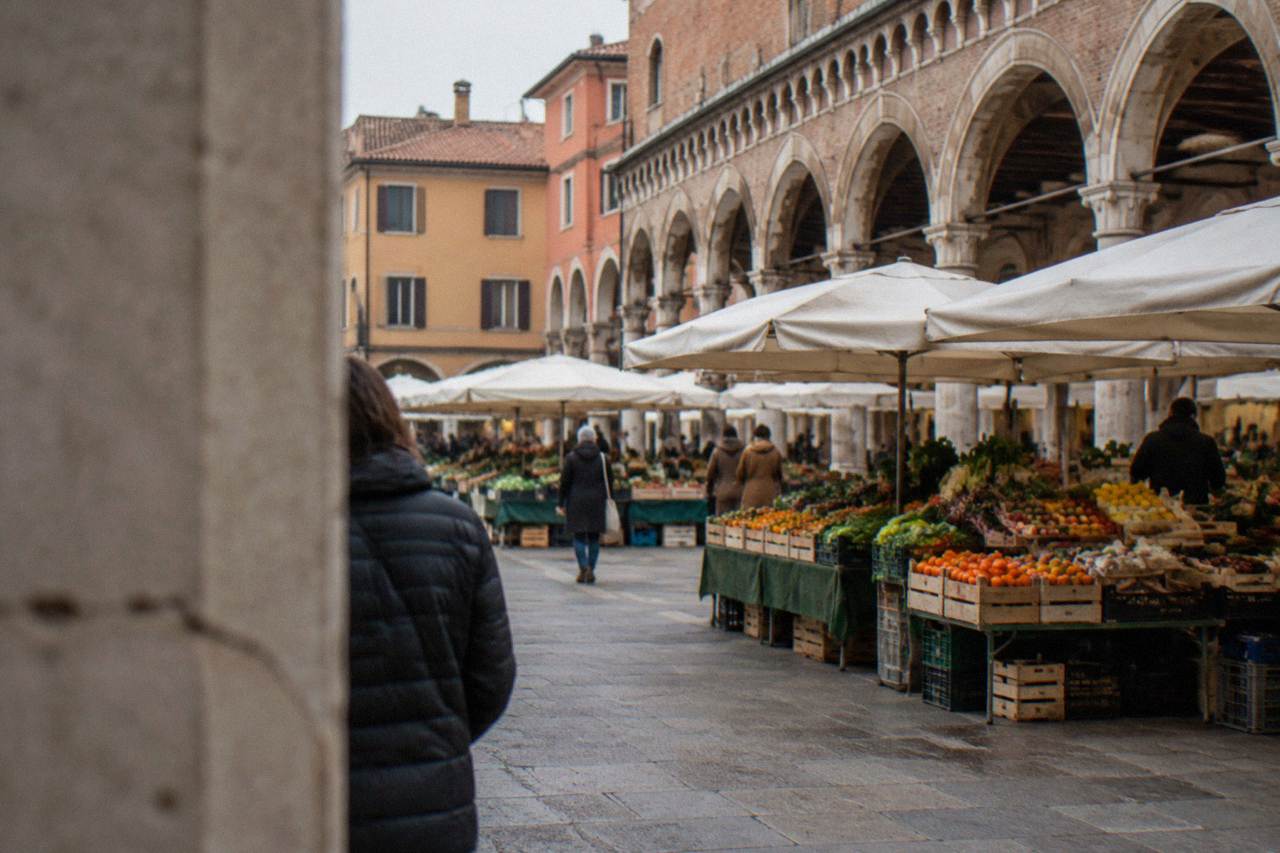
Piazza delle Erbe in Padua hosts a 52-stall fruit, vegetable and flower market Monday to Friday 7:30 to 13:30 and Saturday 7:30 to 20:00, per the Comune di Padova. With Piazza della Frutta and Piazza dei Signori it forms the city's historic square complex around the Palazzo della Ragione.
Padua (Padova), in the Veneto in northern Italy, keeps its daily market life in a cluster of three squares in the historic centre: Piazza delle Erbe, Piazza della Frutta and Piazza dei Signori. The Comune di Padova's market page is the document that governs all of it, and it lists a 52-stall market of fruit, vegetables and flowers in Piazza delle Erbe, trading Monday to Friday 7:30 to 13:30 and Saturday 7:30 to 20:00. Underneath it all sits the Palazzo della Ragione, the vast medieval hall whose arcades and loggias frame the two market squares, and whose own ticket office, per the civic museums' listing, is reached through the IAT tourist information office at Piazza delle Erbe 52. This page sets out what the sources support about the three squares: the market hours, the covered market under the hall, the buildings that define each square, and how the sequence works for a visitor.
What Are The Three Squares Of Padua?
The three squares are Piazza delle Erbe, Piazza della Frutta and Piazza dei Signori, and they sit side by side around the Palazzo della Ragione in central Padua. The Comune di Padova lists markets in the first two, Piazza delle Erbe with 52 stalls of mostly fruit, vegetables and flowers, and Piazza della Frutta with separate food and non-food trading days.
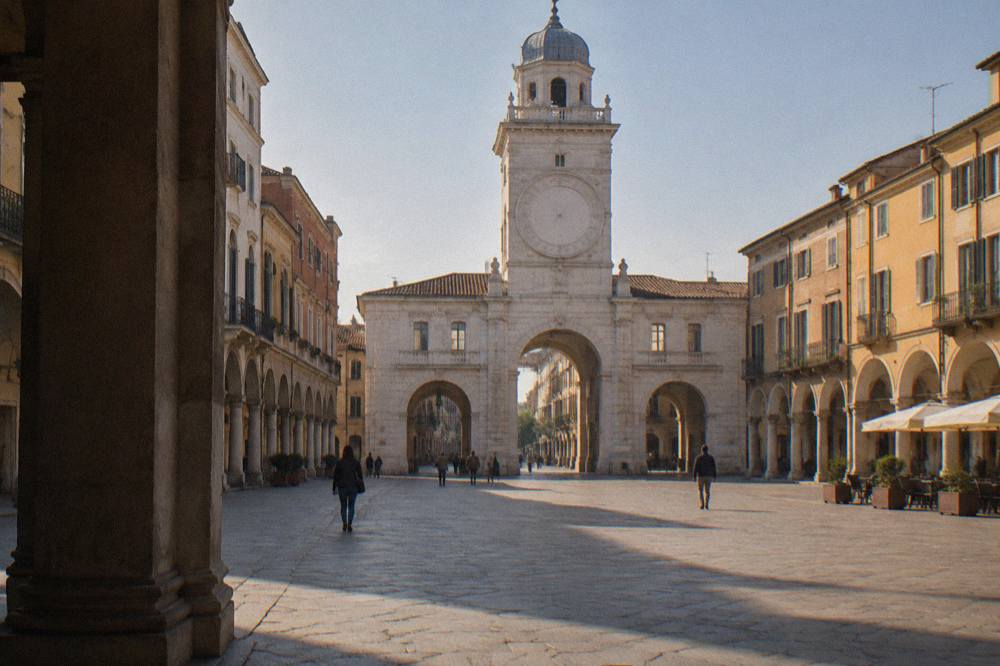
Piazza dei Signori carries no market listing on the city's page; it is the ceremonial square of the group, framed by the Loggia dei Cambio style architecture and closed on its east side by the Torre dell'Orologio.
The arrangement is unusual among Italian cities because the three squares touch and interlock rather than standing apart. The Palazzo della Ragione sits between Piazza delle Erbe and Piazza della Frutta, its upper floor a single huge hall and its ground level an arcade of passages that connect the two market spaces. Piazza dei Signori continues east, and the Torre dell'Orologio, the clock tower that also gives access to a terrace over the archway, stands between the market squares and the Signori side. The tower's visits are free but require a mandatory booking on set days, per the civic museums' listing.
The names are literal and old: Erbe means herbs, the green produce of the daily market, Frutta means fruit, and Signori means lords, the square of the city's rulers under the Carrara lordship of 1318 to 1405 and then under Venice from 1405. What a visitor meets today is a working market district in the mornings and an arcade of bars and shops through the day, with the evening scene shifting to the tables that spread under the arcades.
When Is The Piazza Delle Erbe Market Open In Padua?
The Piazza delle Erbe market runs Monday to Friday from 7:30 to 13:30 and on Saturday from 7:30 to 20:00, according to the Comune di Padova's market page, which lists 52 stalls trading mostly fruit, vegetables and flowers. The same page lists Piazza della Frutta separately: food trading Monday to Wednesday 8:00 to 14:00 and Thursday to Saturday 8:00 to 19:00, and non-food trading Tuesday to Friday 8:00 to 14:00 and Saturday 8:00 to 19:00.
Those hours come straight from the city's own listing for the markets of Padua, and they carry the practical message: the weekday market is a morning institution that ends early in the afternoon, while Saturday trading runs into the evening. Anyone planning photographs of full stalls, or shopping for the ingredients of a picnic, needs the morning window. The Saturday extension changes the character of the square, with the market running alongside the day's other trading in the surrounding streets.
| Market | Days | Hours | Goods listed |
|---|---|---|---|
| Piazza delle Erbe | Mon to Fri | 7:30 to 13:30 | Mostly fruit, vegetables, flowers |
| Piazza delle Erbe | Saturday | 7:30 to 20:00 | Mostly fruit, vegetables, flowers |
| Piazza della Frutta (food) | Mon to Wed | 8:00 to 14:00 | Food |
| Piazza della Frutta (food) | Thu to Sat | 8:00 to 19:00 | Food |
| Piazza della Frutta (non-food) | Tue to Fri | 8:00 to 14:00 | Non-food |
| Piazza della Frutta (non-food) | Saturday | 8:00 to 19:00 | Non-food |
The page also carries the Saturday market at Prato della Valle, the great square on the other side of the centre reached along the route that passes the Basilica of Santa Giustina, with winter hours of 8:00 to 19:00 and summer hours of 8:00 to 20:00. A third fixture is the antiques market, held on Prato della Valle and via Umberto I on every third Sunday of the month. Together the listings describe a city whose market calendar is published, checkable and stable, which is rare: many Italian cities leave market hours to oral tradition. Padua does not, and the Comune's page is the reference.
For a visitor who wants the squares explained rather than only shopped, a guided option exists. The Padova walking tour with audio and written guide by a local is one way to cover the sequence, and this site's overview page collects the wider set of options for the city.
What Sits Under The Palazzo Della Ragione In Padua?
Under the Palazzo della Ragione sits Sotto il Salone, the permanent covered market of local food products that occupies the ground-floor halls beneath the great upper room, per the Padua tourism board's own description. The civic museums' listing reports the Palazzo della Ragione itself open Tuesday to Sunday 9:00 to 19:00, with a full ticket at EUR 8 and concessions at EUR 6, and tickets sold at the IAT office at Piazza delle Erbe 52.
Sotto il Salone is the reason the market district keeps running in bad weather and through the afternoon: the stalls sit inside, in the vaulted ground level of the hall, selling the categories the tourism board names, local food products. The board's page describes it as a permanent covered market; the sources this site uses give no stall count and no opening hours for it, so a visitor should read the stalls as trading through the day and confirm any specific shop's hours on the spot.
The hall above is the civic monument. The Palazzo della Ragione is one of the eight sites of Padua's fourteenth-century fresco cycles, the UNESCO World Heritage inscription of 2021 known as Padova Urbs Picta, and its upper floor is a single hall of exceptional size. The reported visiting arrangement is straightforward: Tuesday to Sunday, 9:00 to 19:00, EUR 8 full and EUR 6 concession, tickets from the IAT office on Piazza delle Erbe 52 itself, which places the entry point for one of the city's major monuments directly on the market square. The listing also notes an optional booking with a EUR 1 fee.
| Venue | Reported hours | Reported ticket | Ticket point |
|---|---|---|---|
| Palazzo della Ragione | Tue to Sun, 9:00 to 19:00 | EUR 8 full, EUR 6 concession | IAT, Piazza delle Erbe 52 |
| Sotto il Salone | Permanent covered market | No ticket | Ground level, own entrances |
| Torre dell'Orologio | Set days, Wed, Fri and Sat | Free, mandatory booking | Booking via Legambiente Salvalarte |
The Torre dell'Orologio completes the set of structures that hold the three squares together. The civic museums' listing reports it as free to visit with a mandatory booking for specific times on Wednesday, Friday and Saturday, arranged through the Salvalarte contact. The tower stands in the archway between the market squares and Piazza dei Signori, so the booking, when it can be made, connects the whole ensemble into a single walk: market stalls below, the hall's frescoed interior above, and the tower's terrace over the passageway.
How Do The Three Squares Change From Morning To Evening In Padua?
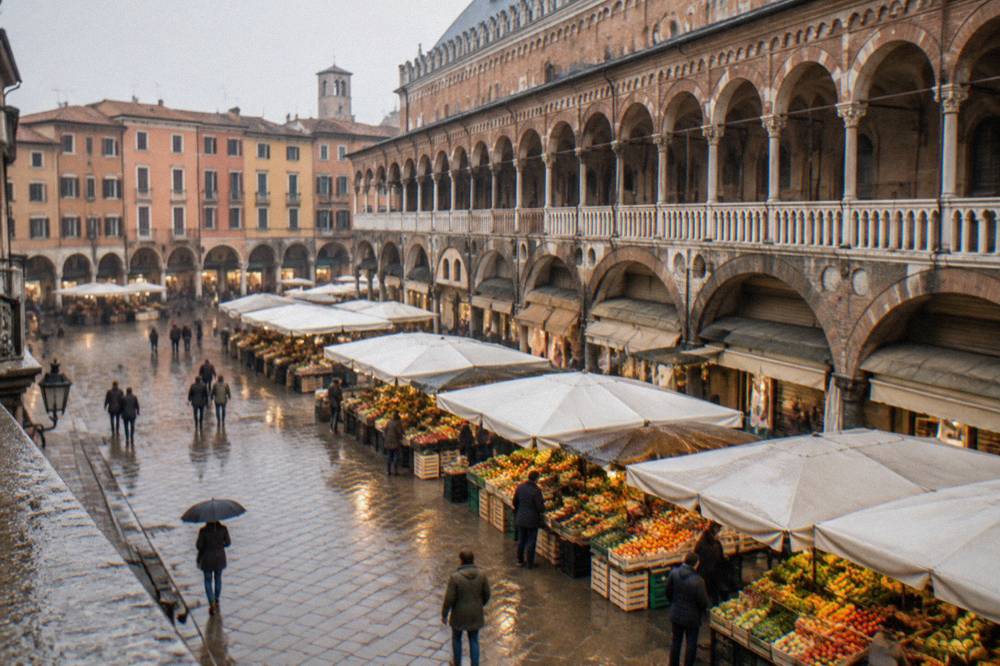
The squares run on a market rhythm by day and an aperitivo rhythm by evening: the Comune's market hours end at 13:30 on weekdays and 20:00 on Saturdays in Piazza delle Erbe, while the Padua tourism board's enogastronomia pages describe the piazzas, naming Piazza delle Erbe and Piazza dei Signori, as the setting for the city's evening spritz and aperitivo culture. The board gives no fixed hours for the evening scene, so the change is real but unscheduled.
What the sources support is the shape of the day. Until early afternoon the squares belong to the stalls: produce in Piazza delle Erbe, food and non-food goods in Piazza della Frutta on their separate day patterns, and the covered traders under the hall through the whole span. After the weekday market closes the arcades take over, and the tourism board's pages on the city's food and drink life place the spritz, the Veneto aperitivo, in these very squares, in the bars and botteghe around the two piazzas it names. The spritz itself has a Padua connection worth knowing: Aperol was created in Padua in 1919 by the Barbieri brothers, per the press accounts of the drink's history, and the tourism board treats the piazzas as the stage for the custom that grew around it.
The source that anchors the climate side of the question is the ERA5 reanalysis, 1991-2020, for the grid cell at Padua's centre. July and August carry a mean daily high of 28.8 C, January 7.3 C with a mean low of minus 0.2 C, and November is the month with the highest rain total at 114.0 mm of rain. For open-air market mornings and evening tables alike, the modelled normals suggest the shoulder months: April at a 17.6 C mean high and October at 18.4 C, with October rainfall high at 105.4 mm. An arcade city handles rain well, which is part of the design of these squares.
| Month | Mean high C | Mean low C | Rain mm |
|---|---|---|---|
| January | 7.3 | -0.2 | 53.6 |
| April | 17.6 | 7.8 | 84.4 |
| July | 28.8 | 18.9 | 62.1 |
| October | 18.4 | 10.6 | 105.4 |
| November | 12.6 | 5.5 | 114.0 |
For visitors who want the evening version of the city with a guide attached, an evening option with Scrovegni Chapel admission exists in the roster, and the site's page on spritz in Padua covers the aperitivo tradition in detail, while Padua nightlife extends the picture past the squares.
What Is Within A Short Walk Of Piazza Delle Erbe In Padua?
Everything that defines Padua sits within a short walk of Piazza delle Erbe: the tourism infrastructure lists the IAT office on the square itself at number 52, the Scrovegni Chapel and the Eremitani complex lie to the north, the Caffe Pedrocchi and the university's Palazzo del Bo stand between the squares and the Basilica of Saint Anthony, and the whole stretch from the squares to the Santo is the historic spine of the city. The square is the natural base point for visiting Padua on foot.
The immediate set of neighbours is dense. West and north, a few minutes along the arcaded streets, stand the Scrovegni Chapel with its timed-entry system and the Chiesa degli Eremitani, both part of the UNESCO story, the chapel for Giotto's cycle painted between 1303 and 1305 and the church for its place in the eight-site inscription. South of the squares, the Caffe Pedrocchi, opened in 1831, keeps its position in the city's civic life, and the university's Palazzo del Bo holds the anatomical theatre of 1594 and the chair associated with Galileo, who taught at Padua from 1592 to 1610. East and south again, the route runs to the Basilica of Saint Anthony and then to Prato della Valle with its canal and double ring of statues.
| Sight | Relation to Piazza delle Erbe | Key verified fact |
|---|---|---|
| Scrovegni Chapel | North of the squares | Timed entry, 25 people every 15 minutes; closed 16 to 27 November 2026 |
| Caffe Pedrocchi | South, short walk | Opened 1831 |
| Palazzo del Bo | South, short walk | Anatomical theatre of 1594; Galileo taught 1592 to 1610 |
| Basilica of Saint Anthony | Further south-east | Free entry; begun 1232 |
| Prato della Valle | Beyond the Santo | Canal and statue ring; Venetian Senate declaration of 1767 |
The chapel deserves its own warning line because it is the one booking that can fail: entry is by timed slot only, at most 25 people every 15 minutes with about 15 minutes inside, and the chapel's own site states that same-day online booking does not exist and unbooked visitors should check availability at the museum ticket office. The chapel is closed 16 to 27 November 2026 for the annual fresco inspection. The daytime ticket, EUR 15 full with a EUR 1 booking fee, also covers the Musei Civici Eremitani and Palazzo Zuckermann. None of that is triggered from the squares' own ticket points, so the chapel needs its own arrangement in advance.
For the sequencing question, this site's three-day Padua itinerary places the squares inside a full route that adds the Orto Botanico, the university and the day-trip radius, and the Padua weekend with Venice plan treats the market morning as the anchor of day one. Both start from the same logic: the squares are central, Venice is about 36 km away in a straight line with a regional train journey of about 26 to 40 minutes reported, and Padua works as the calmer base.
Is Piazza Delle Erbe Good For Food And Shopping In Padua?
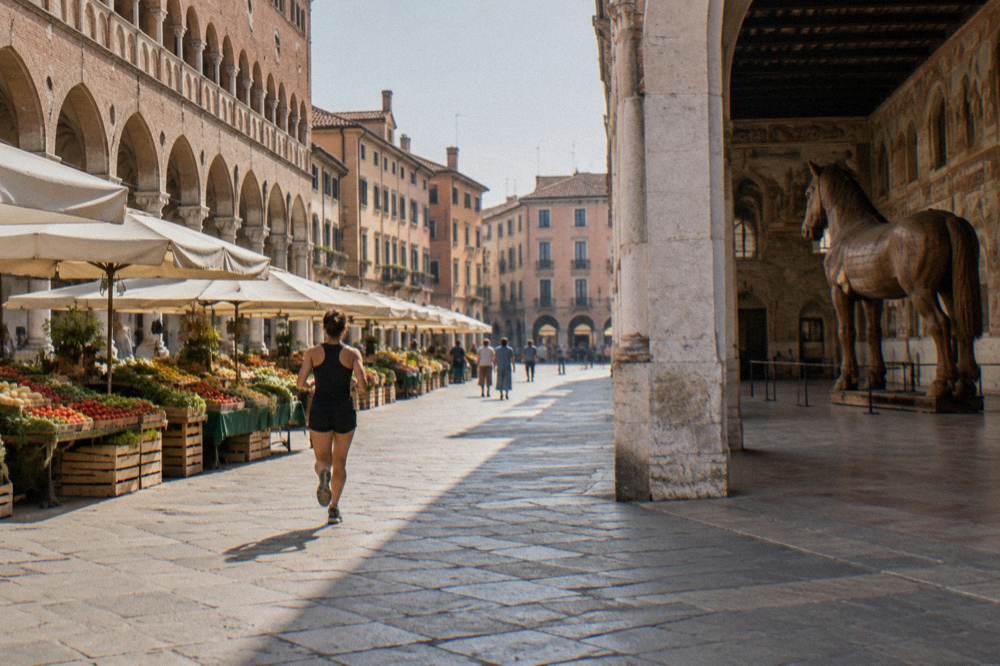
Piazza delle Erbe is the food-shopping centre of Padua's historic core in the mornings, with its 52 stalls of fruit, vegetables and flowers and the permanent covered market of Sotto il Salone next door under the Palazzo della Ragione, and the categories the sources support for buying are the market goods themselves and local food products. No shop, brand or craftsperson in the squares is named in the sources, so this page names none and evaluates none.
What can be said with support is the structure. The morning market supplies fresh produce and flowers on the Comune's listed days and hours. Sotto il Salone, per the tourism board, is the permanent home of local food products, the place where the categories named across the board's food pages, things like bigoli, baccalà, gallina padovana and torta pazientina among the city's standard local mentions, are sold by specialist stalls. The board's recipe pages name three Paduan dishes specifically: risotto ricco alla Padovana, cappone alla canevera and torta pazientina. A visitor assembling a picnic or a food gift works between the open stalls and the covered market, and the arcades around the squares hold further shops whose individual names no source here verifies.
| Where | What the sources list | Source basis |
|---|---|---|
| Piazza delle Erbe stalls | Fruit, vegetables, flowers | Comune di Padova market page |
| Piazza della Frutta | Food and non-food on separate day patterns | Comune di Padova market page |
| Sotto il Salone | Permanent covered market, local food products | Padua tourism board |
| Saturday, Prato della Valle | Plants, flowers, fruit and vegetables, non-food | Comune di Padova market page |
| Third Sunday monthly | Antiques, Prato della Valle and via Umberto I | Comune di Padova market page |
For the guided food angle, the site's Padua food tour overview collects the tasting walks that work the market-to-osteria route, and this page's own roster includes a local-guided audio walk that covers the squares among the city's landmarks, bookable through Check availability on the operator's live listing.
How Does Piazza Dei Signori Differ From The Market Squares In Padua?
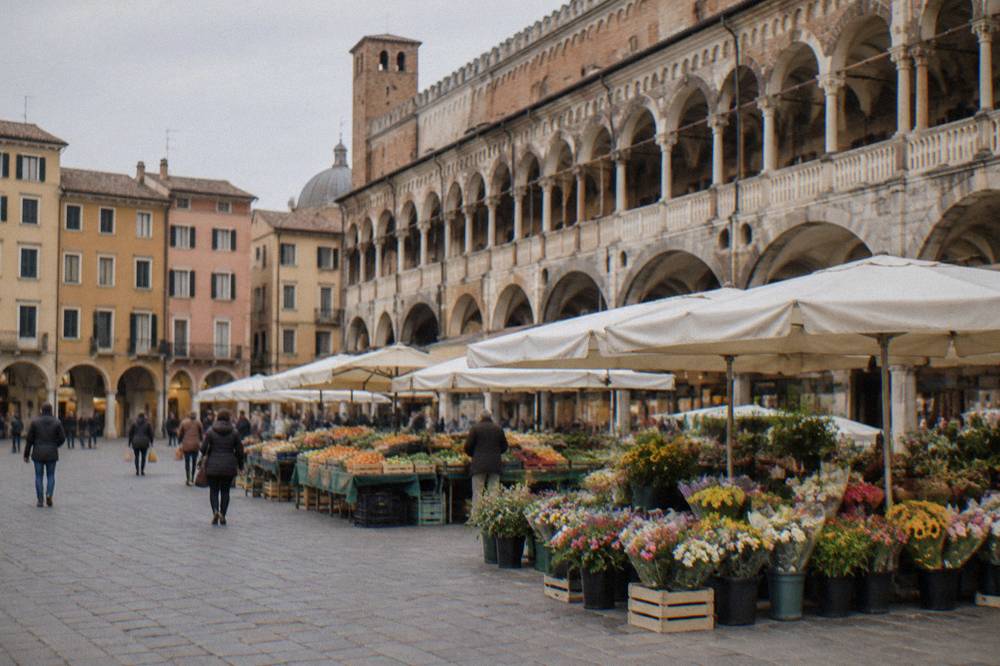
Piazza dei Signori differs from the market squares in function: the Comune's market page lists trading for Piazza delle Erbe and Piazza della Frutta and none for Piazza dei Signori, which is the ceremonial square of the three, holding the Torre dell'Orologio at its west end and framed by the palaces of the city's former rulers, the Carrara lords from 1318 to 1405 and then the Venetian administration from 1405 to 1797. Its present life, per the tourism board, is part of the same evening piazza scene.
The historical sequence comes from the record of the city's rule: the Carraresi held Padua from 1318, Venice took the city in 1405, and the squares divided their labour accordingly, the market on one side of the hall and the seats of power on the other. The Torre dell'Orologio, the gate-tower between the two worlds, is the hinge, and its terrace visits, free with a mandatory booking on set days, are the one way to see the three squares as a single plan from above.
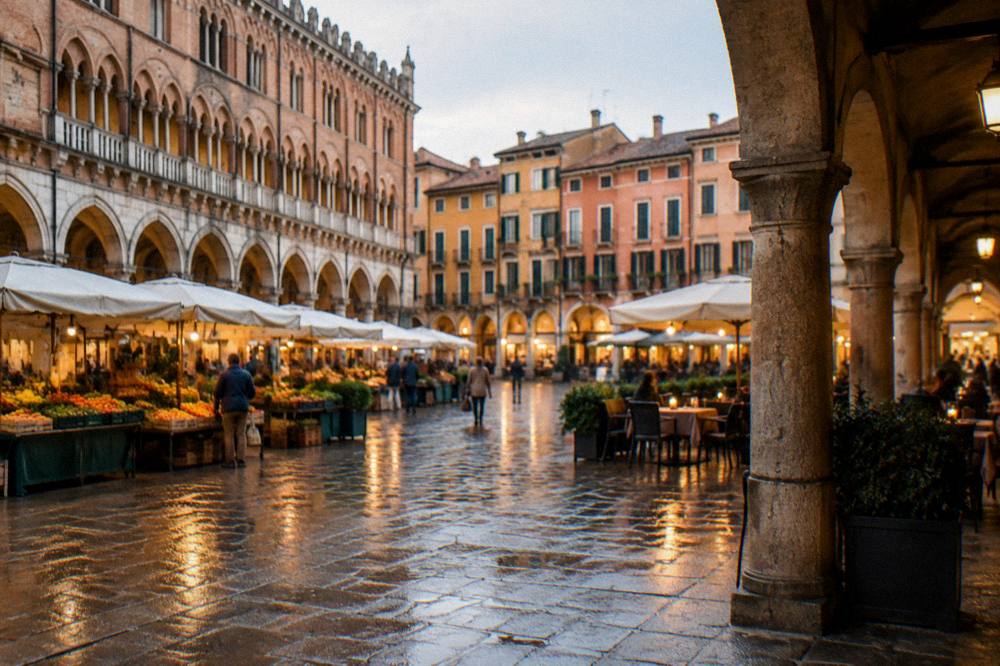
The evening culture is the shared layer. The tourism board's enogastronomia pages place the aperitivo and spritz life in the piazzas, Piazza delle Erbe and Piazza dei Signori together, with the bars and botteghe around them. No hours for that scene are published in the sources, so the practical advice is the simple one: the arcades fill through the early evening, and the square's tables are the place where the day's market and the city's student population, about 76,000 at the university per its own figures, cross paths.
What Should You Know Before Visiting The Squares In Padua?
The practical facts are few and firm: the market hours are the Comune's published ones, the Palazzo della Ragione's reported ticket is EUR 8 full with tickets at the IAT office at Piazza delle Erbe 52, the IAT office at the station runs Monday to Saturday 9:00 to 19:00 and Sundays 10:00 to 16:00, the urban transit ticket is EUR 1.70 for 90 minutes, and the city's tourist tax is collected by the accommodation, capped at five consecutive nights.
The squares themselves are public space with no ticket.
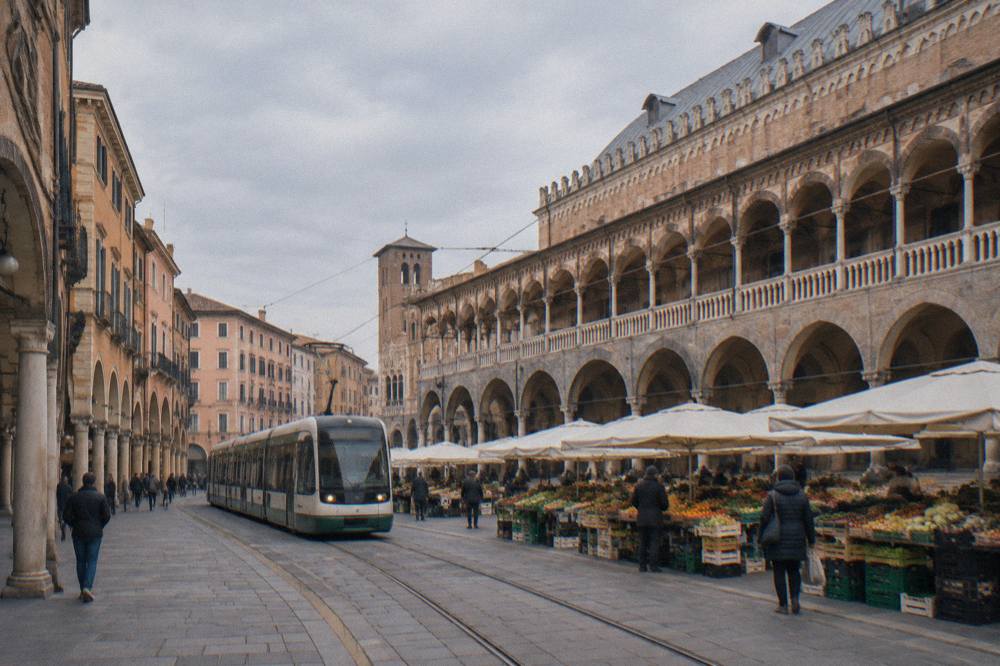
Transit deserves one line of detail. The EUR 1.70 urban ticket covers 90 minutes on the city's buses and the SIR1 tram line, and it can be bought digitally before boarding or paid by tapping a contactless card on board, per the transit operator's own fare page. The tram's second line, SIR3, was in pre-service testing as of the local press reports, with service targeted for the end of 2026, and no opening promise belongs on a planning page until it runs. From the station the squares are a walk into the centre; the station's own IAT office, at the exit of platform 1, is the information point if the route needs confirming.
Two seasonal notes close the practical set. The Padova Marathon on 18 April 2027 starts at the Stadio Euganeo at 8:30 and finishes at Prato della Valle, which places the day's closures and crowds at the far end of the centre from the market squares but on the same axis. And in winter the Saturday market at Prato della Valle keeps hours of 8:00 to 19:00 against the summer 8:00 to 20:00, while the Piazza delle Erbe pattern holds through the year on the Comune's listing.
| Item | Figure | Basis |
|---|---|---|
| Urban transit ticket | EUR 1.70, 90 minutes | Transit operator fare page |
| Airport bus to Venice Marco Polo | EUR 13 one-way, about 45 minutes | Transit operator |
| Palazzo della Ragione | EUR 8 full, EUR 6 concession | Civic museums listing |
| Scrovegni daytime ticket | EUR 15 full plus EUR 1 booking fee | Civic museums price list |
| Tourist tax | Five consecutive nights cap | Comune di Padova |
The Scrovegni figure belongs in the table because a visit to the squares almost always pairs with the chapel, and the pairing needs the booking made ahead: slots run 9:00 to 18:45, advance booking is open through the chapel's own site and call centre, and the 16 to 27 November 2026 closure removes the option entirely for those two weeks. The chapel's site states plainly that same-day online booking does not exist.
How Do The Squares Fit Into A Bigger Padua Plan?
The squares fit a bigger plan as the daily anchor: the market mornings supply the start of each day, the Palazzo della Ragione and the Torre dell'Orologio fill the midday, the arcades carry the evenings, and everything else in Padua, the chapel, the Santo, the Orto Botanico and the university, radiates out from them on foot. Venice sits about 36 km away in a straight line with a reported regional train time of about 26 to 40 minutes, so the coast adds nothing and subtracts little.
The Santo and Prato area pages cover the southern leg of that spine, and the Palazzo della Ragione page carries the hall's own story. North of the squares the cluster changes character: the Scrovegni Chapel, the Chiesa degli Eremitani and the Palazzo Zuckermann share the museums complex whose joint ticket the civic price list describes. Between the two zones stand the Caffe Pedrocchi and the Palazzo del Bo, and beyond them the Basilica of Sant'Antonio and the Orto Botanico, the garden founded in 1545 and inscribed by UNESCO in 1997, close the list of the city's two World Heritage listings together with the fresco cycles of 2021.
For the Christmas season the squares sit inside the city's festive trading, whose exact 2026 dates the Comune leaves to a separate ordinance; the site's Padua Christmas market page tracks what is confirmed and nothing more. A winter visit otherwise follows the same market calendar, with the covered Sotto il Salone carrying the food trading regardless of weather and the ERA5 normals, 1991-2020, giving December a mean high of 7.8 C and November the year's heaviest rainfall at 114.0 mm.
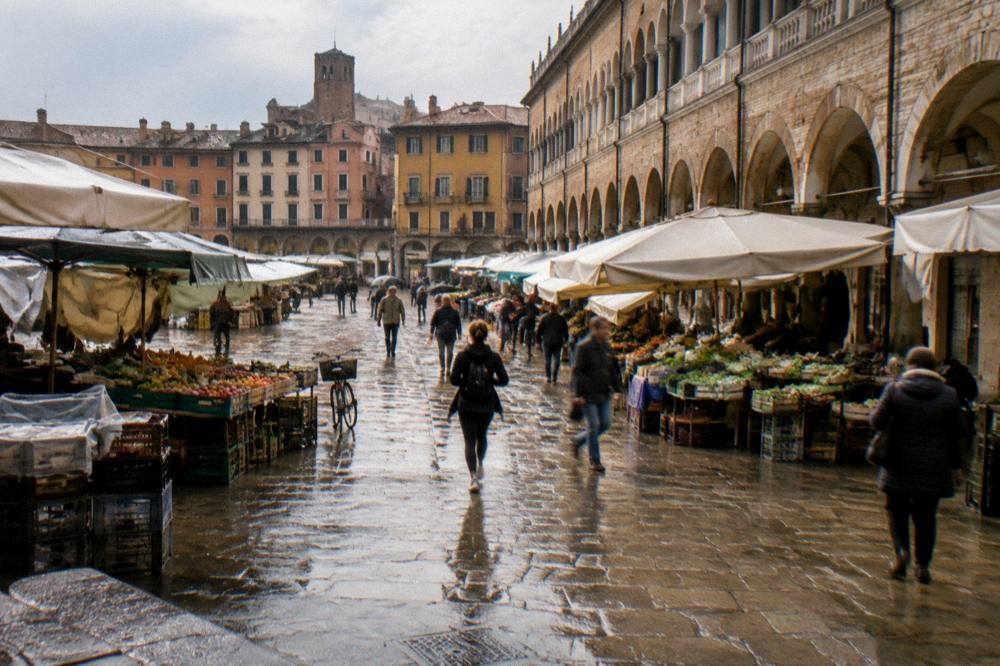
The three squares reward the unhurried approach the sources describe: a morning among the 52 stalls, the hall and its frescoes at midday, the covered market for the food to carry away, and the arcades in the evening with the spritz that Padua can claim a share of, Aperol having been created in the city in 1919. The Prato della Valle page and the Torre dell'Orologio page carry the two ends of the walk, and the Padua Travel Guide holds the rest of the city between them.
Common Questions About The Piazza Delle Erbe In Padua
When is the Piazza delle Erbe market open in Padua?
The Comune di Padova lists the Piazza delle Erbe market, 52 stalls of mostly fruit, vegetables and flowers, from Monday to Friday 7:30 to 13:30 and on Saturday 7:30 to 20:00.
What is the difference between Piazza delle Erbe and Piazza della Frutta?
Piazza delle Erbe trades mainly fruit, vegetables and flowers on the weekday pattern above; Piazza della Frutta has separate food trading (Mon to Wed 8:00 to 14:00, Thu to Sat 8:00 to 19:00) and non-food trading (Tue to Fri 8:00 to 14:00, Sat 8:00 to 19:00), all per the Comune's market page.
What is Sotto il Salone?
Sotto il Salone is the permanent covered market of local food products under the Palazzo della Ragione, described by the Padua tourism board as the city's historic covered market between the two market squares.
How much does the Palazzo della Ragione cost?
The civic museums' listing reports EUR 8 full and EUR 6 concession, Tuesday to Sunday 9:00 to 19:00, with tickets sold at the IAT office at Piazza delle Erbe 52. Confirm at the ticket office before visiting.
Can you visit the Torre dell'Orologio in Padua?
The civic museums' listing reports free visits with a mandatory booking on set days, Wednesday, Friday and Saturday, arranged through the Legambiente Salvalarte contact.
Is Piazza dei Signori also a market square?
No. The Comune's market page lists trading for Piazza delle Erbe, Piazza della Frutta and Prato della Valle on Saturdays, and none for Piazza dei Signori, which is the ceremonial square of the three.