Torre Dell'orologio: The Astronomical Clock On Piazza Dei Signori
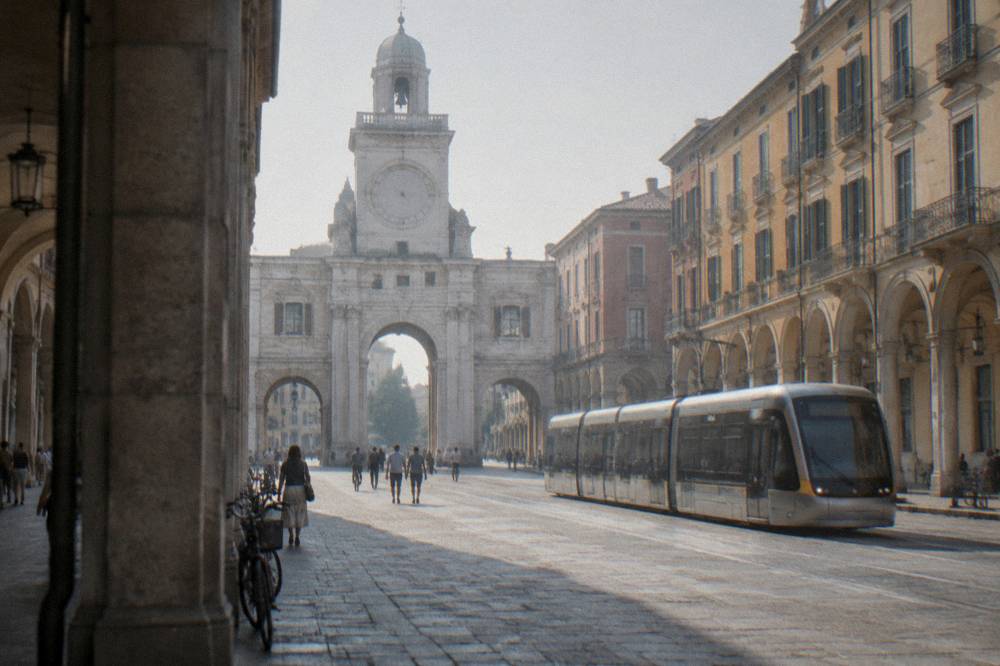
The Torre dell'Orologio stands over Piazza dei Signori in the centre of Padua, a city in the Veneto about 36 km inland from Venice, and entry is free with a mandatory booking on set days.
Short answer
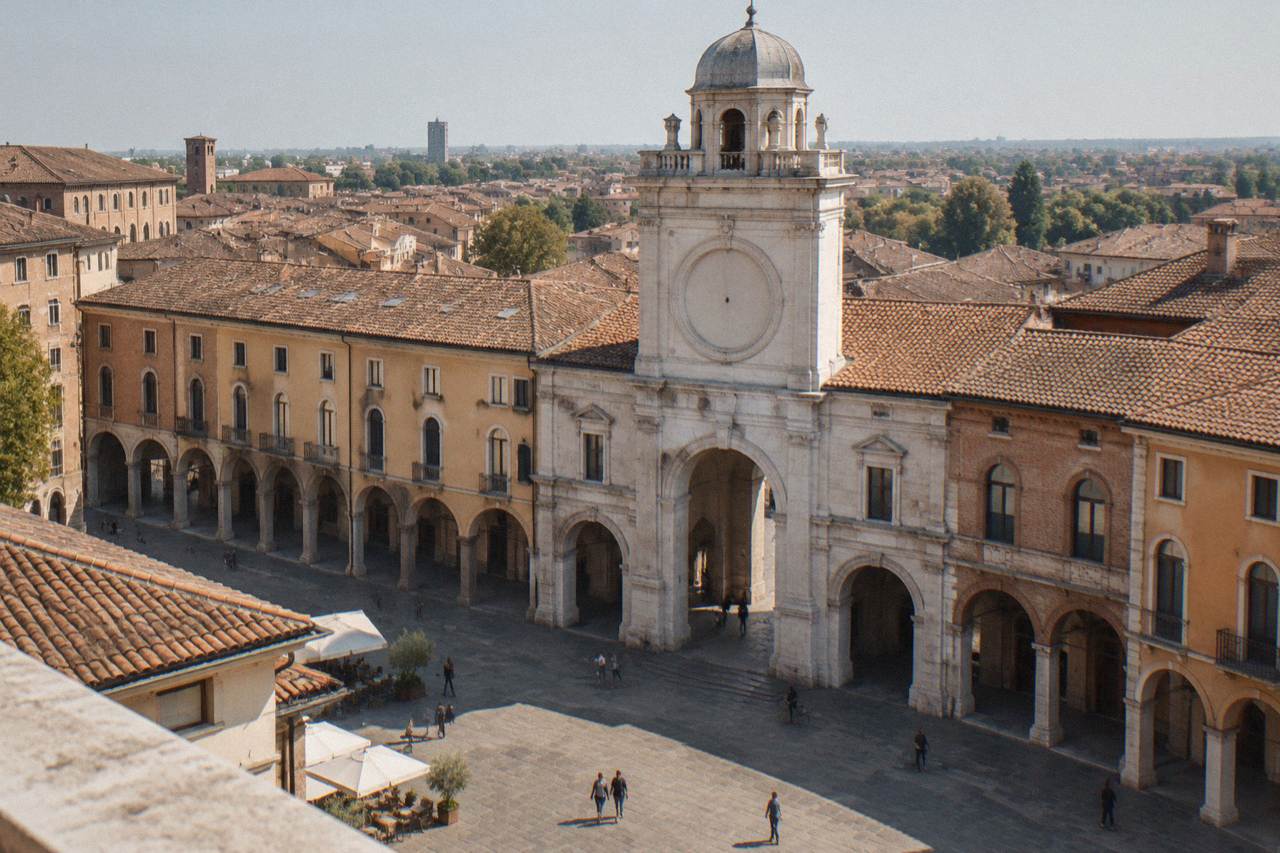
The Torre dell'Orologio is the astronomical clock tower on Piazza dei Signori in Padua, in the Veneto, northern Italy. Visits are free but must be booked, and they run only on set days organised through Legambiente Salvalarte, so the tower works best as a short stop combined with Palazzo della Ragione, the Piazza delle Erbe market and the rest of the historic centre.
The Torre dell'Orologio rises over Piazza dei Signori in Padua (Italian: Padova), an inland city in the Veneto, northern Italy, about 36 km in a straight line from Venice and famous for Giotto's frescoes in the Scrovegni Chapel, the Basilica of Saint Anthony and the Orto Botanico. The tower is the square's vertical landmark, and its clock face has long been the reference point for the civic time of a city built around markets, university lectures and church bells. Visiting it takes planning: per the padovamusei listings, entry is free but only with a mandatory booking, and visits run on set days organised through Legambiente Salvalarte. This guide sets out what the sources say about the tower, the square it anchors, and everything worth pairing with it within a few minutes' walk.
What Is The Torre Dell'Orologio In Padua?
The Torre dell'Orologio is the astronomical clock tower that faces onto Piazza dei Signori, the historic civic square of Padua in the Veneto, and it is one of the few Paduan landmarks that can be visited free of charge, though only with a booking made in advance and only on set days, per the padovamusei listings, which route requests through Legambiente Salvalarte. No other access route appears in the sources.
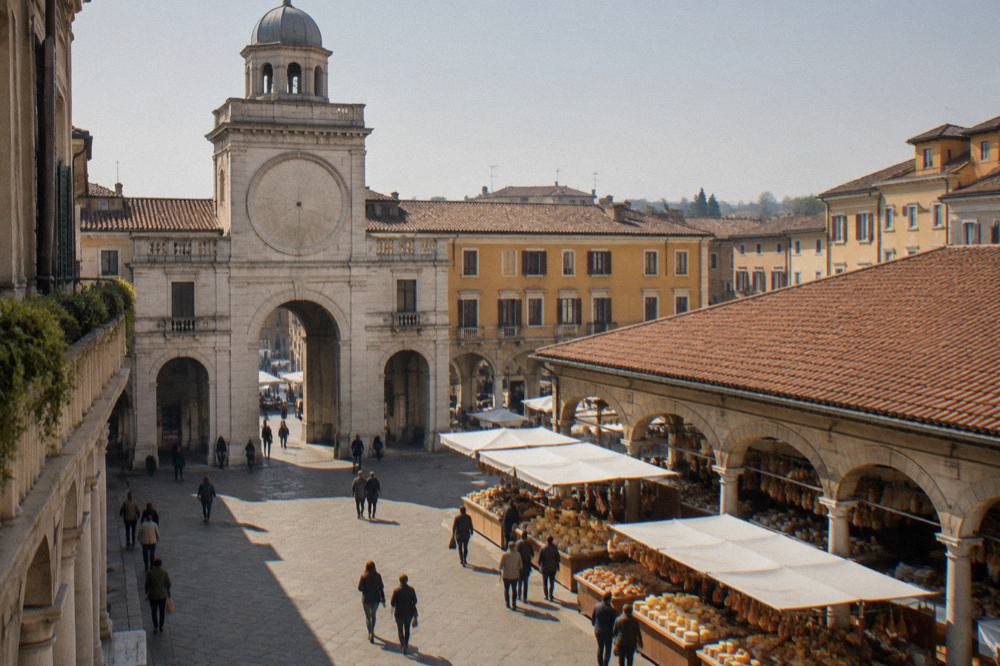
An astronomical clock, in the general sense of the term, is a clock that does more than count the hours: it displays astronomical information such as the phase of the moon and the position of the sun in the zodiac alongside the time of day. Padua's tower belongs to a family of such clocks found across the old cities of northern Italy, where municipal timekeeping and celestial display were built into the fabric of the main square rather than kept in an instrument case. The tower is part of the streetscape of Piazza dei Signori, the square that served the city's government under Venetian rule from 1405 to 1797, close by the Palazzo della Ragione and the daily market squares of Piazza delle Erbe and Piazza della Frutta.
What the listings give, plainly, is this: the visit is free, the booking is mandatory, and the days are fixed, with Wednesdays, Fridays and Saturdays the days named in the padovamusei information. There is nothing to pay at the door and no ticket tier, which makes the tower unusual among Padua's sights, where the Scrovegni Chapel costs EUR 15 full price with timed entry and the Orto Botanico rose to EUR 15 full from 1 September 2026. The practical consequence is that the tower cannot be treated as a drop-in stop: a traveller who wants to stand beside the clockwork needs to arrange the visit before the day, or be content to admire the tower from the square below.
The contact point for bookings, per the listings, is Legambiente Salvalarte, the heritage volunteering arm of the environmental association Legambiente, at salvalarte@legambientepadova.it. That arrangement is itself worth knowing: the tower's openings depend on volunteer guides, which is why they run on set days rather than a continuous schedule. Ask in writing, state the date and the size of the group, and allow time for a reply.
Where Does The Torre Dell'Orologio Stand In Padua?
The tower stands on Piazza dei Signori, the former square of government of Padua, a short walk from Piazza delle Erbe, the Palazzo della Ragione and the Caffè Pedrocchi, all inside the historic centre of the city, which is compact enough that the whole cluster of squares and market streets is covered on foot. The Scrovegni Chapel and the Basilica of Saint Anthony sit a little further out, at opposite edges of the centre.
Piazza dei Signori is the civic counterweight to the market squares. Where Piazza delle Erbe and Piazza della Frutta host the daily stalls, Piazza dei Signori was the square of authority, bounded by the buildings of the city's government during the centuries of Venetian rule from 1405 to 1797. The tower's clock face looks over this ensemble, and the Palazzo della Ragione, the great covered hall whose upper floor was the seat of the courts and whose ground level houses Sotto il Salone, the permanent covered market, stands at the head of the adjoining market squares.
For orientation, the useful landmarks are these. The Piazza delle Erbe market, with its 52 stalls of fruit, vegetables and flowers, runs Monday to Friday 7:30 to 13:30 and Saturday 7:30 to 20:00, per the Comune di Padova's markets page. The IAT tourist office at Piazza delle Erbe 52 sells the tickets for the Palazzo della Ragione, which per the padovamusei listings is open Tuesday to Sunday 9:00 to 19:00 at EUR 8 full price and EUR 6 concessions, a figure to confirm at the ticket office. The Caffè Pedrocchi, opened in 1831, sits two streets north. A route that strings these together passes the tower whether or not a booked visit is secured.
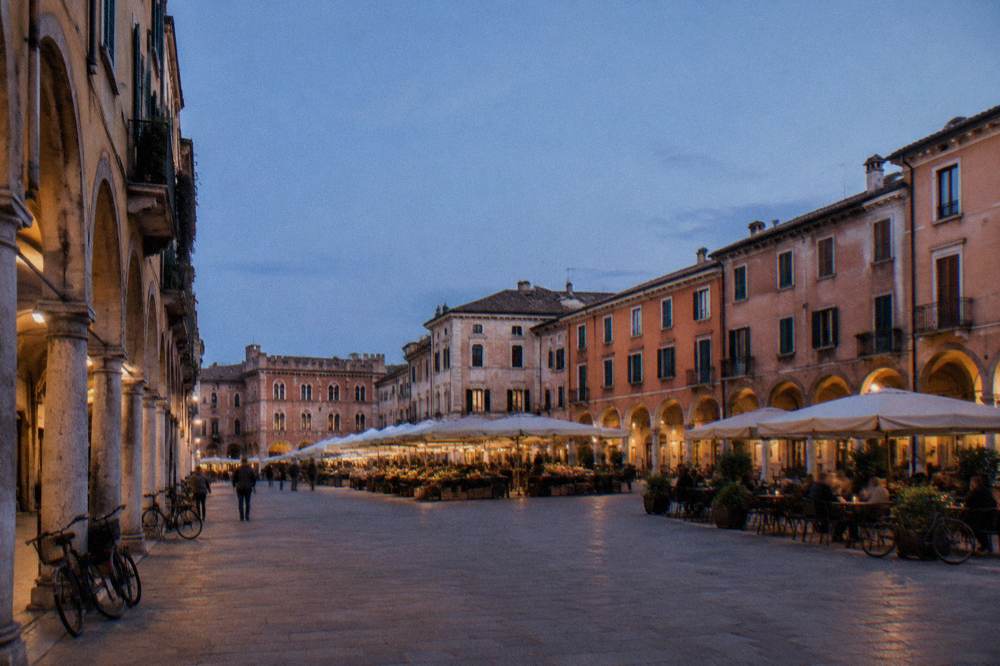
The square also carries a share of Padua's evening life. The city's tourism pages describe the piazzas around Erbe and Signori as the heart of the evening aperitivo scene, with spritz culture central to it, and Aperol itself was created in Padua in 1919 by the Barbieri brothers, per the brand histories. The tower is therefore not just a daytime monument: it is the fixed backdrop to the square at the hours when the tables fill.
How Do You Book A Visit To The Torre Dell'Orologio?
Booking is by email to Legambiente Salvalarte's Padua address, salvalarte@legambientepadova.it, and the visit itself is free, per the padovamusei listings, which name set days for openings reported as Wednesdays, Fridays and Saturdays. There is no online booking system for the tower and no same-day option described anywhere in the sources, so the email has to go out ahead of the trip.
Write in Italian or English, give the preferred date, the number of visitors and a contact, and keep the reply as the confirmation. The volunteer structure behind the openings means the schedule follows the association's calendar rather than a fixed published grid, and a day that suits one week may not run the next. Confirm the meeting point and the start time in the exchange, since the sources give no fixed details of either, and plan the rest of the day around the answer rather than the reverse.
This is different from Padua's other booked sight. The Scrovegni Chapel, a 15-minute walk to the north-west, is timed entry only: at most 25 people every 15 minutes, about 15 minutes inside after a wait in the climate-controlled waiting room, with visitors asked to arrive 5 minutes before the slot shown on the ticket, and latecomers refused re-entry without a new paid booking, per the chapel's own visiting page. Slots are bookable ahead through the chapel's own site and call centre, at EUR 15 full price plus a EUR 1 booking fee for the chapel, and the daytime ticket also covers the Musei Civici Eremitani and Palazzo Zuckermann. The chapel is closed 16 to 27 November 2026 for the annual fresco inspection. A day combining the tower and the chapel therefore needs two separate bookings made weeks apart in urgency: the chapel first, because its slots sell ahead, and the tower second, around whatever the chapel slot allows.
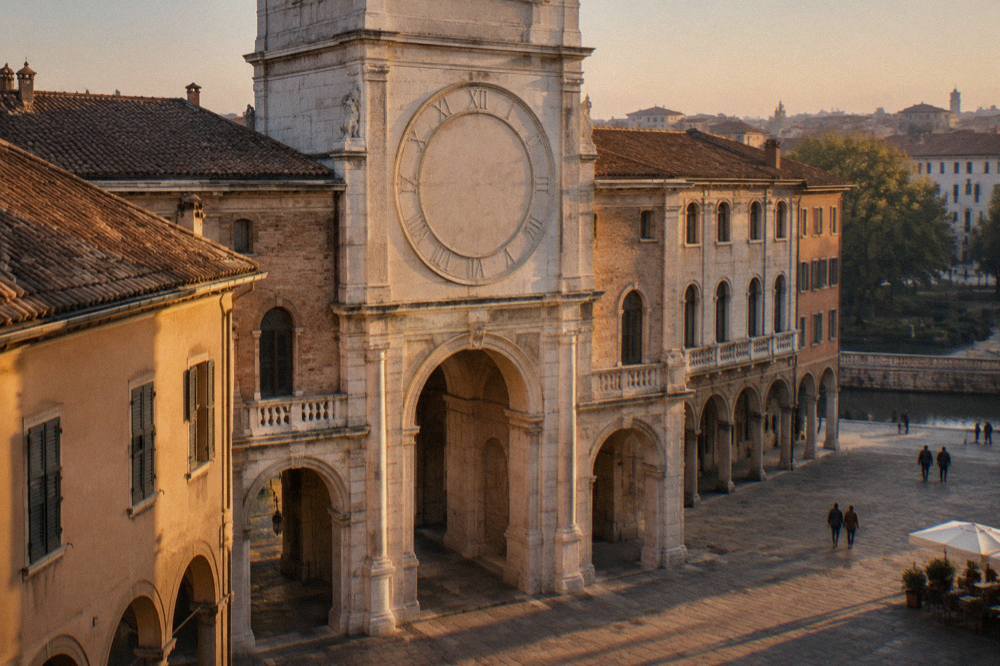
The table below pulls together what the listings say about the sights within a short walk of the tower, so the cost of the day around the free visit can be planned at a glance.
| Sight | Entry price | Notes from the listings |
|---|---|---|
| Torre dell'Orologio | Free | Mandatory booking, set days via Legambiente Salvalarte |
| Palazzo della Ragione | EUR 8 full, EUR 6 concessions | Tickets at IAT Piazza delle Erbe 52, Tue to Sun 9:00 to 19:00 |
| Scrovegni Chapel (daytime) | EUR 15 full, EUR 11 reduced, + EUR 1 booking | Includes Musei Civici Eremitani and Palazzo Zuckermann |
| Musei Civici Eremitani (musei only) | EUR 11 full, EUR 9 reduced | Mon to Sun 9:00 to 19:00 |
| Palazzo Zuckermann | Included with chapel ticket | Tue to Sun 10:00 to 19:00 |
What Does The Astronomical Clock Of Padua Actually Show?
The sources available for this page describe the Torre dell'Orologio as Padua's astronomical clock tower on Piazza dei Signori, free to visit by booking, but they give no breakdown of its dials, its mechanism or its display of lunar and zodiac information, so this guide will not invent one. What can be said with confidence is the general definition: an astronomical clock shows celestial cycles such as moon phases alongside the hour, and Padua's tower belongs to that tradition of public timekeeping.
That restraint matters, because clock towers attract stories. Travellers' pages fill with claims about who built which mechanism, when the dial was repainted and what each ring of symbols encodes, and almost none of it can be checked against a primary source from an armchair. The honest position for a visitor is simpler and better: the tower is a working piece of the square, its bookings run through Legambiente Salvalarte, and the visit itself, standing inside the tower with the person who opens it, is where the mechanism questions get answered by someone with the keys. Bring the questions, in other words, rather than the answers.
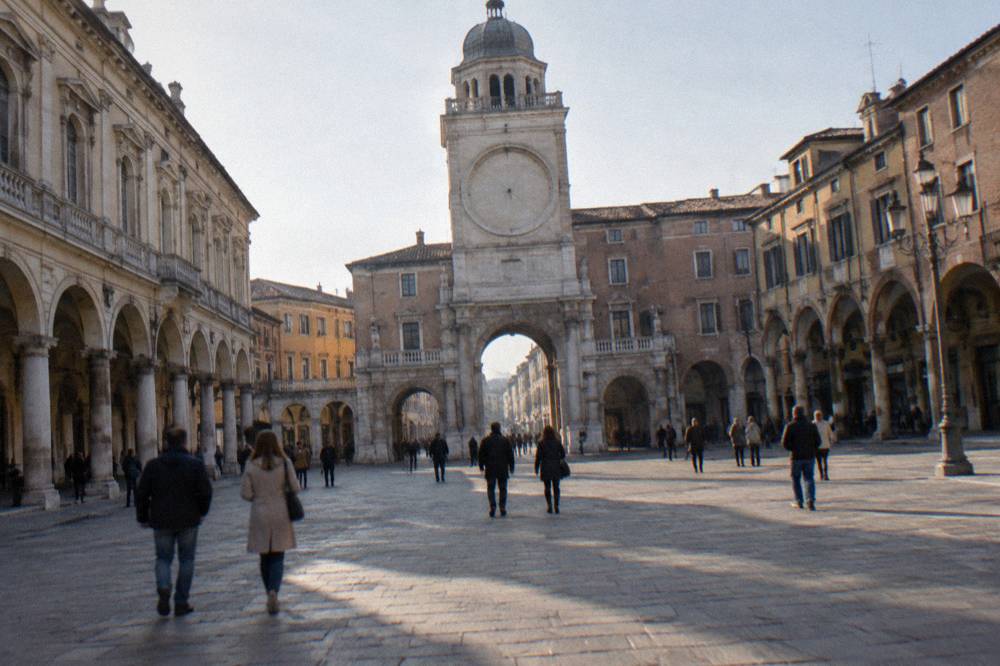
What the surrounding records do establish is the deep institutional context. Padua's university, among the oldest in the world in its own words, was founded in 1222, and the city's scientific tradition runs from Galileo's chair of mathematics, held from 1592 to 1610, to Elena Lucrezia Cornaro Piscopia, awarded her doctorate in philosophy on 25 June 1678 as the first woman university graduate in recorded history, and the anatomical theatre of 1594 in the Palazzo del Bo. A city that measured the sky with Galileo and opened its bodies to public dissection is exactly the kind of city that would keep an astronomical clock in its main square, and the tower reads best as part of that story rather than as an isolated curiosity. The Palazzo del Bo's guided historical tour, at EUR 10 full price per the university's own page, covers Galileo's chair in the Sala dei Quaranta and the anatomical theatre, and pairs naturally with a clock-tower visit for a day of Paduan science.
How Does The Torre Dell'Orologio Fit Into One Day In Padua?
A sensible day anchors on the tower's square: book the tower for one of its set days, put the Scrovegni Chapel slot first in the morning, then work south and east through the Palazzo della Ragione, the Piazza delle Erbe market, the Caffè Pedrocchi and, on the far side of the centre, the Basilica of Saint Anthony and Prato della Valle, all reachable on foot inside the compact historic centre.
The order below is built around the fixed bookings rather than geography alone, because in Padua the timed entries dictate the shape of the day.
| Stop | Booking needed | Time to allow |
|---|---|---|
| Scrovegni Chapel | Yes, timed, in advance | About 15 minutes inside, arrive 5 minutes early |
| Musei Civici Eremitani | No, included with chapel ticket | 1 hour |
| Piazza dei Signori and the Torre dell'Orologio | Yes, free booking, set days | 30 minutes plus the square |
| Palazzo della Ragione and Sotto il Salone | Ticket at IAT Erbe 52 | 1 hour |
| Basilica of Saint Anthony | No, free entry | 45 minutes |
| Prato della Valle | No | 30 minutes |
The morning belongs to the chapel, whose slots run 9:00 to 18:45 with the last entry at 18:45, and whose evening programme, Giotto sotto le stelle, runs 25 March to 1 November, 19:00 to 22:00 every 20 minutes, chapel only. The daytime route then leads south-east through the Eremitani complex toward the market squares. Piazza delle Erbe and Piazza della Frutta sit together, with the Palazzo della Ragione between them, and Piazza dei Signori opens off the same knot of streets, so the tower needs no detour: it stands in the path. The Saturday version adds the Prato della Valle market, which the Comune's page lists at 8:00 to 20:00 in summer and 8:00 to 19:00 in winter, plus the antiques market at Prato della Valle and via Umberto I every third Sunday of the month.
The afternoon runs south. The Basilica of Saint Anthony, begun in 1232 a year after the Saint's death on 13 June 1231, keeps his tomb and the Chapel of the Relics, and entry is free, per the Urbs Picta visiting information. Donatello's equestrian Gattamelata statue stands in the piazza outside. Prato della Valle lies a few minutes further, a square ringed by a canal with a double ring of numbered statues of famous people, declared communal space by the Venetian Senate in 1767. For a structured version of the same route, the site's one day in Padua itinerary works through the same sequence, and the Padua walking tour guide covers how the distances break down on foot.
Two Paduan traps are worth restating for anyone planning this day. The Scrovegni Chapel has no same-day online booking: per the chapel's own page, visitors without a booking should check availability at the museum ticket office in person. And the Venice day-tripper access fee, which a 2026 trial charged on set spring and summer days, ended on 27 July 2026, per Venezia Unica, with no 2027 decision published, so a Padua-based day trip to Venice does not carry that charge on current information.
How Much Does A Day Around The Torre Dell'Orologio Cost?
The tower itself costs nothing, the Palazzo della Ragione is reported at EUR 8 full, and the Scrovegni Chapel and Orto Botanico each cost EUR 15 full, so a full sightseeing day in Padua runs at EUR 38 per adult at full price for those three entries, before food, with the Basilica of Saint Anthony and Prato della Valle free additions that pull the average down. The figures come from the museums' and garden's own price pages.
Reductions shift the arithmetic considerably. The chapel's reduced ticket is EUR 11 and residents of Padua pay EUR 5, per the museums' price list, with a family card at EUR 30 covering up to two adults and two under-18s. The Orto Botanico, the botanical garden founded in 1545 and inscribed by UNESCO in 1997, charges EUR 15 full for visitors aged 26 to 64 and EUR 10 for those 65 and over, with winter rates of EUR 12 and EUR 8 for November to February, from the tariffs that took effect on 1 September 2026. The Palazzo del Bo tour runs EUR 10 full, EUR 8 reduced and EUR 6 for visitors aged 6 to 25. Anyone under 26 or over 65 should read the reduced rows of every price table before booking, because the concessions are not interchangeable between sights. Other pages covering the same trip are gathered on Padua Travel Guide.
| Sight | Full price | Reduced | Source line |
|---|---|---|---|
| Scrovegni Chapel, museums included | EUR 15 (+ EUR 1 booking) | EUR 11, residents EUR 5 | padovamusei price list |
| Orto Botanico | EUR 15 (EUR 12 winter) | EUR 10 over 65 (EUR 8 winter) | Garden tariffs from 1 Sept 2026 |
| Palazzo della Ragione | EUR 8 | EUR 6 | Reported, padovamusei, confirm at IAT |
| Palazzo del Bo tour | EUR 10 | EUR 8 / EUR 6 | University booking page |
| Torre dell'Orologio | Free | Booking mandatory | padovamusei listings |
One extra line belongs on every Padua budget: the tourist tax, the imposta di soggiorno, collected by the accommodation, charged per person per night for at most five consecutive nights, with under-16s and hostel guests exempt, per the Comune di Padova's tax page. The per-night rates vary by category of accommodation and are best confirmed with the hotel at booking.
How Do You Get To Piazza Dei Signori In Padua?
Piazza dei Signori sits in the pedestrian-scale historic centre of Padua, roughly a 10 to 15 minute flat walk from Padova train station via the listone arcaded streets, or two stops on tram line SIR1 toward the centre, with the urban 90-minute ticket costing EUR 1.70 or a tap of a contactless card on board, per Busitalia's fare page. The square itself is closed to through traffic as part of the old-centre street pattern.
The airport question answers itself easily: the Busitalia coach between Venice Marco Polo airport and Padova costs EUR 13 one-way for an adult, EUR 6.50 for a child up to 11, runs every 40 minutes from early morning to late evening and takes about 45 minutes, per the operator's airport page. From the station, the walk passes the Scalzi church and enters the centre through the porticoed streets that give Padua its covered character; the Padua train station pages carry the fuller routes. For luggage, the station's left-luggage office at platform 1 is open daily 6:00 to 20:00 at EUR 5 per 6 hours, per the tourism office's listing.
Regional trains make the city a comfortable base. From Padova station, Venice Santa Lucia is about 26 to 40 minutes away by regional train for about EUR 5, Vicenza is 16 to 25 minutes for about EUR 6, Verona 43 to 60 minutes and Treviso 28 to 60 minutes, per the timetable aggregators, figures to confirm on the operator's own site before travelling. Day trips further afield are covered below.
When Is The Best Time To Visit The Torre Dell'Orologio?
Bookings for the tower run on set days through Legambiente Salvalarte, so the calendar of the association decides the when, while the weather statistics favour late spring and early autumn: the ERA5 reanalysis for Padua, 1991-2020, shows July and August mean daily highs of 28.8 C, January mean lows averaging -0.2 C, and November the month with the highest rain total at 114 mm.
The monthly picture, from the same reanalysis grid, lets a traveller weigh heat against rain directly.
| Month | Mean high C | Mean low C | Rain mm |
|---|---|---|---|
| April | 17.6 | 7.8 | 84.4 |
| July | 28.8 | 18.9 | 62.1 |
| September | 23.6 | 14.9 | 105.5 |
| November | 12.6 | 5.5 | 114.0 |
Two calendar facts matter beyond the weather. The Scrovegni Chapel closes 16 to 27 November 2026 for the annual fresco inspection, so a November trip built around the tower and the chapel together has to avoid that fortnight. And the city's event calendar changes the character of the squares: the Tredicina, the thirteen days before the feast of Saint Anthony on 13 June, ran 31 May to 12 June in 2026, and the Saturday markets and the third-Sunday antiques market at Prato della Valle add their own rhythm, per the Comune's pages.
What Day Trips Work From The Torre Dell'Orologio's Square?
Padua's position in the Veneto puts the Euganean Hills, the Brenta Riviera villas, Vicenza, Venice and Verona within a day trip by train or coach, with regional fares of about EUR 5 to Venice and about EUR 6 to Vicenza per the timetable aggregators, and entry prices at the destinations themselves published by their own sites: Teatro Olimpico in Vicenza at EUR 12 full, Villa dei Vescovi at EUR 11 and Casa del Petrarca at Arqua Petrarca at EUR 6.
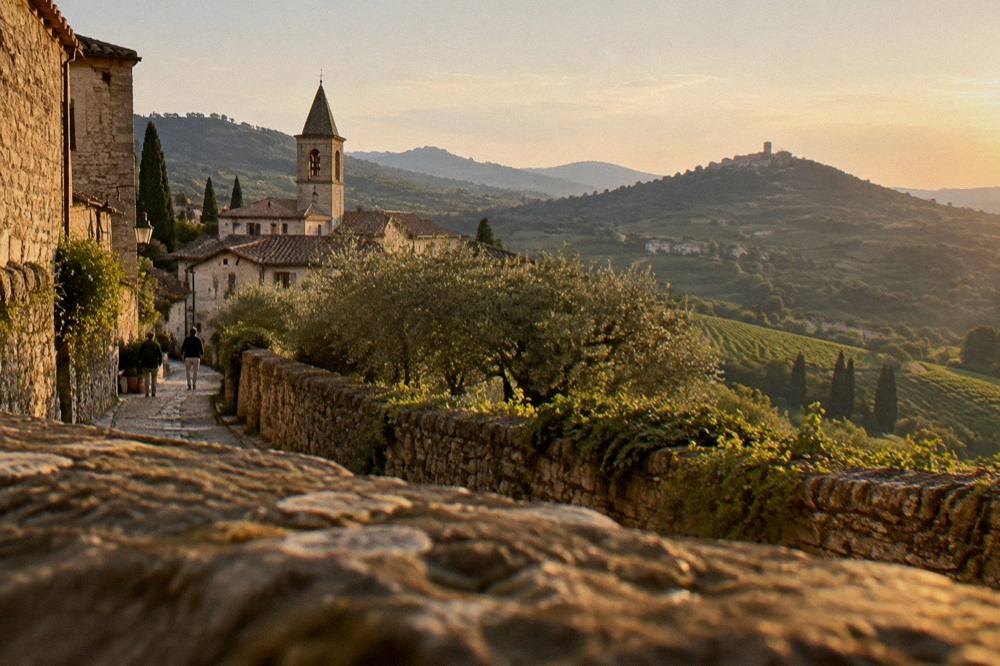
The straight-line distances, computed from the map data, set the frame: Venice 36 km, Vicenza 30, Verona 69, Abano Terme 8, Montegrotto Terme 11, Villa Pisani 11, Arqua Petrarca 20, Monselice 21, Este 26. The hills wine country begins almost at the city edge, and a half-day among the Euganean Hill wineries needs no train at all.
| Destination | Entry at the sight | Straight-line distance from Padua |
|---|---|---|
| Vicenza, Teatro Olimpico | EUR 12 full, EUR 9 reduced | 30 km |
| Villa dei Vescovi (FAI) | EUR 11 adult, EUR 6 ages 6 to 18 | 11 km approx. to the hills |
| Casa del Petrarca, Arqua Petrarca | EUR 6 full, EUR 4 reduced | 20 km |
| Venice | No access fee in force after 27 July 2026 | 36 km |
For the Venice day trip specifically, the 2026 trial of the day-tripper access fee ended on 27 July 2026, per Venezia Unica, and no 2027 decision had been announced, so a Padua-based visitor travels on ordinary train tickets on current information. The regional run takes about 26 to 40 minutes each way, which makes an evening spritz in Piazza dei Signori after a Venice afternoon entirely practical.
What Else Should You Know Before Visiting The Torre Dell'Orologio?
The tower visit needs a booked slot through salvalarte@legambientepadova.it on set days, the surrounding sights carry their own separate bookings and prices, and the two details that catch out travellers are the Scrovegni Chapel's timed-entry regime with its 16 to 27 November 2026 closure and the fact that Padua is an inland city, about 36 km from Venice, whose own sights, food and markets justify the stop rather than a quick pass through.
Practicalities, in short form. The IAT tourist offices are at the station, at the exit of platform 1, Monday to Saturday 9:00 to 19:00 and Sunday 10:00 to 16:00, and in the centre at Piazza delle Erbe 52, open daily 9:00 to 19:00, closed 25 and 26 December and 1 January, per the tourism office's page. Tap water is safe citywide on the municipal supply. The emergency number is 112. Free municipal Wi-Fi, PADOVAweb, covers the piazzas without registration, per the city's networks page. For food, the sources name the city's registered dishes, risotto ricco alla Padovana, cappone alla canevera and torta pazientina, and the Sotto il Salone market under the Palazzo della Ragione for local products; the site's Padua spritz guide covers the spritz tradition and the Piazza delle Erbe guide the market squares in detail.
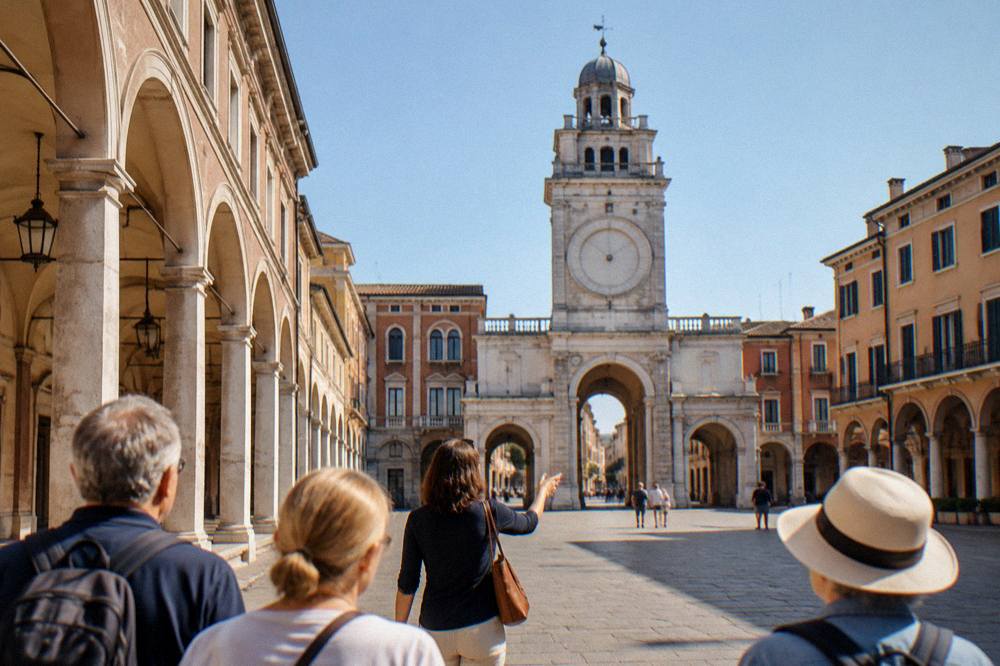
A guided walk frames all of this efficiently, and the private city walking tour with a Scrovegni Chapel visit is the related tour this site features for the historic centre; Check availability if a guided frame for the squares appeals.
What Do Reviews And Listings Say About Guided Options Around The Tower?
Padua's guided walks cluster on the historic centre and the chapel rather than the tower alone, and this site's roster includes a private walking tour of the city with the Scrovegni Chapel, a local-led walk of the historic centre, a food tour from the market to an osteria, and a small-group walk with chapel admission, each carrying its own price, rating and duration on the operator's live listing rather than in prose.
The choice is really about what the day is for. A traveller whose day is built around art takes a chapel-centred walk; one whose day is built around the squares and the market takes the local-led version; one who wants the food of the market halls takes the market-to-osteria tour. The site carries a full page for each, including the Padua walking tour profile and the things to do in Padua round-up, and the trio below renders the current details for the three this page recommends.
Common Questions About The Torre Dell'Orologio In Padua
Is the Torre dell'Orologio in Padua free to visit?
Yes, entry is free, but a booking is mandatory and visits run only on set days, per the padovamusei listings, with requests routed to Legambiente Salvalarte at salvalarte@legambientepadova.it.
How do you book the Torre dell'Orologio in Padua?
Email salvalarte@legambientepadova.it with your preferred date, group size and a contact, and keep the reply as confirmation. The openings are reported to run on Wednesdays, Fridays and Saturdays, so confirm the exact day and time in the exchange.
Where is the Torre dell'Orologio in Padua?
On Piazza dei Signori, the historic civic square of Padua, a few steps from the Palazzo della Ragione and the Piazza delle Erbe market, inside the walkable historic centre of the city in the Veneto.
What is an astronomical clock?
A clock that displays astronomical information, such as the phase of the moon and the sun's position in the zodiac, alongside the time of day. Padua's tower belongs to the tradition of public astronomical timekeeping found across the old cities of northern Italy.
Can you visit the Torre dell'Orologio and the Scrovegni Chapel on the same day?
Yes, the chapel is about a 15-minute walk from Piazza dei Signori. Book the chapel's timed slot first, since entry is capped at 25 people every 15 minutes and same-day online booking does not exist, then arrange the tower's free booked visit around it.
How far is the Torre dell'Orologio from Venice?
Padua lies about 36 km in a straight line from Venice, and the regional train between Padova and Venezia Santa Lucia takes about 26 to 40 minutes, so the tower's square works as a base for a Venice day trip.
The Torre dell'Orologio rewards exactly the kind of traveller Padua suits: someone willing to send one email, walk one square slowly and read one price list carefully, in a city where the university's clock has been keeping time since long before anyone now living sent their first booking request.
