Spritz In Padua: Aperol's Hometown And The Piazza Ritual
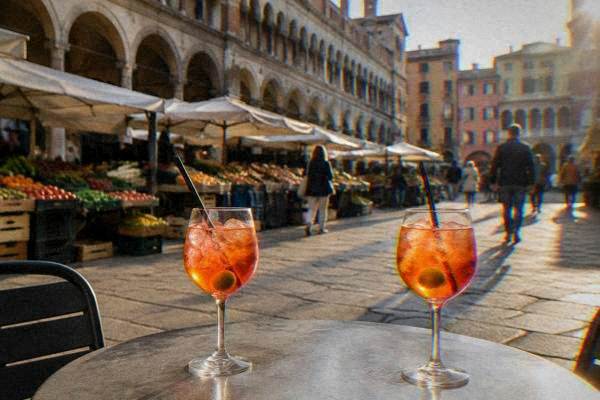
Padua, an inland city in the Veneto about 36 km in a straight line from Venice, is where Aperol was created in 1919, and the evening spritz ritual in its medieval squares is one of the city's defining pleasures.
Short answer
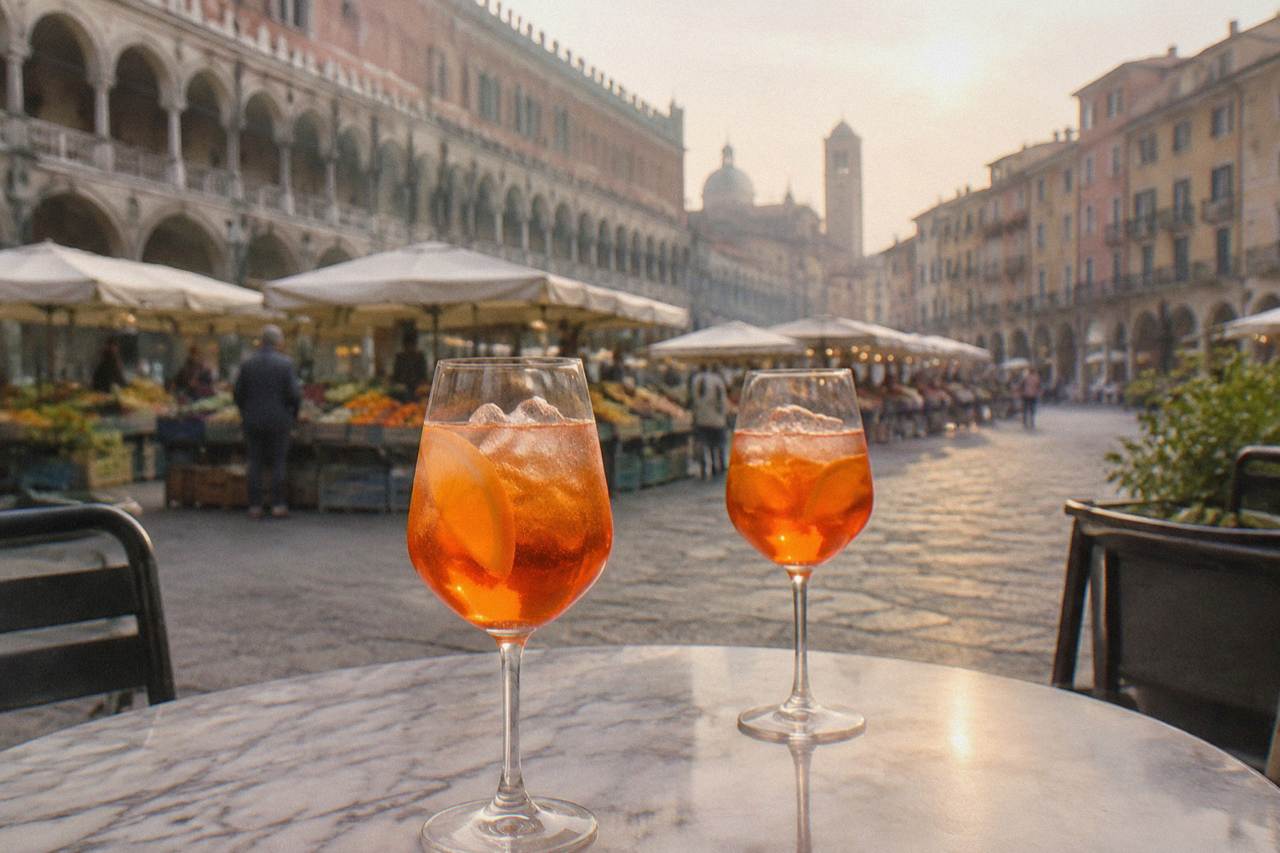
The spritz is Padua's signature evening drink: Aperol was created and first presented in the city in 1919 by the Barbieri brothers, and the aperitivo ritual concentrates around Piazza delle Erbe and Piazza dei Signori, where bars serve the orange drink through the early evening.
Padua, in the Veneto region of northern Italy, is the city where Aperol was created. The Barbieri brothers presented the orange aperitivo liqueur at the Padua fair in 1919, and the drink that became the Aperol Spritz spread outward from there across the Veneto and eventually the world. In Padua itself the spritz never left: it remains the fixed point of the early evening, drunk standing and sitting in the medieval squares of the old centre, above all Piazza delle Erbe and Piazza dei Signori. This guide covers the history the sources actually support, how the ritual works, what belongs in the glass, and how to fit an evening aperitivo into a visit that also takes in the Padua Travel Guide highlights, from Giotto's frescoes to the Basilica of Saint Anthony.
Why Is Padua Called The Hometown Of Aperol?
Aperol was created and first presented in Padua in 1919 by the Barbieri brothers, Luigi and Silvio, at the city's fair, and the brand's own history anchors the drink to this city rather than to Venice or any other Veneto town. The spritz concept itself is older: the original idea of diluting wine is traced to an earlier habit of Austrian soldiers, and Padua's claim is specifically to Aperol, not to the spritz in general.
That distinction matters, because the internet routinely muddles the two stories. The surname Barbieri, the year 1919 and the Padua fair are the documented core, reported by press accounts and the standard reference entries. The Austrian-soldier origin of the diluted-wine habit is a separate, earlier strand, and no source ties a specific recipe to a specific date. What can be said plainly is that the modern orange spritz as the world knows it descends from a product launched in Padua, which is why the city treats the drink as a local institution rather than an imported fashion.
The fair connection is worth a pause. Padua's exhibition grounds have hosted trade fairs for over a century, and a liqueur launched there in 1919 was positioned, from the start, as a product for a national market. Its Venetian-coloured branding, orange and blue, did the rest. The Aperol Spritz recipe that later became standard, prosecco, Aperol and a splash of soda over ice with an orange slice, popularised across the Veneto in the decades after the launch, turned a Paduan product into the region's default aperitivo.
Where Does The Evening Spritz Ritual Happen In Padua?
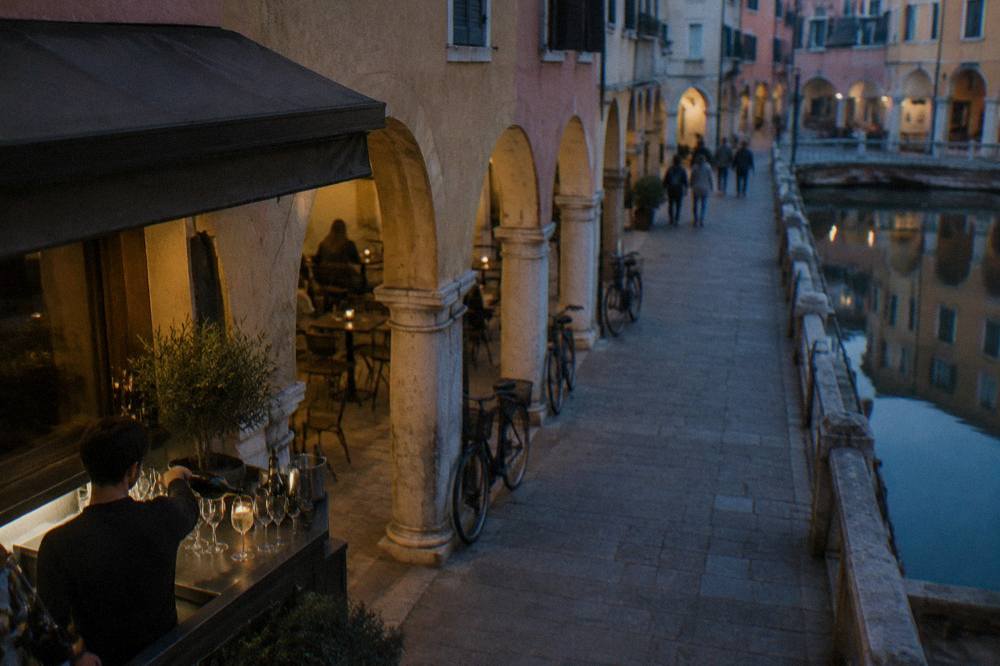
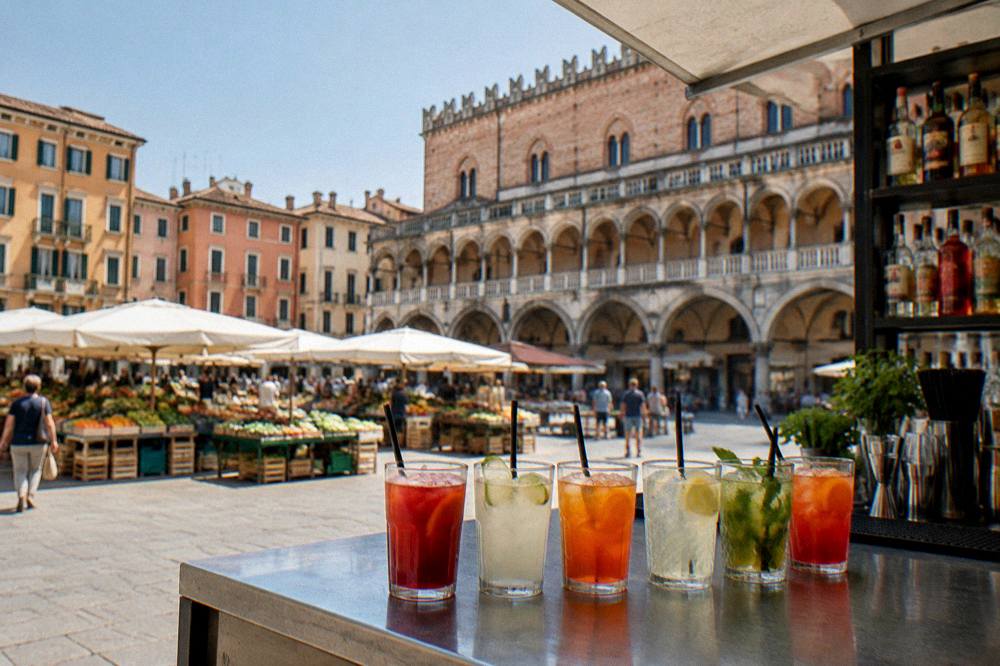
The aperitivo scene in Padua concentrates around Piazza delle Erbe and Piazza dei Signori, the two adjoining medieval squares in the heart of the old centre, where the tourism board describes an evening scene of spritz, aperitivo culture and the small shops and bars that line the arcades. These are the squares to name; the individual venues are not something this site recommends, because no single bar has been independently assessed.
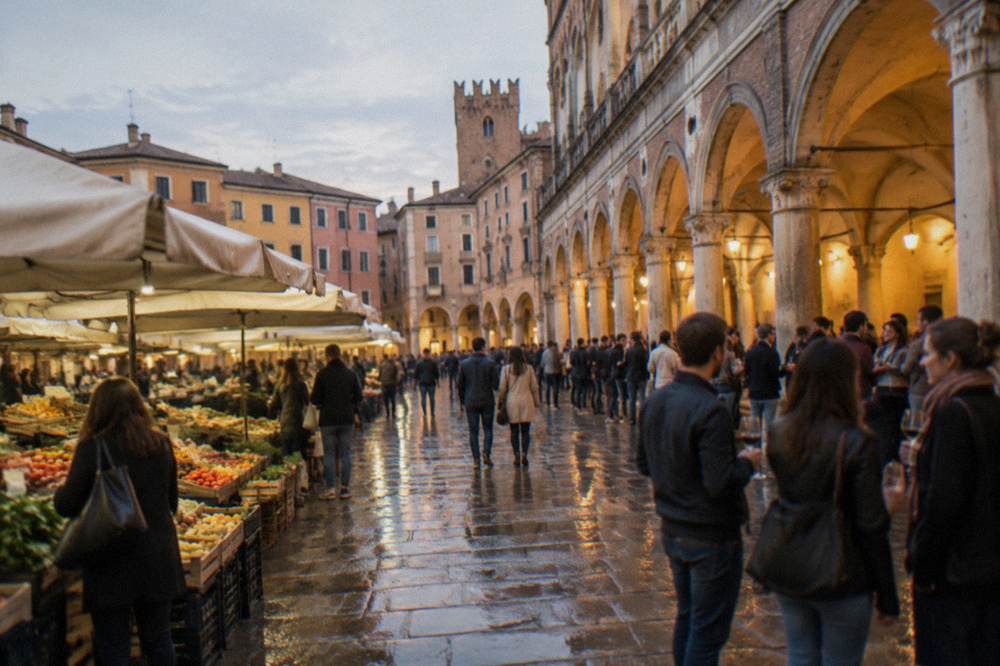
Piazza delle Erbe is the market square by day and a drinking square by early evening. Its daily market runs 52 stalls of mostly fruit, vegetables and flowers, Monday to Friday 7:30 to 13:30 and Saturday 7:30 to 20:00. The same square, in the hours after the stalls close, is the centre of gravity for the aperitivo. Next door, Piazza dei Signori adds the Renaissance backdrop, and under the arcades of both squares the drinks come out with the evening.
The ritual is simple and cheap by big-city standards: a drink, often a spritz, sometimes with a small snack included, taken standing at a barrel or seated at a table while the sky goes down behind the roofs. Aperitivo hours are not published for Padua, so treat early evening as the window rather than quoting a time. On Saturdays the market runs to 20:00, which changes the character of the square, and the antiques market at Prato della Valle on the third Sunday of each month gives the morning a different flavour entirely.
| Square | Day role | Evening role | Verified source detail |
|---|---|---|---|
| Piazza delle Erbe | Market, 52 stalls, fruit, vegetables, flowers | Aperitivo bars under the arcades | Mon to Fri 7:30 to 13:30, Sat 7:30 to 20:00 |
| Piazza dei Signori | Renaissance square, shops | Aperitivo scene, early evening | Named by the Padua tourism board |
| Piazza della Frutta | Food and non-food market | Adjoins the Erbe scene | Food Mon to Wed 8:00 to 14:00, Thu to Sat 8:00 to 19:00 |
| Prato della Valle | Saturday market, plants and flowers | Antiques market, third Sunday monthly | Sat 8:00 to 19:00 winter, 8:00 to 20:00 summer |
For planning a whole evening, the spritz squares sit two minutes from the Scrovegni Chapel tickets route and a short walk from everything else in the compact centre, which is one reason the ritual is so easy to fold into a sightseeing day. The piazza itself has its own guide on this site.
What Actually Goes In A Spritz?
The standard Aperol Spritz as popularised in the Veneto is prosecco, Aperol and a splash of soda water, built over ice in a large wine glass and finished with a slice of orange, and the proportions most commonly cited are three parts prosecco, two parts Aperol and one part soda. No source establishes a single original spritz recipe, and this site does not rank one bar's version against another's.
The build matters more than the brand loyalty. Prosecco, from the hills of the Veneto, is the local default sparkler, and the Conegliano-Valdobbiadene prosecco hills are close enough to be a day trip, about an hour north by train or car. Select, the bitterer cousin of Aperol, is the other classic Veneto choice, and Campari or Cappelletti appear in variations. The glass is a large stemmed wine glass, the ice is generous, and the orange slice is not optional decoration but part of the drink's identity.
No source establishes the claim that any one recipe is the original. The pre-Aperol spritz habit of diluting wine, the 1919 launch of Aperol in Padua, and the later standardisation of the three-two-one build are three separate historical layers. A guide that tells you the recipe has been made the same way for centuries is embellishing. Treat the proportions as the common bar standard and the history as the two documented facts: diluted wine came first, Aperol came in 1919.
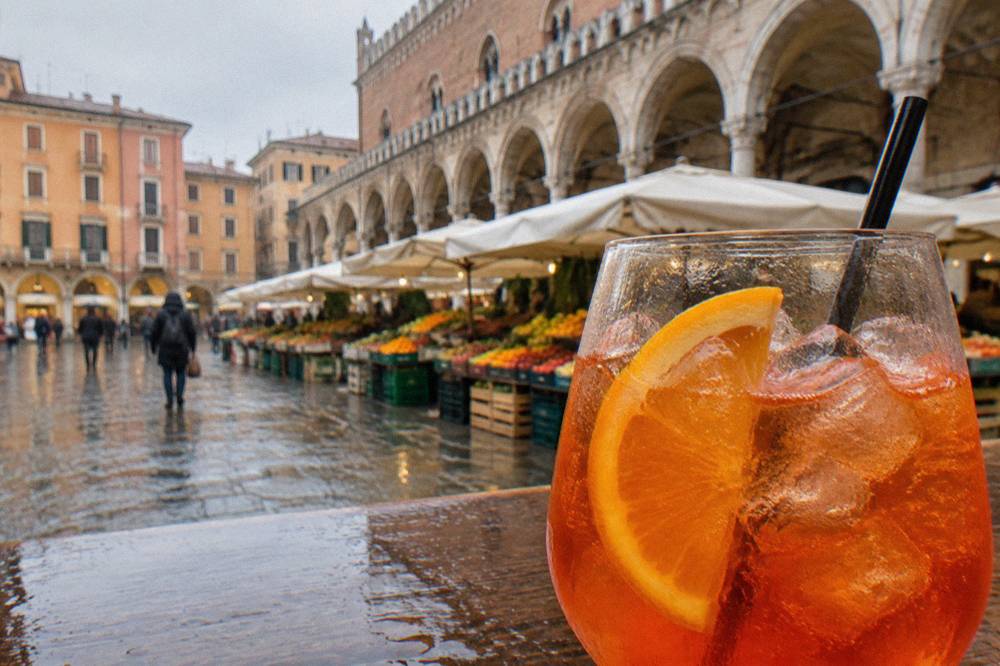
| Element | Standard role | Notes from the sources |
|---|---|---|
| Prosecco | The sparkling base, about 3 parts | Veneto product; hills are a day trip from Padua |
| Aperol | The bitter-orange liqueur, about 2 parts | Created and presented in Padua, 1919 |
| Soda water | The top-up, about 1 part | Splash, not a pour |
| Ice and orange slice | The build | Large wine glass, generous ice |
How Much Should You Expect To Pay For A Spritz In Padua?
Drink prices in the squares vary by venue, by table versus counter service and by whether food comes with the drink. Check the price list at the bar before ordering, and treat any number quoted in a forum or a review as one venue on one day.
What can be said with a source behind it is structural. Italy commonly adds a coperto, a per-person cover charge, at seated table service, and tipping is not obligatory; a small amount for good service is appreciated beyond any coperto or servizio already on the bill. Standing at the counter with a drink is the traditional and cheaper posture, and in Padua's squares both options coexist.
For travellers who want the drink with the story attached, a guided option exists: the Padua Spritz Cocktail Tour walks the aperitivo territory with drinks included, and Check availability on the operator's live listing for current dates and pricing. A self-guided evening costs whatever the bars charge; a guided one bundles the narrative.
What Is Aperitivo, And How Does It Differ From Just Having A Drink?
Aperitivo is the Italian early-evening ritual in which a drink, classically bitter and low in alcohol, is accompanied by small food, and its purpose is to open the appetite and mark the transition from the working day to the night; it is a scheduled social institution rather than an incidental drink, and in Padua the spritz is its standard vehicle.
The distinction from an ordinary drink is the food and the timing. An aperitivo order in the Veneto can arrive with olives, chips, small sandwiches or a plate of local salumi and cheese, depending on the venue, and the whole thing happens in the window between the end of the afternoon and dinner, which in Italy starts late. No published aperitivo-hours figure exists for Padua, so plan for early evening and let the squares set the pace.
The word itself comes from the Latin aperire, to open, and the habit of drinking bitters before a meal long predates Aperol. What changed, with the industrial production of liqueurs like the one launched in Padua, is that the ritual acquired a uniform set of branded bottles. The food side of Padua's table runs deeper than snacks: the tourism board names risotto ricco alla padovana, capon alla canevera made with the gallina padovana and the torta pazientina as the city's signature dishes, with bigoli and baccala as standard local mentions, all covered in the site's nightlife and evening guide.
Can You Visit The Places Tied To Padua's Drink History?
The physical anchors of Padua's drink history are the city's squares and its historic cafes rather than a dedicated museum: Piazza delle Erbe and Piazza dei Signori host the aperitivo scene, the Caffe Pedrocchi opened in 1831 as a neoclassical building by Giuseppe Jappelli and was long known as the cafe without doors, and its signature drink is the Caffe Pedrocchi with mint.
Caffe Pedrocchi is the one named institution the sources support, and it is a monument as much as a cafe. Opened in 1831, designed by Giuseppe Jappelli, and famous for staying open around the clock in its heyday, the caffe without doors closed that tradition in 1916. Its green-and-white neoclassical facade sits a few minutes from the spritz squares, and the Museo del Risorgimento inside is reported to open Tuesday to Sunday 9:30 to 12:30 and 15:30 to 18:00 with a full ticket of EUR 5; confirm at the museum before planning a visit. The caffe's own opening hours are not published in a form this site can verify, so check directly before going for a late drink.
Beyond the cafes, the drink history bleeds into general Padua history. The fair where Aperol debuted in 1919 belongs to the city's long trading tradition, and the university, founded in 1222, gave Padua the student population that still shapes its evening economy. The University of Padua guide covers the Palazzo del Bo and its 1594 anatomical theatre; the Scrovegni Chapel guide covers the fresco cycle Giotto painted between 1303 and 1305, timed entry only, closed 16 to 27 November 2026 for the annual inspection.
| Anchor | Connection to the drink story | Verified detail |
|---|---|---|
| Piazza delle Erbe | Centre of the aperitivo scene | Market 52 stalls, Mon to Fri 7:30 to 13:30, Sat 7:30 to 20:00 |
| Piazza dei Signori | Adjoining aperitivo square | Named by the tourism board |
| Caffe Pedrocchi | Historic cafe, opened 1831, Giuseppe Jappelli | Signature drink: Caffe Pedrocchi with mint; known as the cafe without doors until 1916 |
| The Padua fair | Where Aperol was presented in 1919 | Barbieri brothers, reported by press accounts |
What Food Pairs With An Evening Of Spritz In Padua?
The dishes the Padua tourism board names as the city's own are risotto ricco alla padovana, capon alla canevera made with the gallina padovana breed, and the torta pazientina, with bigoli and baccala as standard local mentions, and any of these can anchor the dinner that follows an aperitivo in the squares.
The gallina padovana is the local chicken breed behind the capon dish, and its presence on the tourism board's list is the kind of detail that separates a real food city from a generic one. Bigoli, the thick local pasta, and baccala, salt cod in its Veneto preparations, are the everyday staples. The torta pazientina, a layered cake, is the dessert with a Paduan name attached. Sotto il Salone, the permanent covered market under the Palazzo della Ragione, is where the raw materials of this cuisine are sold; the tourism board describes eight centuries of trading there, though this site prints no stall count and no "oldest in Europe" ranking for it.
Palazzo della Ragione itself, which sits between the two market squares, is reported to open Tuesday to Sunday 9:00 to 19:00 with a full ticket of EUR 8 and concessions at EUR 6, sold at the IAT office at Piazza delle Erbe 52. Confirm current prices at the ticket office. For a food-first visit, the sequence writes itself: the morning market in Piazza delle Erbe, Sotto il Salone under the Palazzo, an afternoon of frescoes, then the spritz as the hinge into dinner.
When Is The Best Season For The Piazza Spritz Ritual In Padua?
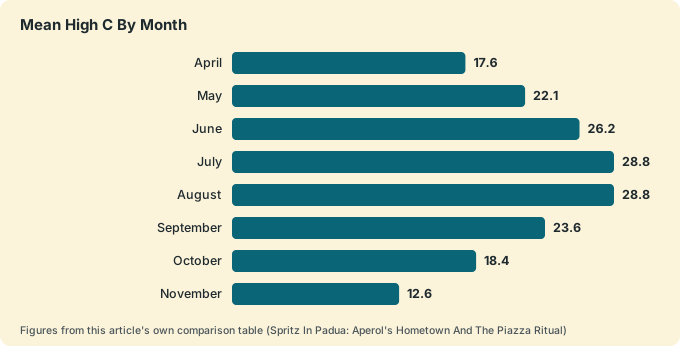
Padua's climate, per the ERA5 reanalysis 1991-2020, gives July and August a mean daily high of 28.8 C and January a high of 7.3 C with a mean low of -0.2 C, so the outdoor-table season runs broadly from April through October, though September and October still carry about 105 mm of rain each and November is the month with the highest rain total at 114 mm.
The numbers, modelled reanalysis rather than a station record, sketch the year clearly. April reaches a mean high of 17.6 C, May 22.1 C, June 26.2 C, and the tables outside fill accordingly. By late autumn the rain totals climb, with November at 114.0 mm the month with the highest total in the table, and January the lowest at 53.6 mm but cold, with that -0.2 C mean overnight low. Winter drinking moves under the arcades and indoors, and the Padua weather guide carries the full monthly table.
Two seasonal notes come from the events calendar rather than the climate model. The Sherwood Festival ran 10 June to 12 July in 2026 at Park Nord by the Stadio Euganeo, an annual music festival that shifts some of the city's evening energy north. And the Salone dei Sapori food event ran 11 to 18 October 2026, tying the autumn table back to Sotto il Salone. Both are annual events; dates for future editions had not been announced.
| Month | Mean high C | Mean low C | Rain mm | Outdoor spritz weather |
|---|---|---|---|---|
| April | 17.6 | 7.8 | 84.4 | Tables out, bring a layer |
| May | 22.1 | 12.4 | 99.7 | Full season |
| June | 26.2 | 16.6 | 81.0 | Full season, warm evenings |
| July | 28.8 | 18.9 | 62.1 | Full season, hot afternoons |
| August | 28.8 | 19.2 | 78.7 | Full season, hot |
| September | 23.6 | 14.9 | 105.5 | Pleasant, wetter |
| October | 18.4 | 10.6 | 105.4 | Arcades useful |
| November | 12.6 | 5.5 | 114.0 | Highest rain total of the year |
How Do You Build A Spritz Evening Around Padua's Sights?
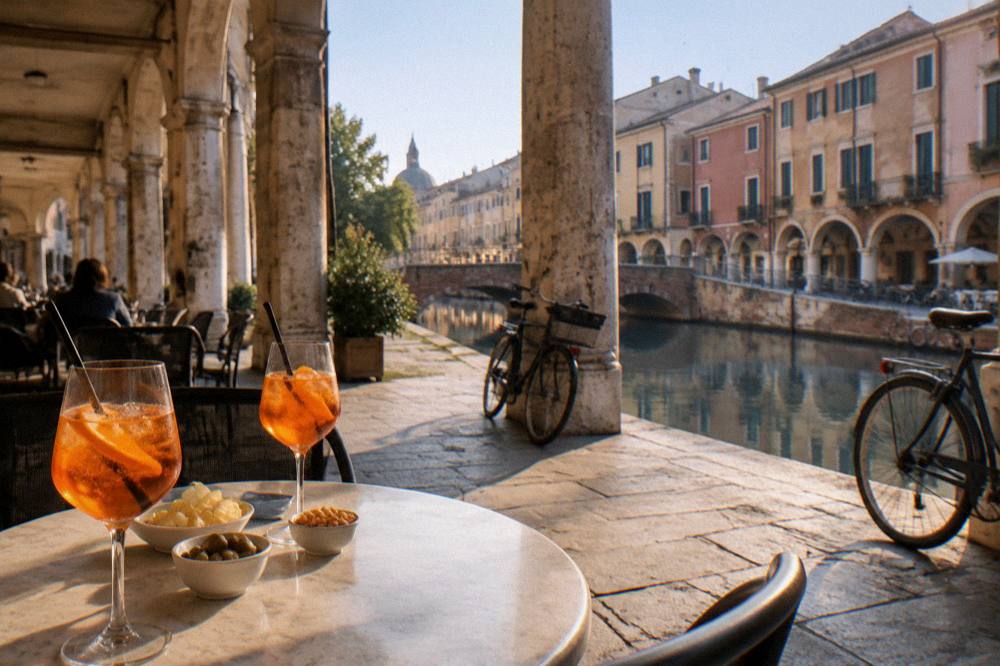
A workable spritz evening in Padua starts with the day's sights finished by late afternoon, moves to Piazza delle Erbe or Piazza dei Signori for the first drink in the early evening, continues with dinner on one of the tourism board's named local dishes, and can end at a historic cafe or under the arcades, all within the compact old centre that lies between the Scrovegni Chapel and Prato della Valle.
The geography makes this easy. Padua's centre is small and walkable, and the one day in Padua itinerary covers the standard sequence: the Scrovegni Chapel with its timed 15-minute visit, the Eremitani church, Piazza delle Erbe, Palazzo della Ragione, Caffe Pedrocchi, the Basilica of Saint Anthony and Prato della Valle. The spritz squares sit in the middle of all of it. A visitor who books the chapel's last entry at 18:45 can be holding a glass under the arcades within twenty minutes of leaving.
One planning trap deserves a repeat: the chapel is timed entry only, at most 25 people every 15 minutes, booked in advance, and closed 16 to 27 November 2026 for the annual fresco inspection. The evening ticket, Giotto sotto le stelle, runs 25 March to 1 November, 19:00 to 22:00 every 20 minutes, chapel only. A late chapel slot followed by a spritz is one of the better pairings a Padua evening offers, and the Scrovegni Chapel tickets guide covers the booking mechanics in full.
Is The Spritz In Padua Different From The Spritz Elsewhere?
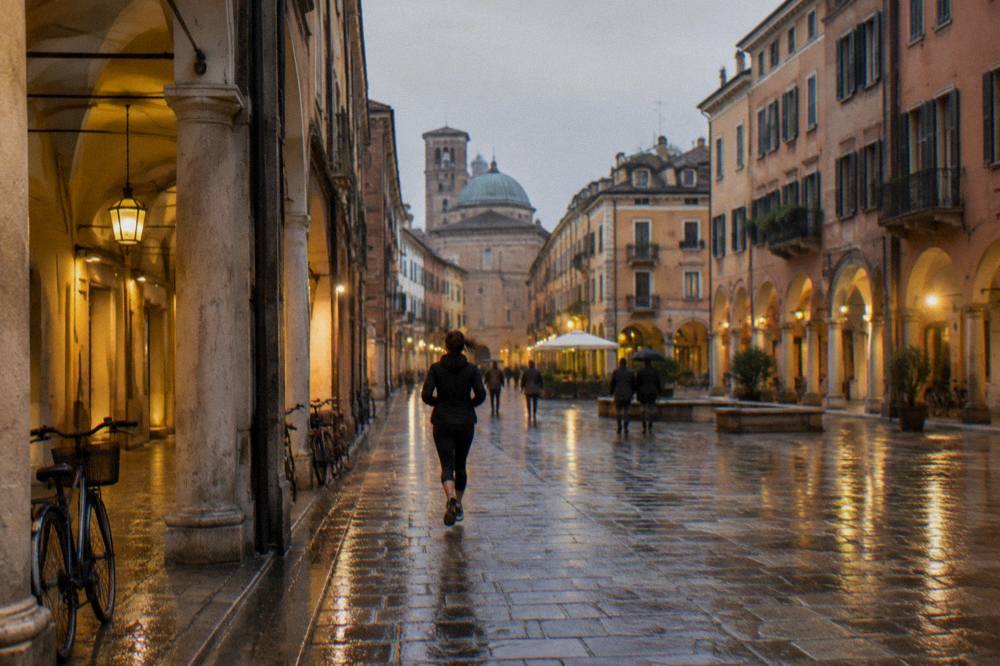
The drink in the glass is broadly the same across the Veneto, prosecco, a bitter orange or red aperitivo liqueur and soda over ice, but Padua's version comes with the origin story attached: Aperol was created and first presented in this city in 1919, and the city's aperitivo scene is anchored in medieval market squares rather than canals, since Padua is an inland city about 36 km in a straight line from Venice.
Venice drinks its spritz standing at bacaro counters with the lagoon outside; Padua drinks its under stone arcades with the market squares outside. That is the real difference, and it is a difference of setting and price logic rather than recipe. The tourism board's description of the evening scene in Piazza delle Erbe and Piazza dei Signori, spritz and aperitivo culture among the botteghe, is the picture to hold. For travellers using Padua as a base, the Padua as a base for Venice guide covers the train link, regional trains taking about 26 to 40 minutes to Venice Santa Lucia.
One correction worth carrying: the Venice day-tripper access fee trial ended on 27 July 2026, and no decision for 2027 had been announced, so a day trip to Venice from Padua does not currently carry that charge. The Veneto is a drinking region with several expressions, prosecco to the north, the Euganean Hills wines to the south, and the spritz in the middle, and Padua sits at the centre of the map.
Common Questions About The Spritz In Padua
Was Aperol really invented in Padua?
Yes, in the sense the sources support: Aperol was created and first presented in Padua in 1919 by the Barbieri brothers, reported by press accounts and standard references. The earlier habit of diluting wine that became the spritz predates Aperol and has its own separate origin story.
What is in a classic Aperol Spritz?
The standard build is three parts prosecco, two parts Aperol and a splash of soda water over ice in a large wine glass, finished with a slice of orange. No source establishes a single original recipe, so treat these proportions as the common bar standard.
Where should you drink a spritz in Padua?
Piazza delle Erbe and Piazza dei Signori are the two squares the Padua tourism board names for the evening aperitivo scene. This site does not recommend individual bars, since no venue has been independently assessed; the squares themselves are the destination.
How much does a spritz cost in Padua?
No price figure is given in the sources this site uses. Prices vary by venue and by whether you stand at the counter or sit at a table, and a coperto may be added for seated service. Check the price list at the bar before ordering.
Is Caffe Pedrocchi worth visiting on a spritz evening?
Caffe Pedrocchi, opened in 1831 and designed by Giuseppe Jappelli, is the one named historic cafe the sources support, and its signature drink is the Caffe Pedrocchi with mint. Its current opening hours are not published in a reliable form, so check directly before planning a late visit.
Does it matter which season you visit for the spritz ritual?
Outdoor-table weather runs broadly from April through October, with July and August mean highs of 28.8 C per the ERA5 reanalysis 1991-2020. November carries the highest monthly rain total at 114 mm, and in the colder months the drinking simply moves under the arcades and indoors.