Padua As A Base For Venice: Trains, Costs And Timing
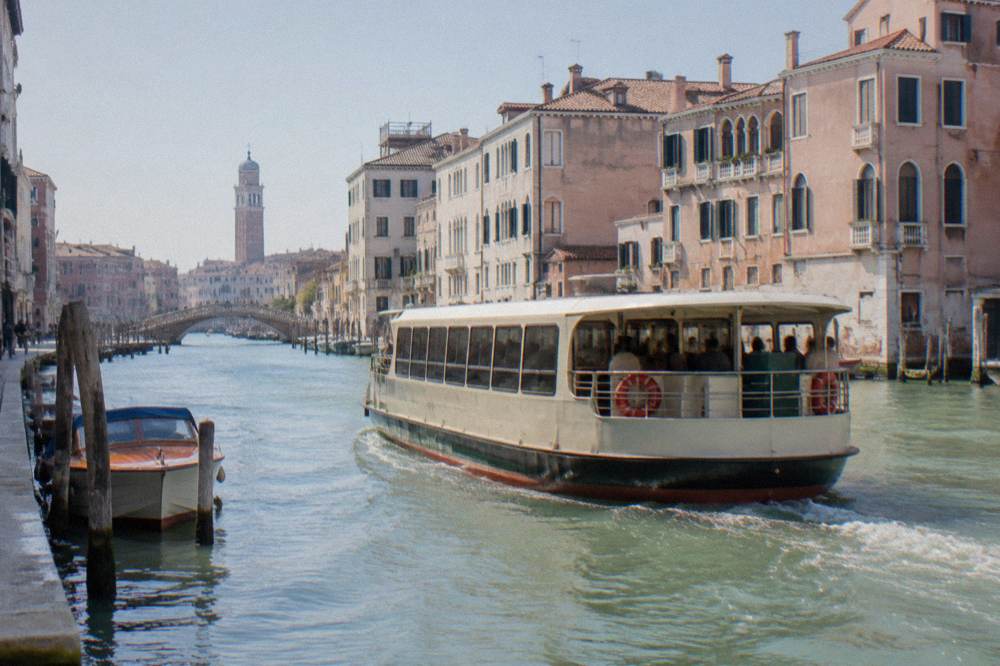
Padua sits about 36 km from Venice on a direct rail line, with regional trains taking about half an hour, so it works as an inland base from which Venice is a short trip rather than a relocation.
Short answer
Yes: Padua is about 36 km in a straight line from Venice, regional trains take about 26 to 40 minutes (about EUR 5), and the Venice day-tripper access fee trial ended on 27 July 2026, so no fee currently applies to a Padua day trip.
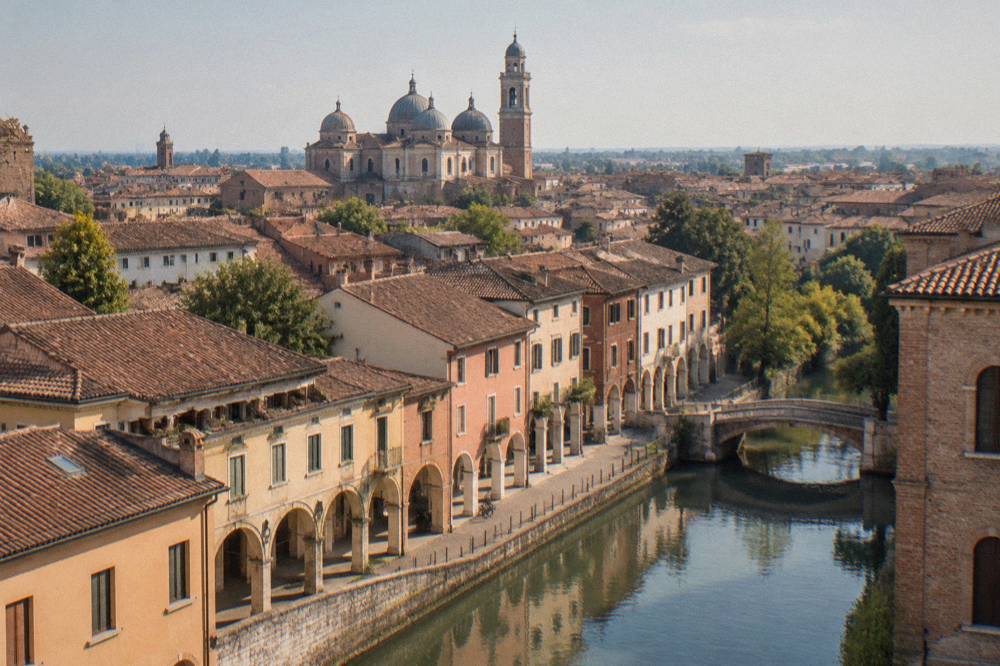
Padua (Italian: Padova) is an inland city in the Veneto, northern Italy, about 36 km in a straight line from Piazza San Marco in Venice, and the two cities are joined by one of the busiest rail corridors in the north. That geography is the whole argument for basing yourself in Padua: you sleep in a smaller university city with its own UNESCO-listed sights, and Venice becomes a train ride rather than a hotel bill. This guide sets out what the sources actually say about the trains, the costs, the ended Venice day-tripper fee, and how to split your days between the two cities.
Why Stay In Padua And Visit Venice?
Staying in Padua and visiting Venice works because Padua is inland but directly connected: trains run from Padova station to Venezia Santa Lucia in about 26 to 40 minutes on the regional service, Padua itself holds two UNESCO listings (the Orto Botanico, inscribed 1997, and the fourteenth-century fresco cycles, Padova Urbs Picta, inscribed 2021), and the city's own sights, from the Scrovegni Chapel to the Basilica of Saint Anthony, sit within a compact historic centre. Venice is the day trip, not the base.
The logic is usually about money and about what you want from the evenings. Padua is a working student city, with the university founded in 1222 and about 76,000 students reported for the 2026/27 academic year, so the centre stays active after the day crowds thin. Venice, about 36 km east, empties into a different rhythm once the last trains leave. Neither rhythm is better; they are different products.
There is also the practical matter of luggage and logistics. Padua's station has an official left-luggage office on platform 1, open daily 6:00 to 20:00 at EUR 5 per 6 hours, per the tourism board's page, which dates from 2024, so confirm at arrival. If you are arriving from Venice Marco Polo airport, the Busitalia airport bus runs to Padua for EUR 13 one way in about 45 minutes, which is covered in detail in the airport transfer guide.
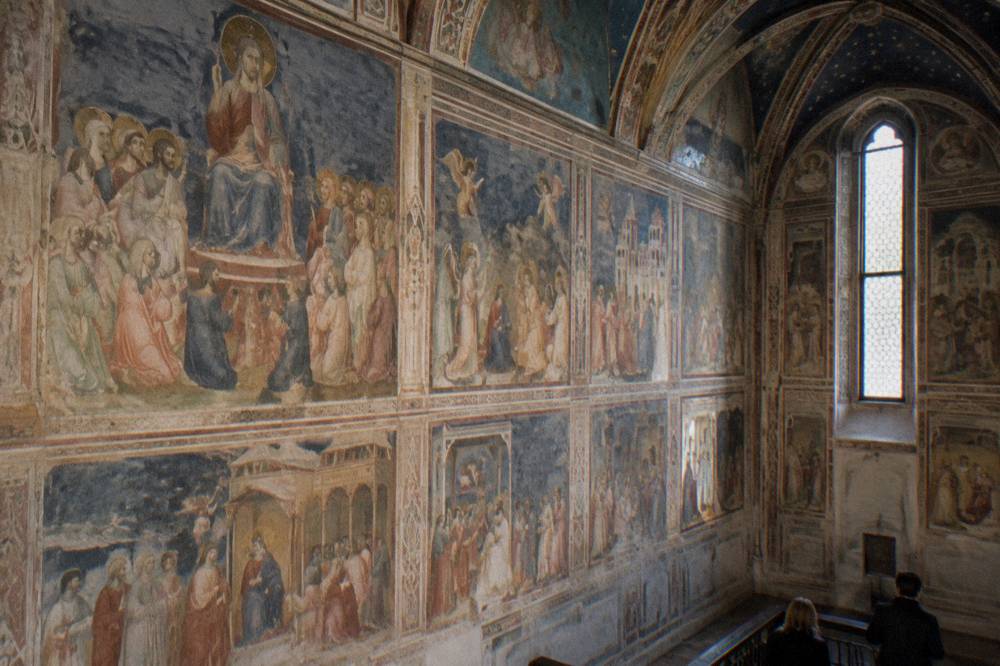
Padua also earns its keep on days you never board a train. The Scrovegni Chapel holds Giotto's fresco cycle, painted between 1303 and 1305; the Orto Botanico was founded in 1545 as the world's first university botanical garden in the university's own words; and the Basilica of Saint Anthony, begun in 1232, keeps the Saint's tomb. A fuller rundown is in things to do in Padua.
How Do The Trains From Padua To Venice Work?
Trains from Padova station to Venezia Santa Lucia take about 26 to 40 minutes on regional services, with a regional fare of about EUR 5, and the route is reported as one of the most frequent in the region, so a Padua base means Venice is a short hop rather than an expedition. These times and fares are reported by journey planners (Rome2Rio, The Trainline, Omio), not published by the operator, so check Trenitalia's own site or app for your exact date.**
The destination station matters. Venezia Santa Lucia is the one on the lagoon, at the foot of the Grand Canal, and every report of the 26 to 40 minute timing refers to that station. Some faster trains and higher fares exist on the same corridor, but the regional service at about EUR 5 is the figure your constraints can carry, and even that only as a reported, check-before-you-travel number.
Frequency is the quiet advantage of this corridor. The journey planners describe departures at intervals of roughly every 15 to 30 minutes across the day, which means a missed train costs you a coffee, not a morning. Again, that is a planner-reported pattern: confirm the timetable for your travel date.
For planning the rest of the region from the same base, here are the reported journey times and the straight-line distances the site has computed:
| Destination | Train from Padova (reported) | Straight-line distance |
|---|---|---|
| Venezia Santa Lucia | about 26 to 40 minutes, regional about EUR 5 | about 36 km |
| Vicenza | about 16 to 25 minutes, regional about EUR 6 | about 30 km |
| Verona | about 43 to 60 minutes | about 69 km |
| Treviso | about 28 to 60 minutes, sometimes with a change | about 41 km |
Distances are computed straight-line kilometres; the train times are reported by journey planners and should be checked against the operator's timetable. If Venice is only part of the plan, the Veneto itinerary guide covers the wider loop.
For the return direction and the reverse question, whether Venice itself works as a hub for a Padua visit, see one day in Padua from Venice.
What Does A Day Trip To Venice From Padua Cost?
A Venice day trip from Padua costs the regional return train fare of about EUR 5 each way (reported, about, check Trenitalia), plus whatever Venice itself charges you, and, since 27 July 2026, no Venice day-tripper access fee applies, because the 2026 trial of that fee ended on that date. Padua-side costs are the tourist tax at your accommodation, charged per person per night for up to five consecutive nights, with under-16s and hostel guests exempt.**
The accommodation tax is collected by wherever you stay, and the Comune di Padova's tax page confirms only the structure of it, the per-person per-night basis, the five-night cap and the exemptions. Rates vary by category of accommodation and are confirmed at booking; no per-star figure belongs on this page.
On the Padua side, the fixed known costs of the city's headline sights are worth having in one place, because they are the reason the base city is not just a dormitory:
| Sight | Ticket (full) | Notes |
|---|---|---|
| Scrovegni Chapel + civic museums | EUR 15 + EUR 1 booking fee | Timed entry, also covers Musei Civici Eremitani and Palazzo Zuckermann |
| Orto Botanico | EUR 15 (from 1 Sept 2026) | EUR 12 winter, Nov to Feb; reduced EUR 10 / EUR 8 |
| Palazzo del Bo guided tour | EUR 10 | About 45 minutes, alternating Italian and English slots |
| Palazzo della Ragione | EUR 8 | Tickets sold at IAT Piazza delle Erbe 52 |
| Basilica of Saint Anthony | free | Tomb and Chapel of the Relics accessible |
Two warnings that come straight from the official pages. The Scrovegni Chapel is timed entry only, at most 25 people every 15 minutes, with about 15 minutes inside, and no same-day online booking exists: the chapel's own booking page says unbooked visitors should check availability at the museum ticket office. And the chapel is closed 16 to 27 November 2026 for the annual fresco inspection. Booking details are covered fully in the Scrovegni Chapel tickets guide.
A combined ticket for the fourteenth-century fresco sites exists; the Padova Urbs Picta card guide explains what is confirmed and what to check on the museums' own site before buying.
Does The Venice Day-Tripper Fee Apply From Padua?
No: the 2026 trial of Venice's day-tripper access fee ended on 27 July 2026, and Venezia Unica's own page confirms the fee does not currently apply, so a visitor day-tripping from Padua is not being charged an entry fee, and no decision for 2027 had been announced. Anyone planning a 2027 trip should check the Venice city access-fee pages for a later scheme rather than rely on 2026's rules.**
This is one of the most useful facts for a Padua-based plan, because much of the advice published about Venice day trips still describes the trial as live. The trial ran on designated days in spring and summer 2026 and ended on 27 July 2026. The old amounts are history and are not repeated here.
What has not changed is that overnight guests in Venice accommodations were treated differently from day-trippers under the trial, which was one more argument for the split-base approach: sleep inland in Padua, day-trip in, and keep an eye on the official pages for any successor scheme.
Where To Stay In Padua For A Venice Day Trip?
The practical answer is to stay near the historic centre or the station side: Padua's centre is compact, the station is the northern anchor of every Venice trip, and the IAT tourist office at the exit of platform 1 (open Monday to Saturday 9:00 to 19:00, Sunday and holidays 10:00 to 16:00) is the first port of call on arrival. No neighbourhood carries a sourced safety score or price level, so position and walking distance are what the sources can honestly support.**
The city's areas, as the site's map defines them, are the Centro Storico around the market squares, the Jewish Ghetto, Portello, the Santo and Prato della Valle quarter, and the station and Arcella side. The station side shortens every Venice morning, since you walk out of your door to the platform. The centre puts Piazza delle Erbe, the Scrovegni Chapel and Caffè Pedrocchi, opened in 1831, within a stroll.
Nightly prices for hotels and apartments do not appear here. What the sources do give is the tax structure described above and the exemption list, and the general advice to confirm the tax amount with the accommodation at booking. The where to stay in Padua guide works through the areas in detail.
A note on arrival logistics if your base doubles as your Venice entry point: the Venice to Padua guide covers the reverse journey, and the reported 26 to 40 minute timing is the same in both directions.
What To Do In Padua Between Venice Trips?
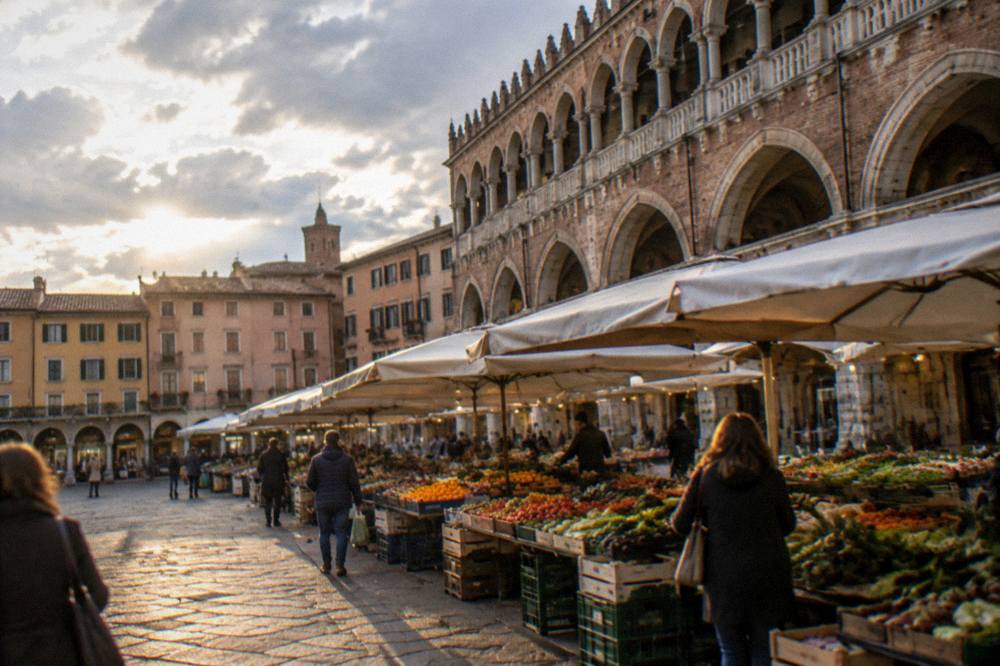
Between Venice trips, Padua's own list is short but dense: the Scrovegni Chapel's timed 15-minute fresco visit, the Orto Botanico (EUR 15 full from 1 September 2026), the Basilica of Saint Anthony with free entry to the Saint's tomb, Palazzo del Bo's anatomical theatre from 1594, and the market squares around Piazza delle Erbe, whose market runs Monday to Friday 7:30 to 13:30 and Saturday 7:30 to 20:00. A one-day or two-day pattern covers all of it comfortably.**
The university line is the one visitors most often underestimate. Galileo held the chair of mathematics here from 1592 to 1610, years he later called the best eighteen of his life, and Elena Lucrezia Cornaro Piscopia took the world's first recorded woman's doctorate here on 25 June 1678. The Palazzo del Bo guided tour (EUR 10 full, about 45 minutes) includes the anatomical theatre and Galileo's chair in the Sala dei Quaranta, subject to room availability on the day. The university guide and the Galileo in Padua guide expand on this.
The market rhythm gives the centre its timetable. Alongside Piazza delle Erbe, the Piazza dei Frutti market runs on foodstuffs Monday to Wednesday 8:00 to 14:00 and Thursday to Saturday 8:00 to 19:00, and the Prato della Valle Saturday market runs 8:00 to 19:00 in winter and 8:00 to 20:00 in summer, per the Comune di Padova's market page. The antiques market fills Prato della Valle and via Umberto I on the third Sunday of each month.
Is The Boat Cruise On The Brenta Riviera A Better Way To Reach Venice?
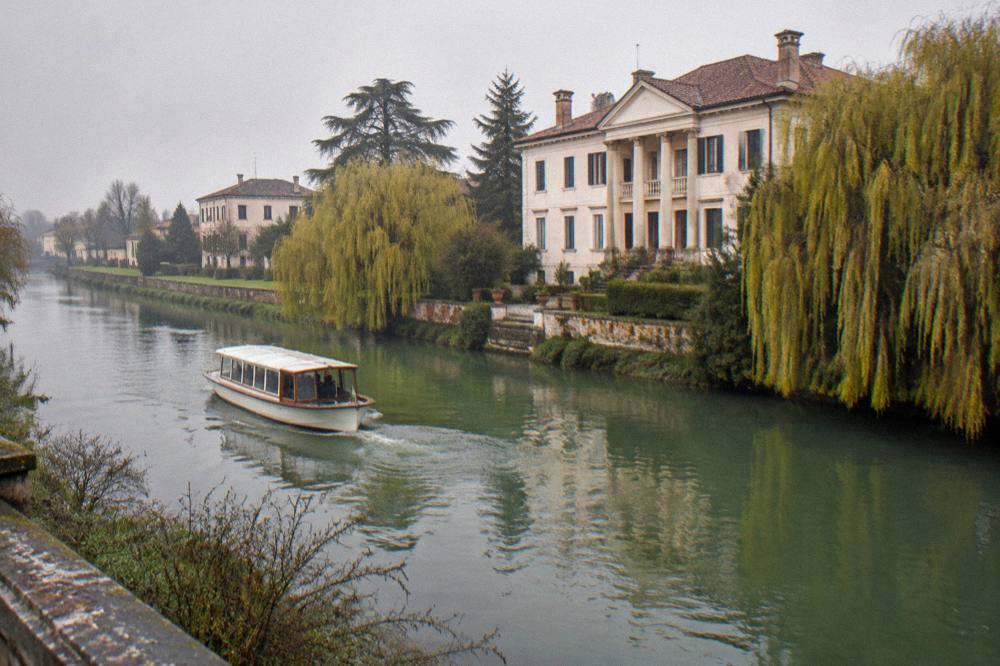
There is an alternative to the train: Il Burchiello, a boat cruise between Padua and Venice along the Brenta Riviera villas, running March to October in both directions, per the operator's own site, and the site's featured Brenta Riviera boat cruise covers the same villa-lined river route. The train is the fast, cheap, reported-about-EUR-5 option; the boat is the journey-as-destination option, and its price is not published here, so check the operator's listing.**
The Brenta Riviera is the string of Venetian villas along the river between Padua and the lagoon, with Villa Pisani at Stra, about 11 km from Padua in a straight line, among them; the villa's own site describes its maze as among the most important in Europe, with timed, limited access announced on the day. A full treatment is in the Brenta Riviera guide entry and the boat tour page.
For the classic question of which arrival style suits which traveller, the honest framing is timing: the train takes about half an hour and runs all day, the boat takes the better part of a day and runs seasonally. Doing one each way is a common compromise, and the cruise can be checked at Check availability.
What About Day Trips Beyond Venice?
Padua's base value extends past Venice: Vicenza is about 16 to 25 minutes away by train (regional about EUR 6) and about 30 km in a straight line, Verona about 43 to 60 minutes and about 69 km, Treviso about 28 to 60 minutes and about 41 km, and the Euganean Hills spa towns of Abano Terme and Montegrotto Terme sit about 8 and 11 km from the centre respectively. All times are reported by journey planners; all distances are computed straight-line kilometres.**
That spread is the real case for a multi-day Padua base with Venice as one of several loops. The straight-line distances computed for the site, with no drive times claimed, are:
| Day trip | Straight-line distance from Padua |
|---|---|
| Abano Terme | about 8 km |
| Montegrotto Terme | about 11 km |
| Villa Pisani (Stra) | about 11 km |
| Arqua Petrarca | about 20 km |
| Monselice | about 21 km |
| Vicenza | about 30 km |
| Venice | about 36 km |
| Treviso | about 41 km |
| Verona | about 69 km |
At the destinations, a few confirmed prices help the budgeting: the Teatro Olimpico in Vicenza is EUR 12 full (EUR 9 reduced), Villa dei Vescovi near Torreglia is EUR 11 for adults, and Casa del Petrarca in Arqua Petrarca is EUR 6 full. The Euganean Hills guide, Vicenza guide and Verona guide carry the detail.
For the weekend pattern that pairs both cities, the Padua weekend with Venice itinerary is built for exactly this split.
How Many Days Should You Base Yourself In Padua?
Two to four days is the workable pattern the sources support: one full day for Padua's own core (Scrovegni Chapel booked ahead, the Basilica, the Orto Botanico and the market squares), one day for Venice on the about-26-to-40-minute train, and a third to fourth day for the Brenta Riviera, the Euganean Hills or Vicenza. The Scrovegni Chapel's timed-entry rule and its 16 to 27 November 2026 closure are the two constraints that should shape the calendar first.**
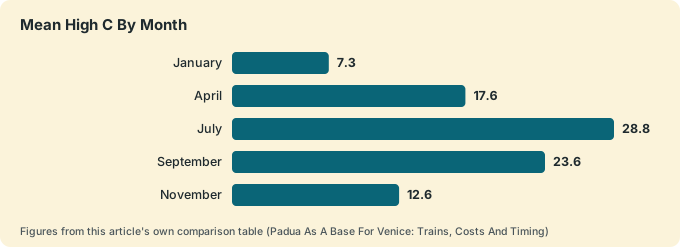
The climate is worth a glance when picking the window. The ERA5 reanalysis, 1991-2020, for Padua gives a January mean high of 7.3 C and July and August mean highs of 28.8 C, with November the month with the highest rain total (114 mm) and January the lowest (53.6 mm):
| Month | Mean high C | Mean low C | Rain mm |
|---|---|---|---|
| January | 7.3 | -0.2 | 53.6 |
| April | 17.6 | 7.8 | 84.4 |
| July | 28.8 | 18.9 | 62.1 |
| September | 23.6 | 14.9 | 105.5 |
| November | 12.6 | 5.5 | 114.0 |
These are modelled normals from a reanalysis grid cell, not a weather-station record; the full table is in the Padua weather guide, and the seasonal framing is in the best time to visit Padua.
On budgeting, the Padua on a budget guide lists the free entries, including the Basilica and the churches, alongside the paid headline sights above.
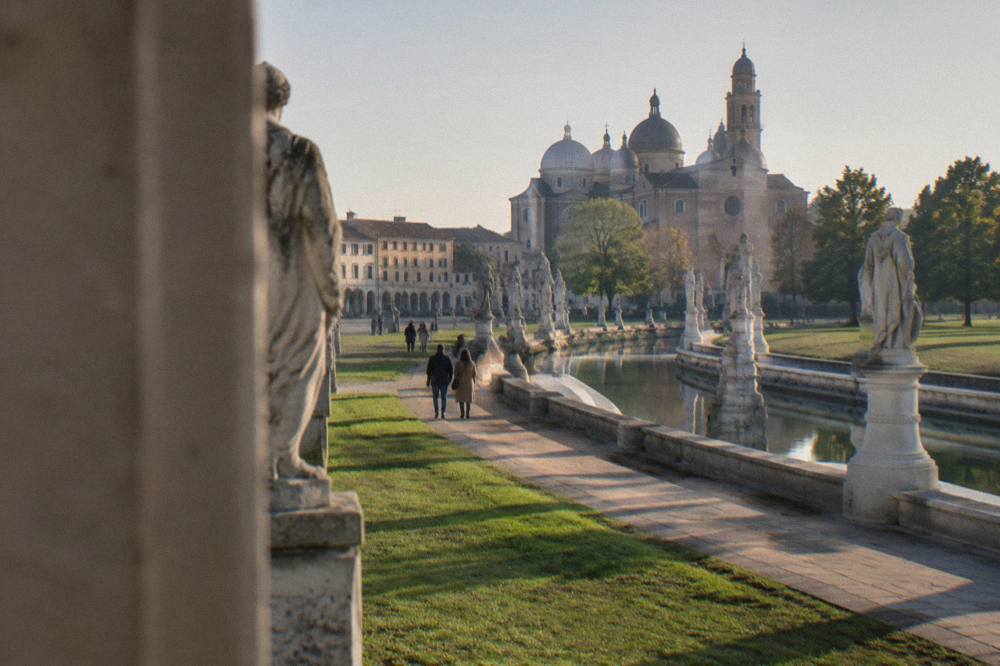
One annual fixture worth matching a calendar to, if June travel is possible: the Tredicina before the Feast of Saint Anthony ran 31 May to 12 June in 2026, with the feast day on 13 June, and the feast guide explains the event. No 2027 date had been announced.
Common Questions About Staying In Padua To Visit Venice
Is Padua a good base for visiting Venice?
Yes, if the fit suits you: Padua is about 36 km from Venice in a straight line, regional trains take about 26 to 40 minutes (about EUR 5, reported by journey planners), and Padua adds its own sights, including two UNESCO listings. Confirm train times and fares on the operator's site for your date.
How far is Padua from Venice?
Venice (Piazza San Marco) is about 36 km from central Padua in a straight line, a distance computed from map data. By train, Venezia Santa Lucia is about 26 to 40 minutes from Padova station on regional services.
How much is the train from Padua to Venice?
The regional fare is about EUR 5 one way, a figure reported by journey planners rather than published by the operator, so check Trenitalia's site or app before travel. Faster trains on the same corridor carry higher fares.
Do I have to pay the Venice access fee if I day-trip from Padua?
No. The 2026 trial of the Venice day-tripper access fee ended on 27 July 2026, and the fee does not currently apply. No decision for 2027 had been announced, so check the Venice city pages before a 2027 trip.
Is it cheaper to stay in Padua than in Venice?
No reliable nightly price comparison for the two cities was published in the sources this site uses, so no claim appears here. What is confirmed: Padua charges a tourist tax per person per night for up to five consecutive nights, collected by the accommodation, with under-16s and hostel guests exempt.
Can I store luggage at Padua station between Venice trips?
Yes. The official left-luggage office is on platform 1, open daily 6:00 to 20:00, at EUR 5 per 6 hours. The tourism board's page dates from 2024, so confirm the rate on arrival.
The short version of the whole strategy: book the Scrovegni Chapel slot before anything else, let the about-half-hour train make Venice a flexible day rather than a fixed one, keep an eye on the Venice access-fee pages for any 2027 scheme, and give Padua's own frescoes, gardens and market squares the days they are owed. The editors at Padua Travel Guide keep the linked pages above current with each new ticket change, including the Orto Botanico's 1 September 2026 tariff.