Venice To Padua By Train: Times, Fares And Stations
The Venice to Padua hop is one of the shortest city-to-city rail runs in the Veneto, and this page sets out the reported times, the fares that can be stated, and what waits at the Padova end.
Short answer
Trains from Venezia Santa Lucia to Padova take about 26 to 40 minutes, a regional ticket costs about EUR 5, and Padua is about 36 km from Venice in a straight line, an inland city of arcades, markets and Giotto rather than a lagoon town.
The train from Venice to Padua crosses the width of the Veneto in well under an hour, dropping you in an inland city of arcaded streets, market squares and two UNESCO listings that has almost nothing in common with the lagoon you just left. Padua (Italian: Padova) sits about 36 km west of Venice in a straight line, on the Bacchiglione and its canals, and it is famous for Giotto's frescoes in the Scrovegni Chapel, the Basilica of Saint Anthony, the Orto Botanico and a university founded in 1222. This page covers the rail run itself, the stations at both ends, and what to do with the hours after you step off at Padova.
The route is a workhorse of the Venice to Milan corridor, which cuts both ways: departures are frequent, but the practical questions people actually ask are about which station to use, whether a ticket needs booking ahead, and how the arrival in Padua works. Each of those has a concrete answer, and the sections below give them one at a time, with the figures the sources support and nothing beyond.
How Far Is Padua From Venice?
Padua lies about 36 km west of Venice in a straight line, measured centre to centre from the heart of the old city to Piazza San Marco, and it is an entirely inland city on the Bacchiglione river, not a lagoon or coastal town. The train covers the gap in a fraction of the time a map suggests, because the rail corridor runs almost directly between the two centres. Venice is close enough that it works as a day trip from a Padua base, and Padua works just as easily as a day trip from Venice, which is the direction this page covers.
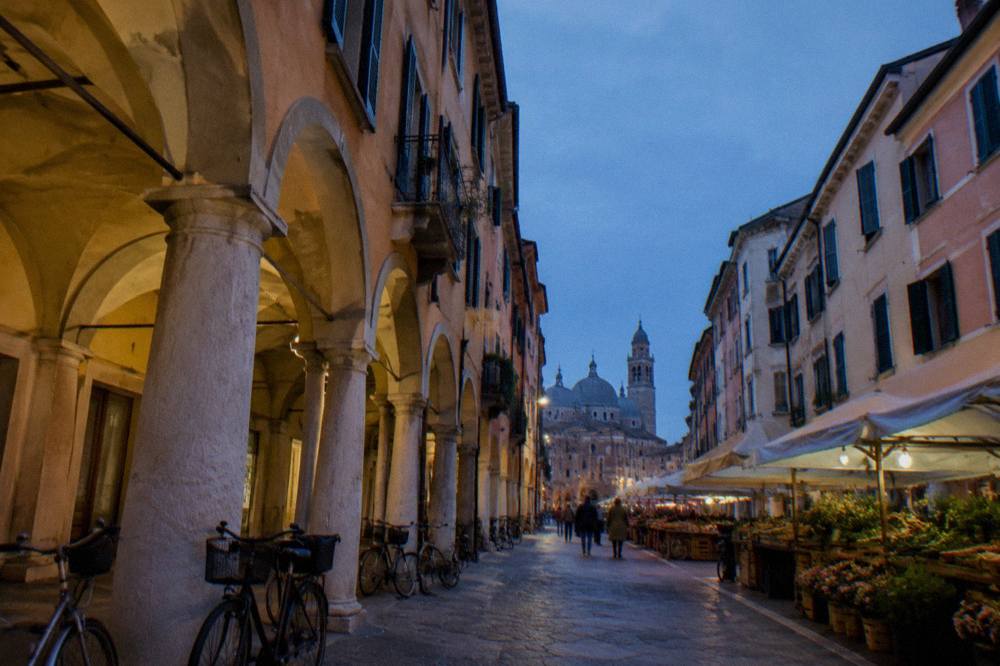
The distinction matters more than it sounds. Travellers occasionally arrive expecting a second waterside city, and Padua is not that. Its water is river water, its streets are arcaded rather than canal-cut, and its two UNESCO listings are a 1545 botanical garden and the fourteenth-century fresco cycles of Padova Urbs Picta, inscribed in 2021. The Scrovegni Chapel, the Basilica of Saint Anthony and the great squares, Piazza delle Erbe and Prato della Valle, are all walking-scale sights on dry land.
For scale against the rest of the region, the straight-line distances from Padua's centre run as follows, all computed from map data.
| Destination | Straight-line distance from Padua |
|---|---|
| Venice | about 36 km |
| Vicenza | about 30 km |
| Treviso | about 41 km |
| Chioggia | about 38 km |
| Verona | about 69 km |
| Bologna | about 110 km |
The neighbouring cities cluster tightly, which is why Padua often ends up as a base rather than a single stop. The full case for that arrangement, including where the Venice and Padua itineraries overlap, is laid out in how far Padua is from Venice and in the guide to using Padua as a base for Venice.
How Long Does The Train From Venice To Padua Take?
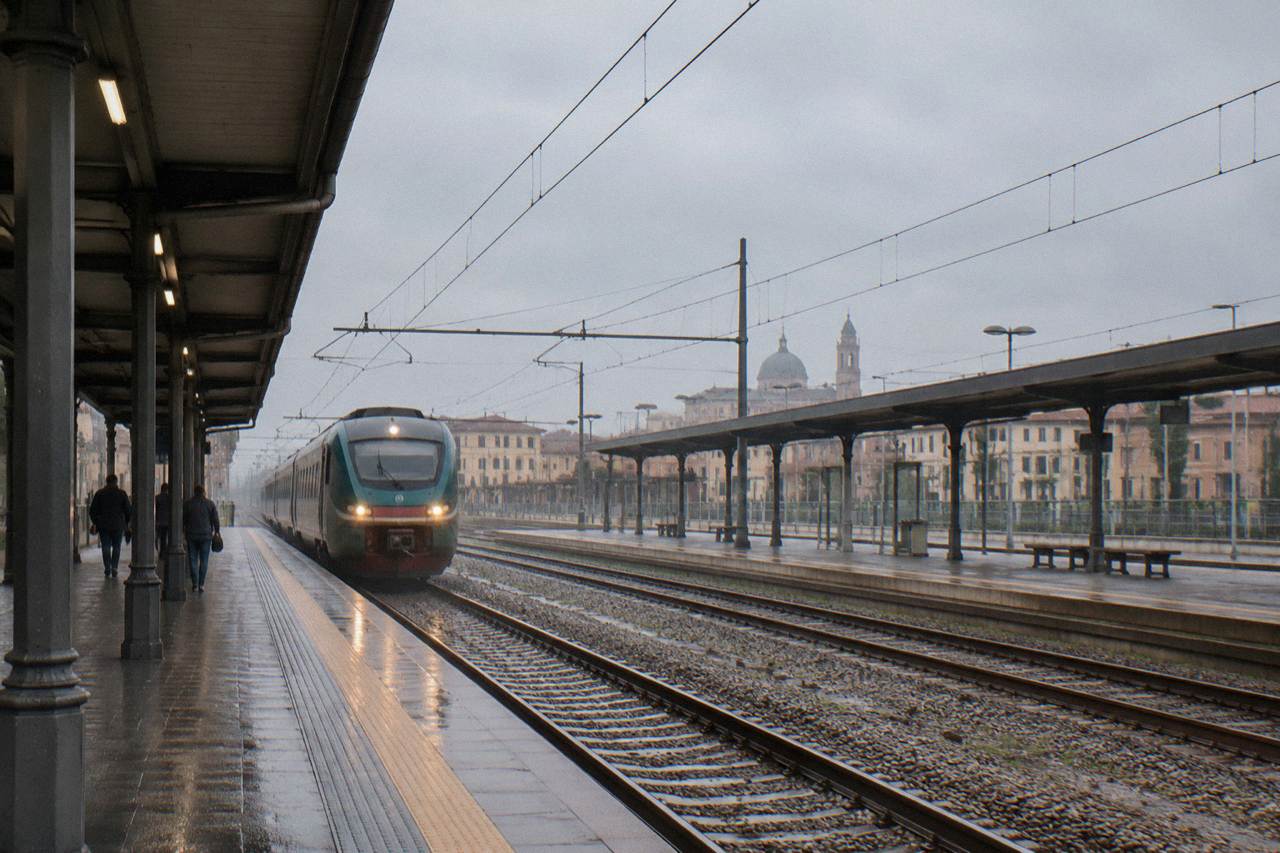
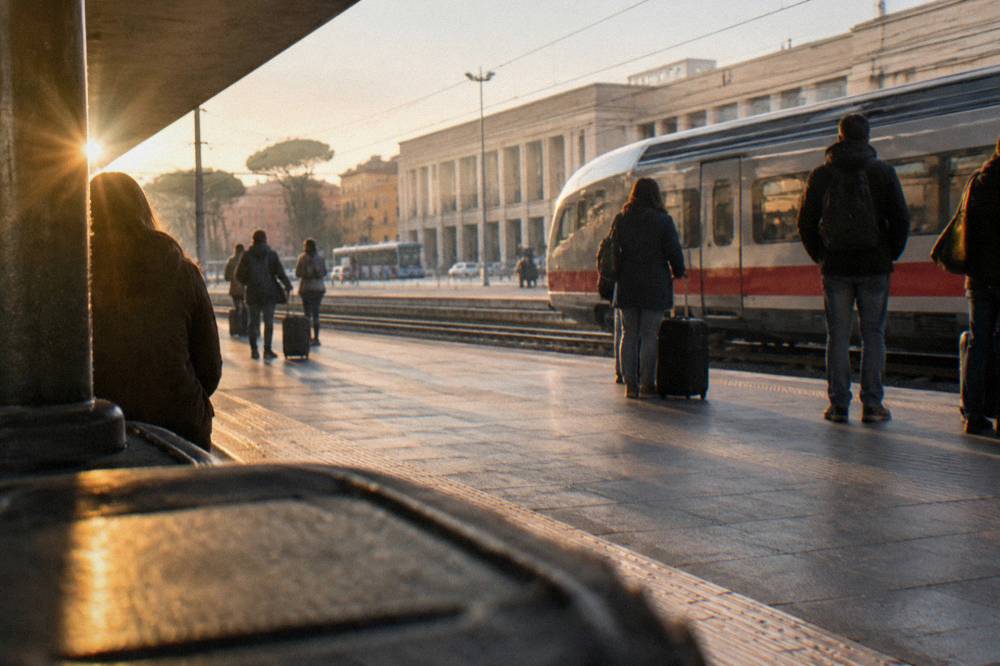
The train from Venezia Santa Lucia to Padova takes about 26 to 40 minutes, with regional and high-speed services both running the corridor, the regional trains at the slower end of that range and the faster services nearer 26 minutes, per journey-time aggregators rather than an operator timetable. Those figures are reported times from rail-search listings, not an official schedule, so treat them as a planning range and check Trenitalia for the specific departure you intend to catch. Either way, the journey is short enough that the walk from your Venice lodging to the station can take longer than the ride.
The same corridor serves the return direction all day, and frequency on the Venice leg is high: departures run roughly every 15 to 30 minutes across the day according to the same aggregator listings. The practical consequence is that a Venice to Padua day trip does not need to be engineered around a particular train. Pick a departure after breakfast, and the return legs run into the evening.
For comparison with the other rail runs out of Padova, the reported times from the same class of sources look like this.
| Route from Padova | Reported journey time |
|---|---|
| Venezia Santa Lucia | about 26 to 40 minutes |
| Vicenza | about 16 to 25 minutes |
| Verona | about 43 to 60 minutes |
| Treviso | about 28 to 60 minutes, sometimes with a change |
Every figure in that table is aggregator-reported rather than operator-published, so the honest framing is "about", with Trenitalia as the place to confirm a given departure. The Venice run is the quickest of the four, and by a wide margin over Verona and Treviso.
One alternative deserves a mention before the rails take over entirely. Il Burchiello is a boat cruise between Padua and Venice along the Brenta Riviera villas, running March to October in both directions, a full-day water route past the villas that the train skips entirely. Its fare is on the operator's own site, so check there before committing. The site's own tour to that stretch of river is covered in the Brenta Riviera boat tour guide, and Check availability if the villa-from-the-water angle appeals more than a 30-minute train.
What Does The Venice To Padua Train Cost?
A regional ticket from Venice to Padua costs about EUR 5, per fare listings rather than an operator price table, and that is the only fare on this route that can be stated with a figure; high-speed services price dynamically, so their cost depends entirely on the departure and how far ahead you book, and checking Trenitalia for your exact train is the only way to pin it down. For a day trip the regional fare is usually the whole story: it is cheap, the run is short, and the speed difference between service types saves minutes rather than hours.
Two things change the arithmetic. First, the regional fare is a flat, turn-up-and-buy figure, while the fast trains reward booking ahead, so a late decision can flip which option is cheaper. Second, if Padua is one stop on a longer rail itinerary, the Venice to Padua leg sits inside the Venice to Milan corridor, where advance pricing matters much more. For a simple day return, buy the regional and move on.
A small budget frame for the Padua end of the day, using the figures the sources allow.
| Item at the Padua end | Figure |
|---|---|
| Regional train, Venice to Padua | about EUR 5 |
| Urban ticket (TU1), 90 minutes | EUR 1.70 |
| Urban day ticket (TU1) | EUR 4.70, per the Busitalia fare page |
| Scrovegni Chapel, full daytime ticket | EUR 15 plus EUR 1 booking fee |
| Basilica of Saint Anthony | free entry |
| Station left luggage, per 6 hours | EUR 5 |
The Scrovegni row carries the same warning wherever it appears: that ticket is timed entry only, and the chapel is closed 16 to 27 November 2026 for the annual fresco inspection. The booking mechanics, including the reduced rates and what the daytime ticket covers besides the chapel, are laid out in Scrovegni Chapel tickets.
Which Stations Does The Venice To Padua Train Use?
Trains from Venice depart Venezia Santa Lucia, the terminus on the edge of the old city reached on foot or by vaporetto, and arrive at Padova station on the Venice to Milan line, the city's main rail hub immediately north of the historic centre, with the walk into the old streets taking a matter of minutes rather than a transfer. No station change is needed on the direct runs; the services that involve a change are on other routes out of Padova, Treviso among them.
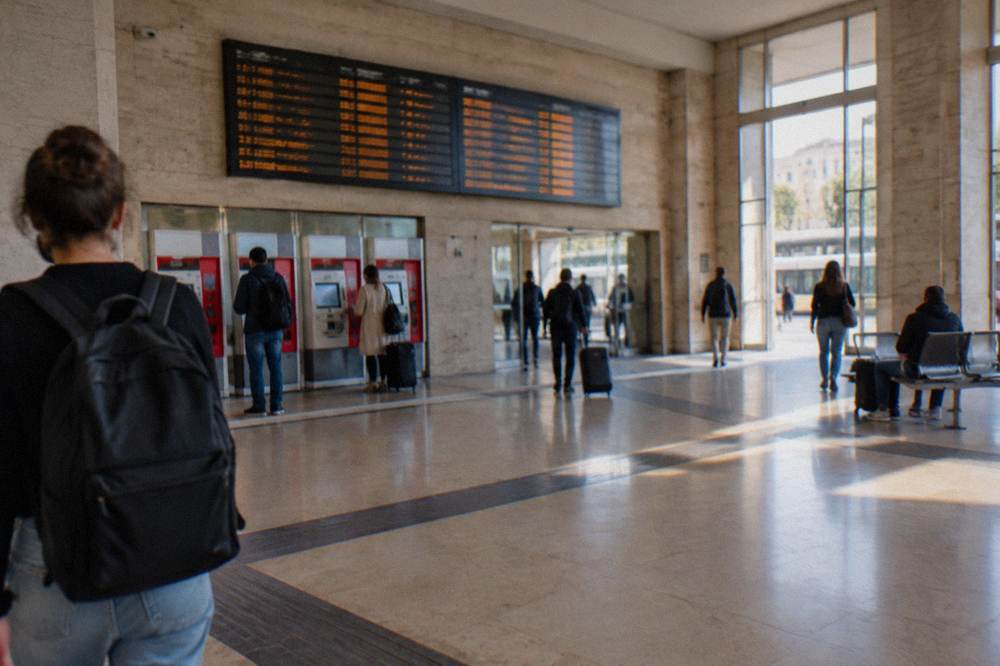
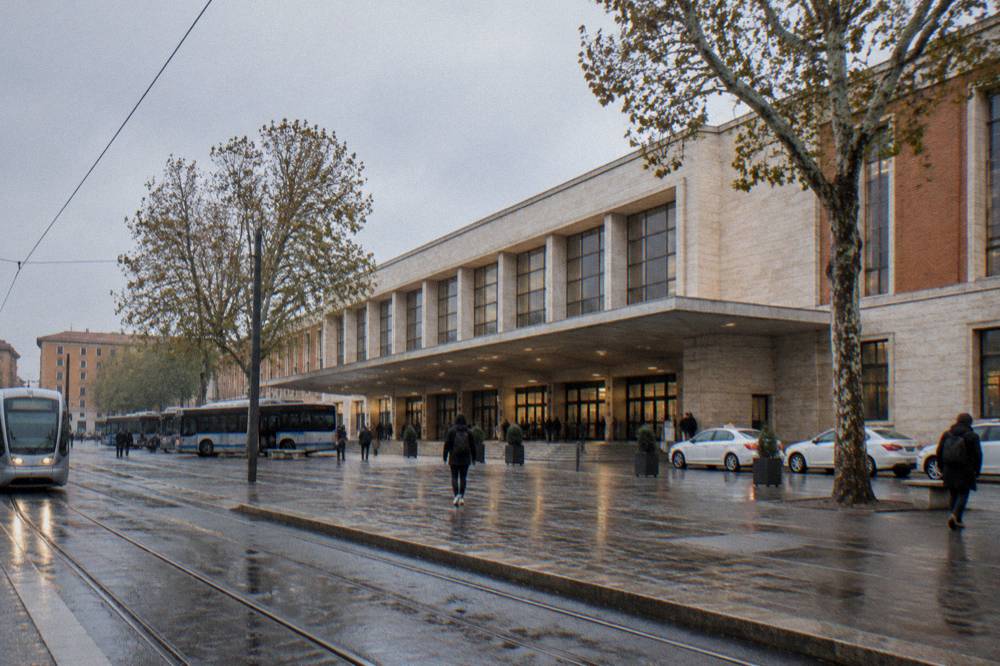
Venezia Santa Lucia needs little introduction to anyone who has arrived in Venice by rail: it is the landward end of the causeway, and everything from there to the Piazza San Marco is water or footbridge. On the Padua side, Padova station is a straightforward through station with the usual complement of platforms, ticket machines and the region's bus and tram links gathered at the front. The station itself, including the left-luggage office on platform 1 (daily 6:00 to 20:00, EUR 5 per 6 hours) and the tourist office by the exit, is covered in detail in the Padua train station guide.
Two practical notes for the arrival. The IAT tourist office at the exit of platform 1 is open Monday to Saturday 9:00 to 19:00 and Sunday and holidays 10:00 to 16:00, closed 25 and 26 December and 1 January, so a weekend arrival lands inside its hours. And if the Scrovegni Chapel is on the day's plan, remember the booking is timed: 25 people every 15 minutes, about 15 minutes inside, and you are asked to be there 5 minutes before the slot, with the ticket office about 100 m from the chapel itself.
Do You Need To Book The Venice Train Or Padua's Sights Ahead?
The Venice to Padua regional train needs no advance booking at roughly EUR 5, but Padua's headline sight does: the Scrovegni Chapel is timed entry only, no same-day online booking exists, and slots must be reserved in advance through the chapel's own booking page or call centre, so the train is the easy half of the day and the chapel is the part that decides your schedule. Visitors who arrive without a booking are told to check availability at the museum ticket office in person.
That inversion surprises people. The rail leg is turn-up-and-go, while a 15-minute fresco visit is the thing with a reservation system. The chapel's own booking page carries slots through to 10 February 2027, bookable by phone on +39 049 2010020 with a card. The daytime ticket at EUR 15 full also covers the Musei Civici Eremitani and Palazzo Zuckermann, which softens the booking discipline with two more museums on the same ticket. The full index of guides sits on Padua Travel Guide.
One Venice-side question belongs on this page because it affects the return leg. Venice's day-tripper access fee trial ended on 27 July 2026, per the Venezia Unica site, and the fee does not currently apply; no decision for 2027 had been announced. Nobody arriving in Padua from Venice, or returning the same day, should budget for that charge on the strength of older advice, and the Venice city site is the place to check for any later scheme.
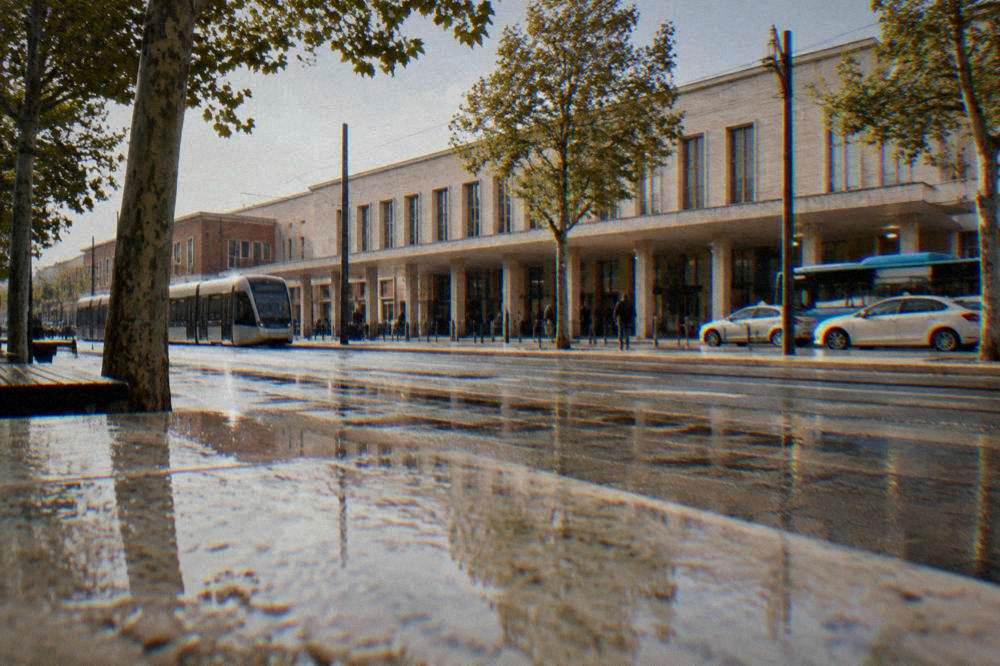
How Do You Get From Padova Station Into The City?
The historic centre starts within a short walk of Padova station's main exit, and for anything further the urban network sells a TU1 ticket at EUR 1.70 valid 90 minutes, or a day ticket at EUR 4.70, with tram line SIR1 running north to south through the city and contactless card tap accepted on board buses and trams for the same EUR 1.70 fare. For a day tripper whose targets are the Scrovegni Chapel, the Eremitani complex and the two great squares, feet cover the rest.
The tram is worth naming precisely because it is easy to oversell. SIR1 is the operational line, running its roughly 10.5 km north-south route from Vigodarzere to Guizza with 26 stops. A second line, SIR3, is in pre-service testing, and no opening date should be relied on; anyone read that it launches for Christmas is reading a target, not a timetable. Tickets come from the Busitalia Veneto app or DropTicket before boarding, or a single contactless tap on board.
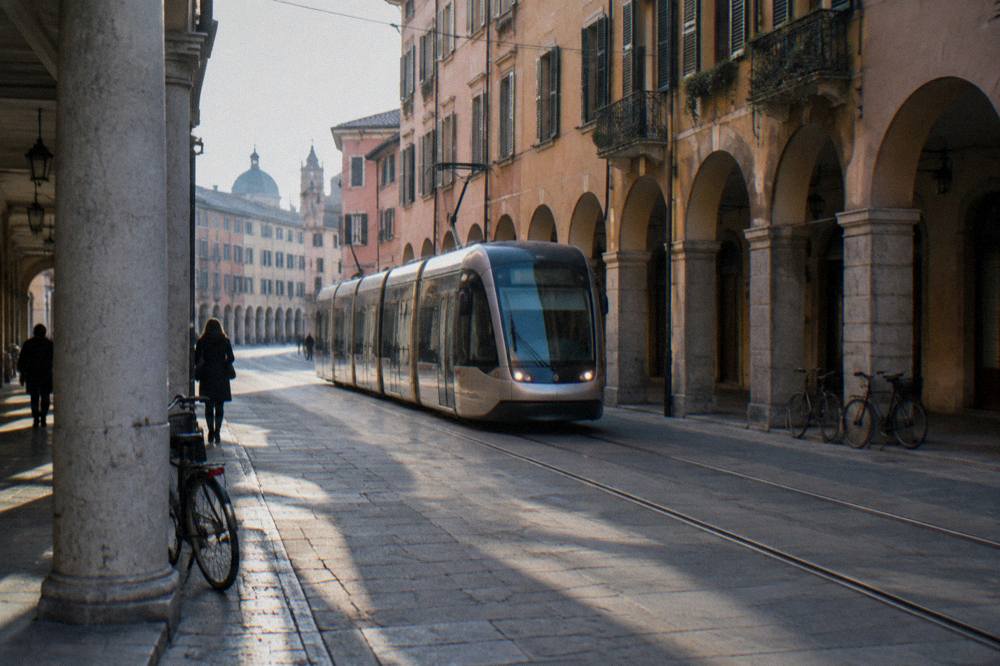
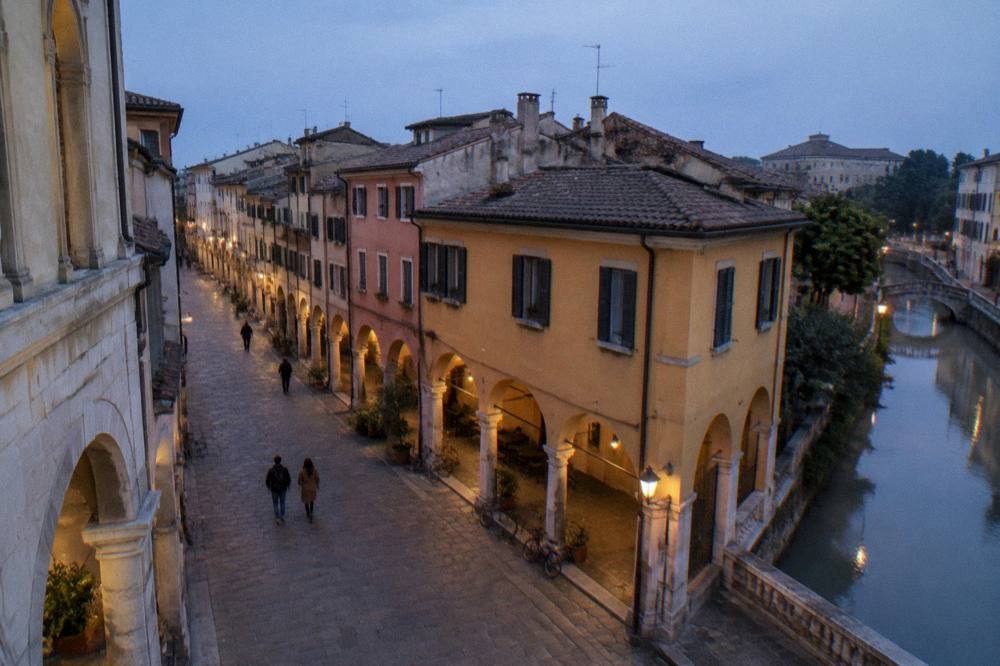
Distances inside Padua are small. The station sits at the northern edge of the centre; the Scrovegni Chapel and the Eremitani church are the nearest of the headline sights; Piazza delle Erbe, Palazzo della Ragione and the Caffè Pedrocchi cluster in the middle; the Basilica of Saint Anthony and Prato della Valle sit towards the south-east. A day's circuit on foot is flat and compact, which is the main reason the city works as a half-day or full-day rail trip.
Should You Visit Padua From Venice, Or Base Yourself In Padua?
Padua as a day trip from Venice works because the train takes about 26 to 40 minutes and costs about EUR 5 regional, but basing yourself in Padua and visiting Venice on the same rail line is the arrangement the economics favour: accommodation away from the lagoon, a short train each way, and two UNESCO listings plus a university quarter on your doorstep when Venice is done. Both patterns are legitimate, and the choice usually comes down to how many nights are available.
The day-trip version has a natural shape. Arrive at Padova, book the Scrovegni slot for mid-morning, use the same EUR 15 daytime ticket for the Musei Civici Eremitani and Palazzo Zuckermann, walk the arcades to Piazza delle Erbe and Palazzo della Ragione, and finish at the Basilica of Saint Anthony, which is free to enter, before an evening train back. The full version of that plan, hour by hour, is in one day in Padua from Venice, with the broader case in is Padua worth visiting from Venice.
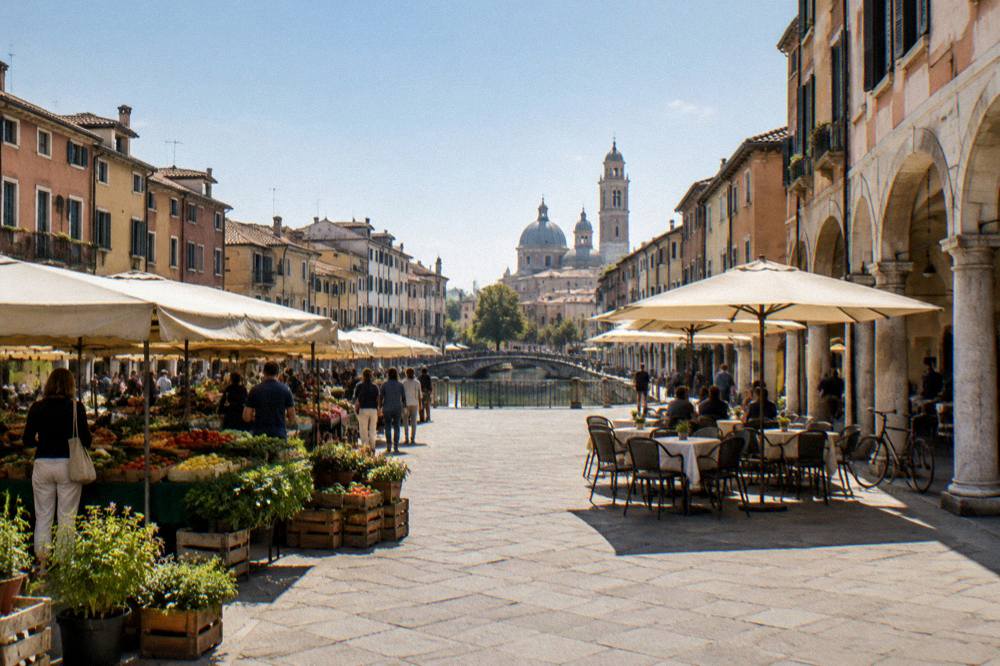
The base-yourself version flips the commuting. Venice becomes the excursion, about 36 km in a straight line east, covered by the same frequent trains, and the evenings return to Padua's own squares. Whether the swap pays off is argued in detail in the Padua as a base for Venice guide and in the combined Padua weekend with Venice itinerary; the Venice-side sightseeing itself is catalogued under day trips to Venice. And for anyone weighing a wider Veneto stay, the pairing is not exclusive: Verona is about 69 km away on the same rail spine, as the Verona to Padua train answer sets out.
What Is Waiting In Padua When You Step Off The Train?
Padua's centre holds the Scrovegni Chapel with Giotto's frescoes painted 1303 to 1305, the Basilica of Saint Anthony begun in 1232 with free entry, the Orto Botanico founded in 1545 and inscribed by UNESCO in 1997, the 1594 anatomical theatre at Palazzo del Bo, and the fourteenth-century fresco cycles of Padova Urbs Picta inscribed in 2021, all within walking distance of the station. Few mid-sized cities pack that density into a walkable radius, and the run from Venice puts you at the edge of it in about half an hour.
The sight cluster breaks down cleanly by ticket. The Scrovegni Chapel needs its timed booking and EUR 15 full daytime ticket. The Basilica of Saint Anthony is free. The Orto Botanico charges EUR 15 full from the new 1 September 2026 tariffs, EUR 12 in winter. The Palazzo del Bo "Giro storico" guided visit costs EUR 10 full, about 45 minutes, with alternating Italian and English slots and booking through the university's centre on 049 827 3939. Prato della Valle, ringed by its canal and double ring of numbered statues on ground the Venetian Senate declared communal space in 1767, costs nothing to wander.
| Sight | Entry figure | Booking need |
|---|---|---|
| Scrovegni Chapel | EUR 15 full daytime, plus EUR 1 fee | timed booking, no same-day online |
| Basilica of Saint Anthony | free | none stated |
| Orto Botanico | EUR 15 full, EUR 12 winter from 1 Sept 2026 | none stated |
| Palazzo del Bo Giro storico | EUR 10 full | book via the university centre |
| Prato della Valle | open ground | none |
Depth on each of these lives elsewhere on this site: the Scrovegni Chapel tickets guide, the Padova Urbs Picta card guide, the Urbs Picta UNESCO guide, the Saint Anthony guide and the university guide. For a first visit assembled end to end, the master list sits at things to do in Padua, and the seasonal framing is in Padua weather, where the ERA5 reanalysis for Padua, 1991-2020, puts the July and August mean high at 28.8 C and November as the month with the highest rain total, 114 mm.
Common Questions About Traveling From Venice To Padua
How long is the train from Venice to Padua?
Trains from Venezia Santa Lucia to Padova take about 26 to 40 minutes, per journey-time listings rather than an operator timetable, so confirm your specific departure on Trenitalia.
How much is a train ticket from Venice to Padua?
A regional ticket costs about EUR 5. High-speed services on the corridor price dynamically, so their fare depends on the departure and how far ahead you book.
How far is Padua from Venice?
About 36 km in a straight line, measured from Padua's centre to Piazza San Marco. Padua is an inland city, not on the lagoon.
Do I need to book the Scrovegni Chapel before arriving from Venice?
Yes. Entry is timed, with 25 people admitted every 15 minutes, there is no same-day online booking, and slots are reserved through the chapel's own booking page or its call centre on +39 049 2010020.
Is there a Venice day-tripper fee to worry about?
The 2026 trial ended on 27 July 2026 and the fee does not currently apply, per the Venezia Unica site; no decision for 2027 had been announced, so check the Venice city site for any later scheme.
Can you do Padua as a day trip from Venice?
Yes. With a train of about 26 to 40 minutes each way and a compact, walkable centre, a single day covers the Scrovegni Chapel, the basilica, the Orto Botanico and the main squares.