Is Padua Worth Visiting From Venice?
Whether Padua justifies a day away from Venice: train times, the Scrovegni Chapel booking rules, what the city holds, and how to plan the trip.
Padua (Italian: Padova) is an inland city in the Veneto, northern Italy, about 36 km in a straight line from Piazza San Marco in Venice, and the train between the two covers the distance in about 26 to 40 minutes, per journey-time listings from Rome2Rio and The Trainline. That proximity is the reason the question keeps coming up: Venice visitors hear about Giotto's frescoes and wonder whether a day away from the canals earns its keep. The short version is that Padua holds two UNESCO World Heritage listings of its own, the fourteenth-century fresco cycles of Padova Urbs Picta (inscribed 2021) and the Orto Botanico botanical garden (inscribed 1997, founded 1545), plus the Basilica of Saint Anthony and one of Italy's oldest universities, founded in 1222. The catch is a booking rule: the Scrovegni Chapel admits timed entries only, at most 25 people every 15 minutes, and there is no same-day online booking. This page lays out what the sources say so the decision can be made on facts rather than slogans.
Is Padua Worth Visiting From Venice?
Yes, Padua is worth the trip from Venice for a visitor with even a passing interest in art or history, because the city holds Giotto's fresco cycle of 1303 to 1305 in the Scrovegni Chapel, the Basilica of Saint Anthony, the 1545 Orto Botanico and the university's 1594 anatomical theatre, all about 26 to 40 minutes from Venice by train, with a regional fare of about EUR 5 each way. The only real cost is planning: the chapel's timed-entry system requires booking ahead.
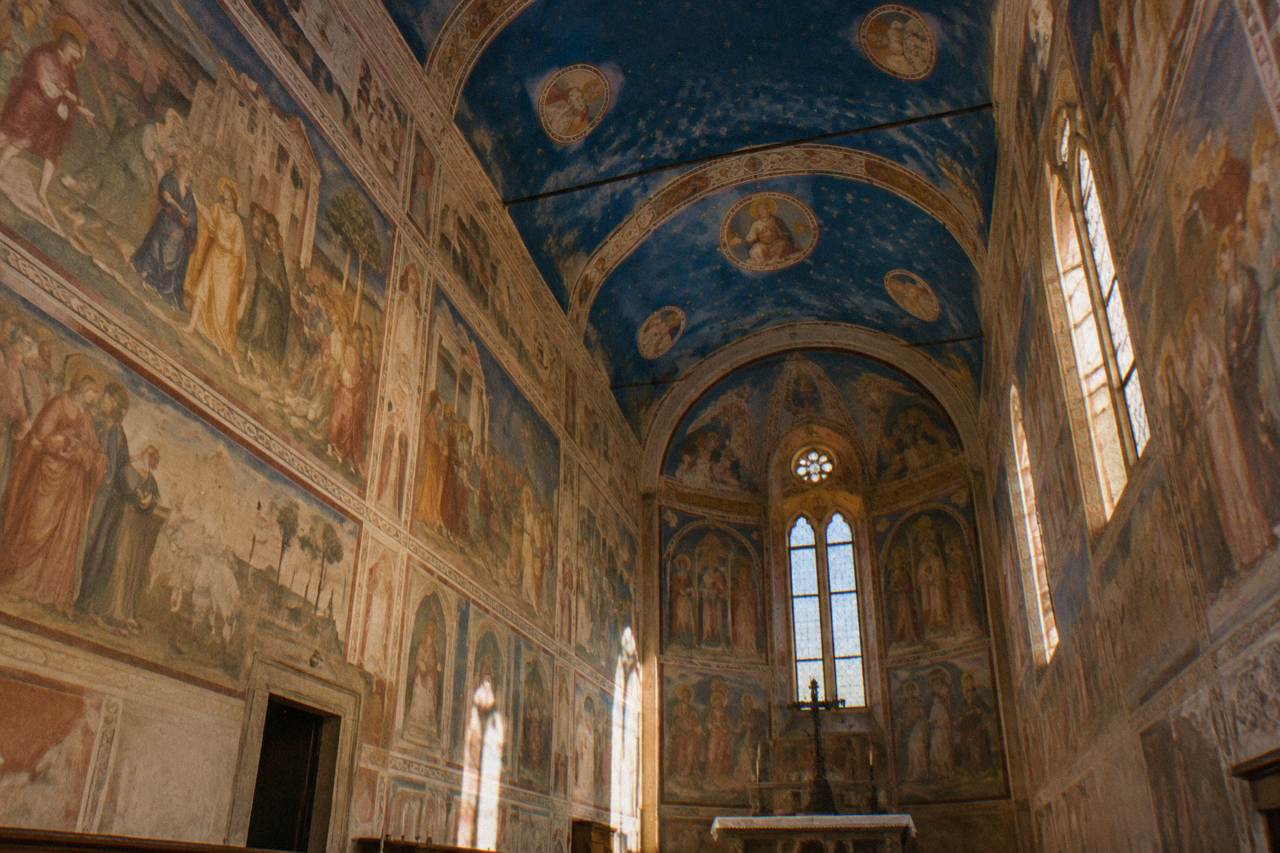
The case rests on what Padua has that Venice does not. The Scrovegni Chapel carries the fresco cycle Giotto painted between 1303 and 1305, the anchor of the Padova Urbs Picta UNESCO inscription of 2021, which spreads across eight complexes in the old centre: the chapel, the Church of the Eremitani, Palazzo della Ragione, the Carrarese chapel, the Cathedral Baptistery, the Basilica and Convent of Saint Anthony, the Oratory of San Giorgio and the Oratory of San Michele. The Orto Botanico, founded in 1545, carries the second inscription, from 1997, as the world's first university botanical garden in the university's own wording. Neither of these exists in Venice.
The Basilica of Saint Anthony, begun in 1232, a year after the saint's death on 13 June 1231, holds his tomb and is free to enter, per the Padova Urbs Picta visitor site. The university, founded in 1222, taught Galileo from 1592 to 1610 and awarded Elena Lucrezia Cornaro the first doctorate earned by a woman in recorded history, on 25 June 1678; its Palazzo del Bo offers guided visits of the 1594 anatomical theatre. For a fuller argument on the city itself, see is Padua worth visiting.
The counterargument is time. Venice rewards staying put, and a Padua day means leaving early enough to secure a chapel slot. The chapel closes 16 to 27 November 2026 for its annual fresco inspection, so a late-November day trip would miss it entirely; the chapel's own site publishes the closure. Check dates before booking anything.
How Do You Get From Venice To Padua?
Trains from Venezia Santa Lucia to Padova take about 26 to 40 minutes on regional services running frequently through the day, with a regional fare of about EUR 5, according to journey-time listings from Rome2Rio and The Trainline, which are not official sources, so confirm times and fares on Trenitalia before travelling. The station is a short walk or tram ride from the historic centre. The two cities are about 36 km apart in a straight line.
That travel time is the whole reason the day trip works. A visitor can leave Venice after breakfast, reach Padova station mid-morning, and still have a full day for the chapel, the Basilica and a walk through Piazza delle Erbe. The tram line SIR1 runs north to south through the city, and the urban bus ticket costs EUR 1.70 for 90 minutes, per Busitalia Veneto's ticket page, with contactless card tap accepted on board.
One point that matters for Venice visitors heading the other way: the Venice day-tripper access fee trial ended on 27 July 2026, per Venezia Unica, and no 2027 decision had been announced. Nobody based in Padua should budget for it now, and anyone planning Venice day trips in either direction should check the Venice city site for any later scheme. For the geography in more detail, see how far is Padua from Venice.
| Journey | Straight-line distance | Reported train time | Fare to print |
|---|---|---|---|
| Venezia S. Lucia to Padova | about 36 km | about 26 to 40 minutes | regional about EUR 5 |
| Padova to Vicenza | about 30 km | about 16 to 25 minutes | about EUR 6 |
| Padova to Verona | about 69 km | about 43 to 60 minutes | check Trenitalia |
| Padova to Treviso | about 41 km | about 28 to 60 minutes | check Trenitalia |
Journey times are reported figures from journey planners, not official timetables, and trains to Treviso sometimes require a change. The EUR 1.70 urban ticket and the airport bus fare below are the only transport prices the sources confirm for this corridor.
If Venice Marco Polo airport is the arrival point rather than Venice itself, the Busitalia airport bus runs to Padova for EUR 13 one way, about 45 minutes, per Busitalia Veneto's own service page; the Venice airport to Padua guide covers that route in full.
What Can You Realistically See In One Day In Padua?
A realistic one-day Padua visit covers the Scrovegni Chapel (about 15 minutes inside on a timed slot), the adjacent Musei Civici Eremitani included on the same EUR 15 daytime ticket, the Basilica of Saint Anthony with free entry, and the arcaded squares of Piazza delle Erbe and Prato della Valle, all within walking or short tram distance of the station. The Orto Botanico costs EUR 15 full price from 1 September 2026 and fits if the day starts early.
The chapel is the fixed point because the time cannot be negotiated. The daytime ticket, EUR 15 full plus a EUR 1 booking fee, admits at most 25 people every 15 minutes, includes the Musei Civici Eremitani and Palazzo Zuckermann, and gives about 15 minutes inside the chapel after a wait in the climate-controlled waiting room; visitors should arrive 5 minutes before the slot, and latecomers are denied re-entry without a new paid booking, per the chapel's own how-to-visit page. Advance slots are bookable through the chapel's site or its call centre, and there is no same-day online booking, so unbooked visitors must check availability at the museum ticket office in person. The evening ticket, "Giotto sotto le stelle", runs 25 March to 1 November, 19:00 to 22:00, and covers the chapel only.
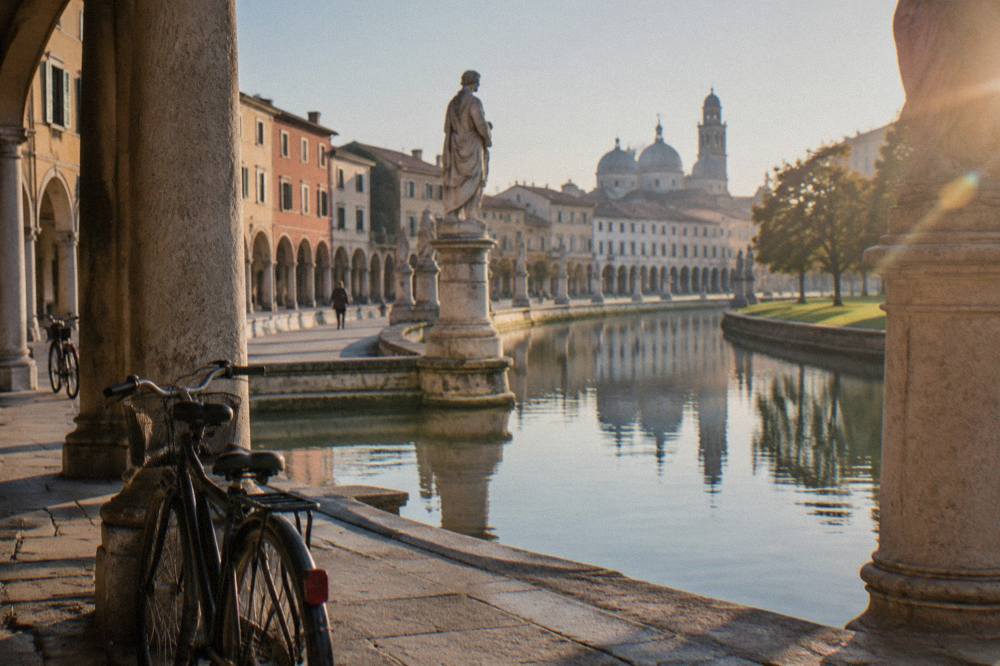
Around that slot, the rest of the day assembles itself. The Basilica of Saint Anthony, a 10-minute walk south, is free, with the saint's tomb and Chapel of the Relics accessible. Prato della Valle, a square ringed by a canal lined with a double ring of statues of famous figures, was declared communal space by the Venetian Senate in 1767, per the Padua tourism board. Piazza delle Erbe holds its market Monday to Friday 7:30 to 13:30 and Saturday 7:30 to 20:00, per the Comune di Padova's market page, and the food stalls of Sotto il Salone sit beneath Palazzo della Ragione nearby. For a fuller argument on length of stay, see how many days you need in Padua, and for a ready-made plan, the one day in Padua from Venice itinerary.
| Site | Entry figure | Booking rule | Source basis |
|---|---|---|---|
| Scrovegni Chapel (daytime) | EUR 15 full, EUR 11 reduced, plus EUR 1 booking fee | timed slot, max 25 people every 15 min, book ahead | chapel site and padovamusei.it |
| Basilica of Saint Anthony | free | dress suitable for a church | Padova Urbs Picta site |
| Orto Botanico | EUR 15 full from 1 Sept 2026 (EUR 12 winter, Nov to Feb) | closed non-holiday Mondays | ortobotanico1545.it |
| Palazzo del Bo guided tour | EUR 10 full, about 45 minutes | book via the university centre | unipd.it |
| Prato della Valle | no ticket | open public space | turismopadova.it |
The Palazzo del Bo tour alternates Italian and English slots through the day, per the university's own information page, so it needs a time check rather than a spontaneous arrival. A morning chapel slot, the Basilica and the squares at lunch, and the Orto Botanico or Palazzo del Bo in the afternoon is the shape the sources support.
Should You Stay In Padua Instead Of Venice?
Staying in Padua and day-tripping into Venice is a real option, not a compromise made only for budget reasons: the train runs about every 15 to 30 minutes with a regional fare of about EUR 5, the Venice day-tripper access fee trial ended on 27 July 2026, and Padua's accommodation collects a tourist tax capped at five consecutive nights per person. The trade-off is sleeping away from the lagoon's evening character.
The arithmetic favours basing in Padua for a traveller who wants both cities and values space or lower accommodation pressure, though no hotel price can responsibly be quoted here because the sources confirm none. What is confirmed: the train link is frequent and cheap, the Padua tourist tax exists, is collected by the accommodation and is capped at five consecutive nights per person, per the Comune di Padova's tax page, and the Venice access fee does not currently apply after the 2026 trial ended on 27 July 2026, per Venezia Unica, with no 2027 decision published at that point.
There is also a third way to move between the two cities. Il Burchiello, a boat cruise between Padua and Venice along the Brenta Riviera villas, runs March to October in both directions, per its own site, and turns the transfer itself into a villa-lined passage along the Brenta canal. Check availability if that crossing suits the dates. The Padua as a base for Venice guide develops the whole argument, and Padua Travel Guide covers the city end to end.
What Are The Alternatives To A Day In Padua?
The realistic alternatives to Padua from Venice are Vicenza, about 30 km from Padua and reachable in about 16 to 25 minutes by train with the Teatro Olimpico at EUR 12 full price, Verona at about 43 to 60 minutes, and the Brenta Riviera villas, with Villa dei Vescovi at EUR 11 full price and Villa Pisani at Stra about 11 km from Padua's centre; each trades Padua's frescoes for Palladio, an arena city or villa architecture respectively.
Vicenza pairs Palladio's buildings with a compact centre; its Teatro Olimpico charges EUR 12 full and EUR 9 reduced, per the theatre's own ticketing page, and a Vicenza Gold Card covering 11 sites costs EUR 22. Verona, about 69 km in a straight line from Padua's centre and about 43 to 60 minutes by train, offers the Roman arena and Shakespeare associations. The Euganean Hills, with Arqua Petrarca's Casa del Petrarca at EUR 6 full, sit about 20 km south of Padua, and Monselice about 21 km, per the computed distances in the site's places data.
Against those, Padua's advantage is density and depth: two UNESCO listings, a free major basilica and a university precinct inside a walkable centre, all under an hour from Venice by rail. Verona and Padua can also be paired across two days from a single base, a comparison developed in which city is better to visit, Verona or Padua.
| Day trip from Venice via Padua | Straight-line distance from Padua centre | Reported train time from Padova | Confirmed entry figure |
|---|---|---|---|
| Padua itself | 0 km | about 26 to 40 min from Venice | Scrovegni EUR 15 plus EUR 1 fee |
| Vicenza | about 30 km | about 16 to 25 min | Teatro Olimpico EUR 12 |
| Verona | about 69 km | about 43 to 60 min | check official pages |
| Arqua Petrarca | about 20 km | check Busitalia planner | Casa del Petrarca EUR 6 |
| Villa dei Vescovi (Torreglia) | within the Euganean Hills | check Busitalia planner | EUR 11 full, per FAI |
Distances are straight-line kilometres computed from the site's places data, not road distances, and train times are reported figures from journey planners rather than official timetables.
Common Questions About Visiting Padua From Venice
Is Padua Worth Visiting From Venice?
Yes. Padua holds Giotto's Scrovegni Chapel frescoes of 1303 to 1305, the free Basilica of Saint Anthony and two UNESCO listings, all about 26 to 40 minutes from Venice by train at a regional fare of about EUR 5, with the chapel requiring a timed booking made ahead.
How long is the train from Venice to Padua?
Reported regional journey times run about 26 to 40 minutes between Venezia Santa Lucia and Padova, at a regional fare of about EUR 5; the figures come from journey planners, so confirm times and fares on Trenitalia before travelling.
Can you visit the Scrovegni Chapel on the same day?
Not by booking online. The chapel admits at most 25 people every 15 minutes on timed slots, and same-day online booking does not exist; unbooked visitors must check availability in person at the museum ticket office. Book ahead through the chapel's own site.
Do you have to pay the Venice access fee if you stay in Padua?
No fee currently applies. The 2026 trial of the Venice day-tripper access fee ended on 27 July 2026, per Venezia Unica, and no 2027 decision had been announced; check the Venice city site for any later scheme.
Is one day enough for Padua?
One day covers the Scrovegni Chapel, the Basilica of Saint Anthony, Piazza delle Erbe and Prato della Valle, and can add the Orto Botanico or a Palazzo del Bo tour if the day starts early; two days ease the chapel-slot constraint and leave room for the museums.
