Venice Airport To Padua: Bus, Train And Taxi
The direct Busitalia airport bus runs from Venice Marco Polo to Padua about every 40 minutes for EUR 13 one way, with no transfer needed; this guide covers the bus, the train alternative, arrival at Padova station and the first hours in the city.
Short answer
The direct Busitalia airport bus from Venice Marco Polo to Padua costs EUR 13 one way for an adult, EUR 6.50 for a child up to 11 and EUR 23 for a same-day return, with 54 runs a day about every 40 minutes between 05:30 and 22:50 from Padua, and the trip takes about 45 minutes. There is no train station at the airport itself; a train journey means a bus or transfer into Venice or Mestre first.
Venice Marco Polo Airport (VCE) is the main gateway for travel to Padua (Italian: Padova), the inland city in the Veneto about 36 km in a straight line from Piazza San Marco, known for Giotto's frescoes in the Scrovegni Chapel, the Basilica of Saint Anthony, the Orto Botanico and a university founded in 1222. Padua is not on the lagoon and has no airport of its own, so every arrival passes through either Venice Marco Polo or Treviso, and the first decision is simple: the direct airport bus, or a train routed through Venice or Mestre. This guide sets out what Busitalia and the transport sources publish, what the journey looks like on arrival at Padova station, and how the pieces fit together for a stay based in Padua.
What Is The Best Way To Get From Venice Airport To Padua?
The best way for almost any arrival time is the direct Busitalia airport bus from Venice Marco Polo to Padua, which runs 54 times a day, about every 40 minutes, from 05:30 to 22:50 outbound from Padua and 06:30 to 23:50 from the airport, takes about 45 minutes and costs EUR 13 one way for an adult, with no transfer at any point, according to Busitalia's own service page.
The alternative is a train from Venezia Mestre or Venice itself, which needs a bus or transfer from the airport first.
The airport bus is the only mode that connects the terminal building to Padua without a change. Busitalia's page for the Padova to Venezia Aeroporto link states the frequency (54 runs a day, roughly every 40 minutes), the span of the day and the about-45-minute journey time. The service runs to and from Padova station, so the bus drops passengers at the station forecourt rather than in the historic centre; from there the old town is a short tram or bus ride, or a walk, as covered further down this page.
A train journey from the airport to Padua exists in practice but never as one single vehicle. There is no station at Venice Marco Polo itself, so the route is a bus or other transfer from the airport to Venezia Mestre station, then a regional or high-speed train to Padova. For a traveller with heavy luggage, or one landing late in the evening, the direct bus avoids that change entirely. The reverse also holds for departure day: the first buses leave Padua at 05:30, which matters for early flights out of Marco Polo.
Taxi and private transfer services run from both airports, but no published fare was found for either, so this page prints none; confirm any transfer price with the operator before booking. For a fuller comparison of the two airports that serve the Veneto, the guide to Treviso Airport to Padua covers the second option, where no direct official bus was confirmed.
How Much Does The Venice Airport Bus To Padua Cost?
An adult one-way ticket on the Busitalia airport bus from Venice Marco Polo to Padua costs EUR 13, a child ticket up to age 11 costs EUR 6.50, and a same-day return costs EUR 23, per the fares published by Busitalia for the Padova to Venezia Aeroporto link, with the equivalent service from Montegrotto and Abano Terme priced at EUR 15 one way. Tickets cover the bus only and no rail journey.
Those fares come from Busitalia's own page for the special airport service, which also states the frequency and the timetable span quoted above. The child fare applies up to age 11; a family of two adults and two children travelling one way pays EUR 39 in bus fares at the published rates. The same-day return at EUR 23 is the option for a quick turnaround, though for anyone staying overnight two one-way tickets are the norm.
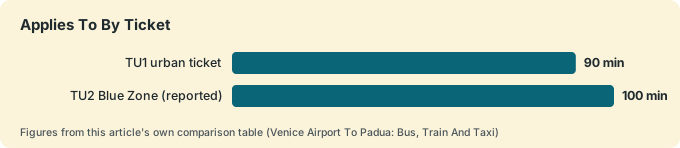
For comparison, the urban bus and tram ticket inside Padua itself, the TU1 Orange Zone ticket, costs EUR 1.70 for 90 minutes and can be bought digitally or by tapping a contactless card on board, per Busitalia's ticketing page. A reported daily ticket at EUR 4.70 and the TU2 Blue Zone ticket at EUR 2.00 also appear on the operator's site; treat those as reported and check before travel. The airport bus is a separate, special service priced well above the urban network, so it is worth knowing the boundary between the two fare systems before arrival.
| Ticket | Price | Applies to |
|---|---|---|
| Airport bus, adult one way | EUR 13 | Venice Marco Polo to Padua, either direction |
| Airport bus, child one way | EUR 6.50 | Children up to 11 |
| Airport bus, same-day return | EUR 23 | Both directions in one day |
| Montegrotto / Abano to VCE | EUR 15 | Thermal towns to the airport |
| TU1 urban ticket | EUR 1.70 | 90 minutes, Padua city buses and tram |
| TU1 daily (reported) | EUR 4.70 | One day of urban travel |
| TU2 Blue Zone (reported) | EUR 2.00 | 100 minutes, wider conurbation |
One budgeting item that catches some arrivals out is the Padua tourist tax, the imposta di soggiorno. The Comune di Padova's tax page states it is charged per person per night for up to five consecutive nights, collected by the accommodation, with under-16s and hostel guests exempt. Rates vary by category of accommodation; confirm the amount for your property at booking.
Can You Take A Train From Venice Airport To Padua?
No train runs from Venice Marco Polo Airport itself, because the airport has no station of its own; the train route from the airport to Padua means a bus or transfer first to Venezia Mestre station, then a train to Padova, with regional trains from Venice proper to Padova reported at about 26 to 40 minutes, so the train only wins on price of the rail leg, never on simplicity.
The bus-plus-train combination suits travellers who are already heading into Venice, or who hold a rail pass. Trains from Venezia Santa Lucia to Padova take about 26 to 40 minutes on regional services, with a regional fare of about EUR 5, according to timetable aggregators (rome2rio, trainline and omio, which are not official sources, so treat the times as approximate and check Trenitalia for the day of travel). High-speed services also run the corridor at higher fares.
Two things to hold straight about that route. First, the Venice day-tripper access fee is not a factor for airport transit: the 2026 trial of the fee ended on 27 July 2026 and the fee does not currently apply, per Venezia Unica, and no 2027 decision had been announced. Second, Mestre is on the mainland: a bus from Marco Polo to Mestre station followed by a regional train to Padova avoids crossing the lagoon entirely. The dedicated question page is there a train from Venice airport to Padua works through that routing in detail, and the wider Venice to Padua guide covers the reverse journey for a day trip.
| Rail leg | Reported time | Reported fare | Source type |
|---|---|---|---|
| Venezia Santa Lucia to Padova, regional | about 26 to 40 minutes | about EUR 5 | Aggregators, not official |
| Venezia Mestre to Padova | within the above range | about EUR 5 | Aggregators, not official |
| Padova to Vicenza | 16 to 25 minutes | about EUR 6 | Aggregators, not official |
| Padova to Verona | 43 to 60 minutes | not stated here | Aggregators, not official |
| Padova to Treviso | 28 to 60 minutes, sometimes a change | not stated here | Aggregators, not official |
Confirm live times and fares on Trenitalia for the travel date, because regional pricing and schedules shift through the year.
Where Does The Bus Arrive In Padua And How Do You Reach The Centre?
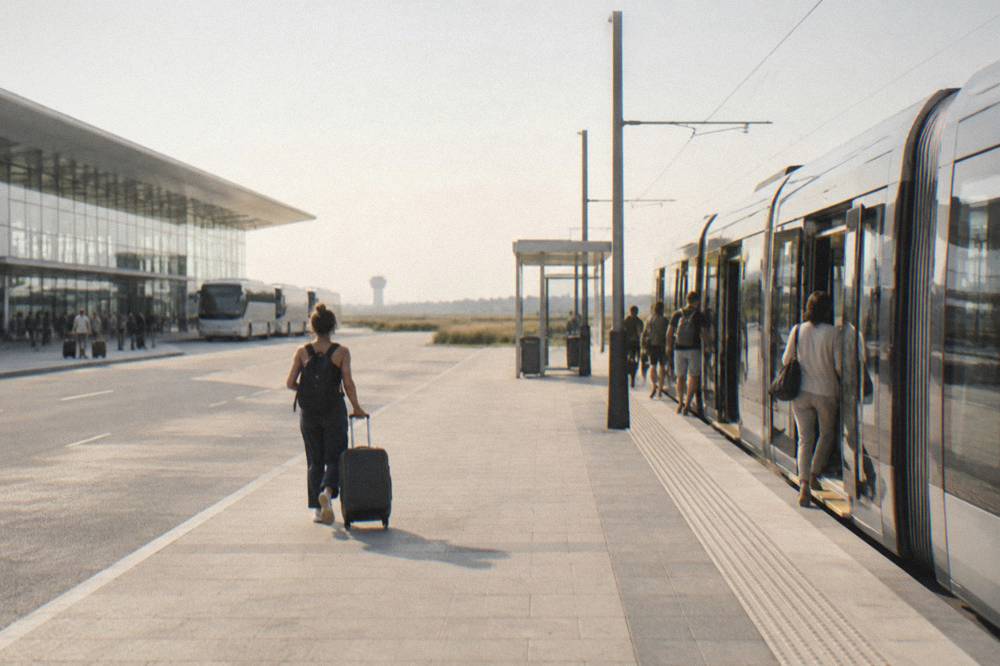
The airport bus terminates at Padova station, on the northern edge of the historic centre, and the old town with its market squares and main sights lies within about 3 km of the centre point, reachable on the SIR1 tram (running north to south, about 10.5 km with 26 stops), on urban buses with the EUR 1.70 TU1 90-minute ticket, or on foot, since every city-tier landmark sits within that 3 km radius.
Padova station is the region's rail hub on the Venice to Milan line, and the arrival experience is straightforward: the bus stops at the station, the tram and bus stops sit at or beside the forecourt, and the IAT tourist office stands at the exit of platform 1. The IAT Stazione office is open Monday to Saturday 9:00 to 19:00 and Sunday and holidays 10:00 to 16:00, closed 25 and 26 December and 1 January, per the tourism board's own listing, and it is the place to pick up a paper map and ask about same-day Scrovegni availability.
The tram line SIR1, a Translohr system running north to south from Vigodarzere to Guizza with 26 stops along about 10.5 km, serves the station and the western side of the centre. A second line, SIR3 from the station towards Voltabarozzo, is in pre-service testing, with service targeted for the end of 2026; no opening date should be assumed. Tapping a contactless card on board the tram or a bus buys the EUR 1.70 TU1 ticket directly, per Busitalia's contactless page, which saves hunting for a ticket machine after a flight.
Luggage is worth a thought on arrival day. The station's left-luggage office at platform 1 is open daily 6:00 to 20:00 at EUR 5 per 6 hours, per the tourism board's luggage page, which is useful for travellers whose accommodation cannot take bags early or who want a final day without them. The Padua train station guide goes deeper on the station itself, and getting around Padua covers trams, buses and walking in the centre.
| From Padova station to the centre | What the sources say |
|---|---|
| Tram SIR1 | North to south, about 10.5 km, 26 stops, serves the station |
| Tram SIR3 | Pre-service testing, station to Voltabarozzo, no promised date |
| TU1 ticket | EUR 1.70 for 90 minutes, contactless tap on board |
| IAT tourist office | Platform 1 exit, Mon to Sat 9:00 to 19:00, Sun 10:00 to 16:00 |
| Left luggage | Platform 1, daily 6:00 to 20:00, EUR 5 per 6 hours |
What About Treviso Airport To Padua?
Treviso Airport (TSF), about 37 km in a straight line from the centre of Padua, has no direct official bus to Padua in the published sources, and no taxi fare was found for either airport, so a Treviso arrival means routing by bus or train via Treviso city, from where trains to Padova are reported at about 28 to 60 minutes, sometimes with a change; confirm the connection on the operator's own planner before booking a Treviso flight.
Treviso suits some low-cost carriers, but the last leg into Padua needs more planning. The rail route runs from Treviso station to Padova, reported by aggregators at about 28 to 60 minutes depending on whether a change is needed; a transfer between the airport and Treviso station has to be arranged separately, and this page names no operator or fare for it because none was confirmed. Venice Marco Polo, by contrast, has the direct Busitalia link all the way to Padova station. The rest of the planning pages sit on Padua Travel Guide.
The practical rule when comparing flights: price the whole journey, not the ticket. A cheaper fare into Treviso can be offset by a slower, less certain final leg, while Marco Polo connects to Padua with one vehicle and a published EUR 13 fare. The distances are similar in straight-line terms, Treviso at about 37 km and Marco Polo at about 38 km from the centre, so the difference lies entirely in the quality of the connection. The full comparison lives in the Treviso airport to Padua guide.
Should You Stay In Padua And Visit Venice, Or The Other Way Round?
Staying in Padua and day-tripping to Venice works well on the transport facts: the two centres are about 36 km apart in a straight line, trains from Padova to Venezia Santa Lucia take about 26 to 40 minutes with a regional fare of about EUR 5, and Padua's own sights, from the Scrovegni Chapel to the Orto Botanico and the Basilica of Saint Anthony, sit within about 3 km of the centre, so the city works as a compact base with cheaper logistics than a lagoon stay.
The case is practical rather than scenic. Padua is inland, on the Bacchiglione and its canals, with arcaded streets and market squares rather than water buses, and the historic core is walkable in a way Venice's archipelago is not. Trains run frequently on the corridor, per the aggregators, and the Venice day-tripper access fee is not currently a charge to plan around: the 2026 trial ended on 27 July 2026, and no 2027 decision had been published, so a Padua-based day-tripper should simply check the Venice city site for any later scheme rather than budget for a fee.
The base-city question has its own guides: Padua as a base for Venice, is Padua worth visiting from Venice and the itinerary one day in Padua from Venice cover both directions, and how far is Padua from Venice states the distance plainly. For anyone combining the two cities over a weekend, the Padua weekend with Venice itinerary sequences the pair.
There is also a slower water route between the two, if the point of the trip is the journey itself. Il Burchiello, a boat cruise between Padua and Venice along the Brenta Riviera villas, runs March to October in both directions, per its own site, and the site's featured Brenta Riviera boat tour page describes what that villa-lined waterway involves.
What Should You Sort Out Before Landing In Padua?
Two bookings decide the shape of an arrival day: the Scrovegni Chapel, which admits a maximum of 25 people every 15 minutes on timed entry, with tickets booked in advance and a EUR 1 booking fee on top of the EUR 15 full-price daytime ticket that also covers the Musei Civici Eremitani and Palazzo Zuckermann, and the airport bus, whose EUR 13 fare and roughly 40-minute frequency make same-day planning easy, while the chapel's own page warns that late arrivals must rebook and pay again.
The chapel is the one sight in Padua that genuinely punishes improvisation. Same-day online booking does not exist; the chapel's booking page directs visitors who have not booked to check availability at the museum ticket office in person. Entry is in groups of at most 25 every 15 minutes, with about 15 minutes inside, after a wait in the climate-controlled waiting room; the visitor instructions say to arrive 5 minutes before the slot, and groups at least 45 minutes early. Slots are bookable by phone or online up to the day before. Note also the annual closure: the chapel is closed 16 to 27 November 2026 for the fresco inspection, and the daytime ticket price of EUR 15 (EUR 11 reduced, EUR 5 for residents) covers the two civic museums as well, per the museums' price list. The dedicated Scrovegni Chapel tickets guide works through the options.
The rest of the checklist is short. The Orto Botanico's tariff rose to EUR 15 full price from 1 September 2026 (EUR 12 in winter, November to February, and EUR 10 reduced for visitors 65 and over), per the garden's own ticket page. The Basilica of Saint Anthony has free entry, reported by the Urbs Picta site, with a dress code suitable for a church. A city card exists in the form of the Padova Urbs Picta Card for the eight UNESCO fresco-cycle sites; this page prints no card price or inclusion list, and the Scrovegni Chapel always needs its own timed booking regardless, so check the official museums site and the site's Padova Urbs Picta card and Urbs Picta UNESCO guides before buying anything.
| Arrival-day item | What the sources say |
|---|---|
| Scrovegni Chapel entry | Timed, max 25 people every 15 minutes, about 15 minutes inside |
| Scrovegni daytime ticket | EUR 15 full, EUR 11 reduced, plus EUR 1 booking fee |
| Daytime ticket includes | Musei Civici Eremitani and Palazzo Zuckermann |
| Scrovegni closure | 16 to 27 November 2026, annual fresco inspection |
| Orto Botanico ticket | EUR 15 full from 1 September 2026, EUR 12 winter |
| Basilica of Saint Anthony | Free entry, dress code suitable for a church |
What Can You Do With Your First Few Hours In Padua?
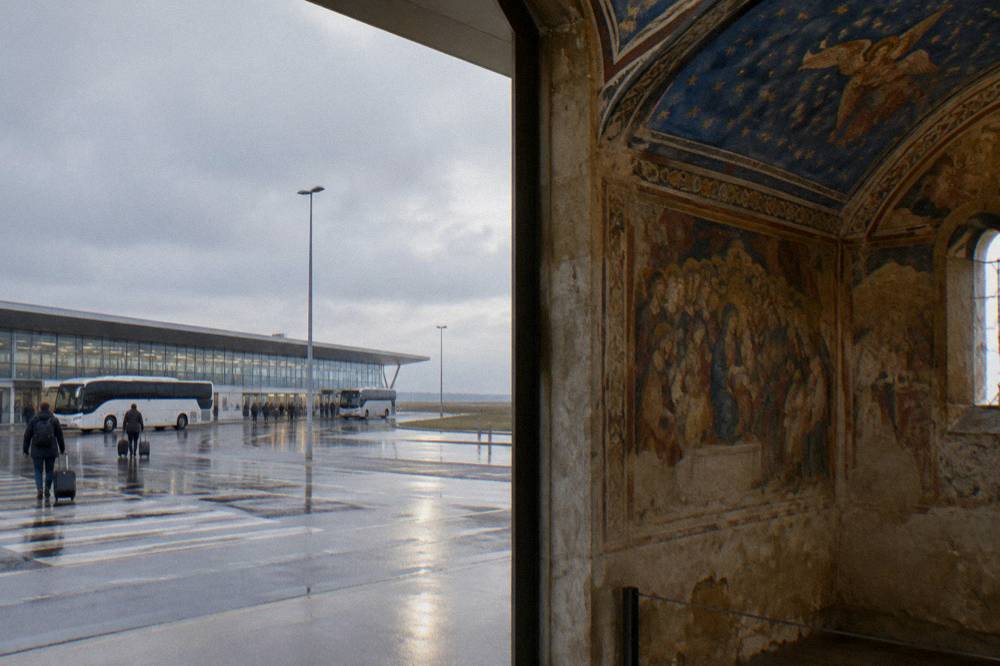
With bags dropped and a few hours to fill, the compact centre offers the Scrovegni Chapel and its civic museums by the station side of town, Piazza delle Erbe and Piazza dei Frutti whose markets run Monday to Friday 7:30 to 13:30 and Saturday 7:30 to 20:00, the Basilica of Saint Anthony with free entry, and Prato della Valle with its canal and double ring of statues, all within about 3 km of the centre point.
The market squares sit at the heart of the old town, under the bulk of Palazzo della Ragione. The Comune di Padova's market page gives the Piazza delle Erbe hours (52 stalls, mostly fruit, vegetables and flowers) and lists the Piazza dei Frutti and the Saturday Prato della Valle market alongside it; the antiques market fills Prato della Valle and via Umberto I on the third Sunday of each month. On a Saturday arrival, the Prato market runs 8:00 to 19:00 in winter and 8:00 to 20:00 in summer, per the same page.
From the squares, the walk south leads past the Basilica of Saint Anthony, begun in 1232, to Prato della Valle, which the Venetian Senate declared communal space in 1767 and which carries a double ring of numbered statues of famous people around its canal, per the tourism board's own page. The university quarter holds Palazzo del Bo, whose guided historic tour includes the anatomical theatre inaugurated in 1594 and Galileo's chair in the Sala dei Quaranta; the university's tour page lists full price EUR 10 with alternating Italian and English slots, bookable through the university's centre. Galileo taught at Padua from 1592 to 1610, and Elena Lucrezia Cornaro Piscopia took her philosophy doctorate there on 25 June 1678, the first woman graduate of a university in the recorded line of the institution's own history pages.
For a first day sequenced end to end, things to do in Padua is the site's overview page, and the history behind the sights is traced in the Padua history guide, with the university's story in University of Padua and the Santo's in Saint Anthony of Padua.
What Day Trips Open Up Once You Are Based In Padua?
Padua sits at the centre of a dense day-trip web: Venice about 36 km away by straight line with trains reported at about 26 to 40 minutes, Vicenza about 30 km with trains at 16 to 25 minutes and its Teatro Olimpico at EUR 12 full price, the Euganean Hills towns of Arqua Petrarca about 20 km and Montegrotto Terme about 11 km, and Verona about 69 km with trains at 43 to 60 minutes, all reachable without a car.
The train times are aggregator-reported and should be confirmed on Trenitalia for the travel date, but the pattern is reliable: Padova is a rail node on the Venice to Milan line, and the surrounding cities are short hops. Vicenza's Teatro Olimpico charges EUR 12 full price and EUR 9 reduced, per the theatre's own visitor page, which also lists a Vicenza Gold Card covering eleven sites over twelve days at EUR 22. In the Euganean Hills, Villa dei Vescovi (FAI, at Luvigliano di Torreglia) charges EUR 11 for adults and EUR 6 for visitors aged 6 to 18, per the FAI page, and Casa del Petrarca at Arqua Petrarca charges EUR 6 full price, per the village's own what-to-see page.
For distances, places.json supplies straight-line kilometres only, so this page prints those and no drive times. The site's day-trip guides cover the individual destinations: Venice, Lake Garda and the rest of the regional set. For rail questions beyond the Veneto, is there a train from Verona to Padua and Milan to Padua answer the two long corridors.
| Destination | Straight-line distance from Padua centre | Train time (reported) |
|---|---|---|
| Venice | about 36 km | 26 to 40 minutes |
| Vicenza | about 30 km | 16 to 25 minutes |
| Treviso | about 41 km | 28 to 60 minutes |
| Verona | about 69 km | 43 to 60 minutes |
| Abano Terme | about 8 km | not a rail route |
| Arqua Petrarca | about 20 km | not a rail route |
| Bologna | about 110 km | not stated here |
Wine travellers can head into the hills without a car by joining an organised tasting trip, and the site's hills winery pages, including the featured Brenta Riviera boat tour itinerary pages, describe what each covers. If a water route back towards the airport corridor appeals on a departure day, the Padua to Venice boat cruise along the Brenta Riviera runs in both directions between March and October; Check availability on the operator's live listing if that fits the calendar.
What Does The Weather Mean For Your Airport Transfer Plans?
The climate figures that matter for transfer planning are modest: the ERA5 reanalysis for Padua, 1991 to 2020, puts the January mean daily high at 7.3 C with a mean low of -0.2 C, July and August mean highs at 28.8 C, and November as the month with the highest rain total at 114 mm against January's 53.6 mm, so the airport bus, which runs on the same timetable year-round, is the mode that behaves the same whatever the month.
Those numbers are modelled normals from a reanalysis grid cell over the city centre, not a weather-station record, and they describe averages rather than any specific day. They still shape two decisions. Rain totals climb through autumn, with September and October both around 105 mm and November at 114 mm, so an arrival that involves standing at a curb with luggage is better spent inside the direct bus than waiting for a connection in the open. And in summer, with mean highs at 28.8 C in July and August, the about-45-minute air-conditioned bus ride beats a bus-plus-train change with a transfer on foot.
Snow is a minor factor: a long climate study of the Padua series reports an average of about 4.4 snowy days per year in the 1995 to 2024 period, down from about 10.4 in the 1785 to 1814 window, with seasons entirely without snow not uncommon. Winter disruption to the airport bus is therefore rare, but the Padua weather and Padua in winter guides carry the seasonal detail for anyone planning around it.
Common Questions About Travel From Venice Airport To Padua
How much is the bus from Venice airport to Padua?
The Busitalia airport bus costs EUR 13 one way for an adult, EUR 6.50 for a child up to 11, and EUR 23 for a same-day return, per the operator's published fares for the Padova to Venezia Aeroporto link.
Is there a direct bus from Venice Marco Polo to Padua?
Yes. Busitalia runs a direct airport service with 54 runs a day, about every 40 minutes, from 05:30 to 22:50 outbound from Padua and 06:30 to 23:50 from the airport, taking about 45 minutes with no transfer.
How do I get from Venice airport to Padua by train?
There is no station at the airport. The rail route is a bus or transfer to Venezia Mestre or Venice first, then a train to Padova; regional trains from Venezia Santa Lucia to Padova are reported at about 26 to 40 minutes with a fare of about EUR 5, so confirm times on Trenitalia.
Where does the airport bus stop in Padua?
The bus terminates at Padova station, on the northern edge of the centre. From there the SIR1 tram and urban buses run into the city with the EUR 1.70 TU1 90-minute ticket, and the old town lies within about 3 km of the centre point.
Do I have to pay the Venice day-tripper fee when transferring from the airport?
No. The 2026 trial of the Venice access fee ended on 27 July 2026 and the fee does not currently apply; no 2027 decision had been announced. Check the Venice city site for any later scheme.
Can I leave luggage at Padua station after arriving?
Yes. The left-luggage office at platform 1 is open daily 6:00 to 20:00 at EUR 5 per 6 hours, per the tourism board's luggage page, which suits an early arrival before check-in.
The transfer itself is the simplest part of a Padua trip: one bus, one published fare of EUR 13, and a station that opens straight onto a walkable city. Book the Scrovegni Chapel slot before the flight, tap a contactless card on the tram at Padova station, and the rest of the visit arranges itself on foot.