Padua And Venice In Three Days
Padua and Venice pair naturally: the two cities sit about 36 km apart in the Veneto, the train between them takes about half an hour, and Padua's frescoes, markets and university quarter give a weekend a second, quieter centre of gravity.
Short answer
Spend two of three days in Padua and one in Venice. Book the Scrovegni Chapel's timed slot before anything else, walk the historic centre and the Orto Botanico, then take the 26-to-40-minute train to Venice for the third day, or the Brenta Riviera boat between March and October.
Padua (Italian: Padova) is an inland city in the Veneto, northern Italy, about 36 km in a straight line from Venice, and the pairing of the two makes one of the most practical weekends in northern Italy. Trains from Padova station reach Venezia Santa Lucia in about 26 to 40 minutes, so a visitor can sleep in Padua, spend a full day on the lagoon, and still be back for a late spritz under the arcades of Piazza delle Erbe. This page lays out a three-day Padua and Venice itinerary built around the things that genuinely need planning ahead: the Scrovegni Chapel's timed entry, the Orto Botanico's ticket, and the choice between the train and the Brenta Riviera boat for the Venice day. For a deeper look at the city's sights, the site's root guide to things to do in Padua covers every major stop in detail.
Why Split A Weekend Between Padua And Venice?
A weekend split two days Padua, one day Venice works because the two cities are 36 km apart in a straight line and the regional train takes about 26 to 40 minutes each way, so Venice becomes a day trip rather than a relocation, while Padua's timed-entry Scrovegni Chapel and two UNESCO listings reward the longer stay. Padua holds the Orto Botanico, inscribed by UNESCO in 1997 and founded in 1545, and the fourteenth-century fresco cycles of Padova Urbs Picta, inscribed in 2021 across eight complexes. Venice holds the lagoon. Splitting the stay this way keeps accommodation in one place and gives the chapel, the Basilica of Saint Anthony and the university quarter enough room to breathe.
The economics of the split also matter. Padua is a university city, founded in 1222, and its historic centre is compact enough that the whole itinerary below is walkable, with a tram line running north to south for the odd longer hop. The tourist tax (imposta di soggiorno) applies in both cities, is collected by the accommodation, and in Padua is capped at five consecutive nights per person, which covers a weekend with room to spare. What the split avoids is dragging luggage onto a vaporetto: the station left-luggage office at Padova, on platform 1 and open daily 6:00 to 20:00 at EUR 5 per 6 hours, handles bags on the Venice day if checkout comes first.
One 2026 point needs stating plainly because older guides get it wrong: the Venice day-tripper access fee trial ended on 27 July 2026, and the fee does not currently apply. A visitor day-tripping from Padua should not budget for it, and should check the Venice city site for any later scheme before travelling. No decision for 2027 had been announced.
| Journey or item | Figure | Note |
|---|---|---|
| Padua to Venice, straight line | about 36 km | computed distance, city centre to city centre |
| Train Padova to Venezia Santa Lucia | about 26 to 40 minutes | regional, frequent; fare about EUR 5 |
| Airport bus, Venice Marco Polo to Padua | about 45 minutes | EUR 13 one-way adult |
| Urban ticket in Padua (TU1) | EUR 1.70 | valid 90 minutes, bus and tram |
| Venice access fee | does not apply | 2026 trial ended 27 July 2026 |
What Should Day One In Padua Look Like?
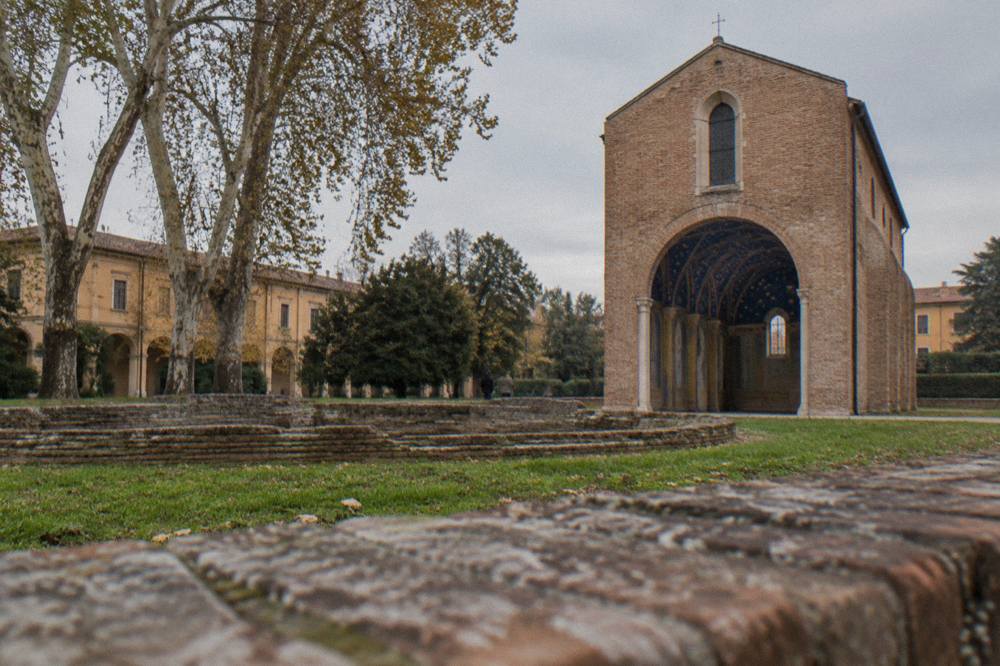
Day one belongs to the Scrovegni Chapel in the morning and the historic centre after it: the chapel admits at most 25 people every 15 minutes for about 15 minutes inside, booked in advance, and the daytime ticket at EUR 15 full price also covers the Musei Civici Eremitani and Palazzo Zuckermann, so the whole museum cluster slots into one block before lunch. The chapel's own booking site is the place to reserve: there is no same-day online booking, and visitors without a reservation are told to check availability at the museum ticket office in person. Arrive five minutes before the slot on the ticket, because latecomers are denied re-entry without a new paid booking.
Giotto painted the fresco cycle between 1303 and 1305, and the chapel stands on the site of Padua's Roman amphitheatre, which is why it is also called the Arena Chapel; that Arena is Padua's own, never the Arena di Verona. The visit is short by design: the climate-controlled waiting room comes first, then about 15 minutes inside. Two 2026 dates matter for planners. The chapel is closed 16 to 27 November 2026 for the annual fresco inspection, and the evening visits, "Giotto sotto le stelle", run 25 March to 1 November from 19:00 to 22:00, chapel only, as a separate ticket.
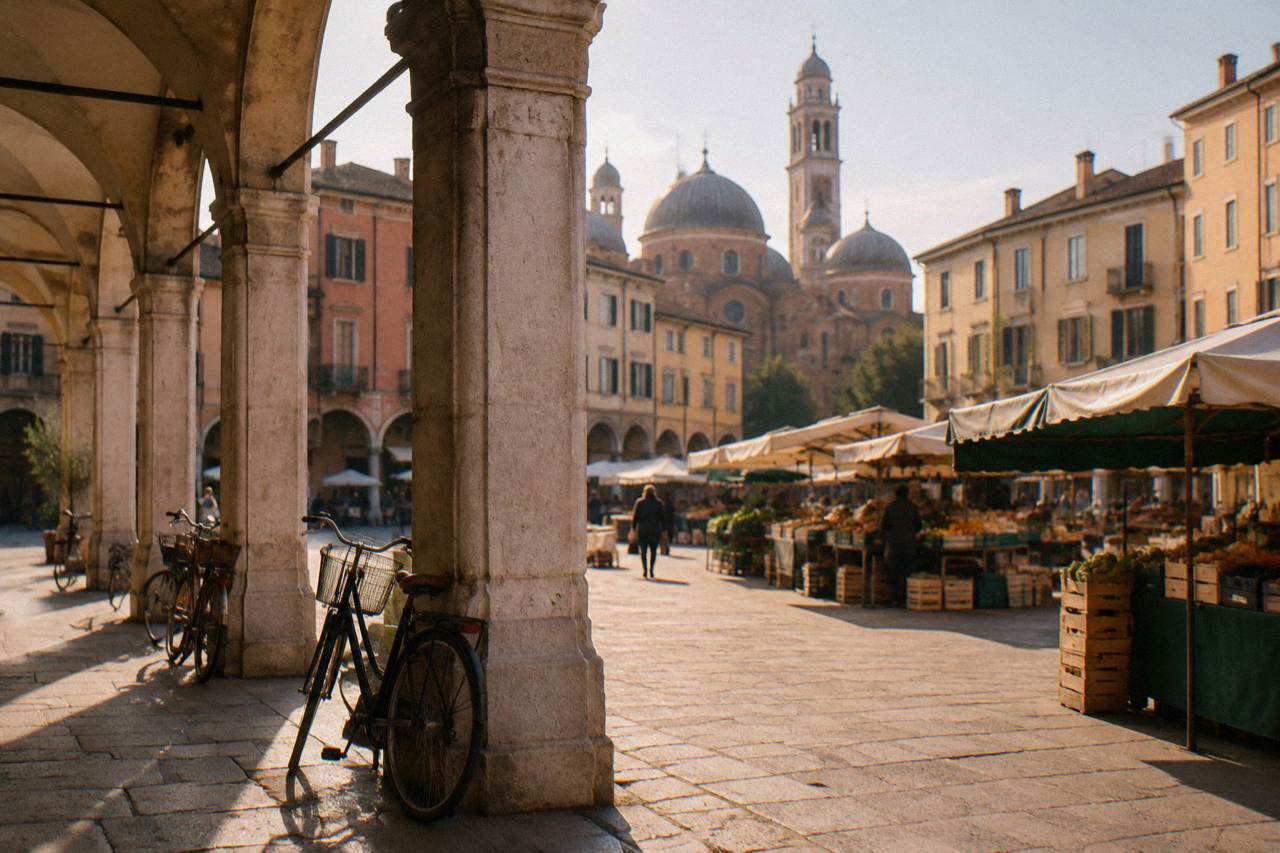
After the chapel, the day walks itself. Piazza delle Erbe and Piazza della Frutta hold the daily markets, fruit and vegetables and flowers on the weekdays from 7:30, with the Saturday market running to 20:00; the market square itself deserves ten minutes of looking up as well as down. Under Palazzo della Ragione sits Sotto il Salone, the covered food market, and the Palazzo itself, with its fourteenth-century frescoes among the eight complexes of the UNESCO listing, is EUR 8 full price and EUR 6 concession. The Caffè Pedrocchi, opened in 1831, caps the afternoon. For anyone wanting a guide rather than a map, a small-group walk that includes the chapel covers the same ground with commentary, and the site's overview of Padua walking tours compares the options.
How Do You Fit Day Two Around The Basilica And The Orto Botanico?
Day two takes in the Basilica of Saint Anthony, the Prato della Valle and the Orto Botanico, all within a walkable chain south and east of the centre, with the Orto Botanico at EUR 15 full price since 1 September 2026 (EUR 12 in winter, November to February) and the Basilica free to enter, so the day's only fixed costs are the garden ticket and whatever lunch costs. The Basilica, begun in 1232 a year after Saint Anthony's death, holds the Saint's tomb and the Chapel of the Relics, and entry is free; dress suitable for a church. Hours are not listed in this article, so check the Basilica's own site before setting out.
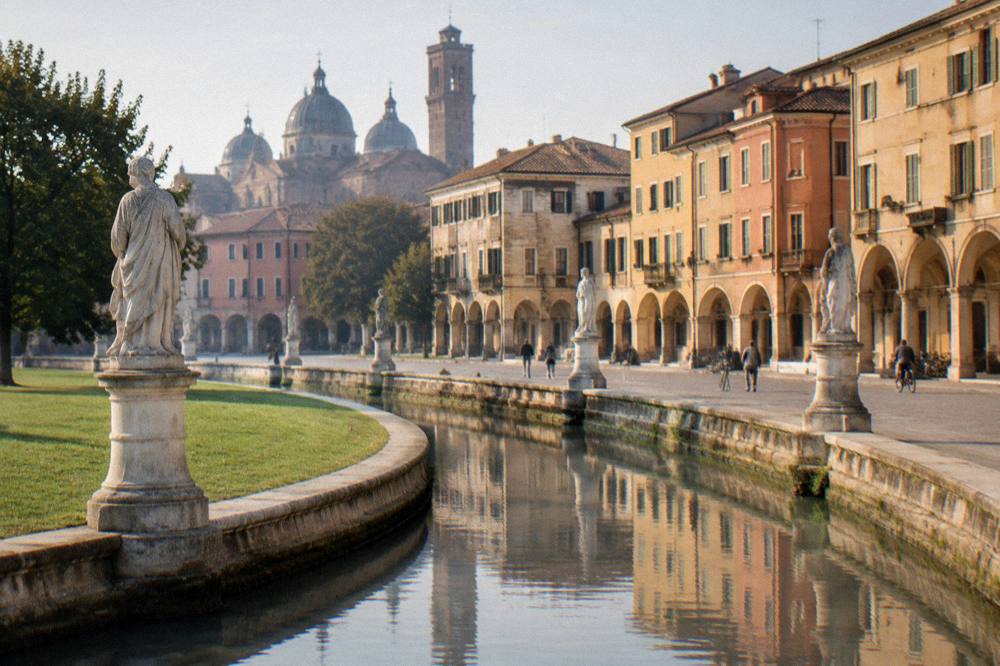
Prato della Valle sits behind the Basilica: a square ringed by a canal and a double ring of numbered statues of famous people, declared communal space by the Venetian Senate in 1767 and reclaimed under Andrea Memmo. On Saturdays it also holds a market, plants and flowers and produce, from 8:00 into the evening. The Orto Botanico is a short walk further, the botanical garden founded by the university in 1545 and inscribed by UNESCO in 1997. Tickets moved to the current tariff on 1 September 2026: EUR 15 full for ages 26 to 64, EUR 12 full in winter, EUR 10 reduced for 65-plus and teachers, EUR 8 winter reduced. It is closed on non-holiday Mondays, and closed 25 December 2026. Everything else covered here is indexed on Padua Travel Guide.
The afternoon can bend toward the university quarter. Palazzo del Bo, the historic seat of the university founded in 1222, runs a guided "Giro storico" at EUR 10 full, about 45 minutes, taking in the anatomical theatre inaugurated in 1594 and Galileo's chair in the Sala dei Quaranta; Galileo held the chair of mathematics here from 1592 to 1610. Slots alternate between Italian and English, so book ahead. For the evening, the piazzas around Erbe and Signori carry the aperitivo tradition, and the spritz has a local claim: Aperol was presented in Padua in 1919 by the Barbieri brothers. A guided tasting walk through the city's wine bars is one structured way into that, and the site's longer three days in Padua itinerary stretches this same day over a lazier pace.
Should Day Three Be Venice By Train Or By Boat?
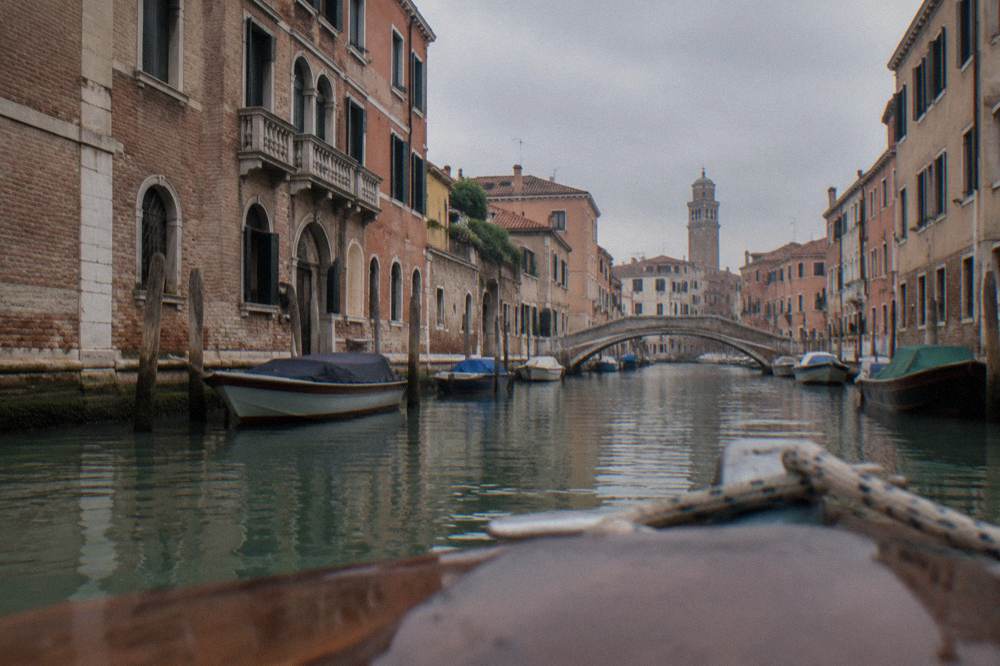
Day three is Venice, and the honest answer is train for schedule freedom and boat for the journey itself: the train runs about 26 to 40 minutes each way from Padova to Venezia Santa Lucia for about EUR 5, while the Brenta Riviera boat cruise between Padua and Venice, the Il Burchiello route along the villas, runs March to October in both directions and turns the transfer into the day's main event. The boat is the related tour on this page precisely because it resolves the weekend's one real decision, and its operator's live listing carries the current price, schedule and departure point. Check availability if the villa route appeals, then read the site's guide to Venice as a day trip for what to do once the lagoon appears.
The train option needs no advance planning beyond a ticket. Regional trains run frequently through the day, and the fare sits around EUR 5 each way; the Venice to Padua guide covers the return leg in detail. On the lagoon side, the 2026 access-fee trial ended on 27 July 2026, so day-trippers from Padua have no fee to pay under the current arrangement, and anyone travelling later should check the Venice city site for any 2027 scheme before assuming either way.
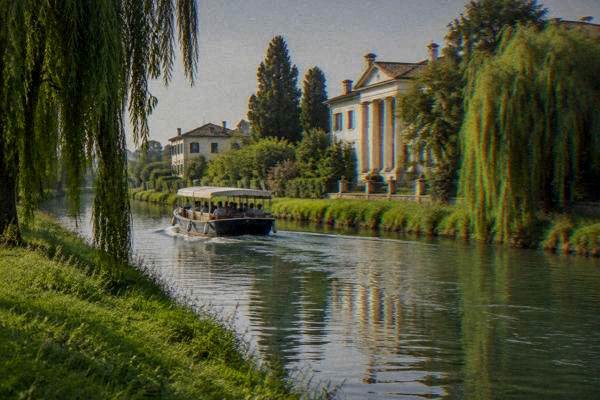
The boat route has its own geography. It follows the Brenta Riviera, the string of villas along the river between Padua and the lagoon, of which Villa Pisani at Stra, about 11 km from Padua in a straight line, is the best known, with a hedge maze the villa's own site describes as among the most important in Europe. Travel between March and October and the boat is a genuine alternative to the rails; outside those months it is the train, full stop. The site's guide to Padua as a base for Venice works through the trade-offs, and the Brenta Riviera boat tour page collects the practical detail.
| Day-three option | Time each way | Runs | Best for |
|---|---|---|---|
| Train, Padova to Venezia Santa Lucia | about 26 to 40 minutes | daily, frequent | earliest start, flexible return |
| Brenta Riviera boat, Padua to Venice | the day's journey, villa stops en route | March to October, both directions | villas, travelling on the water |
| Train via Venezia Mestre | short regional hop | daily | getting onto the lagoon fast |
What Does The Weekend Cost In Tickets?
The fixed sight costs for this weekend come to roughly EUR 50 to 60 per adult before food and lodging: the Scrovegni Chapel combined ticket at EUR 15 plus its EUR 1 booking fee, Palazzo della Ragione at EUR 8, the Orto Botanico at EUR 15, the Palazzo del Bo tour at EUR 10, and the Basilica of Saint Anthony free, with Venice itself needing no entry fee and the train about EUR 5 each way. A visitor who swaps the daytime chapel ticket for an evening one pays less on paper but sees the chapel alone, without the museums the daytime ticket bundles in. The only price that moved recently is the Orto Botanico's, which rose to EUR 15 full on 1 September 2026.
The table below holds every figure this page is willing to state. Where a price is on a banned-by-uncertainty list, the itinerary says nothing, and the right move is to check the official ticket page before booking. Nothing here includes accommodation, food, or the tourist tax, which exists, is collected by the accommodation, and is capped at five consecutive nights per person in Padua.
| Item | Full price | Reduced / note |
|---|---|---|
| Scrovegni Chapel (museums plus chapel) | EUR 15 + EUR 1 booking fee | EUR 11 reduced; EUR 5 residents |
| Scrovegni evening ticket, chapel only | separate ticket, chapel's site | 25 March to 1 November |
| Musei Civici Eremitani, museum-only ticket | EUR 11 | EUR 9 reduced |
| Palazzo della Ragione | EUR 8 | EUR 6 concession |
| Orto Botanico | EUR 15 (from 1 Sept 2026) | EUR 12 winter full; EUR 10 and EUR 8 reduced |
| Palazzo del Bo guided tour | EUR 10 | EUR 8 and EUR 6 tiers |
| Basilica of Saint Anthony | free | dress suitable for a church |
| Train Padova to Venice | about EUR 5 | regional, about 26 to 40 minutes |
When Should You Take This Padua And Venice Itinerary?
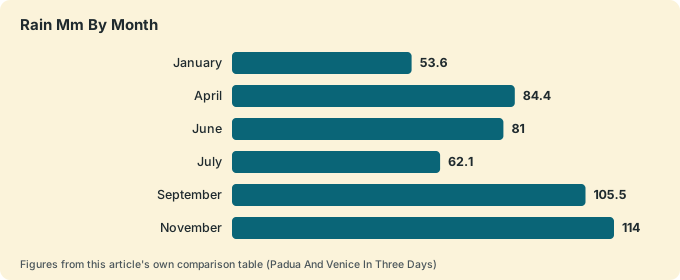
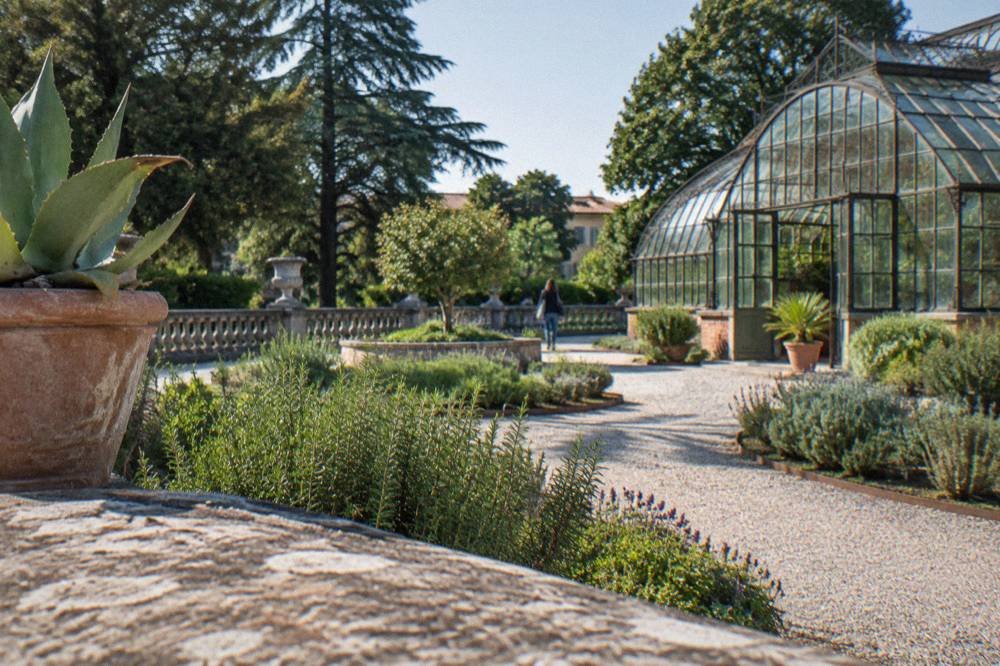
Any month works on paper, but the ERA5 reanalysis for Padua, 1991 to 2020, gives January a mean daily high of 7.3 C and July and August 28.8 C, with November the month carrying the highest rain total at 114 mm, so late spring and early autumn sit most comfortably between the two, and two fixed closures shape the edges: the Scrovegni Chapel's 16 to 27 November 2026 inspection closure and the boat season's March to October window. A November weekend is the one to check against the calendar with real care, because the chapel closure removes the city's headline sight for those twelve days, and November is also the modelled month with the highest rain total.
Summer visitors should plan around the heat rather than against it: the morning chapel slot, the shaded arcades of Piazza delle Erbe, and the Orto Botanico's green cover distribute the day sensibly. Winter visitors get the garden at its EUR 12 winter ticket, the evening chapel visits end on 1 November, and the boat to Venice does not run at all, so the winter version of day three is the train, without exception. The feast of Saint Anthony falls on 13 June, with the Tredicina running the thirteen days before it; the 2026 edition ran 31 May to 12 June, and it is an annual event, so a June weekend lands in the middle of the city's most public devotion.
For anyone stretching the weekend, the answers page on how many days you need in Padua argues the case for a fourth day, and the wider Veneto itinerary folds this same Padua-and-Venice spine into a longer route through Vicenza and Verona.
| Month | Mean high (ERA5, 1991-2020) | Rain mm | Weekend note |
|---|---|---|---|
| January | 7.3 C | 53.6 | low of about -0.2 C at night |
| April | 17.6 C | 84.4 | full sight and boat season |
| June | 26.2 C | 81.0 | feast of Saint Anthony, 13 June |
| July | 28.8 C | 62.1 | warmest stretch, with August |
| September | 23.6 C | 105.5 | Orto Botanico at EUR 15 |
| November | 12.6 C | 114.0 | chapel closed 16 to 27 Nov 2026 |
Where Does This Weekend Leave The Rest Of The Veneto?
This three-day weekend is deliberately a two-city itinerary, but Padua's position, 30 km in a straight line from Vicenza, 69 from Verona and 8 from Abano Terme, means a fourth day can add the Palladian city, the Shakespeare one or the thermal towns without changing hotels, and the trains run from the same Padova station the Venice day already uses. The regional trains take about 16 to 25 minutes to Vicenza and about 43 to 60 minutes to Verona, so both work as half-day or full-day extensions. Verona and Lake Garda even come as a single organized day trip from Padua, which suits a traveller who wants the lake without a hire car.
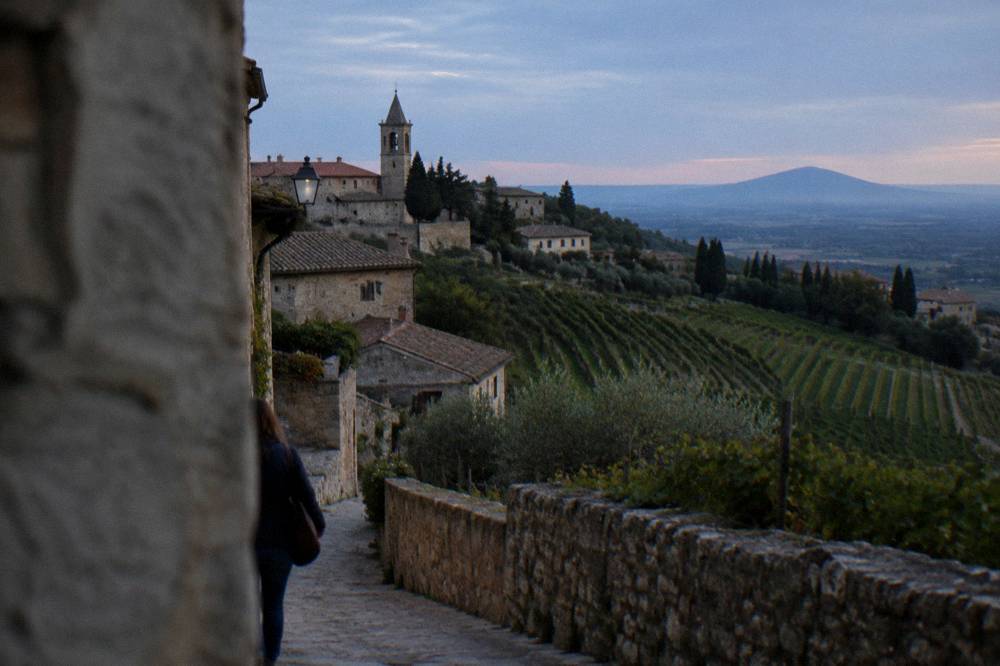
Closer in, the Euganean Hills sit on Padua's doorstep: Arqua Petrarca is about 20 km away in a straight line, Monselice 21, and the thermal towns of Abano and Montegrotto Terme 8 and 11. The site's Euganean Hills guide covers the hill villages, and the two days in Padua itinerary is the right compress-it version for anyone who trades a Padua day for one of them. Arriving or leaving through Venice's airport is covered in the airport-to-Paduaguide, with the direct Busitalia airport bus at EUR 13 one-way taking about 45 minutes.
Common Questions About A Padua And Venice Weekend
Is three days enough for Padua and Venice?
Three days is enough for Padua's core sights and one full Venice day: the Scrovegni Chapel, the Basilica of Saint Anthony, the Orto Botanico, Palazzo della Ragione and the market squares fit into two Padua days, and the 26-to-40-minute train makes Venice a comfortable third day.
How far is Padua from Venice?
Venice is about 36 km from Padua in a straight line. The regional train between Padova and Venezia Santa Lucia takes about 26 to 40 minutes, and the fare is around EUR 5 each way.
Should I stay in Padua or Venice for the weekend?
Staying in Padua keeps the weekend in one place, with Venice as a day trip and the Euganean Hills, Vicenza and Verona all reachable from the same station. The site's guide to Padua as a base for Venice works through the trade-offs.
Do I need to book the Scrovegni Chapel in advance?
Yes. Entry is timed, with at most 25 people admitted every 15 minutes for about 15 minutes inside, and there is no same-day online booking; the chapel's own booking site handles reservations, and unreserved visitors are told to ask at the museum ticket office.
Is Padua worth visiting from Venice?
Yes, and the pairing works in both directions: Padua holds two UNESCO listings, Giotto's frescoes and a walkable historic centre, all about half an hour from Venice by train.
Can I take a boat from Padua to Venice?
Between March and October, yes: the Il Burchiello boat cruise runs between Padua and Venice along the Brenta Riviera villas in both directions. Outside those months the train is the connection.
A final planning note ties the weekend together: the only appointments that cannot be improvised are the Scrovegni Chapel slot, the Palazzo del Bo tour's language slot, and, for the villa route, the Brenta boat. Everything else in this Padua and Venice itinerary, from the Basilica's free entry to the EUR 1.70 urban ticket that covers a tram ride across town, flexes around them.