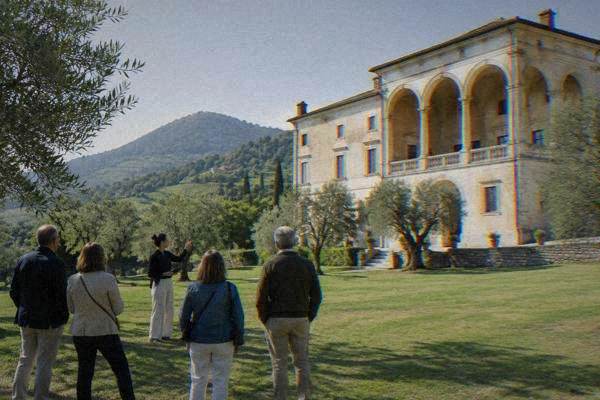
Euganean Hills: Villages, Abbeys And Volcanic Slopes
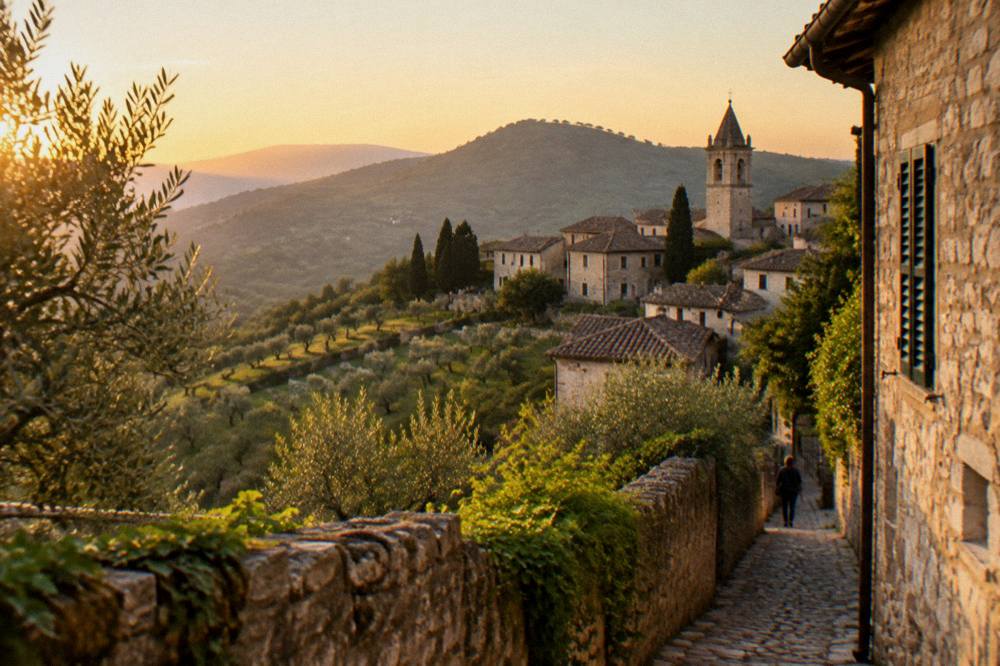
The Euganean Hills rise from the plain south of Padua, a day-trip range of walled villages, villas, olive groves and thermal towns within about 26 km of the city centre.
Short answer
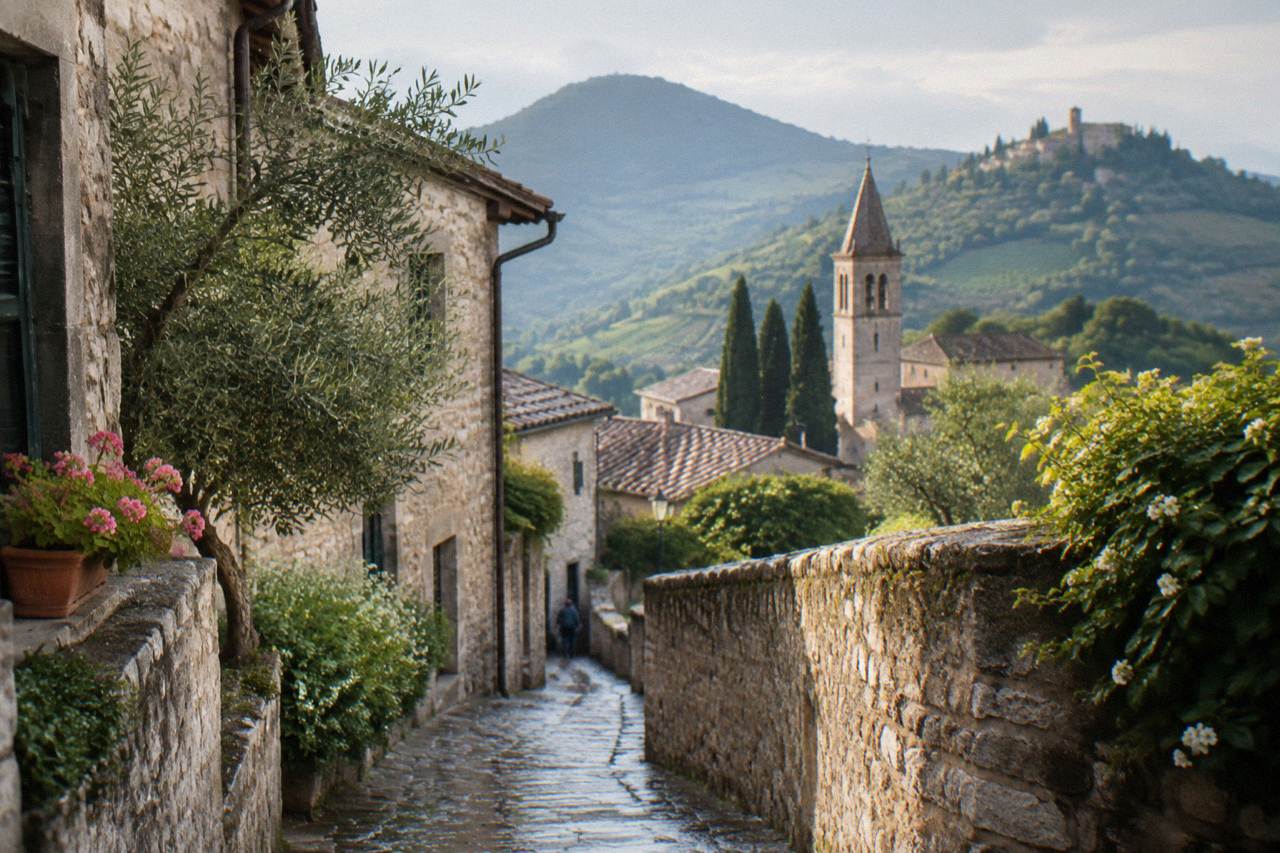
The Euganean Hills are a day-trip range of volcanic hills south of Padua in the Veneto. Key stops include Arquà Petrarca (about 20 km), Montegrotto Terme (about 11 km), Abano Terme (about 8 km) and Villa dei Vescovi (about 15 km), all reachable as tours from Padua or by local transport.
The Euganean Hills rise from the flat Paduan plain south of Padua (Padova), the inland Veneto city about 36 km in a straight line from Venice that this site covers end to end. It is a compact range of steep, cone-shaped hills of volcanic origin, and it puts walled villages, a Petrarch house, a FAI villa, olive groves, wine country and two famous thermal towns all within about 26 km of the centre of Padua. This guide lays out what the range holds, what entry costs at the sites that publish prices, how the hills compare with Padua's other day trips, and which guided options cover the ground without a car.
What Are The Euganean Hills?
The Euganean Hills (Colli Euganei in Italian) are a group of steep hills of volcanic origin that rise directly out of the plain south of Padua, in the Veneto region of northern Italy, with the farthest of the main villages, Este, sitting about 26 km in a straight line from the centre of Padua and the nearest thermal town, Abano Terme, only about 8 km away. The range is close enough to the city that it works as a half-day excursion or a full slow day, and it is a different landscape from everything else on Padua's day-trip list: the Brenta Riviera is a villa-lined river, Venice a lagoon city, and the hills are countryside, slopes and stone villages.
The name matters for planning more than it does for geography. "Colli Euganei" appears on wine labels, on local bus routes and on the tourism pages of the towns themselves, so a traveller searching timetables or tickets will meet the Italian form constantly, while "Euganean Hills" is the standard English name used here.
Two of the range's towns, Abano Terme and Montegrotto Terme, are thermal resorts, and their spa traditions are the reason many visitors come to the area at all. The thermal water's properties, temperatures and treatment prices belong to the spas themselves and are best checked directly with each hotel, because no figure for them is carried on this page. What is certain is the geography: Abano Terme about 8 km from central Padua, Montegrotto Terme about 11 km, both on the south-western edge of the range.
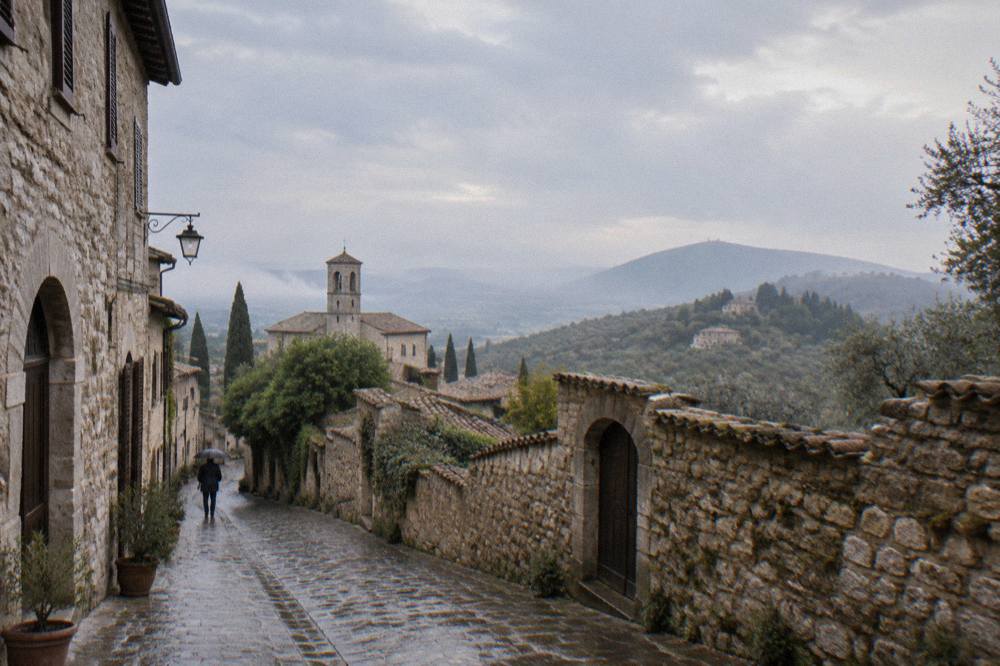
The hills also sit inside a web of small destinations that this site covers separately, and combining two or three of them is the natural shape of a day. The dedicated pages on Arquà Petrarca, Abano Terme and Montegrotto Terme go deeper on each, and the wider set of Padua day trips is mapped on the things to do in Padua overview.
Which Villages Should You Visit In The Euganean Hills From Padua?
The four villages that anchor a Euganean Hills day are Arquà Petrarca, a stone hill village about 20 km from Padua that holds the house of the poet Petrarch; Monselice, about 21 km, a walled town on the southern edge of the range; Este, about 26 km, at the foot of the hills; and the thermal pair Abano Terme and Montegrotto Terme at 8 and 11 km respectively, while Villa dei Vescovi, a frescoed Renaissance villa now run by FAI, stands about 15 km out at Luvigliano di Torreglia. Each is small enough that a stop is measured in an hour or two, not a morning, and together they make a full and varied loop.
| Destination | Straight-line distance from central Padua | What it is known for |
|---|---|---|
| Abano Terme | about 8 km | Thermal spa town at the north-west edge of the hills |
| Montegrotto Terme | about 11 km | Thermal spa town below the southern slopes |
| Villa dei Vescovi (Luvigliano di Torreglia) | about 15 km | Frescoed villa run by FAI, open to visitors |
| Arquà Petrarca | about 20 km | Stone village, Casa del Petrarca |
| Monselice | about 21 km | Walled town on the southern edge of the range |
| Este | about 26 km | Town at the foot of the hills, at the range's southern end |
Arquà Petrarca is the one village that appears on nearly every Euganean itinerary, and with reason: it is a dense cluster of stone houses on a slope, and its Casa del Petrarca is open to visitors with published prices, full EUR 6, reduced EUR 4 and school EUR 3, closed non-holiday Mondays plus 8 December, 25 and 26 December and 1 January. The village also gives its name to the surrounding hill country in many guidebooks, and the dedicated Arquà Petrarca guide covers the visit in full.
Monselice and Este complete the southern arc. Both carry castle heritage, but their castles' details, opening arrangements and any entry figures are the castles' own to publish, so check the current information on each town's official channels before planning a visit inside them. What the two towns reliably offer is scale: walls, a steep main street at Monselice, and a town-museum character at Este, all within a short hop of one another. This site's pages on Monselice and Este hold the full detail.
Villa dei Vescovi deserves its own paragraph because it is the one site in the hills with a full price list from its own operator, FAI, the Italian environment fund: adults EUR 11, ages 6 to 18 EUR 6, students to 26 EUR 6, under-6s free, family ticket EUR 28. The villa sits at Luvigliano di Torreglia on the north-eastern side of the range, and a combined villa-and-hills day is one of the most coherent ways to see the area, which is exactly what the related tour on this page, the olive oil and wine trip into the hills, is built around. If that shape appeals, Check availability on the operator's live listing.
How Do You Get From Padua To The Euganean Hills?
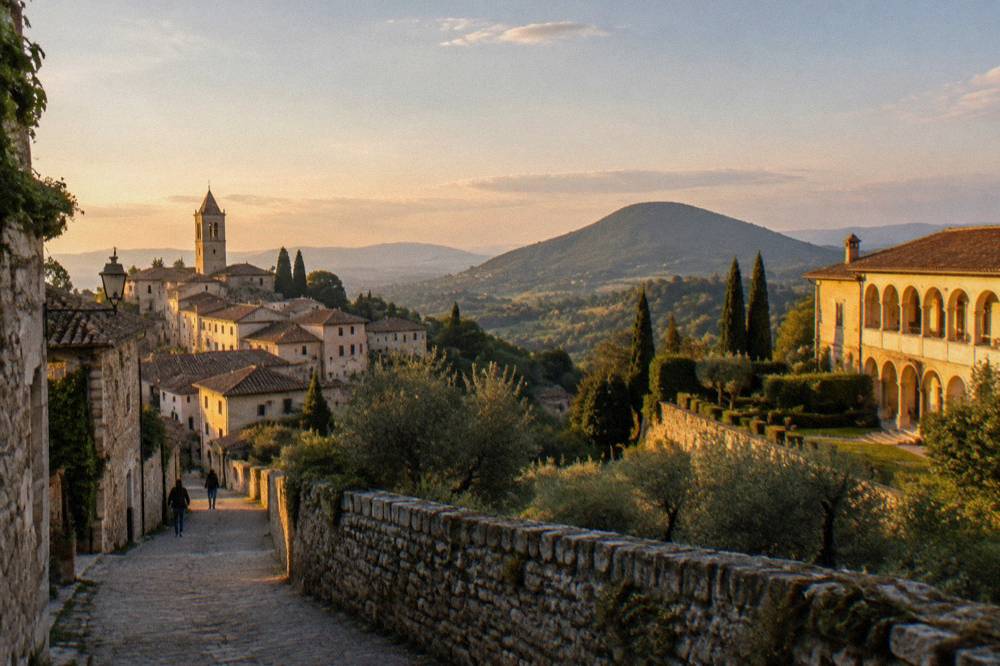
Getting from Padua into the Euganean Hills means either a guided tour with transport included, local extraurban buses run by the regional operator toward the thermal towns and hill villages, or a car, and the one transport figure this page can state with certainty is the urban Padua ticket at EUR 1.70 for 90 minutes, which covers city buses and the SIR1 tram but not the extraurban run into the hills. For the bus lines, times and any extraurban fares, the operator's own journey planner is the reference to check before travel, because the specific Colli lines and their timetables change with the season.
The tour option removes the question entirely. Guided trips from Padua into the hills run throughout the warmer part of the year, covering the wineries, the olive mills and the villas with pickup and drop-off in the city, and their prices, ratings and durations are listed on each operator's page rather than typed here. For a traveller based in Padua without a car, this is generally the simplest structure: the range's villages are close together but not walkable between one another, and public transport threads the thermal towns more readily than the high villages.
Driving is the flexible third option, and the straight-line distances in the table above are the honest measure of scale: nothing in the range is far, Abano Terme at about 8 km is practically a suburb, and even Este at about 26 km is a short run. No drive times are stated on this site, and the hills' roads are narrow and winding in places, which is worth knowing when estimating. Park-and-stroll works well in each of the villages.
For context, here is how the hills sit against Padua's other day trips by rail, all times approximate regional figures:
| Day trip from Padova station | Approximate train time | Approximate regional fare |
|---|---|---|
| Vicenza | 16 to 25 minutes | about EUR 6 |
| Venice (Venezia Santa Lucia) | 26 to 40 minutes | about EUR 5 |
| Treviso | 28 to 60 minutes | check the operator before travel |
| Verona | 43 to 60 minutes | check the operator before travel |
The hills are not primarily a train destination in the way those cities are: the rail lines skirt the range through the plain, so the train serves the edges while buses and cars serve the villages themselves. A traveller mixing hills and cities, say Arquà Petrarca in the morning and Vicenza in the afternoon, should treat them as two separate legs.
What Do Villa Dei Vescovi And Casa Del Petrarca Cost To Visit?
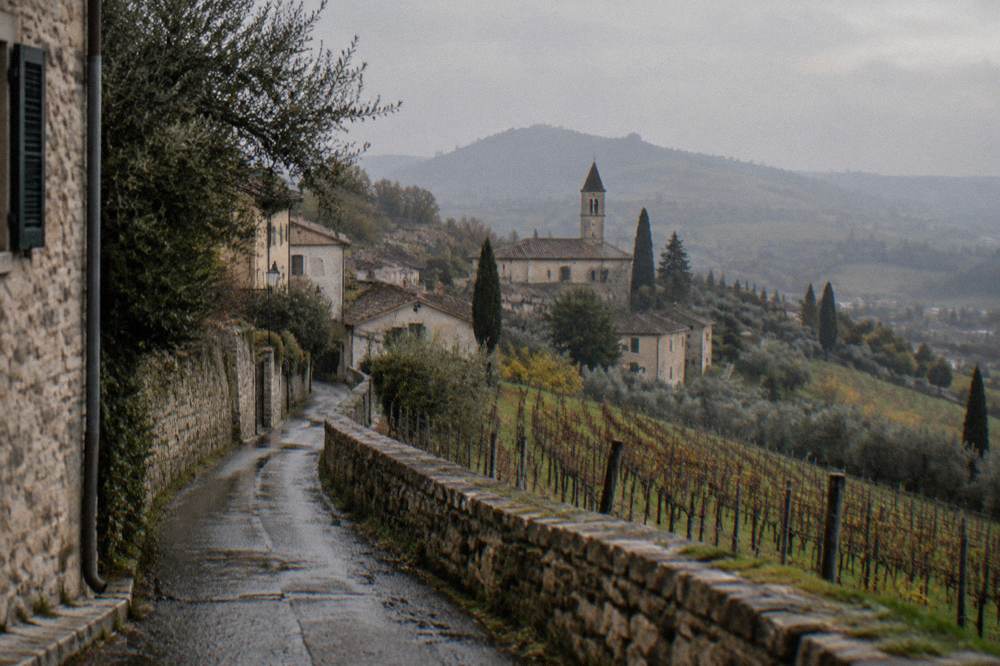
Villa dei Vescovi at Luvigliano di Torreglia charges adults EUR 11, ages 6 to 18 and students up to 26 EUR 6, under-6s nothing and a family ticket EUR 28, while Casa del Petrarca in Arquà Petrarca charges EUR 6 full, EUR 4 reduced and EUR 3 for school groups, with closures on non-holiday Mondays, 8 December, 25 and 26 December and 1 January. These are the two sites in the hills whose own operators publish complete price lists, and they are the figures to budget a village-and-villa day around.
| Site | Full price | Reduced | Family / school |
|---|---|---|---|
| Villa dei Vescovi (FAI, Luvigliano di Torreglia) | EUR 11 | EUR 6 (ages 6 to 18; students to 26) | EUR 28 family; under 6 free |
| Casa del Petrarca (Arquà Petrarca) | EUR 6 | EUR 4 | EUR 3 school groups |
Seasonal opening is the second half of the planning picture. FAI adjusts Villa dei Vescovi's days and hours across the year, and the Casa del Petrarca's Monday closure means a Monday hill day lands better on the thermal towns or the landscape itself than on the two ticketed sites. Before setting out, check each site's current opening days on its own page; the prices above are stable published tariffs, but days on site change with the seasons.
For visitors who want both villa and villages without self-driving, a structured trip is the clean solution. A combined excursion covering Villa dei Vescovi and the great baroque garden of Valsanzibio nearby runs from Padua and handles the logistics end to end.
Are The Euganean Hills A Good Wine Day Trip From Padua?
Yes: the Euganean Hills are Padua's own wine country, a range whose slopes carry vineyards and olive groves close enough to the city that winery visits, tastings and mill tours run as half-day and full-day trips from Padua, with guided options spanning a short winery stop, a longer vineyard-and-cellar tour, and full olive-oil-and-wine combinations into the hills themselves. The range's wines travel under the Colli Euganei name, and the cellar-door experience, tasting beside the slopes the grapes came from, is the reason wine travellers base themselves in Padua for this.
The bookable shapes differ mainly in depth. A short visit covers a single winery on the Padua hills with a tasting; a longer tour spends most of a day moving between producers; and the combined trips add an olive mill, which is the range's second agricultural identity. No tasting prices, durations or ratings are typed on this page: each operator's live listing carries the current figures, and tasting fees at independent wineries should always be confirmed with the room before visiting. More of these guides are collected on Padua Travel Guide.
Wine is also the thread that connects the hills to the wider region. The Prosecco hills north of Treviso are the Veneto's other famous wine range and a longer day out from Padua, while the Euganean slopes are the near one. A traveller with two wine days could reasonably do both, and the itineraries on two days in Padua and three days in Padua show where a hills day slots into a fuller stay.
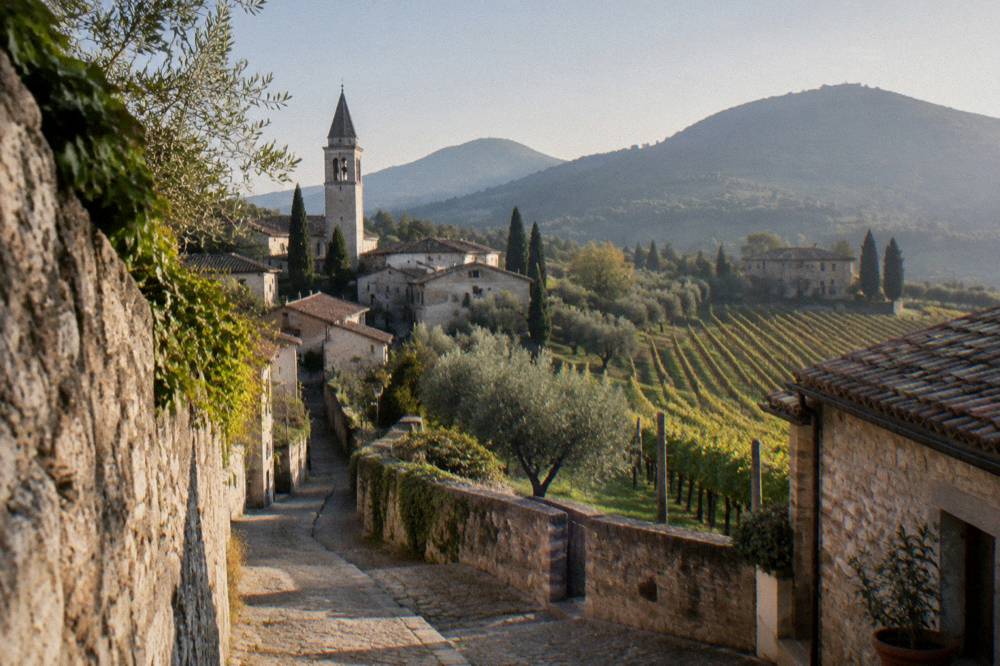
For a deeper day among the producers, a dedicated wine tour of the hills moves from Padua into the cellars with a guide, and the spritz culture back in the city, born of a drink whose best-known brand was created in Padua itself in 1919, makes a fine evening coda to a day of tasting.
When Is The Best Time Of Year To Visit The Euganean Hills?
The ERA5 reanalysis for Padua, 1991-2020, shows why late spring through early autumn is the comfortable window for hill walking and terrace tastings: July and August carry the highest mean daily highs at 28.8 C, while January sits at a mean high of 7.3 C and a mean low of -0.2 C, and rain peaks in November at 114 mm, making the late-autumn hills a matter of weather windows rather than reliable dry days. The figures are modelled climate normals for the Padua grid cell, and the hills' microclimate varies with altitude and slope, but the seasonal rhythm they describe holds for the range.
| Month | Mean daily high (C) | Mean daily low (C) | Rain (mm) |
|---|---|---|---|
| January | 7.3 | -0.2 | 53.6 |
| April | 17.6 | 7.8 | 84.4 |
| July | 28.8 | 18.9 | 62.1 |
| September | 23.6 | 14.9 | 105.5 |
| November | 12.6 | 5.5 | 114.0 |
Two practical notes follow from the calendar. First, the thermal towns are year-round destinations by nature, so a cold January week in the hills can pivot indoors without losing the day, and the same is true of wine cellars. Second, the vineyard year itself gives the range its rhythms, with harvest-season visits shaped around the cellars rather than long walks, and any spa, hotel or harvest-event dates should be confirmed with each operator for the specific week of travel.
Opening constraints matter as much as weather. The Casa del Petrarca's non-holiday-Monday closure and FAI's seasonal days at Villa dei Vescovi both trim the weekly calendar, and the best time to visit Padua page places the hills in the context of the city's whole year, including the major events that fill the Paduan calendar and can affect accommodation across the plain.
What Can You Do In The Euganean Hills Beyond Wine And Villas?
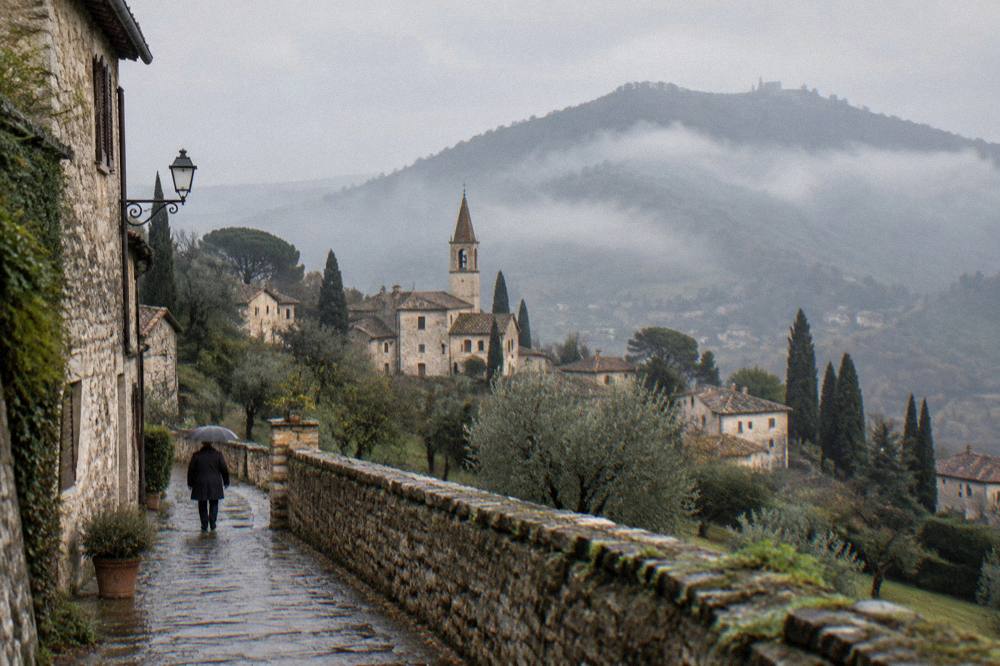
Beyond wine and villas, the Euganean Hills offer the thermal resorts of Abano Terme and Montegrotto Terme, the hill walking and scenery of the range itself, the stone villages of Arquà Petrarca, Monselice and Este, and, on the plain at the range's edge, the Benedictine Praglia Abbey, whose story is told on its own page on this site. That is a broader menu than the range's wine reputation suggests, and it is why the hills reward a second day.
The thermal pair is the anchor for many visitors. Abano Terme, about 8 km from Padua's centre, and Montegrotto Terme, about 11 km, are established spa towns where the holiday is the hotel: treatments, pools and packages are booked with the individual properties, and their prices are the hotels' own to publish. What can be said with certainty is that both towns sit on the range's doorstep, close enough that a morning in the vineyards and an afternoon at a spa is a feasible single-day shape.
Walking and landscape fill the rest. The hills' slopes are wooded and steep-sided, the profile of a volcanic range, and the views open across the plain toward Padua and, on clear days, much further. Trails, waymarked routes and park information are managed by the regional park authorities, and the Praglia Abbey page covers the monastery that anchors the range's south-western edge. Details of the regional park's own facilities belong to the park's official channels.
A last note on scale and combination: because Este lies only about 26 km out and Monselice about 21 km, the southern hills pair naturally with a return journey through the plain's smaller walled towns, and the Montagnana and Cittadella pages extend that arc for travellers with a car and a full day.
How Long Should You Spend In The Euganean Hills?
A single long day is enough for a taste of the Euganean Hills, one village plus Villa dei Vescovi or a winery visit, but two days is the shape that fits the range properly: a wine-and-villa day across the northern slopes, then a southern day through Arquà Petrarca, Monselice and Este, with a thermal morning or afternoon slotted wherever the season allows. Anything less than a day trips better as a single-focus excursion, a spa half-day at Abano Terme or one guided tasting, rather than a rushed circuit.
| Length of stay | What fits |
|---|---|
| Half day | One thermal town, or one guided winery or mill visit from Padua |
| One day | Villa dei Vescovi plus a village, or a full guided wine trip |
| Two days | Northern wine-and-villa day plus a southern villages day, with spa time |
Basing the stay in Padua itself is the common pattern, and this site's where to stay in Padua guide covers the neighbourhood logic; the tourist tax, collected by the accommodation and capped at five consecutive nights, applies in the city just as it does in the hills' spa hotels. Travellers pairing the hills with a lagoon day should note that Padua sits about 36 km in a straight line from Venice, and the Venice day-trip page covers that run, including the fact that Venice's 2026 day-tripper access-fee trial ended on 27 July 2026 with no 2027 decision published.
However long the stay, book the two timed things first: the Scrovegni Chapel in Padua, which is timed entry only, with entries of 25 people every 15 minutes, booked in advance, and the hills' guided trips, whose small-group wine and villa days fill their calendars ahead of the peak weeks. The chapel's own booking page lists the current slots and the EUR 1 booking fee, and each tour's live listing carries its own calendar.
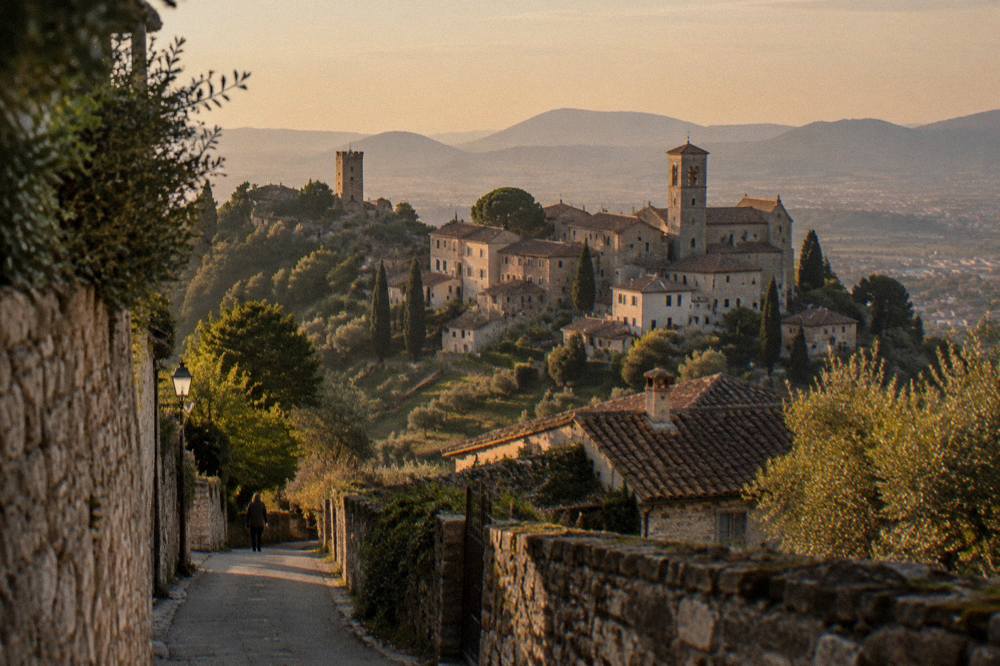
The hills also reward travellers whose real interest is food. A market-to-osteria food tour back in Padua, a cooking class in a local home, or a spritz walk through the city's evening squares each pairs naturally with a hills day, and the what to eat in Padua page sets out the city's table. The hills supply the wine and oil; the city supplies the kitchens that use them.
Common Questions About The Euganean Hills
How far are the Euganean Hills from Padua?
Abano Terme is about 8 km in a straight line from central Padua, Montegrotto Terme about 11 km, Villa dei Vescovi about 15 km, Arquà Petrarca about 20 km, Monselice about 21 km and Este about 26 km. No drive times are stated on this site.
What is there to see in the Euganean Hills?
The stone village of Arquà Petrarca with the Casa del Petrarca, Villa dei Vescovi at Luvigliano di Torreglia, the walled towns of Monselice and Este, the thermal resorts of Abano and Montegrotto Terme, and the vineyards and olive groves of the slopes, plus Praglia Abbey on the plain at the range's edge.
How much does Villa dei Vescovi cost?
Per FAI's own tariff, adults pay EUR 11, ages 6 to 18 and students to 26 pay EUR 6, under-6s enter free, and a family ticket is EUR 28. Seasonal opening days vary, so check FAI's page before travelling.
Can you visit the Euganean Hills without a car?
Yes, in two ways: guided tours from Padua that include transport, and regional buses toward the thermal towns and hill villages. Extraurban lines and timetables should be checked with the operator's journey planner before travel.
Which is better, the Euganean Hills or the Prosecco hills?
The Euganean Hills are the near range, with villages, villas and thermal towns within about 26 km of Padua, while the Prosecco hills are a longer full-day trip north. This site makes no ranking between them; both pages set out what each range offers.
When is the best time to visit the Euganean Hills?
The ERA5 reanalysis for Padua, 1991-2020, puts July and August mean highs at 28.8 C and January's mean high at 7.3 C, with November the month of highest rainfall at 114 mm. Late spring through early autumn suits walking and tastings; the thermal towns and cellars run year-round.