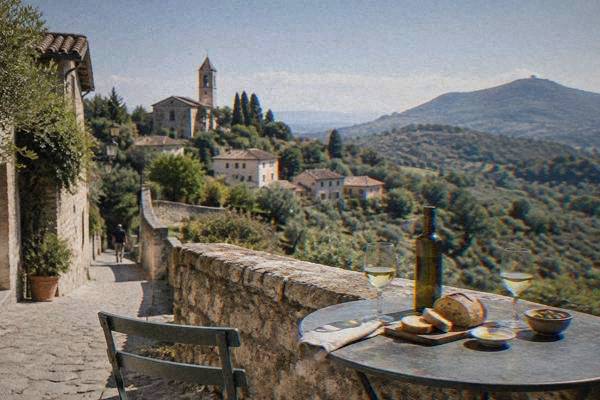
Praglia Abbey: Benedictine Monks In The Hills
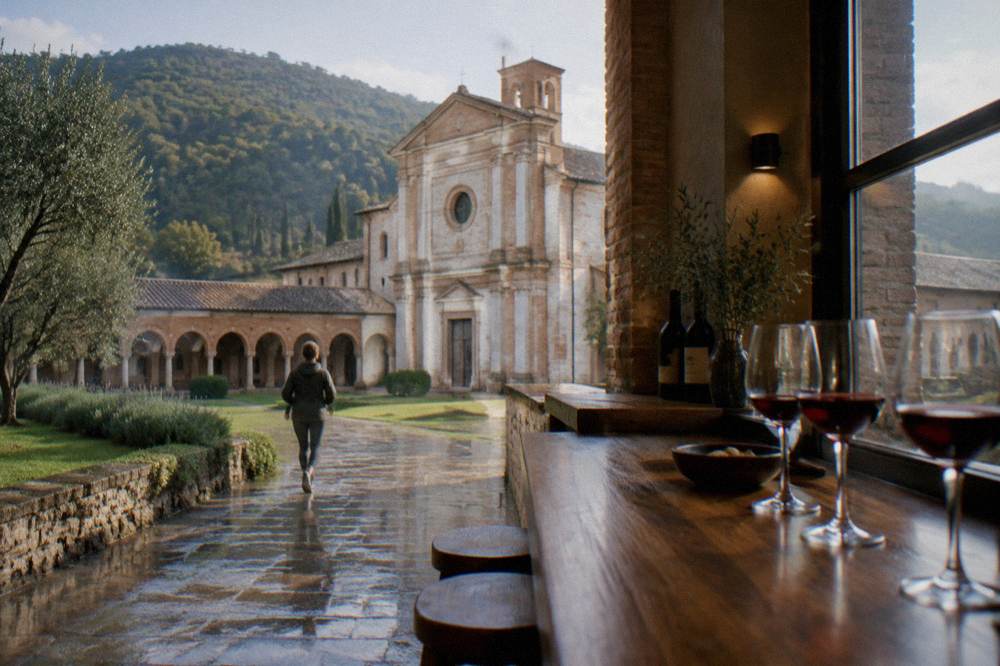
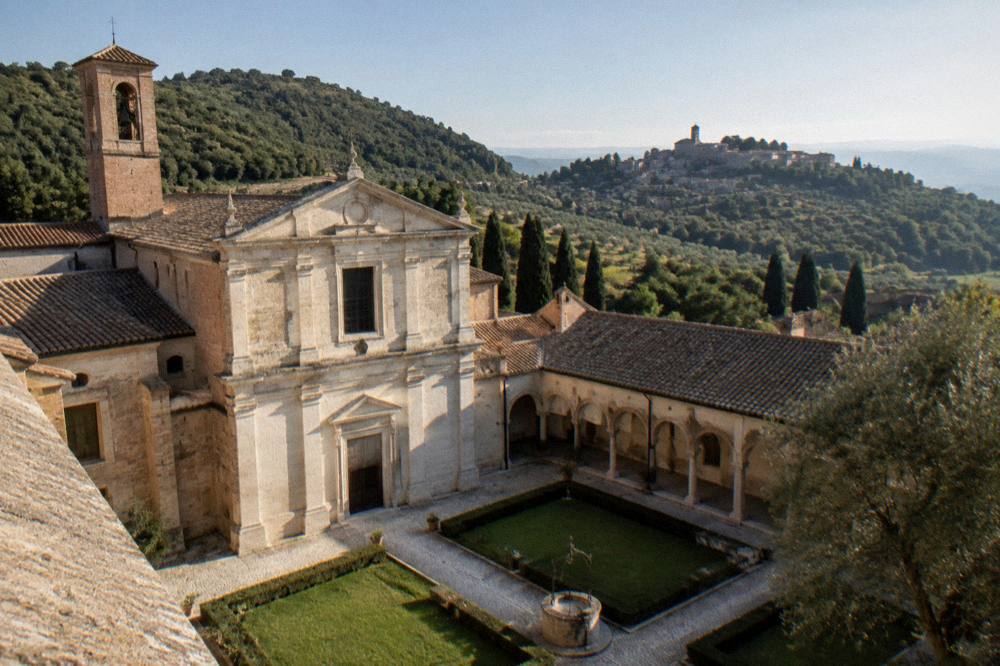
Praglia Abbey is a working Benedictine monastery in the Euganean Hills, a short hop south of Padua in the Veneto, and it pairs naturally with the hill towns, villas and wineries around it.
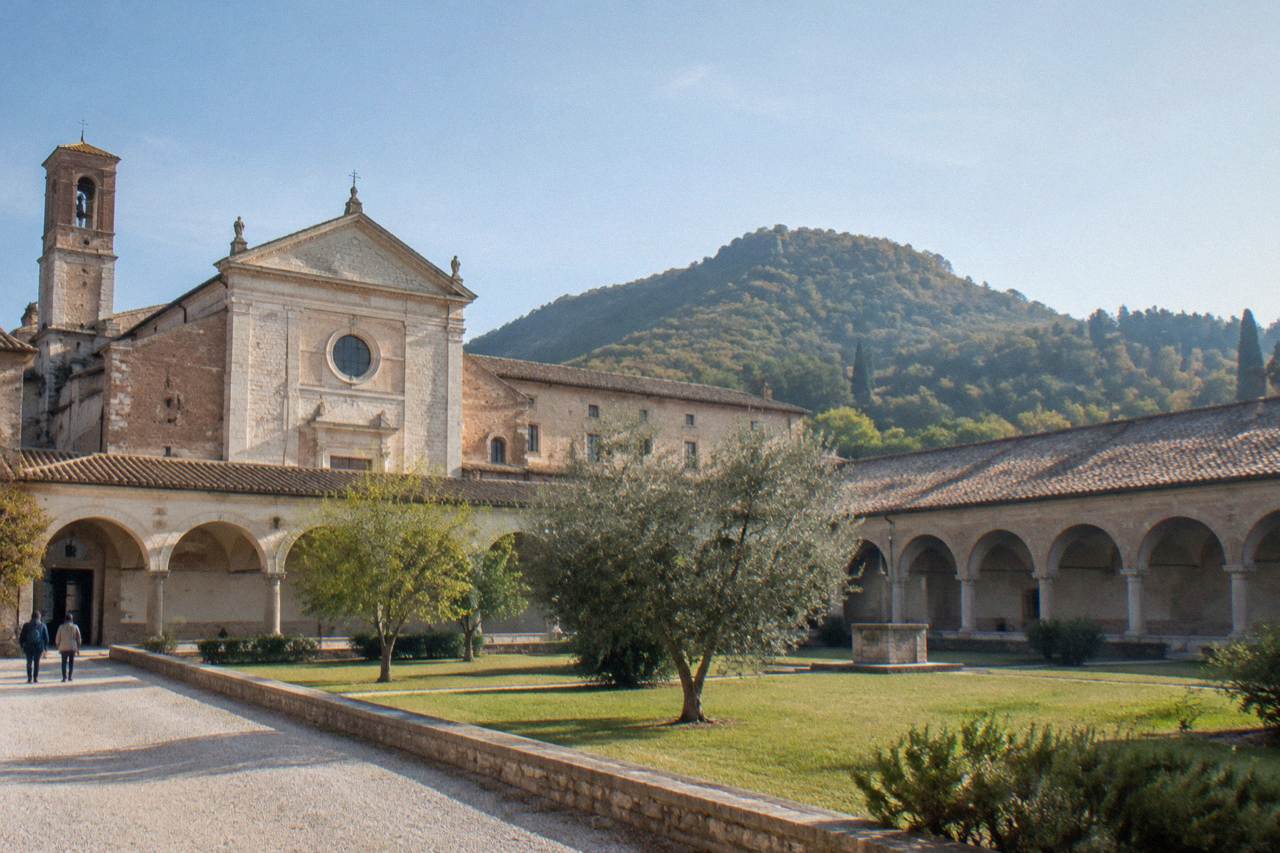
Short answer
Praglia Abbey sits in the Euganean Hills south of Padua; it is a working Benedictine community reachable as a day trip from the city, and this guide covers how to plan the visit, what surrounds it, and how to combine it with the rest of the hills.
Praglia Abbey is a Benedictine monastery in the Euganean Hills, the volcanic hill country that rises south of Padua (Padova) in the Veneto, northern Italy, an inland city about 36 km in a straight line from Venice. The abbey belongs to a landscape of spa towns, walled villages and vineyards that spreads across the southern edge of the Paduan plain, and it makes a calm, unhurried counterpart to the frescoed churches and student squares of the city itself. The surrounding hill towns, Abano Terme about 8 km away and Montegrotto Terme about 11 km, sit on the plain's edge, while Arquà Petrarca, about 20 km from the centre of Padua, climbs the slopes to the south. This guide lays out how to think about a Praglia day: what the abbey is, how the hills are reached from the city, what else belongs on the same route, and how the seasons shape the trip.
What Is Praglia Abbey?
Praglia Abbey is a Benedictine monastery in the Euganean Hills south of Padua, a functioning religious community rather than a museum, set in farmland and woodland at the foot of the hill country, and it is visited as a quiet half-day stop rather than a full-day attraction on its own. The abbey is one of several monastic and villa sites that ring the hills, and unlike the ticketed civic museums of central Padua it is approached as a place where a religious community lives and works. The Padua plain around it is dense with day-trip options: the Basilica di Santa Giustina in the city itself is another Benedictine house, and the Basilica di Santa Giustina guide covers that one in detail.
Because the abbey is a living community, the practicalities, opening arrangements and any visiting rules are set by the monastery itself and change, so the current details belong to the abbey's own channels and to the local tourism office rather than to any fixed list. What a planner can fix in advance is the shape of the day: the abbey sits inside a triangle formed by the spa towns on the plain, the hill villages to the south, and the wine country that rolls east and north, which makes it a natural anchor for a loop through the Euganean Hills.
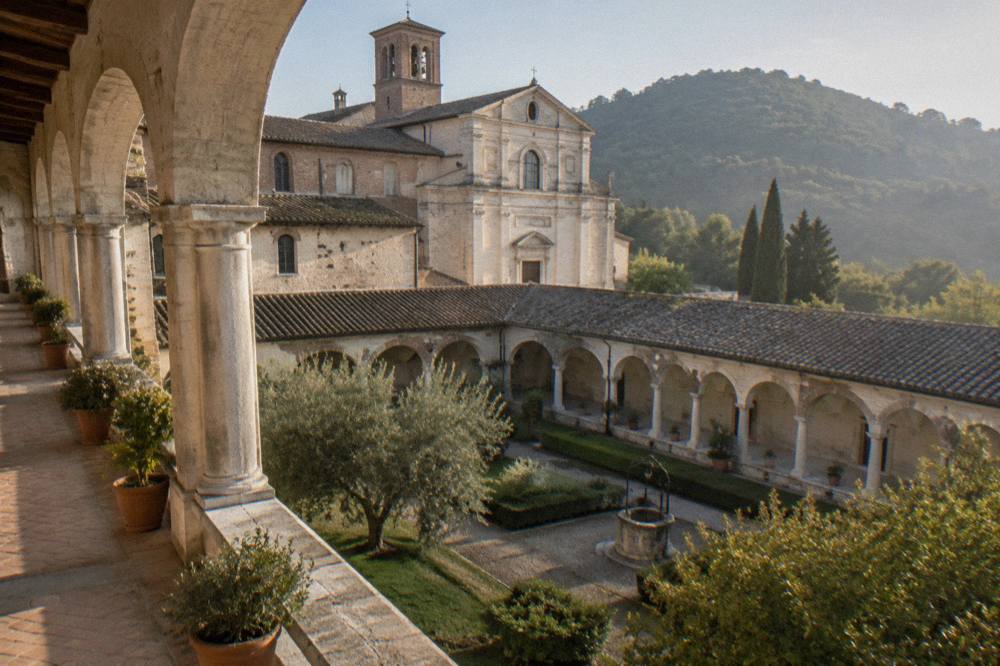
How Far Is Praglia Abbey From Padua And The Rest Of The Euganean Hills?
Praglia Abbey sits in the Euganean Hills roughly south-west of Padua's centre, inside a cluster of hill towns whose straight-line distances from the city run from about 8 km at Abano Terme to about 26 km at Este, and every other classic stop in the hills falls between those two marks. The straight-line figures from the centre of Padua give the honest scale of the region: nothing in the Euganean belt is far, and a single day comfortably holds two or three stops. These are straight-line kilometres, not road distances, so actual travel by bus or car takes longer than the number suggests.
| Place | Straight-line km from Padua centre |
|---|---|
| Abano Terme | about 8 |
| Montegrotto Terme | about 11 |
| Villa Pisani (Stra) | about 11 |
| Villa dei Vescovi (Torreglia) | about 15 |
| Arquà Petrarca | about 20 |
| Monselice | about 21 |
| Este | about 26 |
The pattern matters for planning. The spa towns sit on the plain and act as the gateway to the hills, the villas and the abbey sit on the lower slopes, and the walled towns climb the ridges beyond. An itinerary that runs Padua to Abano or Montegrotto, then into the hills, then south to Arquà Petrarca or Monselice, follows the geography instead of fighting it, and the Euganean Hills day-trip guide covers that arc in full. For readers building a longer stay, the two-day Padua itinerary and the three-day Padua itinerary both leave room for exactly this kind of half-day excursion.
How Do You Reach The Euganean Hills From Padua Without A Car?
Padua connects to the Euganean Hills by bus from the city's urban network, with the Busitalia Veneto system covering the spa towns and the hill villages, and the fares that can be stated are the EUR 1.70 ninety-minute urban ticket and the EUR 13 airport bus to Venice Marco Polo; hill routes and their exact running times should be checked on the Busitalia travel planner before travel. The urban TU1 ticket, valid ninety minutes across the Orange Zone, costs EUR 1.70 and can be bought in the Busitalia Veneto app or by tapping a contactless card on board. The tram line SIR1 runs north to south through the city, and a second tram line, SIR3, was in pre-service testing in 2026 with no opening date to promise.
For the hills specifically, the extraurban Colli lines are the ones to plan around, and the schedules belong to the operator's planner rather than to any static page. What is certain is the rail picture on the plain: Padova station sits on the Venice to Milan line with frequent regional services, Venice Santa Lucia about 26 to 40 minutes away, Vicenza 16 to 25 minutes, Verona 43 to 60 minutes and Treviso 28 to 60 minutes, all reported by journey planners as approximate.
| Journey from Padova | Typical regional time | Reported fare |
|---|---|---|
| Venezia Santa Lucia | about 26 to 40 min | about EUR 5 |
| Vicenza | about 16 to 25 min | about EUR 6 |
| Verona | about 43 to 60 min | check trenitalia.com |
| Treviso | about 28 to 60 min | check trenitalia.com |
| Venice Marco Polo airport (Busitalia bus) | about 45 min | EUR 13 one-way |
A car gives the hills their full value, since the abbey, the villas and the hill villages do not all sit on one bus line, but a car-free day is workable with the spa towns as a base and the bus planner in hand. Readers weighing the trade-off can start from the map guide to Padua and the things to do in Padua overview to see how the city and the hills divide a week.
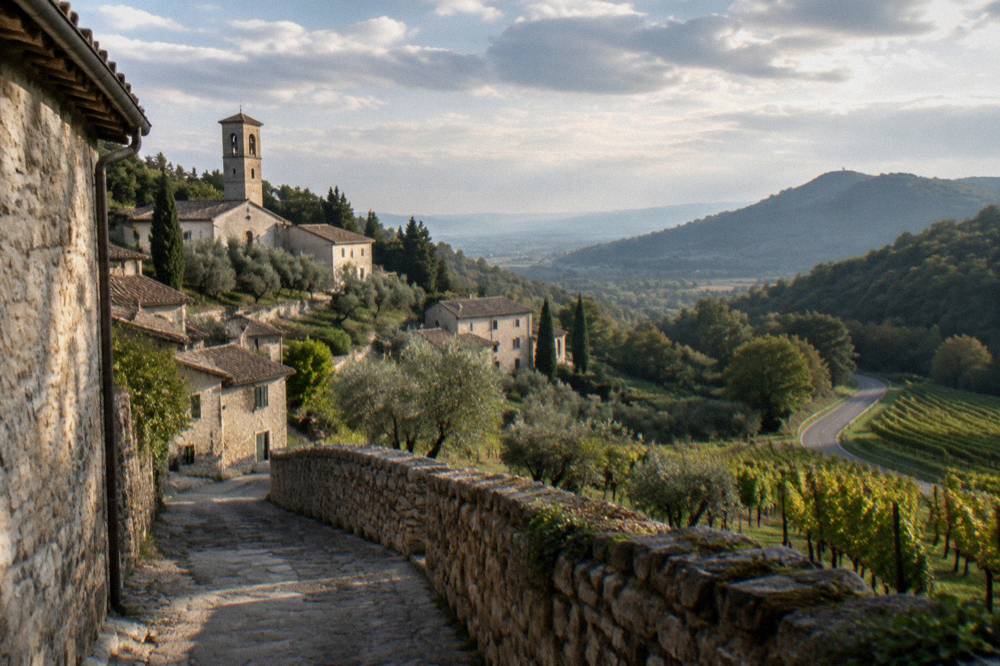
What Can You See Around Praglia Abbey In The Euganean Hills?
The stops that pair with Praglia Abbey are the spa towns of Abano Terme and Montegrotto Terme on the plain, the Renaissance Villa dei Vescovi at nearby Torreglia, the hill village of Arquà Petrarca with its Petrarch house museum, and the walled towns of Monselice and Este further south, each with its own entry price or open access. Villa dei Vescovi, run by FAI at Luvigliano di Torreglia, charges EUR 11 for adults, EUR 6 for ages 6 to 18 and students to 26, free entry under 6, and EUR 28 for a family ticket. Casa del Petrarca in Arquà Petrarca charges EUR 6 full, EUR 4 reduced and EUR 3 for school groups, and closes on non-holiday Mondays plus 8 December, 25 and 26 December and 1 January.
| Site near Praglia | Adult entry | Notes |
|---|---|---|
| Villa dei Vescovi (FAI, Torreglia) | EUR 11 | ages 6 to 18 and students to 26 EUR 6, under 6 free, family EUR 28 |
| Casa del Petrarca (Arquà Petrarca) | EUR 6 | reduced EUR 4, school EUR 3, closed non-holiday Mondays |
| Abano Terme and Montegrotto Terme | spa entry varies | thermal spa prices are set by each establishment |
| Monselice and Este old towns | open streets | castle visits arranged locally |
The abbey's own visiting arrangements sit alongside these rather than inside any combined ticket, and the spa towns' thermal establishments price their own treatments, so those figures belong to each venue. The villages themselves cost nothing to walk: Arquà Petrarca is a compact stone settlement of lanes and fountain squares, Monselice and Este carry their walls and castle silhouettes, and the Arquà Petrarca guide, the Abano Terme guide and the Montegrotto Terme guide each take one of them in turn.
Can You Combine Praglia Abbey With A Wine Day Trip From Padua?
Yes: the Euganean Hills are a wine region, with the hills' wineries reachable on organised tours from Padua, and a guided wine or olive-oil day trip is the practical way to fold tastings into a route that also takes in the abbey's corner of the hills, since the wineries are scattered and not all sit on bus lines. The site's featured tour for this page is the Tour in the Prosecco Hills from Padua, which heads to the Prosecco hill country with transport and tastings arranged, and there is a related option among hill wineries closer to Padua itself: Check availability on the operator's live listing to see the current dates and meeting details.
The Prosecco hills, the Conegliano-Valdobbiadene district, are a distinct trip east of the Euganean belt, covered in the Prosecco Hills guide, while the Euganean Hills' own wines are tasted at farmhouses and estates around the abbey's corner of the region. The two make a good either-or decision for a single free day: one guided day in the Prosecco country, or one self-directed or guided day in the Euganean Hills with the abbey, a villa and a winery stop.
When Is The Best Time Of Year To Visit The Hills Around Padua?
The ERA5 reanalysis for Padua, 1991-2020, shows a continental climate with a July and August mean daily high of 28.8 C, a January mean high of 7.3 C, and November carrying the highest monthly rain total at 114.0 mm, so spring and early autumn give the most comfortable walking conditions for the hills and their villages. Rain is spread across the year, with September and October each around 105 mm and January the lowest month at 53.6 mm, and the summer months stay warm through the evenings, with July lows averaging 18.9 C. These are modelled normals for the grid cell at the centre of Padua, a representation of the plain and its hills rather than a weather-station record.
| Month | Mean daily high C | Mean daily low C | Rain mm |
|---|---|---|---|
| January | 7.3 | -0.2 | 53.6 |
| April | 17.6 | 7.8 | 84.4 |
| July | 28.8 | 18.9 | 62.1 |
| October | 18.4 | 10.6 | 105.4 |
| November | 12.6 | 5.5 | 114.0 |
The seasons carry practical weight beyond comfort. The Villa dei Vescovi runs seasonal opening windows, Casa del Petrarca closes on non-holiday Mondays, and the spa towns operate year-round regardless of weather, which makes them the reliable fallback of any wet hill day. The Padua weather guide carries the full monthly table, and the Padua in winter guide and the best time to visit Padua guide cover the calendar question for the whole trip.
How Does A Praglia Day Fit Into A Longer Padua Stay?
A Praglia Abbey day works best as the middle excursion of a two or three night Padua stay, with the first day given to the city's core, the Scrovegni Chapel with its timed entry, the Basilica of Saint Anthony and the Orto Botanico, and the abbey and hills day slotted after it, leaving Venice or Verona for a separate rail day trip. The Scrovegni Chapel admits at most 25 people every 15 minutes, with visits of about 15 minutes inside after a wait in the climate-controlled waiting room, and the chapel is closed 16 to 27 November 2026 for the annual fresco inspection, so the city day needs its booking made well ahead. The Orto Botanico's full ticket is EUR 15 from 1 September 2026.
The ordering advice is simple: book the chapel first, since it is the one entry with a hard capacity, then let the hills day float. A sample division looks like this.
| Day | Base plan | Key booking |
|---|---|---|
| Day 1 | Scrovegni Chapel, Eremitani museums, Piazza delle Erbe | Scrovegni timed slot, booked ahead |
| Day 2 | Praglia Abbey and the Euganean Hills loop | villa and winery visits as needed |
| Day 3 | Venice by train, about 26 to 40 minutes | no access fee applies since the 2026 trial ended on 27 July 2026 |
The Venice point deserves its own sentence because the rules changed: the 2026 day-tripper access fee trial ended on 27 July 2026 and the fee does not apply from that date, with no decision for 2027 published, so a Padua-based day trip to Venice currently carries no access charge. The Venice day-trip guide covers the crossing in detail, and the Padua as a base for Venice guide makes the case for sleeping in Padua.
What Else Is Within Reach On A Euganean Hills Day Trip?
Beyond the abbey's immediate neighbourhood, the day-trip ring around Padua runs from the Brenta Riviera villas and Villa Pisani about 11 km away, through Vicenza about 30 km and Verona about 69 km, out to Treviso about 41 km and Bassano del Grappa, and each is served by the regional rail lines through Padova station. Villa Pisani at Stra is known for its maze, described on the villa's own site as among the most important in Europe, with timed or limited access announced on site. Vicenza's Teatro Olimpico charges EUR 12 full and EUR 9 reduced, and the Vicenza Gold Card covering eleven sites over twelve days costs EUR 22, EUR 17 reduced, EUR 26 family.
| Day trip from Padua | Straight-line km | Rail time (approx.) |
|---|---|---|
| Vicenza | about 30 | 16 to 25 min |
| Treviso | about 41 | 28 to 60 min |
| Verona | about 69 | 43 to 60 min |
| Villa Pisani, Stra | about 11 | bus or boat route |
| Bassano del Grappa | further north | about 1 hour by regional train |
The dedicated guides carry each of these in depth: Villa Pisani, Brenta Riviera, Vicenza, Verona, Treviso and Bassano del Grappa. The point for this page is that Praglia Abbey belongs to the southern, rural half of that ring, and mixing it with a northern rail city in one day would waste both.
What Practical Facts Should A Praglia Abbey Visitor Know Before Leaving Padua?
A visitor heading for Praglia Abbey from Padua needs four practical anchors: the EUR 1.70 ninety-minute urban ticket for city transport, the tourist information offices at the station and Piazza delle Erbe 52 for printed hill information, the station left-luggage office at platform 1 open daily 6:00 to 20:00 at EUR 5 per 6 hours, and the tourist tax collected by accommodations for up to five consecutive nights. The IAT office at the station runs Monday to Saturday 9:00 to 19:00 and Sundays and holidays 10:00 to 16:00, and the Centro office at Piazza delle Erbe 52 serves the same purpose from the middle of town. The emergency number throughout Italy is 112.
Money in the hills runs on the euro, cards are widely taken in the towns, and cash still matters at farm gates and small village shops. Tipping is not obligatory in Italy, with 5 to 10 percent for excellent service appreciated beyond any coperto already on the bill. The food of the plain travels with you: bigoli, baccalà and torta pazientina are the Paduan standards, and the what to eat in Padua guide covers the table in full.
| Practical item | Figure |
|---|---|
| Urban 90-minute ticket (TU1) | EUR 1.70 |
| Station left luggage, platform 1 | daily 6:00 to 20:00, EUR 5 per 6 hours |
| Venice Marco Polo airport bus | EUR 13 one-way, about 45 minutes |
| Tourist tax | collected by the accommodation, up to 5 consecutive nights |
| Emergency number | 112 |
Why Do The Euganean Hills Reward A Slow Day From Padua?
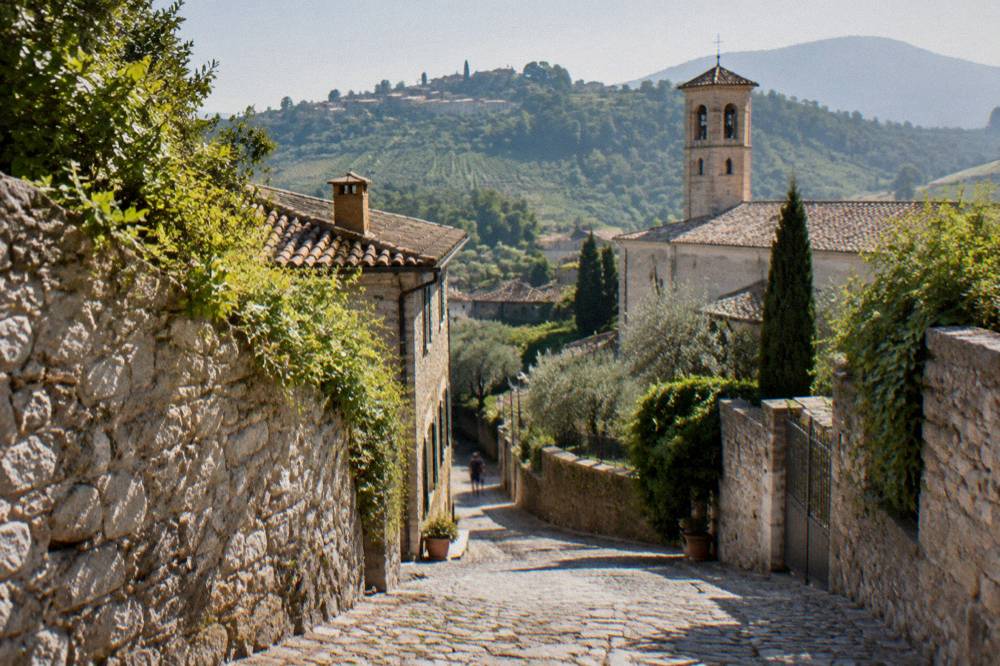
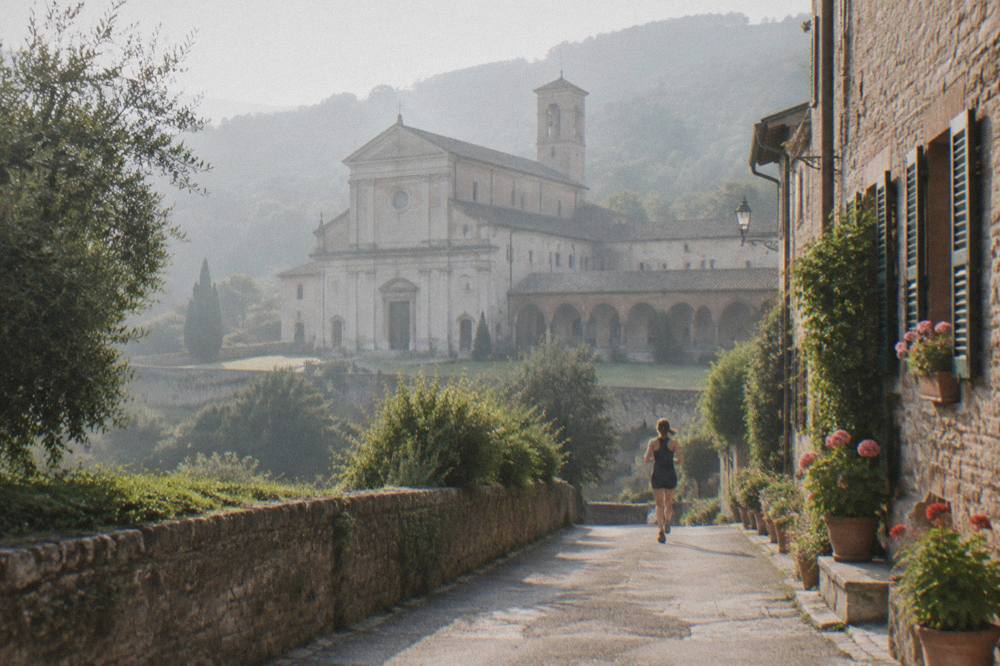
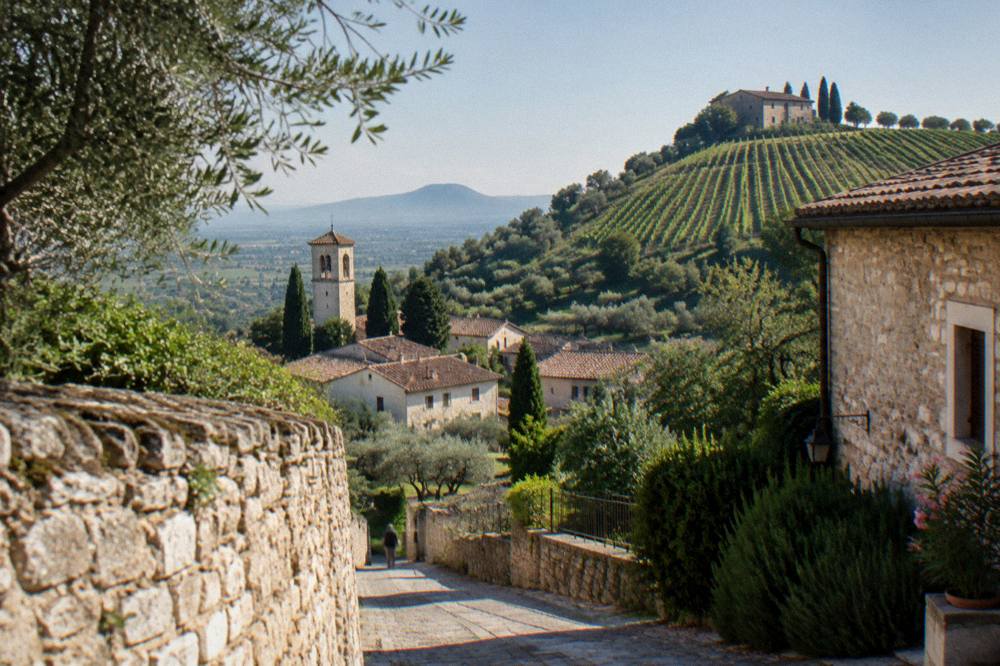
The Euganean Hills reward a slow day because everything in them is close together yet different in kind: a working abbey, a Renaissance villa with a formal garden, a Petrarch museum in a stone village, thermal towns on the plain and vineyards on the slopes, all within about 26 straight-line kilometres of Padua, and none of it demanding the queue discipline of the city's timed chapel. The region's rhythm is set by its geography, volcanic cones rising from a flat plain, which compresses the landscape changes into short hops and makes the loop structure of a hill day feel natural rather than forced. The hill towns' markets and festivals follow the agricultural calendar, and the antiques market at Prato della Valle in Padua itself, every third Sunday of the month, gives a city-side counterpart on the same rhythm.
For a site-seeing counterweight, the fourteenth-century fresco cycles of Padua, inscribed by UNESCO in 2021 as Padova Urbs Picta across eight complexes, sit in the city at the start of the same day-trip corridor, and the Orto Botanico, inscribed in 1997 and founded 1545, adds a garden tradition that pairs with Villa dei Vescovi's terraces. That is the real argument for basing in Padua: the weekend with Venice plan and the Veneto itinerary guide both treat the city as the hub and the hills as the spoke, which is exactly how Praglia Abbey is best visited. This page is part of Padua Travel Guide, where each hill town and villa has its own detailed guide.
Common Questions About Praglia Abbey And The Euganean Hills
What is Praglia Abbey?
Praglia Abbey is a Benedictine monastery in the Euganean Hills south of Padua, a working religious community set among the farmland and vineyards at the foot of the hills, and it is visited as a calm half-day stop combined with the villas, hill towns and wineries around it.
Can you visit Praglia Abbey without a car?
A car-free day is workable using the Busitalia Veneto network through the spa towns and the extraurban Colli lines, with the EUR 1.70 ninety-minute urban ticket inside the city and hill schedules checked on the operator's travel planner before travel.
What else should you see on a Praglia Abbey day trip?
Villa dei Vescovi at Torreglia (EUR 11 adult), the Petrarch house at Arquà Petrarca (EUR 6 full), the spa towns of Abano and Montegrotto Terme, and the walled towns of Monselice and Este all sit within the same hill belt and fit a single looped day.
When is the best time to visit the Euganean Hills?
Per the ERA5 reanalysis for Padua, 1991-2020, July and August average a 28.8 C daily high and November carries the year's highest rain total at 114.0 mm, so spring and early autumn give the most comfortable walking weather for the hills.
Do you need to book anything ahead for a hills day from Padua?
The abbey's own visiting arrangements and any villa or winery visits are set by each venue, while in the city the Scrovegni Chapel is timed entry only, 25 people every 15 minutes, and must be booked ahead, with the chapel closed 16 to 27 November 2026.