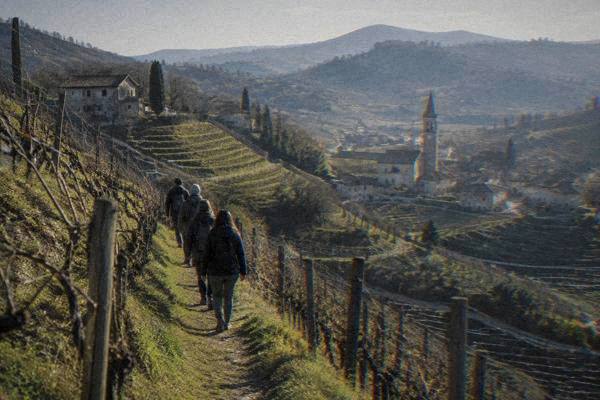
Prosecco Hills: Valdobbiadene And Conegliano From Padua
The Prosecco hills begin about 56 km north of Padua in a straight line, a day trip into the Veneto's sparkling-wine country between Valdobbiadene and Conegliano.
Short answer
Valdobbiadene lies about 56 km and Conegliano about 63 km from central Padua in a straight line. There is no single train that covers the hills themselves, so the practical options from Padua are a guided wine day trip by road, or a train to a gateway town combined with local transport.
The Prosecco hills rise north of Padua, the inland city in the Veneto about 36 km in a straight line from Venice that this Padua Travel Guide covers. The two names to know are Valdobbiadene, about 56 km from central Padua in a straight line, and Conegliano, about 63 km. Together they frame the steep, hand-worked vineyard country where Italy's best-known sparkling wine grows, a landscape of hillsides so narrow and so vertiginous that the vines are tended largely by hand. Padua is one of the sensible bases for visiting them, closer to the hills than Venice is and connected to them by road and rail.
This guide sets out what the Prosecco hills actually are, how far they sit from Padua, how the travel works, what a tasting day involves, and how the trip compares with the other wine country on Padua's doorstep, the Euganean Hills. Where a figure comes from a planning source rather than an official one it is marked as approximate; where a price belongs to a bookable product it renders from the tour blocks on this page rather than from prose.
What Are The Prosecco Hills And Where Do They Sit Relative To Padua?
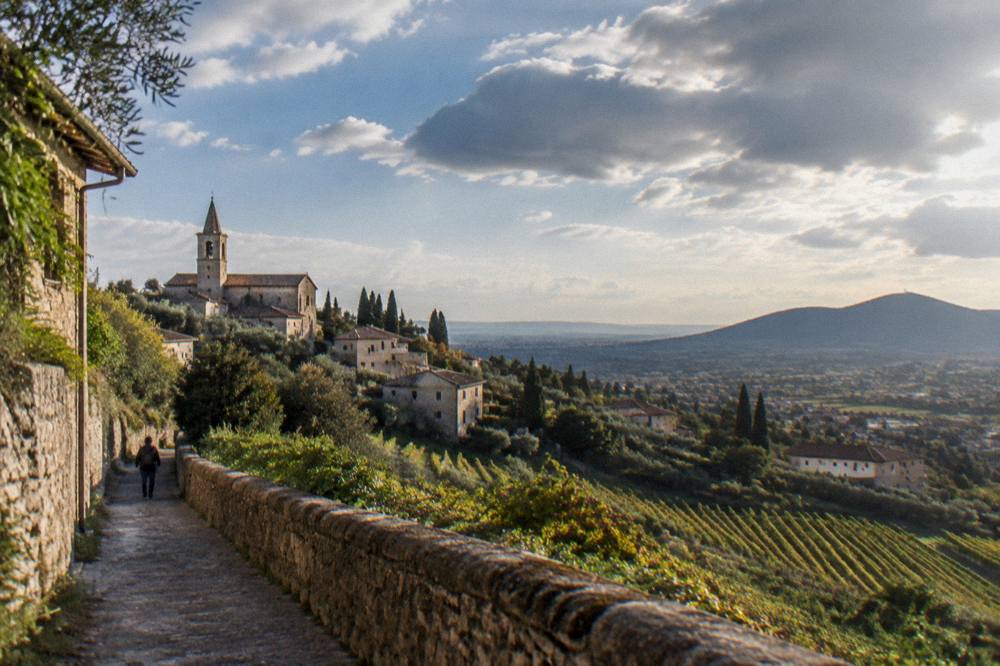
The Prosecco hills are the vine-covered slopes between Valdobbiadene and Conegliano in the Veneto, about 56 and 63 km respectively from central Padua in a straight line, a compact upland of steep ridges, woodland and small wine villages that gives its name to Italy's most widely exported sparkling wine. The hills belong to the band of pre-Alpine country that runs along the northern edge of the Venetian plain, closer to the mountains than Padua is. The terrain is the point: the slopes are steep enough that mechanised harvesting is largely impossible, and the landscape is defined by terraced rows, scattered farmhouses and narrow roads that wind from one hilltop village to the next.
The straight-line distances from central Padua, computed from map data, are the honest measure of scale. Valdobbiadene sits about 56 km to the north, Conegliano about 63 km to the north-east. Both are further out than the Euganean Hills, which lie 10 to 25 km from Padua's centre, and closer than Verona at about 69 km or Bologna at about 110 km. In practical terms the Prosecco hills sit at the far edge of comfortable day-trip range from Padua: reachable, but a full-day commitment rather than a half-day one.
What the area offers is a different register of wine country from the volcanic Euganean Hills south of the city. The Euganean slopes, covered in our guide to the hills, are close enough to combine with a morning in Padua. The Prosecco country is a destination in itself, worth the journey for the landscape and the cellar doors rather than as an add-on. Readers planning a wider stay can slot it into a route such as three days in Padua, with one of those days given over to the hills.
How Far Is The Prosecco Country From Padua And How Long Does The Journey Take?
Valdobbiadene is about 56 km and Conegliano about 63 km from central Padua, both measured in a straight line, and the journey is a day trip by any mode: a guided tour by road handles the whole loop, while independent travellers can reach gateway towns by rail and continue locally. No road distance or drive time is given for these routes; treat the straight-line figures as a measure of scale, not a schedule. The hills are further from Padua than Venice is (about 36 km straight line), which shapes the planning: this is not a trip you sandwich between two cathedral visits.
The rail picture is partial. Padua's station sits on the Venice-Milan line with fast connections north, and Treviso, about 41 km away in a straight line, is the regional hub that lies between Padua and the Prosecco country. Published train times exist for the journeys the site's transport research covered, Padua to Venice in about 26 to 40 minutes, Vicenza in about 16 to 25 minutes, Verona in about 43 to 60 minutes, but no time was sourced for the specific run from Padova towards Conegliano or Valdobbiadene, so none is printed. Check Trenitalia's own journey planner for the current timetable and fare before committing to an independent rail plan.
For that reason the guided day trip is the format that suits the hills best. The roads between the wineries are narrow and winding, tasting means nobody should drive afterwards, and a tour folds the producers, the timings and the logistics into one booking. The featured option on this site is a dedicated hills tour, described below; readers who prefer to build their own day can pair a train to a gateway town with local buses or a taxi for the winery legs, confirming each leg locally before setting out.
A guided day trip removes the driving question entirely. Check availability for the tour that runs from Padua into the hills, or read on for what the day itself involves.
What Does A Prosecco Hills Day Trip From Padua Actually Involve?
A typical guided day from Padua travels by road into the hills between Valdobbiadene and Conegliano, stops at one or more producers for cellar visits and tastings, pauses in a hill village for the landscape and a meal, and returns to Padua by evening, with the driving, the bookings and the tasting arrangements handled by the operator. The substance of the day is the wine and where it comes from: the cellars where the secondary fermentation happens, the slopes the grapes are picked from, and the difference between the styles produced in the zone. The tour's listing carries the current itinerary, inclusions and per-person price, so confirm the details there before booking.
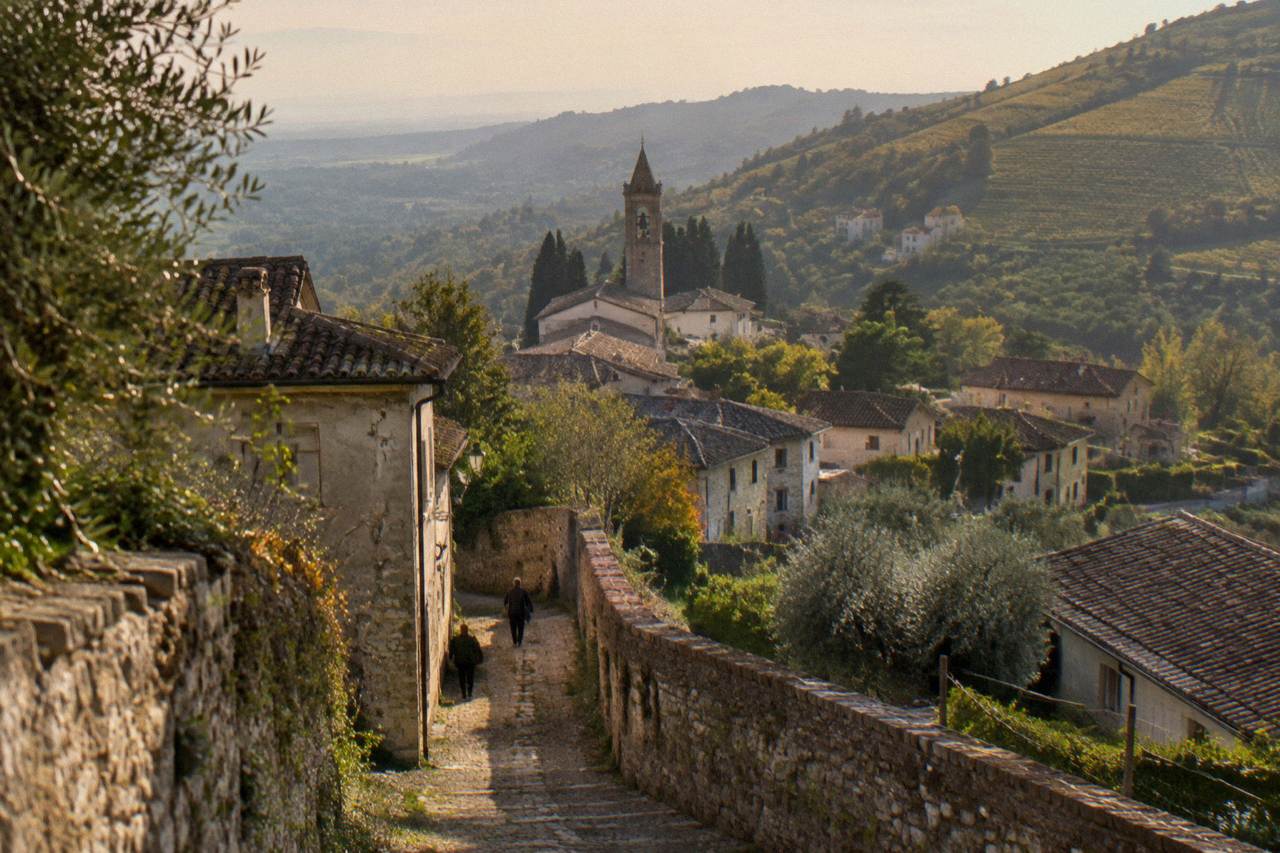
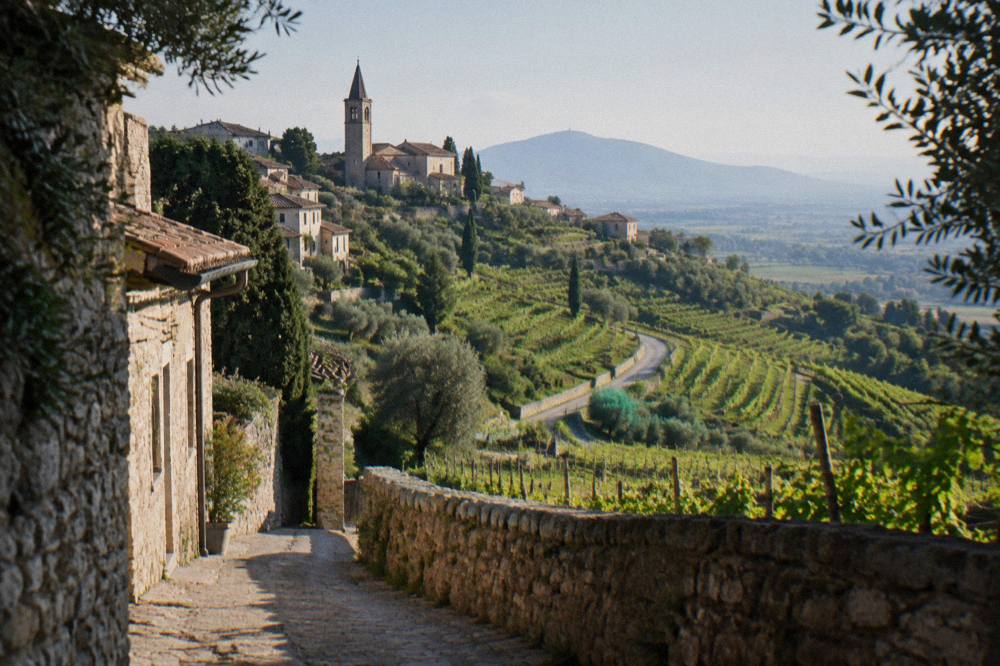
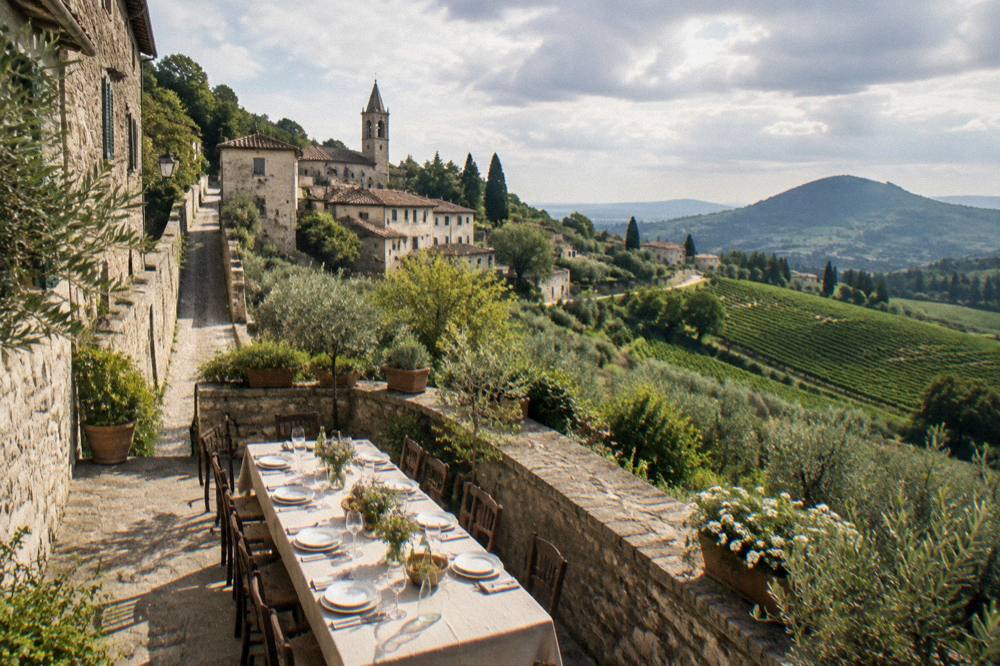
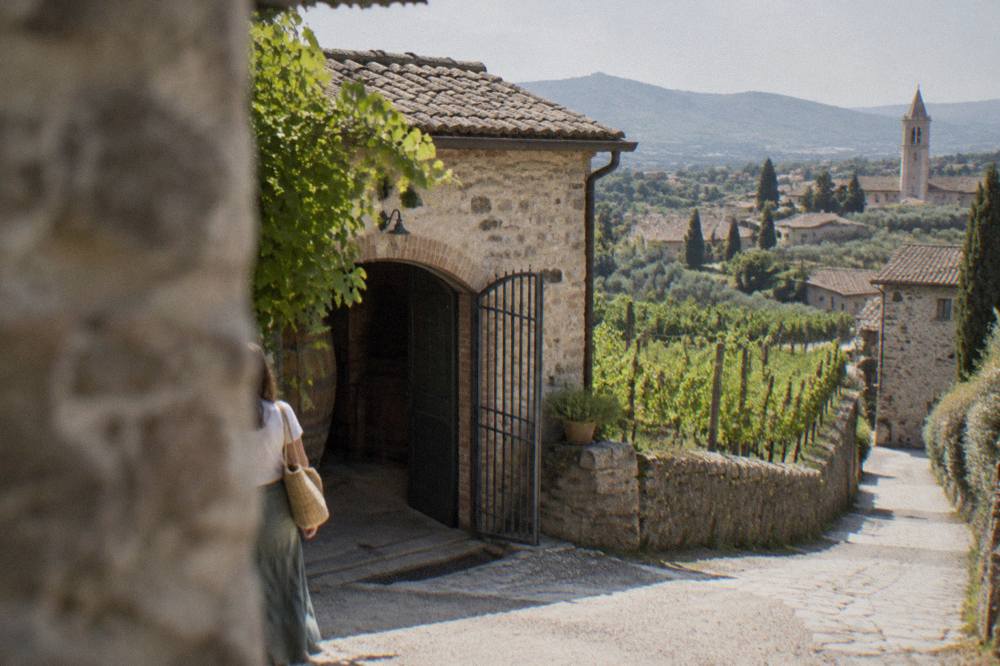
The landscape itself is half the reason to go. The hills are steep and heavily planted, with the vine rows following the contours so closely that from a distance the slopes look striped. Villages sit on the ridgelines, church towers marking each one, and the views open across the plain towards the mountains on clear days. Even visitors who treat the wine as secondary tend to remember the scenery. A day trip in spring through autumn encounters the vines at different stages, from bare winter rows to the green of the growing season; no month-by-month claim is made here because none was sourced.
What the visit is not is a trip to a single famous estate. The zone is a working agricultural region of many small and medium producers, and the character of a day depends on which stops the operator has arranged. Producers' names, tasting prices and the specifics of what is poured are facts for the booking page, not for this guide: wine-specific details beyond the tour descriptions were not sourced and are deliberately not invented. Ask the operator before booking if the cellar list matters to you.
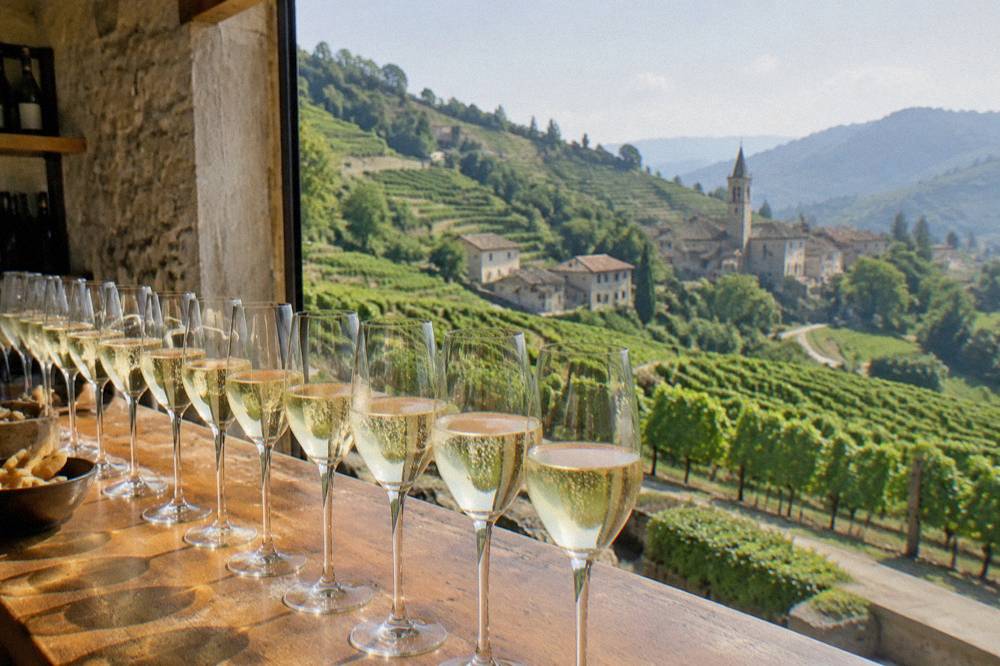
The comparison worth making before booking is with the wine country on Padua's own doorstep. The two zones are different products: the Euganean Hills are volcanic hills 10 to 25 km away, close enough for a half day, while the Prosecco hills are a full-day excursion into a different landscape. The table sets the two side by side.
| Prosecco Hills | Euganean Hills | |
|---|---|---|
| Distance from central Padua (straight line) | Valdobbiadene about 56 km, Conegliano about 63 km | 10 to 25 km |
| Terrain | Steep pre-Alpine ridges, terraced vineyards | Volcanic cones, wooded slopes |
| Best suited to | A full-day wine excursion | A half-day or combined itinerary |
| Travel from Padua | Guided road tour, or rail to a gateway town plus local transport | Short hop by car, bus or tour |
| Wine style on the tours | Sparkling wine from the zone | Still and sparkling wines of the Euganean zone |
Is The Prosecco Hills Trip Better Than The Euganean Hills Trip From Padua?
Neither zone is better; they answer different questions: the Prosecco hills are the full-day spectacle of steep sparkling-wine country about 56 to 63 km out, while the Euganean Hills are the close, flexible half-day option 10 to 25 km from the centre, and a trip to one is not a reason to skip the other on a longer stay. The honest differentiators are distance and time. If Padua is a two-night base with one free day, the Euganean Hills cost less of it. If the visit runs longer, say a plan built around two days in Padua extended with a third, the Prosecco day earns its slot.
The Euganean Hills also carry attractions beyond wine: the thermal towns of Abano and Montegrotto, the medieval villages of Arqua Petrarca, Monselice and Este, and the abbey at Praglia all sit in or beside them. The Prosecco country is more single-minded, and that focus is its appeal. A reader whose main interest is wine will find the fuller cellar day in the north; a reader balancing wine with thermal baths, hill towns and a shorter journey will find the southern hills the better fit.
Costs between the two are not compared in prose, because the only prices this site prints for bookable products are those rendered by the tour blocks on the page. Both zones have options at several price points on the roster, and the per-person figures, ratings and review counts all live on the tour pages and in the picks bands rather than in this sentence.
Which Towns And Villages Make Up A Prosecco Hills Itinerary?
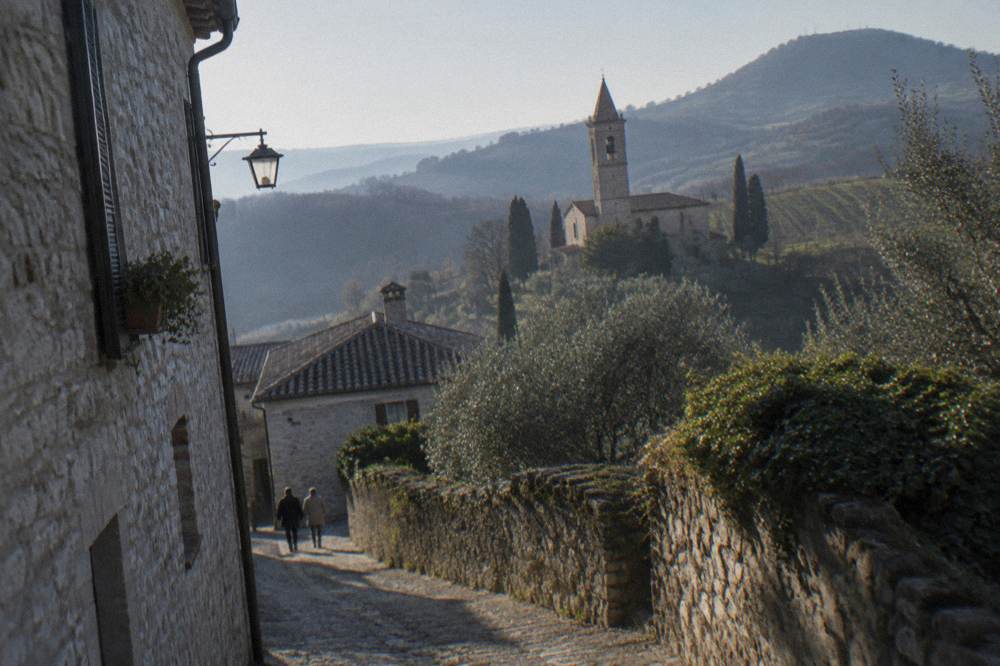
The two anchors are Valdobbiadene, about 56 km from Padua in a straight line, and Conegliano, about 63 km, and between them the itinerary strings together small hill villages, ridge viewpoints and the wineries scattered across the slopes that connect the two towns. The area is not one site but a corridor: the wine zone runs along the band of hills between the two names, and a day trip moves through it rather than arriving at a single gate. Conegliano, the larger of the pair, carries a castle-topped old town on the rail line; Valdobbiadene sits deeper in the hills at the heart of the vineyard zone.
Between and around them lie the villages that give the landscape its texture, small settlements perched on spurs with a church, a piazza and a producer or two. Their names and the specific roads between them are the operator's business on a guided day. Independent travellers should treat any one village as a stop on a route planned around transport and opening hours, confirmed locally, rather than as a destination with published visitor hours sourced for this page.
A practical framing for a self-planned day: pick one anchor town reachable by rail or bus from the Padua area, book one producer visit in advance, and leave the rest to walking. The hills reward being unhurried. No entry prices, opening hours or transport frequencies for the individual villages were sourced, so none are printed; the Padua map guide covers the city end of the journey, and the hills end is best confirmed with the local tourism information on arrival.
| Stop | Rough character | Distance from Padua (straight line) |
|---|---|---|
| Valdobbiadene | Heart of the vineyard zone, deep in the hills | About 56 km |
| Conegliano | Larger anchor town with an old town and castle, on the rail side | About 63 km |
| Hill villages between | Ridge settlements, churches, cellar doors | Between the two anchors |
| Treviso (gateway) | Walled city on the route between Padua and the hills | About 41 km |
Can You Visit The Prosecco Hills From Padua Without A Car?
Yes, but the car-free version is a guided day trip by road rather than a self-drive plan: the practical car-free route from Padua is a tour that collects passengers in the city, or a rail journey to a gateway town such as Treviso or Conegliano continued by local bus or taxi, with each leg confirmed locally before travel. The hills' internal transport is thin because the zone is rural and the roads are minor; that is the same reason the guided format dominates. No timetable, frequency or fare for the local buses within the hills was sourced, so none is printed.
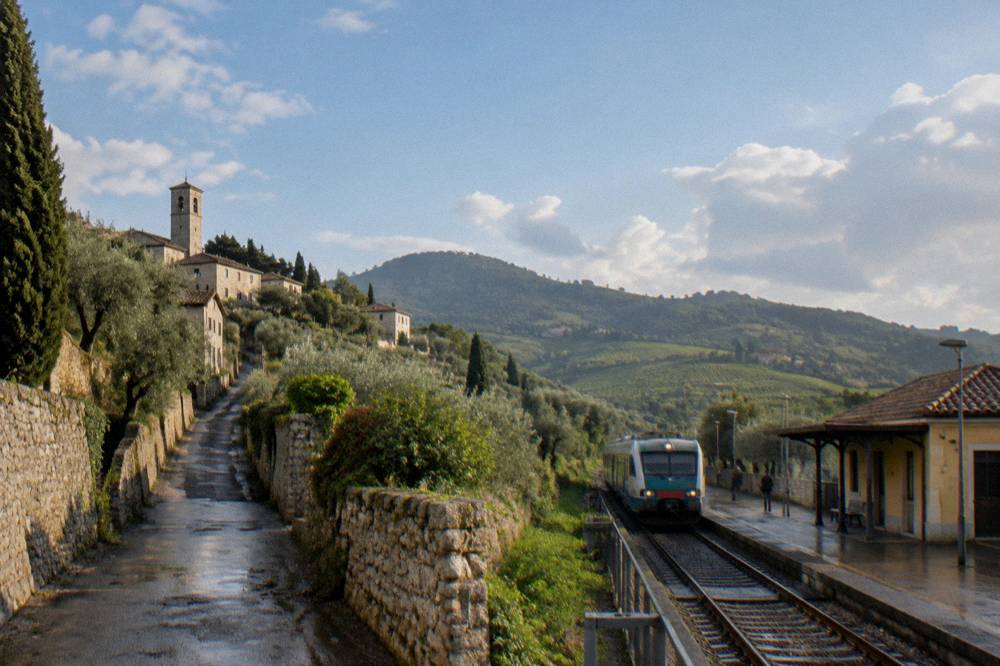
The rail leg is the strong part of any independent plan. Padova station is a major node, and Treviso, about 41 km from Padua's centre in a straight line, sits on the route north-east; it is a destination in its own right, and the site's Treviso day-trip guide covers it. From a gateway town the last miles into the hills are the hard part, and that is where a pre-booked tour, a taxi arranged by the accommodation, or a bike for the fitter traveller fills the gap. No bike-hire tariff for the hills is printed because none was sourced.
Driving is possible for visitors who hire a car in Padua, but the tasting day creates an obvious problem: the person who drives cannot drink, and the roads between producers demand attention. Splitting the driving across a pair, or designating one non-drinker, works; the alternative is the tour, which is why this page leans on it. The car rental guide covers the hire side, and the ZTL rules that matter in Padua itself are summarised on the parking page.
When Is The Best Time Of Year For A Prosecco Hills Trip From Padua?
The growing season from spring through early autumn is when the hills are at their fullest, with July and August the warmest months (ERA5 reanalysis for the region shows mean daily highs of 28.8 C in both) and the shoulder months cooler for walking, while no single month is claimed as the best because no crowd or availability data was sourced. The climate figures that can be stated plainly come from the modelled normals for the Venetian plain: warm summers, cold winters with a January mean high of about 7.3 C, and a rainfall pattern that peaks in the autumn months. The hills will run a little cooler than the plain in every season.
The practical considerations are the vine's calendar and the weather's. Winter rows are bare and the views are wide but grey; spring brings leaf and blossom; late summer brings the weight of the crop; and autumn the harvest activity and the turning woodland. Any claim about which month has the fewest visitors or the shortest waits would be invented, so none is made. Book the tour and the tasting slots regardless of season, because the producers' capacity is limited by appointment, not by turnstiles.
One scheduling note belongs to the Padua end of the day rather than the hills. If the wider itinerary includes the Scrovegni Chapel before or after the trip, remember that its timed-entry slots are booked ahead, up to 25 people every 15 minutes, and the chapel is closed 16 to 27 November 2026 for the annual fresco inspection; the details sit on the Scrovegni Chapel guide. Do not plan a hills-and-chapel double on the same day; the distances make it a false economy.
| Season | Conditions (ERA5 reanalysis, 1991-2020, for the Padua grid) | Notes for the hills |
|---|---|---|
| Spring (Mar-May) | Mean highs rising from 13.7 to 22.1 C, rain increasing to 99.7 mm in May | Vines in leaf, cool walking |
| Summer (Jun-Aug) | Mean highs 26.2 to 28.8 C | Full canopy, warm afternoons |
| Autumn (Sep-Nov) | Mean highs falling from 23.6 to 12.6 C, rain peaking at 114.0 mm in Nov | Harvest period, woodland colour |
| Winter (Dec-Feb) | Mean highs 7.3 to 9.4 C, January mean low -0.2 C | Bare vines, wide views, short days |
What Should You Budget For A Prosecco Hills Day From Padua?
The only per-person price this page can state for the hills trip is the one rendered by the tour block itself, because producer prices, restaurant prices and independent travel costs for the zone were not sourced; the honest budget is the tour's from-price plus whatever you spend beyond its inclusions, checked against the listing before booking. The tour's listing states what the price covers and what it leaves out, and that distinction is the real budgeting decision: a day that includes tastings and transport behaves differently on the wallet from one that includes neither.
Beyond the tour, the standard travel costs that are printed on this site and apply to the Padua end of the journey are the EUR 1.70 urban 90-minute ticket within the city and the EUR 13 airport bus fare to Venice Marco Polo, neither of which reaches the hills. Train fares and local bus fares for the specific legs into the hills were not sourced and are not printed; confirm them on the operators' own pages when the plan firms up.
Two further costs are worth naming without figures. The tourist tax, imposta di soggiorno, applies to nights spent in Padua, is collected by the accommodation and is capped at five consecutive nights per stay, with no rate given here. And a meal in the hills, if the tour does not include one, is a per-head cost to ask the operator about: they know the stops, and the listing or the confirmation message will say whether lunch is included, at your expense, or built into a village stop.
Can You Combine The Prosecco Hills With Other Day Trips From Padua?
A two-base plan works better than cramming: the hills are a full day at 56 to 63 km out, and the natural combinations are an overnight in the hills paired with a second day in Treviso, Bassano del Grappa or Asolo, all of which sit in the same northern band of the Veneto and are covered by separate day-trip guides on this site. The arithmetic is the constraint. A same-day double with anything more than a gateway town means more hours in a vehicle than at either destination, and no traveller needs that.
The pairings that share geography are the ones to look at. Treviso, about 41 km from Padua in a straight line, is the logical rail gateway on the way north-east. Bassano del Grappa, about 42 km out, lies on the same northern arc, with its covered alpine bridge and the Poli Grappa Museum, which reports free entry. Asolo and Conegliano's neighbour Castelfranco Veneto belong to the same zone, though their transport specifics were not sourced. A loop that takes in two of these over two days is a strong Veneto itinerary.
The other direction, the Euganean Hills and the Brenta Riviera villas, stacks with a Padua base without overnights, and the site's Veneto itinerary guide assembles the full picture. The choice between a two-day northern arc and a set of southern half-days usually answers itself once the length of the Padua stay is fixed: short stays stay south, long stays go north.
| Combination | Straight-line distance from Padua | Fits with the hills? |
|---|---|---|
| Treviso | About 41 km | Yes, as the rail gateway or a second stop |
| Bassano del Grappa | About 42 km | Yes, same northern arc, separate day |
| Valdobbiadene and Conegliano | About 56 and 63 km | The hills themselves |
| Verona | About 69 km | Not on the same day |
| The Euganean Hills | 10 to 25 km | Different direction entirely |
What Should You Know Before Booking A Prosecco Hills Tour From Padua?
Check four things on the listing before booking: the exact pickup point in Padua, what the price includes in the way of tastings and food, the cancellation terms, and the group size, because those four variables differ across operators and none of them is stated in this guide's prose. The tour blocks on this page render the live from-price, rating and review count from the site's own product data, and everything operational lives on the operator's live listing, which is the document to read closely.
Booking horizon matters less here than for Padua's own headline sights, but the producers' capacity is finite: a tour that visits small cellars cannot absorb an arbitrary number of guests. Booking a few days ahead in the high summer weeks is the cautious course. The same logic applies to the Scrovegni Chapel if the itinerary pairs the hills day with a chapel slot on another day: that booking is timed and strict, with same-day online booking unavailable.
Finally, keep the hills in proportion to the city. Padua's centre holds two UNESCO listings, the Orto Botanico (inscribed 1997, founded 1545) and the fourteenth-century fresco cycles of Padova Urbs Picta (inscribed 2021, eight complexes), and a visitor who spends every day out of the city misses them. A defensible shape for a five-day stay is two days in the city, one in the hills, one in Venice and one in the Euganean zone. The site's overview of things to do in and around Padua is the place to assemble it.
Common Questions About The Prosecco Hills From Padua
How far are the Prosecco hills from Padua?
Valdobbiadene is about 56 km from central Padua in a straight line and Conegliano about 63 km, both to the north-east. They are further out than Venice (about 36 km) and closer than Verona (about 69 km), which puts the trip at the comfortable edge of day-trip range.
Can you get to the Prosecco hills from Padua by train?
Partly. Confirm the specific connections on the operators' own journey planners, or take a guided road tour from Padua.
Is a tour better than driving to the Prosecco hills yourself?
A tour answers the main problem of the zone: the person who drives cannot taste, and the hill roads between producers are narrow. A guided day trip also handles the producer bookings. Driving works with a designated non-drinker, but the tour is the format that fits the landscape.
Is the Prosecco hills trip better than the Euganean Hills from Padua?
They are different trips. The Prosecco hills are a full day at 56 to 63 km out, centred on sparkling wine and steep scenery; the Euganean Hills are 10 to 25 km away and pair wine with thermal towns and medieval villages in a half day. A longer stay can do both.
What does a Prosecco hills day trip include?
On the guided options, travel from Padua, producer visits with tastings and a village stop; the exact inclusions, price and itinerary are on the operator's live listing. Producers' own tasting prices and opening hours were not sourced for this page, so confirm any independent plan directly with the wineries.
When is the best time to visit the Prosecco hills from Padua?
The growing season, spring through early autumn, is when the hills are at their fullest; the ERA5 reanalysis for the region shows mean July and August highs of 28.8 C and a January mean high of 7.3 C. No single month is claimed as the best, because no crowd or availability data was sourced.
The Prosecco hills are Padua's most distant wine day and one of its most rewarding: a full day of steep, hand-worked vineyard country that no itinerary built around the city's frescoes and arcades quite replicates. Book the tour or the train leg with the same care you would give the chapel slot, and the hills take care of themselves.