Padua Car Rental: When A Car Helps
This guide sets out when hiring one helps, using fares, distances and opening rules.
Short answer
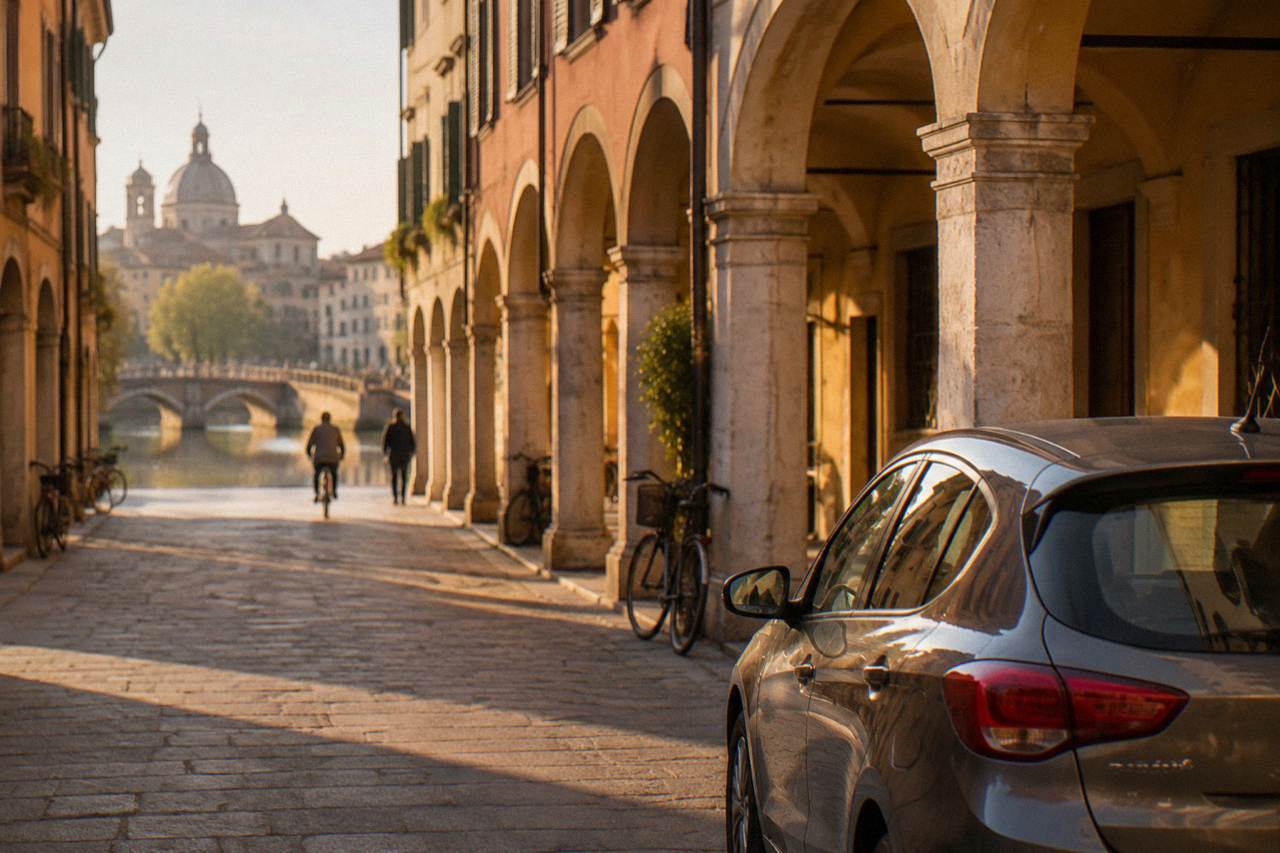
Skip the car for Padua itself and for Venice, Vicenza and Verona; hire one mainly for the Euganean Hills, the Brenta Riviera villas and small towns with thin train links, and park outside the restricted centre.
Padua (Italian: Padova) sits inland in the Veneto, about 36 km in a straight line from Venice, on the Milan to Venice rail line. That single sentence explains the whole car-rental question: the city is compact and walkable, the station feeds fast trains to the region's big names, and the places where a car genuinely helps are the small ones, the hills and the villas, where rail coverage thins out. This page weighs the two options with the figures that have been checked, train fares the operators publish, straight-line distances computed from map data, and entry prices from the sites themselves, and it stays silent where no checked figure exists. For the broader picture of the city without a car, start with things to do in Padua.
Do You Need A Car In Padua?
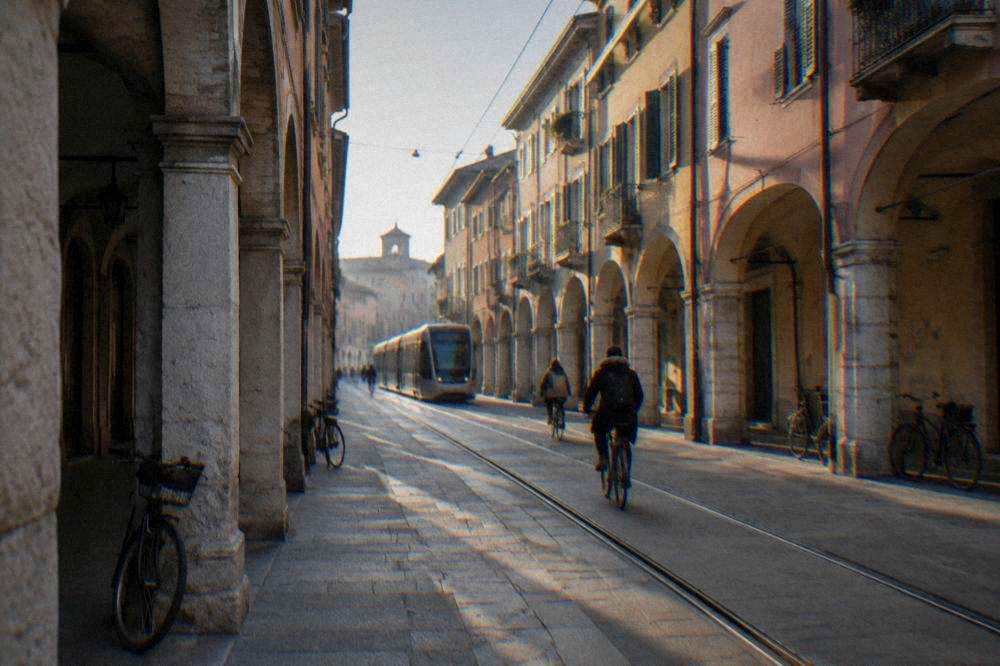
No, not for the city itself and not for Venice, Vicenza or Verona, because Padua's historic centre is compact, arcaded and served by tram and bus, and the trains to those three cities run direct in well under an hour. A car becomes useful for the Euganean Hills, the Brenta Riviera villas and small hill towns where trains are slow or absent. The Scrovegni Chapel, the Basilica of Saint Anthony, Prato della Valle, the Orto Botanico and Palazzo del Bo all sit within, or on the edge of, the walkable centre, and the urban ticket is cheap: EUR 1.70 for 90 minutes on Busitalia's city network, with contactless card taps accepted on board.
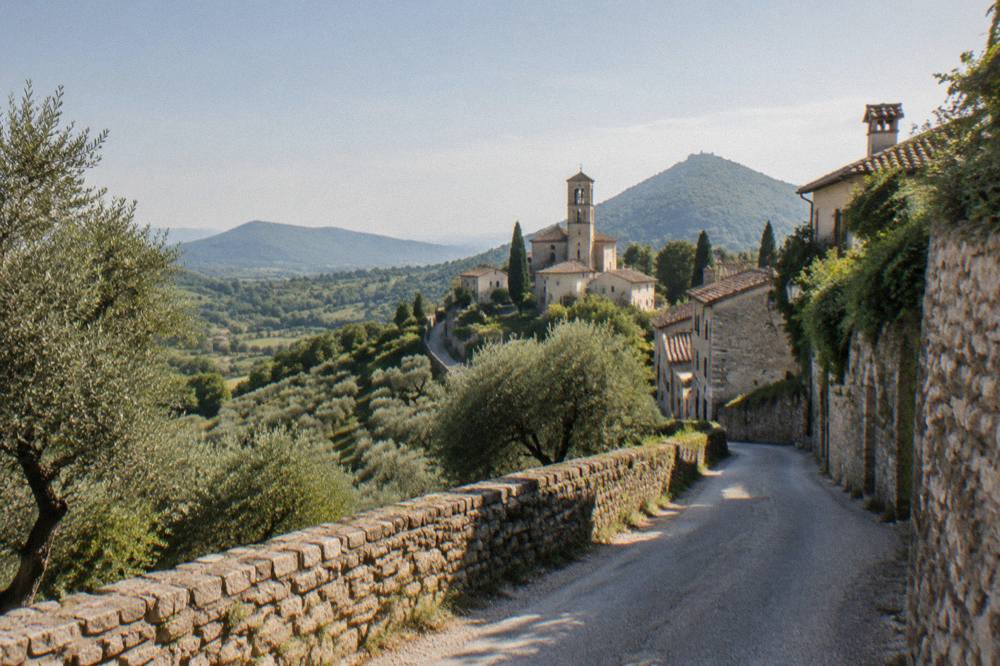
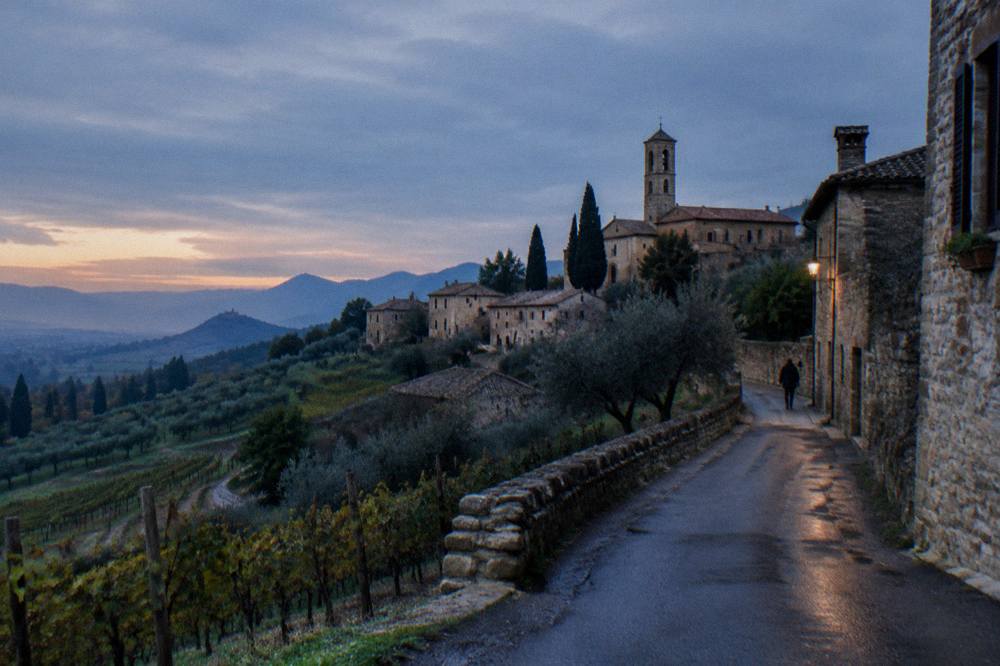
The arithmetic changes the moment you leave the plain. Arqua Petrarca is about 20 km in a straight line from the centre, Monselice about 21, Este about 26, and the villages between them are stitched together by country roads rather than rail. Villa dei Vescovi, the FAI property at Luvigliano di Torreglia, and the great villa gardens of the Euganean front line up for exactly the kind of slow, multi-stop day a car serves well.
There is also the question of what you give up. Driving into Padua means confronting the restricted-traffic zones of the historic centre, covered in a section below, and the city's own advantages, the free and low-cost sights, the market squares, the evening passeggiata, are all pedestrian pleasures. The honest summary: rent for the region, not for the city.
Families and anyone carrying luggage between bases should weigh the walkable-centre point twice. A pair of suitcases dragged over cobbles from a car park to a hotel inside the arcades can erase an afternoon; the same pair wheeled from Padova station to a central hotel is a short, flat push. The where to stay guide explains how the centre, the station quarter and the riverside districts divide up for visitors deciding where to sleep, and that choice drives the car question more than any other.
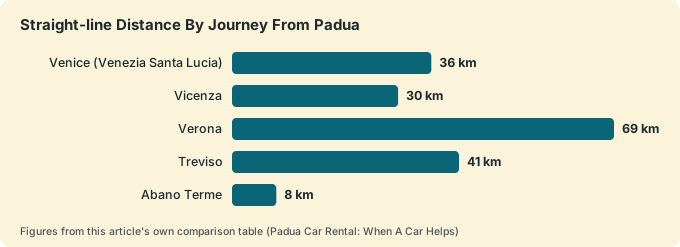
| Journey from Padua | Straight-line distance | Train time (about) | Regional fare (about) |
|---|---|---|---|
| Venice (Venezia Santa Lucia) | 36 km | 26 to 40 min | EUR 5 |
| Vicenza | 30 km | 16 to 25 min | EUR 6 |
| Verona | 69 km | 43 to 60 min | from about EUR 8 |
| Treviso | 41 km | 28 to 60 min | from about EUR 4 |
| Abano Terme | 8 km | not a direct rail route | bus network |
Train times and fares are approximate and change with the date; check Trenitalia or the operator's own planner before booking. Distances are straight-line kilometres, not road distances.
Where Do You Pick Up A Rental Car In Padua?
The practical pick-up points in Padua are the railway station area, where the national and international desks cluster around the city's main transport hub, and, for fly-drive arrivals, Venice Marco Polo airport, where the Busitalia airport bus from Padova runs 54 times a day and takes about 45 minutes at EUR 13 one way. The station sits on the northern edge of the centre, a few minutes' walk from the historic core, which makes it the natural place to collect a car on the morning you leave the city and return it the evening you come back.
That last pattern, rent late, return early, deserves emphasis. Padua's tourist infrastructure rewards staying inside the restricted centre, and a car parked for days at a European city hotel is money and worry spent on nothing. The station-left-luggage office (platform 1, daily 6:00 to 20:00, EUR 5 per 6 hours) covers the opposite case: a car-free arrival with bags you want to stow.
For arrivals through Venice Marco Polo, the airport transfer options matter before any car decision: the direct bus runs every 40 minutes from 06:30 to 23:50 out of the airport, so a fly-drive can begin at the airport desk instead of in Padua. Treviso airport has no officially confirmed direct bus link to Padua in the checked sources, so treat connections there as a live question for the operator's own site.
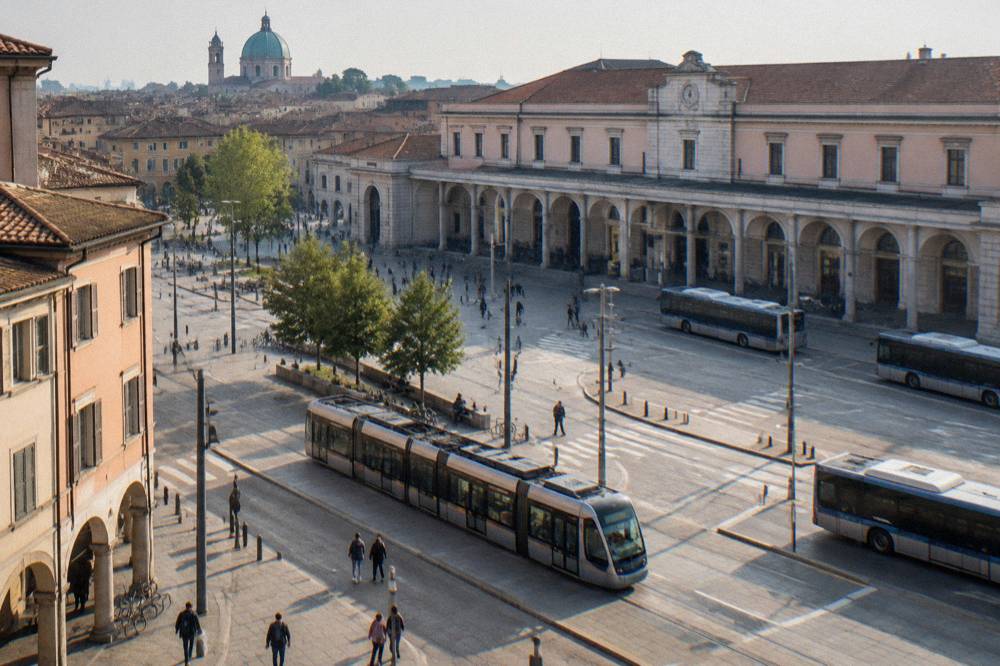
Insurance and driver-licence rules are set by the rental company, not the city, and this site's sources offer no summary of them; read your agreement. What Padua does fix is the road environment: tram SIR1 runs north to south through the city on about 10.5 km of track, and a second line, SIR3, is in pre-service testing with no opening date you should rely on. Trams mean rails in the road, and rails mean narrow tyres follow them: give the tracks a wide berth, especially wet.
One car-free alternative for the hills deserves a place in the same conversation: the guided Tour to Villa dei Vescovi and the Valsanzibio Garden Check availability, which reaches two of the Euganean Hills' headline gardens without a rental agreement at all.
Is Parking In Padua Difficult?
Yes, in the historic centre, because Padua's core contains restricted-traffic areas that limit or exclude private cars, and the specific hours, boundaries and penalty amounts for those zones are published by the Comune di Padova rather than by any general guide; the practical rule is to book accommodation with parking or a garage arrangement and to ask the property directly about access before you arrive. Beyond the zone, the city runs surface and structure parking, but no checked price list for those car parks exists on this site's sources, so compare rates at the machine or on the operator's app when you arrive.
What can be stated plainly: the restricted zones exist, they are enforced, and reserved bus lanes operate in the city alongside them. The comune's own pages carry the boundaries. If your hotel sits inside a limited zone, the property can usually register your plate for the access window; if it cannot, plan to park outside and walk or ride the tram in, which is what the EUR 1.70 urban ticket is for. Everything else covered here is indexed on Padua Travel Guide.
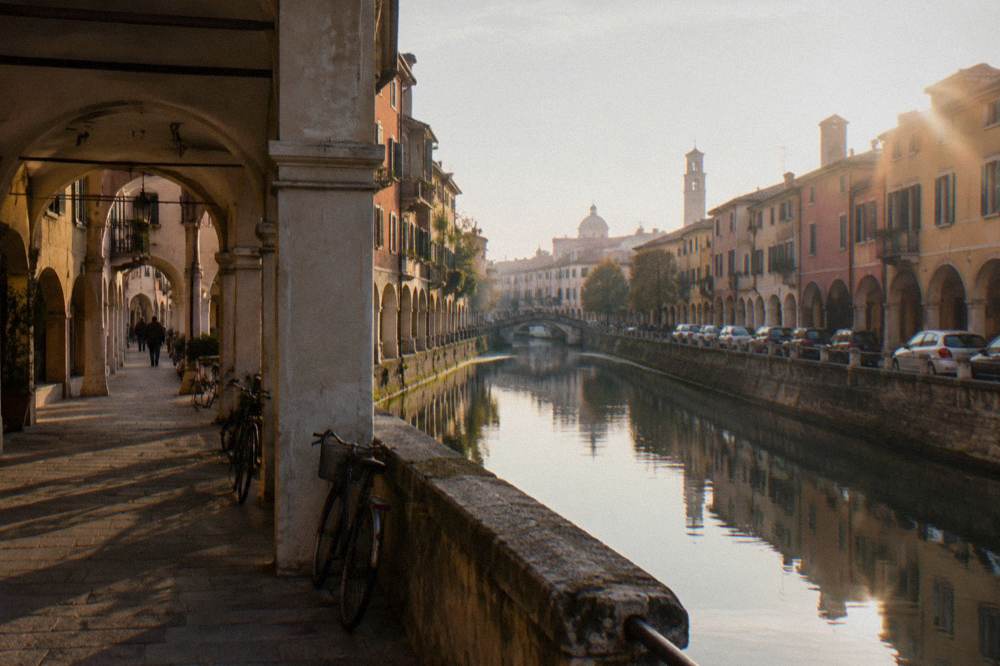
The centre's street pattern explains the rules. Padua grew around Piazza delle Erbe, Palazzo della Ragione and the university quarter long before the car, and the arcades that make it pleasant to walk make it impossible to widen. The parking and restricted-zone details have their own page on this site; the car-rental takeaway is simpler: collect the car the day you leave, not the day you arrive.
Market days sharpen the point. Piazza delle Erbe hosts its stalls from 7:30 on weekdays and until 20:00 on Saturdays, and Prato della Valle fills with the Saturday market from 8:00, winter closing 19:00 and summer 20:00 per the Comune di Padova's market pages. On those mornings the squares that a driver might circle for a space are occupied by stalls and stalls' vans, and the ring of streets around them carries the traffic instead. Anyone planning a market visit with a car attached should treat the early morning as the awkward window.
Which Day Trips From Padua Work Best By Car?
The journeys where a car clearly helps are the Euganean Hills villages (Arqua Petrarca, Monselice, Este), the Brenta Riviera villa chain along the river between Padua and Venice, and villa-and-garden combinations such as Villa dei Vescovi and Valsanzibio, because these cluster on country roads with limited rail service; the big cities, Venice, Vicenza and Verona, are better by train. The hills sit close: Abano Terme about 8 km in a straight line, Montegrotto Terme about 11, Villa Pisani at Stra about 11, Arqua Petrarca about 20.
Entry prices at the destinations, from the properties' own pages, give the budget shape of a hills day:
| Euganean Hills stop | Full entry price | Notes from the property |
|---|---|---|
| Villa dei Vescovi, Luvigliano di Torreglia | EUR 11 | 6 to 18 and students EUR 6, under 6 free, family EUR 28 |
| Casa del Petrarca, Arqua Petrarca | EUR 6 | reduced EUR 4; closed non-holiday Mondays |
| Villa Pisani, Stra | price on the official site | the maze has timed, limited access announced |
| Il Burchiello, Brenta river cruise | price on the operator's site | runs March to October, both directions |
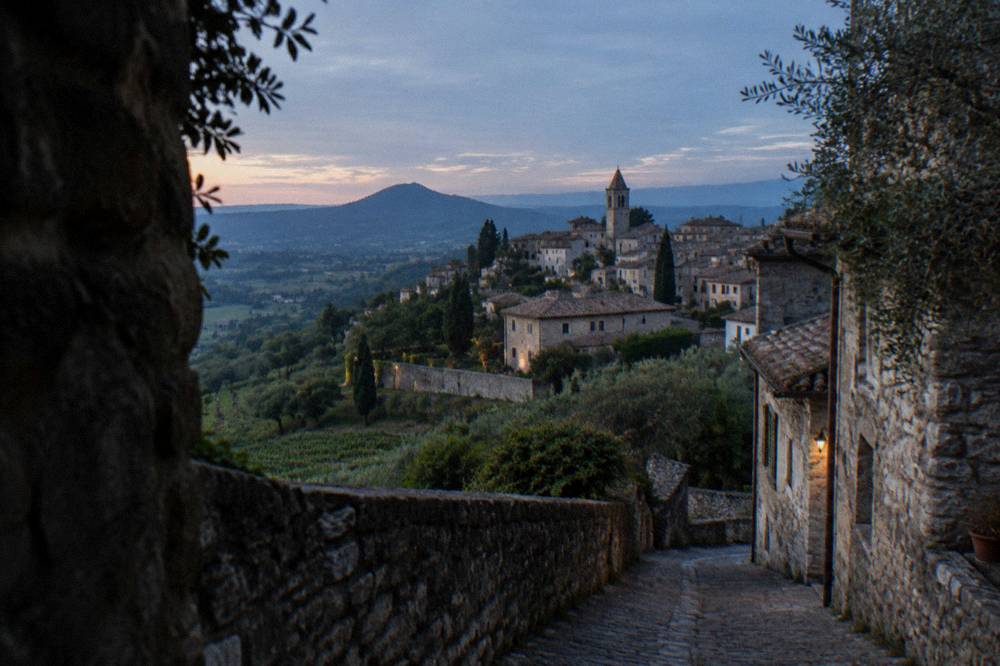
The wine angle strengthens the car case. The Euganean Hills carry their own DOC wines, and the olive-oil and winery stops sit on farm tracks that no bus serves conveniently; this site lists a Euganean Hills wine guide and a full hills overview. A driver who does not drink, or a small group splitting a guided day, both solve the problem cleanly. The market towns to the south, Este and Monselice, have stations of a sort, but the timetables are thin and the sights sit uphill from them.
Set against that, Verona and Lake Garda on one wheel of a day, or Vicenza's Palladian centre, are train work. Verona is about 69 km in a straight line with direct trains taking about 43 to 60 minutes; Vicenza is about 30 km with trains every 20 minutes or so taking 16 to 25. The Verona guide and the Vicenza guide cover both. Driving a rental into either city reintroduces the very restricted-zone problem you solved by leaving Padua.
Car Or Train From Padua: Which Costs Less?
For solo travellers and pairs going to Venice, Vicenza or Verona, the train wins outright, because the regional fares are about EUR 5 to Venice and about EUR 6 to Vicenza per person each way, while a rental day carries the fixed costs of the day rate, fuel and city parking; the car's economics improve with three or four people, with luggage, and on multi-stop hill itineraries where no single ticket exists. The comparison below uses only the fares that appear in this site's checked sources.
| Cost line | Train day (Venice) | Rental day (hills) |
|---|---|---|
| Return fare, per person | about EUR 10 | not applicable |
| Rental day rate | not applicable | set by the operator |
| Fuel | not applicable | set by distance and pump price |
| City parking in Padua | not applicable | rates at the facility |
| Venice day-tripper access fee | trial ended 27 July 2026 | not applicable |
The Venice line deserves its own note. The 2026 access-fee trial ended on 27 July 2026, and the fee does not apply from that date; no decision for 2027 had been announced. So the old arithmetic of "drive to avoid the Venice fee" is dead: the train is simply the better tool, roughly 26 to 40 minutes to Venezia Santa Lucia, and the Venice day-trip page covers the arrival logistics.
For the hills, the car competes not with the train but with the guided day trips this site lists, where a driver-guide absorbs the routing, the parking and the tasting logistics. Whether that is worth it over a self-drive is a price question, and prices for those products appear on their listings.
Season moves the balance a little. The ERA5 reanalysis for Padua, 1991-2020, puts November as the month with the highest rain total at 114 mm, and September and October close behind at about 105 mm each, so an autumn hills day by car means wet roads and lower vineyard views; July and August carry a mean high of 28.8 C, which argues for morning starts whatever the transport. None of this changes the car-versus-train split, but it changes how a rented day feels.
What Should You Know About Driving Out Of Padua?
The three things that matter are that the city exits onto the regional road and motorway network towards Venice, Vicenza and Bologna without a checked toll figure on this page, that the emergency number throughout Italy is 112, and that distances in this region are short enough that the drive is rarely the day's problem, the parking at the far end is. Bologna lies about 110 km in a straight line, Venice about 36, Vicenza about 30, and each has its own restricted centre to negotiate on arrival.
No toll amounts, motorway rules summaries or fuel prices appear in this site's checked sources, so none are printed; the toll operator's own signage and the rental agreement govern both. Winter matters more than visitors expect: the ERA5 reanalysis for Padua, 1991-2020, puts the January mean high at 7.3 C and the mean low at minus 0.2 C, with the highest monthly rainfall in November at 114 mm, so hill roads from late autumn through winter can be wet, and occasionally white. A long climate series for the city counts about 4.4 snowy days per year in recent decades, with seasons of none at all.
Timing around the city's calendar helps too. The Saturday market fills Prato della Valle from 8:00, and the antiques market takes the same square and via Umberto I on the third Sunday of each month; both change the parking and traffic picture in the south of the centre on those days. The events and festivals page lists the fixed dates. And if the marathon matters to your plans, the Padova Marathon on 18 April 2027 starts at Stadio Euganeo at 8:30 and finishes in Prato della Valle, which closes roads in between.
One border case deserves a sentence: the crossing into Venice's mainland, Mestre, is a short rail hop from Padova with similar regional options to the Santa Lucia service, so even a mainland-oriented day, say the Brenta villas by boat from one end, can begin and end without a steering wheel. The Padua as a base for Venice guide lays out that pattern in full.
Can You Manage Padua Entirely Without A Car?
Yes, comfortably, because Padua's centre is walkable end to end, the tram and bus network sells a 90-minute ticket for EUR 1.70, and every headline sight, the Scrovegni Chapel, the Basilica of Saint Anthony, Prato della Valle, the Orto Botanico and the university's Palazzo del Bo, sits on or inside that walkable core, with Venice and the other big cities a short train ride away. The car-free pattern is the default for this city, and the getting around guide plus the two-day itinerary show how much fits without one.
The Scrovegni Chapel alone anchors the argument for staying central. Entry is timed, with at most 25 people admitted every 15 minutes and about 15 minutes inside, booked in advance through the chapel's own site, with no same-day online booking; the chapel is closed 16 to 27 November 2026 for its annual fresco inspection. A car adds nothing to that visit and subtracts nothing from the risk of missing a slot. The daytime ticket, EUR 15 full plus a EUR 1 booking fee, also covers the Musei Civici Eremitani and Palazzo Zuckermann.
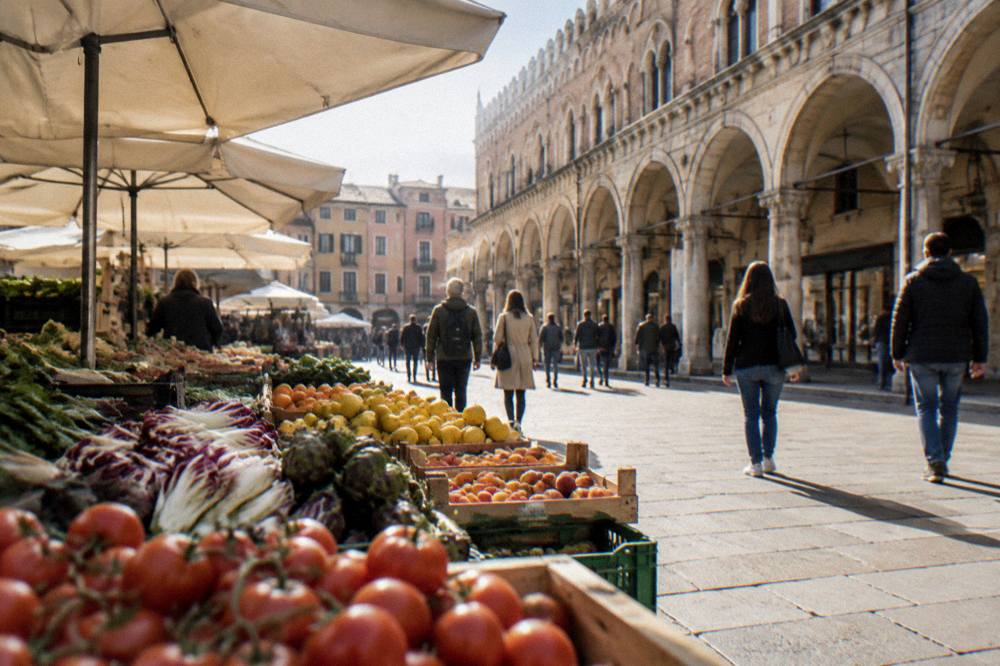
Bikes fill the gap the trains leave. The city is flat, and the Padua by bike guide covers the routes; between bike, tram and shoe leather, the only journeys left wanting are the ones this page has already assigned to the rental or the guided hills day.
Even the saint's own itinerary can be walked or guided: the Basilica of Saint Anthony, free to enter per the basilica's own listing, stands a short walk from Prato della Valle, and the Tredicina, the thirteen days of pilgrimage before the feast, ran 31 May to 12 June in 2026 with the feast on 13 June. Camposampiero, tied to the saint's final months, is one of the small towns where a car or an organised tour beats the timetable.
Common Questions About Padua Car Rental
Do you need a car to visit Padua?
No. The historic centre is compact and arcaded, the urban tram and bus ticket is EUR 1.70 for 90 minutes, and the major sights sit within walking range of each other. Venice, Vicenza and Verona are faster and cheaper by direct train.
Is it hard to park in Padua's centre?
The centre contains restricted-traffic areas enforced by the comune. Book accommodation with parking, ask the property about zone access before arrival, and check the Comune di Padova's own pages for boundaries and rules.
Where should you pick up a rental car for Padua?
Padova station is the natural pick-up point, sitting at the edge of the centre. Venice Marco Polo airport works for fly-drive arrivals; the direct Busitalia airport bus from Padua takes about 45 minutes and costs EUR 13 one way.
Which day trips from Padua are best by car?
The Euganean Hills villages (Arqua Petrarca, Monselice, Este), the Brenta Riviera villas and villa-garden pairings like Villa dei Vescovi and Valsanzibio. The big cities are better reached by train.
Is driving to Venice from Padua a good idea?
The train is the better tool: about 26 to 40 minutes, regional fare about EUR 5, and no parking problem at the far end. Venice's 2026 day-tripper access fee trial ended on 27 July 2026, removing the old fee-avoidance argument.
Does it snow around Padua in winter?
Rarely. A long climate series for the city counts about 4.4 snowy days per year in recent decades, with some winters recording none. The ERA5 reanalysis, 1991-2020, puts the January mean low at minus 0.2 C.
The short version stands: rent a car in Padua for the hills and the villas, park it outside the centre, and let the trains carry the rest.