Padua ZTL And Parking: Where Drivers Can Go
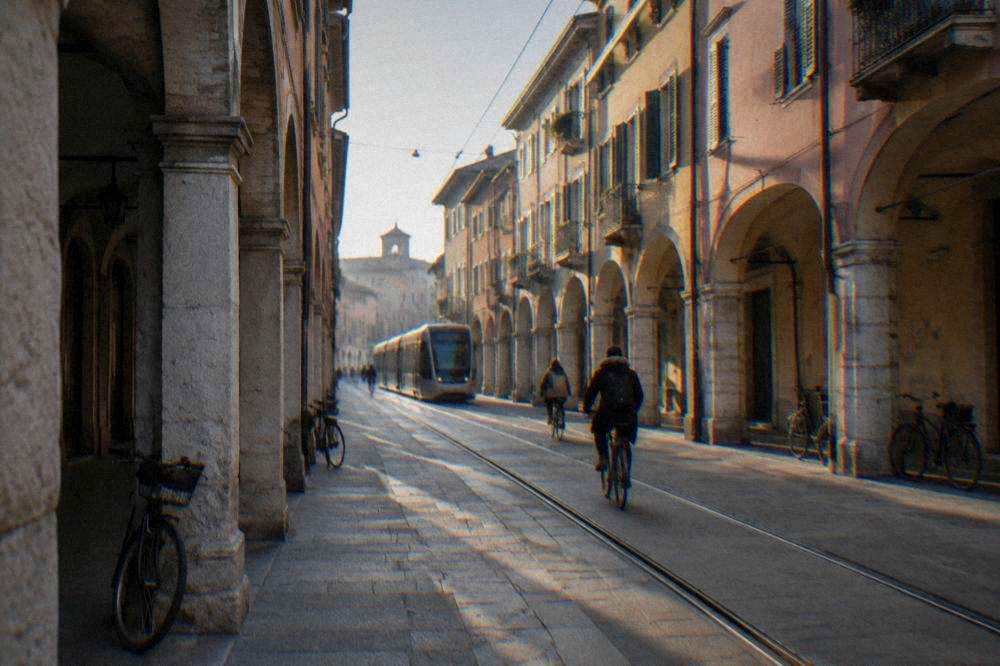
Padua's historic centre is laced with restricted-traffic streets, and the practical question for a driver is not how to enter it but where to stop before it begins.
Short answer
Padua's old centre has limited-traffic (ZTL) areas whose hours and rules are set by the Comune di Padova; visitors arriving by car should park outside the restricted streets and walk, or arrive by train. No specific ZTL hours or fines can be quoted here, so confirm current rules on the comune's own pages or with your accommodation.
Padua (Italian: Padova) is an inland city in the Veneto, northern Italy, about 36 km in a straight line from Venice, and its historic centre is a dense web of arcaded streets, market squares and university buildings that long predates the automobile. Like nearly every Italian city of its age, Padua answers the car with a ZTL, a "zona a traffico limitato", a limited-traffic zone where entry is reserved for permit holders at controlled times. This guide, from the editorial desk at Padua Travel Guide, sets out what a visitor with a car actually needs to plan: where the restricted streets sit in the geography of the city, what the honest options are for leaving a vehicle outside them, and why the centre itself rewards anyone who abandons the wheel entirely.
What Is The Padua ZTL And Where Does It Apply?
The Padua ZTL is a limited-traffic zone covering streets of the historic centre, meaning driving into them without a permit can trigger an automatic fine recorded by camera, and the zone's exact hours, boundaries and penalty amounts are published only by the Comune di Padova, so this guide quotes none of them and directs drivers to the comune's own pages and to their accommodation before arriving. Reserved lanes for buses and trams also exist across the city, per the comune's documentation, and those restrictions apply on their own separate schedules.
The honest starting point is that the ZTL is not a trap laid for tourists; it is the mechanism that keeps a medieval street plan usable at all. Padua's centre grew around the Scrovegni Chapel, the Basilica of Saint Anthony, Piazza delle Erbe and the university quarter, all within roughly twenty minutes' walk of one another. Streets built for carts cannot absorb commuter traffic, so the city reserves them for residents, deliveries and permit holders during controlled periods.
What that means in practice for a visitor is simple. You do not plan a route into the centre. You plan a route to the edge of it. The ring of wider roads around the old core carries through traffic, and the train station sits just north of the historic centre, which is one reason arriving by rail is the least stressful option of all, as this guide to reaching Padua lays out.
Two practical cautions are worth fixing in mind before you drive in. First, signs marking a ZTL in Italy are circular, red-ringed and carry the words "Zona a Traffico Limitato"; a camera icon beneath them signals automatic enforcement. Second, Italian ZTL enforcement is photographic, and penalties can arrive months later through a rental company, which adds its own administrative fee. The Comune di Padova publishes the authoritative rules; check them, or simply never drive inside the ring at all.
If your accommodation lies inside the restricted streets, ask the hotel or host directly before arrival. Many properties inside Italian ZTLs can register a guest's plate for the duration of the stay, but the arrangement, its deadlines and any cost are set property by property, and this page prints no rule about it because none belongs here. Ask, in writing, before you set off.
Where Can You Park When Visiting Padua?
The workable pattern in Padua is to leave the car in a car park outside the restricted streets of the historic centre and continue on foot, by tram or by bus, since the centre is compact and the urban transit network is built around exactly that handoff; this guide quotes no car-park names, prices or park-and-ride details, because those figures belong to the operators and the Comune di Padova rather than to a travel page.
What can be said with confidence is the geography that makes the pattern work. Padua's old centre is small enough that a single well-chosen parking spot puts every headline sight within a walk: the Scrovegni Chapel and the Eremitani complex at the northern edge, Caffè Pedrocchi a few streets south, then Piazza delle Erbe, Palazzo della Ragione and the university's Palazzo del Bo in the middle, and the Basilica of Saint Anthony with Prato della Valle at the southern end. A driver who parks at the perimeter is, at most, a pleasant walk from all of it.
The transit handoff is cheap and simple. The urban ticket costs EUR 1.70 and is valid for 90 minutes across the city's buses and the SIR1 tram line, and it can also be paid by tapping a contactless card on board, per Busitalia Veneto's fare pages. If you are moving around repeatedly in a day, Busitalia's fare page lists a day ticket at EUR 4.70 and a conurbation ticket at EUR 2.00, but confirm those at the ticket shop or in the Busitalia app before relying on them. The broader picture of trams, buses and walking distances is covered in how to get around Padua.
One detail that matters for drivers arriving by train-adjacent routes: the station's left-luggage office, at platform 1, is open daily from 6:00 to 20:00 and charges EUR 5 per 6 hours, which makes a car-free half day in the centre possible even with luggage in tow, as the padua train station guide explains.
Drivers should also note what Padua is not. It is not a coastal city and not a lagoon city; Venice, about 36 km away in a straight line, is a day trip, and its own access rules for day-trippers changed in 2026, with the trial access fee having ended on 27 July 2026 and no 2027 decision published. Anyone combining the two cities by car should treat Venice's parking and access situation as a separate piece of planning, and the page on using Padua as a base for Venice covers the smarter alternative: sleeping in Padua and taking the train.
Do You Need A Car In Padua At All?
No, a car adds nothing inside Padua itself: the historic centre is walkable end to end, the tram and bus network covers the rest of the city for EUR 1.70 a ride, and every headline sight from the Scrovegni Chapel to the Basilica of Saint Anthony sits inside a twenty-minute walk of the central squares, so the car earns its keep only for rural day trips such as the Euganean Hills or the Prosecco country.
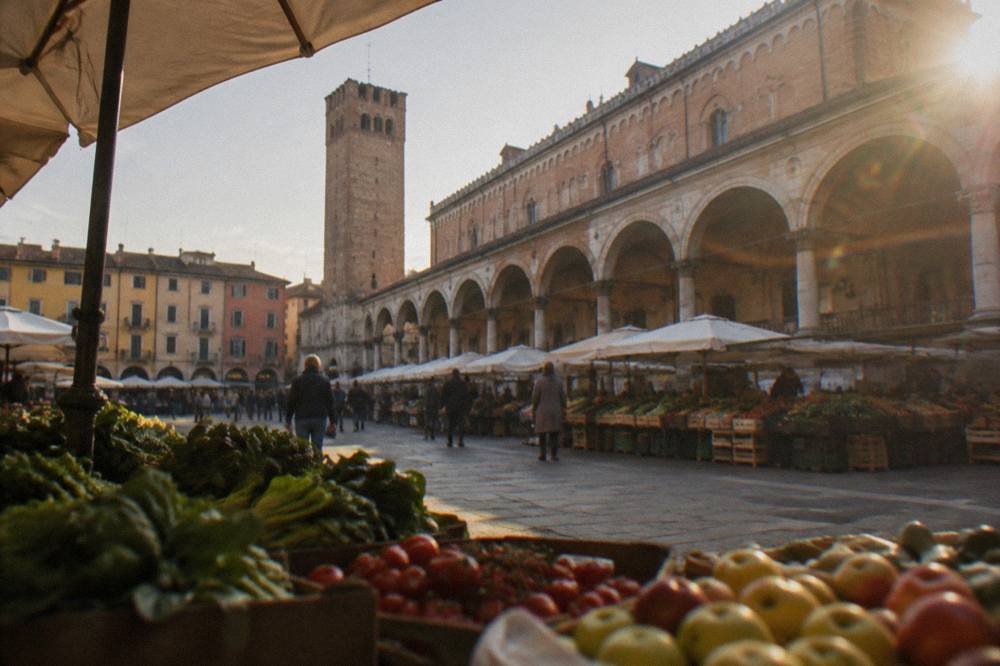
The walkability claim is not a soft impression; it is a fact of the city's shape. The Scrovegni Chapel stands at the northern edge of the centre beside the Eremitani church and museum. From there, Caffè Pedrocchi, the coffee house opened in 1831, is a short stroll south, and immediately beyond it lie Piazza delle Erbe and Piazza dei Frutti, whose markets run Monday to Friday from 7:30 and on Saturdays into the evening, per the Comune di Padova's market pages. Palazzo della Ragione and the daily covered market beneath it sit between the two squares. The Palazzo del Bo, the historic university building where Galileo taught from 1592 to 1610, is a few streets east, and the Basilica of Saint Anthony, begun in 1232, stands with Prato della Valle at the southern end of the same axis. Nothing on that list requires a vehicle.
The transit network exists for the longer legs. The SIR1 tram runs north to south across the city, and a second line, SIR3, is in pre-service testing with service targeted by the end of 2026, though no opening date should be relied on until the operator announces it. Buses fill the gaps. The fare facts that can be stated plainly: the 90-minute urban ticket is EUR 1.70, and a contactless card tap on board pays the same fare on the TU1 zone.
For visitors who land at Venice Marco Polo airport, there is a case for never touching a steering wheel at all: Busitalia runs a direct airport coach to Padua at EUR 13 one-way for an adult, EUR 6.50 for a child, about 45 minutes, with roughly 54 runs a day. The Venice airport to Padua guide works through the alternatives, and the getting around Padua page covers buses, trams and the city's bike share in detail.
A car does earn its keep beyond the city limits, and that is the one honest argument for bringing one. The Euganean Hills begin about 8 km from the centre at Abano Terme, with Montegrotto Terme at 11 km, and the wine country beyond them has wineries and olive mills whose visiting is easiest with wheels. That said, wheels can be someone else's: this site lists a guided Prosecco hills day trip from Padua, which covers the driving, the cellar visits and the timing in one booking, Check availability if a car-free hills day appeals.
How Do You Get Around Padua Without Driving?
Getting around Padua without a car means walking inside the historic centre and using the tram, buses or a bike for anything further out, with the EUR 1.70 90-minute urban ticket as the standard fare, contactless card taps accepted on board, and the SIR1 tram as the spine of the network from the station to the southern districts.
The fare structure is straightforward enough to put in one table. These are the urban figures Busitalia Veneto publishes; the airport coach figures are the operator's own.
| Ticket | Price | What it covers |
|---|---|---|
| Urban 90-minute ticket (TU1) | EUR 1.70 | Buses and tram in the city zone, 90 minutes |
| Contactless tap on board | EUR 1.70 | Same TU1 fare, one tap per vehicle within the time |
| Day ticket (TU1) | EUR 4.70 per Busitalia's fare page | A day of urban travel; confirm before travel |
| Conurbation ticket (TU2) | EUR 2.00 per Busitalia's fare page | 100 minutes across the wider zone |
| Airport coach to Venice Marco Polo | EUR 13 adult, EUR 6.50 child | Direct run, about 45 minutes |
Tickets are digital: buy through the Busitalia Veneto app or DropTicket before boarding, or tap a contactless debit or credit card on boarding. Physical ticket shops and agents exist as well. The tram and bus network is dense enough that a visitor staying anywhere along the SIR1 line, from the station through the centre to Guizza in the south, can live without a car comfortably.
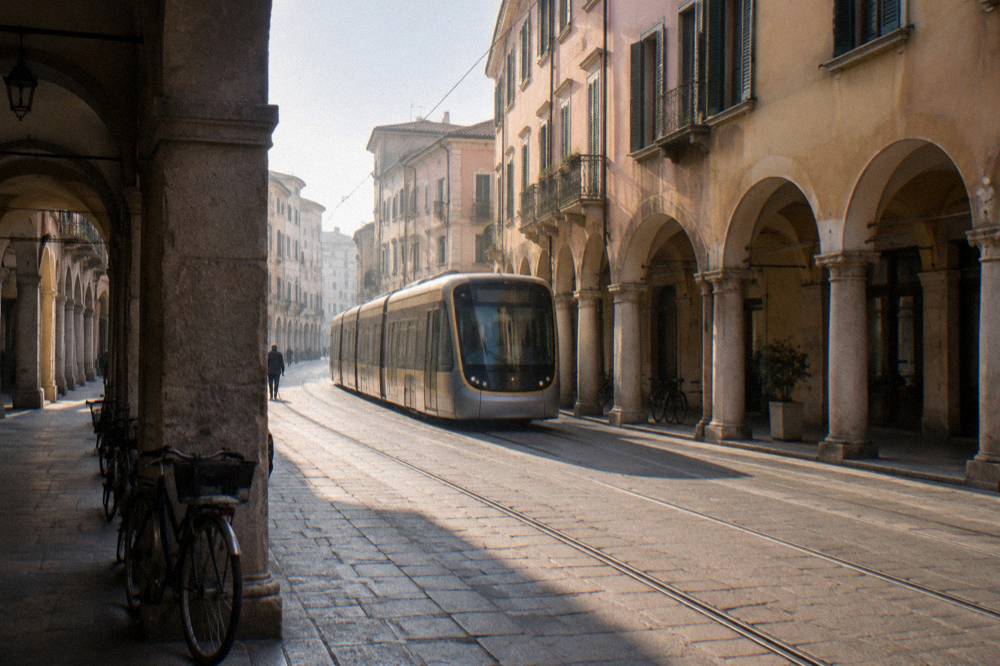
Bicycles are the other answer, and Padua is a student city of about 76,000 university students in a 2026/27 academic year reported by the university, which is one reason the flat streets carry so much two-wheeled traffic. Bike-share services operate in the city; check current tariffs and operator status in the app before relying on a specific scheme, as this page prints none. Cyclists should note what local reporting repeats: bike theft is the common petty crime in a student city, so use a proper lock.
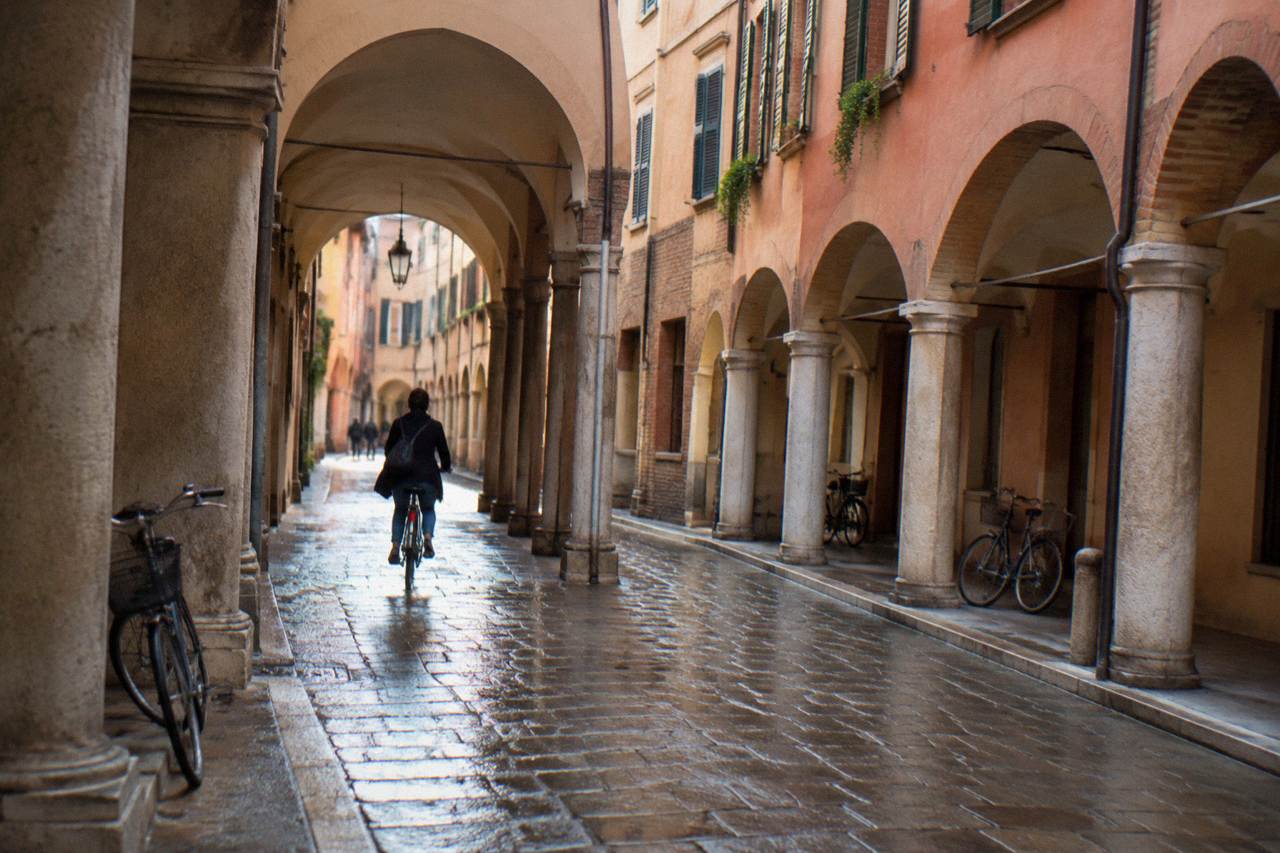
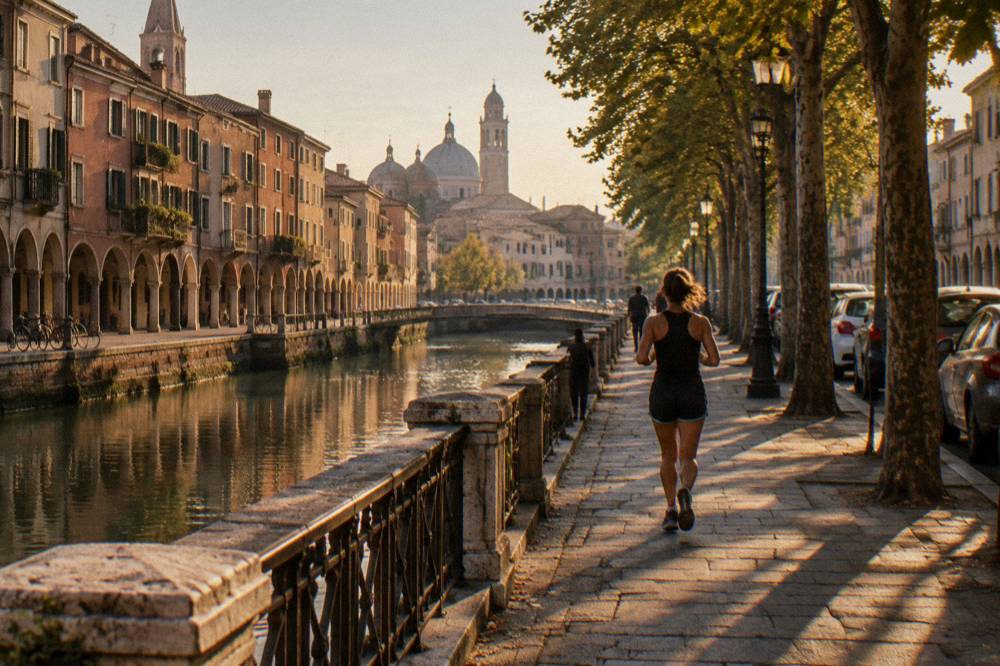
Walking, though, remains the point. The centre's arcades, the reason a rainy day in Padua barely matters, link the squares in continuous covered passages, and the whole core from the Scrovegni Chapel to Prato della Valle is a single walk broken by coffee. The page on free things to do in Padua maps out a route that costs nothing but shoe leather, and the Padua in one day itinerary assumes no vehicle at any stage.
Is Padua A Good Base For Driving Day Trips?
Padua is an excellent base for day trips, but the train serves the headline destinations better than a car does: Venice is about 26 to 40 minutes by regional train for roughly EUR 5, Vicenza 16 to 25 minutes for about EUR 6, Verona 43 to 60 minutes, and Treviso 28 to 60 minutes, while a car only becomes the better tool for the Euganean Hills' smaller villages, villas and wineries.
The straight-line distances, computed from map data, tell the story of how tightly the region is packed around Padua.
| Destination | Straight-line distance from Padua centre | Train time from Padova |
|---|---|---|
| Abano Terme | about 8 km | not a through rail route |
| Montegrotto Terme | about 11 km | not a through rail route |
| Villa Pisani (Stra) | about 11 km | boat and bus options |
| Arqua Petrarca | about 20 km | bus, with connections |
| Vicenza | about 30 km | about 16 to 25 min |
| Venice | about 36 km | about 26 to 40 min |
| Treviso | about 41 km | about 28 to 60 min |
| Verona | about 69 km | about 43 to 60 min |
Train times and fares are reported by journey planners rather than taken from an official timetable, so treat them as planning ranges and confirm on the operator's site, but the pattern holds: a driver leaving Padua for Venice or Verona exchanges a 30 to 60 minute rail ride for the far slower business of parking at the far end, where both cities have their own restricted zones and their own costs. The Venice to Padua and day-trip pages on this site work through each rail option.
The hills are the exception, and it is a real one. Arqua Petrarca, the village where Petrarch's house can be visited for EUR 6 full and EUR 4 reduced, Monselice at 21 km, Este at 26 km and the wineries strung between them are served patchily by bus, and a car or a guided tour is the practical answer. The straight-line figures are computed, not driven: no drive times are printed on this page because none can be honestly sourced.
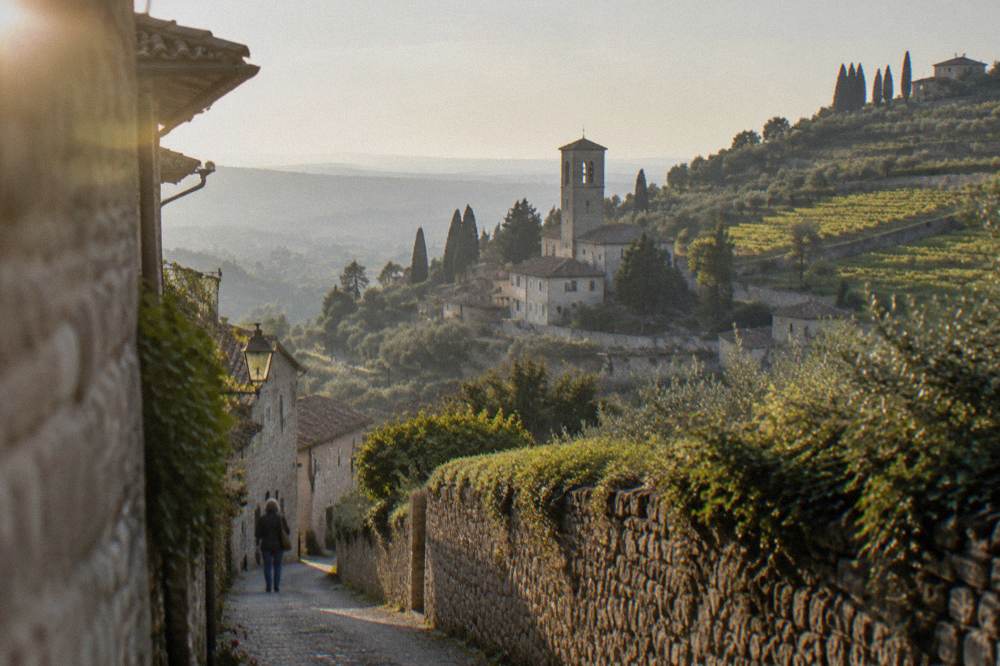
Guided tours solve the hills problem without any parking question at all. Beyond the Prosecco trip already mentioned, this site lists a Venetian villas and Brenta Riviera tour from Padua, a Villa dei Vescovi and Valsanzibio garden trip, and an olive oil and wine day in the Euganean Hills, each with transport from Padua built in. For drivers who still want their own wheels in the hills, the advice below on rental logistics applies.
What Should Drivers Know Before Arriving In Padua?
Before arriving, a driver should confirm three things with primary sources: the current ZTL rules on the Comune di Padova's own pages, the parking arrangements at the specific accommodation, and, if renting, the rental company's policy on passing photographic fines to the customer; none of those figures or rules belongs on a travel page, so plan around them rather than around quoted numbers.
Start with the accommodation. A property inside the restricted streets will know exactly how a guest's car should be handled, whether a plate can be registered, and where the nearest practical parking sits. That single email saves more trouble than any general advice, and it is the one step this guide recommends without hesitation.
Next, the arrival route. Drivers from Milan or Bologna approach on the A4, and the ring roads around Padua feed the perimeter described above. The rule of thumb: treat the historic centre's inner streets as closed to you and navigate to your parking or accommodation's stated access point, not to a sight. The Scrovegni Chapel, for instance, sits near the northern edge of the centre, and its timed-entry system, 25 people every 15 minutes with about 15 minutes inside, booked in advance, is the reason the Scrovegni Chapel tickets guide tells every visitor, driver or not, to book before travelling. The chapel is closed 16 to 27 November 2026 for its annual fresco inspection.
Renters should read the fine print on ZTL fines. In Italy, enforcement is photographic, the penalty goes first to the rental company, and the company passes it on with an administrative fee. That is not a Padua-specific quirk but a national pattern, and it is the strongest single argument for parking once at the perimeter and not moving the car until departure. The alternative, arriving by train and renting only for a hills day, avoids the question entirely.
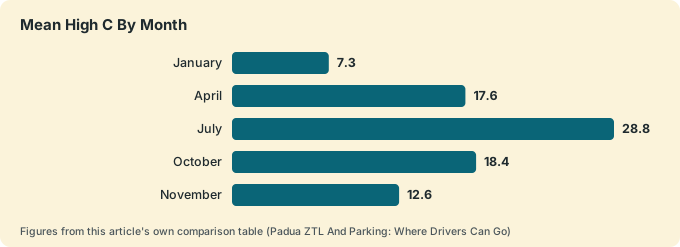
Finally, weigh the seasons. The climate matters to a walking-first plan: the ERA5 reanalysis for Padua, 1991-2020, shows a January mean high of 7.3 C and July and August mean highs of 28.8 C, with November the month carrying the highest rain total at 114 mm.
| Month | Mean high C | Mean low C | Rain mm |
|---|---|---|---|
| January | 7.3 | -0.2 | 53.6 |
| April | 17.6 | 7.8 | 84.4 |
| July | 28.8 | 18.9 | 62.1 |
| October | 18.4 | 10.6 | 105.4 |
| November | 12.6 | 5.5 | 114.0 |
Those are modelled normals from the ERA5 reanalysis, 1991-2020, not a weather-station record, and the Padua weather and best time to visit Padua pages put the full twelve months in context. For a driver, the practical read is that the covered arcades make even a wet November walkable, which keeps the park-once-and-walk plan intact year round.
Can You See Padua's Main Sights Without Ever Moving The Car?
Yes, every one of Padua's headline sights lies within the walkable historic centre or a short tram ride of it, so a car parked once at the perimeter, or left at the station, is simply unused weight while the Scrovegni Chapel, the Basilica of Saint Anthony, Prato della Valle, the Palazzo del Bo and the Orto Botanico are all visited on foot.
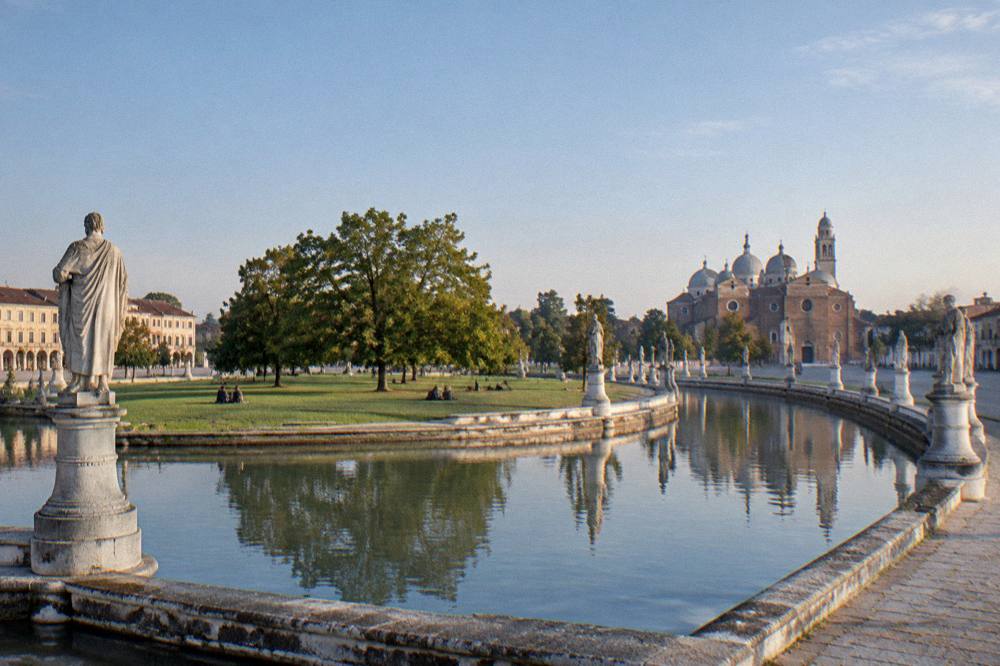
The distance from the centre's northern edge to Prato della Valle in the south is a single walk, and the two UNESCO listings both sit on that axis: the Orto Botanico, the university botanical garden founded in 1545 and inscribed by UNESCO in 1997, and the fourteenth-century fresco cycles of Padova Urbs Picta, inscribed in 2021 across eight monuments including the Scrovegni Chapel and the Basilica of Saint Anthony. The Urbs Picta UNESCO guide walks through all eight.
Tickets worth booking from a phone while the car sits parked: the Scrovegni Chapel at EUR 15 full price plus a EUR 1 booking fee, which also covers the Musei Civici Eremitani and Palazzo Zuckermann; the Palazzo del Bo historic tour at EUR 10 full, including the anatomical theatre of 1594 and Galileo's chair, on alternating Italian and English slots; and the Orto Botanico at EUR 15 full since 1 September 2026, EUR 12 in the winter months of November to February. The Basilica of Saint Anthony is free to enter, though its opening hours are not listed.
| Sight | Full ticket | Booking note |
|---|---|---|
| Scrovegni Chapel (daytime) | EUR 15 + EUR 1 fee | Timed entry, book ahead; includes two museums |
| Scrovegni Chapel (reduced) | EUR 11 + EUR 1 fee | Conditions on the museums' price list |
| Orto Botanico | EUR 15 (EUR 12 Nov to Feb) | New tariff from 1 September 2026 |
| Palazzo del Bo guided tour | EUR 10 | About 45 minutes, language alternates |
| Basilica of Saint Anthony | Free entry | Tomb and Chapel of the Relics inside |
| Palazzo della Ragione | EUR 8 | Tickets sold at the IAT office, Piazza delle Erbe 52 |
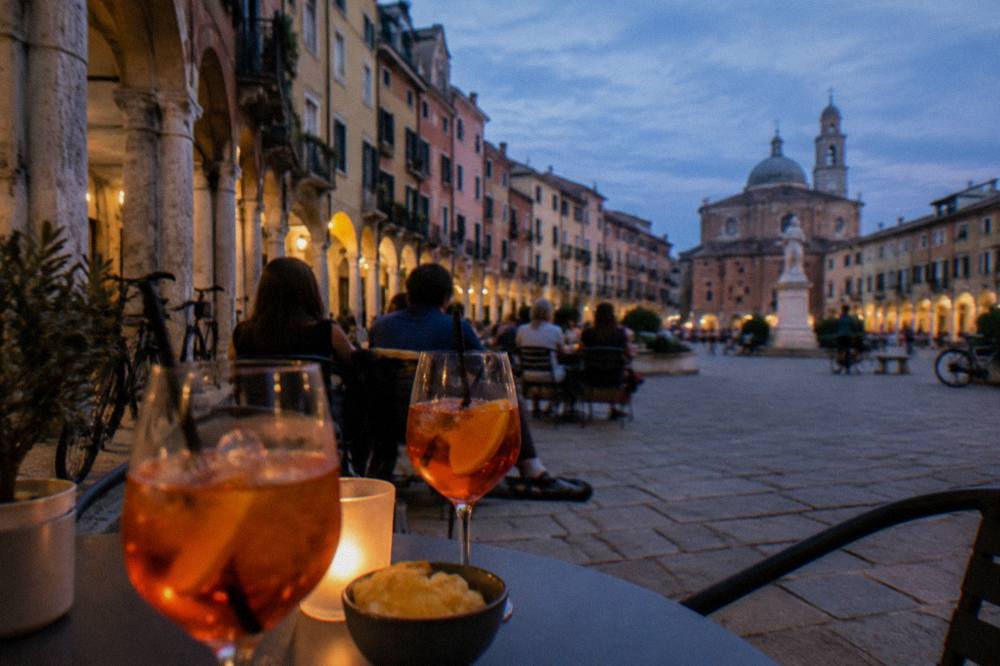
The through-line of this whole page is that Padua is at its best at walking pace, and the ZTL, whatever its exact hours on the comune's books, is the city's way of insisting on that. Park at the edge, or arrive by train and skip the question, and spend the days the way the city is built to be spent: on foot under the arcades, with a spritz in one of the squares that Aperol's creators, the Barbieri brothers, called home when they presented the aperitif in Padua in 1919. The spritz in Padua page tells that story properly.
Common Questions About The Padua ZTL And Parking
Can I drive into Padua's historic centre?
The centre has limited-traffic streets where entry is restricted to permit holders at controlled times, enforced by camera. Ask your accommodation whether a guest plate can be registered, and check the Comune di Padova's own pages for the current rules before you arrive.
How much does parking in Padua cost?
No car-park rate is quoted on this page, because those prices belong to the operators and change. The practical plan is to park outside the restricted streets once, pay the posted rate at the car park itself, and move around the city on foot, tram or bus with the EUR 1.70 90-minute urban ticket.
Is Padua walkable without a car?
Yes. Every headline sight, from the Scrovegni Chapel in the north to Prato della Valle in the south, sits within one continuous walk through the arcaded centre, and the tram and bus network covers anything further out.
What happens if I drive into the ZTL by mistake?
Enforcement in Italian ZTLs is photographic, and a penalty can reach you weeks later through a rental company, which typically adds its own administrative fee. The defence is planning: navigate to your parking at the perimeter or your accommodation's stated access point, never directly to a sight.
Should I rent a car in Padua at all?
Only for the rural day trips. Venice, Vicenza, Verona and Treviso are all faster and easier by train, roughly EUR 5 to Venice and EUR 6 to Vicenza by regional service. The Euganean Hills' villages and wineries are the case for wheels, and guided hills tours from Padua cover that ground without a rental contract.
Can I leave luggage at the station while I visit the centre?
Yes. The left-luggage office at platform 1 of Padova station is open daily from 6:00 to 20:00 and charges EUR 5 per 6 hours, which makes a car-free or car-parked half day in the centre straightforward.
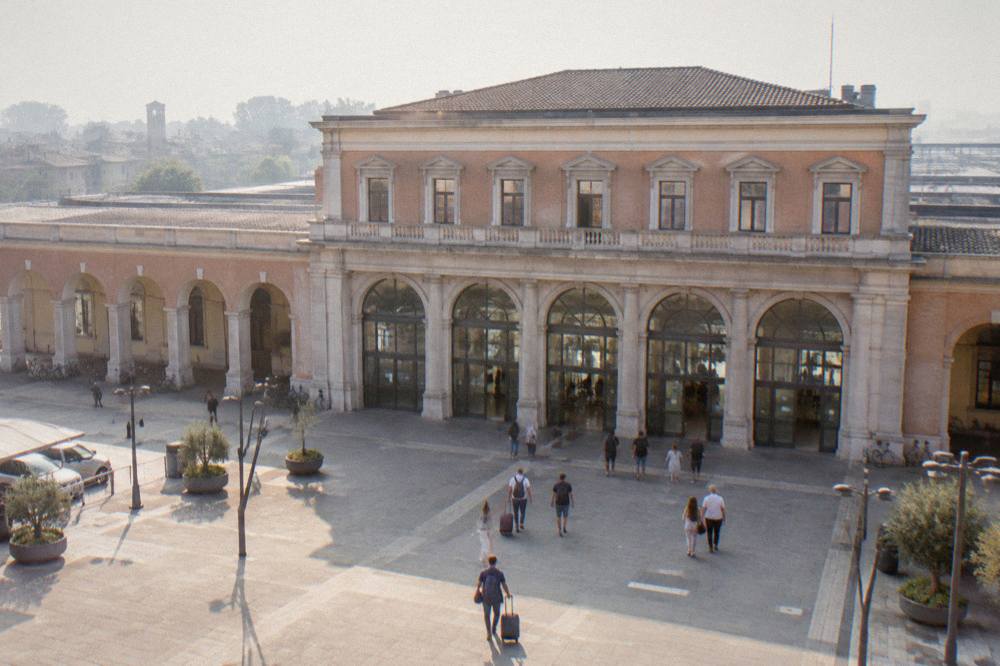
Padua rewards the driver who gives up driving, and the ZTL, the trams, the arcades and the sheer compactness of the centre all push in the same direction: leave the car at the edge, or better, arrive by train at the station that sits a short walk from everything, and let the city be explored the way it was built to be.