How To Get To Padua By Air, Rail And Road
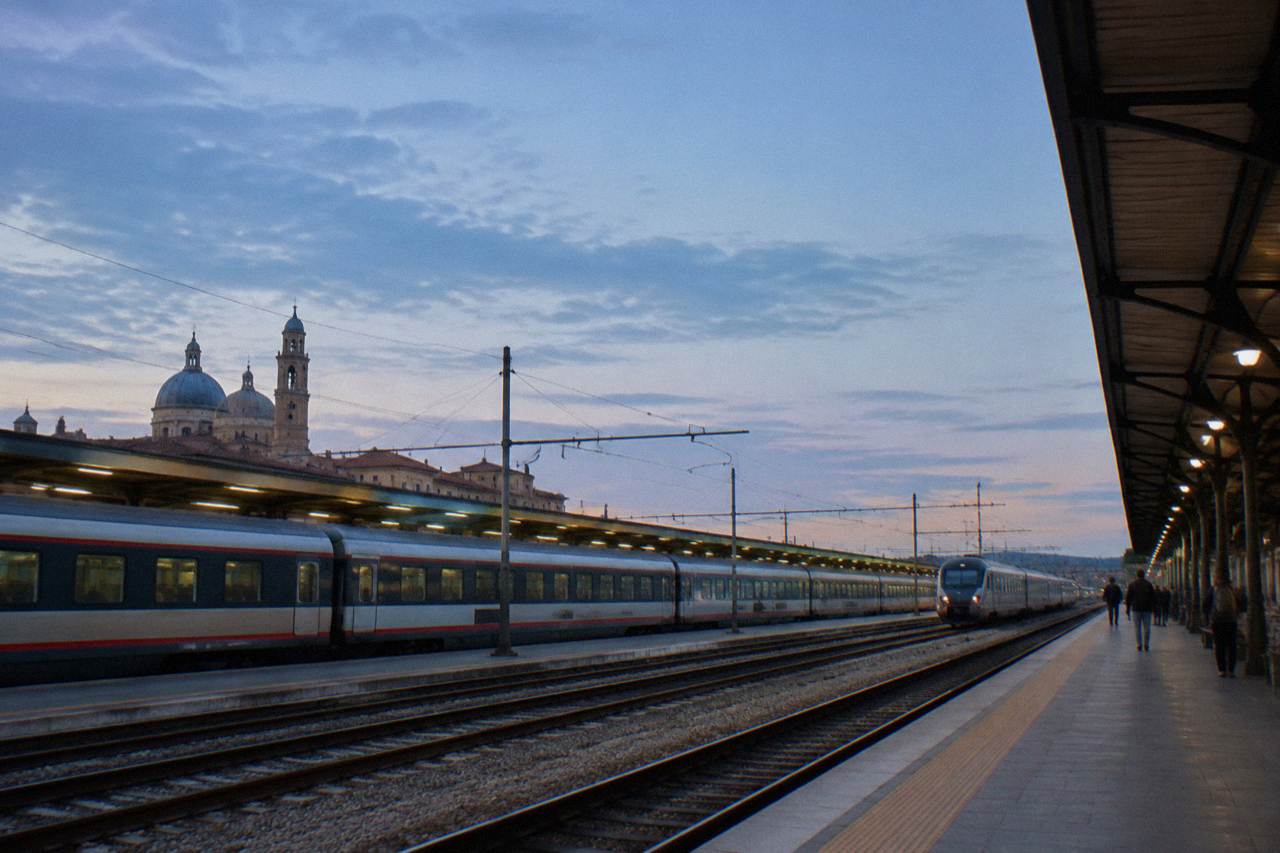
Padua sits on the Venice to Milan rail line with two airports within about 40 km, and almost every route into the city funnels through one of three doors: an airport bus, Padova station, or the ring road.
Short answer
Fly into Venice Marco Polo and take the EUR 13 Busitalia airport bus, about 45 minutes; or arrive by train at Padova station, which has regional links from Venice, Vicenza, Verona and Treviso and high-speed services on the Milan line. Padua is inland, about 36 km in a straight line from Venice.
Padua (Italian: Padova) is an inland city in the Veneto, northern Italy, about 36 km in a straight line from Venice, and it is one of the easiest small cities in the north of the country to reach: it sits directly on the Venice to Milan railway, it has two commercial airports within about 40 km, and the motorway ring around the Venetian plain passes its doorstep. What trips planners up is not the distance but the naming. English speakers say Padua, the railway and bus operators say Padova, and every ticket machine in the country will only understand the Italian spelling. This page sets out the routes that are on the record, with the fares and times that the operators themselves publish, and points out where the numbers stop.
Which Airports Serve Padua?
Padua has no airport of its own: the two commercial gateways are Venice Marco Polo (VCE), about 38 km in a straight line from the centre, and Treviso (TSF), about 37 km, both north of the Venetian lagoon. Marco Polo carries the full scheduled and low-cost range and has the only confirmed public transport link straight into Padua, the Busitalia airport bus, while Treviso has no direct official bus to Padua on the record.
Both distances are straight-line figures computed from map coordinates, and neither airport is on a rail line into Padua: there is no train from either terminal building to the city. Bologna's airport is a third option for some itineraries, but Bologna is about 110 km in a straight line from Padua and the onward connection is a long one. For a city break built around the Scrovegni Chapel and the Basilica of Saint Anthony, Marco Polo is the airport the numbers support, and the rest of this page treats it as the default arrival point.
| Airport | Code | Straight-line distance from Padua centre | Direct public transport to Padua |
|---|---|---|---|
| Venice Marco Polo | VCE | About 38 km | Yes, Busitalia airport bus, about 45 minutes |
| Treviso | TSF | About 37 km | No direct official bus on the record |
Once you are down on the ground, the practical questions are the bus and the ticket, and the operator publishes both.
How Do You Get From Venice Marco Polo Airport To Padua?
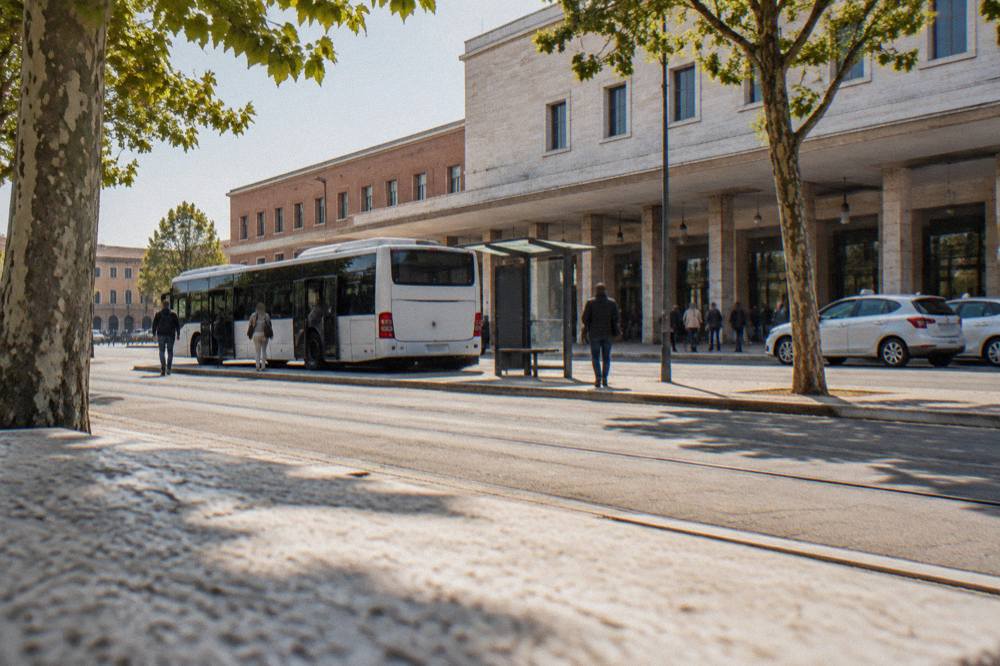
The Busitalia airport bus runs directly between Padua and Venice Marco Polo for EUR 13 one way per adult, EUR 6.50 for a child up to 11, or EUR 23 as a same-day return, with 54 runs a day, roughly every 40 minutes, first departure 05:30 and last 22:50 from Padua, and a journey of about 45 minutes. Those figures are the operator's own, published on the Busitalia Veneto site.
The bus is a scheduled service, not a shuttle: it uses urban stops and the station area in Padua, so it doubles as a cheap way in for anyone whose hotel is near the centre. Tickets are bought through the operator's own channels, and the child and return fares above are the ones on the official page. The same service costs EUR 15 from Montegrotto and Abano Terme to the airport, which matters if your base is the spa towns. There is also a dedicated companion guide with the full arrival walkthrough at Venice Airport To Padua, including what to do if your flight lands late.
What the record does not contain is a taxi price. No published fixed fare from Marco Polo to Padua exists in the sources used for this site, so the honest answer is to ask at the taxi rank for the metered price before committing, and compare it against EUR 13. On a solo trip the bus wins that comparison outright; a group of four can run the maths on the day.
| Venice Marco Polo airport bus fact | Figure on the operator's page |
|---|---|
| Adult one way | EUR 13 |
| Child up to 11, one way | EUR 6.50 |
| Same-day return, adult | EUR 23 |
| Runs per day | 54 |
| Frequency | About every 40 minutes |
| First departure from Padua | 05:30 |
| Last departure from Padua | 22:50 |
| Journey time | About 45 minutes |
Arriving by plane only solves half the problem, of course. The other half is what you do on the day you land with a bag and a time slot at the chapel, and that is where a booked tour with the transport decided in advance earns its keep.
How Do You Get From Treviso Airport To Padua?
Treviso airport has no direct official bus to Padua in the record, so the practical route is a local bus or taxi into Treviso first, then a train from Treviso Centrale to Padova, reported at about 28 to 60 minutes depending on the service, because some routings involve a change. No operator publishes a Treviso airport to Padua fare, so check the Treviso airport and Trenitalia pages for your specific flight time before booking.
Treviso airport works well for people whose trip includes Treviso itself, which is about 41 km in a straight line from Padua and an easy rail hop. As a Padua gateway it is the second choice, not because it is far, it is not, but because the last leg is stitched together from two operators rather than one. If your fare to TSF is dramatically cheaper than to VCE, the saving can absorb the extra change; otherwise Marco Polo's single EUR 13 bus is the simpler machine. The dedicated page on Treviso Airport To Padua works through the connection in detail.
Which Trains Run To Padua?
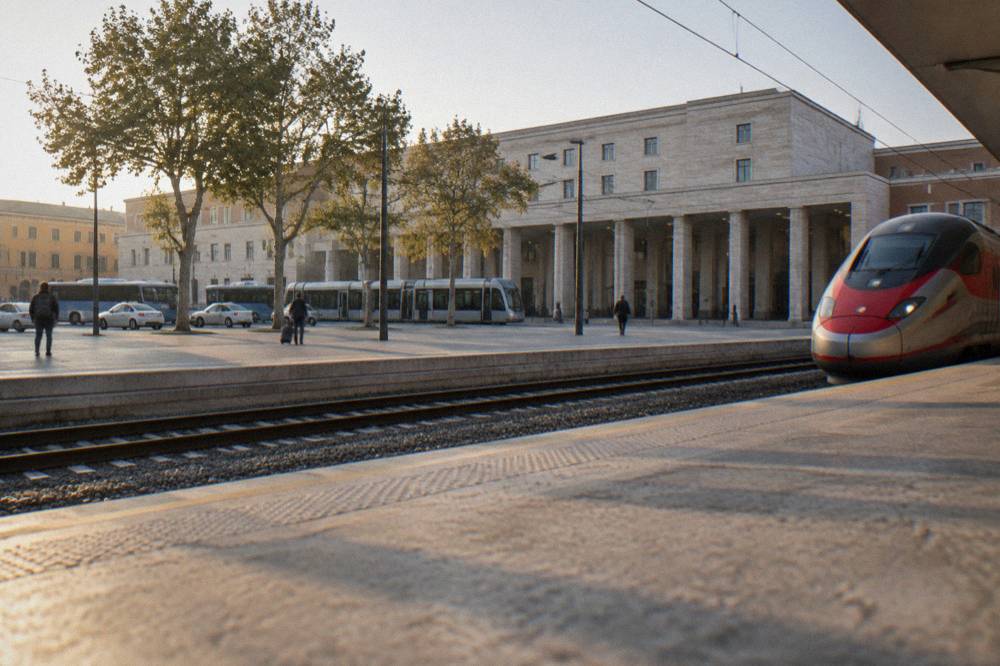
Padova station is on the Venice to Milan line and is one of the busiest junctions in the north: reported regional journey times are about 26 to 40 minutes from Venezia Santa Lucia, 16 to 25 minutes from Vicenza, 43 to 60 minutes from Verona and 28 to 60 minutes from Treviso, with a regional fare of about EUR 5 from Venice and about EUR 6 from Vicenza. High-speed services on the Milan line also call at Padova.
Those train times come from journey planners rather than the operator's own published tables, so treat them as "about" figures and confirm on Trenitalia before travelling. The regional trains are the workhorses for day trips: Venice, Vicenza and Verona are all straightforward rail destinations from Padua, and the Venice run in particular is frequent enough that the Venice To Padua corridor works in both directions for a day of either city. One trap to strike from your planning: the Venice day-tripper access fee trial ended on 27 July 2026, so a day trip from Padua to Venice does not require the old payment, and no 2027 decision had been announced. Check the Venice municipality's page before you go if that changes.
| Route to Padova | Reported regional journey time | Fare on the record |
|---|---|---|
| Venezia Santa Lucia | About 26 to 40 minutes | Regional about EUR 5 |
| Vicenza | About 16 to 25 minutes | Regional about EUR 6 |
| Verona | About 43 to 60 minutes | Not on the record, check Trenitalia |
| Treviso | About 28 to 60 minutes, some routings with a change | Not on the record, check Trenitalia |
For journeys beyond the region, Rome, Milan and Bologna are all reachable, but no reliable travel times or fares for those runs are in the sources behind this page, so none are quoted here. The general rule for the Veneto is simple: anywhere on the regional map, book or check Trenitalia; the further afield the journey, the more the high-speed operators' own sites matter.
Where Does The Train Arrive, And What Is At Padova Station?
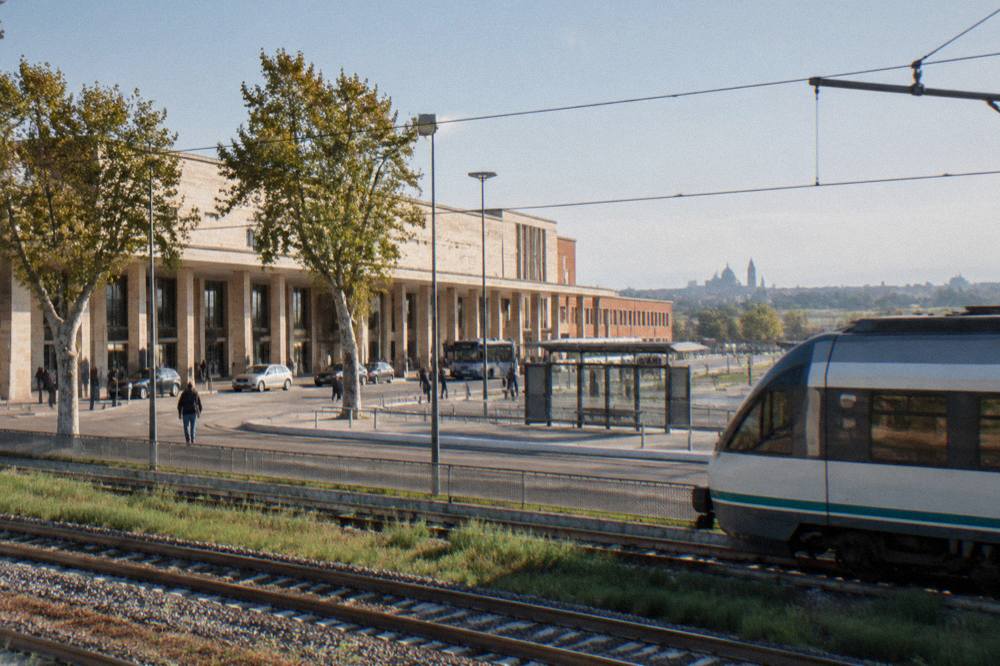
Trains arrive at Padova station on the northern edge of the centre, and the IAT tourist office sits right at the exit of platform 1, open Monday to Saturday 9:00 to 19:00 and Sunday and holidays 10:00 to 16:00, closed 25 and 26 December and 1 January, per the tourism board's own listing. Left luggage is at platform 1, daily 6:00 to 20:00 at EUR 5 per 6 hours, and the urban ticket is EUR 1.70 for 90 minutes.
Those facts cover almost every arrival question. The tourist office hands out maps and sells museum tickets; the left-luggage desk handles the gap between checkout and an evening train; and the EUR 1.70 ticket, per Busitalia Veneto, can be bought in the operator's app or by tapping a contactless card on board the tram and bus. A daily ticket is listed by the operator at EUR 4.70. From the station forecourt, tram line SIR1 runs south through the city. The station district itself, and how to read it, has its own walkthrough at Padua Train Station, and the wider network is mapped in Getting Around Padua.
| Station facility | Details on the record |
|---|---|
| IAT tourist office | Exit of platform 1; Mon to Sat 9:00 to 19:00, Sun and holidays 10:00 to 16:00 |
| Closures | 25 and 26 December, 1 January |
| Left luggage | Platform 1, daily 6:00 to 20:00, EUR 5 per 6 hours |
| Urban ticket | EUR 1.70 for 90 minutes (TU1), per Busitalia Veneto |
| Daily urban ticket | EUR 4.70, per Busitalia Veneto |
| Tram | SIR1, north to south through the city |
One line of caution about the tram network: SIR3, the second line, was in pre-service testing in 2026 with service targeted by the end of that year, and no opening date should be promised by any guide, including this one. Plan around SIR1 and the buses, and treat any new line as a bonus. Other pages covering the same trip are gathered on Padua Travel Guide.
How Do You Get To Padua By Car?
Padua is ringed by the A4 Milan to Venice motorway and the Padova to Bologna spur, and driving in is straightforward until the historic centre, where a limited traffic zone (ZTL) controls entry to the old streets. No published ZTL hours, boundaries or fine amounts are in the record, so the working rule is to park outside the zone and walk or take the tram in. The city is inland, about 36 km in a straight line from Venice, with Vicenza about 30 km and Verona about 69 km.
Those are straight-line distances rather than driving distances, and Bologna sits about 110 km away by the same measure. The ZTL point deserves its emphasis. Italian limited traffic zones are enforced by camera, the penalties arrive through the rental company, and Padua publishes no hours or tariff that a guide could responsibly quote. The practical answer is a car park outside the restricted streets, and the Padua ZTL And Parking page covers the approach in full. For anyone combining Padua with a Venetian leg, the stronger advice is to leave the car at the hotel: the train from Padova to Venezia Santa Lucia takes about 26 to 40 minutes, and Venice's cars stay on the mainland in any case.
| City | Straight-line distance from Padua centre | Rail link |
|---|---|---|
| Vicenza | About 30 km | Train, about 16 to 25 minutes |
| Venice | About 36 km | Train, about 26 to 40 minutes |
| Treviso | About 41 km | Train, about 28 to 60 minutes |
| Bassano del Grappa | About 42 km | Regional services with changes |
| Verona | About 69 km | Train, about 43 to 60 minutes |
| Bologna | About 110 km | High-speed services, times not on the record |
Distances above are computed straight-line figures, useful for judging scale rather than planning a drive. No driving times are printed anywhere on this site, and a guide that invents them is guessing with your itinerary.
Do You Need A Car Once You Are In Padua?
You do not: the historic centre of Padua is compact and arcaded, the tram and bus network covers the city on a EUR 1.70 90-minute ticket, and the two places a car would help, the spa towns and the Euganean Hills, are both workable without one. Abano Terme sits about 8 km and Montegrotto about 11 km from the centre in a straight line, and the airport bus itself serves the spa towns at EUR 15 to Marco Polo.
For the hill villages and wineries, a booked day trip with transport included is the alternative the numbers support.
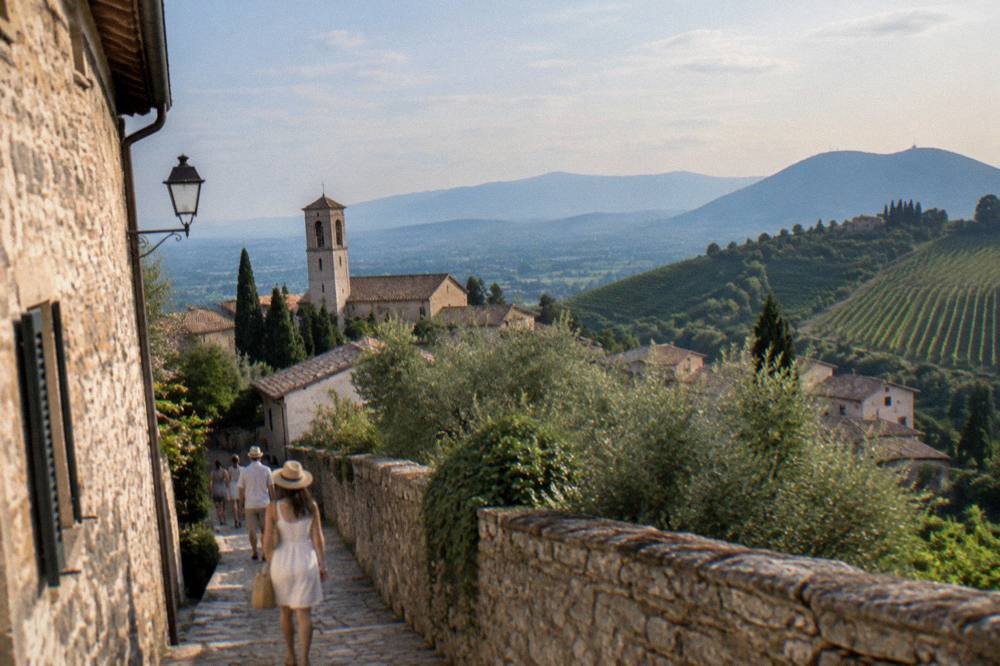
That last point is not a sales line; it is arithmetic. The Colli Euganei are a scatter of hilltop villages and wineries where a change of two buses is normal, and a guided tour that collects you in Padua and returns you there converts a half-day of timetable anxiety into a half-day of tastings. The hills also sit inside one of Italy's sparkling-wine regions, and the Euganean Hills and Prosecco Hills pages map what is where. For the guided option out of the city, the Prosecco hills trip from Padua is the operator's listing to read: Check availability.
Inside the city, everything a first visit needs sits within a walkable band: the Scrovegni Chapel and the Eremitani complex at one end, Piazza delle Erbe and Palazzo della Ragione in the middle, the Basilica of Saint Anthony and Prato della Valle at the other. The Scrovegni is timed entry only, 25 people every 15 minutes, booked in advance, and closed 16 to 27 November 2026 for the annual fresco inspection, so its booking page should be your first stop after the transport is sorted, a sequence the Scrovegni Chapel Tickets guide handles.
What About Arriving From Venice Itself?
Travelling from Venice to Padua is a single regional train of about 26 to 40 minutes from Venezia Santa Lucia to Padova at a fare of about EUR 5, and because Venice's 2026 day-tripper access fee trial ended on 27 July 2026, no access payment applies to your arrival or departure either way. No 2027 decision had been announced. The route is the same in both directions, whether you base in Venice and visit Padua or the reverse.
The comparison of which direction suits which trip is worked through on the Padua As A Base For Venice page. Padua as the base has a quiet logic the fares underline: accommodation in a student city of about 208,000 residents, per the demographic aggregators, with the lagoon 30-odd minutes away by train. The city's own weight is real, too. Two UNESCO listings, the Orto Botanico inscribed in 1997 and founded in 1545, and Padova Urbs Picta, the fourteenth-century fresco cycles inscribed in 2021, sit inside the walking band described above, and neither requires a vehicle. The university, founded in 1222, gives the centre its shape and its audience.
The interplay of the two cities is the single most common routing question this site receives, and the honest summary is that the train has made it a non-decision. Book the chapel slot, book the train, and let the timetable arbitrate.
What Should You Sort Before You Travel?
Three bookings carry the weight of a Padua trip: the Scrovegni Chapel time slot, which cannot be made same-day online and admits at most 25 people every 15 minutes for about 15 minutes inside; the airport bus or train that matches your flight; and, if a hills day is on the list, a guided trip whose transport is included. The tourist tax is collected by your accommodation, capped at five consecutive nights, with under-16s and hostel guests exempt.
The tax is paid at the desk rather than planned in advance, so it needs no booking of its own. Everything else, tickets for the Orto Botanico at EUR 15 full from 1 September 2026, for instance, can be handled on arrival day. The chapel deserves the earliest booking because it is the one element of a Padua visit with a hard capacity. The daytime ticket at EUR 15 full also covers the Musei Civici Eremitani and Palazzo Zuckermann, with a EUR 1 booking fee, and the evening visits run 25 March to 1 November. The details, including the reduced tariffs and the closure dates, live on the Scrovegni Chapel Tickets page and the chapel's own booking site.
For the rest of the stay, the planning pages on this site divide cleanly: Where To Stay In Padua for the districts, Best Time To Visit Padua for the season, and Padua Weather for the climate normals, which the ERA5 reanalysis for 1991 to 2020 puts at a January mean high of 7.3 C and July and August mean highs of 28.8 C, with November the month carrying the highest rain total at 114 mm. Pack for the month, book for the chapel, and the journey in is the easy part.
Common Questions About Getting To Padua
How far is Padua from Venice?
About 36 km in a straight line from the centre of Padua to Piazza San Marco, with a regional train journey reported at about 26 to 40 minutes from Padova to Venezia Santa Lucia.
Is there a bus from Venice Marco Polo airport to Padua?
Yes. The Busitalia airport bus runs 54 times a day, about every 40 minutes, for EUR 13 one way per adult, about 45 minutes each way, with the first departure from Padua at 05:30 and the last at 22:50.
Does Padua have its own airport?
No. The city is served by Venice Marco Polo, about 38 km away in a straight line, and Treviso, about 37 km, and only Marco Polo has a direct bus to Padua on the record.
Can you get to Padua by train from Verona?
Yes, with reported regional journey times of about 43 to 60 minutes from Verona to Padova. Confirm times and fares on Trenitalia for your travel date.
Do you need a car in Padua?
No. The centre is walkable, the tram and bus network runs on a EUR 1.70 90-minute ticket, and the main day-trip destinations are on rail lines. A car matters only for the Euganean Hills villages, and guided trips with transport included cover that gap.
Is Padua on the Venice lagoon?
No. Padua is an inland city on the Bacchiglione, about 36 km in a straight line from Venice, reached by train, bus or motorway rather than by boat across the lagoon.