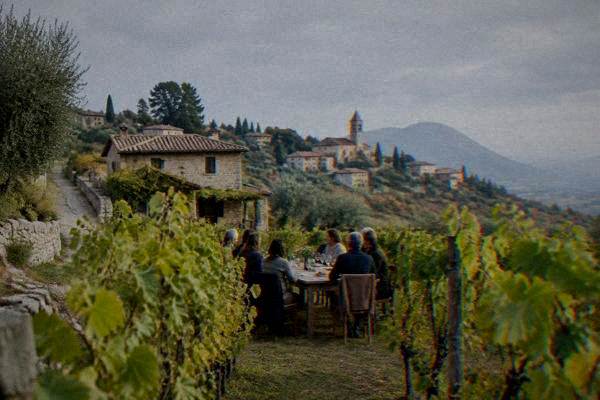
Colli Euganei Wine: Fior D'Arancio And Hill Wineries
The Euganean Hills rise south and southwest of Padua, and a wine day there is one of the easiest escapes the city offers. This guide lays out the distances, the towns worth pairing with a tasting, and what the region's own ticket pages charge.
Short answer
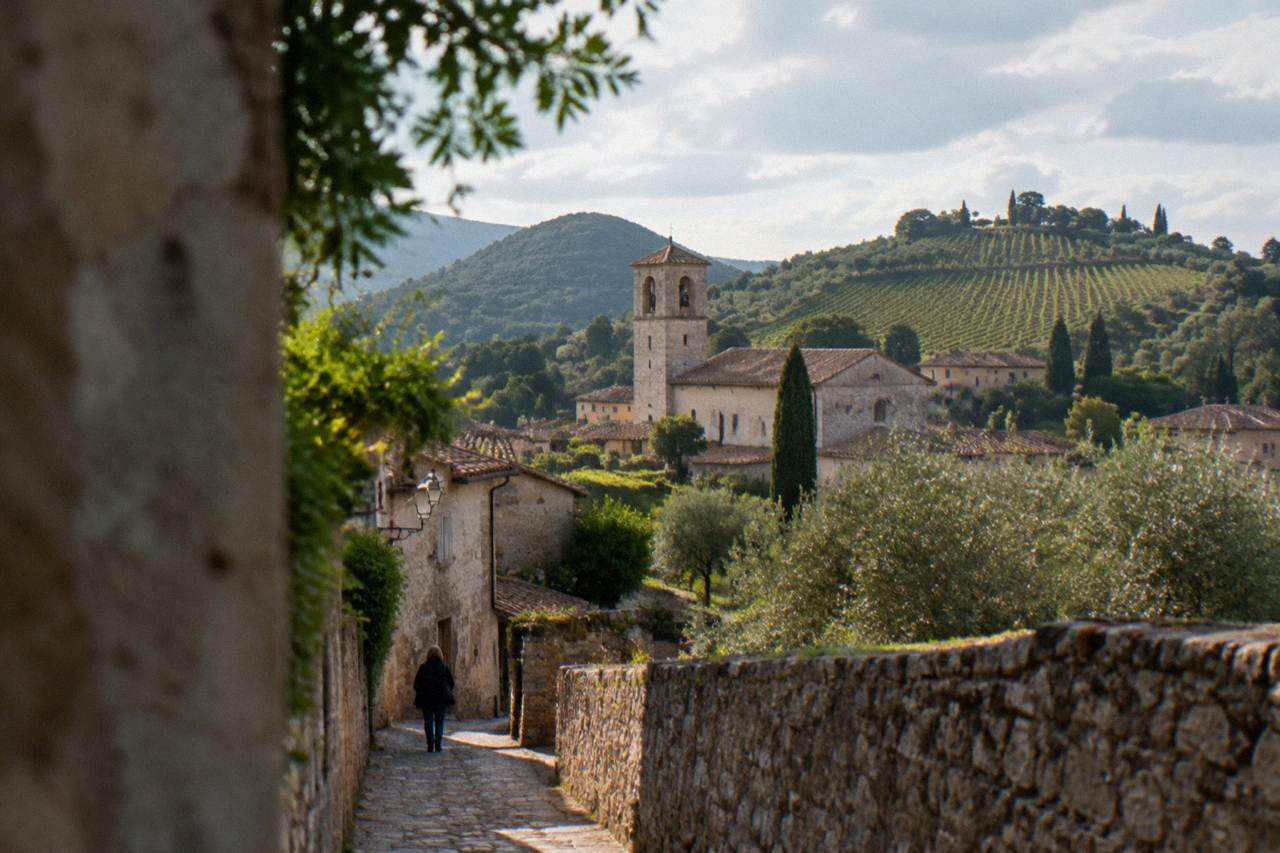
Organized wine tours from Padua handle the driving; independent travellers pair the hills with Arquà Petrarca or Villa dei Vescovi using the entry prices listed below.
The Euganean Hills are the cone-shaped, green-topped chain that rises from the flat Veneto plain south and southwest of Padua, the city in northern Italy whose arcaded centre sits about 36 km in a straight line from Venice. This page is a planning desk for the wine country in those hills: how far each part of it sits from Padua, what the venues' own pages charge, which hill towns reward a detour, and how a wine day fits into a wider stay. The wine facts themselves, grape names, producers and tasting prices, are the wineries' own to quote, so what follows concentrates on the travel arithmetic that can be stated plainly. For the wider picture of the city these hills orbit, start with things to do in Padua.
What Are The Colli Euganei And Where Do They Sit Relative To Padua?
The Colli Euganei, the Euganean Hills, are a group of steep isolated hills on the plain south and southwest of Padua, with the nearest wine-country landmarks sitting roughly 8 to 26 km from the city centre in a straight line: Abano Terme about 8 km, Montegrotto Terme about 11 km, Arquà Petrarca about 20 km and Este about 26 km. Padua itself is inland, not on the Venice lagoon, and the hills are its closest upland landscape.
Those distances are straight-line measurements computed from map data, and they matter for planning because the hills are scattered rather than arranged along one road. Abano Terme and Montegrotto Terme sit on the northeastern edge, closest to the city, and are known as spa towns. Arquà Petrarca, Monselice and Este line the southern and southwestern side, further out but still well inside a day trip. Villa dei Vescovi, a villa with a famous hillside setting, lies about 15 km out near Torreglia. The practical consequence: a single day comfortably covers one edge of the hills plus a tasting stop, while a loop of everything is a rush.
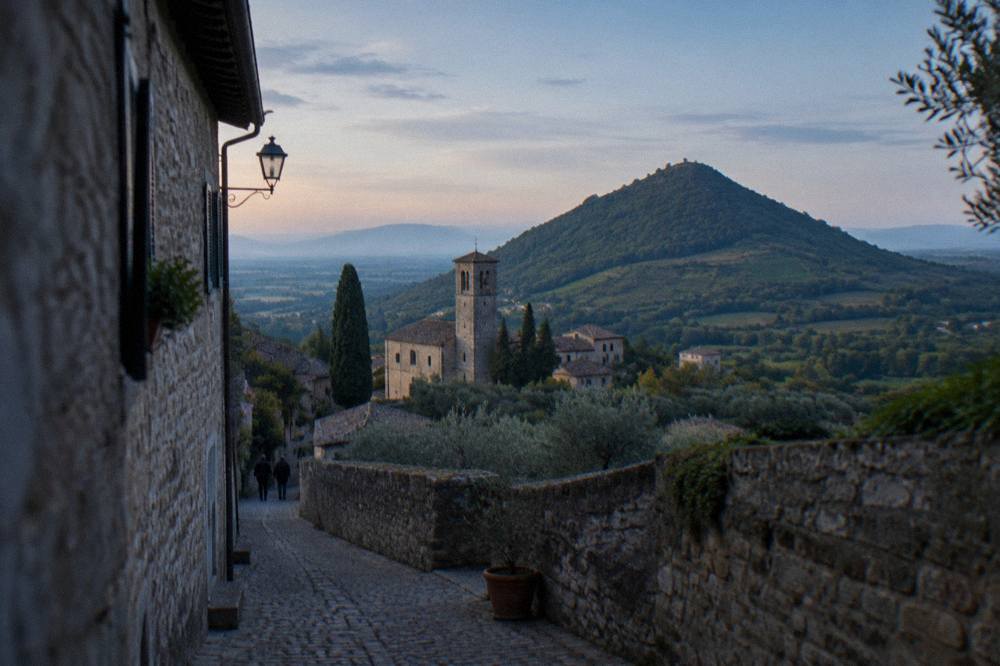
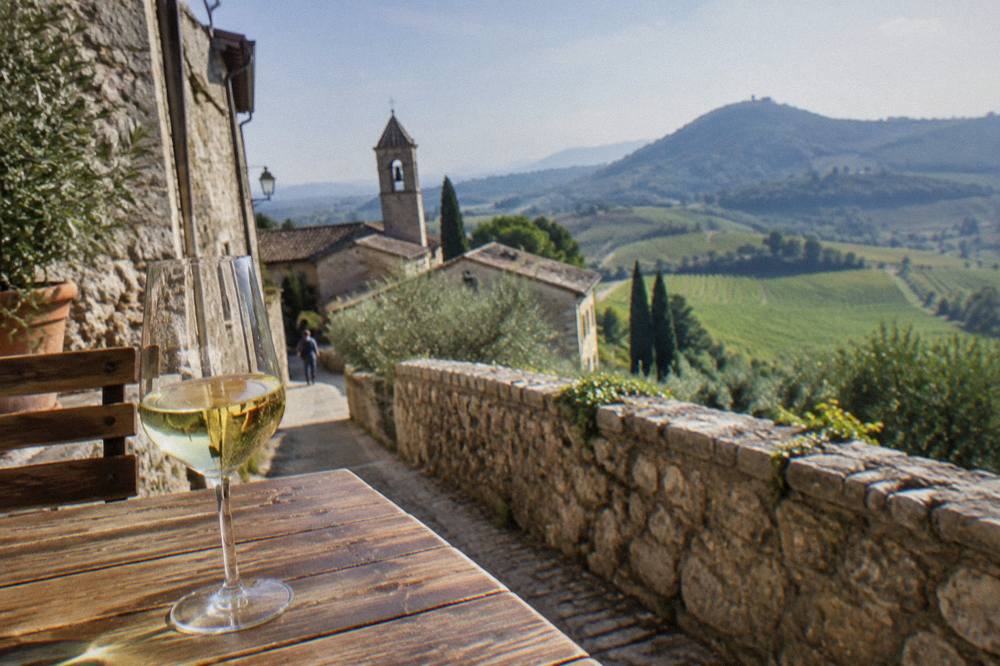
The terrain is the draw. The plain around Padua is dead flat for kilometres in every direction, so the hills arrive abruptly, wooded on top, cultivated with vines and olives on the lower slopes. That vertical variety in a small area is why a wine day here feels like a different region from the city, even though the border of the hill country is a short hop from the edge of town. The volcanic origin of the hills is what wineries point to when they describe their soils, but the specifics of variety and vineyard are each estate's own story to tell at the table, and this page leaves it there.
| Place | Straight-line distance from central Padua |
|---|---|
| Abano Terme | about 8 km |
| Montegrotto Terme | about 11 km |
| Villa dei Vescovi (Torreglia area) | about 15 km |
| Arquà Petrarca | about 20 km |
| Monselice | about 21 km |
| Este | about 26 km |
How Do You Get From Padua To The Euganean Hills Wine Country?
Getting from Padua to the Euganean Hills means either an organized tour with transport included, a regional bus from Padova, or a car, because no train line serves the hill towns themselves; what can be stated with figures is the urban side: a 90-minute city ticket costs EUR 1.70, and the airport bus that passes the northeastern edge of the hills corridor costs EUR 13 one way. Bus routes into the hills exist but their timetables are the operator's to confirm.
The honest starting point is that the hills are a transit gap in an otherwise well-connected region. Padova station is a major rail hub, but its fast connections run to other cities, Venice in about 26 to 40 minutes by regional train for about EUR 5, Vicenza in about 16 to 25 minutes for about EUR 6, not into the hill country. Buses from Padova serve the Colli towns; check the operator's journey planner for current lines and times.
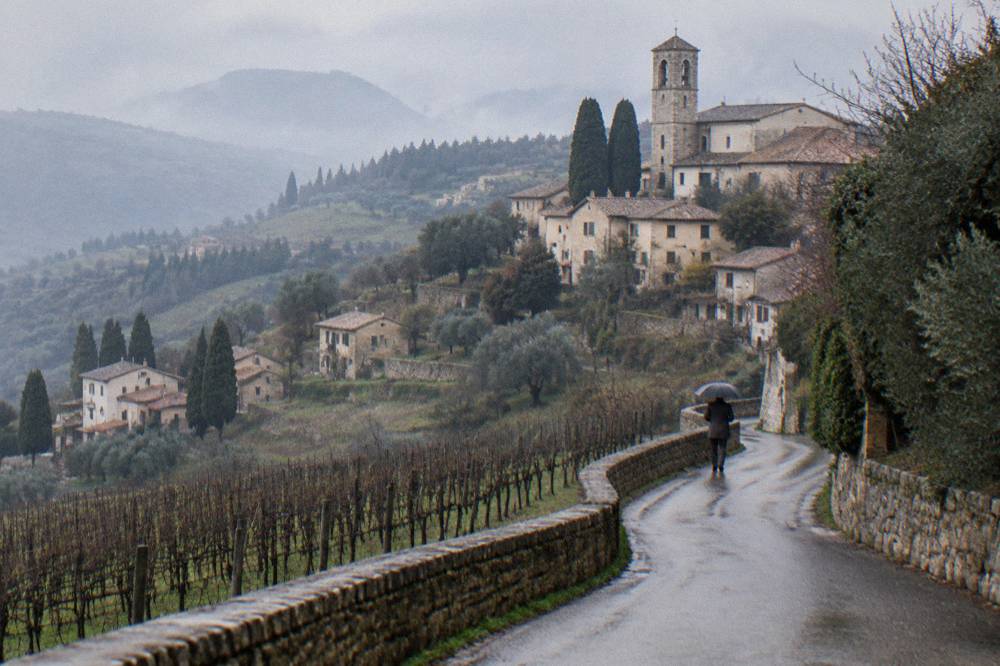
This is why guided wine tours from Padua are popular in the practical sense that they remove the question entirely: a vehicle meets the group in the city, drives the hill roads, and returns. For a group where anyone wants to drink seriously, that is the safer arithmetic. Independent travellers with a car should note that Padua's historic centre is restricted to traffic, so the usual pattern is to sleep outside the ZTL boundary or pick up the car on the ring, and to read up on the rules in advance on a page dedicated to them; see getting around Padua for the city side and how to get to Padua for arrival planning.
| Journey from Padova | Typical time | Typical fare | Notes |
|---|---|---|---|
| Urban bus/tram, 90-minute ticket | 90 minutes validity | EUR 1.70 | Contactless card tap accepted on board |
| Venice Marco Polo airport bus | about 45 minutes | EUR 13 one way | About every 40 minutes, 54 runs a day |
| Venice (regional train) | about 26 to 40 minutes | about EUR 5 | Frequent departures |
| Vicenza (regional train) | about 16 to 25 minutes | about EUR 6 | Frequent departures |
| Euganean hill towns | check operator | check operator | Regional bus, no rail line |
Train times and fares are approximate and vary by date and operator, so treat them as planning ranges and confirm on the operator's own booking system.
What Does A Colli Euganei Wine Day Look Like From Padua?
A typical wine day from Padua pairs one or two producer visits in the hills with a stop in a hill town or at a villa, and the wine half is best arranged either through an organized tour from the city or by contacting a winery directly, because this site does not quote grape names, producers or tasting fees; the parts that carry printed figures are the culture stops, where Villa dei Vescovi charges adults EUR 11 and Casa del Petrarca charges EUR 6 full.
The shape of the day is flexible. A morning departure from Padova puts a traveller in the hills within the first hour. The middle of the day belongs to the tasting and to lunch, and the afternoon can absorb one town or one villa before the return. The tour the site features, Check availability for the olive oil and wine hills trip from Padua, covers a winery visit and an olive oil stop with transport from the city arranged, which is the version of the day where nobody has to decline a pour.
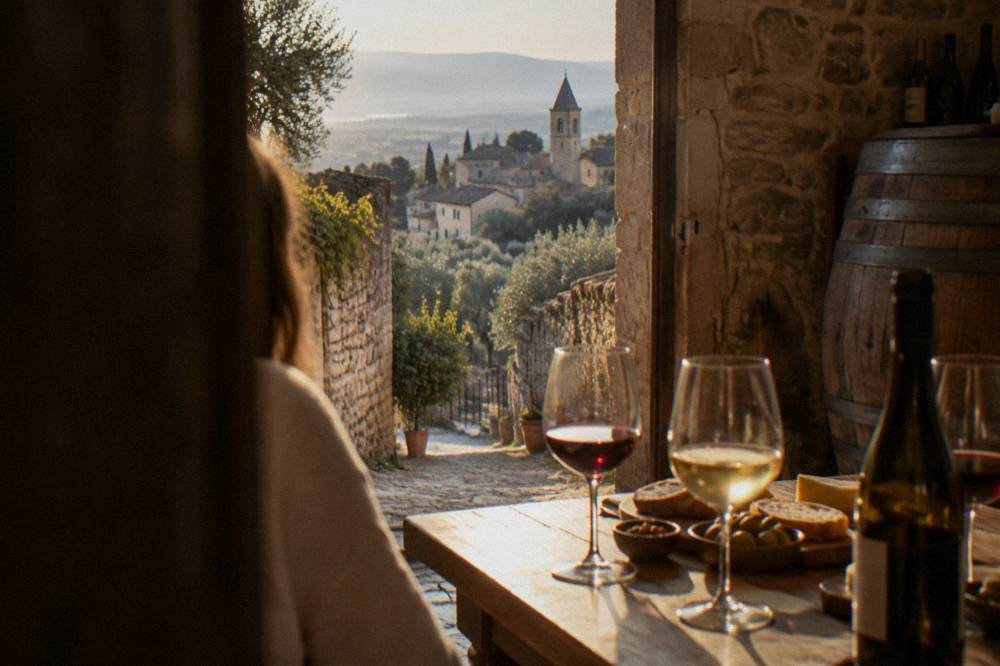
The wine facts themselves belong to the producers. Grape varieties, DOC boundaries, cellar histories and tasting prices vary from estate to estate and change with the season, so the honest move is to let the booking listing or the winery's own reply fill in those details. What a planner can lock in advance are the fixed-price entries around the tasting, listed in the table below, all from the venues' own pages.
| Stop | Full price | Reduced / other | Source page |
|---|---|---|---|
| Villa dei Vescovi (FAI) | EUR 11 adult | EUR 6 ages 6 to 18 and students to 26; under 6 free; family EUR 28 | fondoambiente.it |
| Casa del Petrarca, Arquà Petrarca | EUR 6 | EUR 4 reduced; EUR 3 school | arquapetrarca.com |
| Palazzo della Ragione, Padua | EUR 8 | EUR 6 concession | padovamusei.it |
| Scrovegni Chapel (museums + chapel) | EUR 15 plus EUR 1 booking | EUR 11 reduced; EUR 5 residents | padovamusei.it |
Note the last two rows: they are city prices, included because a common pattern is a culture morning in Padua and a hills afternoon, or the reverse. The Scrovegni Chapel requires its own timed booking, capped at 25 people every 15 minutes, and closes 16 to 27 November 2026 for its annual fresco inspection, so it cannot be treated as a walk-in add-on. The Scrovegni Chapel tickets page covers that booking in detail.
Which Hill Towns Pair With A Colli Euganei Wine Day?
The hill towns that pair best with a wine day are Arquà Petrarca, about 20 km from Padua, a stone village whose Casa del Petrarca charges EUR 6 full and closes on non-holiday Mondays, and Monselice and Este further southwest at about 21 and 26 km; on the northeastern edge, Villa dei Vescovi at about 15 km makes a calm villa stop, while the spa towns Abano and Montegrotto at about 8 and 11 km are overnight bases rather than sights.
Arquà Petrarca is the classic pairing. It is small, hillside and compact, the kind of village where the visit is the walk rather than a queue of monuments, and its one fixed-price interior, the Casa del Petrarca, carries published hours and prices that make planning simple. It sits close enough to the southern vineyards that a tasting plus village combination is natural. The dedicated Arquà Petrarca day trip page goes deeper on the village itself.
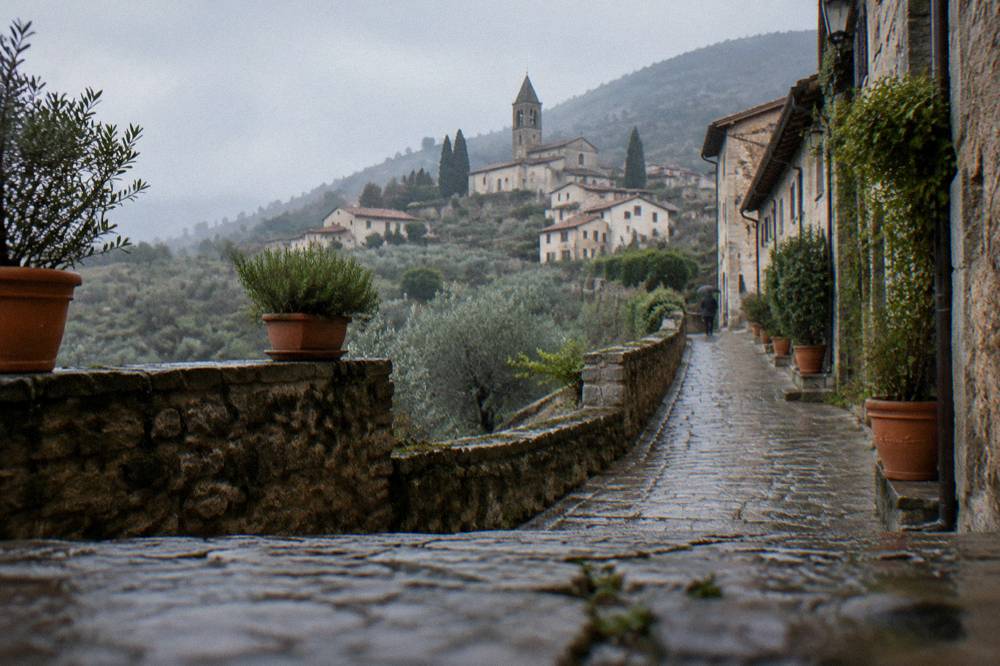
Monselice and Este extend the day southwest. Both are towns with castles and old centres on the far side of the hills, and both sit at distances, about 21 and 26 km, that make them a second stop rather than a first when wine is the headline. Their castle interiors and hours change with the season, so confirm before committing. The Monselice day trip page holds the travel detail for that side of the hills.
Where Do The Euganean Hills Fit In A Longer Padua Itinerary?
In a longer Padua itinerary the Euganean Hills work best as the day-two or day-three excursion, after the city's core sights, the Scrovegni Chapel, the Basilica of Saint Anthony and the UNESCO-listed Orto Botanico, have been booked and walked, because those city entries are timed or capped while the hills are weather-and-booking flexible; a two-night stay can absorb one hills day, and a week can absorb two, pairing one wine-focused day with one villas-and-towns day.
The sequencing logic is about rigidity. The chapel is timed entry only, with advance slots and a November 2026 closure, so it anchors the city days. The hills, by contrast, bend around the weather and the bookings, so they slot wherever a flexible day exists. A traveller arriving through Venice can also run the pattern in reverse, sleeping in Padua and giving Venice a day, since the regional train takes about 26 to 40 minutes and the Venice to Padua transfer is short enough that the two cities share an airport. Sleep in Padua rather than the hills and the whole region stays open: the where to stay in Padua page lays out the neighbourhood logic, and the Padua as a base for Venice page extends the argument.
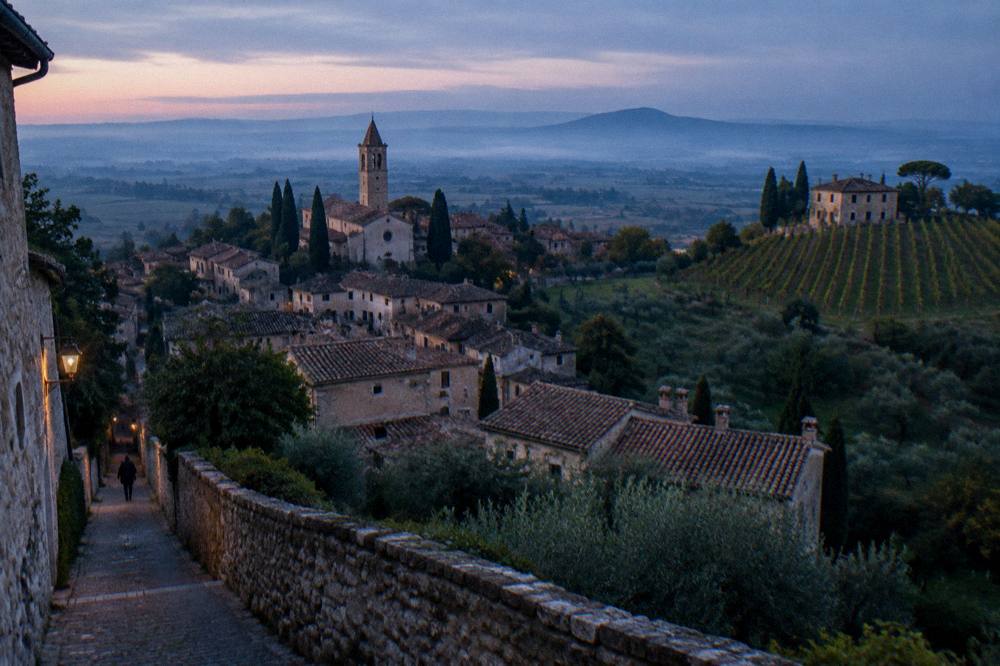
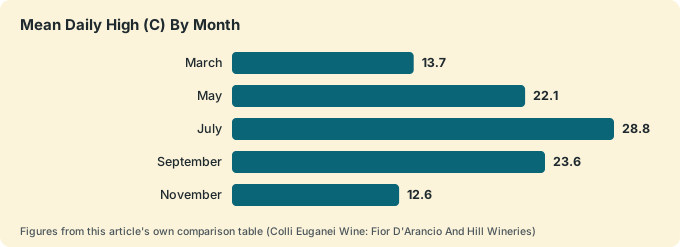
For season planning, the ERA5 reanalysis for the region, 1991-2020, gives July and August a mean daily high of 28.8 C and September about 23.6 C with 105.5 mm of rain, and November the highest monthly rain total at 114.0 mm. Read plainly: the hills are walkable in shoulder months with a layer and a rain shell, and hot at midday in summer, when an early start and a long lunch are the comfortable structure. The Padua weather and best time to visit Padua pages carry the full monthly table.
| Month | Mean daily high (C) | Mean daily low (C) | Rain (mm) |
|---|---|---|---|
| March | 13.7 | 3.9 | 67.2 |
| May | 22.1 | 12.4 | 99.7 |
| July | 28.8 | 18.9 | 62.1 |
| September | 23.6 | 14.9 | 105.5 |
| November | 12.6 | 5.5 | 114.0 |
Climate values are ERA5 reanalysis, 1991-2020, a modelled grid cell, not a station record.
How Much Does A Hills Wine Day Cost Against A City Day In Padua?
A hills wine day costs the tasting fee, which is set by each winery and is not quoted here, plus either the tour price rendered in the booking blocks on this page or the bus or car costs of going independently, while a city day in Padua carries printed fixed figures such as EUR 15 for the Scrovegni combination ticket, EUR 8 for Palazzo della Ragione and EUR 1.70 for a 90-minute urban ticket, so a hills day's total swings on transport and tasting rather than on tickets.
The comparison is worth making honestly. A city day in Padua is cheap by Italian sightseeing standards: the headline chapel ticket includes two museums, the Basilica of Saint Anthony is free to enter, and the market squares cost nothing to wander. A hills day replaces those low fixed costs with two variables, the tasting and the ride. An organized tour converts both variables into one printed price, which is why the blocks on this page render real figures rather than ranges.
Budget the edge items too. The tourist tax, imposta di soggiorno, applies in Padua accommodations, is collected by the property and is capped at five consecutive nights per stay. If a hills day ends with a late return, the station's left-luggage office at platform 1, daily 6:00 to 20:00 at EUR 5 per 6 hours, can free a morning. And if the day starts or ends at Venice Marco Polo, the airport bus is EUR 13 one way, about 45 minutes, as covered above. Families should read the Villa dei Vescovi family ticket, EUR 28 for the group, against the per-person numbers, since a villa stop is the hills' most price-predictable interior for children.
What Should You Eat In Padua Alongside Euganean Wine?
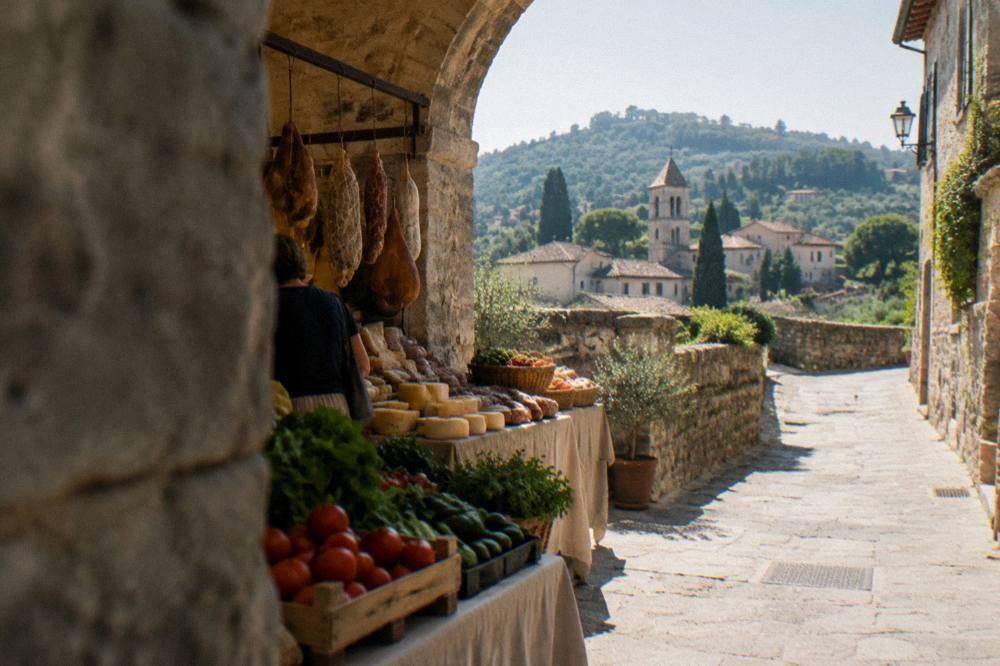
Padua's own named dishes, as listed by the city's tourism board, include risotto ricco alla Padovana, cappone alla canevera made with the local gallina padovana breed, and torta pazientina, with bigoli and baccalà as standard local staples, and the city's covered market under Palazzo della Ragione, Sotto il Salone, is the fixed address for local products to carry into the hills or home.
The food-and-wine pairing happens naturally because the city and the hills share a market region. A market morning in Piazza delle Erbe, whose stalls run Monday to Friday 7:30 to 13:30 and Saturday 7:30 to 20:00 per the Comune di Padova, followed by an afternoon tasting in the hills, is a full day of the same food culture in two settings. The what to eat in Padua page maps the dishes and the spritz in Padua page covers the aperitivo side of the evening, including the fact that Aperol was created in Padua in 1919.
One dated event sits usefully in this context: the Salone dei Sapori food event ran 11 to 18 October 2026 in the Sotto il Salone complex, an eight-day run of local food and wine producers reported by local press. Treat it as an annual marker rather than a promise, and check the city's events calendar for the next edition when planning a harvest-season trip. More standing options, from guided food walks to cooking classes, render with real prices in the blocks on this page and on the Padua Travel Guide home base.
Common Questions About Colli Euganei Wine From Padua
How far are the Colli Euganei from Padua?
The hills lie about 10 to 25 km from central Padua in a straight line, with Abano Terme about 8 km, Villa dei Vescovi about 15 km, Arquà Petrarca about 20 km, Monselice about 21 km and Este about 26 km. These are straight-line distances; allow more by road.
Can you visit Colli Euganei wineries without a car?
Yes, either on an organized tour from Padua with transport included or by regional bus, though no train serves the hill towns. Bus timetables into the hills are the operator's to confirm, so check the journey planner before committing.
What does a wine tour in the Euganean Hills from Padua include?
That depends on the listing: the tours rendered on this page describe their own inclusions and prices in their booking blocks. The featured olive oil and wine trip covers a winery visit and an olive oil stop with transport from the city.
Which towns are worth combining with an Euganean wine day?
Arquà Petrarca at about 20 km is the classic pairing, with Casa del Petrarca entry at EUR 6 full. Monselice and Este extend the day southwest, and Villa dei Vescovi near Torreglia charges EUR 11 adult entry for a villa stop closer to town.
When is the best season for a Colli Euganei wine day from Padua?
The ERA5 reanalysis, 1991-2020, shows July and August mean highs of 28.8 C and September about 23.6 C with 105.5 mm of rain, while November carries the highest monthly rain total at 114.0 mm. Shoulder months balance warmth and rainfall; no crowd prediction is made here.
Is a Colli Euganei wine day better than staying in Padua?
They serve different purposes, and no ranking is claimed. The hills offer vineyard landscape and hill towns within about 10 to 25 km; the city offers the Scrovegni Chapel, the Basilica and the markets on foot. A stay of two nights or more absorbs one of each.