Verona Day Trip From Padua: The Arena And Old Town
Verona sits about 69 km west of Padua in a straight line, and a regional train covers the distance in well under an hour, which makes it one of the longest yet easiest day trips on Padua's list.
Short answer
Verona is about 69 km west of Padua in a straight line, and trains from Padova station take about 43 to 60 minutes, so a day trip is entirely practical: book a morning regional, spend the day around the Roman arena and the old town, and return the same evening.
Verona is about 69 km west of Padua in a straight line, and the regional trains that link the two Veneto cities take about 43 to 60 minutes, which puts Shakespeare's city firmly within day-trip range of Padua. Padua (Italian: Padova) is an inland city in the Veneto, about 36 km from Venice, famous for Giotto's frescoes in the Scrovegni Chapel, the Basilica of Saint Anthony, one of Italy's oldest universities and the Orto Botanico, and Verona is simply the biggest of the day trips on its western side. This page lays out the train logistics, the arena, the old town, and a realistic single-day plan, in the reporting voice this site always uses: what the operators and official pages say, with nothing invented between them.
Why Verona Works As A Day Trip From Padua?
Verona works as a Padua day trip because the two cities sit on the same main rail corridor with frequent regional services taking about 43 to 60 minutes each way, so a full day on the ground costs roughly two hours of total travel, and the city's headline sights cluster walkably around one compact old town. Straight-line distance is about 69 km, the largest gap among Padua's nearby Veneto options. Venice is closer at about 36 km and Vicenza at about 30 km, but Verona repays the longer ride with a scale of Roman and medieval architecture Padua does not have. Trains run from Padova station, the same station that handles the Venice and Milan lines.
The practical arithmetic is what makes the trip attractive. Leave Padua in the morning, arrive in Verona before noon, and the return leg leaves plenty of evening margin. The train times cited here come from published schedule searches, so treat them as "about" figures and check Trenitalia for your exact date, since regional timetables shift through the year.
| Day trip from Padua | Straight-line distance | Typical train time |
|---|---|---|
| Vicenza | about 30 km | about 16 to 25 minutes |
| Venice | about 36 km | about 26 to 40 minutes |
| Treviso | about 41 km | about 28 to 60 minutes |
| Verona | about 69 km | about 43 to 60 minutes |
What Verona adds, compared with the shorter hops, is a Roman amphitheatre of its own plus a layer of medieval and Renaissance streets on a larger footprint. The comparison page on this site, which city is better to visit, Verona or Padua, takes that question head on; this page sticks to the logistics and the day itself.
How Do You Get From Padua To Verona By Train?
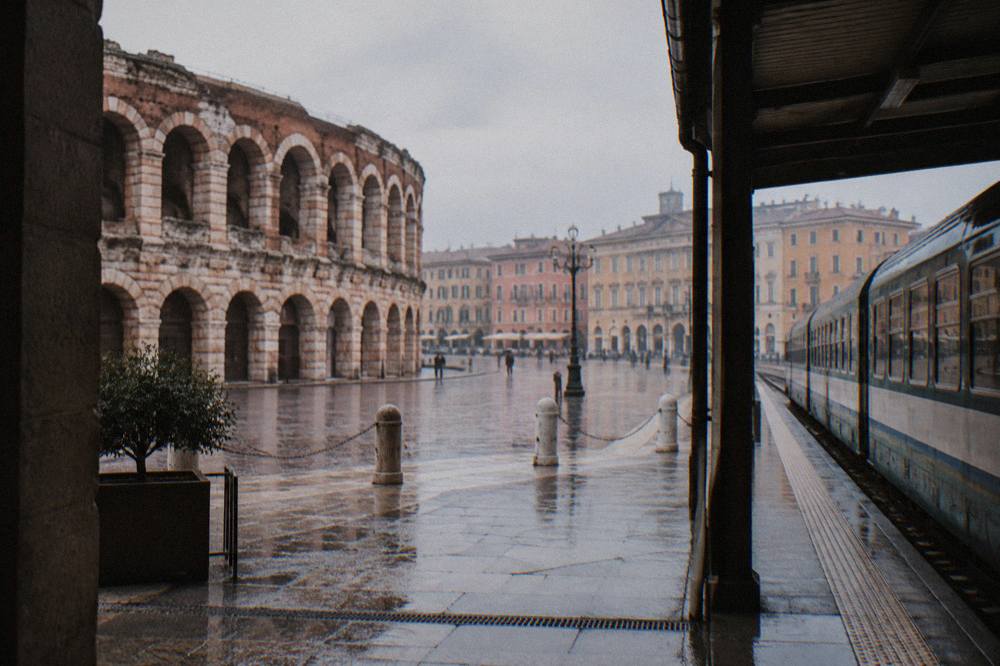
You take a train from Padova station toward Verona Porta Nuova, a journey of about 43 to 60 minutes on regional and faster services that share the corridor, and you buy the ticket from Trenitalia or at the station before boarding; no other transport mode competes on speed or price for this route. Padova station is the city's rail hub, on the Venice to Milan line, and also the terminus of the airport bus from Venice Marco Polo at EUR 13 one way. For the Verona run, published searches show frequent departures through the day. The exact fare for this specific route is not carried on this page, so check the operator's site when booking.
The station itself is easy: the IAT tourist office sits at the exit of platform 1, open Monday to Saturday 9:00 to 19:00 and Sunday 10:00 to 16:00, and the left-luggage office on platform 1 runs daily 6:00 to 20:00 at EUR 5 per 6 hours if you would rather leave bags in Padua than carry them. The reader question is there a train from Verona to Padua covers the return direction, and the answer is the same line in reverse.
Two Padua-specific habits travel well. The urban ticket inside Padua is EUR 1.70 for 90 minutes or a tap of a contactless card on the tram and bus, so getting to the station costs less than a coffee in Verona. And the tram line SIR1 runs north to south through the city; the SIR3 line to the station is still in testing, with no opening date to promise, so leave tram plans out of tight morning connections for now.
For anyone who would rather the day run itself, several tours from Padua bundle transport, guide and schedule into one booking, including a Verona and Garda Lake combination listed on this site. The trio above covers a different mix: villa and garden trips into the Euganean hills, and a premium Padua walk with the Scrovegni Chapel, for travellers deciding between a far day trip and a deep city day.
What Is The Arena Di Verona And Why Does The Name Confuse Padua Visitors?
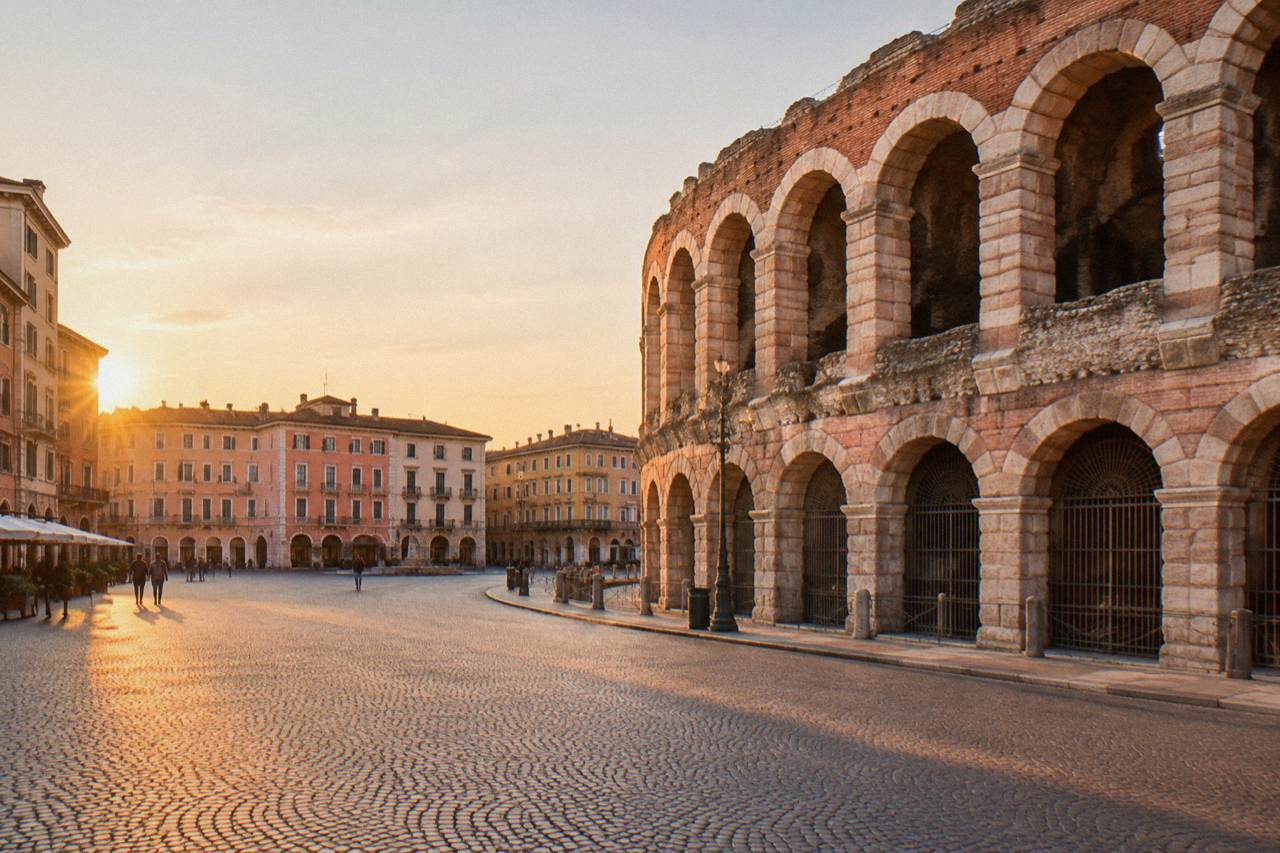
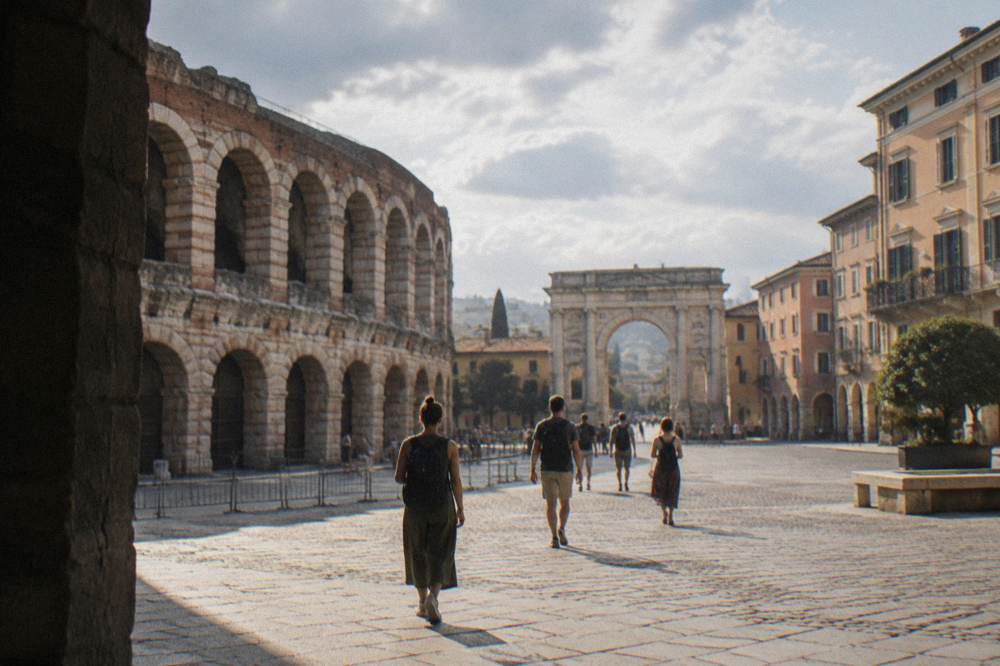
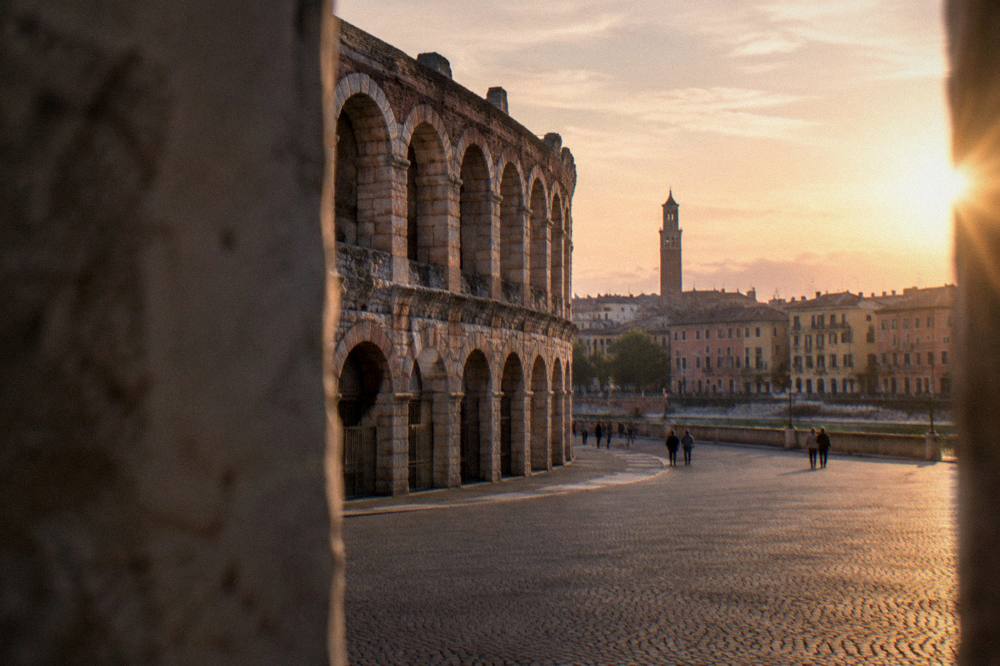
The Arena di Verona is Verona's own Roman amphitheatre, a great stone oval in the middle of the city that doubles in summer as an open-air opera house, and it has nothing to do with Padua's Scrovegni Chapel, which is nicknamed the Arena Chapel because it stands on the site of Padua's separate Roman amphitheatre. The collision of names is a real trap for readers planning both cities in one trip, and this site has two dedicated answers on it: why the Scrovegni Chapel is also called the Arena Chapel and who paid for the Arena Chapel.
The Padua side of the pair is documented in detail: Enrico degli Scrovegni bought the land, which included the remains of the Roman amphitheatre, in February 1300, and Giotto painted the chapel's fresco cycle between 1303 and 1305. Verona's arena is a different building in a different city, and this page's constraints do not carry its ticket prices, tour schedule or opera season dates, so those need checking on Verona's own ticketing pages before you commit a summer evening to them.
What can be said plainly: the arena sits at the edge of Verona's old town, it is the city's single most recognisable structure, and it anchors the walk most day-trippers take. If an opera performance is the point of your trip, book ahead; the chapel lesson from Padua applies everywhere in the Veneto, and timed, bookable entry beats hopeful arrival.
A question worth asking before locking the Verona plan: is a long rail day the right spend of this slot at all? The Villa dei Vescovi and Valsanzibio Garden tour, which this site features, covers a Renaissance villa at Luvigliano di Torreglia and one of the great historic gardens of the Euganean hills, both far closer to Padua, with tickets, transport and timing arranged. You can Check availability and compare against the train fare and schedule before deciding.
What Should You See In Verona's Old Town In One Day?
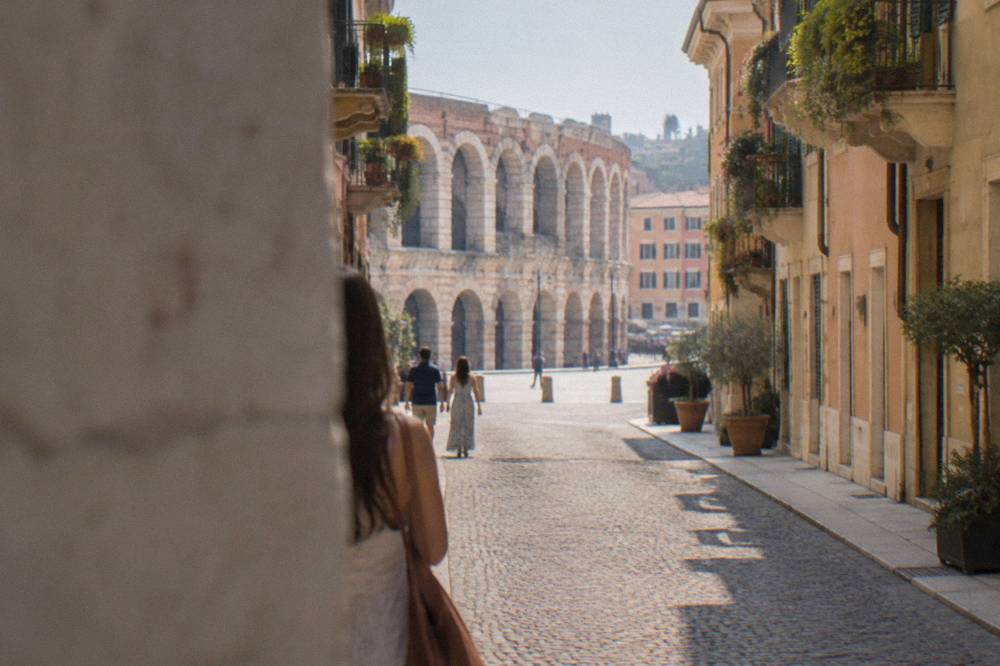
A one-day Verona old town walk realistically takes in the arena, the main Roman-era street axis, the two big squares of the historic centre, the river bridges and one or two churches, because the core is compact and pedestrian, but this page prints no Verona ticket prices or opening hours, so each sight's current terms must be checked on the spot or in advance on Verona's own pages. The layout is the city's gift to day-trippers: nearly everything worth seeing sits inside the river loop or just across it, and the walking distances between sights are short.
The honest planning frame is a list of anchors rather than timed entries. Start at the arena, walk the central shopping streets toward the two main piazzas, cross to the castle-bridge stretch of the river, and leave the last hours for whichever church or view you most wanted. Fit what fits; a day trip that races ten sights remembers none of them.
| Verona old town anchor | What it is | Planning note for a day trip |
|---|---|---|
| The arena | Roman amphitheatre, open-air opera venue in summer | Check ticket and tour times on Verona's own pages |
| Main central squares | The city's civic heart, cafés and market buildings | Free to wander, no ticketing |
| The Roman street axis | Ancient decumanus, now the main shopping street | Walkable in minutes |
| River bridges and castle stretch | Views over the Adige from the western bridges | Best light late afternoon |
| Churches in the centre | Several historic churches within the loop | Hours vary; check locally |
Contrast with Padua helps set expectations. Padua's headline sights are also walkable from one another: the Scrovegni Chapel, the Eremitani complex, Piazza delle Erbe and the Palazzo della Ragione, the Basilica of Saint Anthony and Prato della Valle. The centro storico guide maps that cluster, and the cappella degli Scrovegni page explains the timed-entry system: 25 people every 15 minutes, about 15 minutes inside, booked ahead, closed 16 to 27 November 2026 for the annual fresco inspection. Verona's core rewards the same kind of pre-booked, unhurried approach.
How Does A Day Trip Schedule From Padua Actually Look?
A workable Verona day from Padua runs: an early regional out of Padova station, about 43 to 60 minutes on the rails, arrival at Verona Porta Nuova and a short transfer into the old town, six to eight hours on the ground, then an evening return train, which lands you back in Padua with the whole night still open in a student city whose markets and cafés run late. The schedule below is a frame, not a promise: train frequencies and sight hours need confirming for your date.
| Time of day | Where | What happens |
|---|---|---|
| Early morning | Padova station | Regional train toward Verona, ticket bought in advance |
| Late morning | Verona Porta Nuova | Transfer to the old town, first sight on foot |
| Midday | Old town | Long lunch or market squares, arena visit |
| Afternoon | River and churches | Bridges, castle stretch, one church inside |
| Early evening | Verona Porta Nuova | Return train to Padua, about 43 to 60 minutes |
| Night | Padua | Piazza delle Erbe and Piazza dei Signori, late café stops |
Padua's own evening scene is worth planning around rather than away from. The Piazza delle Erbe market runs Monday to Friday 7:30 to 13:30 and Saturday 7:30 to 20:00, Piazza dei Frutti trades food Monday to Wednesday 8:00 to 14:00 and Thursday to Saturday 8:00 to 19:00, and the Prato della Valle Saturday market runs 8:00 to 19:00 in winter and 8:00 to 20:00 in summer. Coming back to a live market square is one of the quiet advantages of sleeping in Padua.
A caution carried over from Padua planning: do not build the day around same-day bookings for anything timed. The Scrovegni Chapel, the model case, has no same-day online booking at all; walk-ups are told to check the museum ticket office in person. Assume Verona's bookable sights behave the same way in high season and reserve ahead.
Verona Or The Closer Veneto Day Trips: Which Should You Pick?
Pick Verona when the aim is a big-city day with Roman spectacle and a famous old town, pick Vicenza when the aim is Palladian architecture an hour closer, pick Venice when the aim is the lagoon at about 36 km, and pick the Euganean hills when the aim is villages, villas and wine without a long rail leg, because each option serves a different day rather than a different quality of day. This page refuses to rank cities against each other; the distances and train times below are the printed, sourced facts, and taste does the rest.
| Option from Padua | Distance (straight line) | Train time | Character of the day |
|---|---|---|---|
| Verona | about 69 km | about 43 to 60 minutes | Roman arena, grand old town |
| Vicenza | about 30 km | about 16 to 25 minutes | Palladio, Teatro Olimpico at EUR 12 full |
| Venice | about 36 km | about 26 to 40 minutes | Lagoon city, canals |
| Euganean hills | Arqua Petrarca about 20 km | bus and train links | Villages, hills, wine country |
| Bassano del Grappa | about 42 km | regional services | Bridge town, grappa museum, free entry |
The Vicenza day-trip page and the Venice day-trip page carry the detail for those two, and the Euganean hills guide plus Arqua Petrarca cover the near option. One price for the Veneto circuit beyond Padua: the Vicenza Gold Card, covering 11 sites over 12 days, costs EUR 22 full and EUR 17 reduced, with a family version at EUR 26, per the Teatro Olimpico's own site. Villa dei Vescovi at Luvigliano di Torreglia is EUR 11 for adults, EUR 6 for visitors aged 6 to 18, free under 6, family EUR 28.
A note for anyone chaining cities: the Venice day-tripper access fee trial ended on 27 July 2026, per the Venezia Unica site, and the fee does not currently apply; no decision for 2027 had been announced. That changes nothing about Verona, but it removes one worry from mixed itineraries.
What About Combining Verona With Lake Garda?
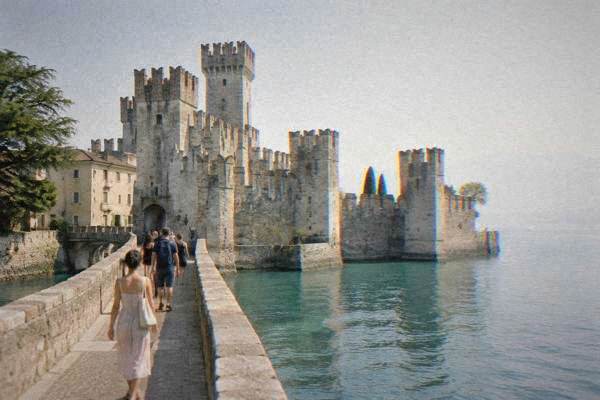
Lake Garda is a day trip in its own right, not a bolt-on: Sirmione, the lake town Padua travellers ask about, lies about 99 km in a straight line from Padua, so pairing it with Verona in one day means two long legs and very little time anywhere. The straight-line figure is the honest constraint: Garda is the far edge of the day-trip map, and Verona sits between Padua and it.
If the lake is the real goal, treat it as the destination and skip Verona that day. If Verona is the goal, stay in the old town and keep the lake for another trip from a different base. What this site can print for Garda is only the distance above and the existence of a combined Verona and Garda Lake tour from Padua in the roster, whose price and duration render from its listing rather than from this page.
The comparison is worth stating in Padua's terms: the Euganean thermal towns of Abano Terme, about 8 km away, and Montegrotto Terme, about 11 km, are this city's near spa country, covered on the Abano Terme page. Garda plays that role for Verona at ten times the distance. Distance, not quality, is the planning fact.
What Does The Weather Mean For The Verona Day Plan?
Verona shares Padua's continental northern Italian climate, with ERA5 reanalysis 1991-2020 means for Padua showing July and August mean daily highs of 28.8 C and a January mean high of 7.3 C, and the year's rain peaking in November at 114 mm, so the seasonal advice is simple: summer days are hot for long outdoor walks, winter days are cold and damp, and late autumn is the highest-rainfall stretch on the record. The figures below are modelled normals for Padua's grid cell, the closest sourced climate table this site carries, not a Verona station record.
| Month | Mean high (C) | Mean low (C) | Rain (mm) |
|---|---|---|---|
| January | 7.3 | -0.2 | 53.6 |
| April | 17.6 | 7.8 | 84.4 |
| July | 28.8 | 18.9 | 62.1 |
| September | 23.6 | 14.9 | 105.5 |
| November | 12.6 | 5.5 | 114.0 |
The old town day is an outdoor day. Squares, bridges and streets carry the itinerary, so the rain plan matters: Padua's own equivalent, the padua in the rain guide, shows how this city handles a wet day with its museums and covered market, and Verona needs the same thinking in advance. Snow is rare but real in the plain: a long climate series for the area puts recent decades at about 4.4 snowy days per year on average, down from about 10.4 in the 1785 to 1814 span of the same series.
For families weighing the trip, the padua with kids itinerary is the nearer model, and the same pacing logic, one anchor sight plus generous square time, applies to a Verona day with children in tow.
How Does A Guided Day Trip Compare With Doing Verona Yourself?
A guided day trip from Padua covers Verona's transport, timing and guiding in one booking at a single from-price shown on the operator's live listing, while the independent route costs a train fare plus whatever you book in Verona itself, and the choice comes down to whether you want the schedule owned by someone else or the freedom to linger, since neither option is inherently cheaper once arena tickets and lunch are counted. The site's roster includes a Verona and Garda Lake full-day tour, plus the walking and food options for staying in Padua instead.
The independent route's virtues are flexibility and the pleasure of an unplanned square. The guided route's virtues are certainty and the complete absence of timetable anxiety. What no route escapes is the geography: about 69 km each way, about 43 to 60 minutes by rail, a genuine day out rather than an afternoon hop.
If Verona proves too far for your dates, the shorter Veneto runs still deliver. The Padua on a budget guide shows how little a day inside the city can cost, the padua in one day itinerary compresses the home team's highlights, and the padua map guide holds the whole picture together. Venice itself, at about 26 to 40 minutes by train, remains the shortest big day out on the list, and the one day in Padua from Venice page is its mirror image for travellers based east.
Common Questions About A Verona Day Trip From Padua
How far is Verona from Padua?
Verona is about 69 km west of Padua in a straight line, the longest of the city's main Veneto day-trip distances. By train the journey takes about 43 to 60 minutes. No drive time is printed on this site.
Is there a direct train from Padua to Verona?
Yes, frequent services link Padova and Verona Porta Nuova on the shared main line, with journey times of about 43 to 60 minutes depending on the service. Check Trenitalia for the exact timetable and fare on your travel date.
Is the Arena di Verona the same as Padua's Arena Chapel?
No. The Arena di Verona is Verona's Roman amphitheatre. Padua's Scrovegni Chapel is nicknamed the Arena Chapel because it stands on the site of Padua's own, separate Roman amphitheatre. They are different buildings in different cities.
Can you do Verona and Lake Garda in one day from Padua?
It is a stretch: Sirmione on Lake Garda lies about 99 km in a straight line from Padua, beyond Verona. A combined guided tour from Padua exists in this site's roster, but an independent two-stop day leaves little time at either place.
What is the best time of year for the Verona day trip?
ERA5 reanalysis 1991-2020 for Padua's grid cell shows July and August mean highs of 28.8 C and November as the month with the highest rain total at 114 mm. Shoulder months balance the two, but this site makes no crowd predictions for any season.
Where do you catch the train in Padua?
Padova station, the city's main rail hub on the Venice to Milan line. The IAT tourist office at the platform 1 exit is open Monday to Saturday 9:00 to 19:00 and Sunday 10:00 to 16:00, and the left-luggage office on platform 1 runs daily 6:00 to 20:00 at EUR 5 per 6 hours.
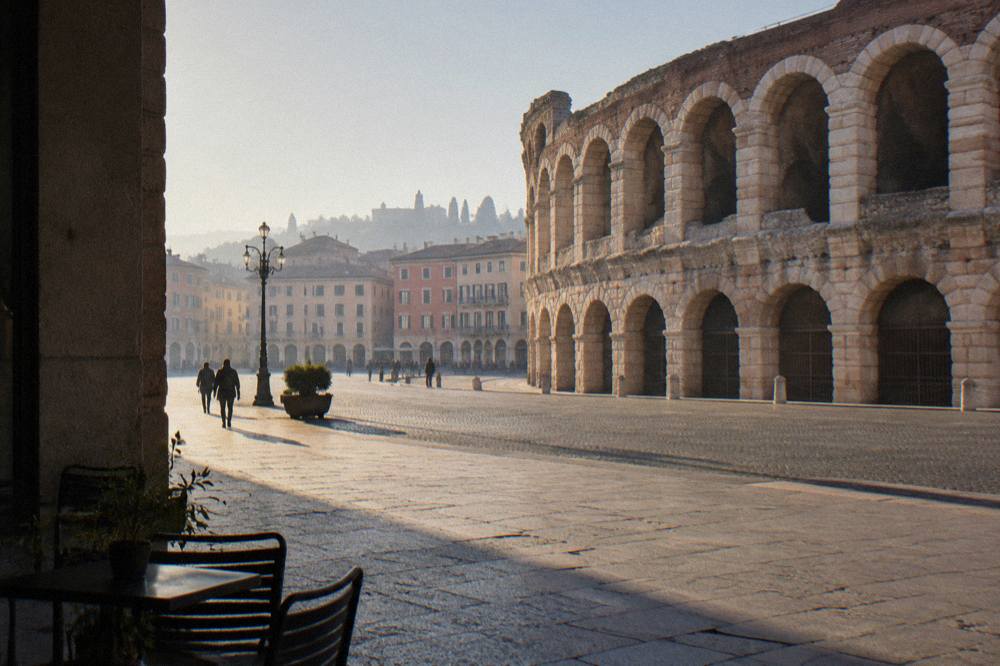
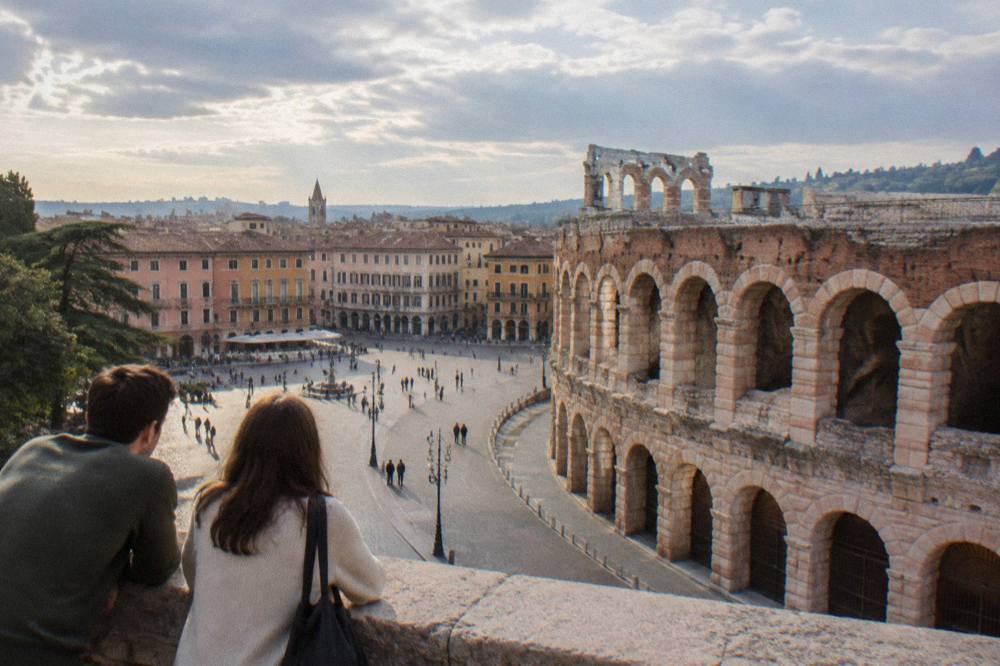
Verona at about 69 km and under an hour by rail is the big western day trip on Padua's map, and it earns the fare with a Roman arena and an old town built for walking; book what needs booking, check what this page does not carry on Verona's own ticketing pages, and be back in Padua for a late spritz in Piazza delle Erbe. For everything closer to home, the things to do in Padua round-up and the Padua Travel Guide homepage hold the full list, and the Bologna day-trip page covers the opposite direction for travellers with a second long day to spend.