Padua Old Town: Where The Centro Storico Begins And Ends
The Padua old town wraps Giotto's chapel, Saint Anthony's basilica, the university and the market squares into a walkable core. Here is where it starts, where it ends and what to see between.
Short answer
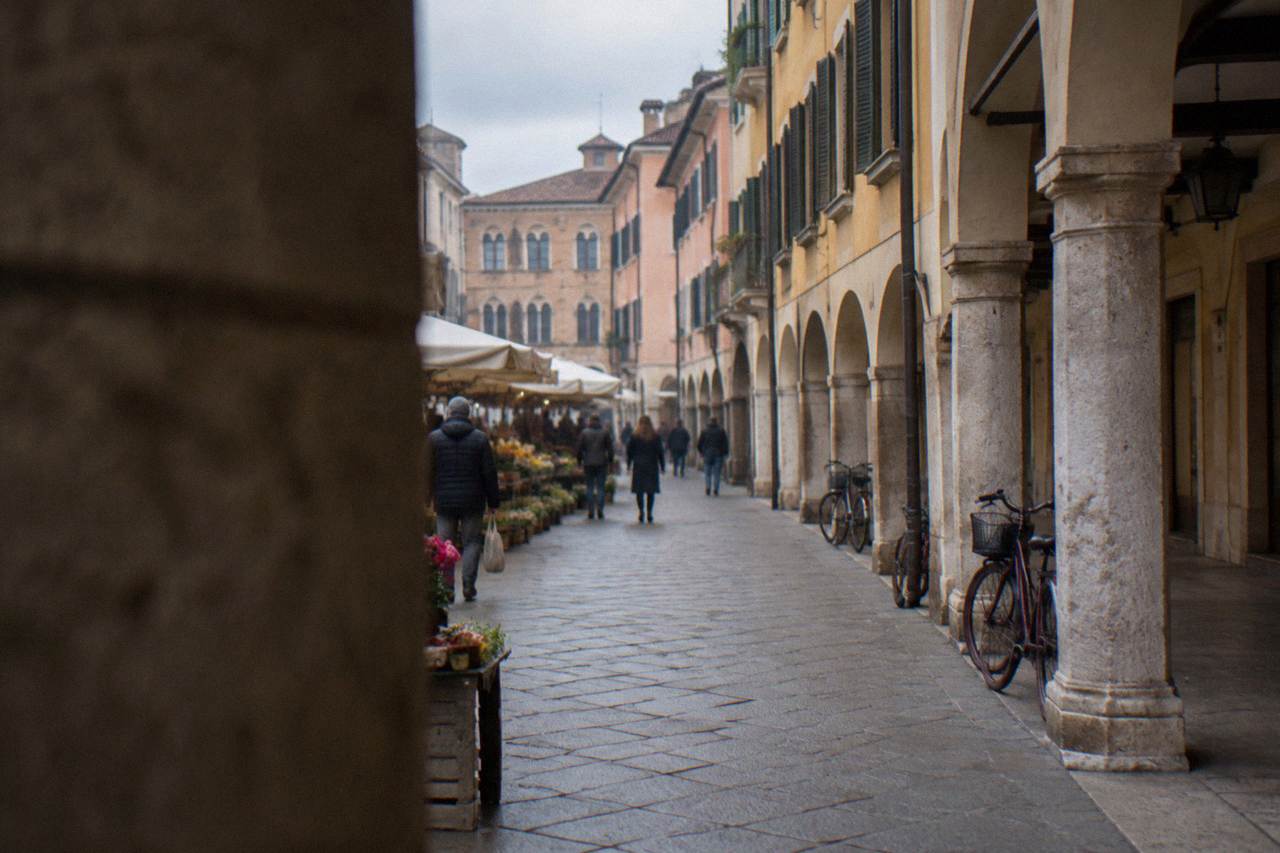
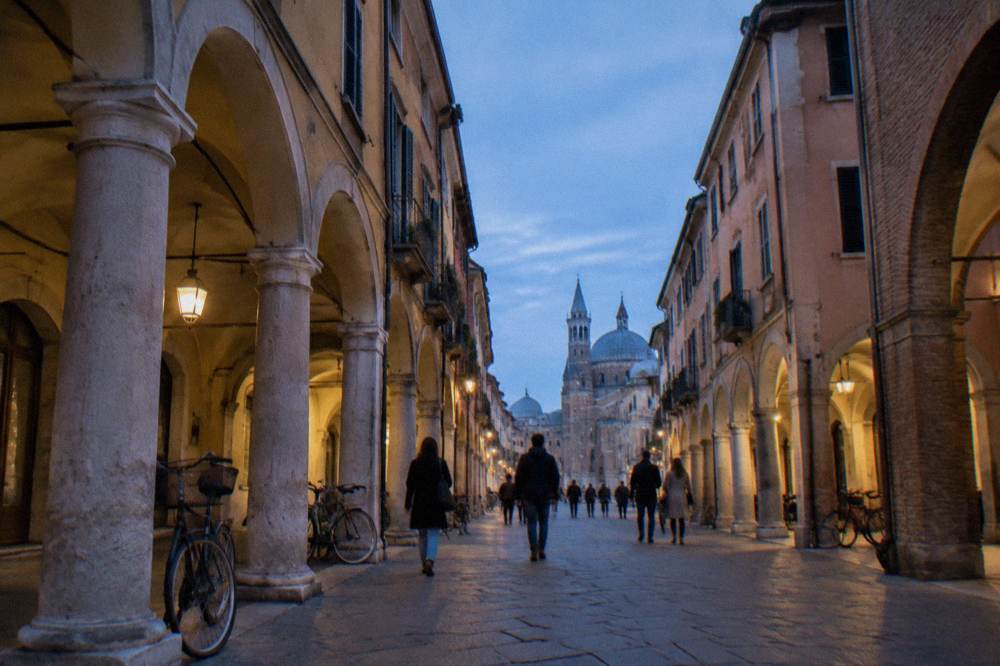
The Padua old town centres on Piazza delle Erbe, Piazza dei Frutti and Piazza dei Signori, with the Scrovegni Chapel at its northern edge, Prato della Valle to the south and the Bacchiglione canals at Portello to the west.
Padua (Italian: Padova) is an inland city in the Veneto, northern Italy, about 36 km in a straight line from Venice, and its historic core is compact enough that the whole set of headline sights sits within a short walk of the market squares. The old town, the centro storico, is a mesh of arcaded streets laid around Piazza delle Erbe, Piazza dei Frutti and Piazza dei Signori, with the Scrovegni Chapel standing at its northern edge, the Basilica of Saint Anthony and Prato della Valle to the south, and the Bacchiglione river framing the western side at Portello. This page from the Padua Travel Guide editorial desk maps where the centro storico begins and ends, what each cluster holds, and which hours, prices and booking rules apply.
Where Does The Padua Old Town Begin And End?
The Padua old town runs from the Scrovegni Chapel and the Eremitani complex at its northern edge, south through the market squares and Palazzo della Ragione to the Basilica of Saint Anthony and Prato della Valle, with the Bacchiglione river and the Portello gate marking the western boundary and the railway station sitting just outside the core to the north. Everything inside that loop is walkable, and the site's own area map places the central cluster, the Jewish Ghetto, Portello, the Santo and Prato quarter, and the station and Arcella side as the five pieces that together cover the city a visitor actually uses.
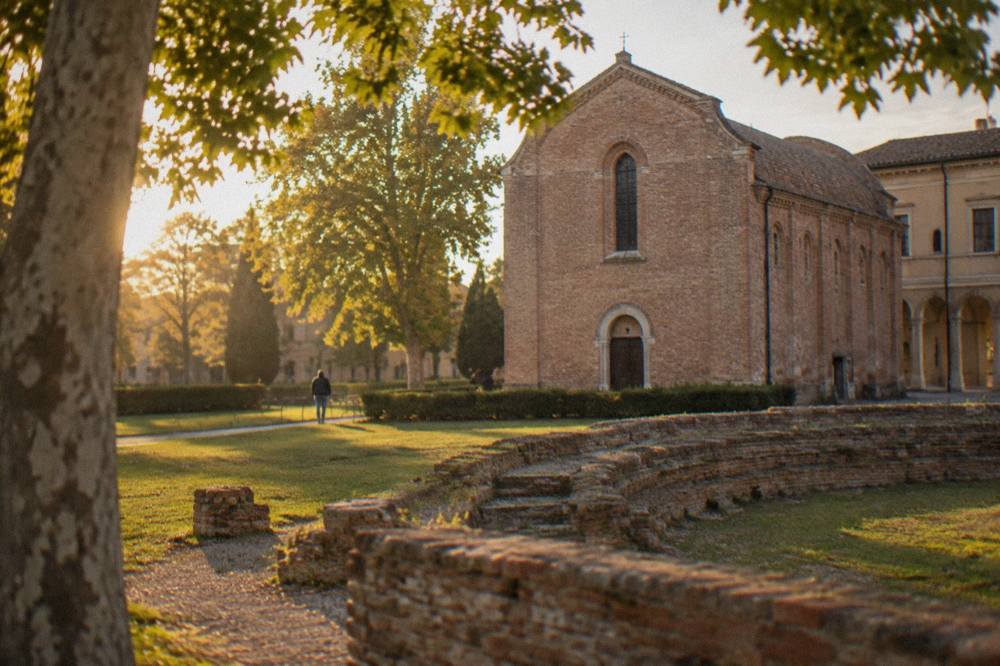
The northern gate of the old town, in practical terms, is the Scrovegni Chapel. The chapel's own booking rules are strict: entry is timed, at most 25 people every 15 minutes during the day, about 15 minutes inside after a wait in the climate-controlled waiting room, and visitors should be at the entrance 5 minutes before the slot on the ticket. Same-day online booking does not exist; the chapel's own how-to-visit page directs anyone without a booking to check availability at the museum ticket office. The chapel is closed 16 to 27 November 2026 for the annual fresco inspection.
The southern end is Prato della Valle, a square surrounded by a canal with a double ring of numbered statues of famous people, declared communal space by the Venetian Senate in 1767 and reclaimed under Andrea Memmo. Between those two poles the old town is a continuous stretch of arcades, and the site's Padua map page lays out the same geography in visual form.
| Old town edge | What marks it | Key sight |
|---|---|---|
| North | Scrovegni Chapel and Eremitani complex | Cappella degli Scrovegni, Musei Civici Eremitani |
| Centre | The market squares and the civic palace | Piazza delle Erbe, Piazza dei Frutti, Palazzo della Ragione |
| South | The basilica and the great square | Basilica of Saint Anthony, Prato della Valle |
| West | The Bacchiglione river and city gate | Portello (Porta Ognissanti) |
| Beyond the core | The station and its quarter | Padova station, Arcella |
For a full route through the same ground in one day, the one day in Padua itinerary strings the northern chapel, the squares and the southern basilica together in order. The antiques market adds a monthly rhythm to the same map: the Comune di Padova lists it at Prato della Valle and via Umberto I on every third Sunday of the month, which places a market day at both the southern and central ends of the old town at once.
What Are The Main Squares Of The Padua Old Town?
The main squares of the Padua old town are Piazza delle Erbe and Piazza dei Frutti, the twin market squares under Palazzo della Ragione, and Piazza dei Signori with its clock tower, with Piazza del Duomo beside the Cathedral and Prato della Valle forming the large southern terminus of the sequence. The Comune di Padova's market page sets the hours: Piazza delle Erbe runs Monday to Friday 7:30 to 13:30 and Saturday 7:30 to 20:00, while Piazza dei Frutti trades on food from Monday to Wednesday 8:00 to 14:00 and Thursday to Saturday 8:00 to 19:00.
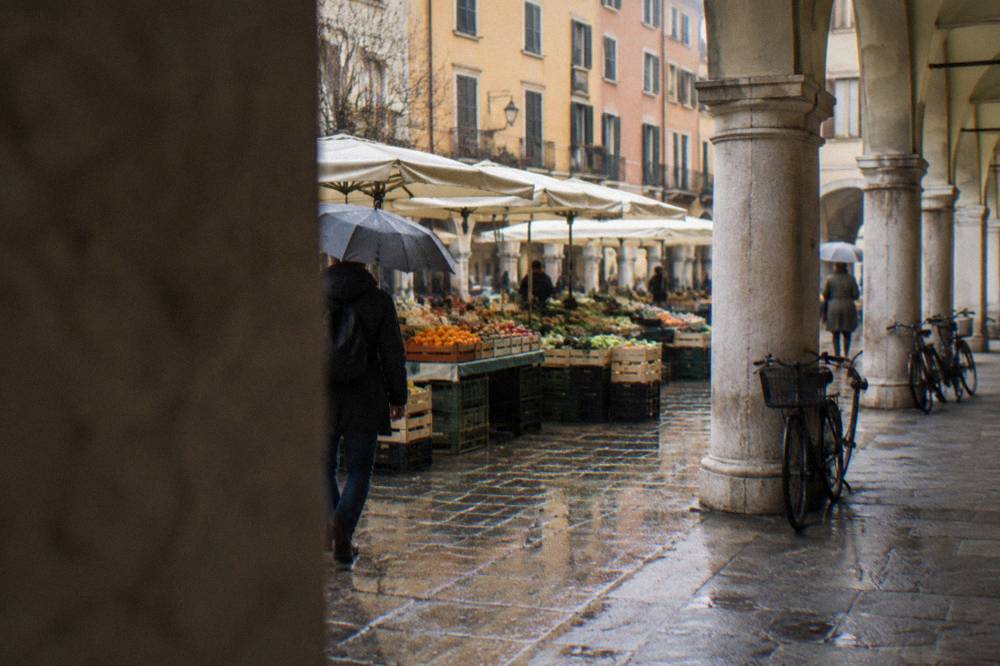
Piazza delle Erbe carries 52 stalls, mostly fruit, vegetables and flowers, per the Comune's own market page. Under Palazzo della Ragione sits Sotto il Salone, the permanent covered market the tourism board describes as a historic market of local specialities beneath the great hall of the palace. The Palazzo itself is ticketed: the museums' price list carries EUR 8 full and EUR 6 concession, open Tuesday to Sunday 9:00 to 19:00, with tickets sold at the IAT office at Piazza delle Erbe 52.
The full detail on each square, including the market stalls and the palace's halls, is on the Piazza delle Erbe guide and the Palazzo della Ragione guide. For the west side of the core, the Portello area page covers the river gate and the traghetti landing stages on the Bacchiglione, where the boats of the old river route to the Brenta villas once departed; the Brenta Riviera boat tour guide picks up that story downstream toward Venice.
A guided walk is one way to tie the squares to the chapels without managing each timed entry separately. The site's Padua walking tour overview compares the formats, from private walks to self-guided scavenger hunts, and the operator listings carry their own live prices and times.
How Compact Is The Padua Old Town On Foot?
The Padua old town is compact on foot because every headline sight inside it, the Scrovegni Chapel, the market squares, the Cathedral and Baptistery, Palazzo del Bo, Caffè Pedrocchi, the Basilica of Saint Anthony and Prato della Valle, sits within the same continuous stretch of arcaded streets, and the station sits just outside the northern edge, so the whole core is covered without a car. The tram SIR1 line runs north to south through the city for the longer hops, and the urban ticket costs EUR 1.70 for 90 minutes, with contactless card tap on board.
Practical services cluster at the edges of the core. The left-luggage office at the station, on platform 1, is open daily 6:00 to 20:00 at EUR 5 per 6 hours, per the tourism board's luggage page, which dates from 2024, so confirm before relying on it. The IAT tourist offices are at the station exit of platform 1, Monday to Saturday 9:00 to 19:00 and Sunday 10:00 to 16:00, and in the centre at Piazza delle Erbe 52. Free municipal Wi-Fi, the PADOVAweb network, is reported in the piazzas and public buildings, which covers the squares at the heart of the old town.
| Service inside or at the edge of the old town | Location | Hours (per official pages) |
|---|---|---|
| IAT station tourist office | Station, exit of platform 1 | Mon to Sat 9:00 to 19:00, Sun and holidays 10:00 to 16:00 |
| IAT centre tourist office | Piazza delle Erbe 52 | Daily 9:00 to 19:00 |
| Left-luggage office | Station, platform 1 | Daily 6:00 to 20:00, EUR 5 per 6 hours |
| Market, Piazza delle Erbe | Under the arcades | Mon to Fri 7:30 to 13:30, Sat 7:30 to 20:00 |
| Saturday market, Prato della Valle | Around the canal ring | 8:00 to 19:00 winter, 8:00 to 20:00 summer |
The station and its Arcella quarter sit across the tracks from the core; the station and Arcella page covers that side of the city, including the airport bus at EUR 13 one-way to Venice Marco Polo, about 45 minutes, with 54 runs a day. The child fare on the same bus is EUR 6.50 and a same-day return EUR 23, per the Busitalia page for the route. A tourist tax also applies to overnight stays, collected by the accommodation and capped at five consecutive nights, with under-16s exempt, per the Comune di Padova's tax page.
What Frescoes Define The Padua Old Town?
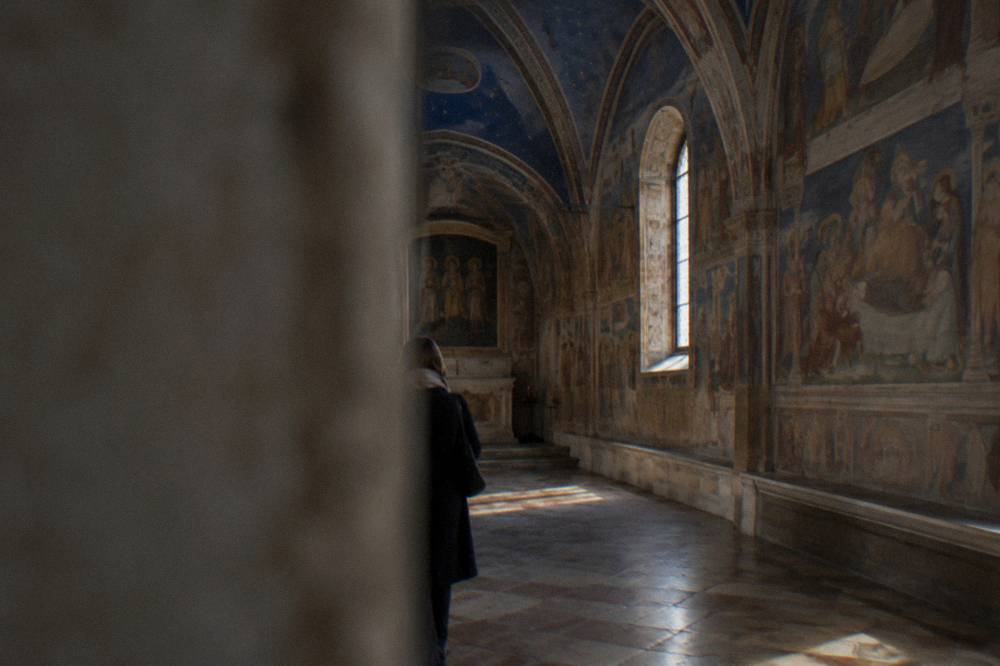
The frescoes that define the Padua old town are the fourteenth-century cycles inscribed by UNESCO in 2021 as Padova Urbs Picta, eight complexes led by Giotto's cycle in the Scrovegni Chapel painted between 1303 and 1305, joined by the churches, palace halls, baptistery and oratories listed on the UNESCO inscription. The inscription covers the Cappella degli Scrovegni, the Chiesa dei Santi Filippo e Giacomo agli Eremitani, Palazzo della Ragione, the Cappella della Reggia Carrarese, the Battistero della Cattedrale, the Basilica e Convento di Sant'Antonio, the Oratorio di San Giorgio and the Oratorio di San Michele.
The daytime Scrovegni ticket, EUR 15 full and EUR 11 reduced plus a EUR 1 booking fee, also covers the Musei Civici Eremitani and Palazzo Zuckermann, per the museums' own price list; the evening visit, "Giotto sotto le stelle" from 25 March to 1 November, 19:00 to 22:00 every 20 minutes, is chapel only. The site's Scrovegni Chapel guide carries the full booking walkthrough, including the family card at EUR 30 plus EUR 1 per person for the chapel booking, covering up to two adults and two under-18s.
| Padova Urbs Picta site | Place in the old town | Ticket status |
|---|---|---|
| Cappella degli Scrovegni | North edge, by the Eremitani | EUR 15 full plus EUR 1 booking fee, timed entry |
| Chiesa dei SS. Filippo e Giacomo agli Eremitani | North edge, beside the chapel | Part of the museum complex |
| Palazzo della Ragione | Between the market squares | EUR 8 full, EUR 6 concession |
| Cappella della Reggia Carrarese | Central, off the squares | Listed on the UNESCO inscription |
| Battistero della Cattedrale | Beside the Duomo | Covered by the dedicated ticketed visit |
| Basilica e Convento di Sant'Antonio | South of the core | Free entry |
| Oratorio di San Giorgio | Near the basilica | Part of the inscription |
| Oratorio di San Michele | Near the basilica | Part of the inscription |
The whole Santo and Prato quarter page covers the southern cluster around the basilica and the great square, where the Basilica of Saint Anthony, begun in 1232, a year after the Saint's death on 13 June 1231, keeps the tomb and the Chapel of the Relics, with free entry per the Urbs Picta visitor page. The basilica's own regulation asks for dress suitable to a church environment. Donatello's equestrian Gattamelata statue of Erasmo da Narni stands in Piazza del Santo outside, one of the fixed landmarks of the southern old town.
How Does The University Shape The Old Town?
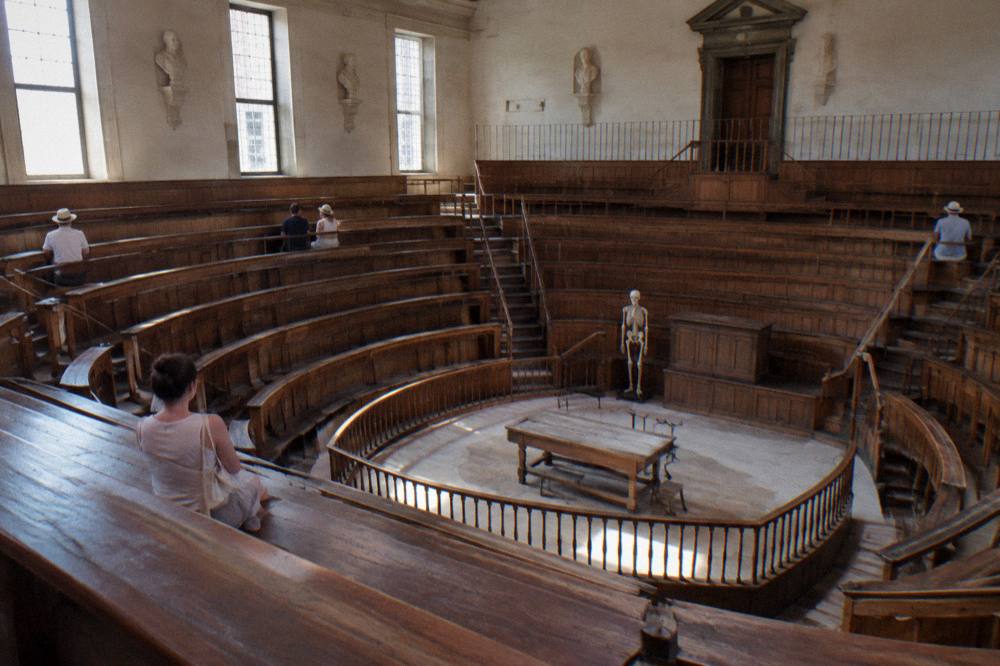
The University of Padua, founded in 1222 and described by the university itself as among the oldest in the world, shapes the old town through Palazzo del Bo in the centre, whose guided historical tour takes in the 1594 anatomical theatre and Galileo's chair in the Sala dei Quaranta, and through the Orto Botanico, the world's first university botanical garden, founded in 1545 and inscribed by UNESCO in 1997. The Bo tour costs EUR 10 full, EUR 8 reduced and EUR 6 for ages 6 to 25, runs about 45 minutes and alternates Italian and English slots.
Galileo held the chair of mathematics here from 1592 to 1610, years he later called the best eighteen of his life, per the university's own history pages. The university's profile also records Elena Lucrezia Cornaro Piscopia's philosophy doctorate of 25 June 1678, the first woman university graduate in recorded history. The site's Palazzo del Bo guide and Galileo in Padua coverage carry the detail, and the wider story of the institution is on the University of Padua page.
The Orto Botanico, at the old town's southern edge, charges EUR 15 full from 1 September 2026, with a winter full ticket of EUR 12 for November to February and reductions to EUR 10 and EUR 8, per the garden's own ticket page. It is closed on non-holiday Mondays, and its audioguide is included in the ticket. The Orto Botanico guide covers the hours month by month.
| University sight | Year in the record | Ticket |
|---|---|---|
| Studium Patavinum founded | 1222 | Palazzo del Bo tour EUR 10 full |
| Orto Botanico founded | 1545 | EUR 15 full from 1 Sept 2026, EUR 12 winter |
| Anatomical theatre inaugurated | 1594 | Included in the Bo tour |
| Galileo's chair years | 1592 to 1610 | Included in the Bo tour |
| Elena Cornaro's doctorate | 1678 | Statue on the Bo tour route |
What Food And Drink Anchor The Padua Old Town?
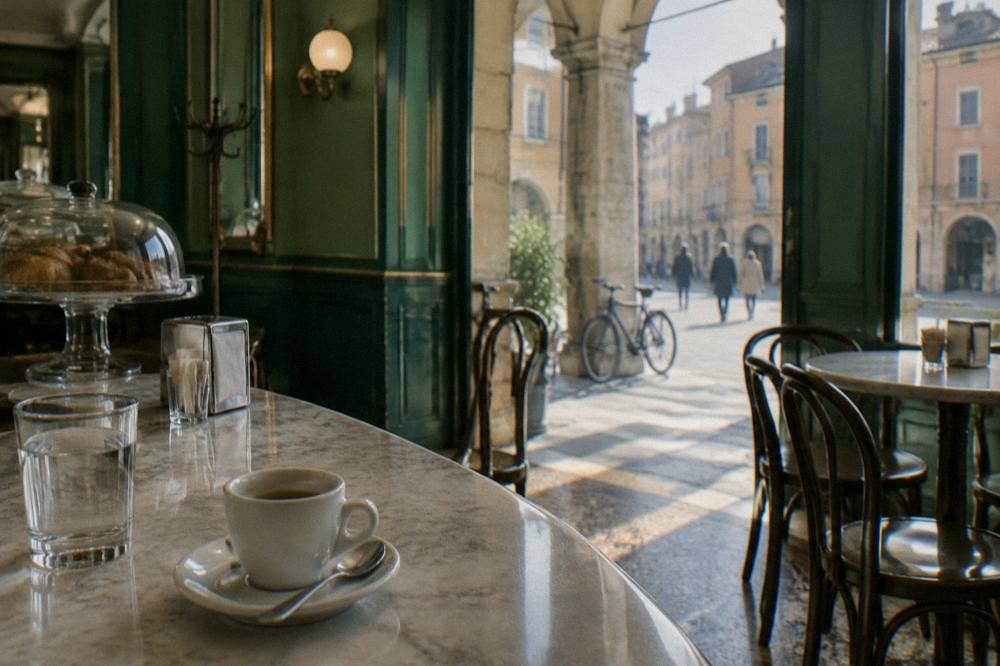
The food and drink anchors of the Padua old town are the covered Sotto il Salone market under Palazzo della Ragione, the stalls of Piazza delle Erbe and Piazza dei Frutti, Caffè Pedrocchi, opened in 1831, with its mint coffee, and the spritz culture of the evening piazzas, with Aperol itself created in Padua in 1919 by the Barbieri brothers. The tourism board's own recipe pages name risotto ricco alla Padovana, capponi alla canevera and torta pazientina as the city's three patented dishes.
Caffè Pedrocchi, the neoclassical coffee house by Giuseppe Jappelli, stands a block north of the squares; the site's Caffè Pedrocchi guide tells its story, including the "caffè senza porte" years before 1916. The museums' price list tickets the adjoining Museo del Risorgimento at EUR 5 full, Tuesday to Sunday mornings and afternoons. For the deeper food picture, from bigoli to baccalà, the what to eat in Padua guide walks the same streets dish by dish. Other pages covering the same trip are gathered on Padua Travel Guide.
For tasting the quarter rather than reading about it, the related tour for this page is the Check availability link beside the site's tour page, a Saint Anthony walk that can extend to Camposampiero; the tour page carries what it covers, and the food and culture walk in the picks below pairs the market side of the old town with tastings.
Which Quarters Border The Centro Storico?
The quarters that border the Padua old town are the Jewish Ghetto to the west of the market squares, Portello with its river gate and canals further west, the Santo and Prato della Valle quarter to the south, and the station and Arcella side beyond the northern edge, each mapped on the site's own area pages. The two-day and three-day itineraries use these quarters as natural halves of the city: the two days in Padua itinerary splits the core from the outer quarters, and the one day from Venice itinerary fits the old town into a day arrival by train.
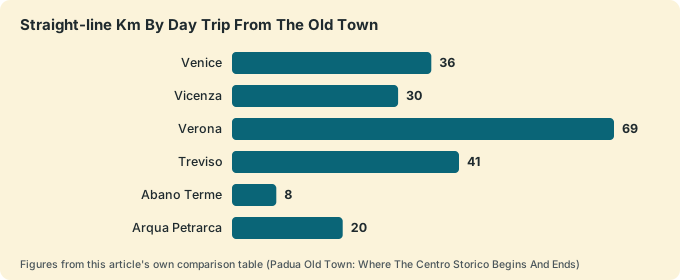
The Jewish Ghetto page covers the streets west of the squares. Beyond the city, day trips run out along the same rail lines: the Verona day trip page covers the 43 to 60 minute run, and the Euganean Hills page covers the hill towns about 8 to 26 km south in a straight line, with Abano Terme at 8 km and Arqua Petrarca at 20 km from the centre.
| Day trip from the old town | Straight-line km | Train time (reported, about) |
|---|---|---|
| Venice | 36 | 26 to 40 minutes |
| Vicenza | 30 | 16 to 25 minutes |
| Verona | 69 | 43 to 60 minutes |
| Treviso | 41 | 28 to 60 minutes |
| Abano Terme | 8 | Bus, Colli lines |
| Arqua Petrarca | 20 | Bus, Colli lines |
When Is The Best Weather For Walking The Padua Old Town?
The climate normals from the ERA5 reanalysis, 1991 to 2020, put July and August at a mean daily high of 28.8 C and January at a mean daily high of 7.3 C with a mean low of minus 0.2 C, while November carries the highest monthly rain total at 114.0 mm and January the lowest at 53.6 mm, so the months with cooler means and lower rain totals suit a walking day in the arcades best. These are modelled grid-cell normals, not a station record, and they describe the whole year rather than any single day.
The rainfall column is the one that matters for a plan built entirely on foot. September and October both average about 105 mm, and the summer months sit between 62.1 and 81.0 mm, so no month of the year is dry in absolute terms and a rain layer earns its place in the bag at any season. Snow is a modest part of the picture: a long Padua climate series published in 2025 reports an average of about 4.4 snowy days per year across 1995 to 2024, down from about 10.4 in the 1785 to 1814 window.
| Month | Mean daily high (C) | Mean daily low (C) | Rain (mm), ERA5 reanalysis 1991-2020 |
|---|---|---|---|
| January | 7.3 | -0.2 | 53.6 |
| April | 17.6 | 7.8 | 84.4 |
| July | 28.8 | 18.9 | 62.1 |
| October | 18.4 | 10.6 | 105.4 |
| November | 12.6 | 5.5 | 114.0 |
The site's weather page and best time to visit page carry the full monthly table and the seasonal planning detail.
For the full spread of sights across the whole city, the root things to do in Padua page is the site's master list, and it indexes every attraction, area and itinerary, including the old town sights covered here.
Common Questions About The Padua Old Town
How big is the Padua old town?
The old town stretches from the Scrovegni Chapel at its northern edge to Prato della Valle in the south, a continuous walkable core of arcaded streets centred on Piazza delle Erbe, with the Bacchiglione river at Portello marking the western side. Every headline sight sits inside that loop or at its edge.
Can you walk everywhere in the Padua old town?
Yes, the whole centro storico is covered on foot, and the tram SIR1 line runs north to south for longer hops. The urban ticket costs EUR 1.70 for 90 minutes, and a contactless card can be tapped on board.
What is at the centre of the Padua old town?
Piazza delle Erbe and Piazza dei Frutti, with Palazzo della Ragione between them, form the centre, hosting the daily markets listed by the Comune di Padova and the covered Sotto il Salone food market beneath the palace.
Do you need to book the Scrovegni Chapel from the old town?
Yes. Entry is timed, at most 25 people every 15 minutes, with no same-day online booking. The daytime ticket, EUR 15 full plus a EUR 1 booking fee, also covers the Musei Civici Eremitani and Palazzo Zuckermann. The chapel is closed 16 to 27 November 2026.
Is the Basilica of Saint Anthony inside the old town?
The basilica stands at the southern edge of the old town, in the Santo and Prato quarter, with entry free per the Urbs Picta visitor page. Construction began in 1232, a year after Saint Anthony's death, and the Tredicina before the 13 June feast ran 31 May to 12 June in 2026.
Does it rain often in the Padua old town?
November carries the highest monthly rain total in the ERA5 reanalysis normals for 1991 to 2020, at 114.0 mm, and January the lowest at 53.6 mm. No month is dry in absolute terms, so a rain layer is worth carrying in any season.
The old town holds the whole of Padua's headline offer, from Giotto's 1303 to 1305 cycle in the north to the statue-ringed canal of Prato della Valle in the south, and a single well-timed chapel booking is the one reservation the rest of the walk does not need.
