Arcella And The Station Area: What To Expect
Arcella is the district on the north side of Padua's railway station, the side every train arrives on before the tracks dip toward the historic centre. This guide covers what the area actually contains, how the station works, and how to use it as a base.
Short answer
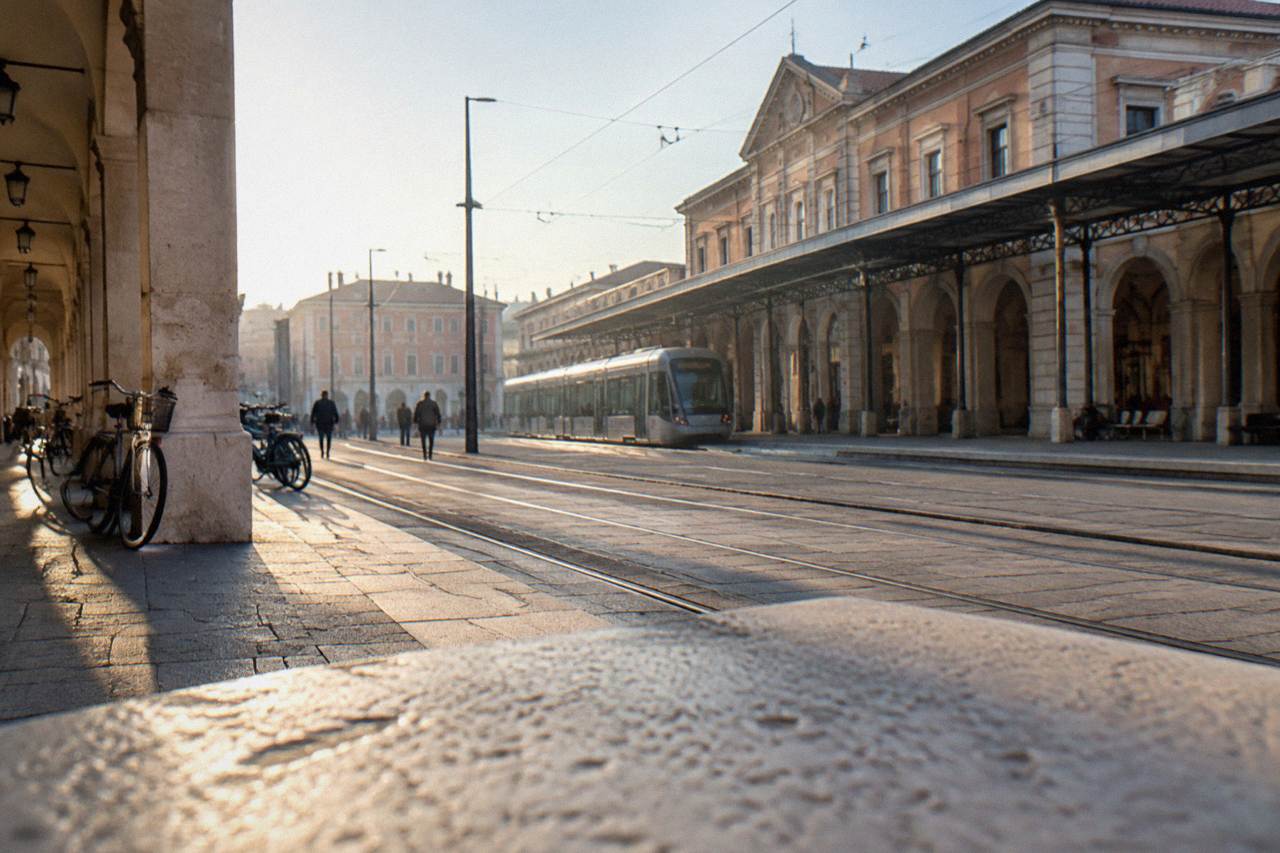
Arcella is the quarter immediately north of Padova station in Padua, in the Veneto. The station itself sits on the Venice-Milan line, with regional trains to Venice in about 26 to 40 minutes and to Vicenza in about 16 to 25 minutes, an airport bus to Venice Marco Polo, and a tourist office at the exit of platform 1.
Padua's railway station stands on the northern edge of the historic centre, and the district on its far side, the side the trains arrive from, is Arcella. The station, Padova, is one of the Veneto's principal rail junctions: every train between Venice and Milan calls here, and the city it serves, an inland city about 36 km in a straight line from Venice, is famous for Giotto's frescoes in the Scrovegni Chapel, the Basilica of Saint Anthony and one of Italy's oldest universities. This guide from the Padua Travel Guide editorial desk covers what the station area and Arcella actually contain, how to move between them and the centre, and how the area works as a practical base.
Where Is Arcella In Padua?
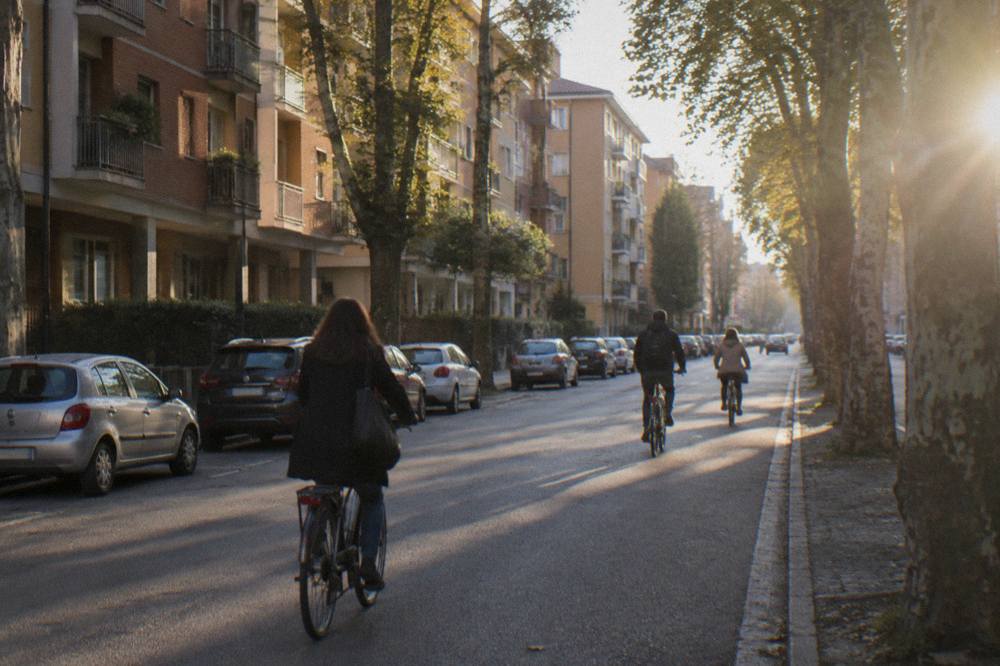
Arcella is the district immediately north of Padova railway station in Padua, in the Veneto, separated from the historic centre by the railway line that runs east to Venice and west to Milan. The station building marks the boundary: on its platform side and forecourt you are at the northern rim of the centre, and everything across the tracks, toward Arcella and the Stadio Euganeo beyond, belongs to the northern districts of the city. The name refers to a historically separate settlement that the growth of the city absorbed, and it survives today as a residential and commercial quarter with its own squares and streets, roughly continuing the line of Corso Milano and the roads that leave the city to the north.
The geography matters for two practical reasons. First, every arrival by rail puts you on the centre side of the tracks, facing the station forecourt where the tram stops and taxis stand. Second, Arcella sits on the flat plain that stretches from Padua toward Camposampiero and the north of the province, which is why the district reads as a normal working Italian neighbourhood rather than a tourist district.
For orientation, the site's Padua map guide lays out the whole city by area: the Centro Storico around the market squares, the Portello gate and canal side, the Santo and Prato della Valle quarter, the former Jewish Ghetto and this station and Arcella side. Each area guide in the series describes position and walking relations only, because no neighbourhood in Padua carries a sourced safety score, price level or character rating beyond its place on the map.
What Sits Around Padua Railway Station?
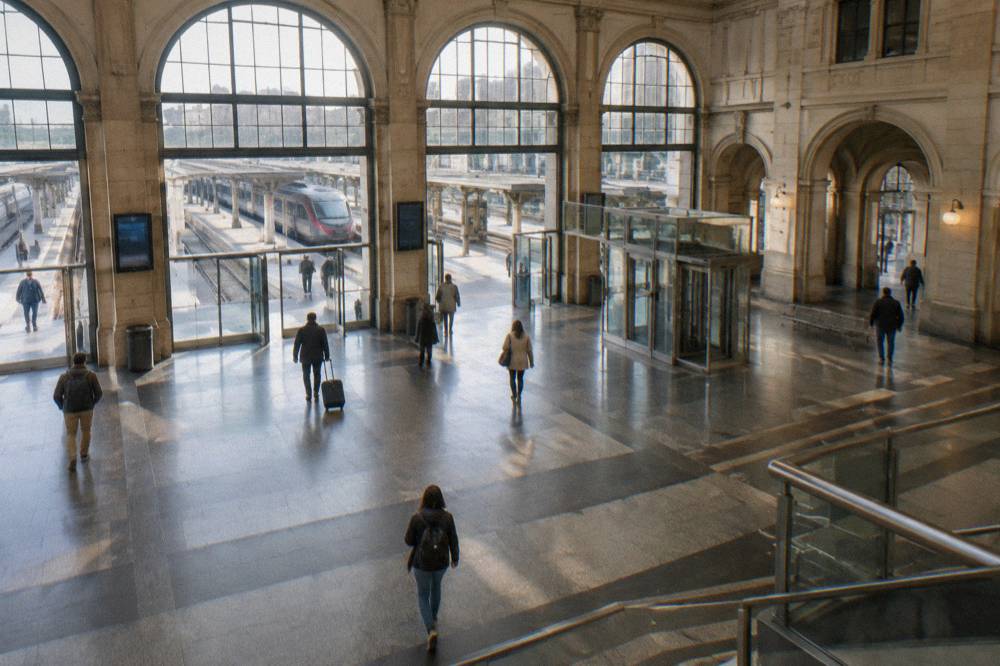
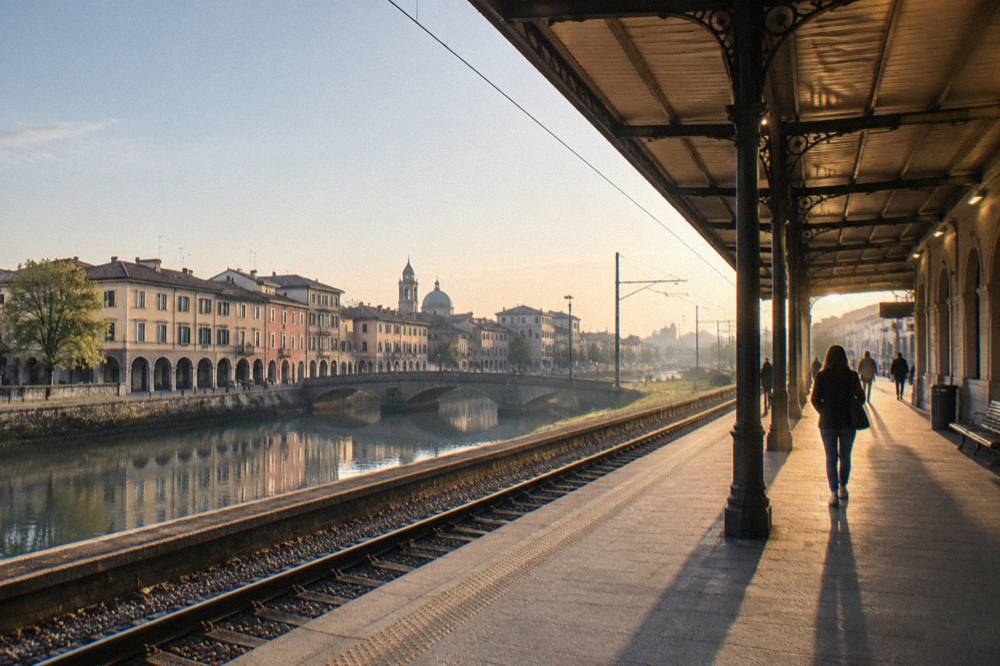
Around Padova station you find the practical machinery of arrival and departure rather than monuments: the IAT tourist office at the exit of platform 1, open Monday to Saturday 9:00 to 19:00 and Sunday and holidays 10:00 to 16:00, closed 25 and 26 December and 1 January; the left-luggage office on platform 1, daily 6:00 to 20:00; tram and bus stops on the forecourt; and a stretch of hotels, cafes and shops along Corso Milano leading south toward the historic centre. The station's own guide on this site, the Padua train station page, covers platforms and facilities in detail; the summary here is what stands at the door.
The station is a through station: trains pass under the centre in a cutting and the historic core begins a short walk south of the forecourt. The Centro Storico, with Piazza delle Erbe and the market squares, is reachable on foot, and the walk is flat the whole way. The Scrovegni Chapel and the Eremitani complex sit on the near-north-west edge of the centre, close to the station side, which is why so many day visitors walk there first.
For orientation, the two most useful official touchpoints both sit at the station. The IAT office at the exit of platform 1 handles maps and booking questions, and a second IAT office operates in the centre at Piazza delle Erbe 52. The station office's hours are the ones to plan around if you arrive on a Sunday, when it opens at 10:00 rather than 9:00.
| Facility at Padova station | Location | Hours | Notes |
|---|---|---|---|
| IAT tourist office | Exit of platform 1 | Mon to Sat 9:00 to 19:00, Sun and holidays 10:00 to 16:00 | Closed 25 and 26 Dec, 1 Jan |
| Left-luggage office | Platform 1 | Daily 6:00 to 20:00 | EUR 5 per 6 hours, confirm on arrival |
| Tram SIR1 stops | Station forecourt | Line runs north to Vigodarzere, south to Guizza | About 10.5 km, 26 stops |
| Urban bus stops | Station forecourt | TU1 90-minute ticket EUR 1.70 | Tap a contactless card on board |
| Airport bus to Venice Marco Polo | Station forecourt | Runs every 40 minutes, 05:30 to 22:50 | EUR 13 one-way, about 45 minutes |
How Do You Store Luggage Near Padua Station?
The official left-luggage office at Padova station sits on platform 1 and is open daily from 6:00 to 20:00, charging EUR 5 per bag per 6-hour block, per the Padua tourism board's own page on luggage storage; because the publisher dates that page to 2024, confirm the price and hours when you arrive. App-based locker and drop-off services also operate around the station area, and the IAT office at the exit of platform 1 can point to the nearest option. The site's dedicated luggage storage guide expands on this.
The station office is the one storage point with published official hours, which makes it the natural answer for a specific kind of traveller: someone stopping in Padua between two trains, or arriving hours before a hotel check-in, who wants a few hours in the Centro Storico without a suitcase. The Scrovegni Chapel's timed-entry system means a visit has to be booked to a slot in any case, and the chapel stands on the station side of the centre, so a station-to-chapel-to-squares loop is a workable shape for a stopover day.
The platform 1 location also matters because it sits inside the paid station area: you keep your ticket handy. Six-hour blocks suit a half-day stop; for a full day you simply pay consecutive blocks, and the office's 20:00 close sets the latest collection time. Anyone planning a late-evening departure should collect bags before the office shuts, not after.
How Do You Get From The Station Area Into Padua's Centre?
You walk, in the great majority of cases: the historic centre of Padua begins a flat, direct walk south of the station forecourt, and the walk to the market squares passes the Scrovegni Chapel and the Eremitani church on the way, both on the station side of the centre.
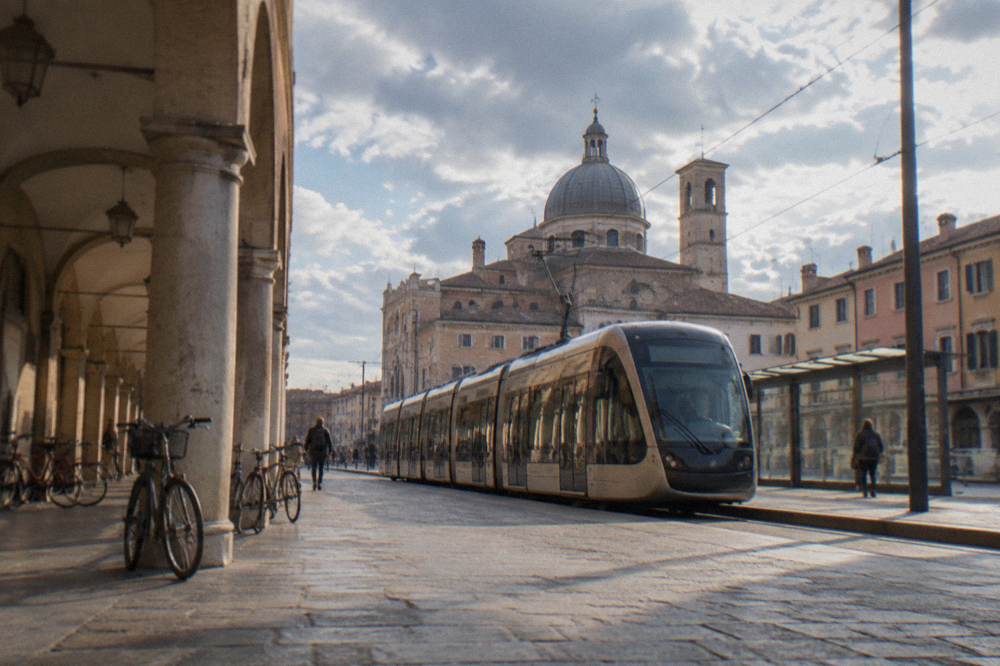
For wheels, the tram SIR1 stops on the forecourt and runs north into Arcella and toward Vigodarzere and south toward Guizza, the urban TU1 ticket costs EUR 1.70 for 90 minutes and can be tapped from a contactless card on board, and the daily TU1 ticket is EUR 4.70. The getting around coverage on the Padua walking tour page describes the street-level route.
The tram is the line to know in this district. SIR1 is the operational line, about 10.5 km north to south with 26 stops; its northern section is what serves Arcella proper. A second line, SIR3, linking the station to Voltabarozzo, has been in pre-service testing, and no opening date should be relied on until the operator announces full service.
Buses share the forecourt. The TU1 ticket covers the Orange Zone, the city proper, for 90 minutes from validation; a contactless bank card can be tapped directly on board for the same EUR 1.70 fare, one tap per vehicle within the time window. Tickets are also sold in the Busitalia Veneto app before boarding. Fares beyond these, and everything about regional buses toward the Euganean Hills, need checking on the operator's own planner.
| Transport from the station | Covers | Ticket | Fare |
|---|---|---|---|
| On foot | Historic centre, chapel, squares | None | Free |
| Tram SIR1 | Vigodarzere to Guizza via Arcella and the station | TU1 90 minutes | EUR 1.70 |
| Urban bus | Orange Zone (city) | TU1 90 minutes | EUR 1.70 |
| Urban bus, all day | Orange Zone (city) | TU1 daily | EUR 4.70 |
| Contactless tap | Tram and bus, TU1 | Card tap on board | EUR 1.70 |
Where Do Trains From Padova Station Go?
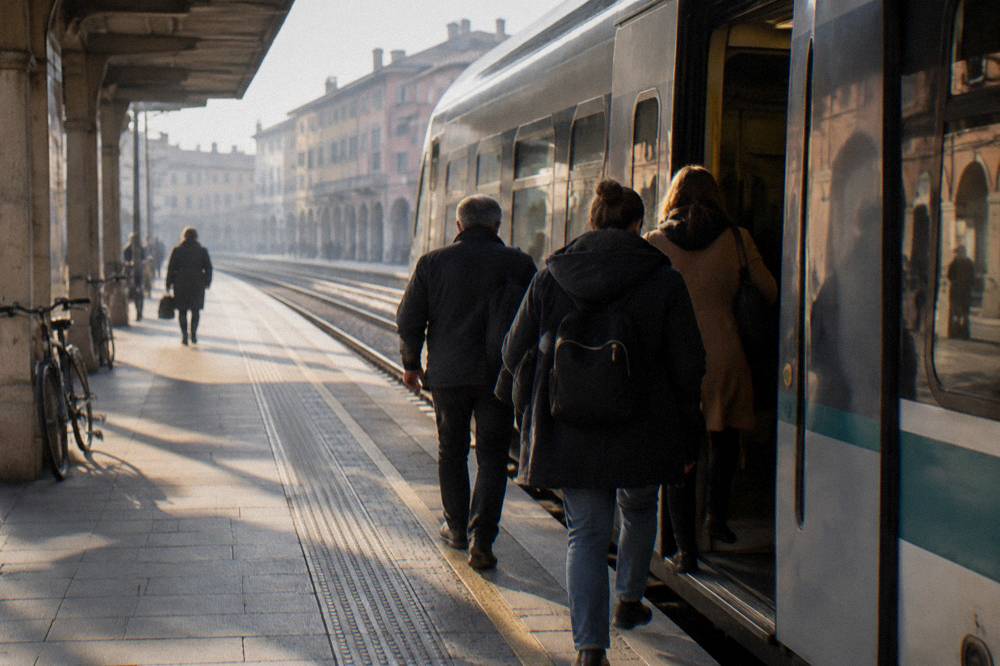
Trains from Padova station connect Padua along the Venice-Milan line and across the Veneto: reported journey times are about 26 to 40 minutes to Venezia Santa Lucia on a regional train, about 16 to 25 minutes to Vicenza, about 43 to 60 minutes to Verona and about 28 to 60 minutes to Treviso, sometimes with a change, and the regional fare to Venice is about EUR 5 while Vicenza is about EUR 6, per journey planners, so check Trenitalia for the exact service. The station also carries high-speed services on the same corridor, for which fares vary and nothing is fixed.
These are the connections that make the station area useful. Venice is a day trip measured in minutes rather than hours, and the site's Venice day trip guide covers what to do once there. One 2026 fact matters for anyone heading to Venice from Padua: the Venice day-tripper access fee trial ended on 27 July 2026, the fee does not apply after that date, and no 2027 decision has been published, so a Padua day-tripper should not budget for it without checking the Venice authorities' current position.
Vicenza and Verona sit west, Treviso north-east. Beyond them, the plains and hills of the Veneto open up: Bassano del Grappa is about 42 km in a straight line from Padua's centre, Valdobbiadene in the Prosecco hills about 56 km, and Bologna about 110 km. The distances are straight-line figures; the train times above are the journey figures to rely on.
| Destination from Padova | Reported train time | Straight-line distance from Padua centre | Regional fare |
|---|---|---|---|
| Venezia Santa Lucia | About 26 to 40 minutes | About 36 km | About EUR 5 |
| Vicenza | About 16 to 25 minutes | About 30 km | About EUR 6 |
| Verona | About 43 to 60 minutes | About 69 km | Check Trenitalia |
| Treviso | About 28 to 60 minutes, sometimes a change | About 41 km | Check Trenitalia |
| Bologna | Not published in this guide's data | About 110 km | Check Trenitalia |
Is The Station Side Of Padua A Good Base For Day Trips?
The station side of Padua, including Arcella, works well as a base for day trips because every regional and high-speed train, the airport bus to Venice Marco Polo at EUR 13 one-way taking about 45 minutes, and the tram into the northern districts converge on the one forecourt, and the historic centre remains walkable from the station in the other direction. What the area trades away is the atmosphere of the market squares: Arcella is a residential district, not a monumental one. The balance suits travellers who sleep in Padua and move daily.
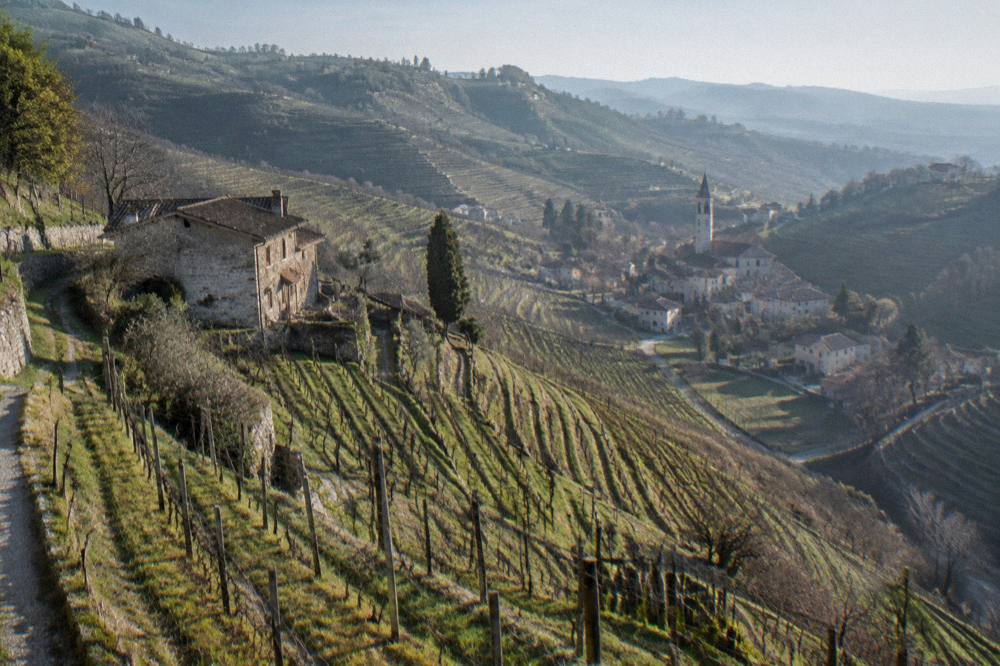
The day-trip radius is wide. Venice, Vicenza, Verona and Treviso go by train; the Brenta Riviera villas and the Euganean Hills go by road or water; and the Prosecco hills sit about 56 km north-east as the crow flies. For the Prosecco hills specifically, a guided day trip from Padua is one way to handle the awkward public-transport edges of the hills: the Prosecco Hills tour from Padua covers the Conegliano-Valdobbiadene wine country with transport from the city, and you can Check availability on the operator's live listing before committing.
Back in the city, the station side has one quiet advantage for sightseeing logistics: the Scrovegni Chapel, the single most booking-sensitive sight in Padua, is closer to the station than to the far end of the centre. The chapel's own booking page requires a timed reservation, at most 25 people every 15 minutes, with about 15 minutes inside, and the chapel is closed 16 to 27 November 2026 for its annual fresco inspection. The daytime ticket, EUR 15 full, also covers the Musei Civici Eremitani and Palazzo Zuckermann. The Scrovegni Chapel guide has the full booking detail.
What Does The Arcella District Itself Contain?
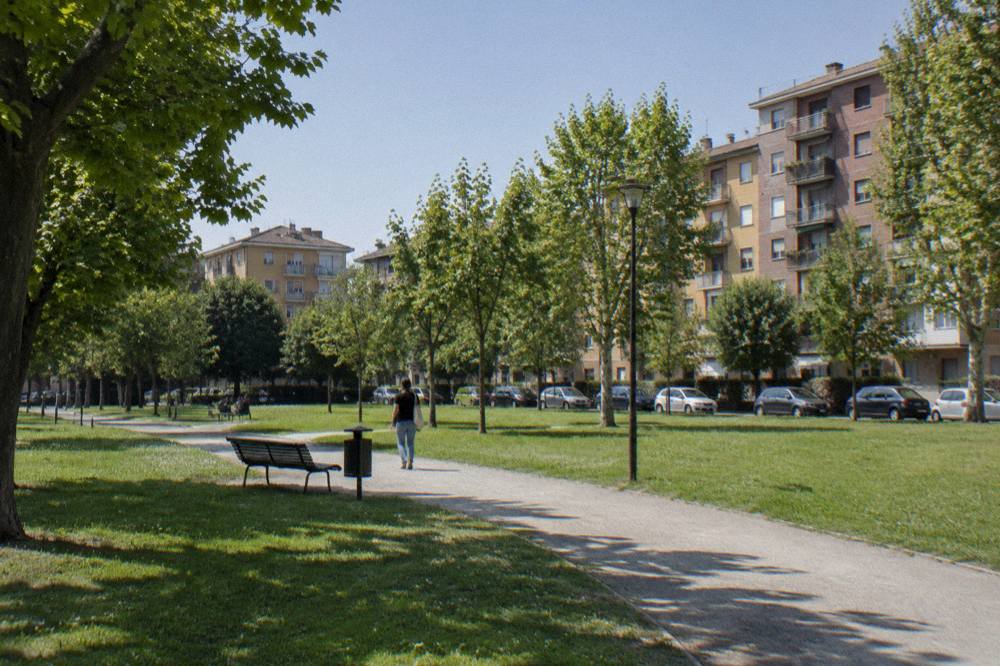
Arcella is a residential and commercial quarter of Padua on the north side of the railway, anchored by its own squares, shopping streets and one of the city's large parks along the Sarpi street axis, and its landmark on the sporting map is the Stadio Euganeo, the football and events stadium that also served as the site of the 2026 Sherwood Festival between 10 June and 12 July. The district reads as everyday Padua: apartment blocks, schools, markets and the tram running up its spine toward Vigodarzere.
The Stadio Euganeo is the one named venue with a sourced recent use. The Sherwood Festival, the annual concert and events programme, ran there from 10 June to 12 July in its 2026 edition; the festival is a yearly fixture, and no 2027 dates have been announced. The stadium also gives its name to the start of the Padova Marathon route: the 2027 edition starts at the Stadio Euganeo at 8:30 on 18 April and finishes at Prato della Valle, which puts both ends of the race on this side of the city's geography.
Beyond the stadium, the district's interest for a visitor is mostly practical: it is where a good share of Padua's roughly 76,000 students, per the university's own current figures, and its roughly 208,000 residents live the ordinary city. The about-10.5 km tram line with its 26 stops is the district's public spine, and the Arcella stops are the ones that matter for reaching the stadium end from the station forecourt.
Where Should You Stay: Arcella Or The Centre Of Padua?
Choose the station and Arcella side of Padua for function: train and tram at the door, the airport bus, luggage storage and the IAT office, and often simpler logistics for early departures; choose the Centro Storico for the market squares, the evening life of Piazza delle Erbe and Piazza dei Signori, and having the Basilica of Saint Anthony, Palazzo della Ragione and the Orto Botanico on foot. No Padua neighbourhood carries a published price level or character score in this site's data, so the choice rests on position alone. Hotel rates in both areas are likewise not quoted.
Two facts narrow the decision. The station's IAT office and the left-luggage office both keep long daily hours, 9:00 to 19:00 weekdays for the IAT and 6:00 to 20:00 for storage, which only helps if you are near the station. Against that, the centre holds the evening weight of the city: the spritz culture around the piazzas, and sights such as the Basilica of Saint Anthony, free to enter, and Prato della Valle with its statue-ringed canal, both in the Santo and Prato quarter south of the centre.
A middle path exists and is common: the strip between the station and the market squares, along which the Scrovegni Chapel, the Eremitani church and, a little further, the Pedrocchi cafe and Palazzo del Bo line up. Staying on that axis puts the station in one direction and the squares in the other, with nothing in Padua's flat centre more than a walk away. The itineraries on this site, starting with one day in Padua, are all built on that walkable core.
| Choice | Best for | Trade-off |
|---|---|---|
| Arcella and the north | Tram access, stadium events, long stays by rail | Residential, few monuments |
| Station forecourt side | Luggage office, IAT, airport bus, early trains | Functional rather than scenic |
| Station-to-squares axis | Chapel and Eremitani on foot, both directions walkable | Midway, not in the piazzas |
| Centro Storico | Markets, evening piazzas, major sights on foot | Longer walk with luggage |
For anyone using Padua as a base and heading out daily, the day-trip maths favour the station side: a Venice train at about 26 to 40 minutes, an airport bus every 40 minutes, and the tram north into Arcella all sit within a two-minute walk of each other. The wider set of options for the city as a whole is on the things to do in Padua page, and the one-day itinerary from Venice covers the reverse commute for visitors sleeping on the lagoon side.
What Practical Facts Matter Around Padua Station And Arcella?
The facts that matter are few and firm: the airport bus to Venice Marco Polo costs EUR 13 one-way and takes about 45 minutes with a run every 40 minutes from 05:30 to 22:50; the urban 90-minute ticket is EUR 1.70; the left-luggage office on platform 1 is open 6:00 to 20:00 at EUR 5 per 6 hours; the emergency number in Italy is 112; and Padua's tourist tax exists, is collected by the accommodation and is capped at five consecutive nights. Free municipal Wi-Fi, PADOVAweb, operates in the piazzas and public buildings, per reporting on the city's network.
Climate matters if the day trips are seasonal. The ERA5 reanalysis for Padua, 1991-2020, puts the January mean daily high at 7.3 C and the July and August mean high at 28.8 C, with November carrying the year's highest monthly rain total at about 114 mm and September and October close behind at about 105 mm each. Those figures argue for an umbrella in autumn and for planning the tram and bus options on the warmest afternoons, though they are modelled normals for the grid cell, not a station record.
Money and phones are simple: Italy uses the euro and is a Schengen member, and the station area's banks and card readers follow the national norm. The IAT office at platform 1 is the fallback for anything the internet does not answer, and its Sunday opening at 10:00 rather than 9:00 is the one quirk to remember on a weekend arrival.
Common Questions About Arcella And The Station Area In Padua
Is Arcella the same as the station area of Padua?
No, but they meet at the tracks. The station area is the forecourt and the streets immediately south toward the centre; Arcella is the residential district north of the railway line, reached by the tram or the road bridges over the cutting.
How far is Arcella from Padua's historic centre?
The station itself borders the centre, and the walk from the forecourt to the market squares is flat and direct, passing the Scrovegni Chapel on the way. Deeper into Arcella, north of the tracks, you are a tram ride of a few stops from the forecourt on line SIR1.
Can you store luggage at Padua railway station?
Yes. The official left-luggage office on platform 1 is open daily from 6:00 to 20:00 and charges EUR 5 per 6 hours, per the Padua tourism board's page; confirm the current price on arrival, and note the 20:00 closing for late collections.
How do you get from Padua station to Venice?
Regional trains take about 26 to 40 minutes to Venezia Santa Lucia and cost about EUR 5, per journey planners, so check Trenitalia for the exact service. The Venice day-tripper access fee trial ended on 27 July 2026, and no 2027 decision has been published.
Is there a tourist office at Padua station?
Yes, the IAT office sits at the exit of platform 1, open Monday to Saturday 9:00 to 19:00 and Sunday and holidays 10:00 to 16:00, closed 25 and 26 December and 1 January. A second IAT office operates in the centre at Piazza delle Erbe 52.
Does the tram serve Arcella?
Yes, tram line SIR1 runs about 10.5 km from Vigodarzere in the north to Guizza in the south with 26 stops, via the station forecourt and the Arcella district. A second line, SIR3, has been in testing toward Voltabarozzo; rely only on lines the operator confirms in service.
