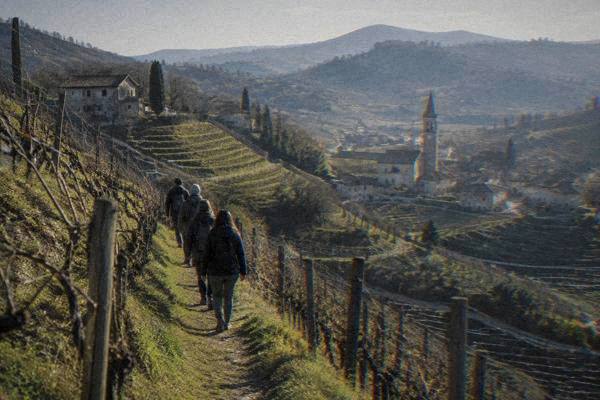
Bassano Del Grappa: The Wooden Bridge And Grappa Distilleries
Bassano del Grappa sits about 42 km north of Padua in a straight line, where the Venetian plain meets the foothills of the Alps, and a day trip there pairs one of Italy's photographed wooden bridges with working grappa distilleries.
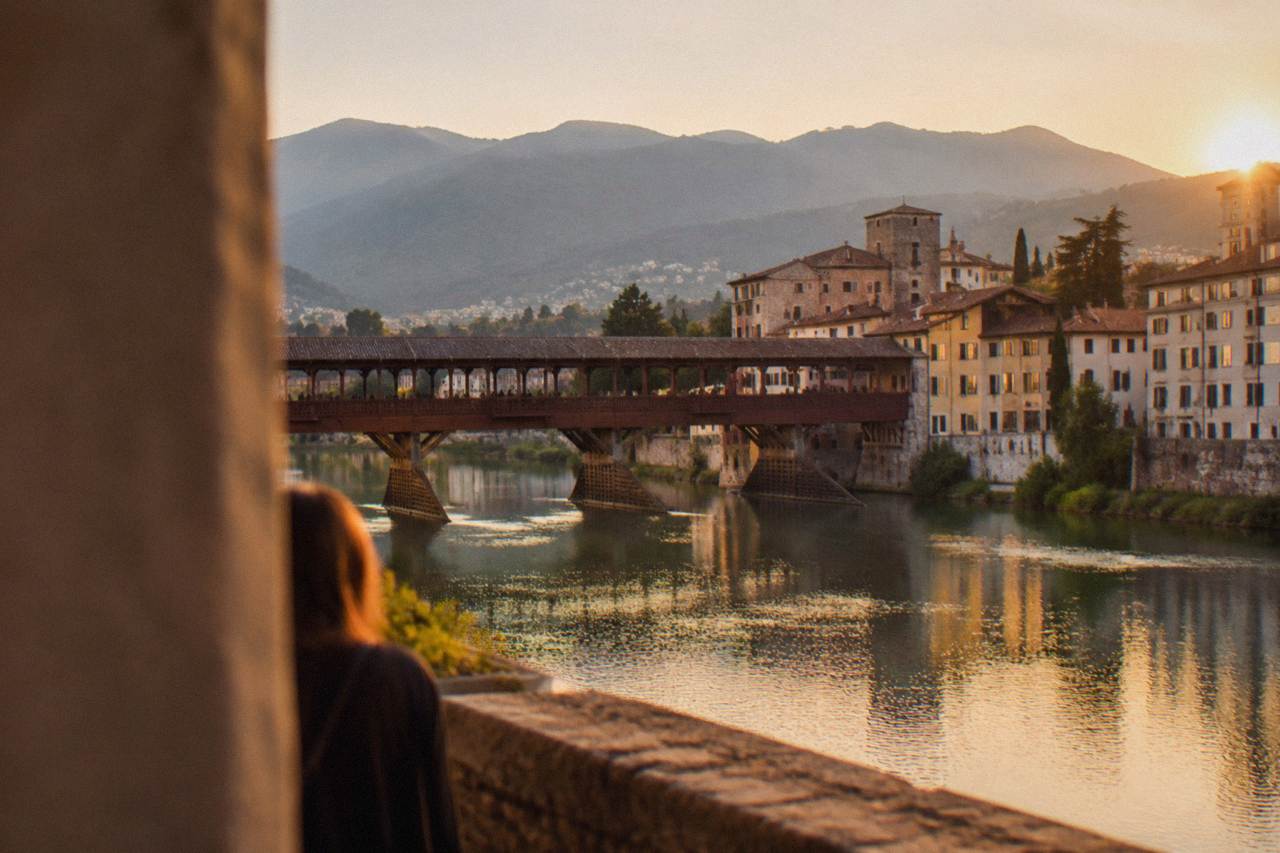
Short answer
Bassano del Grappa is about 42 km north of Padua in a straight line, reached in about an hour by regional train. The Ponte degli Alpini wooden bridge spans the Brenta river, the Poli Grappa Museum has free entry, and grappa tastings run about EUR 3.50.
Bassano del Grappa is a town of about 42 km in a straight line north of Padua, where the flat Venetian plain runs into the first hills of the Alpine foothills and the Brenta river leaves the mountains. Day trippers from Padua come for two things above all: the Ponte degli Alpini, the covered wooden bridge that spans the Brenta in the middle of town, and the grappa distilleries that give the town the second half of its name. This guide lays out what the sources say about the bridge, the museums, the train connection and a realistic plan for one day.
Where Is Bassano Del Grappa From Padua?
Bassano del Grappa lies about 42 km north of Padua in a straight line, at the foot of the mountains that give the town its name, on the Brenta river, which flows down towards the Venetian plain and past the Brenta Riviera villas between Padua and Venice. It is a day trip in every practical sense: closer than Verona, farther than Vicenza, and reachable by regional train without changing cities.
The straight-line figure comes from computed geographic data, and it is the only distance figure this site prints for the journey: no road distance and no drive time. What the geography does explain is the town's character. The river that runs under the Ponte degli Alpini is the same Brenta that the Padua area knows from its villa-lined lower course, so a day in Bassano is in a sense a trip to the source of a river Padua already sits beside. The Grappa massif rises immediately north of town, and the foothills close the view from the bridge in a way the plain around Padua never does.
For scale against Padua's other day trips, the computed straight-line distances look like this:
| Day trip from Padua | Straight-line distance |
|---|---|
| Vicenza | about 30 km |
| Venice | about 36 km |
| Montagnana | about 37 km |
| Treviso | about 41 km |
| Bassano del Grappa | about 42 km |
| Valdobbiadene | about 56 km |
| Verona | about 69 km |
Bassano therefore sits in the same distance band as Treviso: an easy half-day if that is all the time there is, and a comfortable full day with lunch and a distillery stop. Visitors building a wider circuit of the Veneto can continue from Bassano towards Asolo or Cittadella, both of which have their own pages in this site's day-trips section.
How Do You Get To Bassano Del Grappa From Padua?
Regional trains connect Padova and Bassano del Grappa in about one hour, with departures through the morning and connections routed via intermediate stations such as Cittadella and Rossano Veneto, according to published timetables. There is no high-speed link; this is the slow, cheap regional railway that serves the towns of the northern Veneto, and the fare should be confirmed on the operator's booking system before travel.
The roughly one-hour journey time is a reported timetable figure, not a promise: specific departures vary by day and season, and a small number of routings run longer. The trade-off is that the train deposits travellers a short walk from the town centre and the bridge, which removes every question about parking, ZTL rules and car hire for the day.
Setting the Bassano run beside Padua's other rail day trips gives a sense of how the network is arranged:
| Train day trip from Padova | Typical journey time |
|---|---|
| Vicenza | about 16 to 25 minutes |
| Venice (Santa Lucia) | about 26 to 40 minutes |
| Treviso | about 28 to 60 minutes |
| Verona | about 43 to 60 minutes |
| Bassano del Grappa | about 1 hour, regional |
Timetables and fares move, so check the operator's site or app for the exact travel date. Once back in Padua, the city's own transport is simple: the urban ticket is EUR 1.70 and can also be paid by tapping a contactless card on board, per Busitalia's fare page.
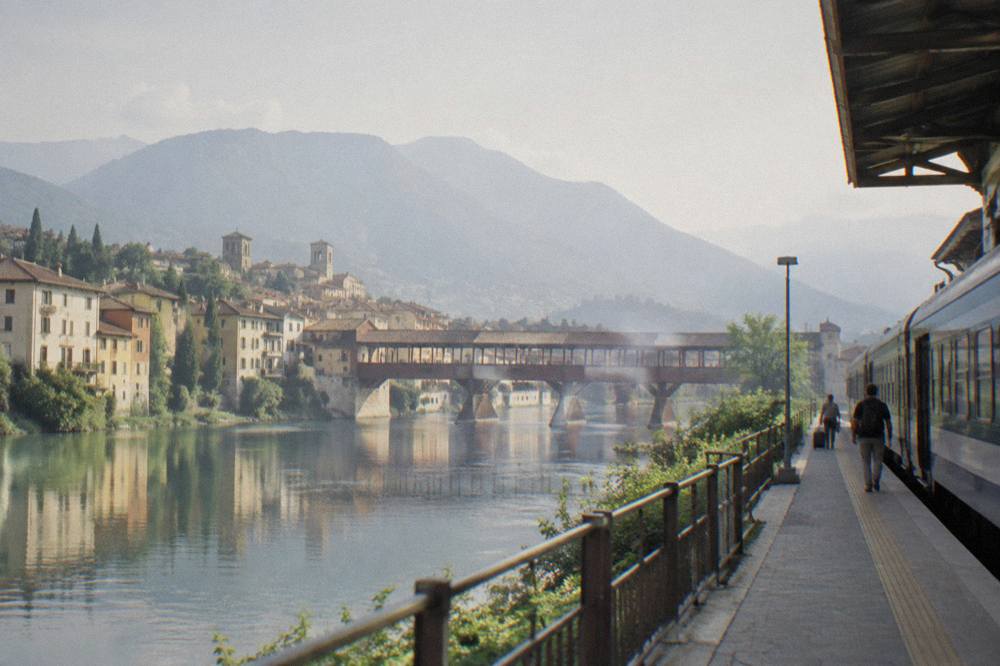
What Is The Ponte Degli Alpini In Bassano Del Grappa?
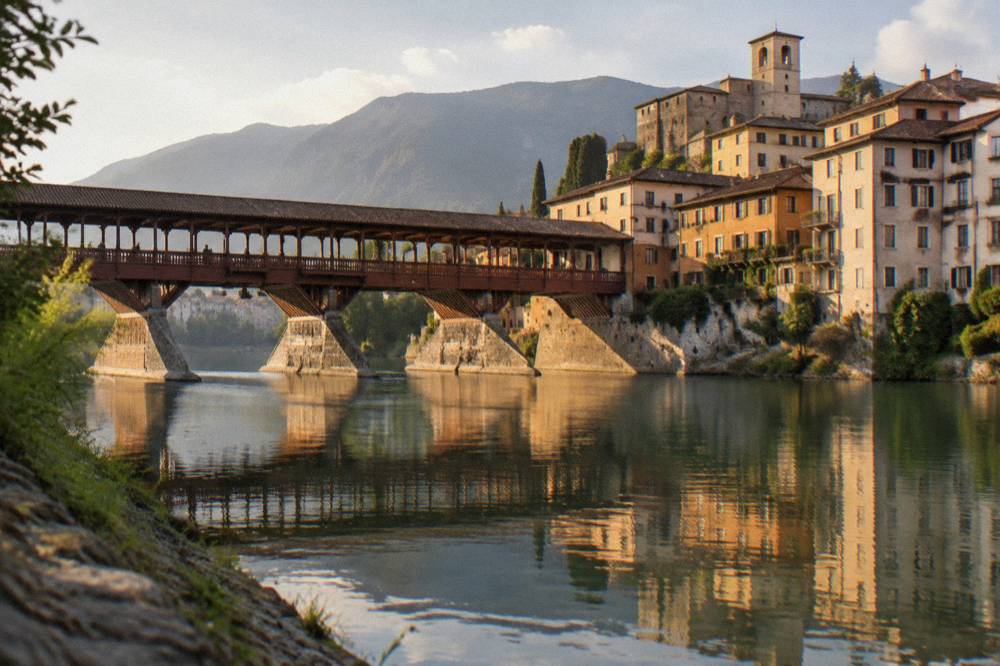
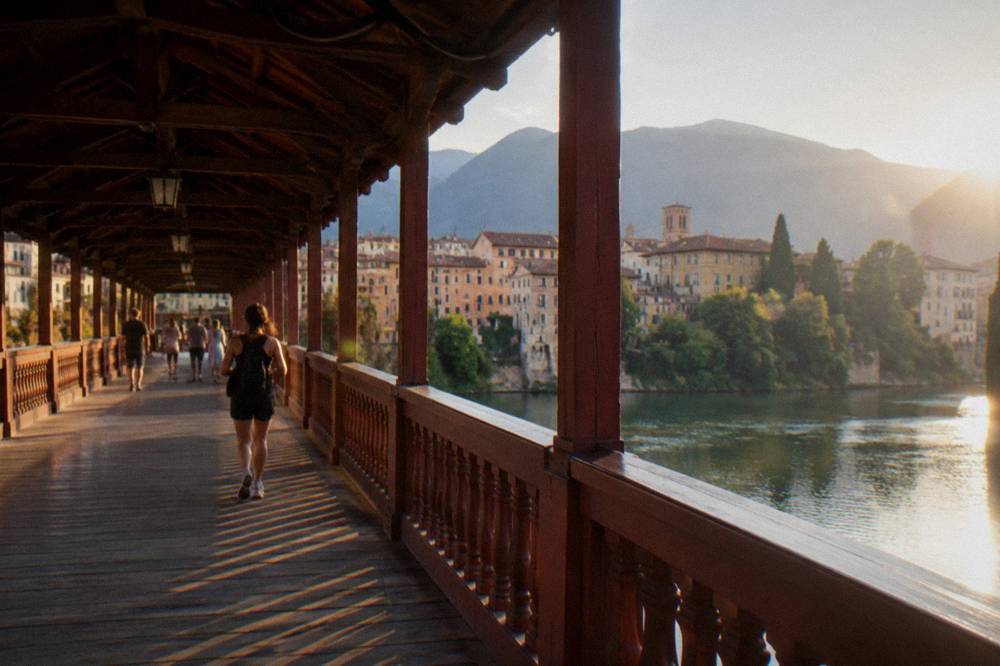
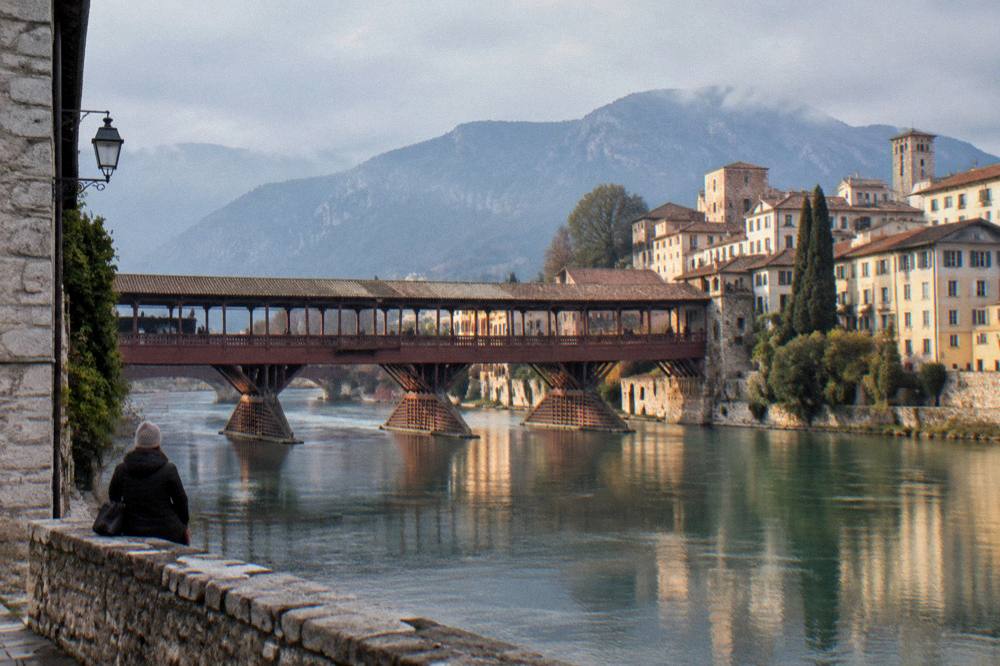
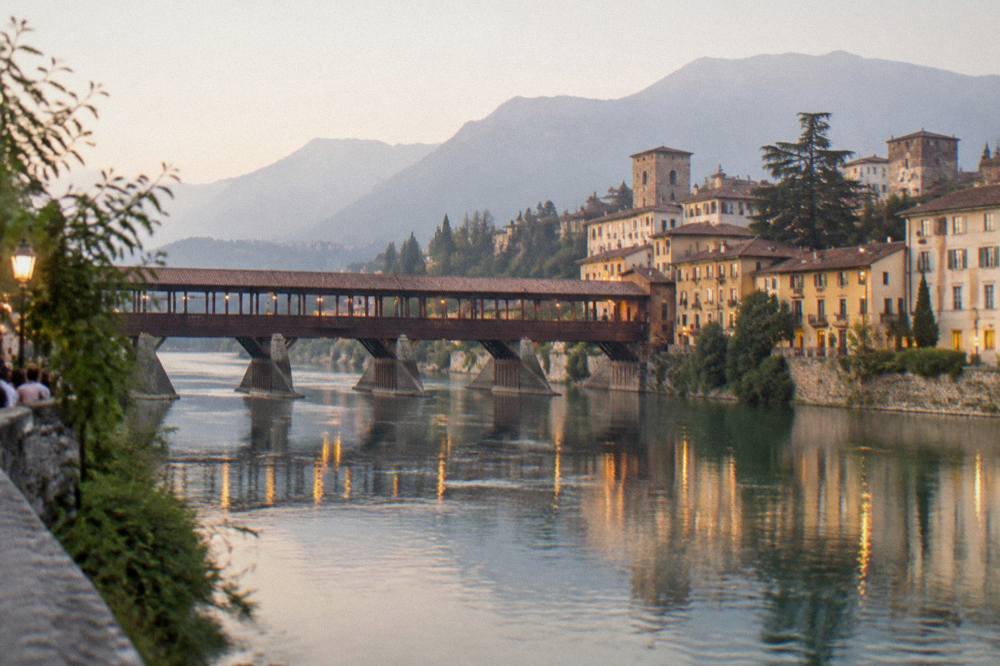
The Ponte degli Alpini is Bassano del Grappa's covered wooden bridge across the Brenta, the landmark the town is known by, and it is open, which the distillery's own museum information confirms alongside its visitor details. The bridge carries its name from the Alpini, Italy's mountain troops, whose association with the structure and its rebuilding is part of the town's story.
The bridge is the single most photographed object in Bassano, and with reason: a timber structure with a roof, spanning a fast green river with mountains behind it, is not a common sight in the Veneto. Visitors should treat it as a place to stand rather than a museum: there is no ticket, no queue system and no timed entry of the kind the Scrovegni Chapel imposes back in Padua. The deck, the riverbanks on both sides and the view upstream towards the hills are all freely walkable.
The practical notes are short. The bridge sits at the bottom of the old town's main streets, so it becomes the natural turnaround point of any walking route. In the evening the structure is lit, and the town's bars and squares cluster within a few minutes' walk of either end, per the local tourism board's general description of the centre. No opening hours attach to a public bridge; it is simply there, day and night.
What Is Grappa And Why Is Bassano Its Home?
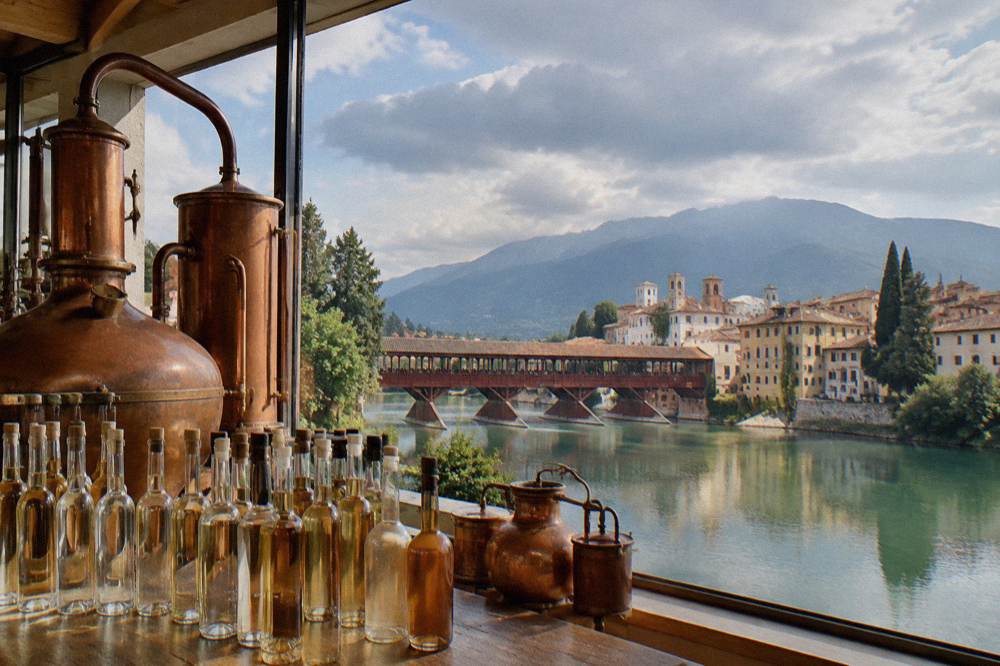
Grappa is an Italian spirit distilled from pomace, the pressed skins, seeds and stems left over from winemaking, and Bassano del Grappa is the historic centre of its production, with working distilleries in and around the town, including the Poli operation whose museum occupies a building beside the Ponte degli Alpini. The town's name and the spirit's name have grown together into a single destination brand.
The craft matters for visitors because Bassano is one of the few Italian towns where a distillery visit needs no car and no advance planning beyond a free afternoon. The pomace arrives from wine country, and the stills turn it into a clear spirit that ranges from fierce young versions to mellow aged ones. A tasting in Bassano is therefore a direct line into the wine economy of the whole Veneto: the same regional vineyards that feed the Euganean Hills and Prosecco country supply the raw material.
For travellers based in Padua who want the drinking culture without the hour of rail, the city has its own options: a guided tasting through the historic centre covers local wines with a host who leads the route, and the operator's listing carries the current price and availability.
What Does The Poli Grappa Museum Offer?
The Poli Grappa Museum in Bassano del Grappa has free entry, is open daily from 9:00 to 19:30, and closes on 1 January, Easter and 25 December, according to the distillery's own museum pages, which also list a second museum site at Schiavon; tastings at the Bassano museum run at about EUR 3.50.
That makes the museum one of the cheapest structured activities in the whole Veneto day-trip circuit: a free museum attached to a working distillery, in the centre of town, steps from the bridge. The reported details, which visitors should confirm before travelling, are:
| Poli Grappa Museum detail | Reported figure |
|---|---|
| Entry | free |
| Hours (Bassano site) | daily 9:00 to 19:30 |
| Closures | 1 January, Easter, 25 December |
| Tastings | about EUR 3.50 |
| Second site | Schiavon |
A visit works as follows in practice: the museum explains the history of distillation and the equipment, and the tasting bar lets visitors compare styles side by side. The EUR 3.50 tasting figure is a reported price and belongs with the distillery's own information rather than with any guarantee, so treat it as a planning number to check on arrival. The distillery also runs a shop, which is where the town's classic souvenir, a bottle of grappa in every strength from rough to refined, changes hands. Everything else covered here is indexed on Padua Travel Guide.
How Much Time Do You Need In Bassano Del Grappa?
A comfortable day trip allows five to seven hours in Bassano itself: about an hour each way by regional train from Padua, then a morning for the bridge and old town, an early afternoon in the Poli Grappa Museum with a tasting, and the late afternoon for the squares and the walk along the Brenta before the return train. Half a day works for the bridge and the museum alone.
The town is compact. Everything in this guide sits within a short walking radius of the station and the bridge, so the day is a matter of pace rather than logistics. A sample plan:
| Time | Activity |
|---|---|
| Morning | Regional train from Padova, about 1 hour |
| Late morning | Walk down to the Ponte degli Alpini, cross both ways, follow the riverbank |
| Midday | Lunch in the old town near the bridge |
| Early afternoon | Poli Grappa Museum, free entry, tasting at about EUR 3.50 |
| Late afternoon | Squares, shopping streets, a second look at the bridge |
| Evening | Return train to Padova |
Families and casual walkers can stretch the riverside part of the day as far as interest holds; dedicated hikers will find the mountains begin almost at the edge of town, though this site prints no trail details because none are sourced. Visitors who would rather someone else handle the day's structure can compare the operator listings lower on this page, and the question of whether the trip earns a full day is weighed in this site's Is Bassano Del Grappa Worth Visiting? answer page.
Bassano Del Grappa Or Other Padua Day Trips: Which Suits You?
Bassano del Grappa fills a specific slot among Padua's day trips: it is the mountain-foot option, about 42 km in a straight line north, pairing a wooden bridge and a free distillery museum, while Vicenza at about 30 km is the architecture and Palladio trip and Venice at about 36 km is the lagoon city; the sources support distances and train times, not rankings, so the choice rests on what the day is for.
The honest comparison table, using only sourced figures:
| Day trip | Straight-line from Padua | Train time | Anchor sight |
|---|---|---|---|
| Vicenza | about 30 km | about 16 to 25 minutes | Teatro Olimpico, EUR 12 full |
| Venice | about 36 km | about 26 to 40 minutes | the lagoon city |
| Treviso | about 41 km | about 28 to 60 minutes | the walled town on the Sile |
| Bassano del Grappa | about 42 km | about 1 hour | Ponte degli Alpini |
| Verona | about 69 km | about 43 to 60 minutes | the Roman arena city |
Read that as a menu rather than a leaderboard. Wine-first travellers have a separate thread entirely: the Euganean Hills lie 10 to 25 km from Padua's centre and carry the region's winery visits, while a Verona and Garda day covers the grand tour end of the spectrum. Bassano's distinction is the mountains: no other trip on this list delivers Alpine foothills in the frame. The Vicenza page carries the Teatro Olimpico pricing in full, and the Treviso page rounds out the near options.
What Can You Combine With Bassano Del Grappa?
Bassano del Grappa sits at the northern edge of Padua's day-trip ring, and the practical combinations are Asolo and Cittadella, both reachable in the same regional corridor, though this site prints no sourced hours, prices or train times for either town, so the combination is a matter of geography and a second page each, not a fixed itinerary.
The pattern that works is a two-stop day: one town in the morning, Bassano from lunch onwards, or the reverse on the way back. Asolo is the hilltown of the pair, Cittadella the walled one, and each has its own guide on this site with what the sources support. Castelfranco Veneto sits on the same rail axis and completes the set for travellers who want a three-town circuit of the northern Veneto.
Travelers with a car have more reach, but this site prints no drive times for any of these runs, and the regional train is the sourced connection. What can be said plainly: every one of these towns is a day trip from Padua in the same sense Bassano is, and none of them needs an overnight, though the area rewards one for visitors with time to spare.
When Is The Best Time Of Year For A Bassano Del Grappa Day Trip?
The climate data that applies is Padua's, since Bassano sits in the same continental climate zone: ERA5 reanalysis for 1991-2020 puts July and August mean highs at 28.8 C, January's at 7.3 C with lows around -0.2 C, and November as the month with the highest rain total at 114 mm, so late spring through early autumn carries the warmest and lowest-rain pattern, and November the month with the highest rain total.
The distillery and the bridge are year-round attractions: a museum with daily hours and an open public bridge do not close for winter, and grappa has an obvious logic in cold weather. The table for planning, labelled as modelled reanalysis rather than a station record:
| Month | Mean high C | Mean low C | Rain mm |
|---|---|---|---|
| January | 7.3 | -0.2 | 53.6 |
| April | 17.6 | 7.8 | 84.4 |
| July | 28.8 | 18.9 | 62.1 |
| October | 18.4 | 10.6 | 105.4 |
| November | 12.6 | 5.5 | 114.0 |
No crowd or availability prediction follows from that: weather data says what the sky does, not how the trains or the museum feel. Plan around the closures the museum itself lists, take an umbrella from late September onward, and let the calendar do the rest.
Drinking Grappa And Veneto Spirits Back In Padua
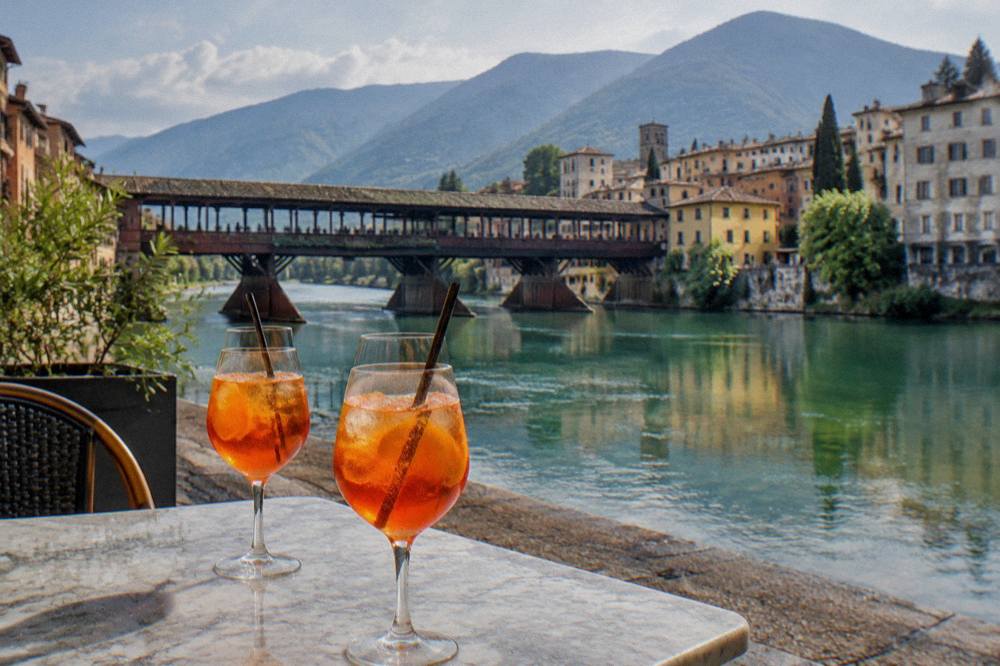
A Bassano del Grappa bottle travels home easily, and Padua's own drinking culture is the place to use it: the spritz, built on Aperol, which was created in Padua in 1919 by the Barbieri brothers per the brand's reported origins, is the region's signature pour, and this site's guided tastings, a spritz walk and a wine tasting walk through the historic centre, are the structured ways into it after a day in the hills.
Bringing the day home is half the pleasure of a Bassano trip: the bottle from the distillery shop, the tasting vocabulary, the preference for young or aged. Padua's own drinking culture is the natural laboratory for it. Aperol was created in Padua in 1919 by the Barbieri brothers, per the reporting on the brand's origins, and the spritz that grew around it is the region's signature pour, a subject this site covers in its own spritz in Padua guide.
For a structured evening after a Bassano morning, two options sit in this site's listings. A guided spritz walk through the city pairs the aperitivo tradition with a host who knows the stops, and a wine tasting walk through the historic centre covers the still wines of the region that grappa distilling ultimately depends on: the pomace in a Bassano still begins as grapes in vineyards like these. Check the operator's live listing for dates, prices and availability, since those render from the booking data rather than from this page.
Planning The Trip: What To Check Before You Go
Before a Bassano del Grappa day trip, check three things on official pages: the regional train times for the exact travel date, the Poli Grappa Museum's current hours and tasting price, and the weather forecast against the ERA5 normals, because the sourced figures on this page, the about-one-hour train, the free museum entry and the about EUR 3.50 tasting, are planning numbers that operators can change.
A short checklist keeps the day honest:
- Train times and fares: on the rail operator's booking system for the travel date
- Museum hours, closures and tasting price: on the distillery's own site
- Bridge: public and open, no ticket, no timed entry
- Weather: against the ERA5 1991-2020 normals, remembering November's rain
- Back in Padua: urban tickets at EUR 1.70 for 90 minutes, or a contactless tap on board
One planning note for the wider Veneto circuit: the Venice day-tripper access fee trial ended on 27 July 2026 and no 2027 decision had been announced, so a Bassano day carries no such question at all, and the town charges nothing to enter beyond what visitors choose to spend on tastings and lunch.
For travellers who want the region's drinking landscape arranged end to end, this site's wine tasting walk in Padua listing carries the current price and availability, and a day of grappa in Bassano makes a natural counterpart to an evening of local wine at home base. If the hills call more than the mountains, the Euganean Hills and Arqua Petrarca pages cover the southern alternative, or start from the site's root things to do in Padua page for the full picture.
Common Questions About Bassano Del Grappa
How far is Bassano del Grappa from Padua?
About 42 km in a straight line north of Padua's centre, a computed geographic figure; this site prints no road distance or drive time for the route.
How long is the train from Padua to Bassano del Grappa?
About one hour by regional train, per the published timetables, with routings via intermediate stations; confirm exact departures and fares for the travel date on the operator's system.
What is the Ponte degli Alpini?
Bassano del Grappa's covered wooden bridge over the Brenta river, the town's landmark, named for the Alpini mountain troops; it is a public bridge with no ticket or opening hours.
Does the Poli Grappa Museum cost anything?
Entry is free, with tastings at about EUR 3.50, daily from 9:00 to 19:30 except 1 January, Easter and 25 December, per the distillery's own museum information; confirm locally before visiting.
Can you visit a grappa distillery from Padua?
Yes: the Poli Grappa Museum is a working distillery's museum in central Bassano, a short walk from the station and beside the bridge, so a distillery visit needs no car from Padua.
Is Bassano del Grappa a good day trip with kids?
The bridge, the riverbanks and the free museum make an easy walkable day, though the tasting bar is for adults; the site's Padua with kids page covers city alternatives for families.