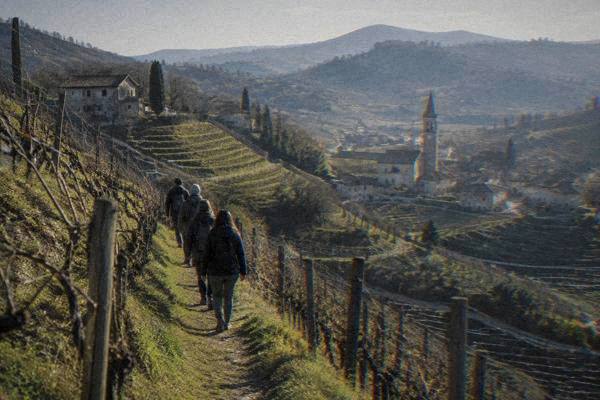
Asolo: The Hill Town Of A Hundred Horizons
Asolo is a small hill town in the Veneto, reached from Padua through Treviso province, and this guide sets out what is known about getting there, what the town offers, and how it fits a Padua-based itinerary.
Short answer
Asolo is a hill town in the Veneto, in the province of Treviso, reachable from Padua by rail via Treviso or Castelfranco Veneto plus a local connection; its fortified ridge, arcaded streets and theatre setting are the draw, and it pairs naturally with the Prosecco hills to the north.
Asolo is a small hill town in the Veneto, the region of northern Italy that Padua (Padova) also belongs to, set in the hills north of Treviso rather than on any coast or lake. Padua itself is an inland city about 36 km in a straight line from Venice, and Asolo belongs to the same web of day trips that spreads out from it: Treviso, Bassano del Grappa, the Prosecco hills, Vicenza and the Euganean Hills. This guide reports what the sources support about the town and its neighbours, with no invented times, prices or rankings.
Where Is Asolo And How Do You Get There From Padua?
Asolo lies in the Veneto's hill country in the province of Treviso, roughly between Treviso city and the foothill town of Bassano del Grappa, and there is no direct train figure for the journey from Padua: the practical route runs by rail to Treviso or Castelfranco Veneto and onward from there, so the timetable is the thing to check when booking. Treviso is about 41 km from Padua in a straight line and Bassano del Grappa about 42 km, which frames how far north the town sits. The train times that the sources do give for the region's spine are Treviso at about 28 to 60 minutes from Padova station and Bassano at about an hour by regional services, both reported by journey planners rather than official timetables, and both "about" figures to confirm on the Treviso day-trip guide's own advice before travelling.
| Day-trip destination from Padua | Straight-line distance | Direction from Padua |
|---|---|---|
| Vicenza | about 30 km | west |
| Venice | about 36 km | east |
| Montagnana | about 37 km | south-west |
| Chioggia | about 38 km | south-east |
| Treviso | about 41 km | north-east |
| Bassano del Grappa | about 42 km | north |
| Valdobbiadene | about 56 km | north |
| Conegliano | about 63 km | north-east |
| Verona | about 69 km | west |
Asolo sits in the hill belt between the Treviso and Bassano entries on that table, which is why the standard advice is to treat it as the high point of a northern loop rather than a single-purpose train dash. Pairing it with Treviso or Bassano on one ticket works with the region's regional rail pattern, and Castelfranco Veneto, which also has a guide on this site, sits on the same axis.
What Is Asolo Famous For?
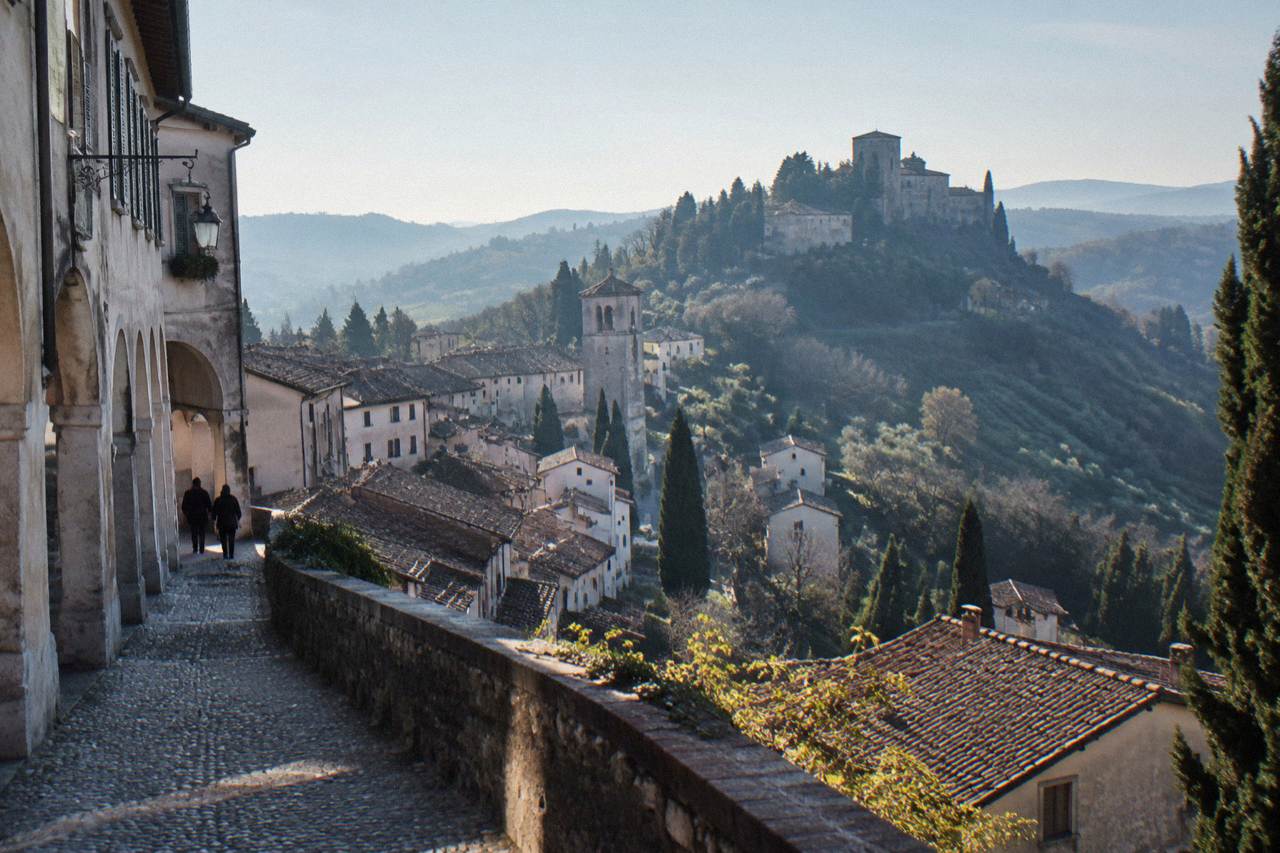
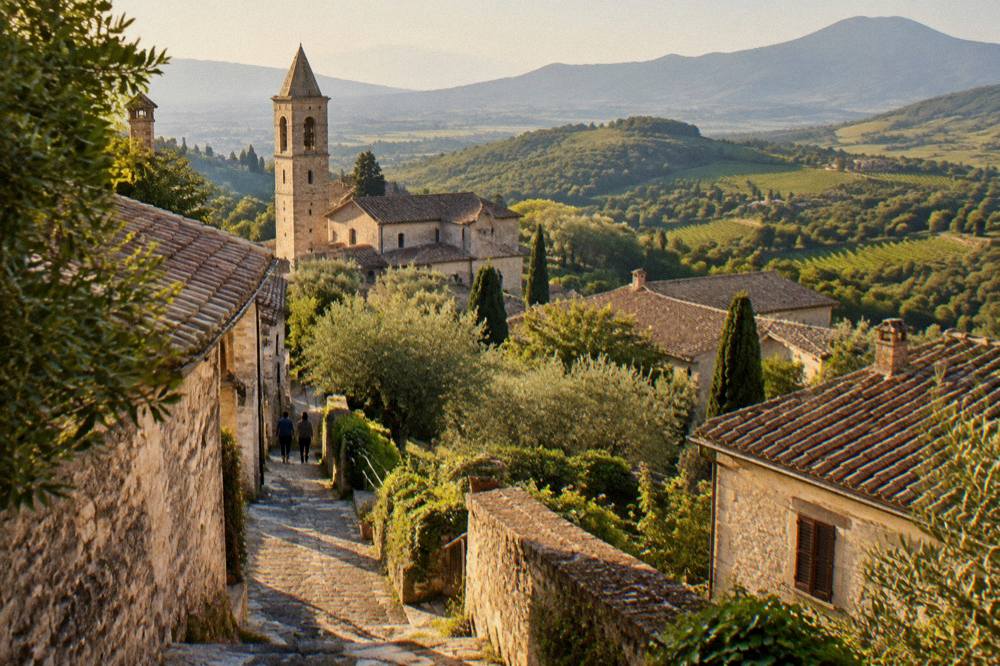
Asolo is known as a walled hill town crowned by a fortified ridge, with a Renaissance theatre at its centre and an epithet, the town of a hundred horizons, that travel writing attaches to its panorama over the Veneto plain; none of these claims carries a figure, so this page reports them as reputation rather than measurement. The theatre connection is the town's most concrete cultural claim: Asolo's small historic theatre gives the town a place in the Veneto's performing-arts geography alongside Vicenza's Teatro Olimpico, for which prices exist (EUR 12 full, EUR 9 reduced, per the theatre's own site). For Asolo itself the facts carry no ticket price and no hours, and the honest planning position is to check the current arrangements on the town's official pages before setting the itinerary.
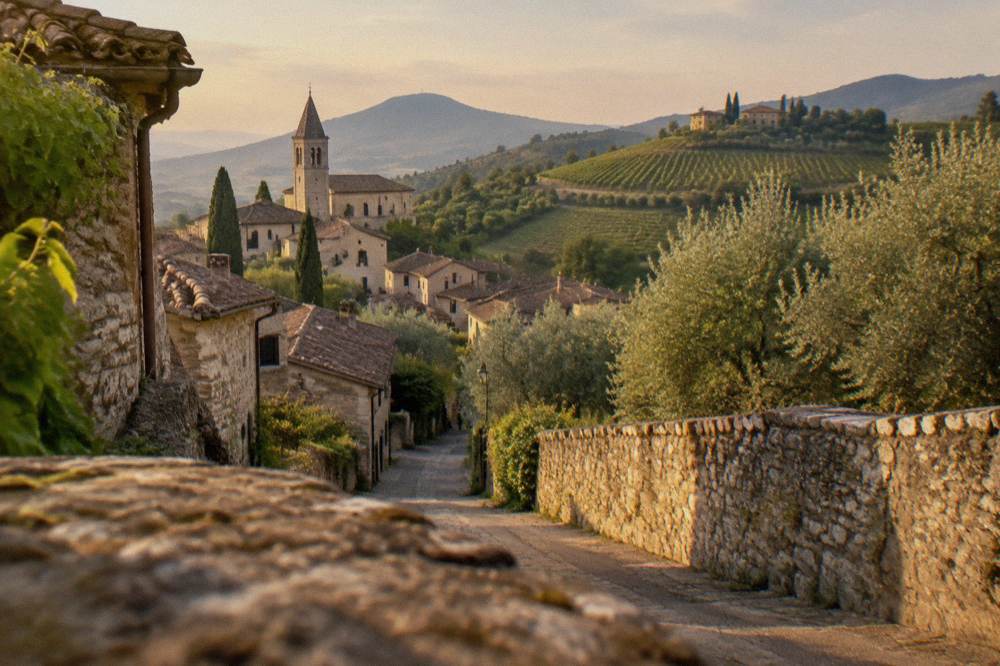
The town's reputation also rests on its setting. The hills around Asolo belong to the same pre-Alpine fringe that produces the Prosecco wine country to the north, where Valdobbiadene lies about 56 km in a straight line from Padua and Conegliano about 63 km. The Prosecco hills have their own guide on this site, and the practical point for an Asolo day is that the two fit on one arc: town in the morning, wine country after.
|---|---|---|---| | Teatro Olimpico, Vicenza | EUR 12 | EUR 9 | per the theatre's own ticket page | | Vicenza Gold Card, 11 sites over 12 days | EUR 22 | EUR 17 | family EUR 26 | | Villa dei Vescovi, Luvigliano di Torreglia | EUR 11 | EUR 6 (ages 6 to 18, students to 26) | under 6 free, family EUR 28 | | Casa del Petrarca, Arqua Petrarca | EUR 6 | EUR 4 | school rate EUR 3 | | Poli Grappa Museum, Bassano del Grappa | free entry | free entry | tastings priced separately, per the museum |
What To See In Asolo On A Day Trip From Padua
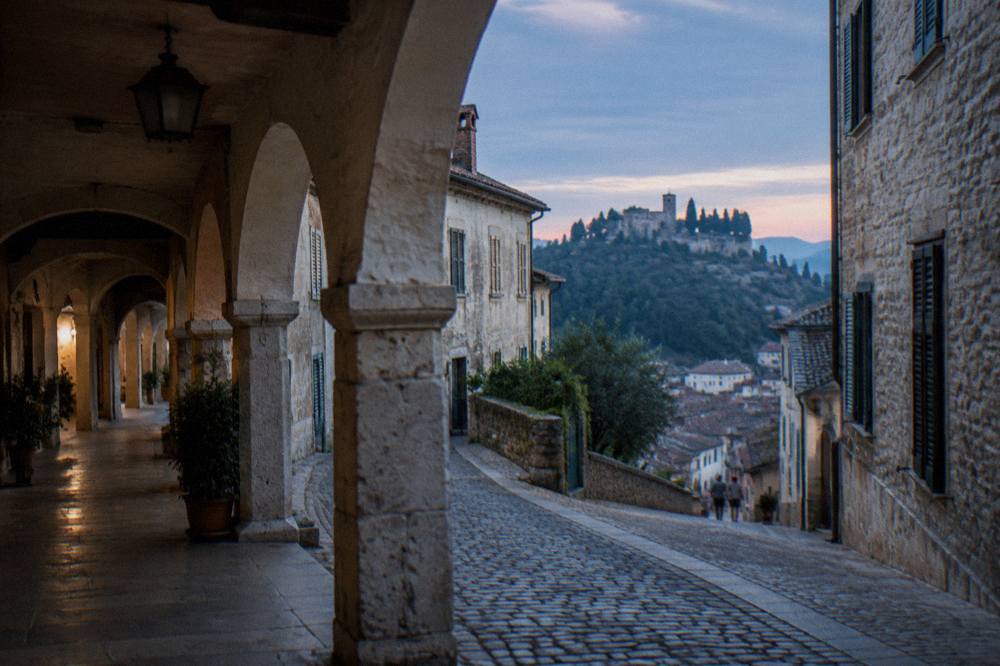
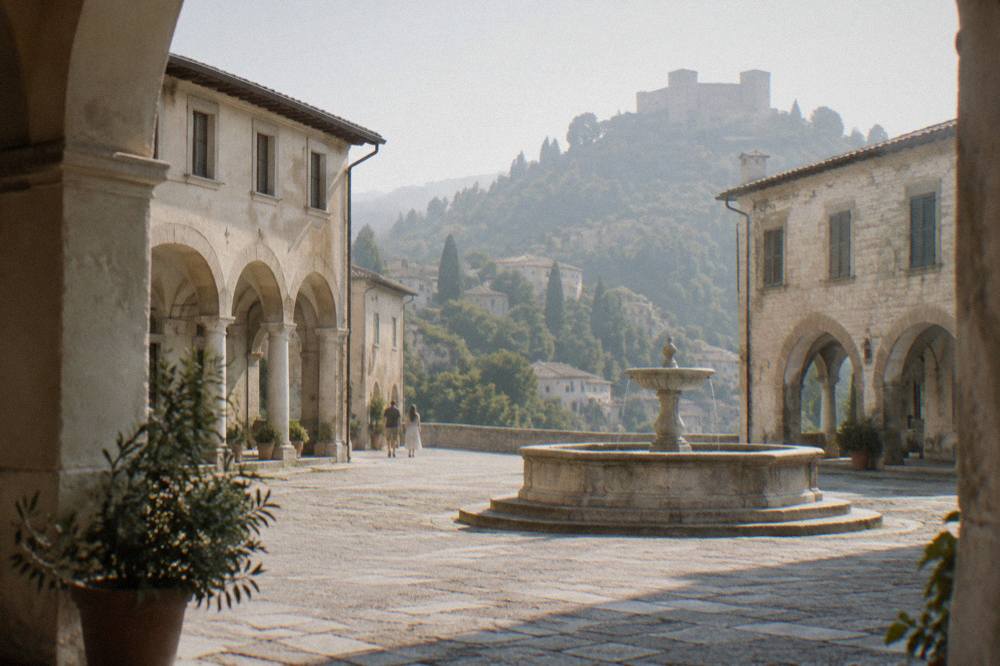
An Asolo day from Padua resolves into four things: the fortified ridge above the town, the arcaded central square, the historic theatre, and the panorama over the plain, with no opening hours or admission figures for any of them, so the day is best built as a walking day with the town's official information checked the evening before. That is a different planning shape from Padua's own heavyweight sights, where everything is timed and ticketed: the Scrovegni Chapel admits at most 25 people every 15 minutes, about 15 minutes inside, booked ahead, and the daytime ticket at EUR 15 full also covers the Musei Civici Eremitani and Palazzo Zuckermann. A Padua morning of frescoes and an Asolo afternoon of open hillside sit well together, and the Padua Travel Guide covers the city half in detail elsewhere.
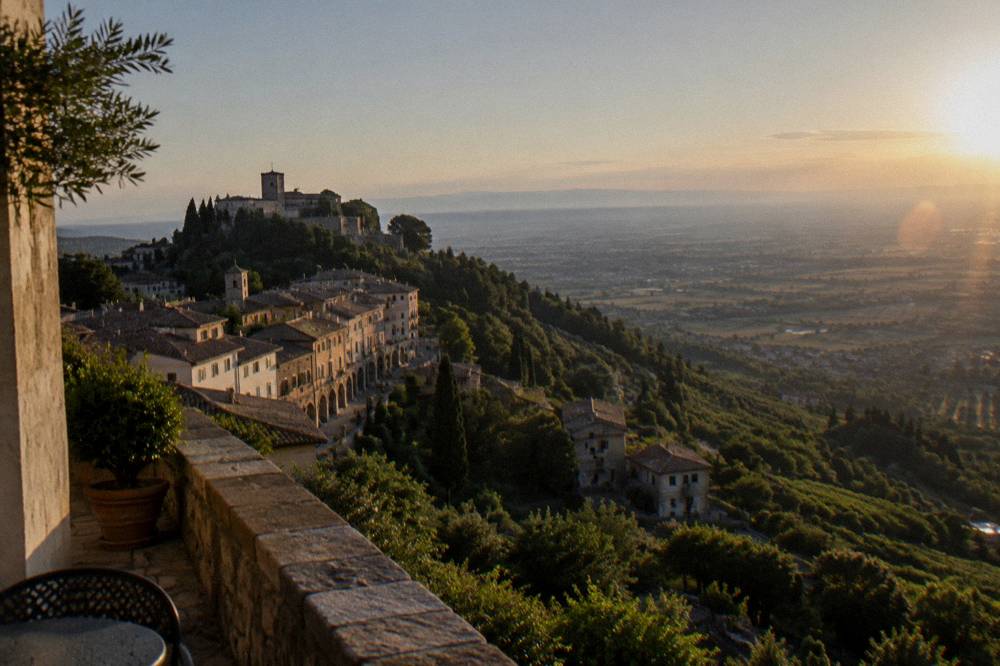
The ridge walk is the town's fixed geographical fact. Asolo climbs from its square to a ruined fortification line on the crest, and the reward is the view the epithet refers to.
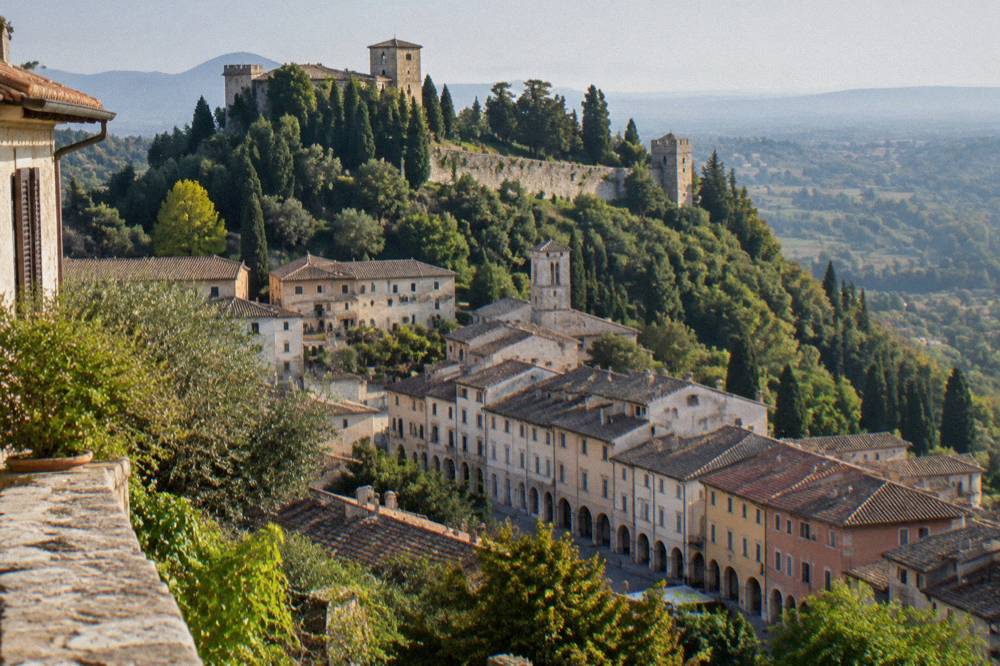
The theatre is the one indoor stop worth naming. Historic theatres in the Veneto are a regional speciality: Vicenza's Teatro Olimpico is the documented benchmark with its published tariff, and Asolo's own theatre belongs to the same tradition on a smaller scale. Arrangement details for visits are on the town's channels; this page declines to guess them.
A fourth stop that costs nothing is simply the approach. Whichever way the journey is routed, through Treviso or through Castelfranco Veneto, the last stretch climbs out of the plain into the hills, and that transition from flat Veneto farmland to ridgeline is the visual argument for making the trip at all.
How Does Asolo Compare With Padua's Other Day Trips?
Asolo is the hill-town choice among Padua's day trips, where the Euganean Hills are the spa-and-village choice, Vicenza the architecture choice and Venice the lagoon choice, and the distances put them all within a 40 to 70 km straight-line band of Padua except Bologna at about 110 km; no ranking is given. What can be said is structure: each destination has a different dominant draw, and the table below states each one using only what this site's research supports. The comparison matters for itinerary-building more than for prestige, because a Padua base can string several of these into a week without repeating a landscape.
|---|---|---| | Venice | about 36 km | lagoon city; train about 26 to 40 minutes, regional fare about EUR 5 | | Vicenza | about 30 km | Palladian architecture; Teatro Olimpico EUR 12 | | Treviso | about 41 km | walled river town on the Asolo approach | | Bassano del Grappa | about 42 km | alpine footbridge town; Poli Grappa Museum free entry | | The Euganean Hills | Abano Terme about 8 km | thermal towns, hill villages, Arqua Petrarca | | Asolo | in the Treviso hill belt | walled hill town and theatre | | Verona | about 69 km | Roman arena city; train about 43 to 60 minutes |
Two honest cautions belong in any comparison. First, the Venice day-tripper access fee trial ended on 27 July 2026 and no 2027 decision had been announced, so a Padua-based Venice day needs no fee budget as things stand. Second, the Scrovegni Chapel in Padua itself closes 16 to 27 November 2026 for its annual fresco inspection, which shapes any late-autumn itinerary that pairs the city with a hill-town afternoon.
Can You Combine Asolo With The Prosecco Hills?
Yes, and the pairing is the strongest itinerary this page can recommend: Asolo gives the town and the ridge, the Prosecco hills give the wineries, Valdobbiadene lies about 56 km in a straight line from Padua, and a guided wine tour from Padua covers the countryside without any need to puzzle out rural connections on a day pass. The site's featured tour for this article is a Prosecco hills trip from Padua, and it exists precisely because the wine country rewards a driver and a plan: the hills start where Asolo's ridge line ends, and the wine is the reason the landscape looks the way it does. The tour's price, rating and duration render on its own page and in the blocks on this one, and this page types none of them into prose.
The wine itself is the constant. Prosecco from this area is one of the Veneto's exports alongside the spritz culture Padua claims as its own: Aperol was created in Padua in 1919 by the Barbieri brothers, a fact the research attaches to the city, and the aperitivo hour that grew around it is part of the same regional table.
If wine is the priority over hillside towns, an alternative arc runs through the Euganean Hills south of Padua instead, where a guided olive oil and wine trip reaches another wine district entirely; that guide covers the southern option.
When Is The Best Time Of Year To Visit Asolo From Padua?
The climate record for the region, ERA5 reanalysis for 1991 to 2020, gives July and August a mean daily high of 28.8 C, January a mean low of minus 0.2 C and November the highest monthly rain total at 114.0 mm, so the shoulder months carry milder temperatures and less rain than the extremes on either side; the same modelled normals apply to the hills as to Padua, with no separate station record for Asolo. Those figures are climate normals, not forecasts, and they come from a modelled grid cell rather than a weather station, which is how this site labels every climate number it prints.
| Month | Mean daily high (C) | Mean daily low (C) | Rain (mm) |
|---|---|---|---|
| March | 13.7 | 3.9 | 67.2 |
| April | 17.6 | 7.8 | 84.4 |
| May | 22.1 | 12.4 | 99.7 |
| June | 26.2 | 16.6 | 81.0 |
| September | 23.6 | 14.9 | 105.5 |
| October | 18.4 | 10.6 | 105.4 |
For a hill-town day, the ridge walk is the weather-sensitive part, and the table argues for spring and early autumn on temperature alone: April's 17.6 C mean high against August's 28.8 C.
One fixed date to plan around sits in Padua itself rather than Asolo: the Scrovegni Chapel's November 2026 closure for fresco inspection, from 16 to 27 November. A late-autumn trip that expects the chapel needs a different week or a different sight, and the city's museums still run their own schedules in that window.
Where To Stay Overnight Instead Of Day-Tripping?
Asolo has accommodation, and the tourist-tax facts are the only figures this page can attach to a stay: Padua's own imposta di soggiorno runs per person per night for at most five consecutive nights, collected by the accommodation, with rates set by category, and each municipality sets its own, so the tax line for an Asolo night must be confirmed with the property at booking. Beyond that, the page's honest position is that no hotel price for Asolo, Treviso or anywhere else in the region is given, and none is printed. What the research does support is the base-city logic: Padua makes a strong headquarters for this whole arc because its station sits on the Venice to Milan line with the regional connections listed above, and its own sightseeing fills the days between trips.
For a two-centre plan, Treviso is the natural overnight partner for Asolo at about 41 km from Padua, and the Treviso guide covers the city itself.
What To Eat And Drink Around Asolo
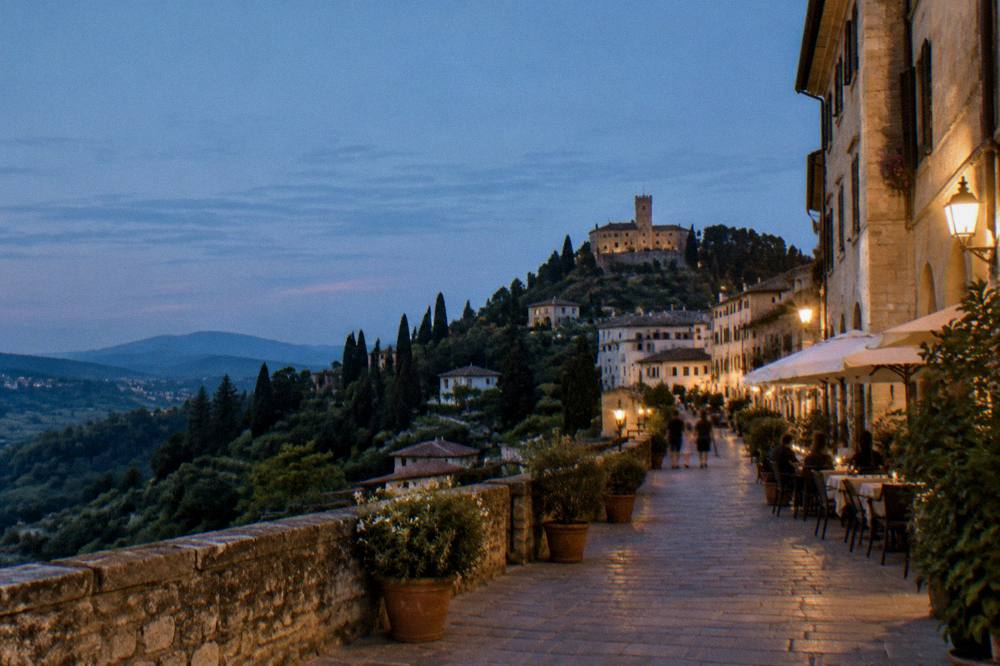
The regional table around Asolo is the Veneto's: prosecco from the hills immediately north, bigoli, baccala and gallina padovana as the documented local dishes of the Padua area, and the spritz as the aperitivo the region exported, with Aperol created in Padua in 1919; no restaurant, bar or bakery in Asolo is named on this page because the research verifies none. That last clause is a planning instruction, not a gap in the region's food: the market and food facts all sit in Padua, where Piazza delle Erbe's market runs Monday to Friday 7:30 to 13:30 and Saturday 7:30 to 20:00 per the Comune di Padova, and where the food tours listed on this site operate.
Valdobbiadene at about 56 km straight-line from Padua and Conegliano at about 63 km define the prosecco district, and the grape reaches into the hills around Asolo itself. A guided tasting removes the question of which cellar takes walk-ins, which no source here answers.
Is Asolo Worth A Day Trip From Padua?
Asolo earns its place on a Padua itinerary as the region's compact hill-town day: it adds a landscape, a ridge walk and a theatre tradition that the flat-plain cities cannot offer, it sits within the same 30 to 60 km band as Vicenza, Treviso and Bassano del Grappa, and it costs no admission to walk; the decision rests on whether a hill horizon matters more to you than a second museum day in Padua. The honest ledger has two columns. Against: no train time, no town ticket prices, and a routing that involves a connection. For: a short list of sights that need no timetable, a natural pairing with the wine country, and a half-day shape that leaves the morning free for Padua's timed-entry sights such as the Scrovegni Chapel or the Palazzo del Bo, whose guided visit costs EUR 10 full per the university's own page.
The wider comparison belongs to the things to do in Padua overview and to the individual day-trip guides, because a week based in Padua can absorb Asolo, the Euganean Hills, Venice and Vicenza without repeating itself. What Asolo uniquely supplies is altitude: everywhere else on the list is flat.
Common Questions About Asolo
How far is Asolo from Padua?
The town sits in the Treviso hill belt: Treviso is about 41 km from Padua in a straight line and Bassano del Grappa about 42 km, which brackets the distance. Check a map service for the road distance and a timetable for the connection.
Is there a direct train from Padua to Asolo?
The journey runs by rail to Treviso or Castelfranco Veneto and onward from there. Train times for parts of that spine run to about 28 to 60 minutes from Padova to Treviso, but none are available for the final leg, so build the plan from a current timetable.
What is Asolo famous for?
Its fortified ridge, its arcaded central square, a historic theatre, and a reputation for its panorama over the Veneto plain, the origin of the hundred horizons epithet.
Can you visit Asolo and the Prosecco hills on the same day?
They sit on the same northern arc from Padua: Valdobbiadene is about 56 km in a straight line from the city and Conegliano about 63 km. A guided Prosecco hills tour from Padua is the simplest way to cover the wine country, and the town can fill the other half of the day.
When is the best time to visit Asolo?
On the climate record, ERA5 reanalysis for 1991 to 2020, July and August have a mean daily high of 28.8 C and November the highest rain total at 114.0 mm, so spring and early autumn carry the mildest temperatures for the ridge walk. No crowd figure exists for the town.
Do you need a ticket to walk around Asolo?
Check the town's official information before setting the itinerary.