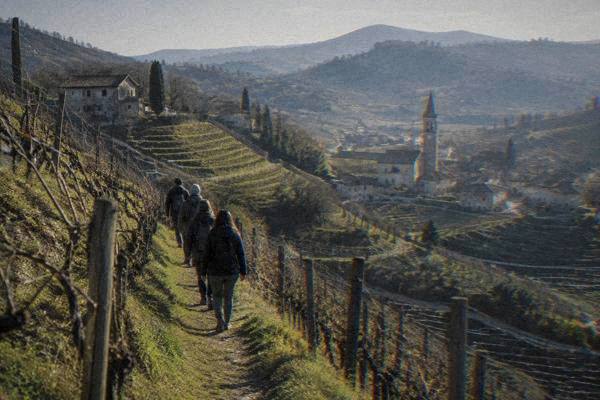
Castelfranco Veneto: Giorgione's Walled Town
Castelfranco Veneto is a small walled town on the Veneto plain north of Padua, billed as the home town of the painter Giorgione, and an easy day trip from a city that itself sits about 36 km inland from Venice.
Short answer
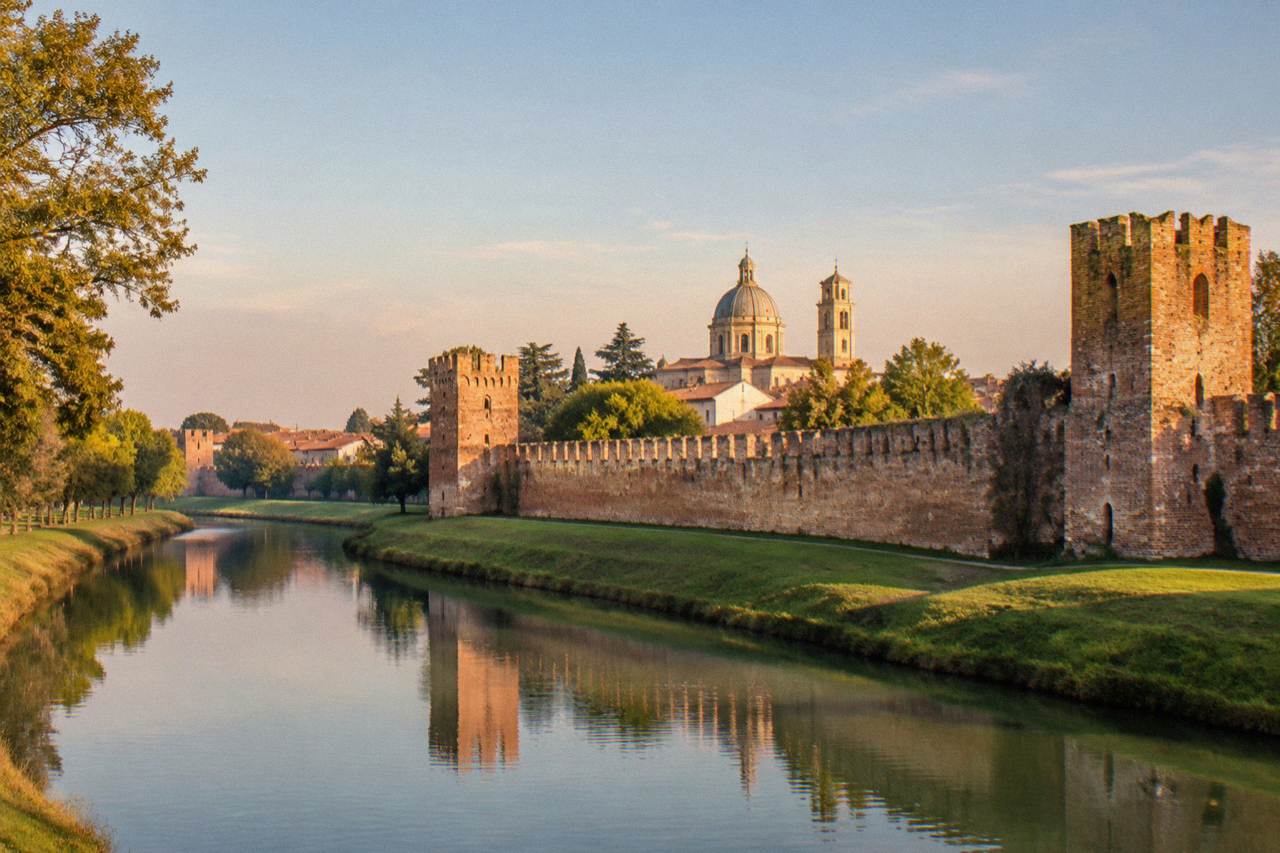
Castelfranco Veneto is a compact walled town reached from Padua by regional train, best seen on foot in about half a day: the intact brick walls and moat, the castle tower at the centre, and the Duomo, which holds the painting known as the Castelfranco Madonna.
Castelfranco Veneto is a small walled town on the flat Veneto plain north of Padua, the city this site covers: Padua (Italian: Padova) lies inland in northern Italy, about 36 km in a straight line from Piazza San Marco in Venice, and is famous for Giotto's frescoes in the Scrovegni Chapel, the Basilica of Saint Anthony, one of Italy's oldest universities and the Orto Botanico. Castelfranco Veneto belongs to the same travelling world: a market and garrison town of the medieval Veneto, ringed by brick walls and a moat, and known above all as the home town of the painter Giorgione, whose name the town carries in its billing and in its principal painting, the Castelfranco Madonna in the Duomo. It is a half-day sort of place, and it pairs naturally with Padua, which has the bigger museums, the UNESCO-listed frescoes and the larger choice of things to do in Padua.
This page is a planning guide, not a brochure. It lays out what the town is, how the visit works as a day trip from a Padua base, and which of the practical figures around such a trip are stated on the record by the sources this site reports: the chapel's own booking page, the Comune di Padova's pages, the FS Busitalia fare tables and the ERA5 reanalysis for the Veneto plain. Where a figure for Castelfranco Veneto itself, such as a museum ticket or an opening hour, is not on the record here, the page says what to do instead: check the current details on the official ticket page or at the Padua tourist offices before you travel.
Where Is Castelfranco Veneto And Why Go From Padua?
Castelfranco Veneto sits on the plain between Padua, Treviso and Bassano del Grappa, a walled market town of the medieval Veneto that regional trains reach from Padua, and its draw is compactness: an almost complete circuit of walls and moat around a small historic core, with the painter Giorgione as its famous son. It is not a lagoon town and not a hill town. It belongs to the group of smaller Veneto destinations that sit comfortably inside a Padua-based trip, alongside Treviso, Bassano del Grappa and Vicenza. The logic of visiting it from Padua is simple: Padua has the rail hub, the two UNESCO listings, the Scrovegni Chapel and the Basilica of Saint Anthony, and Castelfranco Veneto adds a quieter, walkable counterpoint of brick walls, towers and one celebrated painting.
The name explains the town. "Castelfranco", the frank, or free, castle, marks a fortified foundation where settlers held privileges, and the defensive purpose survives in the layout: a rectangular walled perimeter, a moat, and a keep at the heart of it. Towns like this dot the Veneto plain because the flat country between the Alpine foothills and the lagoon was contested ground for centuries, and each power ringed its market towns with walls. Neighbouring Montagnana keeps an even more celebrated circuit of medieval walls, and Cittadella, another of these walled foundations, lies in the same corridor. A traveller interested in this family of towns can build a whole theme around them from a single Padua base.
Giorgione is the cultural reason the town appears on maps beyond the Veneto. The town is billed as Giorgione's home town, and its Duomo holds the painting known as the Castelfranco Madonna, the work the town treats as its principal artwork. The painting alone justifies the train fare for many art-focused travellers, and it slots into a Veneto itinerary that also takes in the frescoes of Padua, whose fourteenth-century cycles earned the UNESCO listing known as Padova Urbs Picta in 2021.
Why go from Padua rather than from Venice? Because Padua is the closer and cheaper base for the plain. Venice lies about 36 km east of Padua in a straight line, and the coastal and lagoon day trips from there run toward the sea. The walled towns run the other way, inland, and Padua's station sits on the main Venice-Milan line with regional branches across the Veneto. A Padua base also spreads the cost differently: the city's own headline sights, the Scrovegni Chapel, the Orto Botanico and the Basilica of Saint Anthony, are all walkable or a short tram ride from the centre, leaving the train days for the small towns.
What Are The Walls And Castle Of Castelfranco Veneto Like?
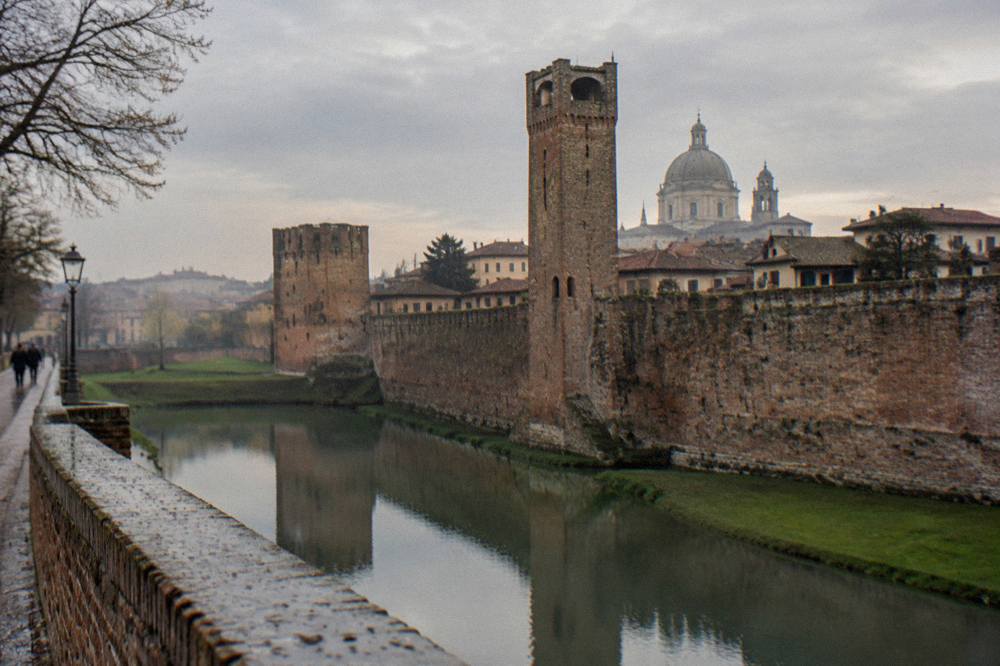
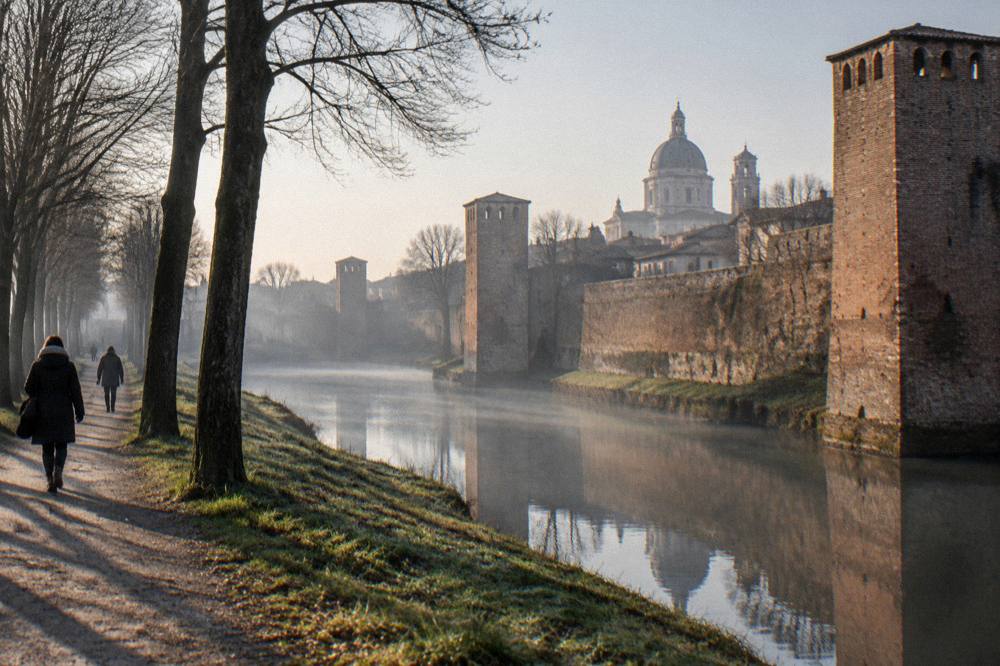
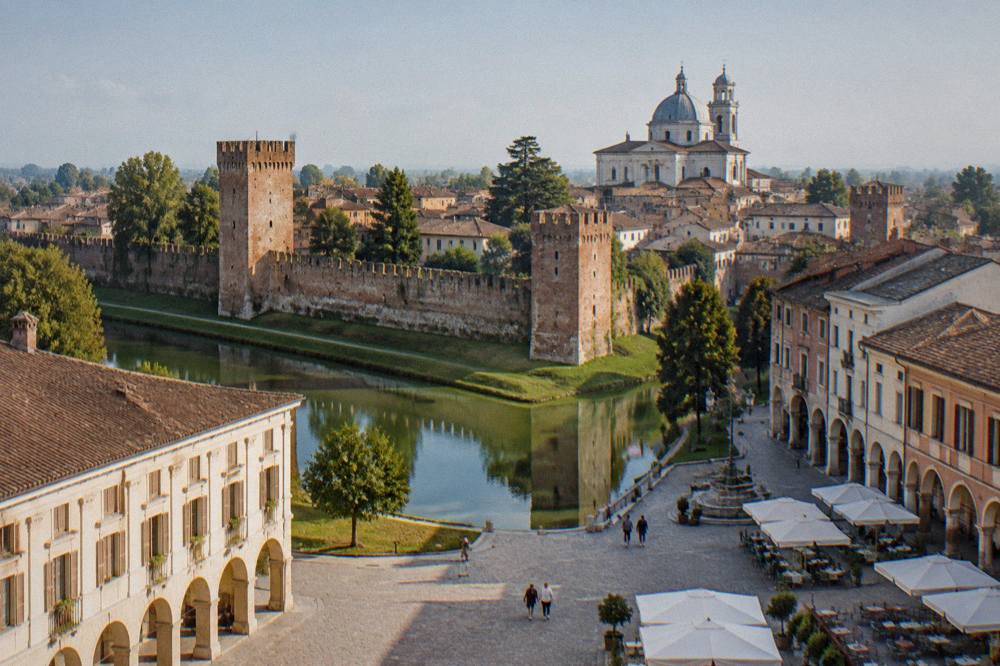
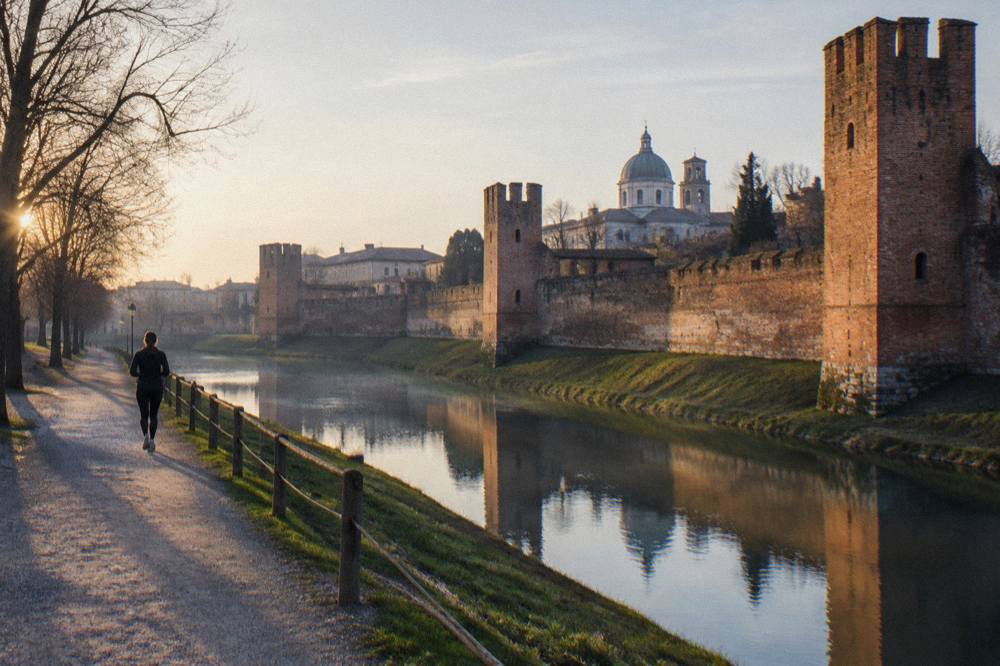
The walls form a compact rectangular circuit of brick with a moat and corner towers around a small historic centre, and the town's castle keep stands inside it, so the entire perimeter is a walk of minutes rather than hours and the visit works as a slow loop on foot. The walls are the town's defining feature and the thing to build the day around: you can walk the outside of the perimeter along the green moat, cross into the centre through the old gates, and climb or view the keep, which gives the town its skyline. Details and specifics for the walls, such as any tower-opening hours or guided-climb times, are not carried on the record for this page, so check at the tourist office in town or on the town's official pages before promising yourself a view from the top.
The visual character is red brick and water. The moat is a green band of grass and trees, and the brick faces change with the light through the day, which is why the loop rewards doing it twice, once on arrival and once before the train home. Inside the walls the streets are narrow and flat, laid out on the grid of a planned foundation rather than the tangle of a town that grew by accident. That makes the town exceptionally easy to navigate: pick any gate, walk in, and the keep at the centre is your landmark.
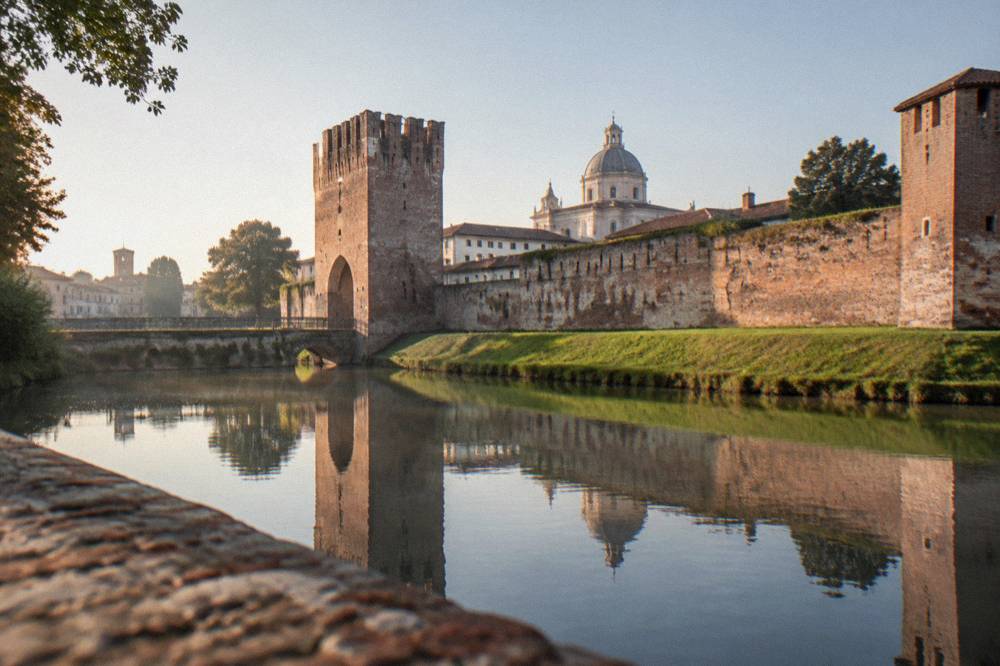
The comparison worth knowing is with the other walled towns of the Veneto. Montagnana, about 37 km from Padua in a straight line, keeps a longer circuit of walls with towers and is the destination for wall-walkers. Cittadella, in the same corridor as Castelfranco Veneto, offers a walkable wall path with a ticket, though the price for that path is not on this site's record, so check the current price on the official page before booking. Castelfranco Veneto's distinction is the combination of walls, moat, castle keep and a single great painting, in a town you can absorb between lunch and an afternoon train.
If the idea of a guided walk appeals but the destination is Padua itself, the site's featured option covers the city and the Scrovegni Chapel in one outing, and you can Check availability alongside the free planning pages on this site. The walls of Castelfranco Veneto are the supporting act; Giotto's cycle in the Scrovegni Chapel, painted between 1303 and 1305, is the region's painted headline.
What To See Inside Castelfranco Veneto In Half A Day?
A half-day in Castelfranco Veneto covers four things: the wall-and-moat loop, the castle keep at the centre, the Duomo with the painting known as the Castelfranco Madonna, and the small historic core of squares and arcaded streets between them, all within an easy walk of the station side of town. That is the whole visit, and it is enough. The Duomo is the one indoor stop that matters: the Castelfranco Madonna is the altarpiece the town is known for, and it hangs in the church at the centre of the visit. Ticketing and opening details for the Duomo are not on the record for this page, so check locally or on the town's official pages before you set the itinerary in stone.
Build the loop in this order and the town unfolds sensibly. Start on the outside of the walls, walking a stretch of the moat so you see the brick against the water and the trees. Enter through one of the gates and head for the keep, which anchors the centre and gives you the castle half of the town's name. From the keep, walk to the Duomo for the painting, then give the remaining time to the squares and the arcades, which hold the town's cafes and shops. Finish with a second stretch of the moat on the far side before walking back to the station.
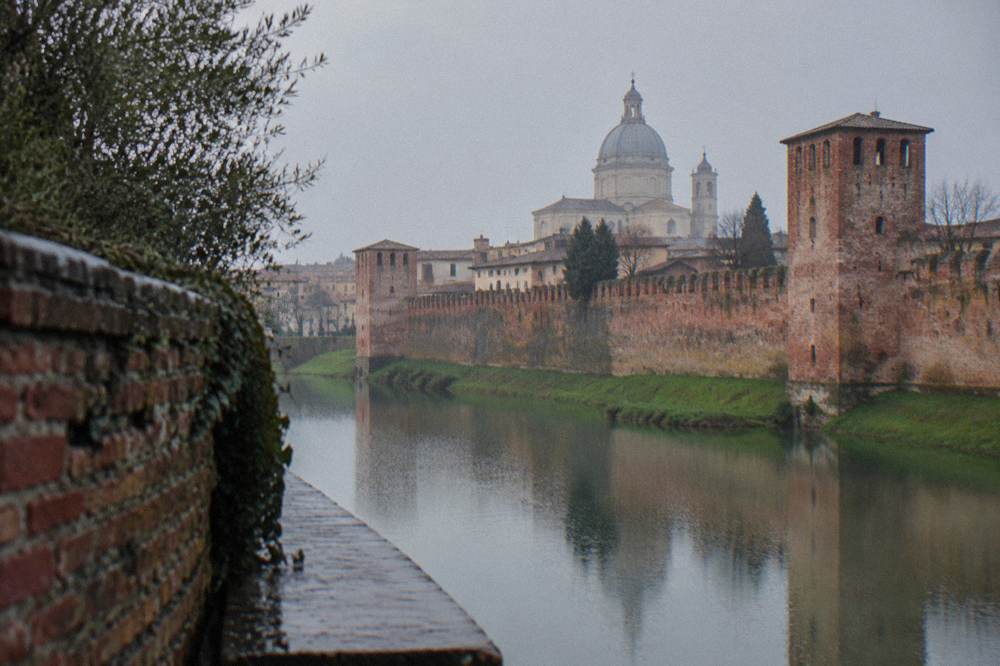
For depth, read a little about the town's art before you go. The Castelfranco Madonna is the work the town's reputation rests on, and the Duomo is the place to see it; for the painting's attribution and history, the town's own museum and Duomo materials are the source to read, since no attribution sits in this site's record. The panel shows the Madonna and Child on a throne with saints, set against a landscape, and its calm, atmospheric handling is what makes it the town's signature work. Seeing it in the town it belongs to, rather than in a big-city museum, is the point of the trip.
If the visit stretches to a full day, the surrounding plain gives you the padding. The town sits between Padua, Treviso and Bassano del Grappa, all of which appear on this site as day-trip pages in their own right, and the regional trains thread them together. A morning in Castelfranco Veneto and an afternoon elsewhere in the corridor is a realistic shape for a day, and the pairing section below covers which towns combine well.
How Do You Get From Padua To Castelfranco Veneto?
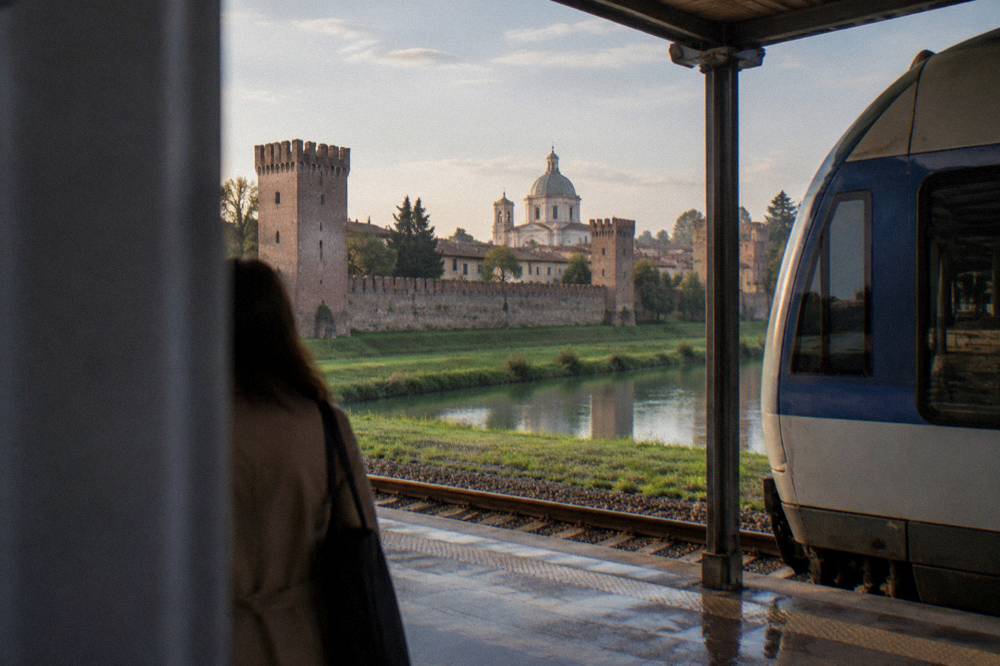
Regional trains link Padua and Castelfranco Veneto on the inland Veneto network, the ride is short, and the fare is modest, so check the timetable and fare on the rail operator's own site or app before you travel, and remember that Padova station is on the Venice-Milan line, with regional services fanning out across the Veneto plain. That is the honest version of the transport answer, and it matters because plenty of pages invent a number for this route. What the record does carry is the shape of the network: Padova station is on the Venice-Milan line, regional services fan out across the Veneto, and Castelfranco Veneto is a junction on the plain, so the connection is a standard regional ride rather than a connection through another city.
The fares this site can state are the Padua-side ones, printed by the sources themselves. Within Padua, the FS Busitalia urban ticket TU1 costs EUR 1.70 for 90 minutes, and you can tap a contactless card on board the tram and bus at the same fare; a daily ticket is EUR 4.70. On trains, the regional fare from Padua to Venice runs about EUR 5 and to Vicenza about EUR 6, both reported with "about" and subject to the operator's pricing. The airport bus from Padua to Venice Marco Polo costs EUR 13 one-way for an adult and takes about 45 minutes, with departures every 40 minutes through the day. None of those is the Castelfranco Veneto fare, and the operator's own journey planner is the place to get that number.
| Journey from Padua | What the record states | Where it comes from |
|---|---|---|
| Urban bus and tram, TU1 | EUR 1.70 for 90 minutes; daily EUR 4.70 | FS Busitalia fare page |
| Padua to Venice (Venezia S. Lucia) | Regional, about EUR 5, about 26 to 40 minutes | Reported rail figures |
| Padua to Vicenza | Regional, about EUR 6, about 16 to 25 minutes | Reported rail figures |
| Padua to Venice Marco Polo airport | EUR 13 one-way adult, about 45 minutes, every 40 minutes | FS Busitalia airport page |
On arrival, the walk from the station to the walls is short and flat, which is the practical reason the trip works with any luggage-free afternoon. If you are arriving in Padua from farther afield first, the same logic holds: the station's left-luggage office at platform 1 is open daily from 6:00 to 20:00 and costs EUR 5 per 6 hours, so a morning arrival into Padua can park bags before a small-town afternoon. The tourist offices at the station and at Piazza delle Erbe 52 handle city questions, and the IAT station office runs Monday to Saturday 9:00 to 19:00 and Sundays 10:00 to 16:00.
One Padua-side detail worth repeating for day-trippers: the Venice day-tripper access fee trial ended on 27 July 2026, and no 2027 decision has been published, so nothing on this page or any other page of this site should send you budgeting for it. That concern belongs to Venice days, not to the walled towns of the plain, where no such charge is part of the record at all.
Can You Combine Castelfranco Veneto With Other Veneto Day Trips?
Yes, and the natural pairings are Treviso, Bassano del Grappa, Vicenza and the walled towns of the same corridor, because Castelfranco Veneto is small enough to fill a morning and sits on the regional network that threads those towns together, while the Euganean Hills and the Brenta Riviera sit on the other side of Padua and work better as their own days. The geography does the sorting for you. North and east of Padua lie Treviso, about 41 km in a straight line, and Bassano del Grappa, about 42 km; west lies Vicenza, about 30 km, with Verona about 69 km. South and south-west lie the Euganean Hills towns such as Arqua Petrarca, about 20 km, and the spa towns of Abano Terme, about 8 km, and Montegrotto Terme, about 11 km.
A two-town day in the Castelfranco corridor is the classic shape. Morning in the walls and the Duomo, afternoon in Treviso's canals and squares or under the Ponte degli Alpini in Bassano del Grappa, where the Poli Grappa Museum has free entry and is open daily into the evening. Vicenza works as either a standalone day, with the Teatro Olimpico at EUR 12 full and EUR 9 reduced and the Vicenza Gold Card covering 11 sites over 12 days at EUR 22 full, or as a half paired with something smaller.
|---|---|---| | Vicenza | about 30 km | Teatro Olimpico EUR 12 / EUR 9; Gold Card EUR 22 / EUR 17, family EUR 26 | | Bassano del Grappa | about 42 km | Poli Grappa Museum free entry; Ponte degli Alpini open | | Treviso | about 41 km | None carried; treat as a walking day | | Montagnana | about 37 km | None carried for the walls; go for the circuit itself | | Castelfranco Veneto | On the plain north of Padua | Walls, castle keep and the Castelfranco Madonna; no entry figures carried |
The towns that do not pair with Castelfranco Veneto are the ones in the wrong direction. The Euganean Hills, with Arqua Petrarca, whose Casa del Petrarca charges EUR 6 full and EUR 4 reduced and closes on non-holiday Mondays, and the FAI villa of Villa dei Vescovi at EUR 11 for an adult, sit south and deserve a slow day. The Brenta Riviera villas and the Il Burchiello boat, running March to October between Padua and Venice, run east toward the lagoon, and Venice is its own commitment. Give each of those a day and keep the corridor towns for doubling up.
When Is A Good Time Of Year For A Walled-Town Day Trip From Padua?
The Veneto plain has cold winters and hot, humid summers, with January averaging a high of 7.3 C and July and August averaging highs of 28.8 C, and November carries the year's highest rain total at 114.0 mm, so the shoulder months give a walled-town walking day the most comfortable conditions, though the walls and the Duomo are walkable year-round. Those figures come from the ERA5 reanalysis for Padua, 1991-2020, a modelled grid cell rather than a weather station, and they describe the plain Castelfranco Veneto shares. A wall-and-moat loop is an outdoor activity with one indoor stop, so rain matters more here than on a museum day.
The monthly detail helps with planning. Rain totals run about 53.6 mm in January, rise through spring to about 99.7 mm in May, dip to about 62.1 mm in July, then climb again to about 105.5 mm in September, 105.4 mm in October and 114.0 mm in November. Snow is a real but shrinking presence: a long climate series for Padua shows the 1995 to 2024 period averaging about 4.4 snowy days a year, down from about 10.4 in the 1785 to 1814 period, and seasons with none at all are not uncommon. None of this predicts a given week; it sets expectations.
| Month | Mean high (C) | Mean low (C) | Rain (mm) |
|---|---|---|---|
| Jan | 7.3 | -0.2 | 53.6 |
| Feb | 9.4 | 0.6 | 57.9 |
| Mar | 13.7 | 3.9 | 67.2 |
| Apr | 17.6 | 7.8 | 84.4 |
| May | 22.1 | 12.4 | 99.7 |
| Jun | 26.2 | 16.6 | 81.0 |
| Jul | 28.8 | 18.9 | 62.1 |
| Aug | 28.8 | 19.2 | 78.7 |
| Sep | 23.6 | 14.9 | 105.5 |
| Oct | 18.4 | 10.6 | 105.4 |
| Nov | 12.6 | 5.5 | 114.0 |
| Dec | 7.8 | 0.7 | 69.9 |
The events calendar in Padua can anchor the timing too, since a day trip slots around it. The Tredicina leading to the feast of Saint Anthony ran 31 May to 12 June in 2026, with the feast on 13 June; the Sherwood Festival ran 10 June to 12 July in 2026; and the Padova Marathon is set for 18 April 2027, starting at the Stadio Euganeo and finishing at Prato della Valle. No 2027 dates for the festivals had been announced when the record was made, so treat those as annual events with 2026 as the latest edition and confirm before building a trip around them.
What Does A Padua-Based Day Trip Budget Look Like?
A day trip like this costs the regional train fare, whatever you spend on food in town, and, in Padua itself, the city's own ticketed sights, whose stated prices run EUR 15 full for the Scrovegni Chapel daytime ticket, EUR 8 for Palazzo della Ragione, EUR 15 full for the Orto Botanico since 1 September 2026 and EUR 10 for the Palazzo del Bo guided visit, while the Basilica of Saint Anthony is free. Those are the figures the sources state, and they let you cost the Padua side of the trip precisely even where the Castelfranco Veneto side has no carried entry prices. Add the EUR 1.70 urban ticket if you need the tram in Padua, and remember the chapel needs its own timed booking plus a EUR 1 booking fee.
The chapel deserves its own paragraph of planning because it is the piece travellers get wrong. Entry is timed only, with at most 25 people admitted every 15 minutes and about 15 minutes inside, and you should be at the entrance 5 minutes before your slot; late arrivals must book and pay again. There is no same-day online booking, and the chapel is closed 16 to 27 November 2026 for the annual fresco inspection. The daytime ticket also covers the Musei Civici Eremitani and Palazzo Zuckermann, which is a better deal than it looks on paper.
| Padua sight | Stated price | Note on the record |
|---|---|---|
| Scrovegni Chapel, daytime | EUR 15 full, EUR 11 reduced, residents EUR 5, plus EUR 1 booking fee | Timed entry only; covers Musei Civici Eremitani and Palazzo Zuckermann |
| Orto Botanico | EUR 15 full since 1 Sept 2026; EUR 12 winter full; EUR 10 reduced; EUR 8 winter reduced | UNESCO listing since 1997; garden founded 1545 |
| Palazzo della Ragione | EUR 8 full, EUR 6 concessions | Tue to Sun 9:00 to 19:00 |
| Palazzo del Bo guided visit | EUR 10 full, EUR 8 reduced, EUR 6 special reduced, EUR 5 school groups | About 45 minutes, alternating Italian and English slots |
| Basilica of Saint Anthony | Free entry | Hours not on the record; check before visiting |
Two city-card caveats protect your wallet. This site prints no PadovaCard or city-card price, validity or inclusion list, because the record does not confirm one, and the Scrovegni Chapel needs its own timed booking regardless of any pass, so check the official museums site before buying anything. And the tourist tax, the imposta di soggiorno, is collected by your accommodation in Padua, runs per person per night and is capped at five consecutive nights, with rates by category that this site does not print; budget a small per-night addition rather than a figure.
Where Does Castelfranco Veneto Fit In A Padua-Based Trip?
It fits as the second or third day of a Padua-based stay: give the first full day to Padua's own core, the Scrovegni Chapel, the Basilica of Saint Anthony, Prato della Valle and the market squares, and use the following days for the small towns, with Castelfranco Veneto as the art-led choice, the Euganean Hills as the landscape choice and Venice as the big day east. That ordering works because the chapel booking shapes everything else. Book the timed slot first, at a time that suits your arrival, and arrange the days around it. A common shape is a chapel morning, an afternoon of squares and the Santo, then a small-town day, then Venice.
Padua's own inventory is deeper than its size suggests. The two UNESCO listings, the Orto Botanico and the fourteenth-century fresco cycles of Padova Urbs Picta, cover eight complexes in the old centre, from the Scrovegni Chapel and the Chiesa degli Eremitani to the Battistero of the Cathedral and the Oratorio di San Giorgio. The University's Palazzo del Bo holds the anatomical theatre inaugurated in 1594 and the chair associated with Galileo, who taught in Padua from 1592 to 1610 and called the period the best eighteen years of his life. Prato della Valle, a square ringed by a canal and a double ring of numbered statues, was declared communal space by the Venetian Senate in 1767. Add the market hours, Piazza delle Erbe running Monday to Friday 7:30 to 13:30 and Saturday 7:30 to 20:00, and the city fills two days without strain.
Then the day trips sort by direction. East to Venice, about 36 km in a straight line, with the regional train taking about 26 to 40 minutes and the fare about EUR 5. South to the Euganean Hills, the spa towns and the hill villages. West to Vicenza and on to Verona, about 69 km. North to the corridor this page covers, Treviso, Bassano del Grappa and Castelfranco Veneto. A five-day stay can take one from each direction and still leave evenings for the squares and a spritz, a drink whose modern star, Aperol, was created in Padua in 1919 by the Barbieri brothers.
For the food-minded, the region carries its own weight. Padua's tourism board names risotto ricco alla Padovana and gallina padovana dishes among the city's trademarked recipes, and Sotto il Salone, the covered market under Palazzo della Ragione, has traded for eight centuries; the Salone dei Sapori food event ran 11 to 18 October in 2026. The Chiesa degli Eremitani and the Scrovegni Chapel sit a few minutes apart, so a painting day in Padua pairs with the painting day in Castelfranco Veneto almost as a course of study, from Giotto's 1303 to 1305 cycle to the Venetian Renaissance towns a short rail ride north.
Common Questions About Castelfranco Veneto
How do I get from Padua to Castelfranco Veneto?
Regional trains connect the two towns on the Veneto inland network. The record this site reports carries no journey time or fare for that exact route, so check the rail operator's own site or app for times and prices before travelling.
What is Castelfranco Veneto famous for?
It is famous for its near-complete medieval brick walls and moat, its castle keep, and its connection to the painter Giorgione, the town's famous son; the Duomo holds the painting known as the Castelfranco Madonna.
Can you visit Castelfranco Veneto as a day trip from Padua?
Yes. The town is compact enough for a half-day loop of the walls, keep and Duomo, and it pairs well with Treviso or Bassano del Grappa on the regional network for a two-town day.
How long do you need in Castelfranco Veneto?
About half a day covers the wall-and-moat loop, the castle keep, the Duomo with the Castelfranco Madonna and the small historic core. A full day lets you add a second town in the same corridor.
Is Castelfranco Veneto worth visiting compared with other Veneto walled towns?
This site ranks no town against another. Castelfranco Veneto offers walls, moat, keep and one celebrated painting in a compact visit; Montagnana and Cittadella offer wall circuits of their own, and each makes a different day from a Padua base.
What should a Castelfranco Veneto day trip cost?
The main costs are the regional train fare, food in town and any Padua tickets on the same stay. No entry prices for Castelfranco Veneto's sights are carried on this record, so check current prices on the official pages before you go.
The short version: book the chapel, spend a day inside Padua's walls, then trade them for a smaller set. Castelfranco Veneto, with its moat, its keep and the Castelfranco Madonna, is the quiet counterpart to the bigger city, and the regional train makes it a low-effort, high-charm addition to any Padua-based plan, one this site's Padua Travel Guide pages cover from every angle, from the Euganean Hills to the Basilica of Saint Anthony and back.