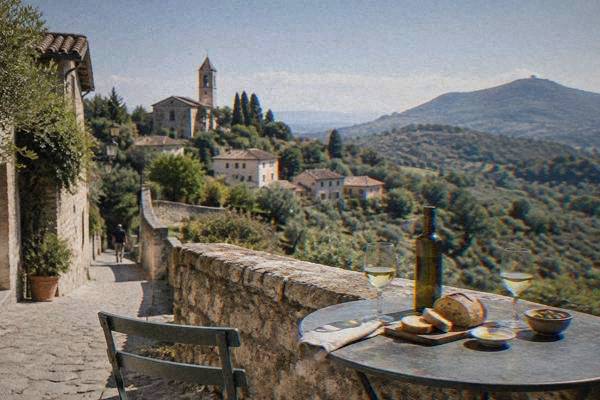
Montagnana: The Walled Town And Its Prosciutto
Montagnana sits about 37 km in a straight line from Padua and keeps a complete circuit of medieval walls. This guide covers how to get there from Padua, what to see inside the walls, the town's prosciutto tradition, and which nearby towns pair well on the same day.
Short answer
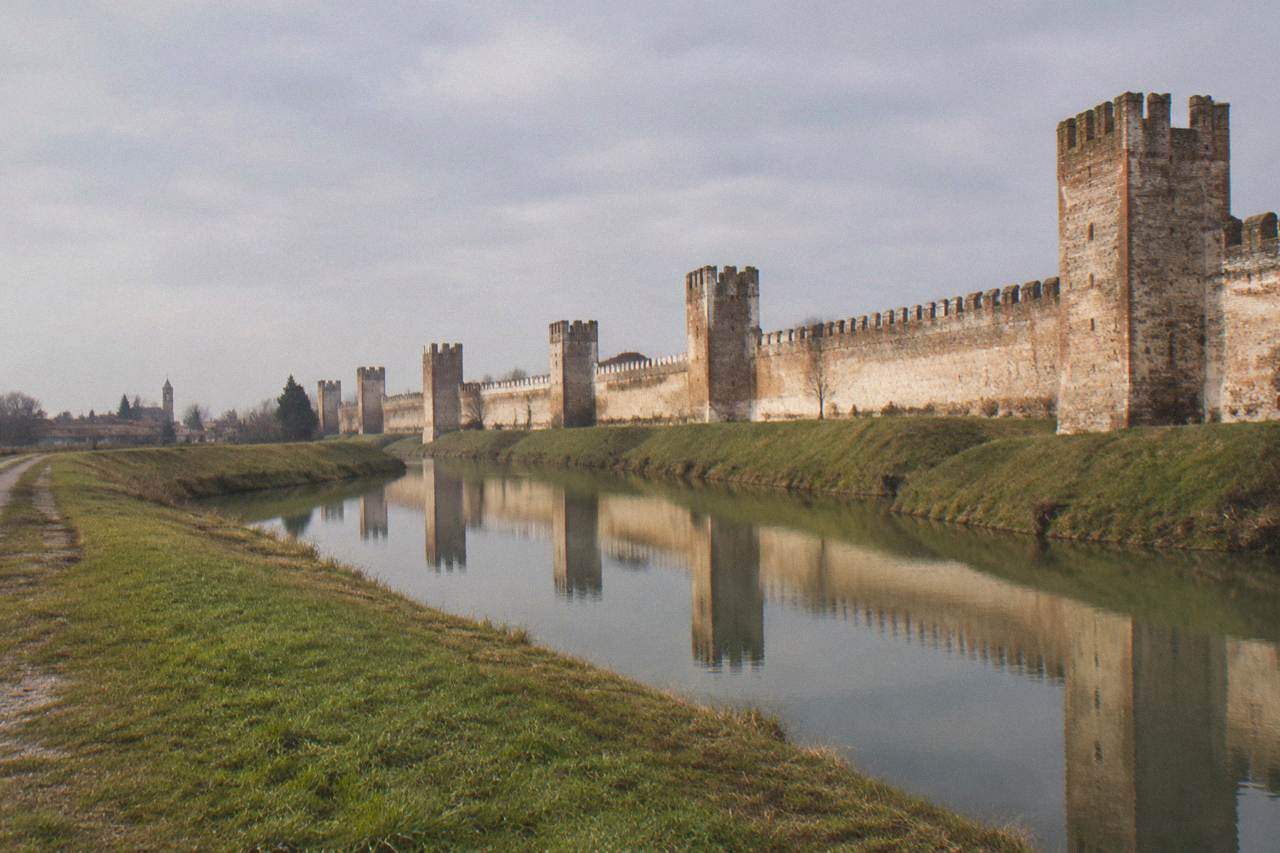
Montagnana is a small walled town about 37 km in a straight line from the centre of Padua, in the Veneto. There are no printed train times or ticket prices for it in this guide's sources, so check Trenitalia before travel; the walls, the historic centre and the town's cured-ham tradition are the draw, and half a day is enough for the town itself.
Montagnana, a small town about 37 km in a straight line from the centre of Padua in the Veneto, keeps one of the complete medieval wall circuits of northern Italy, and it hangs its identity on two things: those walls and the prosciutto that carries the town's name. Padua is the natural base for it. The city is inland, about 36 km from Venice in a straight line, with fast trains on the Venice-Milan line and an airport bus to Venice Marco Polo at EUR 13 one way, which makes a walled-town day trip an easy variation on a Padua-centred holiday. This guide from Padua Travel Guide sets out what the sources support about Montagnana and how to plan the day.
Where Is Montagnana And How Far Is It From Padua?
Montagnana lies about 37 km in a straight line from the centre of Padua, at the south-western edge of the Veneto's plain, beyond the Euganean Hills and the towns of Este and Monselice, which sit about 26 km and 21 km from Padua respectively. It is an inland, landlocked town of walls and flat farmland, not a lagoon or lakeside place, and nothing about the trip involves water. The straight-line figure is computed, not a road distance, and no drive time is given.
That context matters because Montagnana belongs to a cluster of day trips that fan out to the south and west of Padua. The Euganean Hills rise about 8 km from Abano Terme and about 20 km from Arqua Petrarca, both reachable on the same broad arc, and the walled-town theme continues north with Cittadella. Travellers who enjoy comparing fortifications can build a whole week around Padua using nothing but these circuits.
A sense of the geography helps when choosing. The table below lists straight-line distances from the centre of Padua, computed from map data, for the towns this guide mentions. Use them to judge scale, not travel time: straight-line kilometres understate road distance and say nothing about traffic, and the pack behind this page carries no drive times at all.
| Town | Straight-line km from Padua | Character |
|---|---|---|
| Abano Terme | about 8 | thermal spa town |
| Arqua Petrarca | about 20 | hill village |
| Monselice | about 21 | hill town with walls and castle |
| Este | about 26 | former Este seat below the hills |
| Montagnana | about 37 | complete walled town |
| Vicenza | about 30 | Palladio city |
| Venice | about 36 | lagoon city |
For orientation within the region, the Euganean Hills guide covers the volcanic ridge between Padua and Montagnana's plain, and the Este day-trip guide covers the town nearest to it.
How Do You Get From Padua To Montagnana?
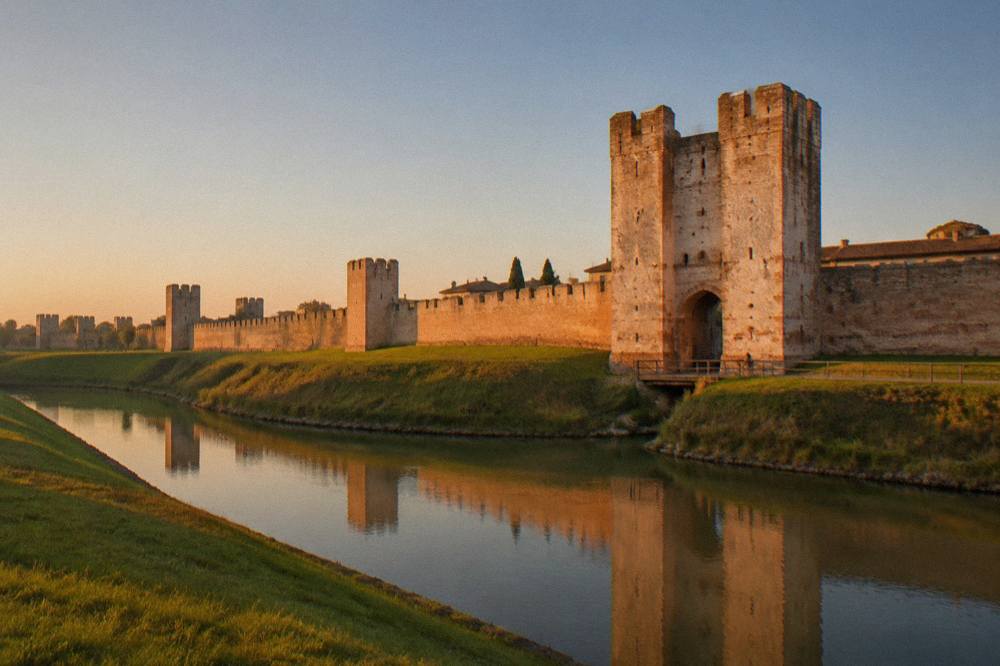
Montagnana is reached from Padua by regional train on the western Veneto network or by road, and the honest planning position is that this page's sources print no timetable, fare or journey time for the Padua to Montagnana run, so the exact figure belongs to Trenitalia's own journey planner on the day you travel.
What is certain: the trip is short by regional standards, the distance is about 37 km in a straight line, and Padua's station sits on the main Venice-Milan line with urban connections at EUR 1.70 for 90 minutes.
Start from Padova station. The urban side of the city runs on Busitalia tickets: the TU1 90-minute ticket is EUR 1.70, with a contactless card tap accepted on board, and the tram line SIR1 runs north-south through the city. None of that gets you to Montagnana; it gets you to the station. From there, the regional railway that serves the Montagnana area is the line through Monselice and Este toward Mantua, and the practical advice is simply to pull the current timetable from Trenitalia before committing to a day, because frequencies on secondary Veneto lines change with the timetable season.
By car, the route crosses the plain past the Euganean Hills, and a rental base in Padua suits a loop that takes in Monselice or Este on the way. The constraints on parking in Padua itself, including the limited-traffic zone, are covered on the city's own pages; Montagnana's own parking arrangements are not in this guide's sources, so plan to check locally on arrival. There is no airport anywhere near Montagnana: Venice Marco Polo is the region's main gateway, about 45 minutes from Padua by the EUR 13 direct Busitalia airport bus.
A few practical anchors for the journey, all from this site's fact base:
| Leg | What the sources give |
|---|---|
| Padua centre to Padova station | tram SIR1 and urban buses, TU1 ticket EUR 1.70 for 90 minutes |
| Padova to Venezia S. Lucia (for comparison) | regional train, about 26 to 40 minutes, about EUR 5 |
| Padova to Vicenza (for comparison) | regional train, about 16 to 25 minutes, about EUR 6 |
| Padova to Montagnana | about 37 km straight line; timetable and fare on Trenitalia's planner |
| Venice Marco Polo airport to Padua | Busitalia direct bus, EUR 13 one way, about 45 minutes |
Guided transport is the third option. A day trip with a driver-guide removes the timetable question entirely, and the tour below runs from Padua into the Veneto countryside, though its route is the Brenta Riviera rather than Montagnana itself. Check availability on the operator's live listing if that shape of day appeals.
Why Are The Walls Of Montagnana Famous?
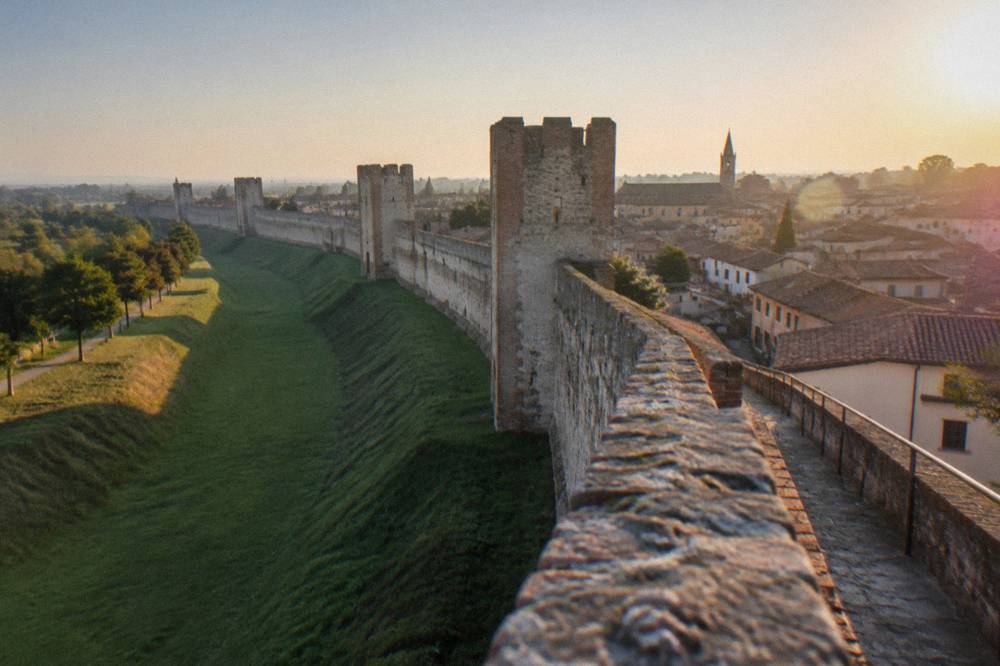
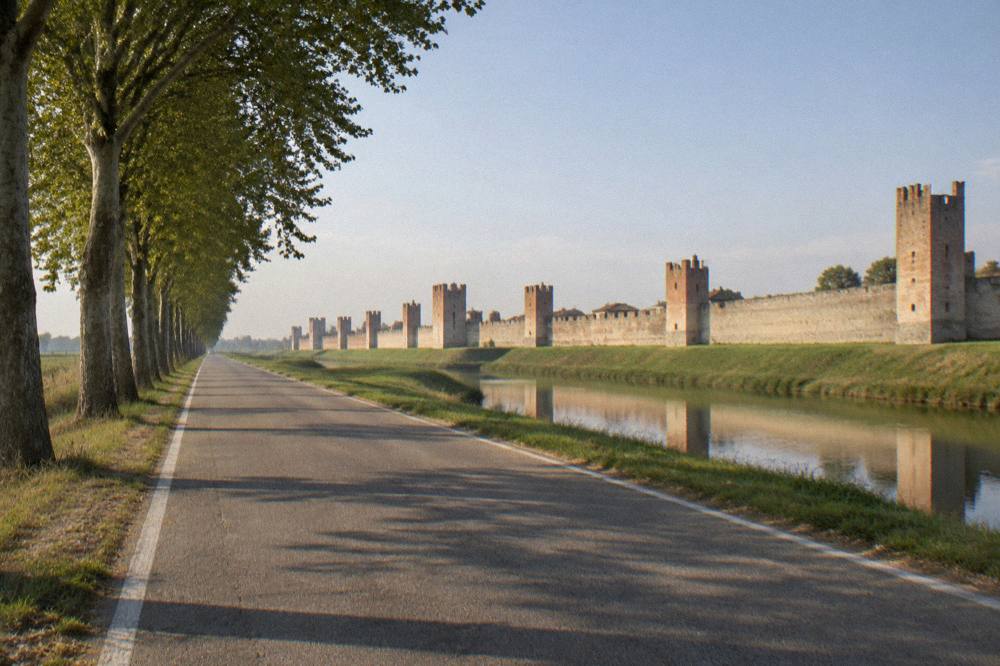
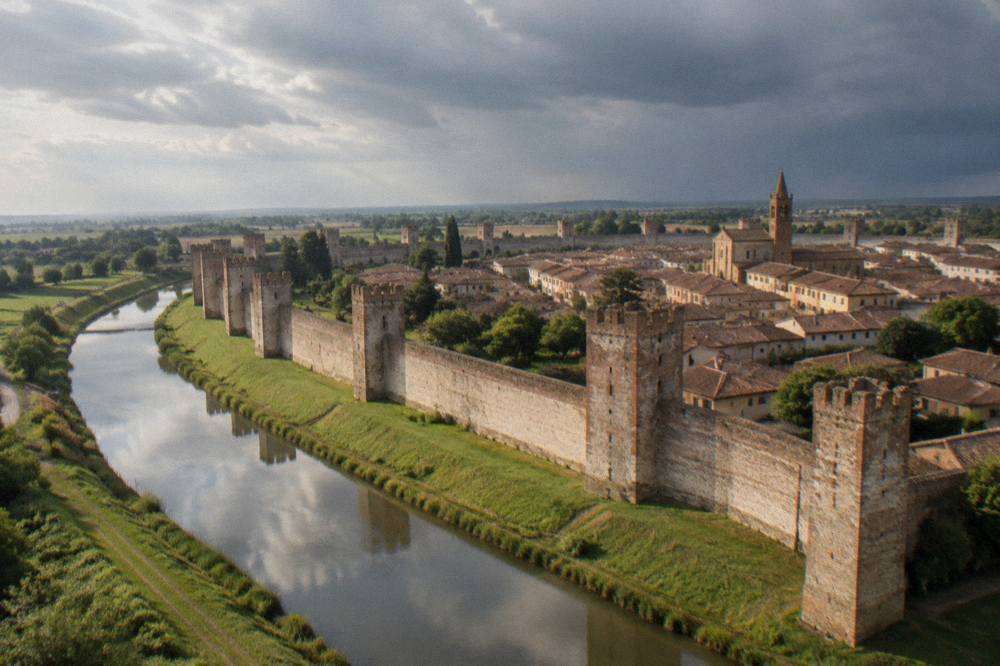
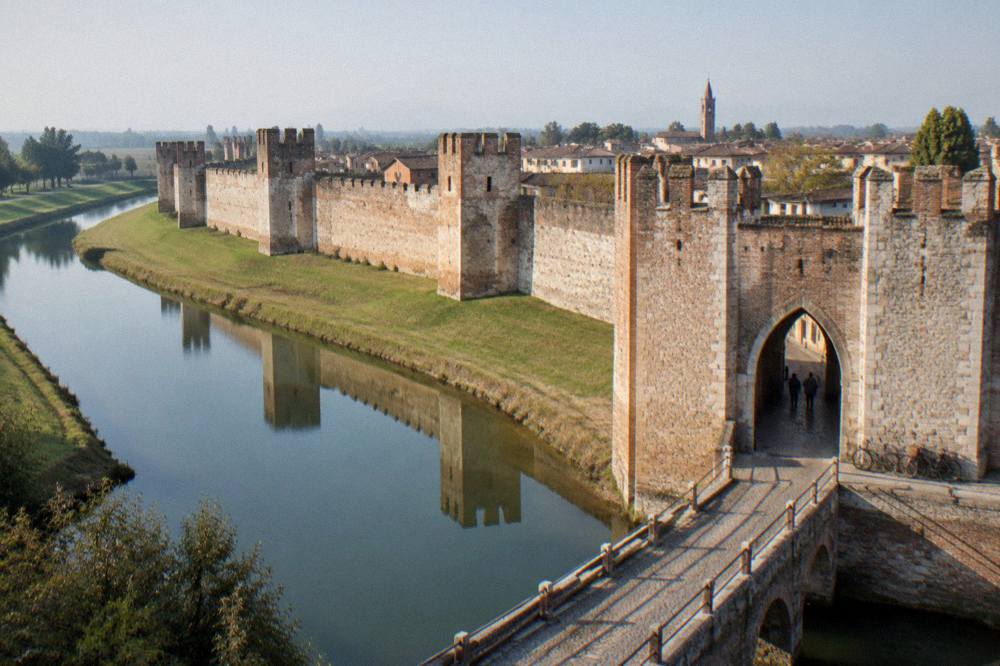
Montagnana's walls are famous because they survive as a complete circuit around the old town, with projecting towers and gate fortifications, a level of preservation that few Italian towns can match, and the town's approved tourist identity, "Montagnana: the walled town", rests on that circuit. The walls themselves are the fact that can be seen and walked today.
What a visitor actually meets is a brick-and-stone defensive ring that you can walk around the outside of at street level, entering through the gates. The sources behind this page support the general character: a medieval planned town form, walls with towers, and gates that still channel traffic into the centre. Anything more specific, from ramp-walk access rules to individual gate names and dates, needs checking on the town's own information points on arrival.
It helps to see Montagnana in the context of the Veneto's other walled towns. Cittadella, north of Padua, keeps a walkable wall circuit with its own ticketed ramparts, and the region's fortification tradition runs from these plain-edge towns to the hillside defences of Monselice. The comparison is one of character, not ranking: this site prints no "nicer" or "better" judgement between towns, and the sources give no visitor figures for any of them.
| Walled Veneto town | Straight-line km from Padua | What the sources support |
|---|---|---|
| Montagnana | about 37 | complete wall circuit with towers and gates |
| Cittadella | not in this page's figures | walled town; no ticket price or hours printed |
| Monselice | about 21 | hill town with walls and a castle |
| Padua itself | centre | medieval and Venetian wall remains, see the city's walls guide |
For the walls of Padua itself as a comparison point, the Padua walls article traces the city's own circuit, and the Cittadella day trip covers the other great wall town of the region.
What To See In Montagnana On A Day Trip From Padua?
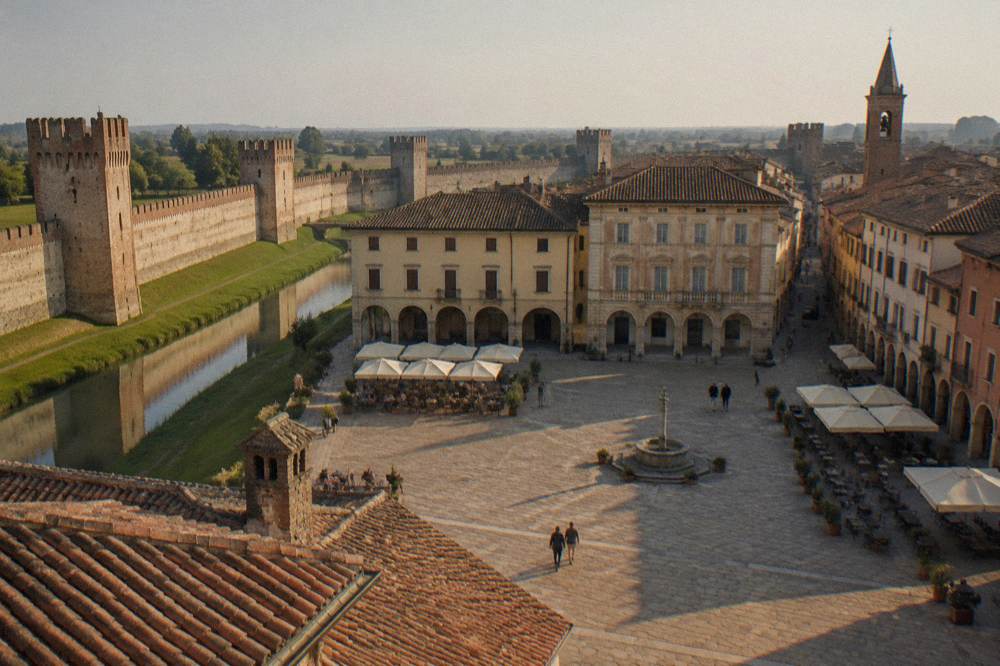
A day in Montagnana divides into four things: the wall circuit seen from outside and through the gates, the main square and historic centre inside the walls, the town's churches, and the food shops and market culture that carry its prosciutto reputation. The sources behind this page print no opening hours, ticket prices or church schedules for Montagnana's individual sights, so the pattern is arrive, walk the perimeter and centre on foot, and check locally for anything you want to enter.
The town is compact enough that walking is the whole method. A perimeter loop outside the walls gives the strongest first impression, then the gates lead into the centre, where the main piazza holds the civic buildings. As with the walls, this guide avoids naming specific palaces with dates or architects, because the fact base does not carry them; the town's own tourist information will map the interiors on the day.
Churches are the one category where the wider region sets expectations. Padua's own ecclesiastical circuit, from the Basilica of Saint Anthony to the Scrovegni Chapel and the eight UNESCO-listed fresco complexes of Padova Urbs Picta, inscribed in 2021, is the regional benchmark, and Montagnana's churches belong to the same broad artistic world without carrying comparable printed detail here. If frescoes are the priority of your trip, plan them in Padua first: the Scrovegni Chapel guide covers the timed-entry system, 25 people every 15 minutes, booked in advance, and the annual closure from 16 to 27 November 2026.
A realistic half-day shape looks like this:
| Time | Activity | Notes |
|---|---|---|
| morning | train or drive from Padua | check Trenitalia or allow a road route past Este |
| late morning | walk the walls outside the circuit | no ticket figure printed; check locally |
| midday | main square, lunch, prosciutto | food is the town's second identity |
| early afternoon | churches and centre on foot | hours on site |
| late afternoon | return via Este or Monselice | both on the same rail axis as Montagnana |
That last row is the one experienced travellers act on. Montagnana pairs naturally with Este, about 26 km from Padua, or with Arqua Petrarca in the hills, where Casa del Petrarca costs EUR 6 full and EUR 4 reduced and closes on non-holiday Mondays. Two stops in a day is realistic; three starts to rush.
What Is Prosciutto Di Montagnana And Where Do You Taste It?
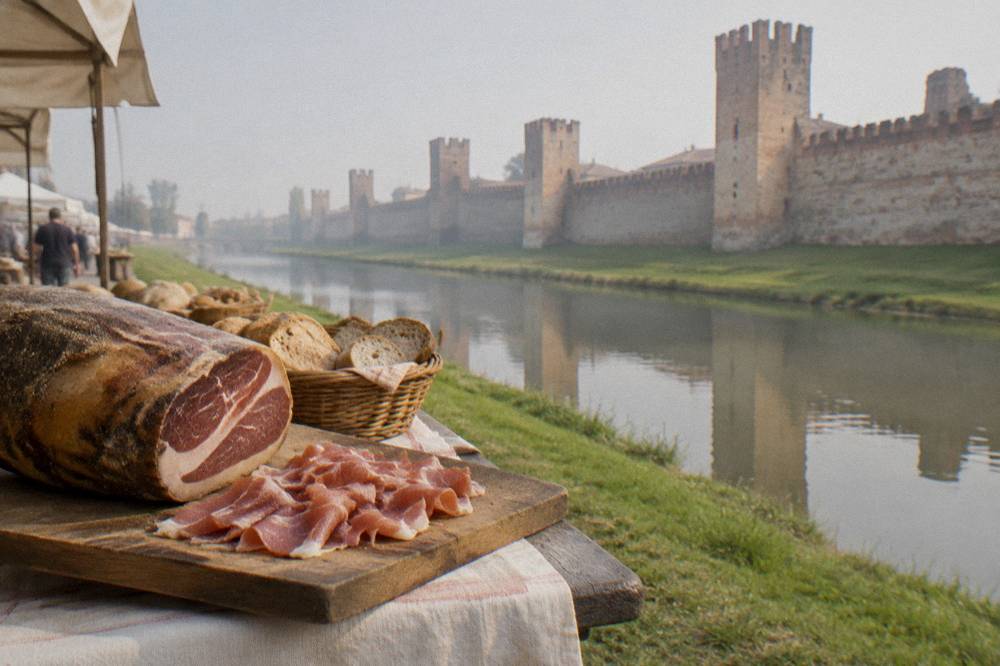
Montagnana gives its name to a cured raw ham, prosciutto, produced in the town and its surrounding district, and the town's approved billing, "the walled town and its prosciutto", reflects a local curing tradition that visitors meet through the town's butchers, shops and food events rather than through a single factory tour. This page's sources print no producer names, tasting prices, opening hours or event dates for Montagnana's ham culture, so the reliable plan is the shops and market tables of the town itself.
The honest framing is important here. The fact base behind this site carries the town's association with prosciutto as part of its approved identity, and it carries nothing beyond that: no protected-designation details, no ageing months, no producer list, no festival dates. Where other guides fill that space with specifics, this one points at the town. What can be said in full is the regional context: the Veneto's food culture around Padua includes the market squares of Piazza delle Erbe and Piazza della Frutta, running Monday to Saturday with the Saturday session to 20:00, and Sotto il Salone, the permanent market under Palazzo della Ragione.
For travellers who want the region's food culture organised for them, guided food experiences from Padua exist in several shapes. The picks below include the site's featured villa day trip plus a hills wine-and-oil outing and a city escape game, a spread that covers guided countryside, tasting and independent exploring. Each listing carries its own price, rating and duration, which this page never types into prose.
Travellers building a food-themed trip around Padua will find the city's own food culture, from bigoli to gallina padovana, covered in the what to eat in Padua guide, and the spritz tradition, with Aperol created in Padua in 1919 by the Barbieri brothers, in the spritz in Padua article.
How Many Hours Do You Need In Montagnana?
Montagnana rewards half a day: a perimeter walk of the walls, an unhurried look through the gates into the centre, a lunch built around the town's ham, and one or two church interiors fits comfortably inside four to five hours on the ground, with the travel time from Padua added on top. A full day makes sense only when Montagnana is paired with Este or Monselice, and an overnight adds nothing the sources support, since no evening schedule or hotel detail for the town appears in them.
The arithmetic of the day matters more than the town's size. Padua-based travellers lose their morning to the outbound leg, gain the middle of the day inside the walls, and need to respect the return timetable, which is exactly why the pairing strategy works: Este and Monselice sit on the way back toward the hills and the plain. Visitors who prefer a single long stop can invert it, spending the morning in the Euganean Hills and reaching Montagnana for lunch and the afternoon walls walk.
Time of day also changes the walls themselves. Photographers will get the warmest light on the brick in late afternoon, and a lunch-focused visit puts the town's food identity at the centre of the day. None of this is a crowd prediction: this site prints no queue, crowd or popularity claims, because its sources carry none, and the planning question is purely what you want the light and the meal schedule to be.
| Trip shape | Time on the ground | Best pairs |
|---|---|---|
| Montagnana only | 4 to 5 hours | a slow lunch and full wall loop |
| Montagnana plus Este | 5 to 7 hours | the rail axis through the hills' southern edge |
| Montagnana plus Monselice | 5 to 7 hours | walls plus a hillside castle town |
| Hills morning, Montagnana afternoon | 6 to 8 hours | Arqua Petrarca or a winery before the walls |
When Is The Best Time Of Year To Visit Montagnana From Padua?
The climate data that exists for this region, the ERA5 reanalysis for Padua, 1991-2020, points to late spring and early autumn as the comfortable windows: May averages a high of 22.1 C, June 26.2 C, and September 23.6 C, against July and August highs of 28.8 C and a January high of just 7.3 C with nights below freezing.
November carries the heaviest rain of the year, 114 mm, and September and October both sit near 105 mm, so the wall walk is a weather-dependent plan.
Those figures are modelled normals for the Padua grid cell, not a weather-station record for Montagnana, and Montagnana is close enough to Padua on the plain for them to stand as regional guidance. The wall circuit is an outdoor activity with little shelter, which is the real reason the rain column matters: a wet November day turns the perimeter walk into a dash between gates, while a May or September day makes it the best part of the trip.
| Month | Mean high C | Mean low C | Rain mm |
|---|---|---|---|
| January | 7.3 | -0.2 | 53.6 |
| March | 13.7 | 3.9 | 67.2 |
| May | 22.1 | 12.4 | 99.7 |
| July | 28.8 | 18.9 | 62.1 |
| September | 23.6 | 14.9 | 105.5 |
| November | 12.6 | 5.5 | 114.0 |
Winter visits trade warmth for a different atmosphere on the plain, and the ERA5 lows, -0.2 C in January, say plainly that frost is normal. The site's Padua weather guide carries the full monthly table, and the best time to visit Padua extends the same data into a trip-level view. Snow does fall in the region: a long climate series for Padua shows recent decades averaging about 4.4 snowy days per year, down from about 10.4 in the 1785 to 1814 period, so a white wall circuit is possible but not a plan.
Is Montagnana Worth The Trip Compared With Other Padua Day Trips?
Montagnana earns its day trip from Padua if complete medieval walls are what you want, because that single quality separates it from every other option in the region's day-trip set, but the sources support no ranking of it against Venice, Verona, Vicenza or the Euganean Hills, and this site prints none: Venice is about 36 km from Padua, Verona about 69 km, Vicenza about 30 km, and each offers something the others do not. The choice is about what kind of day you want, not which town wins.
The comparison set, honestly framed, looks like this. Venice is the region's monument, 26 to 40 minutes from Padua by regional train at about EUR 5, and its 2026 day-tripper access-fee trial ended on 27 July 2026, with no 2027 decision published. Verona, 43 to 60 minutes by train, and Vicenza, 16 to 25 minutes at about EUR 6, are art and architecture cities. The Euganean Hills, the Brenta Riviera and the spa towns of Abano and Montegrotto are countryside and water. Montagnana, with Cittadella and Monselice, is the walls-and-small-town thread, and it is the quietest of those threads in the sense that no printed visitor numbers exist for any of them.
For a two-centre day that leans on water instead of walls, the Brenta Riviera guide and the Villa Pisani page cover the villa route east of Padua, where Il Burchiello runs a Padua to Venice boat cruise between March and October. The featured tour on this page covers that same villa country by road from Padua, and its details, price and rating render on the tour pages themselves.
What Should You Know Before You Go?
Four practical facts carry the day: the trip is about 37 km in a straight line from Padua with the timetable and fare on Trenitalia's planner; no ticket prices, hours or event dates for Montagnana's individual sights are printed in this site's sources, so confirm locally; the town's tourist tax, if your accommodation lies inside it, follows the general Veneto pattern of a per-person, per-night charge capped at five consecutive nights, collected by the accommodation, with rates set by category; and the emergency number across Italy, including Montagnana.
Pack for walking and weather. The wall loop and the centre are entirely on foot, the plain offers little shade, and the ERA5 rainfall figures say a rain layer earns its place from September through November. Water is drinkable from the municipal supply across the region, and a day bag with the usual is enough; there are no printed left-luggage facilities in Montagnana, while Padua's station keeps its left-luggage office at platform 1, daily 6:00 to 20:00, at EUR 5 per 6 hours.
Money is simple. Italy uses the euro, the country is part of the Schengen area, and Italian is the language of Montagnana's shops and signs, with the town small enough that patience and a few words go far. Budget-wise, this site never prints a price that its sources do not carry: no meal price, no coffee price and no hotel rate appears anywhere on this page, and the honest instruction for every one of them is to check the current price at the counter or on the official page before you commit.
For the wider planning frame, the root things to do in Padua page indexes the city's own sights, from the Scrovegni Chapel, EUR 15 full plus a EUR 1 booking fee with timed entry, to the Orto Botanico, EUR 15 full from 1 September 2026, and the Basilica of Saint Anthony, free to enter. A Montagnana day slots into that itinerary most naturally as the countryside counterweight to a fresco-heavy first day.
Common Questions About Montagnana
These are the questions travellers ask before booking a Montagnana day trip from Padua, answered with the same discipline as the rest of this page: only what the sources carry, with the gaps left for Trenitalia's planner, the town's own information points and the operator listings. The essentials repeat across them: about 37 km straight-line from Padua, a complete wall circuit, a cured-ham tradition, no printed local hours or prices, and a regional climate that favours May, June and September for walking outdoors.
How far is Montagnana from Padua?
Montagnana is about 37 km in a straight line from the centre of Padua. That is a computed distance, not a road distance. Check Trenitalia's journey planner for the current regional train timetable and fare.
Can you walk on the walls of Montagnana?
Montagnana keeps a complete circuit of medieval walls with towers and gates, and the perimeter can be walked at street level outside and through the gates. Whether any ramp or walkway section is open to visitors, and on what terms, is not in this site's sources: ask at the town's tourist information point on arrival.
What is Montagnana famous for?
Two things: the complete walled circuit that gives the town its identity, and the prosciutto that carries its name, a cured ham rooted in the town's food tradition and met through its butchers, shops and food events. The town is small and flat, and half a day covers it well.
Is Montagnana a day trip from Venice?
It is possible but awkward: Venice is about 36 km east of Padua and Montagnana about 37 km from Padua in the other direction, so the trip doubles back across the plain. The standard pattern, covered on this site, is to stay in Padua and take Montagnana, Este and Monselice as a southern loop, with Venice as a separate day trip by train.
What is the best time of year to visit Montagnana?
Late spring and early autumn, going by the ERA5 reanalysis for Padua, 1991-2020: May averages a high of 22.1 C and September 23.6 C, against 28.8 C in July and August. November is the month with the highest rain total, 114 mm, and January nights average below freezing, both of which matter for an outdoor wall walk.
Are there guided tours to Montagnana from Padua?
The listings carried on this site from Padua focus on the Brenta Riviera villas, the Euganean Hills and city experiences rather than Montagnana specifically, and this page prints no operator claim beyond that. A rental car or the regional train paired with the town's own information points is the supported route for the walls.