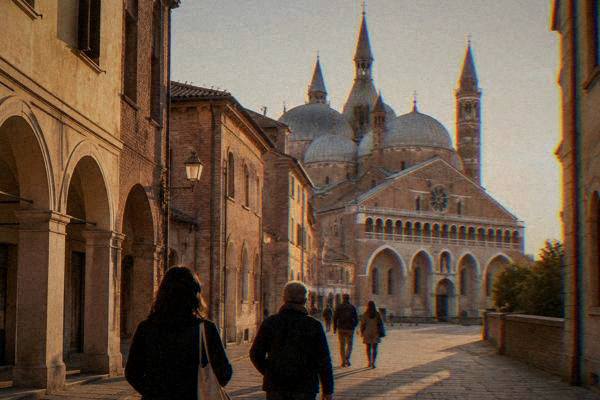
Oratory Of San Giorgio And The Scuola Del Santo
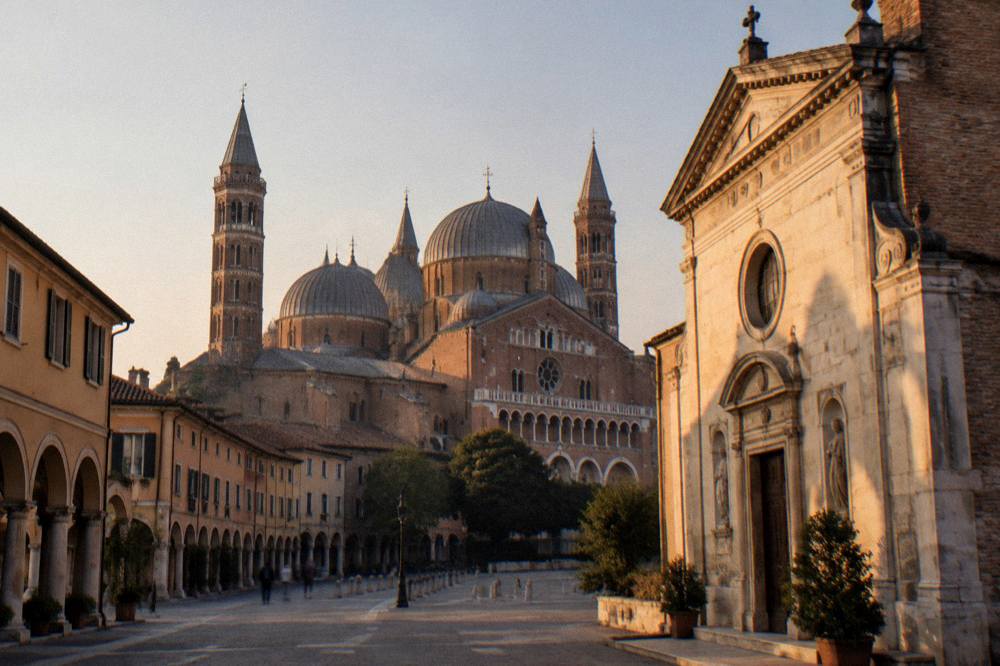
The Oratory of San Giorgio in Padua is one of the eight buildings that make up the Padova Urbs Picta UNESCO World Heritage listing, sitting inside the Santo complex next to the Basilica of Saint Anthony.
Short answer
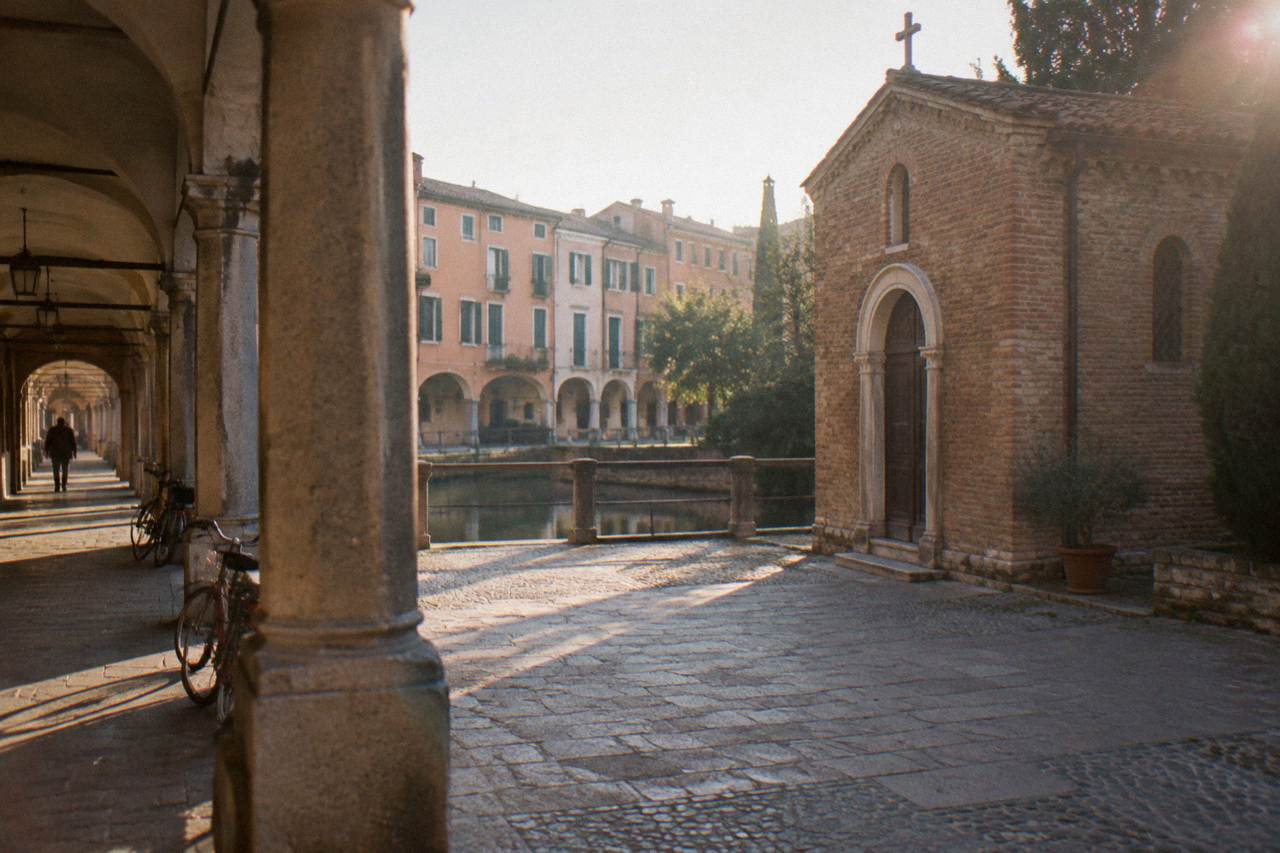
The Oratory of San Giorgio in Padua is a frescoed chapel inside the Santo complex beside the Basilica of Saint Anthony, and one of the eight sites inscribed as Padova Urbs Picta in 2021. Check current opening arrangements on the official ticket page before you go.
The Oratory of San Giorgio in Padua (Padova), in the Veneto in northern Italy, is a small frescoed chapel that belongs to one of the most important ensembles in Italian art: the fourteenth-century fresco cycles that UNESCO inscribed in 2021 under the name Padova Urbs Picta, "painted city". The oratory stands inside the Santo complex, the cluster of buildings around the Basilica of Saint Anthony, a few minutes on foot from Prato della Valle and the canal-ringed square the Venetian Senate declared communal space in 1767. This page explains what the oratory is, why UNESCO counts it, what surrounds it, and how to plan a visit around it.
What Is The Oratory Of San Giorgio In Padua?
The Oratory of San Giorgio is a chapel in Padua dedicated to Saint George, standing in the cloister area beside the Basilica of Saint Anthony, and it carries the fourteenth-century frescoes that placed it on UNESCO's Padova Urbs Picta list in 2021 alongside seven other buildings in the city's historic centre. It forms part of the Santo complex, the spiritual and artistic heart of the quarter described in the site's Santo and Prato area guide.
The oratory is a devotional building rather than a parish church, which is what "oratory" means: a place for prayer and worship attached to a larger institution. In Padua's case that institution is the Franciscan complex of the Santo, where Saint Anthony, who died on 13 June 1231, is buried. The basilica's own construction began in 1232, a year after the saint's death, and the complex grew around it over the following centuries, with the oratory among the buildings that cluster against the basilica's flank.
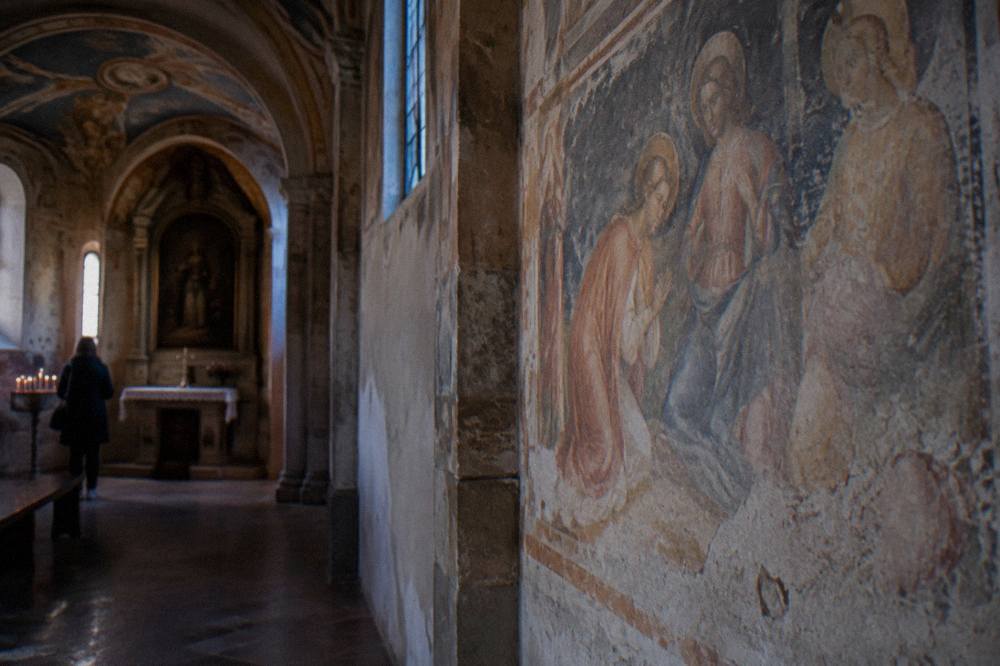
What draws art historians here is the fresco decoration. Padua's fourteenth-century wall paintings, spread across eight buildings, are the reason the city holds two UNESCO World Heritage listings rather than one: the Orto Botanico, inscribed in 1997, and the fresco cycles, inscribed in 2021. The oratory's painted walls belong to the second listing, and the UNESCO inscription records the ensemble under criterion (ii), recognising the exchange of artistic ideas the cycles represent.
Why Is The Oratory Part Of The Padova Urbs Picta UNESCO Listing?
UNESCO inscribed the Oratory of San Giorgio in 2021 as one of the eight components of Padova Urbs Picta, the serial listing that covers Padua's fourteenth-century fresco cycles, and the oratory sits on that list beside the Scrovegni Chapel, the Basilica of Saint Anthony and five other painted spaces in the old centre. The proclamation was made on Saturday 24 July 2021, and the full component list is fixed in the inscription documents.
The eight sites are worth knowing as a set, because they are the skeleton of any fresco-focused visit to Padua:
| # | Padova Urbs Picta component | Notes for visitors |
|---|---|---|
| 1 | Cappella degli Scrovegni | Giotto's cycle, painted 1303 to 1305; timed entry only |
| 2 | Chiesa dei Santi Filippo e Giacomo agli Eremitani | By the civic museums near the Scrovegni |
| 3 | Palazzo della Ragione | The great hall above the market squares, EUR 8 full |
| 4 | Cappella della Reggia Carrarese | The Carrara palace chapel |
| 5 | Battistero of the Cathedral | Frescoed baptistery by the Duomo |
| 6 | Basilica e Convento di Sant'Antonio | The Santo, free entry |
| 7 | Oratorio di San Giorgio | The chapel this page covers |
| 8 | Oratorio di San Michele | A second oratory in the historic centre |
The logic of the serial listing is that no single building tells the whole story. The Scrovegni Chapel, covered in the site's Scrovegni Chapel guide, holds Giotto's cycle, painted, as the chapel's own site puts it, "in just two years, between 1303 and 1305". The other seven components, the oratory included, carry the painting traditions that grew in Giotto's wake across the fourteenth century. UNESCO's criterion (ii) recognises that exchange of ideas, and the listing name itself, "painted city", describes what a visitor is actually walking through: a centre where whole walls, not just panels, were given over to narrative fresco.
Where Is The Oratory Of San Giorgio And How Do You Reach It In Padua?
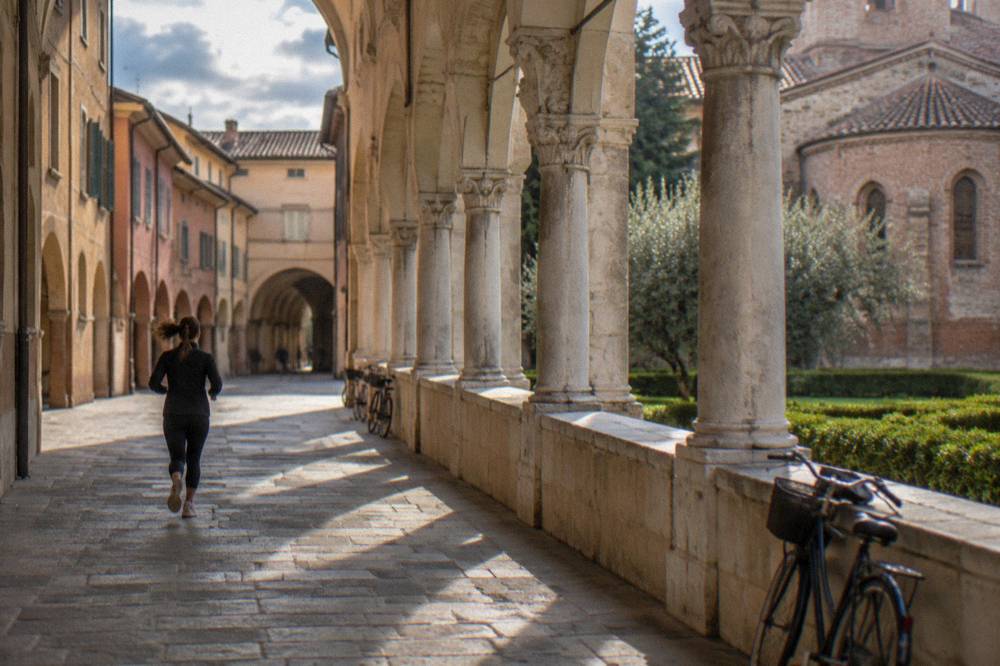
The Oratory of San Giorgio stands beside the Basilica of Saint Anthony in Padua's Santo quarter, about ten minutes on foot from Prato della Valle and roughly fifteen from the Scrovegni Chapel end of the centre, and the whole historic core is flat, compact and walkable, with the SIR1 tram and urban buses available for longer hops. The quarter's layout is described in the site's overview of things to do in Padua.
Arriving by train, you come into Padova station, and the city's transport makes the onward move simple. The urban TU1 ticket costs EUR 1.70 and covers 90 minutes on buses and the tram, or you can tap a contactless card on board. Tram SIR1 runs north to south through the city; the SIR3 line was still in pre-service testing in late 2026, so no opening date can be promised. The IAT tourist office sits at the station exit by platform 1, open Monday to Saturday 9:00 to 19:00 and Sundays 10:00 to 16:00, and a second IAT office stands at Piazza delle Erbe 52, both useful for orientation on arrival.
| Journey or service in Padua | Figure | Notes |
|---|---|---|
| Urban TU1 ticket | EUR 1.70 | 90 minutes, buses and tram |
| Airport bus to Venice Marco Polo | EUR 13 one-way, adult | About 45 minutes, runs every 40 minutes |
| Regional train to Venice | about EUR 5 | About 26 to 40 minutes |
| Regional train to Vicenza | about EUR 6 | About 16 to 25 minutes |
| Station left luggage | EUR 5 per 6 hours | Platform 1, daily 6:00 to 20:00 |
If you would rather have the quarter explained than navigate it alone, the Padova Highlights Tour with a local guide walks the city's principal sights with a guide who lives there: Check availability. The oratory quarter also features on the site's one-day itinerary, which sequences the Santo, Prato della Valle and the fresco sights in a workable order: one day in Padua.
What Can You See Around The Oratory Of San Giorgio In Padua?
Within a short walk of the Oratory of San Giorgio you can see the Basilica of Saint Anthony, which is free to enter and holds the saint's tomb and the Chapel of the Relics, Donatello's high altar inside and his Gattamelata equestrian statue in the square outside, Prato della Valle with its canal and double ring of statues, and the Scuola del Santo attached to the basilica complex. The density of this quarter is the reason to give it half a day rather than a fleeting stop.
The basilica itself needs no ticket. Entry is free, the saint's tomb and the Chapel of the Relics are accessible, and the basilica's own regulation asks only for dress suitable to a church environment. Hours shift around services, so check the basilica's own site before planning your visit. Donatello's work in the presbytery and the Gattamelata statue in the piazza are reported by the sources that describe the complex; print nothing about them beyond their presence. Other pages covering the same trip are gathered on Padua Travel Guide.
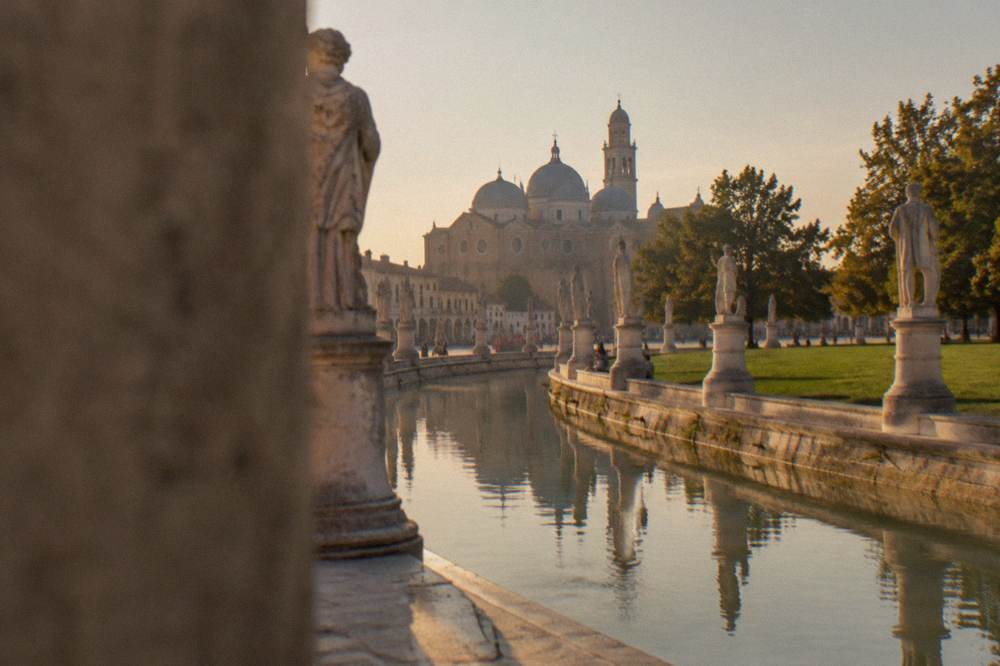
Prato della Valle lies just south. The square's canal is ringed by a double row of numbered statues of famous figures, and the Venetian Senate declared the space communal in 1767, after the reclamation carried out under Andrea Memmo. No area figure or ranking can be printed, but the shape speaks for itself: an island, an oval of water, and statuary facing inward from the rim. The Saturday market fills the square, running 8:00 to 19:00 in winter and 8:00 to 20:00 in summer per the Comune di Padova's market page, and the antiques market arrives every third Sunday of the month.
| Sight near the Oratory of San Giorgio | Admission | Notes |
|---|---|---|
| Basilica of Saint Anthony | Free | Hours vary around services, check the basilica's site |
| Prato della Valle | Free public square | Saturday market, antiques third Sunday monthly |
| Scrovegni Chapel | EUR 15 full + EUR 1 booking fee | Timed entry, about 15 minutes inside |
| Orto Botanico | EUR 15 full from 1 Sept 2026 | EUR 12 winter full, Nov to Feb |
| Palazzo della Ragione | EUR 8 full, EUR 6 reduced | Tue to Sun 9:00 to 19:00 |
The Scrovegni Chapel is the one sight in this orbit that punishes improvisation. Entry is timed, with at most 25 people admitted every 15 minutes, about 15 minutes inside, and you must be at the entrance five minutes before the slot printed on your ticket; latecomers are denied re-entry without a new paid booking. There is no same-day online booking, so check availability at the museum ticket office if you arrive without a reservation. The daytime ticket at EUR 15 full also covers the Musei Civici Eremitani and Palazzo Zuckermann. The chapel is closed 16 to 27 November 2026 for the annual fresco inspection.
How Much Do Padua's Fresco Sights And Civic Museums Cost?
Padua's paid fresco sights cluster around a handful of set prices: the Scrovegni Chapel at EUR 15 full plus a EUR 1 booking fee, Palazzo della Ragione at EUR 8 full with EUR 6 concessions, the Orto Botanico at EUR 15 full from 1 September 2026, and the Palazzo del Bo historical tour at EUR 10 full, while the Basilica of Saint Anthony is free and the Torre dell'Orologio is free with a mandatory booking on set days. The oratory's own admission is not among the published figures, so check the current price on the official ticket page before booking.
The civic museums run on a single published tariff table. What follows is what the museums' own price page states, with the reported figures marked by their attribution in the notes column:
| Museum or sight in Padua | Full price | Concessions | Notes |
|---|---|---|---|
| Scrovegni Chapel + museums | EUR 15 + EUR 1 fee | EUR 11, residents EUR 5 | Includes Eremitani and Zuckermann |
| Palazzo della Ragione | EUR 8 | EUR 6 | Optional booking adds EUR 1 |
| Museo del Risorgimento (Pedrocchi) | EUR 5 | EUR 4 / EUR 3 | Per the museums' tariff page |
| Loggia and Odeo Cornaro | EUR 5 | EUR 4 / EUR 3 | Seasonal hours, per the museums' page |
| Torre dell'Orologio | Free | Booking required | Set days, per the museums' page |
| Palazzo del Bo historical tour | EUR 10 | EUR 8 / EUR 6 | About 45 minutes, alternating languages |
Two practical notes. The Basilica of Saint Anthony's hours are not published in a form this site can state, and the oratory's own arrangements likewise: for both, the basilica complex's official channels are the reference. And if a combined card tempts you, treat it carefully: the Scrovegni Chapel always needs its own timed booking even with a card in hand, so confirm any card's terms on the official museums site before buying. The Padova Urbs Picta card guide on this site covers the details.
When Is The Best Time Of Year To Visit Padua For The Frescoes?
Padua's climate, per the ERA5 reanalysis for 1991-2020, runs from a January mean high of 7.3 C with lows around freezing to July and August mean highs of 28.8 C, with November the month carrying the highest rain total at 114 mm, so the shoulder months pair milder temperatures with the painted interiors, which hold steady conditions year-round regardless of weather outside. The frescoes are the constant; the climate is the variable you plan around.
The monthly picture, from the modelled normals for the grid cell at Padua's centre:
| Month | Mean high C | Mean low C | Rain mm |
|---|---|---|---|
| Jan | 7.3 | -0.2 | 53.6 |
| Feb | 9.4 | 0.6 | 57.9 |
| Mar | 13.7 | 3.9 | 67.2 |
| Apr | 17.6 | 7.8 | 84.4 |
| May | 22.1 | 12.4 | 99.7 |
| Jun | 26.2 | 16.6 | 81.0 |
| Jul | 28.8 | 18.9 | 62.1 |
| Aug | 28.8 | 19.2 | 78.7 |
| Sep | 23.6 | 14.9 | 105.5 |
| Oct | 18.4 | 10.6 | 105.4 |
| Nov | 12.6 | 5.5 | 114.0 |
| Dec | 7.8 | 0.7 | 69.9 |
Snow is part of the winter picture but a modest one: a long Padua climate series published in a 2025 study reports an average of about 4.4 snowy days per year across 1995 to 2024, down from about 10.4 in the 1785 to 1814 window, and seasons with none at all occur. The event calendar also matters if your visit has a devotional angle: the Tredicina, the thirteen days of preparation for the feast of Saint Anthony, ran 31 May to 12 June in 2026 with the feast and procession on 13 June, and it is an annual event, so the 2026 edition stands as the latest. No 2027 date has been announced. For a full seasonal rundown, see the site's best time to visit Padua guide and the Padua weather page.
Which Day Trips From Padua Sit Closest To The Santo Quarter?
Padua's position in the Veneto puts Venice 36 km away in a straight line, Vicenza 30 km, Verona 69 km and Bologna 110 km, with the Euganean Hills towns of Abano Terme and Montegrotto Terme just 8 and 11 km out, so the Santo quarter works as a base point for train day trips in every direction. These figures are straight-line distances computed from map data, not road distances, and no drive times can be given.
| Day trip destination | Straight-line km from Padua | Train time (about) |
|---|---|---|
| Abano Terme | 8 | Regional rail and bus links |
| Montegrotto Terme | 11 | Regional rail and bus links |
| Vicenza | 30 | 16 to 25 minutes |
| Venice | 36 | 26 to 40 minutes |
| Arqua Petrarca | 20 | Hills bus lines, check the planner |
| Monselice | 21 | Hills rail line |
| Verona | 69 | 43 to 60 minutes |
| Bologna | 110 | High-speed rail, times vary |
Venice is the classic pairing, and the regional fare runs about EUR 5. Note the access-fee position if you go: the 2026 Venice day-tripper fee trial ended on 27 July 2026, the fee does not apply from that date, and no 2027 decision had been published at the close of the trial. Nothing is owed by a Padua-based day-tripper under the arrangement as it stood after the trial's end, but confirm on the Venice access-fee pages before a 2027 visit.
The Euganean Hills make a quieter counterpoint to the fresco churches. Arqua Petrarca, 20 km out, charges EUR 6 full for Casa del Petrarca, and the village is one of the region's preserved hill settlements. Monselice and Este sit 21 and 26 km away. The site's Euganean Hills guide and the Arqua Petrarca page cover them in detail. For the northern option, the Bassano del Grappa guide and the answer to is Bassano del Grappa worth visiting weigh that trip.
How Does The Oratory Compare With Padua's Other Frescoed Spaces?
Against the Scrovegni Chapel the Oratory of San Giorgio is smaller, less booked-out and part of a wider complex rather than a standalone monument, but it shares the same UNESCO inscription and the same fourteenth-century painting tradition, while the nearby Baptistery of the Cathedral offers a third variant: a wholly frescoed interior within the Duomo complex, coverable on the same walk through the centre. The differences are practical as much as artistic.
The Scrovegni is the headline and the constraint. Its timed-entry regime, 25 people every 15 minutes, about 15 minutes inside, booking in advance, exists to protect Giotto's surface, and the annual inspection closure in November 2026 shows how seriously that protection is taken. The oratory asks less machinery of you: it belongs to the Santo complex, whose basilica is free, and whose quarter rewards slow looking. The Baptistery and Cathedral page on this site covers the third painted space, and the Padua churches guide strings the sacred buildings together.
A useful framing for a fresco-first day: begin at the Scrovegni in your timed slot, cross to the Eremitani church beside it, walk the arcades to Piazza delle Erbe and Palazzo della Ragione, then continue south to the Santo quarter for the basilica, the oratory and Prato della Valle. That is the route the Padua in two days itinerary expands, and it can be compressed, at cost, into the one day in Padua from Venice plan.
Two closing practicalities. Padua's tourist tax, the imposta di soggiorno, is collected by your accommodation, applies per person per night for at most five consecutive nights, with under-16s and hostel guests exempt, and its rates vary by category, so expect it on your hotel bill rather than at any monument. And the emergency number across Italy, Padua included, is 112. With those set, the Santo quarter and its painted chapel repay an unhurried half day as well as any corner of the Veneto.
Common Questions About The Oratory Of San Giorgio In Padua
Is the Oratory of San Giorgio part of a UNESCO site?
Yes. It is one of the eight components of Padova Urbs Picta, Padua's fourteenth-century fresco-cycle listing, inscribed by UNESCO on 24 July 2021 under criterion (ii). The inscription covers the Scrovegni Chapel, the Basilica of Saint Anthony, the oratory and five other painted buildings in the historic centre.
Where is the Oratory of San Giorgio in Padua?
It stands within the Santo complex beside the Basilica of Saint Anthony, in the quarter southwest of the historic centre, a short walk from Prato della Valle. The site's Santo and Prato area guide describes the layout of the quarter around it.
How much does it cost to visit the Oratory of San Giorgio?
The oratory's admission price is not among the published civic-museum figures this site can state. Check the current price on the official ticket page before booking. The neighbouring Basilica of Saint Anthony is free to enter.
Can you visit the Oratory of San Giorgio and the Scrovegni Chapel on the same day?
Yes, they are within an easy walk of each other across the flat centre. The constraint is the Scrovegni Chapel itself: entry is timed, booked in advance, at most 25 people every 15 minutes, about 15 minutes inside, and it is closed 16 to 27 November 2026 for the annual fresco inspection.
What else is there to see near the Oratory of San Giorgio?
The Basilica of Saint Anthony with the saint's tomb and the Chapel of the Relics, Donatello's high altar and the Gattamelata statue in the square, Prato della Valle with its canal and double ring of statues, and the Saturday and third-Sunday markets the Comune schedules there. The Scuola del Santo adjoins the basilica complex.
Is the Oratory of San Giorgio in Padua or Venice?
In Padua, an inland city in the Veneto about 36 km in a straight line from Venice. The oratory belongs to Padua's Santo complex; Venice is a separate city and a separate day trip by train, about 26 to 40 minutes away.