Padova Urbs Picta Card: What It Covers And When It Pays
Padua sells a visitor card built around its fourteenth-century fresco cycles, the Padova Urbs Picta Card, sold through the city's museum and tourism offices. This guide explains what is known about it, how single-site tickets compare, and the one booking it can never replace.
Short answer
The Padova Urbs Picta Card is Padua's visitor pass for the fresco-cycle sites of the Padova Urbs Picta UNESCO listing. It is sold by the city's museums and tourist offices; its current price and inclusions must be checked on the official Padova museums site, and the Scrovegni Chapel always needs its own timed booking whatever ticket you hold.
Padua, the inland Veneto city about 36 km in a straight line from Venice, wraps its biggest ticketing story around paint: the fourteenth-century fresco cycles that earned the city its second UNESCO World Heritage listing in 2021, under the name Padova Urbs Picta. Around that listing the city's museums and tourist offices sell a visitor pass, the Padova Urbs Picta Card, and this Padua Travel Guide page lays out what a planner actually needs: what the card is for, how it interacts with the Scrovegni Chapel's timed-entry system, what the individual sites cost on their own, and how to decide between a pass and single tickets without guessing.
One point shapes everything else on this page, so it comes first: the Scrovegni Chapel, the single most booked site in the group, runs on timed entry with at most 25 people admitted every 15 minutes, and the chapel's own booking page states that every visitor needs a reserved slot regardless of any other ticket held. No pass replaces that booking. Everything a card can do for a Padua itinerary happens around that fixed point.
What Is The Padova Urbs Picta Card In Padua?
The Padova Urbs Picta Card is the visitor pass Padua's civic museum system and tourist offices sell around the city's fresco-cycle heritage, the eight fourteenth-century sites inscribed by UNESCO in 2021 as Padova Urbs Picta. It is a city-card product of the kind sold across Italian art cities: one purchase, several sites.
Its current price, validity period and full inclusion list are set by the museums and must be checked on the official Padova museums site before buying, and a Scrovegni Chapel timed booking is still required whatever the card covers.
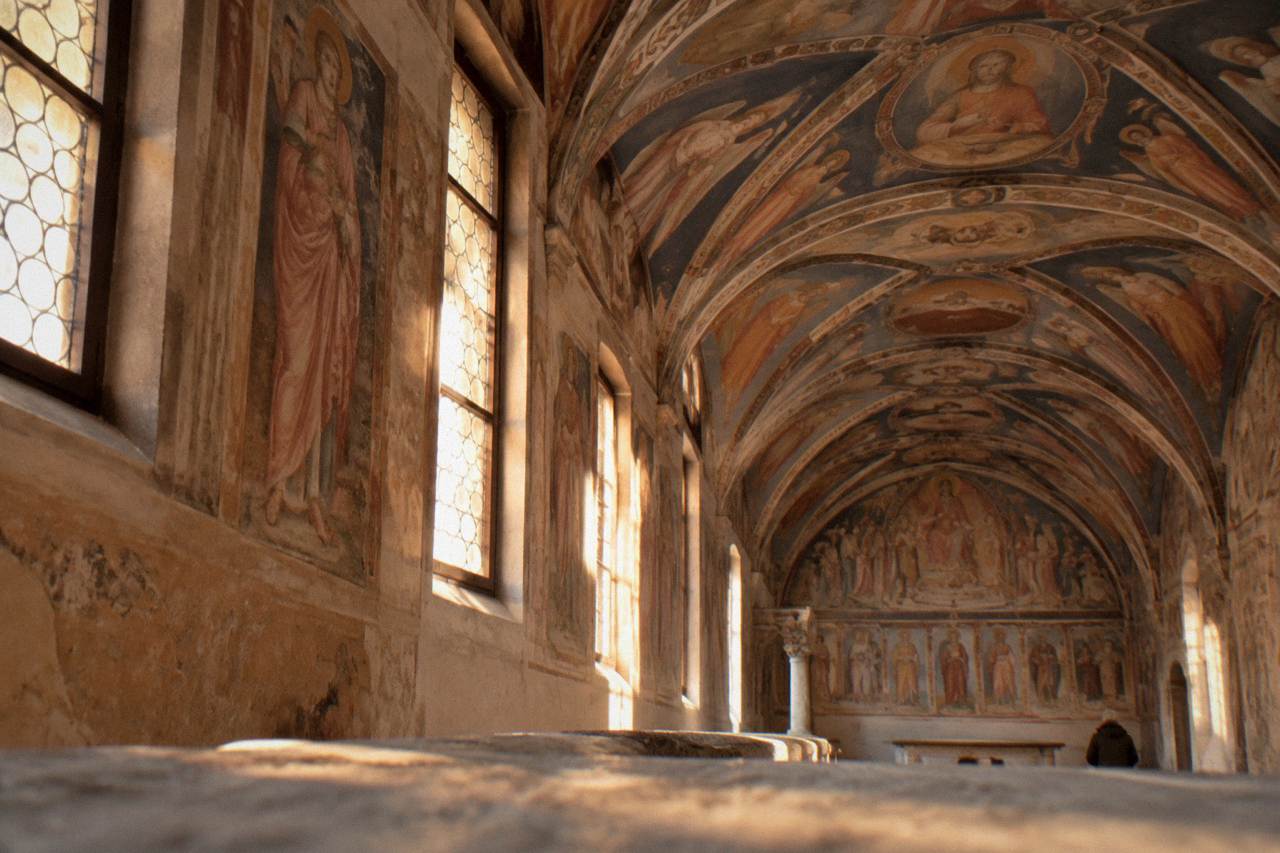
The card exists because of how Padua's heritage is distributed. Unlike a city with one dominant museum, Padua's painted inheritance is scattered across eight separate complexes in the compact old centre: the Scrovegni Chapel, the Church of the Santi Filippo e Giacomo agli Eremitani, Palazzo della Ragione, the Chapel of the Reggia Carrarese, the Baptistery of the Cathedral, the Basilica and Convent of Saint Anthony, the Oratory of San Giorgio and the Oratory of San Michele. UNESCO inscribed the group in 2021 under criterion (ii), recognising the fresco cycles as a body of work that changed the direction of European painting. Giotto's cycle in the Scrovegni Chapel, painted between 1303 and 1305, is the anchor, but the listing is explicitly collective.
That collective listing is the commercial logic of the card. A visitor who comes for Giotto is, in UNESCO's framing, visiting one-eighth of a single heritage object, and the city's museum system packages the sites accordingly. The practical question for a planner is not whether the card exists, it does, and it is sold by the city's own offices, but whether the packaging suits the days available and the sites a given traveller actually wants to see. The rest of this page works through that question with the figures that are published site by site.
For the full background on the listing itself, the companion page on Padua's Urbs Picta UNESCO inscription walks through all eight sites and what to look for in each. For the chapel's booking mechanics, Scrovegni Chapel tickets and timing is the dedicated deep dive.
Which Sites Sit Behind The Padova Card In Padua?
The eight sites behind the fresco-cycle group are the Scrovegni Chapel, the Church of the Santi Filippo e Giacomo agli Eremitani, Palazzo della Ragione, the Chapel of the Reggia Carrarese, the Baptistery of the Cathedral, the Basilica and Convent of Saint Anthony, the Oratory of San Giorgio and the Oratory of San Michele, all inside Padua's old centre and all part of the 2021 Padova Urbs Picta inscription.
The exact set a given card purchase covers must be confirmed on the official Padova museums site, because inclusion lists are the museums' to set and change.
What can be stated plainly is what each site is, because that comes from the UNESCO inscription itself rather than from any commercial packaging. The table below is the map of the group: eight buildings, all reachable on foot within the historic centre, all carrying fourteenth-century painting.
| Site in the Padova Urbs Picta group | What the painting is |
|---|---|
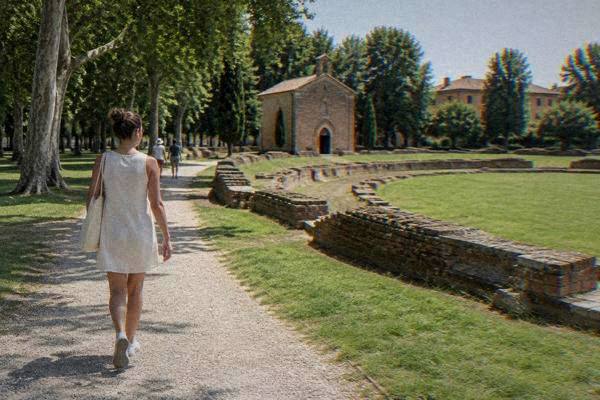
| Scrovegni Chapel | Giotto's fresco cycle, painted 1303 to 1305, on the site of Padua's Roman amphitheatre |
| Church of the Santi Filippo e Giacomo agli Eremitani | Frescoed church beside the civic museums, next to the Scrovegni Chapel |
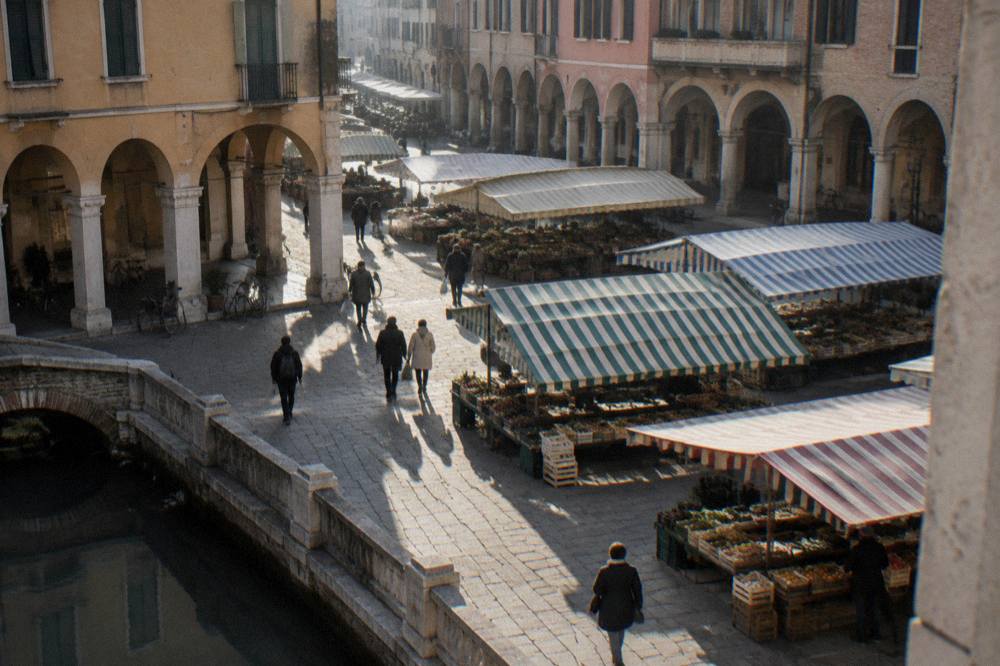
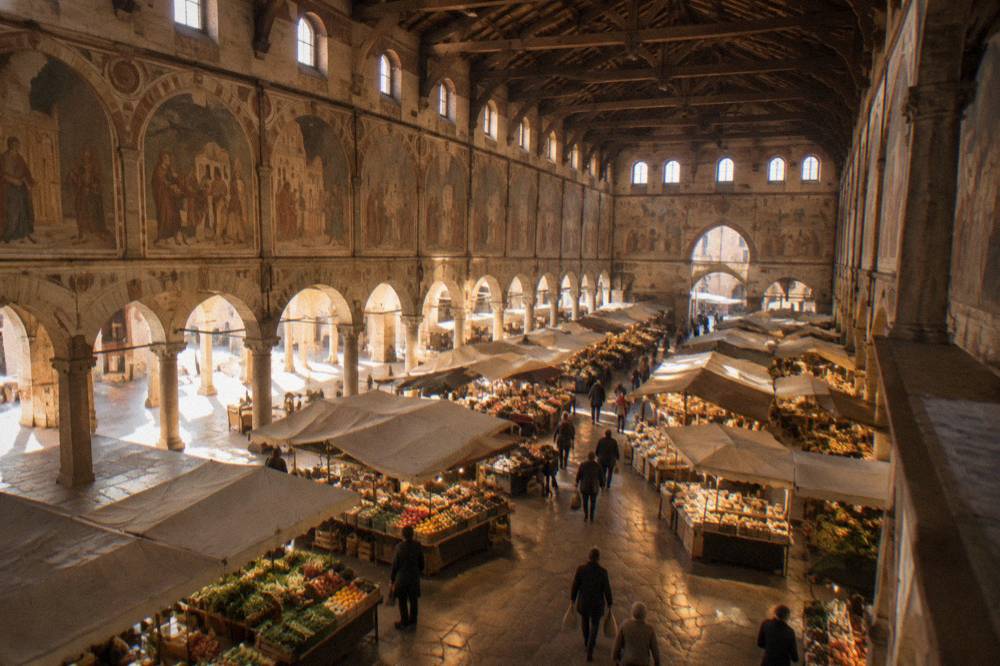
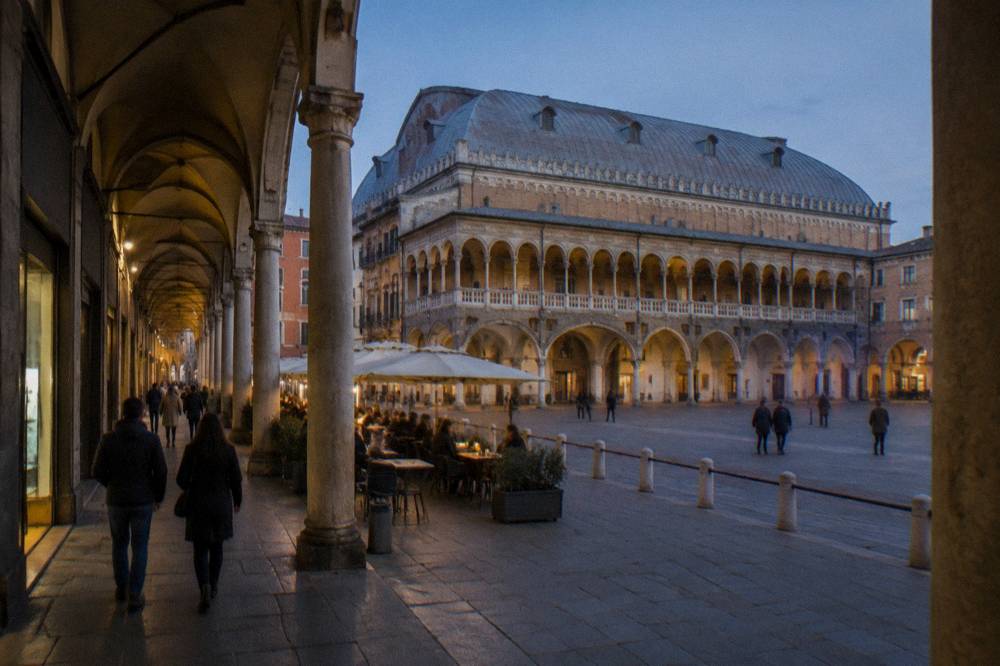
| Palazzo della Ragione | The great painted hall above the market squares, with frescoed cycles in the salone |
| Chapel of the Reggia Carrarese | Painted chapel of the Carrara lords' palace |
| Baptistery of the Cathedral | Giusto de' Menabuoi's fresco cycle covering the interior |
| Basilica and Convent of Saint Anthony | Frescoed interiors of the Santo, begun in 1232 |
| Oratory of San Giorgio | Frescoed oratory near the Basilica |
| Oratory of San Michele | Small painted oratory in the old centre |
Two practical notes sit behind the table. First, the Basilica of Saint Anthony is free to enter and keeps the tomb of the Saint and the Chapel of the Relics; whether a card adds anything there is a question of access to frescoed areas the museums define, so check the official listing before counting it toward a pass's value. Second, the two oratories and the Reggia Carrarese chapel run on limited, seasonal access schedules set by the museum system, and Palazzo della Ragione is closed on non-holiday Mondays; the museums' own pages carry the current openings. Plan the fresco itinerary around fixed anchor bookings and treat the smaller oratories as flexible fill-ins.
Does The Padova Card Cover The Scrovegni Chapel Booking In Padua?
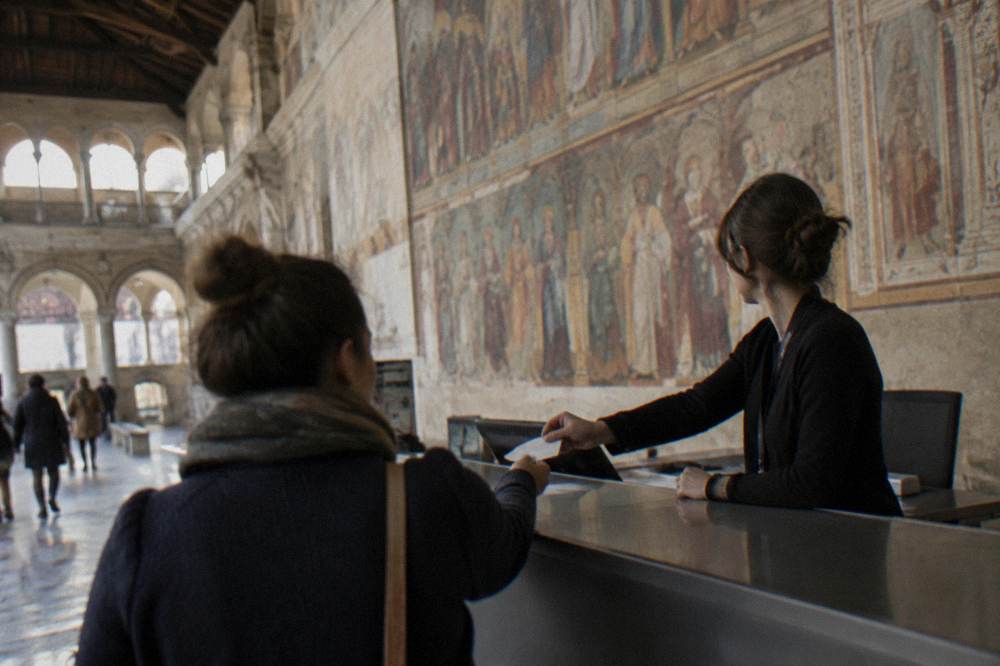
No card replaces the Scrovegni Chapel's own timed booking, and the chapel's own booking page is explicit about it: entry is by reserved slot only, at most 25 people every 15 minutes during the day, about 15 minutes inside the chapel after a stop in the climate-controlled waiting room, with arrival required five minutes before the slot. A late arrival means re-entry is denied without a new paid booking, and there is no same-day online booking for the chapel at all.
This is the single most consequential fact for anyone weighing a card, so it deserves its own arithmetic. The daytime Scrovegni ticket, at EUR 15 full price and EUR 11 reduced plus a EUR 1 booking fee per person for the chapel, already bundles the Musei Civici Eremitani and Palazzo Zuckermann into the same ticket, according to the museums' own price list. Residents of Padua pay EUR 5. The evening programme, Giotto sotto le stelle, runs from 25 March to 1 November with entries every 20 minutes from 19:00 to 22:00, and that ticket is chapel only. The chapel is open 9:00 to 19:00 with the last entry at 18:45, and it closes entirely from 16 to 27 November 2026 for the annual fresco inspection.
| Scrovegni Chapel ticket | Price | What it includes |
|---|---|---|
| Daytime, full | EUR 15 plus EUR 1 booking fee | Chapel slot, Musei Civici Eremitani, Palazzo Zuckermann |
| Daytime, reduced | EUR 11 plus EUR 1 booking fee | Same three sites, for eligible reduced categories |
| Daytime, Padua residents | EUR 5 | Same three sites |
| Evening, Giotto sotto le stelle | Chapel-only ticket, per the museums' price list | Chapel slot only, 25 March to 1 November, 19:00 to 22:00 |
| Family card | EUR 30 plus EUR 1 per person chapel booking | Up to two adults and two under-18s, per the museums' price list |
The reading for a card buyer is straightforward: whatever a pass covers, the chapel slot is a separate, scarce, bookable asset. Advance slots are released on the chapel's own booking site and by phone at +39 049 2010020, and a traveller who books a pass but no slot has bought everything except the one thing that sells out. Book the slot first, then decide how the remaining sites are best paid for.
How Much Does The Padova Card Cost In Padua?
The Padova Urbs Picta Card's current price is set by the city's museum system and is not stated on this page, because the figure the museums publish is the only one that counts: check the current price on the official Padova museums ticket page before buying. The same check covers the validity period and the exact inclusion list, both of which the museums define.
What is fixed and knowable in advance is the arithmetic of the individual sites, listed below, which any traveller can set against whatever price the official page shows on the day.
That is an unsatisfying answer in the way honest answers often are, and it is better than the alternative: a card price copied from an out-of-date forum post or a travel article that has sat unedited through a tariff change. Padua's civic museums revised their prices recently enough that assumptions age badly; the Orto Botanico, for example, moved to a EUR 15 full tariff from 1 September 2026. Tariffs move, so the official page is the only source worth acting on.
What a planner can do in advance is build the comparison base. The table below gathers the published single-site prices for the main ticketed sites a Padua visitor actually encounters, so that the official card price can be checked against a real basket the moment it is known.
| Ticketed site in Padua | Published single-site price |
|---|---|
| Scrovegni Chapel daytime (full) | EUR 15 plus EUR 1 booking fee, includes Eremitani museums and Palazzo Zuckermann |
| Palazzo della Ragione | EUR 8 full, EUR 6 concessions, per the museums' price list |
| Orto Botanico | EUR 15 full from 1 September 2026; EUR 12 winter full, November to February; EUR 10 reduced; EUR 8 winter reduced |
| Palazzo del Bo guided tour | EUR 10 full; EUR 8 reduced; EUR 6 for ages 6 to 25, per the university's tariff page |
| Museo del Risorgimento at Stabilimento Pedrocchi | EUR 5 full, per the museums' price list |
| Loggia and Odeo Cornaro | EUR 5 full, seasonal openings, per the museums' price list |
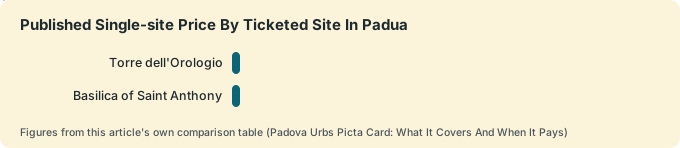
| Torre dell'Orologio | Free with mandatory booking on set days, per the museums' price list |
| Basilica of Saint Anthony | Free entry |
Note what is in that table and what is not: the Orto Botanico and Palazzo del Bo are university-run, not part of the civic museum system, so no assumption should be made that a city card reaches them. The two UNESCO listings are separate instruments too; the botanical garden was inscribed in 1997 and the fresco cycles in 2021, and a fresco-site card speaks to the second, not the first. If the garden and the university tour are on the list, price them separately every time.
Is The Padova Card Worth It For A Short Padua Visit?
Whether the card pays depends on a comparison only the traveller can run on the day: the official card price, checked on the museums' site, set against the single-site basket a specific itinerary actually needs. A one-day fresco-focused visit centred on the Scrovegni daytime ticket already carries two museums inside one EUR 15 purchase, which shrinks what a pass has left to add; a slower visit spread across the Palazzo della Ragione, the oratories and the Baptistery has more sites for a card to bundle.
The honest framing is a decision procedure, not a verdict. Run it in four steps. Step one: fix the Scrovegni slot, because it is the scarce asset and everything else schedules around it. Step two: list the sites the itinerary genuinely includes, using the eight-site table above and the single-site price table. Step three: check the official card price and inclusion list on the museums' ticket page. Step four: compare, remembering that the chapel booking fee and the separate university sites sit outside any bundle.
Two itinerary shapes make the comparison swing. A one-day Padua itinerary that touches the chapel, the Basilica and the market squares may find the daytime chapel ticket plus free basilica entry already does the work, with the card adding little beyond convenience. A fresco-completion itinerary, chasing all eight Urbs Picta sites over two or three days, repeats small ticket purchases at Palazzo della Ragione, the oratories and the Baptistery, and that is the shape a card is built for. The Padua on a budget page carries the free tier of the city for the days between paid sites.
Season matters for access rather than for price. The oratories run seasonal hours, the Scrovegni closes 16 to 27 November 2026 for its annual fresco inspection, and the city's climate, per the ERA5 reanalysis for 1991-2020, puts November at 114 mm of rain, the highest monthly total of the year, against 53.6 mm in January: an indoor-painting itinerary is a sound November plan, provided the chapel's closure window is respected. The best time to visit Padua page carries the month-by-month detail.
Where Do You Buy The Padova Card And Tickets In Padua?
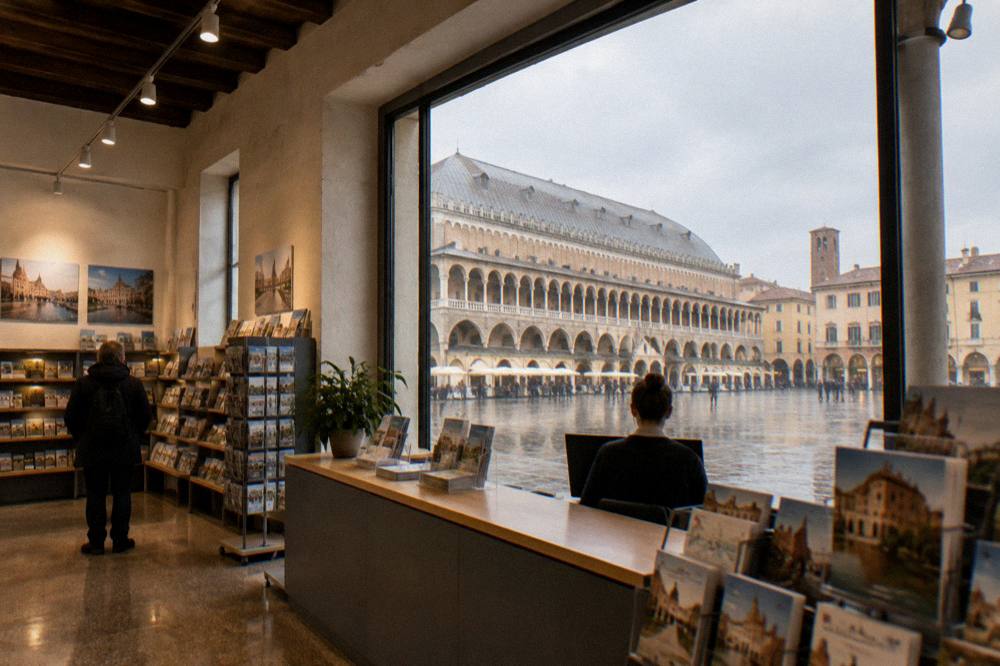
The card is sold through the city's own channels, the Padova civic museums' ticket system and the IAT tourist information offices, while the Scrovegni Chapel slot is booked in advance on the chapel's own booking site or by phone at +39 049 2010020, with no same-day online booking; unbooked visitors are told by the chapel to check availability in person at the museum ticket office. The IAT offices sit at the station, by the exit of platform 1, and in the centre at Piazza delle Erbe 52.
The station office opens Monday to Saturday 9:00 to 19:00 and Sundays and holidays 10:00 to 16:00; the Piazza delle Erbe office is the central counterpart, and both close 25 and 26 December and 1 January. For a visitor arriving by train, the sequence is practical: the station office is on the way out of the platform 1 exit, and the Padua train station page covers the arrival logistics, including the left-luggage office on platform 1, open daily 6:00 to 20:00 at EUR 5 per 6 hours, useful on a card-heavy day spent moving between sites with bags.
Booking windows reward early action. Chapel slots are published well ahead on the chapel's booking site, and the daytime ticket price list is on the museums' pages. For the card itself, buy where the current price is displayed, which means the museums' own ticket channel or an IAT desk, and photograph or keep the inclusion statement: with eight sites and several operators involved, the receipt is the reference that resolves any ambiguity at a door.
How Does Transport Fit Around A Card Day In Padua?
Padua's paid transport is cheap and simple enough that it rarely changes the card decision: the urban 90-minute ticket is EUR 1.70, with tap-on contactless payment accepted on board buses and the SIR1 tram, and the whole Urbs Picta group sits inside the walkable old centre, so the transport line in any card comparison is either zero or a couple of single tickets rather than a pass-size number. The airport bus from Venice Marco Polo is EUR 13 one-way and takes about 45 minutes.
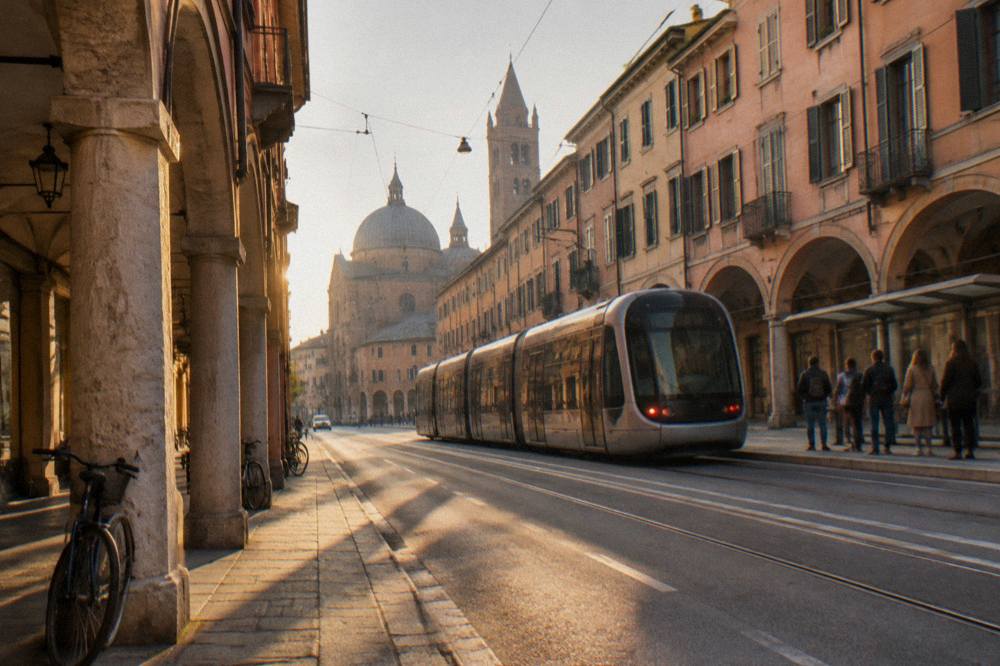
The fresco sites cluster tightly. The Scrovegni Chapel, the Eremitani church, Palazzo della Ragione, the Cathedral Baptistery and the oratories around the Basilica all lie within the historic centre, and the getting around Padua page maps the walk. The tram network's existing SIR1 line runs north to south; a second line, SIR3, is in pre-service testing with service targeted toward the end of 2026, but no opening date should be assumed when planning. Buses and the tram take the EUR 1.70 ticket or a contactless card tap, per Busitalia's fare page.
| Transport around Padua | Fare or figure |
|---|---|
| Urban 90-minute ticket, TU1 zone | EUR 1.70 |
| Urban daily ticket, TU1 zone | EUR 4.70, per Busitalia's fare page |
| Contactless tap on board | EUR 1.70, one tap per vehicle within the time window |
| Airport bus, Padua to Venice Marco Polo | EUR 13 one-way adult, about 45 minutes, EUR 6.50 for a child to 11 |
| Train, Padua to Venezia Santa Lucia | About 26 to 40 minutes, regional fare about EUR 5 |
| Train, Padua to Vicenza | About 16 to 25 minutes, regional fare about EUR 6 |
The reason this table matters to a card page is proportion. A traveller who walks the fresco route, as the geography invites, spends nothing on urban transport inside the card's footprint; the transport lines in a Padua budget are the airport bus and the day trips. The Venice airport to Padua page covers the arrival transfer, and the airport bus runs 54 times a day, every 40 minutes, from early morning to late evening in both directions.
Which Paid Experiences Pair Well With The Padova Card In Padua?
The card covers entry to sites, not interpretation, so the natural pairings are guided experiences that add a guide's layer on top of the painted walls: a guided Scrovegni Chapel tour, a historic-centre walk, or a day trip into the Euganean Hills and the Brenta Riviera once the fresco itinerary is booked. None of these substitutes for the chapel slot, and none is required; the free tier of the city, the Basilica, the squares and the markets, stands on its own.
The strongest pairing for a first visit is a guided walk of the old centre, which stitches the eight Urbs Picta sites into one narrative before or after the chapel slot; a small-group or private walk with a local guide does exactly this, and the sites themselves reward context, from Giotto's 1303 to 1305 cycle to the Menabuoi Baptistery. Beyond the city walls, two directions suit a card-based stay: the Euganean Hills to the south, where Villa dei Vescovi near Torreglia charges EUR 11 for adults and EUR 6 for ages 6 to 18 per the FAI's own tariff page, and the Brenta Riviera villas toward Venice, a boat-and-villa landscape reachable on a organised day trip. Casa del Petrarca at Arqua Petrarca, about 20 km away in a straight line, is EUR 6 full and EUR 4 reduced, and the Vicenza run, 30 km away, puts the Teatro Olimpico at EUR 12 full and EUR 9 reduced per its own visitor page.
| Day-trip site from Padua | Straight-line distance | Entry price |
|---|---|---|
| Villa dei Vescovi, Torreglia | About 11 km | EUR 11 adult, EUR 6 ages 6 to 18, family EUR 28 |
| Arqua Petrarca, Casa del Petrarca | About 20 km | EUR 6 full, EUR 4 reduced, closed non-holiday Mondays |
| Teatro Olimpico, Vicenza | About 30 km | EUR 12 full, EUR 9 reduced |
| Prato della Valle, Padua | Inside the city | Free, open public space |
For villa visits, an entry ticket alone can be booked ahead, and for Villa dei Vescovi the option exists to Check availability alongside the planning on this site's things to do in Padua roundup. A card-based city stay and a hills or villa afternoon are not competing plans; the fresco sites close by late afternoon and the evening aperitivo culture of Piazza delle Erbe and Piazza dei Signori fills the gap, as the spritz in Padua page explains, Aperol having been created in Padua in 1919.
What Should A Card Buyer Check Before Travelling To Padua?
Four checks cover nearly every failure mode: the Scrovegni slot is booked for a date and time that exists, remembering the chapel closes 16 to 27 November 2026; the official card price and inclusion list are read on the museums' own ticket page on the day of purchase; the smaller oratories' seasonal openings are confirmed for the travel dates; and the arrival plan accounts for the airport bus timetable or train connections rather than assumptions. Everything else in a Padua visit is tolerant of improvisation.
The November closure is the trap worth repeating, because it collides with the rainiest month in the ERA5 1991-2020 reanalysis for Padua, November's 114 mm, precisely when an indoor fresco itinerary is most attractive. A late-November traveller should shift the chapel to another trip day or plan around Palazzo della Ragione, the Eremitani museums and the university sites, and check the museums' pages for what the inspection window affects beyond the chapel itself. Openings for the Torre dell'Orologio run only on set weekdays with a mandatory booking through the contacts on the museums' page, so that visit is planned, not improvised.
The final check is energy budgeting rather than logistics. The Scrovegni visit itself is about 15 minutes inside the chapel, a deliberately short encounter with a fragile interior, and travellers who expect an hour inside Giotto's cycle plan the wrong day around it. The fuller Padua experience is the sum of the eight sites, the two market squares, the Basilica and the university's Palazzo del Bo with its 1594 anatomical theatre, and the Padua museums page sequences them all. A card is only the payment layer on top of that geography.
Common Questions About The Padova Card In Padua
Does the Padova card include the Scrovegni Chapel?
The chapel requires its own timed booking whatever ticket you hold, at most 25 people every 15 minutes, and there is no same-day online booking. Whether a card purchase bundles the chapel's admission or its booking fee is defined by the museums' current inclusion list; check the official Padova museums site, and book the slot on the chapel's own booking page either way.
How much does the Padova Urbs Picta Card cost?
The price is set by the city's museum system and changes with tariff revisions, so check the current price on the official Padova museums ticket page before buying. Set it against the published single-site prices on this page to judge value for your own itinerary.
Is the Orto Botanico included in the Padova card?
The Orto Botanico is run by the University of Padua, not the civic museums, and its tickets moved to EUR 15 full from 1 September 2026, EUR 12 in winter. Treat it as a separate purchase unless the museums' current inclusion list explicitly says otherwise.
Can I visit the Scrovegni Chapel without a booking?
No same-day online booking exists. The chapel's own guidance says unbooked visitors should check availability in person at the museum ticket office, but with 25 people per 15-minute slot the reliable route is booking ahead on the chapel's site or by phone at +39 049 2010020.
Is the Basilica of Saint Anthony free?
Yes, entry to the Basilica is free, and it keeps the tomb of Saint Anthony and the Chapel of the Relics. It is one of the eight sites of the Padova Urbs Picta UNESCO inscription, so it belongs on a fresco itinerary regardless of what any card covers.
Where can I buy the Padova card in person?
Through the city's own channels: the Padova civic museums' ticket system and the IAT tourist offices at the station, by the platform 1 exit, and in the centre at Piazza delle Erbe 52. Buying where the current price and inclusions are displayed is the safe route.