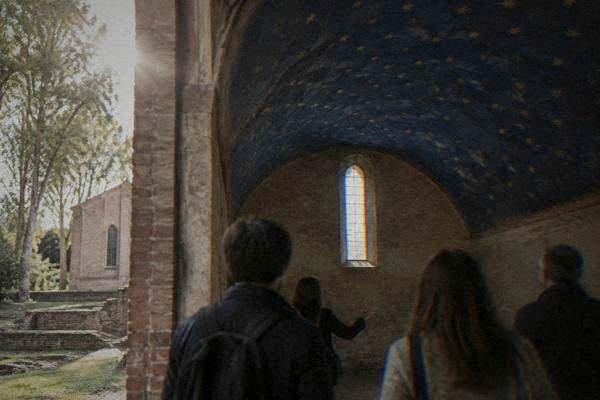
Padua Urbs Picta: The UNESCO Fresco Cycles Site By Site
Padua Urbs Picta is the UNESCO World Heritage listing that ties eight buildings in the old centre of Padua (Padova), in the Veneto, together under one idea: in the fourteenth century this inland city became a laboratory of wall painting, and Giotto's work in the Scrovegni Chapel started it.
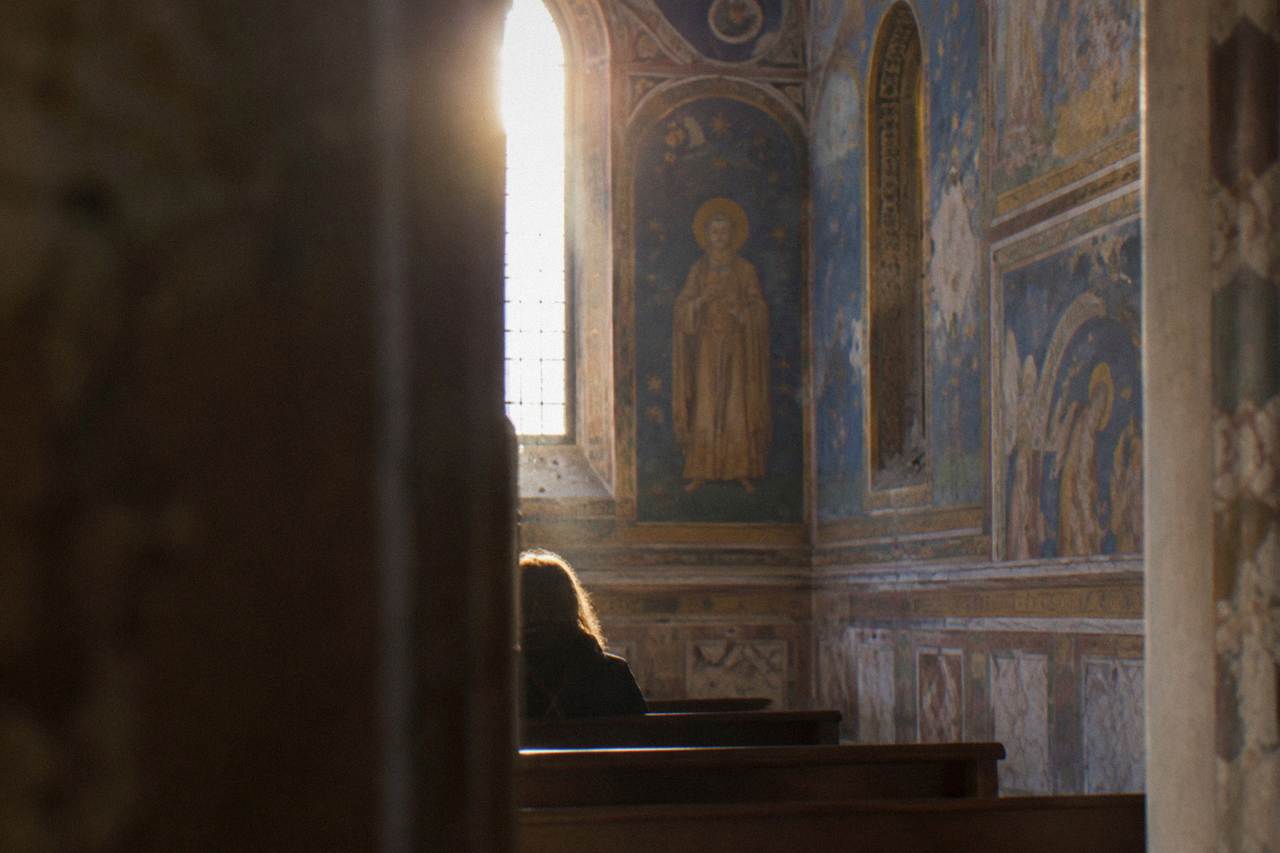
Short answer
Urbs Picta is UNESCO's 2021 inscription for Padua's fourteenth-century fresco cycles across eight complexes: the Scrovegni Chapel, the Eremitani church, Palazzo della Ragione, the Reggia Carrarese chapel, the Cathedral Baptistery, the Basilica and Convent of Saint Anthony, the Oratorio di San Giorgio and the Oratorio di San Michele.
Padua (Padova), an inland city in the Veneto about 36 km in a straight line from Venice, holds two UNESCO World Heritage listings, and Urbs Picta is the younger of the two. Inscribed in 2021, it gathers eight buildings in and around the old centre under one designation: the fourteenth-century fresco cycles that turned this university town into one of the great centres of wall painting in Europe. The Padua Travel Guide desk has assembled this page from what the listing bodies themselves publish, site by site, with the ticket and booking details a planner actually needs.
What Is Padua Urbs Picta?
Padua Urbs Picta is the UNESCO World Heritage inscription, proclaimed on Saturday 24 July 2021, that recognises the fourteenth-century fresco cycles of eight buildings in Padua's historic centre as a single serial site, listed under criterion (ii) for the decisive influence Giotto's work in the Scrovegni Chapel had on wall painting across northern Italy and beyond. The name is Latin for "painted city", and the idea behind the listing is that these walls are not isolated masterpieces but one artistic moment: between the early 1300s and the end of the century, painters working in Padua, beginning with Giotto between 1303 and 1305, developed a new naturalism in fresco that spread outward from here. The Scrovegni Chapel is the anchor, and the other seven complexes show how the language traveled into churches, a palace hall, a princely chapel and a baptistery.
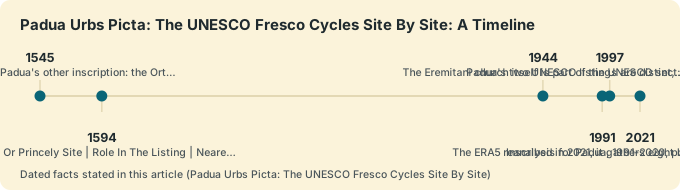
The listing was proclaimed by UNESCO in 2021 following the decision published at whc.unesco.org for list entry 1623. It is separate from Padua's other inscription: the Orto Botanico, the botanical garden founded in 1545 and inscribed in 1997. A visitor who has heard that Padua "has a UNESCO site" may be thinking of either one, and this page deals with the frescoes; the garden gets a comparison section further down.
What makes the serial listing unusual is that the eight buildings sit inside a walkable medieval centre. Nothing in the set requires a car or a bus: the whole itinerary is arcaded streets between Piazza delle Erbe and the Basilica of Saint Anthony. That geography is what makes a fresco-focused day in Padua work, and it is the reason the city markets itself as a base for art-filled days, including trips onward to Venice and the Euganean Hills.
Which Eight Buildings Make Up The Padua Urbs Picta Site?
The eight complexes of Padova Urbs Picta are the Cappella degli Scrovegni, the Chiesa dei Santi Filippo e Giacomo agli Eremitani, the Palazzo della Ragione, the Cappella della Reggia Carrarese, the Battistero della Cattedrale, the Basilica e Convento di Sant'Antonio, the Oratorio di San Giorgio and the Oratorio di San Michele, all listed by padovaurbspicta.org and inscribed together in 2021. Six of the eight stand within a few minutes' walk of Piazza delle Erbe; the Scrovegni Chapel and the Eremitani church sit just to the north, beside the old Roman arena site, and the Oratorio di San Michele is near the Basilica. Together they frame the fourteenth century as Padua's century of paint.
| Complex | Common English Name | Part Of The Old Centre |
|---|---|---|
| Cappella degli Scrovegni | Scrovegni Chapel | North edge, by the Roman arena site |
| Chiesa dei SS. Filippo e Giacomo agli Eremitani | Eremitani church | Beside the Scrovegni Chapel |
| Palazzo della Ragione | Hall of Reason | Between Piazza delle Erbe and Piazza della Frutta |
| Cappella della Reggia Carrarese | Carrarese palace chapel | Near Piazza dei Signori |
| Battistero della Cattedrale | Cathedral Baptistery | Duomo quarter |
| Basilica e Convento di Sant'Antonio | Basilica of Saint Anthony | South of the centre, at Prato della Valle end |
| Oratorio di San Giorgio | Oratory of Saint George | Beside the Basilica of Saint Anthony |
| Oratorio di San Michele | Oratory of Saint Michael | Near the Santo |
The pairing of the Scrovegni Chapel with the Eremitani church is practical as well as thematic. A daytime ticket to the chapel also covers the Musei Civici Eremitani and Palazzo Zuckermann, so one booking on the chapel's own site delivers three of the institutions clustered on that corner. The Eremitani church itself is part of the UNESCO set, and its Mantegna frescoes are the reason many art historians already knew the building before the listing; the church was bombed in 1944 and the Ovetari cycle was largely destroyed, a history reported by the sources the site draws on.
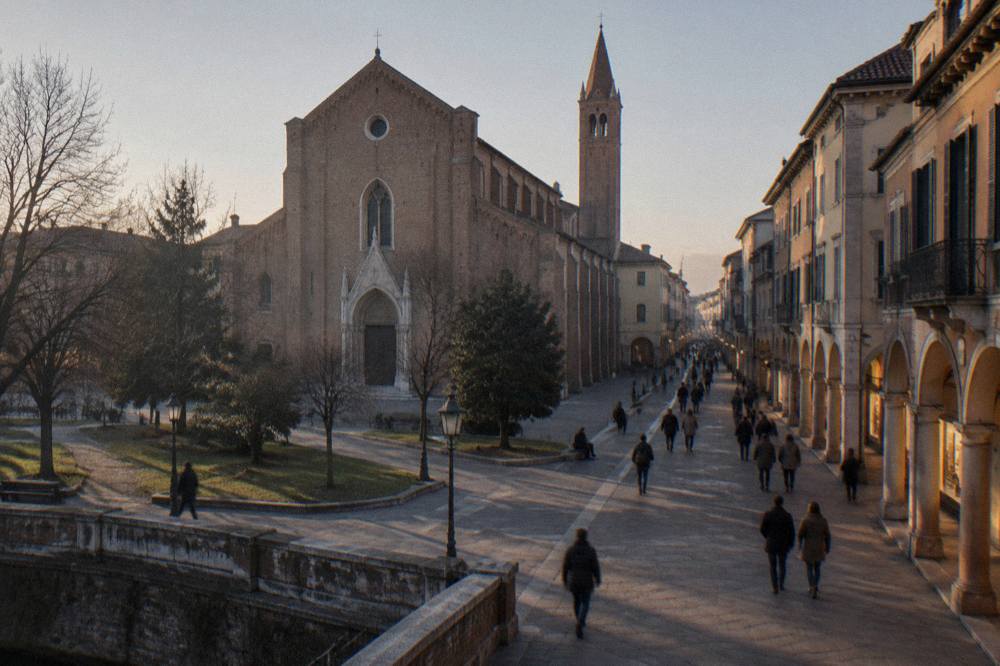
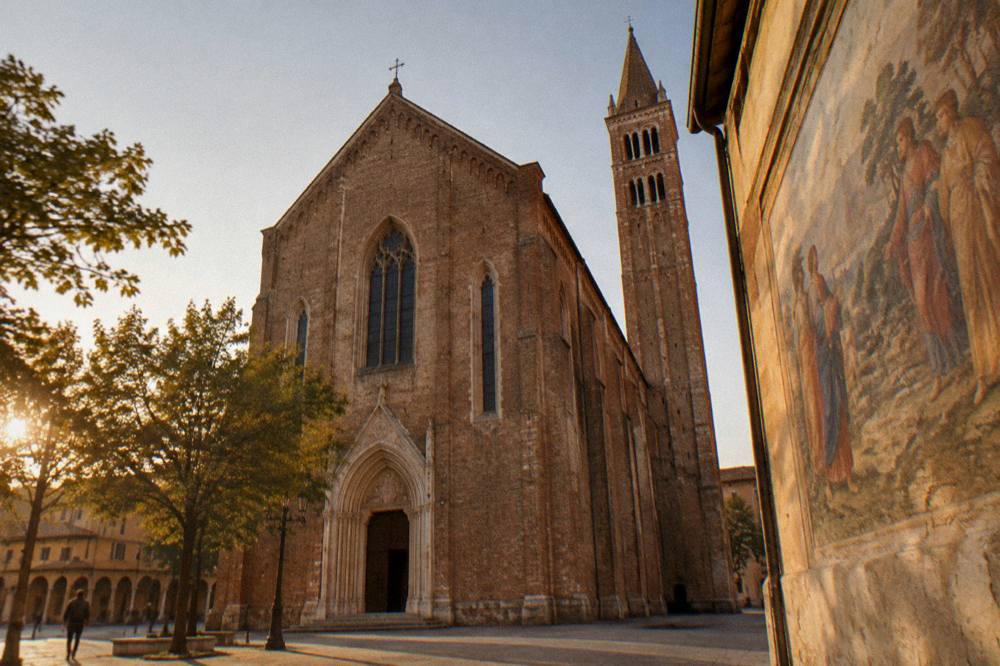
At the other end of the centre, the Basilica of Saint Anthony carries its own weight in the listing: the Basilica and its convent are inscribed as one complex, together with the two oratories nearby. The Basilica's entry is free, per the sources gathered for our Saint Anthony of Padua guide, though the fresco cycles that earned it the UNESCO badge are not its main draw for pilgrims. More on the split between the devotional and the art-historical visit below.
How Much Do Tickets To The Padua Urbs Picta Sites Cost?
The only Urbs Picta figures that can be stated plainly are the Scrovegni Chapel's, per the museums' own price list: EUR 15 full and EUR 11 reduced for the daytime Musei plus Cappella ticket, EUR 5 for Padua residents, plus a EUR 1 booking fee for the chapel, with a EUR 30 family card covering up to two adults and two under-18s; for the other seven complexes, check the current price on the official ticket pages before booking, because the set is run by different bodies with different tariffs. The Scrovegni ticket also includes the Musei Civici Eremitani, open on non-holiday Mondays too, and Palazzo Zuckermann, which is worth knowing because it turns a chapel booking into a half-day of painting and applied arts.
| Ticket | Full | Reduced | Residents | Notes |
|---|---|---|---|---|
| Scrovegni Chapel daytime (Musei + Cappella) | EUR 15 | EUR 11 | EUR 5 | Plus EUR 1 booking fee; covers Musei Civici Eremitani and Palazzo Zuckermann |
| Musei Civici only | EUR 11 | EUR 9 | n/a | Without the chapel |
| Family card | EUR 30 | n/a | n/a | Up to two adults and two under-18s, plus EUR 1 per person chapel booking |
| Evening visit, chapel only | Separate ticket | n/a | n/a | 25 March to 1 November, 19:00 to 22:00 |
Per the museums' price list, reduced rows exist for young people and students at EUR 5, and the conditions attached to each row are worth reading on the museums' own page before booking. There is also a combined city ticket marketed around the Urbs Picta sites; its price and inclusions are not confirmed here, so treat that card as something to check rather than something to budget for, and note that even with a card the Scrovegni Chapel still requires its own timed booking. Our Scrovegni Chapel tickets page and the Padova Urbs Picta card explainer go through what is and is not confirmed.
For the rest of the set, the Basilica of Saint Anthony's entry is free, the Orto Botanico, though not part of Urbs Picta, charges EUR 15 full from 1 September 2026, and the smaller civic buildings change tariffs by season. The honest budgeting answer is: the chapel is the fixed, bookable cost; everything else is confirmed on arrival or on the official pages, and a day built around the chapel slot plus the free Basilica plus the included museums already delivers a great deal of the listing.
How Do You Visit The Scrovegni Chapel As Part Of Urbs Picta?
The Scrovegni Chapel is timed entry only: groups of at most 25 people enter every 15 minutes between 9:00 and 19:00, last entry 18:45, each visit lasts about 15 minutes inside after a wait in a climate-controlled waiting room, and you must be at the entrance 5 minutes before your slot, because late arrivals must rebook and pay again. Booking is done in advance on the chapel's own site or by calling +39 049 2010020; same-day online booking does not exist, and unbooked visitors should check availability at the Museum ticket office in person. Slots are published up to 10 February 2027.
The chapel's own site reports that Enrico Scrovegni bought the land in 1300, land that included the remains of the Roman amphitheatre, which is why the building is also called the Arena Chapel: the arena in question is Padua's Roman one, not the Arena di Verona. Giotto painted the cycle "in just two years, between 1303 and 1305", in the chapel's own words. The programme includes the Stories of Joachim and Anne, the Life of the Virgin and Christ, the Vices and Virtues and a Last Judgment on the entrance wall. Why Scrovegni paid for it is a matter the sources state only tentatively, and this page leaves it there.
One date matters more than any other for a 2026 plan: the chapel is closed 16 to 27 November 2026 for the annual fresco inspection by the central restoration institute, per the chapel's own site. Anyone building a Urbs Picta trip around late November should move the chapel day or the whole trip. The evening programme, "Giotto sotto le stelle", runs 25 March to 1 November, 19:00 to 22:00, every 20 minutes, chapel only, which is the option that fits after a full day of the other seven sites.
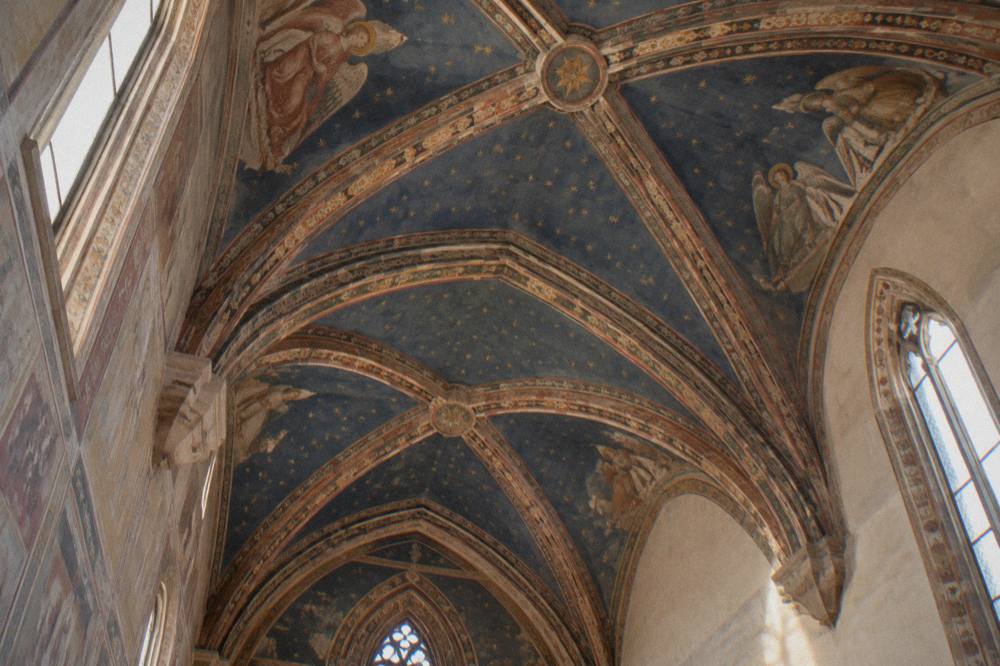
The practical rhythm of a chapel visit is unusual and worth expecting. You wait first in the climate-control room, which protects the paintings from the humidity visitors carry in; the whole thing is closer to a scheduled performance than a church visit. Fifteen minutes sounds short for the painting that anchors a UNESCO listing, and the chapel's own framing of the two-year painting campaign suggests exactly that density: the cycle was designed to be read fast and whole. More context on the building is in our Scrovegni Chapel attraction page.
What Can You See At The Eremitani Church And The Basilica Of Saint Anthony?
The Eremitani church, inscribed as part of Urbs Picta, holds the remains of the Ovetari Chapel frescoes by Mantegna, largely destroyed when the church was bombed in 1944, and it stands beside the Scrovegni Chapel and the Musei Civici Eremitani; the Basilica of Saint Anthony, inscribed with its convent, is free to enter and keeps the Saint's tomb and the Chapel of the Relics. The two ends of the fresco itinerary could hardly feel more different: one is an art-historical site still carrying its wartime wounds, the other a working pilgrimage basilica begun in 1232, a year after Saint Anthony died on 13 June 1231.
The Basilica's construction date and its relics are reported by the basilica's own materials: the skeleton, with the exception of the jawbone and left forearm kept in a crystal urn, rests in the Chapel of Saint Anthony, and the habit and vocal apparatus in the Chapel of Relics. Donatello's work in the presbytery and the Gattamelata equestrian statue outside in Piazza del Santo belong to the same visit, though they sit outside the UNESCO designation itself. For the feast, the Tredicina ran 31 May to 12 June in 2026, with the feast day on 13 June: an annual event, so treat those dates as the latest edition rather than a permanent calendar.
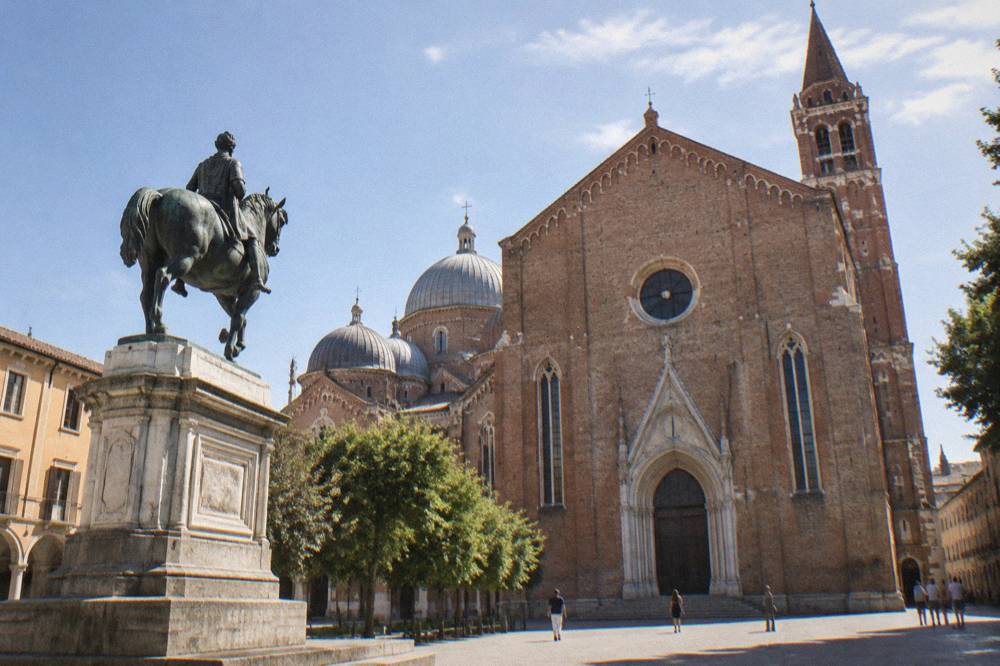
The oratories complete the southern cluster. The Oratorio di San Giorgio and the Oratorio di San Michele are both part of the listing, and both are small enough that a visitor ties them to the Basilica visit rather than making a separate trip. What can be said is structural: the UNESCO argument for these walls is that the painting language born at the Scrovegni Chapel was adopted by patrons across the city's institutions, princely, civic and religious, within the same century.
What Do Palazzo Della Ragione And The Reggia Carrarese Add To The Urbs Picta Listing?
Palazzo della Ragione, the great civic hall wedged between Piazza delle Erbe and Piazza della Frutta, and the Cappella della Reggia Carrarese, the chapel of the palace of the Carrara family who ruled Padua from 1318 until 1405, represent the secular and princely halves of the Urbs Picta story, showing that the new fresco language reached courts and town governments, not only churches. Both are inscribed among the eight, and both sit within a two-minute walk of the market squares, which makes them the natural middle of any fresco day: chapel in the morning, squares and civic buildings at midday, Basilica cluster in the afternoon.
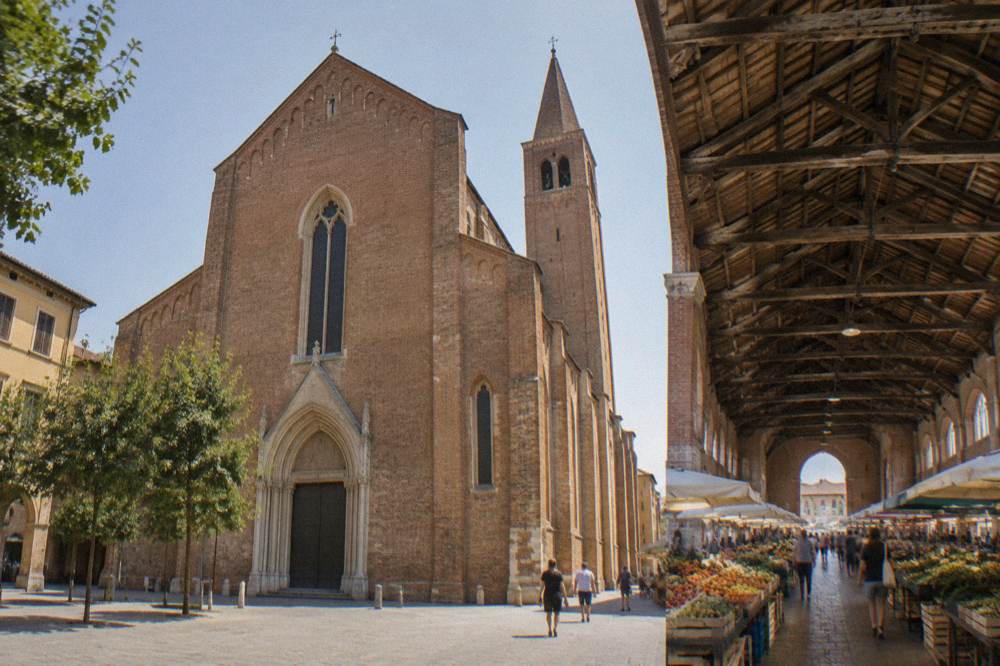
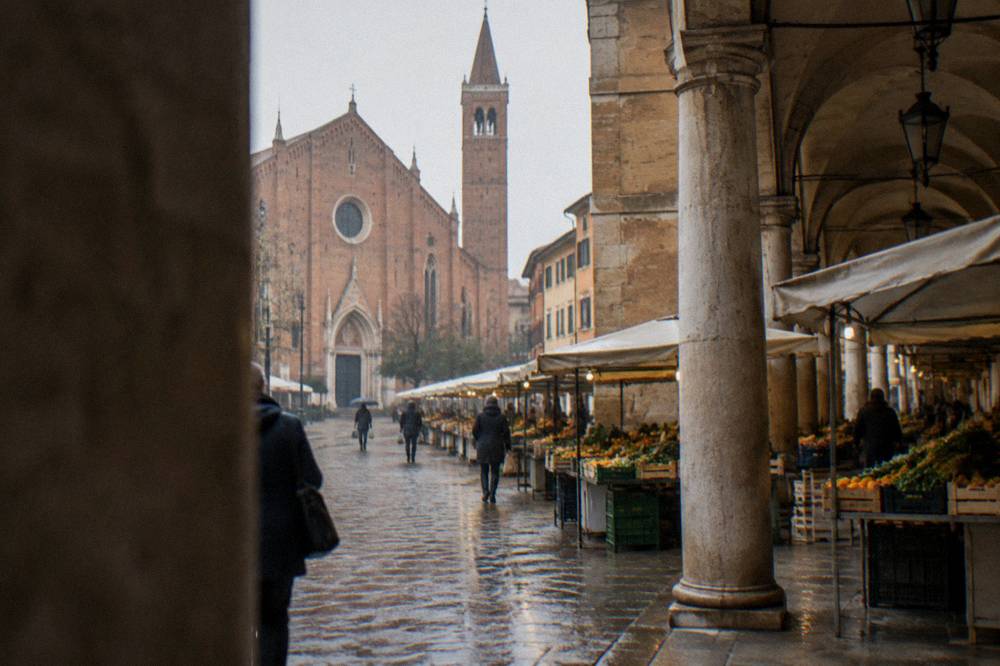
Palazzo della Ragione's reported tariff is EUR 8 full with EUR 6 concessions, Tuesday to Sunday 9:00 to 19:00, with tickets sold at the IAT office at Piazza delle Erbe 52; treat those as reported and confirm on the museums' page. Underneath the hall runs Sotto il Salone, the permanent covered market the city's tourism board describes as centuries old, which solves the lunch problem in the middle of a painting day. The hall's own frescoes are part of the UNESCO argument, and its vast single upper space is the reason the building appears on the list at all.
| Civic Or Princely Site | Role In The Listing | Nearest Landmark |
|---|---|---|
| Palazzo della Ragione | Frescoed civic hall | Between Piazza delle Erbe and Piazza della Frutta |
| Cappella della Reggia Carrarese | Princely chapel of the Carrara rulers | Near Piazza dei Signori |
| Battistero della Cattedrale | Frescoed baptistery | Duomo quarter |
| Palazzo del Bo (not part of Urbs Picta) | University historic seat, anatomical theatre of 1594 | Via VIII Febbraio |
The Reggia Carrarese chapel is the least visited of the eight and the most directly tied to the ruling family whose dates the history sources give plainly: the Carraresi were lords of Padua from 1318 until Venice took the city in 1405. The chapel's frescoes belong to that court world. For orientation on squares themselves, the Piazza delle Erbe guide and the Palazzo della Ragione guide on this site walk each space in detail; for the university's separate, older claim on the city, see the University of Padua page, founded in 1222.
Can You See All Eight Padua Urbs Picta Sites In One Day?
Yes, all eight Urbs Picta complexes sit inside Padua's walkable old centre, and a single day built around a pre-booked Scrovegni Chapel slot can cover the chapel, the Eremitani church, the included museums, Palazzo della Ragione, the Reggia Carrarese chapel, the Baptistery, the Basilica of Saint Anthony and the two oratories, provided you confirm opening access for the smaller buildings on the day, since their hours change. The one fixed point is the chapel: its timed entry, 25 people every 15 minutes, is the appointment the whole day hangs on, and the 16 to 27 November 2026 closure removes that anchor entirely.
A realistic sequence: morning slot at the Scrovegni Chapel, then the Eremitani church and the Musei Civici Eremitani on the same ticket; walk south through the market squares and Palazzo della Ragione with lunch under Sotto il Salone; the Reggia Carrarese chapel and the Baptistery in the Duomo quarter in the early afternoon; the Basilica, Oratorio di San Giorgio and Oratorio di San Michele to finish. Distances are short, the streets are arcaded, and the whole route is a walker's itinerary rather than a transit one; our getting around Padua page covers the tram and bus options if the weather turns.
| Part Of The Day | Sites | Booking Status |
|---|---|---|
| Morning | Scrovegni Chapel, Eremitani church, Musei Civici Eremitani | Chapel slot booked ahead; museums on the same ticket |
| Midday | Palazzo della Ragione, Sotto il Salone market | Confirm the hall's days and tariff on the museums' page |
| Afternoon | Reggia Carrarese chapel, Cathedral Baptistery | Access varies; check the official pages |
| Late Afternoon | Basilica of Saint Anthony, Oratorio di San Giorgio, Oratorio di San Michele | Basilica free; check hours before you go |
The weather argument matters less than in most art cities, because so much of the day is indoors, but the walk between the clusters is open air. The ERA5 reanalysis for Padua, 1991-2020, puts November as the month with the highest rain total at 114 mm, against 53.6 mm in January, with July and August mean highs of 28.8 C; those figures, and what they mean month by month, are laid out in the Padua weather guide and the best time to visit Padua page. If a one-day dash sounds thin, the Padua in one day and Padua in two days itineraries spread the same buildings over more time.
For visitors who want the fresco story told while walking it, a guided city walk is the alternative to self-directing, and the same blocks below cover options that pair well with this itinerary. Between them, the city also runs puzzle-style games across the historic centre, and this site's featured pick is one of those: the Sato Code escape room across Padua sends players past landmarks solving puzzles, a different way to learn the street plan on a rest day between museum days. You can compare it on its listing: Check availability.
How Does Padua Urbs Picta Compare With The Orto Botanico Listing?
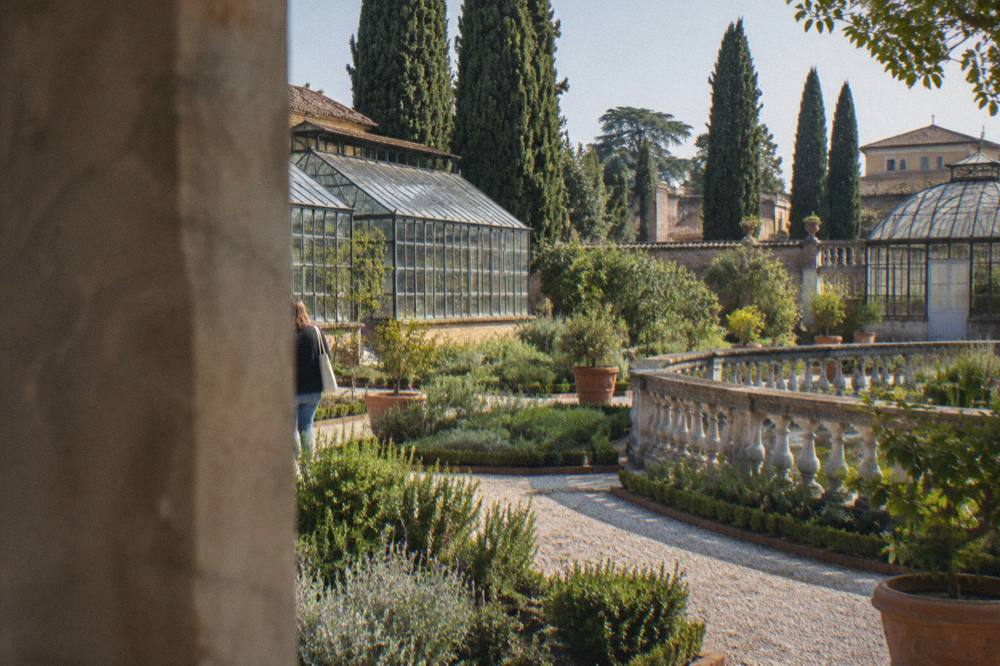
Padua's two UNESCO listings are distinct: the Orto Botanico, inscribed in 1997 and founded in 1545, billed as the world's first university botanical garden, recognises science and botany, while Urbs Picta, inscribed in 2021, recognises the fourteenth-century fresco cycles of eight buildings, so a complete UNESCO day in Padua pairs a morning of Giotto and his successors with a garden visit of about an hour or two, with two different tickets from two different institutions. The Orto Botanico's own page gives its 2026 tariffs: EUR 15 full from 1 September 2026 for ages 26 to 64, EUR 12 winter full in November to February, EUR 10 reduced for 65+, teachers and Padua province residents, EUR 8 winter reduced, with an audioguide included.
| Urbs Picta (2021) | Orto Botanico (1997) | |
|---|---|---|
| What It Recognises | Fourteenth-century fresco cycles in eight complexes | Botanical garden founded 1545 |
| Start with | Scrovegni Chapel, painted by Giotto 1303 to 1305 | The garden itself, by the university |
| Biggest cost | Chapel EUR 15 full plus EUR 1 booking fee | EUR 15 full, EUR 12 winter full |
| Booking | Timed entry, booked ahead, no same-day online | Garden entry, seasonal hours, confirm before you go |
The garden's hours change by season, from 10:00 to 17:00 with last entry at 16:15 from Saturday 24 October 2026, and March hours of 10:00 to 18:00, so state them as seasonal and confirm before you go. It closes on non-holiday Mondays and on 25 December 2026, and it is open on 8 December 2026. The two listings make a tidy contrast for anyone tallying UNESCO stamps: one is a living scientific institution more than four centuries older than the other, the other a set of painted rooms from a single explosive century. The Orto Botanico guide covers the garden on its own page.
Where Does Urbs Picta Fit In A Longer Padua Trip?
Urbs Picta works as the spine of a two or three day Padua stay, with the chapel slot on day one, the southern cluster and the markets on day two, and the Orto Botanico plus day trips on day three, since Padua's inland position about 36 km from Venice makes it a base for the lagoon city, the Euganean Hills and the Brenta Riviera villas rather than a satellite of any of them. The regional trains make the onward legs simple: about 26 to 40 minutes to Venezia Santa Lucia for about EUR 5 regional, and about 16 to 25 minutes to Vicenza for about EUR 6, per the rail aggregators that report those journeys.
The Venice day trip carries one 2026 fact that changed: the lagoon city's day-tripper access fee trial ended on 27 July 2026, per Venezia Unica, and no 2027 decision has been announced, so a Padua-based day trip to Venice needs no access-fee budget for now. The Padua as a base for Venice and Venice to Padua pages carry that planning in full. Back in Padua, evenings after fresco days run through the food side of the city, and the what to eat in Padua guide covers the dishes the tourism board itself names, from bigoli to the city's patented recipes.
Budget planners should note that the fresco itinerary has a low-cost floor: the Basilica is free, the included museums ride on the chapel ticket, and the squares and markets cost nothing to walk. The Padua on a budget and free things to do in Padua pages list the no-ticket side of the city. What the paid set delivers is the reason UNESCO wrote the listing at all: a century of painting, in situ, inside one walkable centre.
Common Questions About Padua Urbs Picta
What does Urbs Picta mean?
It is Latin for "painted city", the name UNESCO's 2021 listing uses for Padua's fourteenth-century fresco cycles across eight buildings in the old centre.
When did Padua's fresco cycles become UNESCO World Heritage?
Padova Urbs Picta was inscribed in 2021, proclaimed on Saturday 24 July 2021, under criterion (ii). The Orto Botanico, Padua's other listing, was inscribed in 1997.
Which buildings are in the Urbs Picta listing?
The Scrovegni Chapel, the Eremitani church, Palazzo della Ragione, the Reggia Carrarese chapel, the Cathedral Baptistery, the Basilica and Convent of Saint Anthony, the Oratorio di San Giorgio and the Oratorio di San Michele.
Is the Scrovegni Chapel part of Urbs Picta?
Yes, and it is the anchor of the listing. Giotto painted its cycle between 1303 and 1305, per the chapel's own site. Entry is timed, at most 25 people every 15 minutes, booked in advance.
Can you visit all eight Urbs Picta sites in one day?
The eight buildings all sit inside the walkable old centre, so one day built around a pre-booked chapel slot can cover the set, with the smaller buildings' access confirmed on the day.
Is the Scrovegni Chapel ever closed?
It closes 16 to 27 November 2026 for the annual fresco inspection, and it closes on 1 May, 25 and 26 December and 1 January. Book the timed slot before travelling.
The one-line summary of the whole listing: a single century, one walkable city, eight sets of walls, and a booking system that turns on one chapel slot. Plan the slot first, confirm the smaller buildings, and the rest of the painted city falls into place around it.