Padua Walking Tour: Which Old Town Walk To Book
Padua's old town is compact enough to cross on foot and dense enough that a walking tour earns its price. Here is what each walk format covers, what the sights on the route cost, and how the Scrovegni Chapel's timed entry shapes every itinerary.
Short answer
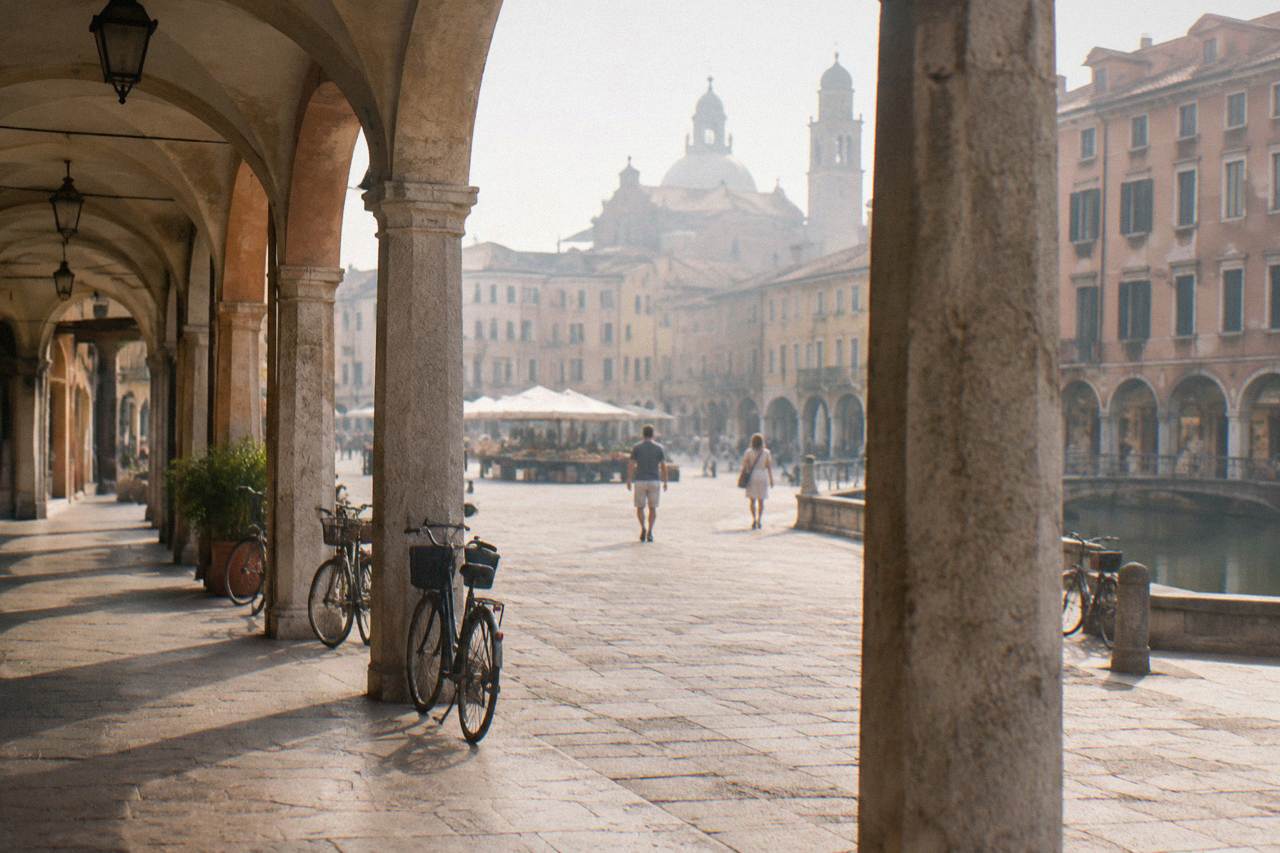
A Padua walking tour is the natural way to see the city because the main sights cluster within a short walk of the market squares. Book a guided walk if you want the Scrovegni Chapel handled, go self-guided if your time is loose, and reserve the chapel slot before anything else.
Padua (Italian: Padova) is a city in the Veneto, northern Italy, about 36 km in a straight line from Venice, and its old town folds an unusual amount into a small radius: Giotto's frescoes in the Scrovegni Chapel, the Basilica of Saint Anthony, two UNESCO listings and a university founded in 1222, all within a short walk of the market squares. That compactness is exactly why a walking tour works here. The question is not whether Padua can be walked, it is which walk to book, because the chapel's timed-entry system dictates the shape of almost every good route.
This guide lays out the formats on offer, what the sights along the way cost, and how to plan a route around the Scrovegni Chapel's booking rules. The site's own overview of the city's sights sits at things to do in Padua, and a fuller route plan is in one day in Padua; this page stays on the walking-tour question itself.
What Can A Padua Walking Tour Cover In The Old Town?
A walking tour of Padua's old town typically covers the market squares, the Scrovegni Chapel and the Eremitani complex at one end, the Basilica of Saint Anthony and Prato della Valle at the other, and the university's Palazzo del Bo in between. Every one of these landmarks sits within 3 km of the centre, per the site's own computed map data, so a single walk can genuinely link them. The variable is not distance but the chapel: timed entry, 15 minutes inside, means the route bends around a booked slot.
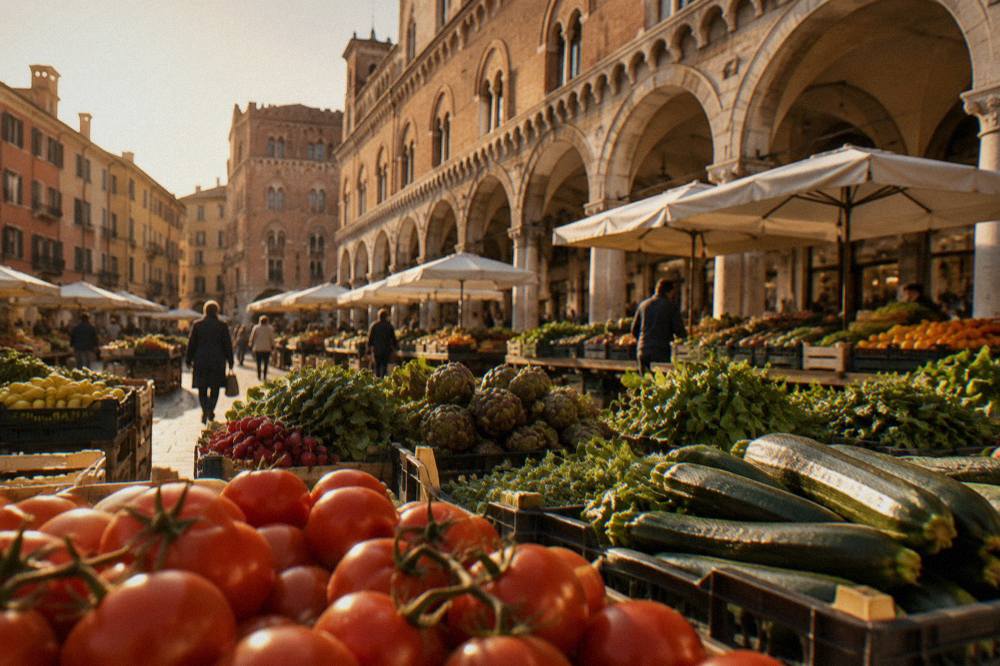
The classic axis runs from the Scrovegni Chapel and the Chiesa degli Eremitani in the north, down through the Cappella degli Scrovegni's neighbouring Musei Civici, into the medieval market heart of the city. Piazza delle Erbe and Piazza dei Frutti still hold daily markets under the flanks of Palazzo della Ragione, whose hall shelters Sotto il Salone, the permanent food market the tourism board describes as running under the palace for eight centuries. This is the stretch where a guide earns most of their fee: the squares look like any Italian market until someone explains what is painted above the stalls.
From there the route crosses the commercial street towards Caffè Pedrocchi, the coffee house opened in 1831, and the Palazzo del Bo, the historic seat of the university, where guided visits include the anatomical theatre inaugurated in 1594 and Galileo's chair in the Sala dei Quaranta. The university's own page notes Galileo held the chair of mathematics from 1592 to 1610 and called these the best eighteen years of his life. A fact like that is the reason a guided walk outperforms a guidebook in Padua: the city's story is mostly indoors, painted or lectured, and the street layer gives little away.
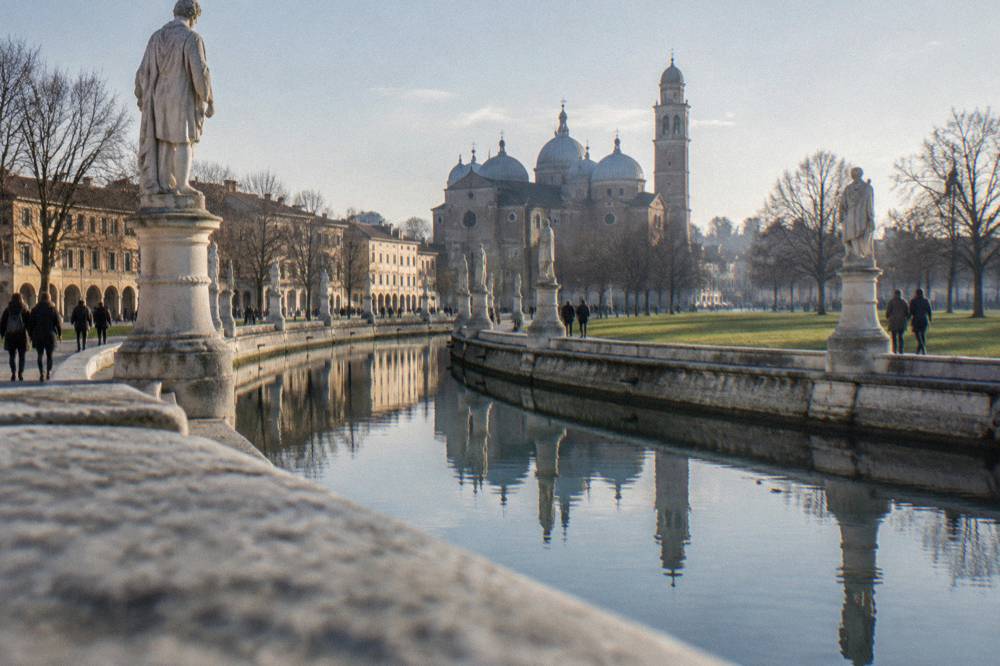
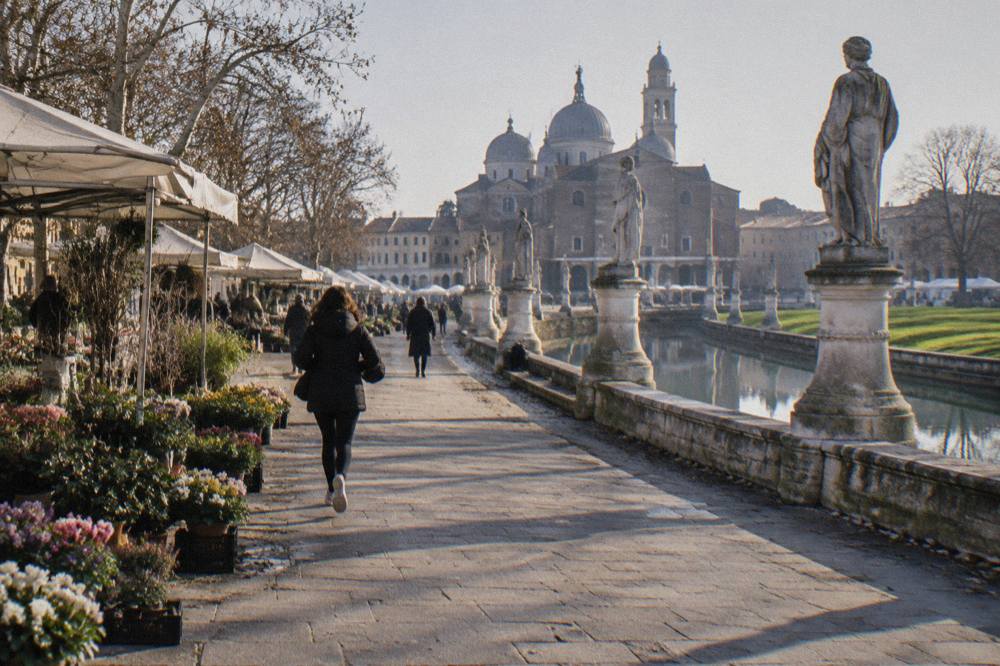
The southern leg ends at the Basilica of Saint Anthony, free to enter, with Donatello's equestrian Gattamelata standing in the piazza outside, and then Prato della Valle, the vast oval square ringed by a canal and a double ring of numbered statues, declared communal space by the Venetian Senate in 1767. Walking the full axis is a half-day proposition with stops; a tour that includes the chapel entry is effectively the same half-day with the hard part pre-arranged.
Which Walk Format Fits Your Trip To Padua Best?
The right format depends on one question: do you want the Scrovegni Chapel slot arranged for you? A private or small-group guided walk with chapel entry included removes the only booking that can derail a Padua day. A self-guided or audio walk suits loose plans and small budgets, and a themed walk, food, wine or spritz, suits a second day once the monuments are done. Padua has no free booking-platform walking tour, so the choice is between paid guided walks and self-guided formats.
The site's tour section carries a dedicated comparison of the free walking tour question in Padua, which explains what does and does not exist in that category. For paid formats, the differences that matter are group size, whether chapel admission is bundled, and whether the walk stays in the old town or heads out to the hills. Food-led walks such as the Padua food tour option cover the market-to-osteria arc and pair well with a monuments walk on a longer stay.
One format decision is worth making early. The chapel sells its own timed tickets directly, and the chapel's own booking page states that same-day online booking does not exist, so a walk that bundles chapel admission is buying you certainty, not a discount. A private city walk with the chapel visit built in, such as Check availability on the operator's live listing, handles the timed entry while you walk.
The comparison below sticks to what the formats cover. Prices, ratings and durations for bookable products render on the tour pages themselves and are deliberately not typed here.
| Format | What it covers | Best for | Chapel entry |
|---|---|---|---|
| Private guided walk | Old town highlights, guide's commentary, flexible pace | Couples, families, short stays | Bundled on some listings |
| Small-group walk | Fixed route, shared guide, lower per-person cost | Solo travellers, budget | Bundled on some listings |
| Audio or written-guide walk | Self-paced route with commentary on your phone | Independent walkers | Not included |
| Scavenger-hunt walk | Sights framed as puzzles, app-based | Families with children | Not included |
| Food or spritz walk | Market squares, tastings, aperitivo culture | Second day, food-first trips | Not included |
How Much Do The Sights On A Padua Walk Cost?
Entry to the sights on a standard Padua walking route adds up to roughly EUR 15 to EUR 33 per adult before any tour fee: the Scrovegni Chapel daytime ticket is EUR 15 full (EUR 11 reduced, plus a EUR 1 booking fee) and also covers the Musei Civici Eremitani and Palazzo Zuckermann; Palazzo della Ragione is EUR 8 full per the civic museums' price list; the Orto Botanico is EUR 15 full from 1 September 2026; the Palazzo del Bo guided visit is EUR 10 full. These are the official figures the museums and institutions themselves publish, and they are the base cost any bundled tour price sits on top of.
The chapel figure deserves the closest reading. The EUR 15 daytime ticket is not chapel-only: the museums' own page states it includes the Musei Civici Eremitani and Palazzo Zuckermann, while the evening "Giotto sotto le stelle" ticket, running 25 March to 1 November from 19:00 to 22:00, covers the chapel alone. Add the EUR 1 booking fee and the annual closure, 16 to 27 November 2026 for the fresco inspection, and the booking stops being a formality. Slots admit 25 people every 15 minutes, the visit lasts about 15 minutes inside, and the chapel's own page tells late arrivals they must rebook and pay again.
| Sight | Full price | Reduced / notes |
|---|---|---|
| Scrovegni Chapel (daytime, museums included) | EUR 15 + EUR 1 fee | EUR 11 reduced; EUR 5 residents |
| Scrovegni Chapel (evening, chapel only) | Separate ticket | 25 Mar to 1 Nov, 19:00 to 22:00 |
| Palazzo della Ragione | EUR 8 | EUR 6 concessions, per the museums' list |
| Orto Botanico | EUR 15 (from 1 Sep 2026) | EUR 10 reduced; EUR 12 winter full |
| Palazzo del Bo guided visit | EUR 10 | EUR 8 reduced; about 45 minutes, alternating languages |
| Basilica of Saint Anthony | Free | Dress suitable for a church |
Two smaller line items can matter on a walking day. The station's left-luggage office at platform 1, daily 6:00 to 20:00 at EUR 5 per 6 hours, is the one official bag drop if you walk between check-out and departure. And the urban transport ticket is EUR 1.70 for 90 minutes if the walk defeats you, bought digitally or by tapping a contactless card on board the tram or bus.
Can You Walk Padua Self-Guided Without A Tour?
Yes, Padua works well self-guided, because the old town is compact, the main axis is obvious, and the only booking that can fail, the Scrovegni Chapel, can be made directly on the chapel's own site up to the day before by phone or online. A self-guided walker who reserves a chapel slot and buys the EUR 15 ticket covers the same core sights a guided walk covers, minus the commentary.
The trade is context: much of Padua's interest is painted indoors or buried in university history a plaque will not summarise.
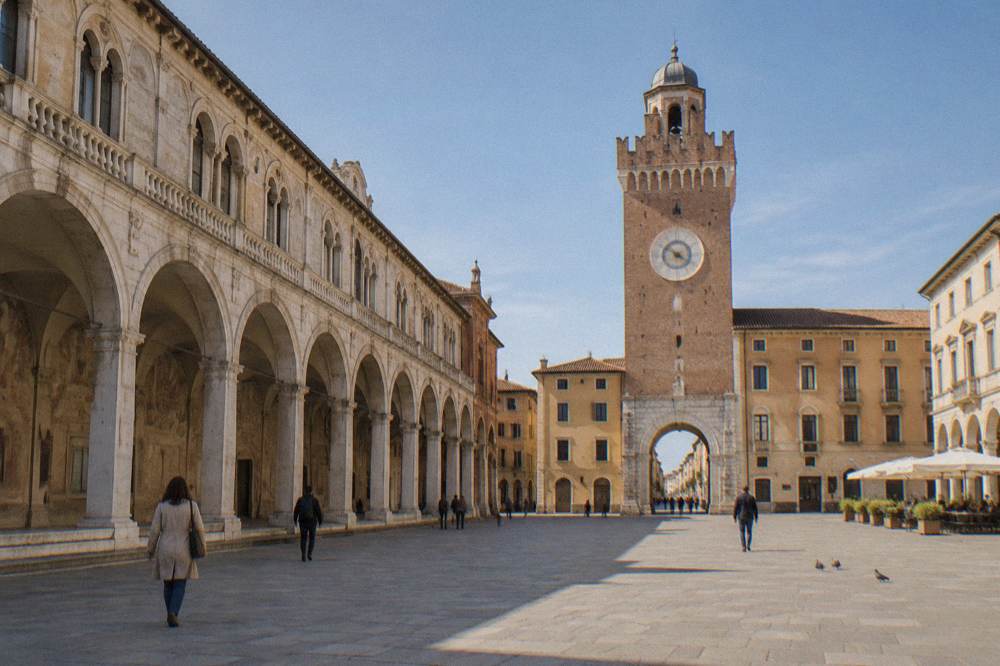
The self-guided route is the same axis described above: chapel and Eremitani in the north, market squares and Palazzo della Ragione in the middle, Pedrocchi, Palazzo del Bo, then south to the Santo and Prato della Valle. The centro storico area guide and the Padua map guide carry the street detail. The market squares alone justify the walk: the Comune di Padova's own market page lists Piazza delle Erbe Monday to Friday 7:30 to 13:30 and Saturday 7:30 to 20:00, with the Saturday market at Prato della Valle alongside it.
Two self-guided formats exist as bookable products: an audio-and-written-guide walk and a scavenger-hunt walk, both app-based, both covering the main sights. They suit travellers who want structure without a guide's schedule. For the chapel itself, a dedicated ticket-and-audio-guide product handles admission and commentary separately.
What Does A Guided Walk Add At The Scrovegni Chapel?
A guided walk adds three things at the Scrovegni Chapel: a reserved timed slot instead of a self-made booking, commentary on a fresco cycle painted by Giotto between 1303 and 1305, and a route that arrives on time, which matters because the chapel's own page states latecomers are denied re-entry without a new paid booking. The 15 minutes inside pass quickly, and a guide who has prepped the cycle beforehand converts those minutes from a scramble into a viewing. The frescoes themselves are unchanged either way.
The cycle, the Stories of the Life of the Virgin and Christ, the Vices and Virtues and the Last Judgment, is the core of Padua's UNESCO listing "Padova Urbs Picta", inscribed in 2021 across eight complexes in the old centre. The chapel's own history page says Giotto painted it "in just two years, between 1303 and 1305". The building is called the Arena Chapel because it stands on the site of Padua's Roman amphitheatre, not Verona's arena. A guide supplies exactly this layer, and in a chapel where the clock is strict, having the context before the door closes is worth real money to some travellers and nothing to others. The wider set of guides lives on Padua Travel Guide.
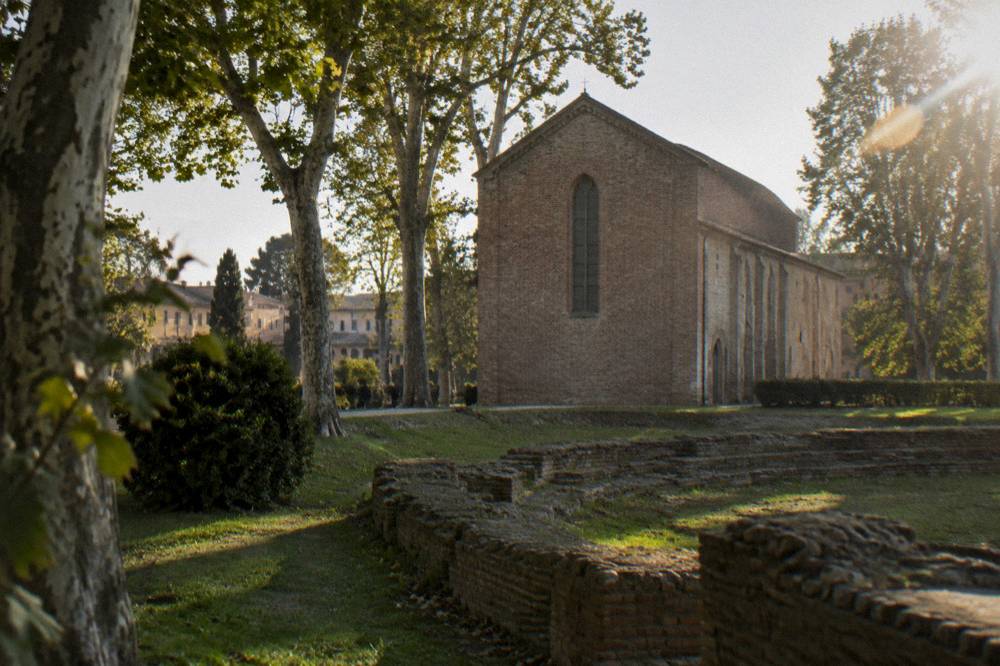
The timing rules in full, all from the chapel's own booking page: entries of at most 25 people every 15 minutes, last daytime entry 18:45, a climate-controlled waiting room first, arrival 5 minutes before the slot, groups 45 minutes early. Booking runs through the chapel's own site or the call centre, with advance slots loaded through to 10 February 2027. Walk-up hope is not a plan: the page directs unbooked visitors to check the museum ticket office in person.
Where Do Padua Walks Go South Of Piazza Delle Erbe?
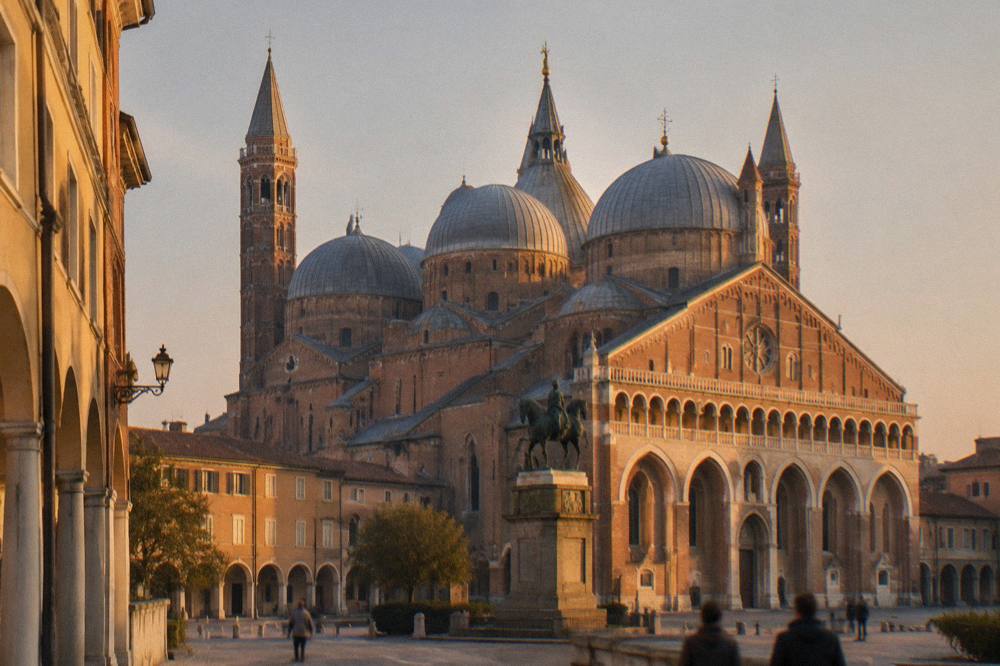
South of the market squares, Padua walks converge on three stops: Caffè Pedrocchi, opened in 1831 and known for its mint coffee; the Basilica of Saint Anthony, free to enter, begun in 1232, holding the Saint's tomb and Donatello's altar; and Prato della Valle, the oval square ringed by a canal and statues, with the Saturday market and the monthly antiques market the Comune schedules on every third Sunday. This southern half is where Padua stops feeling like a day trip and starts feeling like a pilgrimage city.
The Santo and Prato area is covered in its own site page; on a walking tour the segment usually runs Pedrocchi, Palazzo del Bo, then the basilica. The Saint died on 13 June 1231 and the basilica's construction began in 1232; the annual Tredicina devotion ran 31 May to 12 June in 2026 with the feast on 13 June, and the tourism calendar treats it as the city's fixed annual anchor. Prato della Valle's canal and double statue ring date to the redesign under Andrea Memmo after the Venetian Senate declared the space communal in 1767.
| Southern stop | What the walk covers | Official detail |
|---|---|---|
| Caffè Pedrocchi | Coffee house opened 1831, mint coffee | Museum above, per the museums' list EUR 5 |
| Palazzo del Bo | Anatomical theatre 1594, Galileo's chair | Guided visit EUR 10 full, about 45 minutes |
| Basilica of Saint Anthony | Tomb, Chapel of the Relics, Gattamelata outside | Free entry; dress suitable for a church |
| Prato della Valle | Canal, statue ring, markets | Saturday market; antiques third Sunday monthly |
For walkers with a spare half-day, the axis extends out of the old town to the Portello gate and the river, where the remains of Padua's walls trace the city's outline. The walls and the canals are the quiet counterweight to the fresco-heavy centre, and several self-guided formats fold them in.
When Is The Best Weather For Walking Padua?
The ERA5 reanalysis, 1991-2020, for Padua puts July and August mean daily highs at 28.8 C and the January mean high at 7.3 C with a mean low of -0.2 C, and it puts November as the month with the highest rain total at 114 mm with September and October near 105 mm each.
For a city whose walks are outdoors and whose sights are indoors, the practical reading is that late spring and early autumn bring mild daytime highs with moderate rain, while winter walks are cold rather than blocked, and snow averages about 4.4 snowy days per year in recent decades per a published long climate series.
| Month | Mean high C | Mean low C | Rain mm |
|---|---|---|---|
| Jan | 7.3 | -0.2 | 53.6 |
| Feb | 9.4 | 0.6 | 57.9 |
| Mar | 13.7 | 3.9 | 67.2 |
| Apr | 17.6 | 7.8 | 84.4 |
| May | 22.1 | 12.4 | 99.7 |
| Jun | 26.2 | 16.6 | 81.0 |
| Jul | 28.8 | 18.9 | 62.1 |
| Aug | 28.8 | 19.2 | 78.7 |
| Sep | 23.6 | 14.9 | 105.5 |
| Oct | 18.4 | 10.6 | 105.4 |
| Nov | 12.6 | 5.5 | 114.0 |
| Dec | 7.8 | 0.7 | 69.9 |
These are modelled reanalysis normals for the grid cell at the centre of Padua, not a weather-station record, and the site's Padua weather pages treat them as planning ranges. Rain does not kill a Padua walking day the way it does in a park city: the arcades around the market squares, the palazzo halls and the chapel's waiting room give a walkable wet-weather spine, and the site carries a dedicated rainy-day itinerary alongside two days in Padua for slower pacing.
One seasonal fact worth folding into a walk plan: the chapel's evening openings, "Giotto sotto le stelle", run 25 March to 1 November, 19:00 to 22:00, chapel only. An evening chapel slot frees the daytime walk from its single hardest constraint, and a tour built around an evening admission is one of the more useful products in the roster.
What About Walking Padua With Kids Or On A Tight Budget?
For families, the walk format that fits is either a private tour, where the pace flexes, or a scavenger-hunt walk, which frames the main sights as an app-based game and lists from a few dollars per person on the operator's listing.
For tight budgets, the core of Padua is unusually free: the Basilica of Saint Anthony, the Prato della Valle square and its Saturday market, the Piazza delle Erbe market and the old-town streets cost nothing, leaving the chapel as the one expense a budget walker cannot avoid if Giotto is the goal.
The free layer is genuinely substantial. The Duomo and Baptistery piazza, the Santa Giustina邻 basilica beside Prato della Valle, the university's exterior courts and the river walk at Portello can fill a day at zero cost. The site's own budget and free-pages treat this in more depth; from a walking-tour standpoint the point is simpler: a paid walk in Padua is buying commentary and chapel logistics, not access to the city, because access is already open.
For a second walking day, the hills take over. The Euganean hill towns and the wine country south of the city are covered in the site's Euganean Hills pages, and the pairing that recurs in the tour roster is a city walk on day one and a hills wine or olive-oil trip on day two. The Colli Euganei wine guide carries that thread.
Can A Padua Walking Tour Stretch Beyond The Old Town?
Yes, but the walks beyond the old town stop being walking tours and become day trips: Cittadella's walled town, the Brenta Riviera villas by boat, Verona by train in about 43 to 60 minutes, and Venice itself in about 26 to 40 minutes by regional train for about EUR 5. The old town is the walkable part; everything else is a seat on a train, boat or minibus.
Treat these as extensions, with the regional train fares the site reports as approximately EUR 5 to Venice and EUR 6 to Vicenza from Padova station.
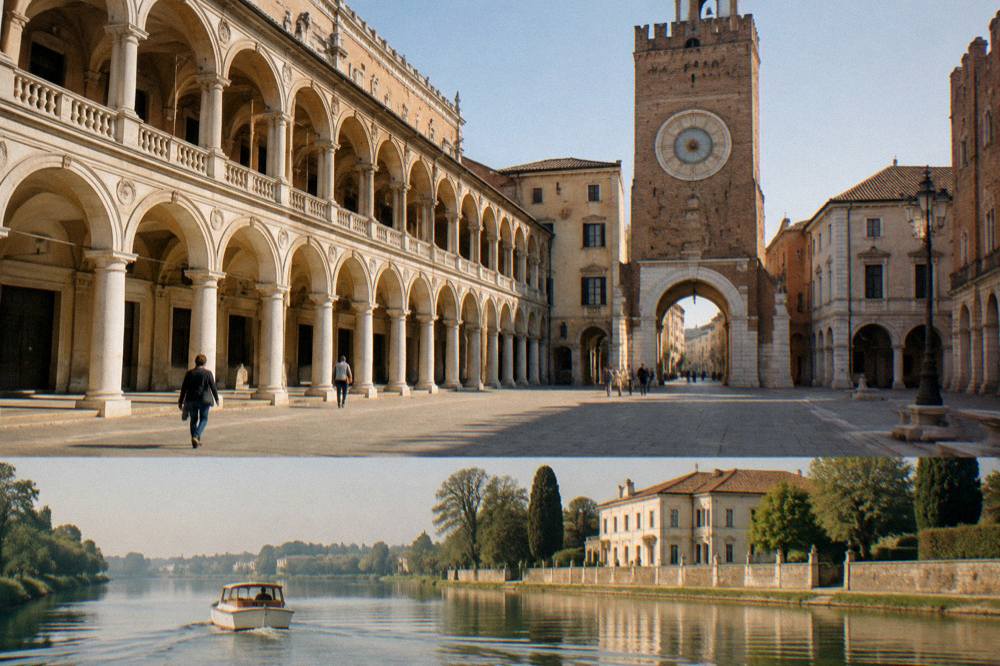
The split matters for planning. A walker who tries to fold Verona or Venice into a Padua walking day loses the walk. The products that bridge the two categories are boat and minibus day trips: the Brenta Riviera boat cruise from Padua to Venice links the villa river and the lagoon city in one seated itinerary, and the site's Brenta Riviera boat tour page covers it in detail. For a walled-town walk closer to hand, Cittadella is the option on the local rail line.
One Venice fact belongs on every Padua page: the Venice day-tripper access fee trial ended on 27 July 2026, per Venezia Unica, and no 2027 decision had been announced. A Padua-based walker heading to Venice for the day does not currently need to budget an access fee, but should check the official Venice pages before travel in case that changes.
For travellers arriving from the lagoon rather than leaving for it, the site's one day in Padua from Venice itinerary reverses this page's logic: the walk is the same, the chapel booking is the same, only the train direction differs.
Common Questions About Padua Walking Tours
Do I need a guided walking tour in Padua?
No, the old town is compact and walkable self-guided, and the only hard booking, the Scrovegni Chapel, can be made directly. A guided walk adds commentary and, on some listings, the chapel slot itself, which removes the one booking that can fail.
How long does a Padua walking tour last?
Guided walks in the roster vary; durations render on each tour page. The old-town axis from the chapel to Prato della Valle is a half-day at walking pace with stops, and the chapel itself allots about 15 minutes inside on a timed slot.
Does a walking tour include the Scrovegni Chapel ticket?
Some do, some do not. If a listing bundles chapel admission, the timed slot is arranged for you; if not, book directly on the chapel's own site, where same-day online booking does not exist and a EUR 1 booking fee applies to the EUR 15 daytime ticket.
Is Padua walkable without using public transport?
Yes. The site's computed map data puts every city-tier landmark within 3 km of the centre, and the main sights cluster far tighter than that. The EUR 1.70 90-minute ticket exists as a fallback, and tram SIR1 runs north to south if a walk ends far from your start.
When is the Scrovegni Chapel closed?
The chapel is closed 16 to 27 November 2026 for the annual fresco inspection, and closed 1 May, 25 and 26 December and 1 January. Evening openings run 25 March to 1 November, 19:00 to 22:00, chapel only.
Can you do a food walk instead of a sights walk in Padua?
Yes, food-led walks cover the market squares and osterias with tastings, and the site's Padua food tour page compares them. The two formats pair well across two days: monuments first, food second.
The short version: pick the format by how much you want the chapel handled, book that slot before anything else, and let the rest of the old town arrange itself on foot.