Padua Food Tour And Cooking Class Options
Padua, an inland city in the Veneto about 36 km from Venice, runs its food life through market squares, arcaded streets and a covered market under Palazzo della Ragione. This page lays out the food tour and cooking class options, what each format covers, and what the city's own tourism board says is on the plate.
Short answer
A Padua food tour or cooking class is a half-day commitment that pairs the city's market squares (Piazza delle Erbe, Piazza dei Frutti, Sotto il Salone) with tastings of local dishes such as risotto ricco alla padovana, bigoli and baccala, or with hands-on cooking in a local home. Guided walks, spritz tours and cooking experiences are all bookable; prices and durations are shown in the live listings below.
Padua (Italian: Padova) is an inland city in the Veneto, northern Italy, about 36 km in a straight line from Venice, and its food culture runs through three market squares, a covered food market eight centuries old by its own account, and an aperitivo habit the local tourism board attributes to the squares of Piazza delle Erbe and Piazza dei Signori. A padua food tour can mean several different things: a guided walk with tastings, a market-to-osteria circuit, a spritz and aperitivo crawl, or a cooking class in a local home where the shopping and the meal are the whole point. This page sets out those formats, the dishes the city's own tourism board names as its own, and how a food-focused visit fits alongside the Scrovegni Chapel and the rest of a short stay. The Padua Travel Guide covers the sights elsewhere; here the subject is dinner.
What Food Is Padua Known For On A Food Tour?
The Padua tourism board names three patented local recipes: risotto ricco alla padovana, capon alla canevera made with the gallina padovana breed of hen, and the torta pazientina, while bigoli pasta and baccala are standard local dishes across the city's kitchens. Sotto il Salone, the covered market under Palazzo della Ragione, is described by the tourism board as a permanent historic market of local specialties, and Aperol was created in Padua in 1919.
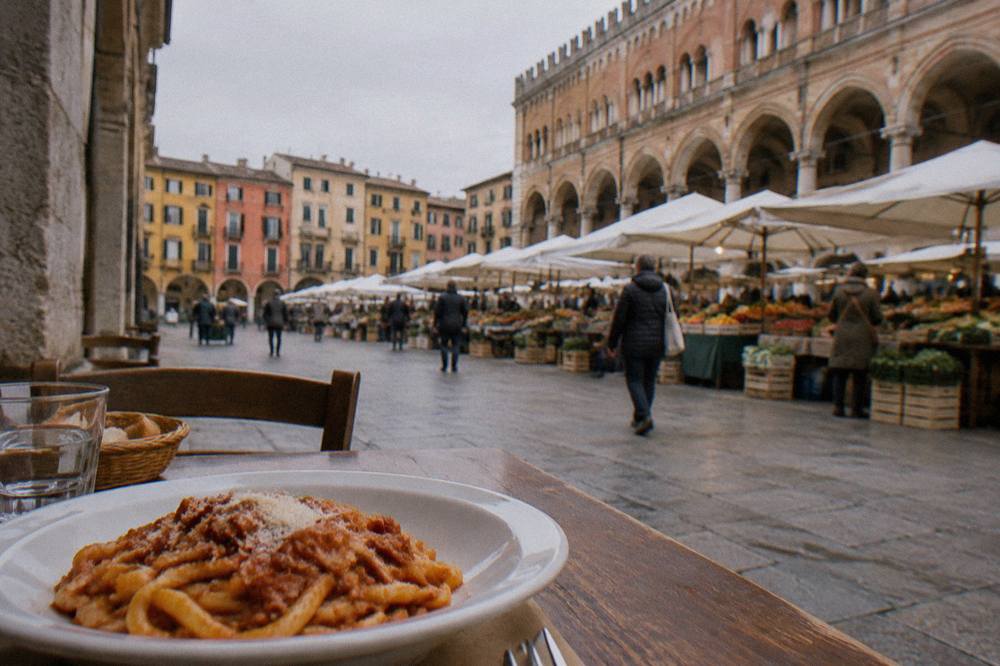
Those are the anchors. The risotto ricco alla padovana is the city's festive rice dish; the capon alla canevera is a boiled hen preparation tied to the gallina padovana, a local breed; the torta pazientina is the dessert the tourism board puts on its short list. Bigoli, a thick dry pasta, and baccala, salt cod, round out the standard local plate. None of this is a secret menu: it is what the tourism board prints on its own enogastronomia pages, and a food walk that covers the market squares will put versions of several of these dishes in front of you.
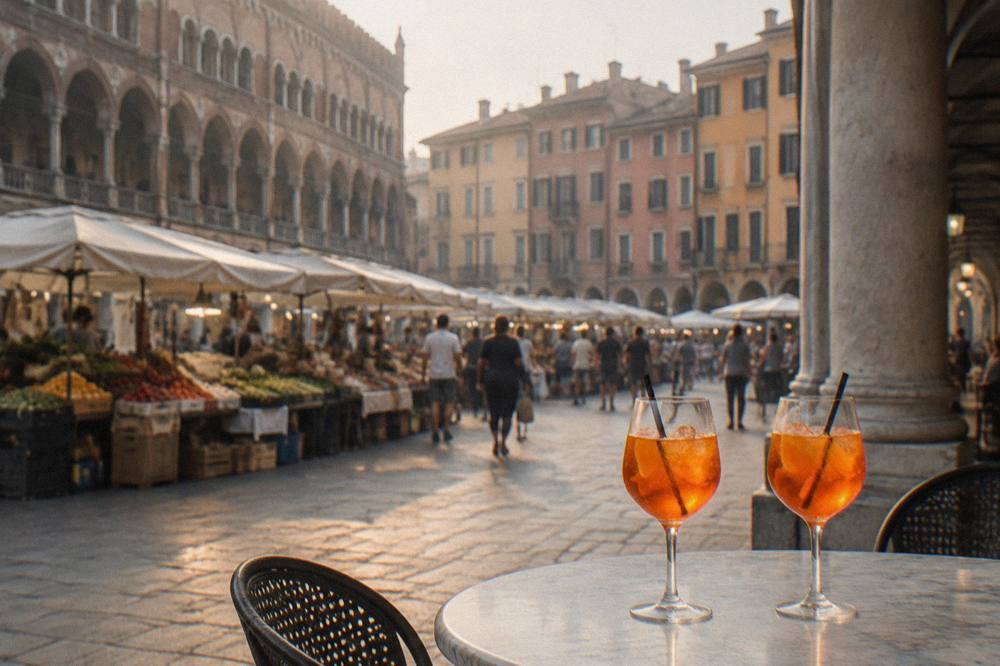
The drink side has one dated fact worth knowing. Aperol, the orange bitter that anchors the modern spritz, was created and first presented in Padua in 1919 by the Barbieri brothers. The spritz as a concept predates Aperol, and which recipe counts as the original one is a dispute this page does not referee. What is safe to say is that the aperitivo scene in Padua lives around Piazza delle Erbe and Piazza dei Signori, per the tourism board's own pages, and that a spritz-themed walk is one of the bookable formats in the city.
For a fuller treatment of the dishes themselves, see the companion page on what food Padua is known for, and for the squares where the markets run, the guide to Padua's markets and shopping.
| Dish or drink | What it is | Status on the tourism board's list |
|---|---|---|
| Risotto ricco alla padovana | The city's festive rice dish | Named as a patented Paduan recipe |
| Capon alla canevera | Boiled hen dish made with the gallina padovana breed | Named as a patented Paduan recipe |
| Torta pazientina | A local dessert | Named as a patented Paduan recipe |
| Bigoli | Thick dry pasta, a standard local mention | Standard local dish |
| Baccala | Salt cod, a standard local mention | Standard local dish |
| Caffe Pedrocchi with mint | The signature drink of the Caffe Pedrocchi, opened 1831 | Named by the tourism board |
How Much Does A Padua Food Tour Or Cooking Class Cost?
Prices for Padua's bookable food experiences are shown in the live listings themselves rather than fixed by the city: the formats range from short spritz walks and self-guided options at the low end, through tasting walks and street food circuits in the middle, to private cooking classes and long food-and-culture walks at the top, and every price, rating and duration below renders from the operator's own listing at the moment you open it. No city card or museum tariff sets these prices.
The reason this page does not print a number in prose is that these are live commercial products whose prices, ratings and durations change, and the compiler blocks below carry the current figures directly from the listing data. What can be said in fixed terms is what each format contains. A tasting walk moves between the market squares and stops at several vendors with a local guide. A market-and-cooking class adds a guided shopping stage before the stove. A cooking demo in a local home sits you down for a meal someone else cooks in front of you. A spritz walk is built around the aperitivo squares rather than the food market.
The first block below shows the featured cooking class alongside the two Scrovegni Chapel ticketing products, because the single most common planning question in Padua is how to put food and Giotto in the same day.
The practical comparison between formats is easier to read as a table. Durations and prices stay in the listings; the structure is what you are choosing between.
| Format | Where it happens | What it centres on | Who it suits |
|---|---|---|---|
| Tasting walk | Market squares and osterias | Multiple small tastings with a guide | First-time visitors wanting breadth |
| Street food walk | The historic centre | Walk-and-eat stops | Casual groups |
| Spritz walk | Piazza delle Erbe and Piazza dei Signori area | The aperitivo and its history | Evening plans, drink-led visits |
| Market and cooking class | Market squares, then a kitchen | Shopping then cooking the meal | Travellers who want the recipes |
| Home cooking demo | A local home | A demonstration plus a seated meal | Visitors who want depth without work |
Which Markets And Squares Does A Padua Food Tour Visit?
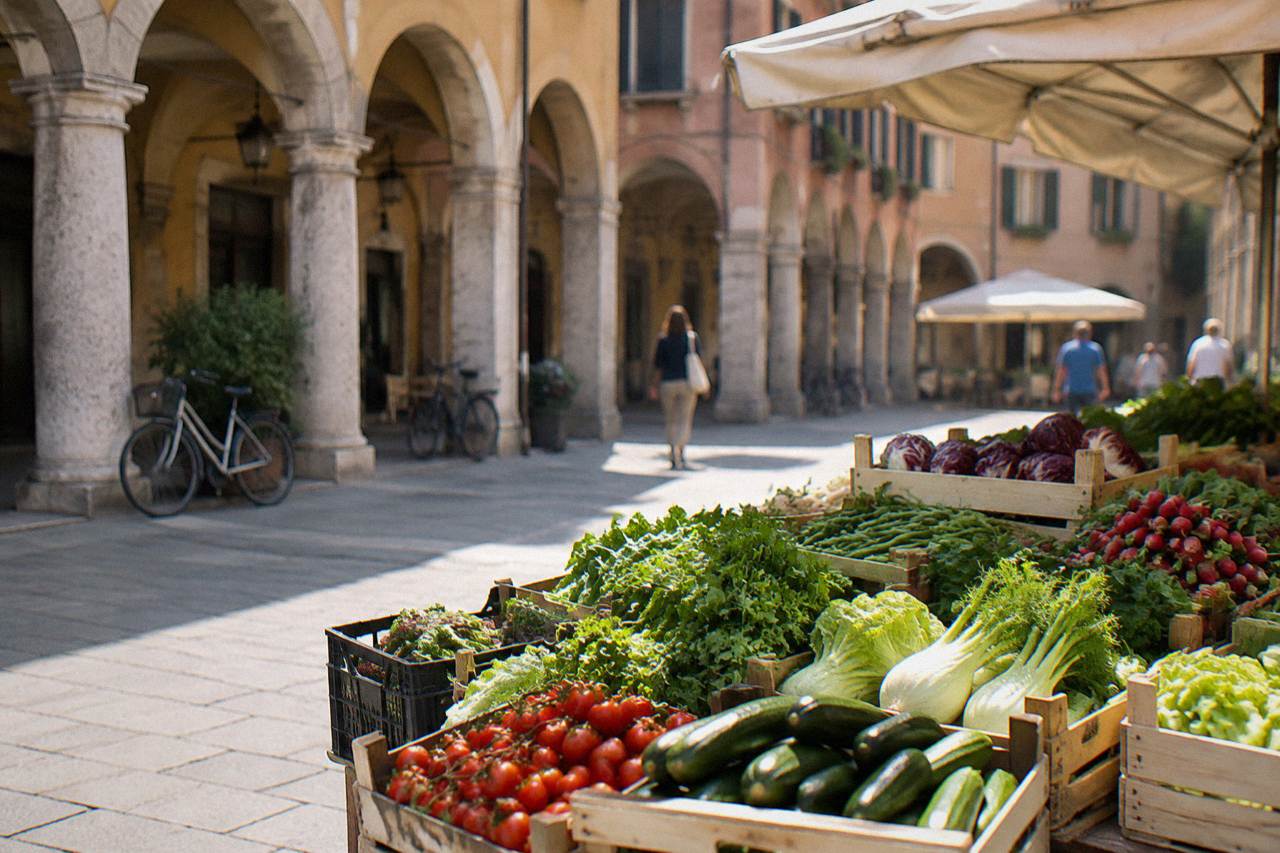
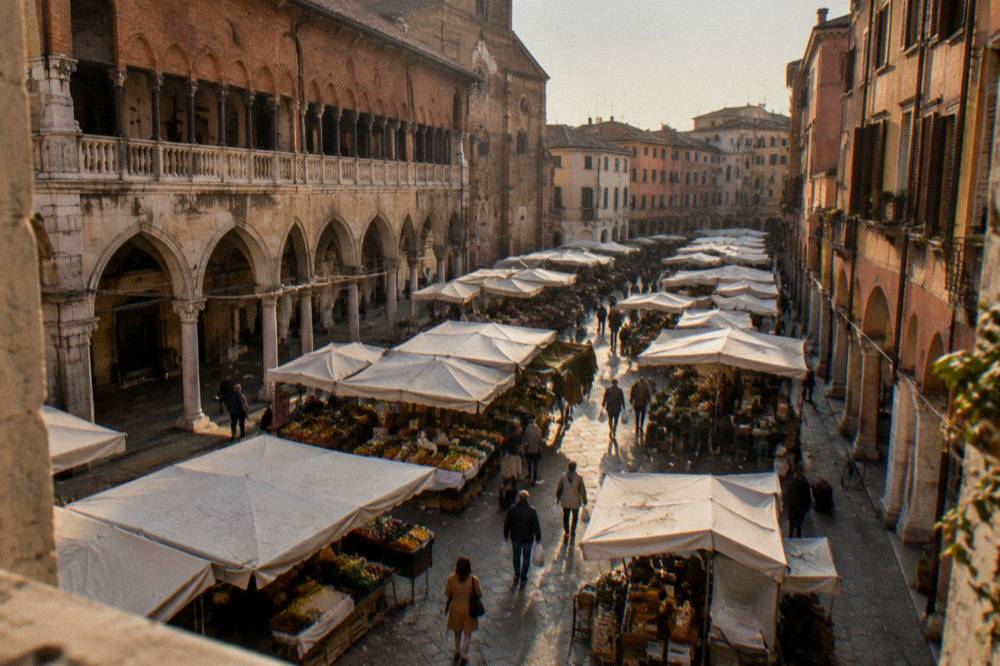
A Padua food tour's geography is compact and fixed by the city's market map: Piazza delle Erbe runs a fruit, vegetable and flower market Monday to Friday 7:30 to 13:30 and Saturday 7:30 to 20:00, Piazza dei Frutti runs food stalls Monday to Wednesday 8:00 to 14:00 and Thursday to Saturday 8:00 to 19:00, and Sotto il Salone is the permanent covered food market under Palazzo della Ragione.
Those hours come from the Comune di Padova's own market page, and they are worth checking against the day of your tour: a walk booked on a Monday morning sees a different Piazza delle Erbe than one booked on a Saturday, when the stalls run to 20:00. Prato della Valle adds a Saturday market of its own, with non-food, plants, flowers and produce stalls from 8:00 in winter and summer closing times an hour apart, and the antiques market fills the same square on the third Sunday of each month. A food tour that crosses the historic centre will pass the two market squares and the covered market; the bigger Saturday circuit at Prato della Valle is usually a separate walk or a longer route.
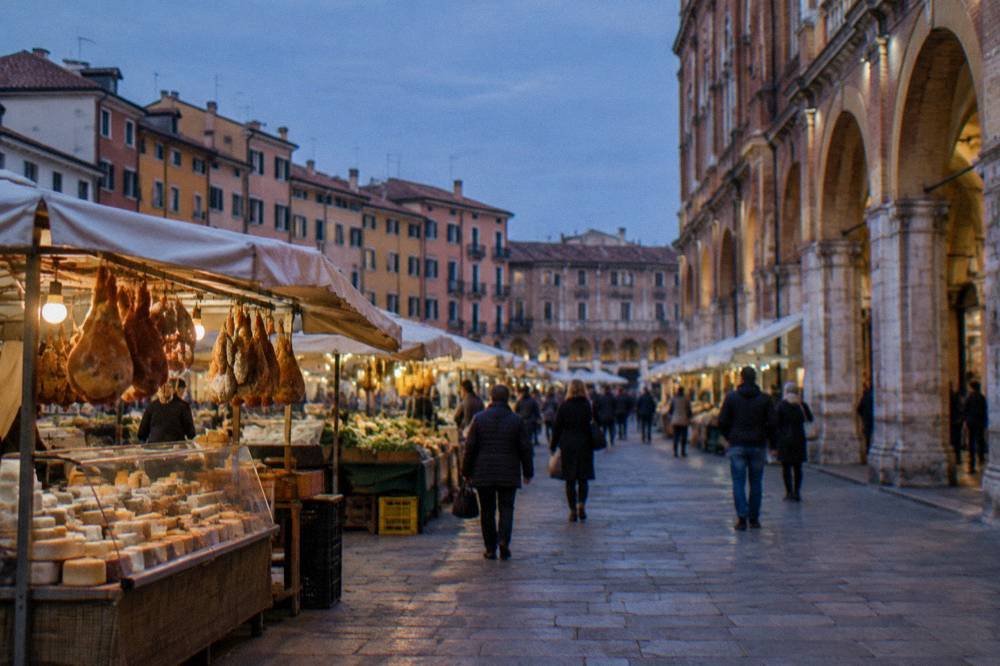
The covered market deserves its own sentence. Sotto il Salone sits beneath Palazzo della Ragione, the great hall of the city's medieval market and one of the eight buildings in the fourteenth-century fresco cycle UNESCO listing, Padova Urbs Picta, inscribed in 2021. So the food geography and the art geography overlap: you can stand in a food market that is directly underneath one of the city's UNESCO-listed monuments. The Palazzo della Ragione page covers the building itself; entry there is EUR 8 full price, per the civic museums' price list, which makes it one of the few fixed figures in this district.
| Market | Location | Official days and hours |
|---|---|---|
| Piazza delle Erbe | Historic centre | Mon to Fri 7:30 to 13:30, Sat 7:30 to 20:00 |
| Piazza dei Frutti (food) | Historic centre | Mon to Wed 8:00 to 14:00, Thu to Sat 8:00 to 19:00 |
| Prato della Valle Saturday market | South of the centre | Sat, 8:00, closing 19:00 winter and 20:00 summer |
| Antiques market | Prato della Valle and via Umberto I | Third Sunday of the month, 8:00 to 20:00 |
What Is A Padua Cooking Class Like?
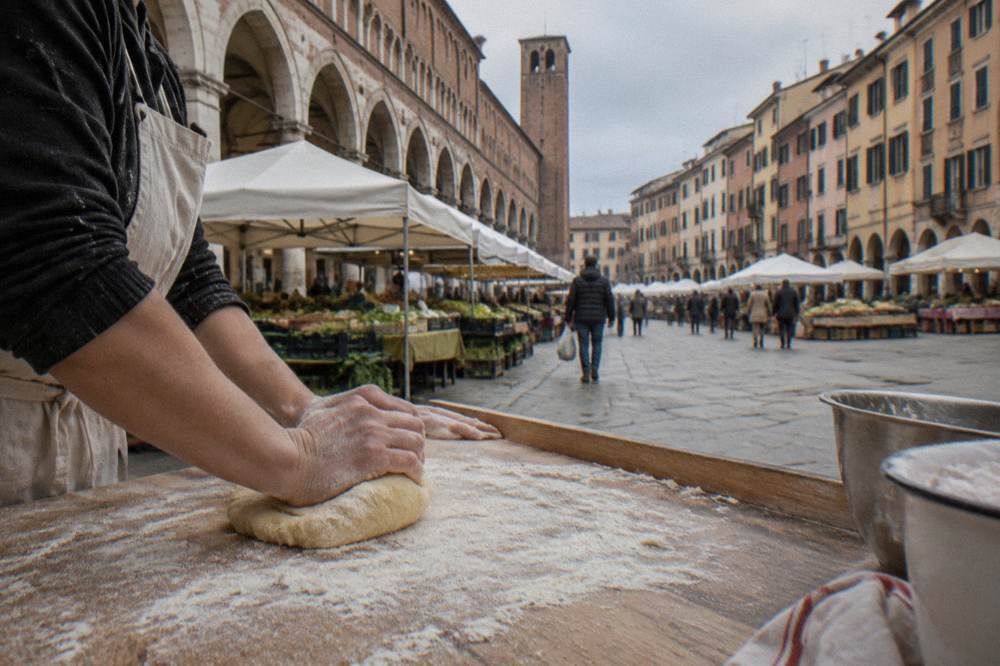
A Padua cooking class pairs you with a local cook, in a home or a teaching kitchen, to prepare the city's own dishes from the shopping stage onward: the featured Padova Cooking Experience covers hands-on preparation of local recipes, while the small-group market format adds a guided tour of the market stalls before the class and the home-demo formats substitute a seated meal for the hands-on work. The class, the meal and the recipes are all inside the product.
The distinction that matters when booking is hands-on versus demonstration. In the hands-on formats you cook; in the demo formats you watch a local cook work and then eat the result. The featured Padova Cooking Experience is the hands-on end of that range, and the market-plus-class formats add the shopping stage in Piazza delle Erbe or Piazza dei Frutti first. For anyone whose interest in Paduan food is recipe-deep rather than tasting-deep, the class is the format that sends you home with the technique for the risotto or the pasta rather than a full stomach alone. Check availability on the live listing, where the current price, duration and cancellation terms render automatically.
One planning note that has nothing to do with food: classes run on fixed schedules, and if you are combining one with the Scrovegni Chapel, the chapel runs on timed entry only, with groups of at most 25 people every 15 minutes and about 15 minutes inside, booked in advance. A class in the morning and a chapel slot in the afternoon is the order the arithmetic favours, because the chapel slot is the fixed appointment.
Can You Combine A Food Tour With The Scrovegni Chapel In One Day?
Yes, and the two fit naturally because the Scrovegni Chapel sits at the north-west edge of the historic centre within walking distance of the market squares: the chapel's own visit lasts about 15 minutes inside on a timed slot of at most 25 people every 15 minutes, booked ahead at EUR 15 full price plus a EUR 1 booking fee, which leaves the better part of a day free for a food walk or class.
The daytime chapel ticket also covers the Musei Civici Eremitani and Palazzo Zuckermann, so the art half of the day is bigger than fifteen minutes in total. One date to keep in mind: the chapel closes 16 to 27 November 2026 for its annual fresco inspection. Evening visits, chapel only, run from 25 March to 1 November, 19:00 to 22:00, every 20 minutes. If your food plans run late into the evening at the aperitivo squares, an evening chapel slot is the combination that keeps the afternoon free for eating.
For the sight-side logistics, the Scrovegni Chapel page holds the ticket detail, and the one-day and two-day itineraries, Padua in one day and Padua in two days, sequence the chapel, the Basilica of Saint Anthony, Prato della Valle and the market squares against realistic timing.
| Pairing | Why it works | The fixed constraint |
|---|---|---|
| Morning class, afternoon chapel | The chapel slot is the immovable appointment | Chapel entry is timed, max 25 per 15 minutes |
| Tasting walk, evening chapel slot | Evening visits run 19:00 to 22:00, 25 Mar to 1 Nov | Evening ticket is chapel only |
| Market morning, chapel midday | Markets close 13:30 to 14:00 on weekdays | Saturday markets run later, to 20:00 |
What Should You Drink In Padua Beyond The Spritz?
The one named drink with a Padua pedigree is the caffe Pedrocchi with mint, the signature of the Caffe Pedrocchi, which opened in 1831 in a neoclassical building by Giuseppe Jappelli and was long known as the cafe without doors; Aperol, created in Padua in 1919, is the other, and the spritz built on it is the standard aperitivo pour around Piazza delle Erbe and Piazza dei Signori, per the tourism board's own enogastronomia pages.
The Caffe Pedrocchi is the institution here. The tourism board describes it as a neoclassical building by Giuseppe Jappelli that opened in 1831 and operated for decades without doors, the "caffe senza porte" of local lore, and its mint-infused coffee is the house drink. The building also houses the Museo del Risorgimento, which the civic museums' price list puts at EUR 5 full price, so the coffee stop can double as a museum stop. The Caffe Pedrocchi page carries the building's history; this page's point is simpler: the drink order is already decided for you.
Beyond that, this page names no venues and ranks no bars, and no recipe origin dispute gets settled here. What the bookable products do is organize the drinking side for you: spritz-themed walks exist in the roster, built around the aperitivo squares, and they are the format that turns the evening pour into a guided hour and a half or two rather than a search.
Does A Food Tour Work For A Short Stay Or A Day Trip From Venice?
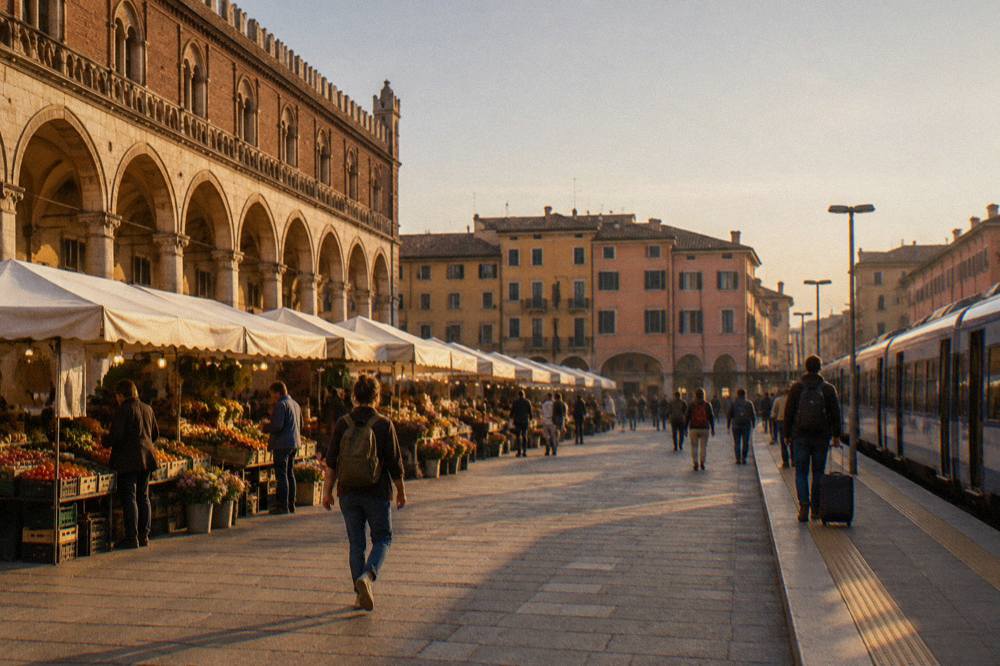
Yes: Padua is about 36 km in a straight line from Venice, the regional train runs the route in about 26 to 40 minutes for about EUR 5, and the food district, the Scrovegni Chapel and the two great squares all sit inside a walkable historic centre, so a single day can hold a market walk, a chapel slot and a long lunch, with an evening train back.
Venice is the most common base for this trip, and the logistics are short: the airport bus from Venice Marco Polo to Padua is EUR 13 one way and takes about 45 minutes, per the operator's published timetable, and the urban ticket inside Padua is EUR 1.70 for 90 minutes if the walk from the station feels long. The one day in Padua from Venice itinerary sequences exactly this kind of visit. One thing that no longer needs planning: the Venice day-tripper access fee trial ended on 27 July 2026, and no 2027 decision has been published, so the direction of travel, Venice to Padua, carries no entry charge question.
For visitors staying in Padua rather than day-tripping in, the food options stretch across the whole stay: a cooking class on one day, a tasting walk on another, and the Euganean Hills wine country, with Abano Terme 8 km and Montegrotto Terme 11 km away in straight line, as the wine-and-hills extension where olive oil and Euganean wine trips run.
| Journey | Figure | Notes |
|---|---|---|
| Padua to Venice by regional train | About 26 to 40 minutes, about EUR 5 | Frequent service on the Venice to Milan line |
| Venice Marco Polo airport to Padua by bus | EUR 13 one way, about 45 minutes | Runs about every 40 minutes |
| Padua urban transport | EUR 1.70 for 90 minutes | Also usable by contactless tap on board |
| Station left luggage | EUR 5 per 6 hours, daily 6:00 to 20:00 | Platform 1 |
What Are The Alternatives To A Guided Food Tour In Padua?
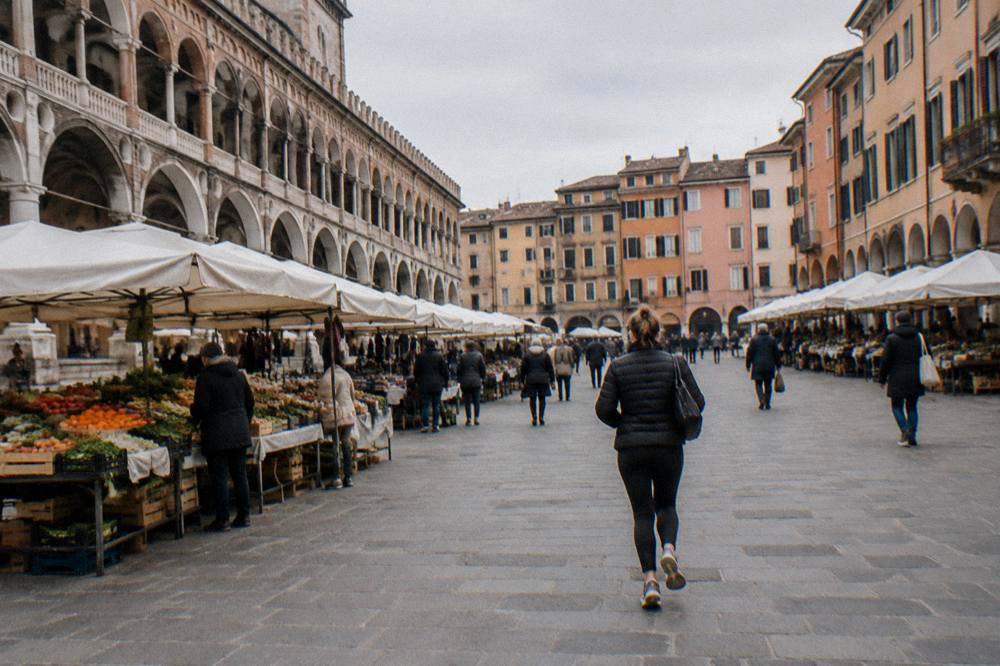
The self-guided alternatives are real and cheap: the markets themselves are free to walk, the covered Sotto il Salone market under Palazzo della Ragione is a permanent food hall, a self-guided scavenger-hunt walking product covers the main sights from a few dollars, and the city's tourism offices at the station and Piazza delle Erbe 52 hand out the maps, so a visitor can build a food day without a guide if the timing is theirs to control.
The trade is simple. A guided walk buys a local's routing, tastings arranged in advance and the stories attached to the dishes. Going alone buys freedom and a lower bill, with the markets' own published hours as the only schedule. The middle formats, self-guided walks and scavenger hunts, are in the roster at the low end of the price range if you want structure without a live guide. And the eating does not require a product at all: the tourism board's list of dishes tells you what to look for, the market hours tell you when the squares are alive, and the rest is walking.
For combining the food day with the rest of the city, the root things to do in Padua page and the Padua walking tour tour page cover the sight-side products, and the Brenta Riviera boat tour covers the villas-and-water extension to the east.
Common Questions About Padua Food Tours
What food is Padua famous for?
The Padua tourism board names risotto ricco alla padovana, capon alla canevera made with the gallina padovana, and the torta pazientina as the city's patented recipes, with bigoli and baccala as standard local dishes.
How long does a food tour in Padua last?
Durations vary by format and are shown on each live listing; spritz walks run shorter, tasting walks and cooking classes occupy a half day. The figures render automatically in the product blocks above.
Can you do a food tour and the Scrovegni Chapel on the same day?
Yes. The chapel visit itself is about 15 minutes inside on a timed slot, and the market squares are within walking distance, so a morning or afternoon food activity pairs with a pre-booked chapel slot.
Where is Aperol from?
Aperol was created and first presented in Padua in 1919 by the Barbieri brothers. The spritz as a drink concept predates it.
Do you need to book a Padua food tour in advance?
Classes and small-group walks have limited places, and cooking formats depend on a host's schedule, so booking ahead is the practical route. Check availability and cancellation terms on the live listing before you travel.
Is a food tour in Padua worth it if you are staying in Venice?
The regional train covers Venice to Padua in about 26 to 40 minutes for about EUR 5, so a day built around a market walk, a chapel slot and a long lunch is realistic from a Venice base.