Padua Shopping And Markets: Antiques, Food Halls And Streets
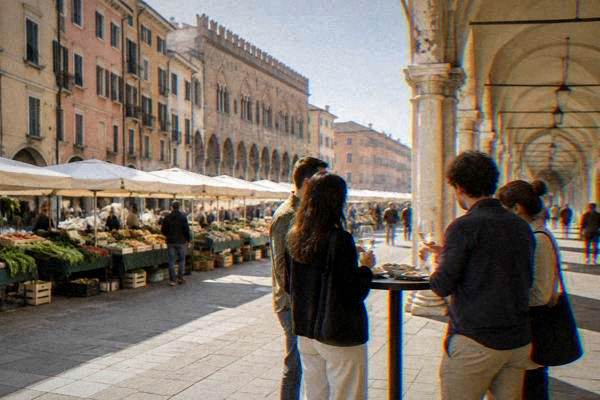
Padua's shopping runs through its market squares: daily produce stalls at Piazza delle Erbe and Piazza della Frutta, a Saturday market around the canal of Prato della Valle, a monthly antiques market, and the covered food hall beneath the Palazzo della Ragione.
Short answer
The main Padua markets are the produce stalls of Piazza delle Erbe (Monday to Friday 7:30 to 13:30, Saturday 7:30 to 20:00), Piazza della Frutta, the Saturday market at Prato della Valle and the antiques market held there every third Sunday of the month. Sotto il Salone, the covered market under Palazzo della Ragione, sells local food year round.
Padua (Italian: Padova) is a city in the Veneto, northern Italy, about 36 km in a straight line from Venice, and its shopping life still centres on the same squares it has used for centuries. The Comune di Padova's own market page lists the produce stalls of Piazza delle Erbe and Piazza della Frutta, the Saturday market around the canal ring of Prato della Valle, and an antiques market held on the third Sunday of every month. Beneath the Palazzo della Ragione sits Sotto il Salone, the permanent covered food market the Padua tourism board describes as a historic market of local products. This guide walks through each of them, what to buy, and how the market calendar fits around the city's annual events.
What Are The Main Markets In Padua?
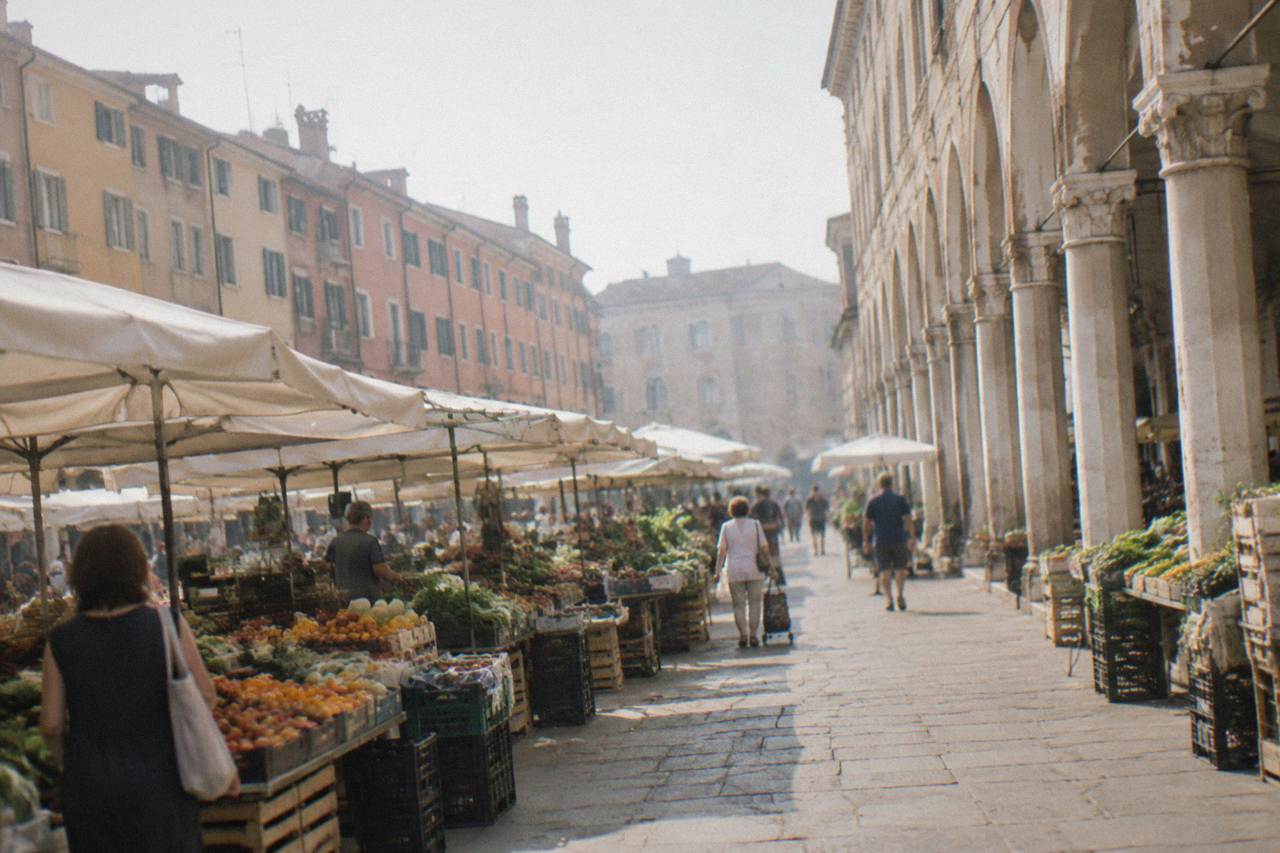
The main markets in Padua are the produce market in Piazza delle Erbe, which the Comune di Padova lists with 52 stalls of fruit, vegetables and flowers open Monday to Friday 7:30 to 13:30 and Saturday 7:30 to 20:00, the Piazza della Frutta food and non-food market next to it, the Saturday market at Prato della Valle, and the monthly antiques market, all published on the city's official market page.
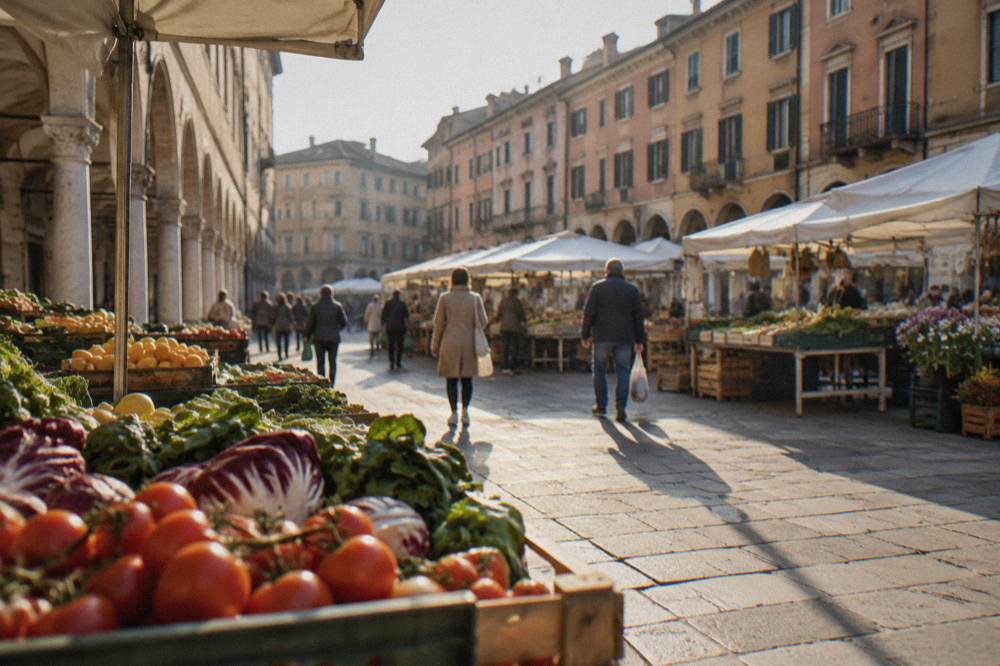
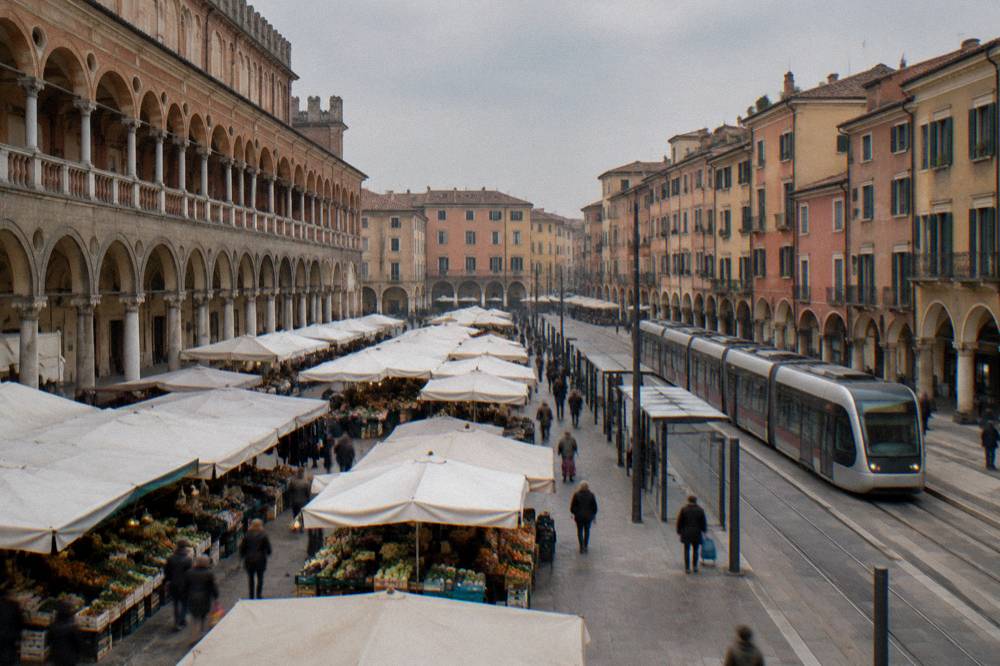
The two adjoining squares in the historic centre carry the everyday trade. Piazza delle Erbe holds 52 stalls, described by the Comune as mostly fruit, vegetables and flowers, on the schedule above. Piazza della Frutta, the square immediately to the north, runs its food stalls on the same page's listing, with non-food stalls on set days. Together they form one continuous market area at the foot of the Palazzo della Ragione, and the same official page names the Saturday market at Prato della Valle, on the far side of the old centre, with non-food stalls, plants, flowers and produce.
The antiques market is the fourth fixture: Prato della Valle and via Umberto I host it every third Sunday of the month, per the Comune di Padova's dedicated antiques-market page. All four are covered in detail below.
| Market | Where | When | What it sells |
|---|---|---|---|
| Piazza delle Erbe | Piazza delle Erbe | Mon to Fri 7:30 to 13:30, Sat 7:30 to 20:00 | 52 stalls, mostly fruit, vegetables, flowers |
| Piazza della Frutta | Piazza della Frutta | Food stalls on set days, non-food on set days, per the Comune listing | Food and non-food goods |
| Saturday market | Prato della Valle | Saturdays, 8:00 to 19:00 in winter and 8:00 to 20:00 in summer | Non-food, plants, flowers, fruit and vegetables |
| Antiques market | Prato della Valle and via Umberto I | Third Sunday of the month | Antiques |
Hours come from the Comune di Padova's market pages and can change by season or ordinance, so check the city's page before setting out for an early visit.
When Is The Antiques Market In Padua Held?
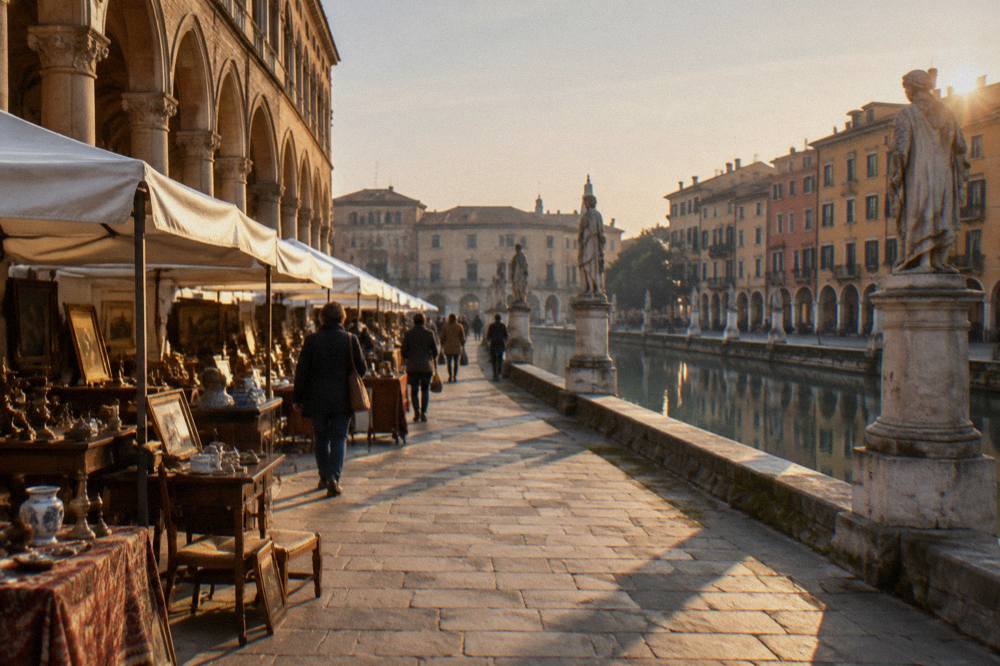
The Padua antiques market is held on the third Sunday of every month at Prato della Valle and along via Umberto I, according to the Comune di Padova's antiques-market page, which is the official source for the schedule, and it runs from 8:00 to 20:00 on those Sundays, with the same page noting the market does not run in August in some listings.
Prato della Valle makes an atmospheric setting for it: the square is ringed by a canal lined with a double ring of numbered statues of famous figures, and the Venetian Senate declared the space communal in 1767 before its reclamation under Andrea Memmo. On antiques Sundays the stalls line the outer ring, and the same visit can take in the Basilica of Saint Anthony, which stands beside the square and holds the Saint's tomb, entry to which is free. If your trip touches the third Sunday of a month, it is one of the more distinctive shopping mornings the city offers.
The market is a monthly fixture rather than a seasonal fair, so it needs no date announcement: count forward to the third Sunday. The Comune's page is the place to confirm before travelling in a month with public holidays, when Italian market schedules sometimes shift.
For travellers whose interest in Padua runs to food as much as antiques, a guided tasting route is one way into the market quarter, and the city has bookable options.
What Is Sotto Il Salone, The Covered Market Under Palazzo Della Ragione?
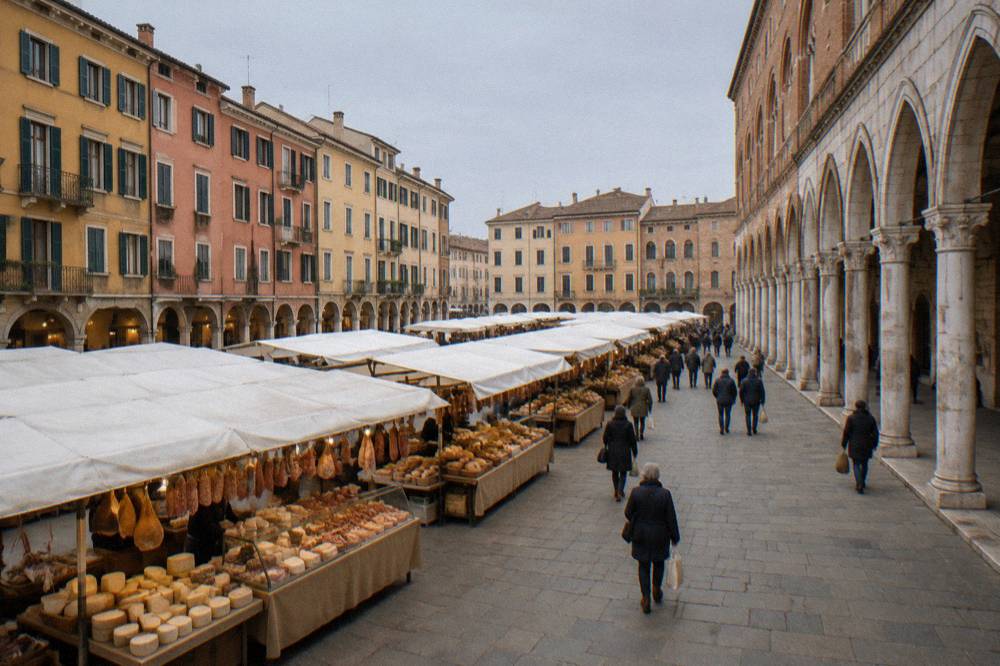
Sotto il Salone is Padua's permanent covered food market, located under the Palazzo della Ragione between Piazza delle Erbe and Piazza della Frutta, described by the Padua tourism board as a historic market of local food products and specialities that trades all year, in contrast to the open-air stalls around it, which follow the daily and weekly schedules the Comune publishes.
The tourism board's page on the market calls it a permanent fixture of local products beneath the great hall of the Palazzo della Ragione, the medieval palace whose upper floor, the Salone, was built to house the city's courts and which now gives the market its roof. The Palazzo itself is separately ticketed: tickets are sold at the IAT tourist office at Piazza delle Erbe 52, and the reported schedule is Tuesday to Sunday 9:00 to 19:00 with a full price of EUR 8 and concessions at EUR 6, per padovamusei.it, so confirm at the ticket office. The market below needs no ticket at all. For more on the building and its hall, see the guide to Palazzo della Ragione and its halls.
The Salone dei Sapori, a food event tied to the market, ran 11 to 18 October in 2026 as its latest edition, an annual appointment rather than a permanent feature. If your visit falls outside event weeks, Sotto il Salone still functions as the everyday food hall, the indoor counterpart to the stalls in the squares.
What Should You Buy In Padua?
What to buy in Padua comes down to two categories the sources support: produce and flowers from the market stalls of Piazza delle Erbe, Piazza della Frutta and Prato della Valle, and local food products from Sotto il Salone, including the dishes the Padua tourism board itself names, risotto ricco alla padovana, capon alla canevera made with the gallina padovana bird, and the torta pazientina, plus bigoli and baccala as standard local mentions.
The tourism board's page on Padua's three patented recipes is the most specific official source on local food: it names the risotto, the capon cooked alla canevera using the local gallina padovana breed, and the torta pazientina, a layered sweet. Bigoli, the thick local pasta, and baccala, salt cod, are further standard local mentions. A market visit is where these ingredients, the raw gallina padovana, seasonal vegetables, and the components of a torta pazientina, are actually on sale. For a fuller treatment of the city's food, see what to eat in Padua and the longer answer on what food Padua is known for.
Two consumable pieces of Padua history also count as purchases with a story. Aperol, the bitter orange aperitif, was created in Padua in 1919 by the Barbieri brothers, and Caffè Pedrocchi, opened in 1831 in a neoclassical building by Giuseppe Jappelli and long known as the cafe without doors, still serves its signature coffee with mint. Neither the cafe's opening hours nor drink prices belong on this page: check directly before visiting.
| Category | Where to find it | Notes from the sources |
|---|---|---|
| Fruit, vegetables, flowers | Piazza delle Erbe, 52 stalls | Comune di Padova market page |
| Non-food goods, plants | Prato della Valle Saturday market | Comune di Padova market page |
| Local food products | Sotto il Salone, under Palazzo della Ragione | Padua tourism board |
| Antiques | Prato della Valle and via Umberto I | Third Sunday monthly |
| Local dishes and ingredients | Markets and food halls | Tourism board names risotto ricco alla padovana, capon alla canevera, torta pazientina |
What the sources do not support is shop names, brand recommendations or a ranking of retailers, and this page prints none. No single street holds the title of the city's shopping street, so treat the arcaded centre around the two market squares as the shopping district by fact of where the markets stand.
How Do The Market Squares Fit Into A Day In Padua?
The market squares sit at the walkable heart of Padua, with Piazza delle Erbe and Piazza della Frutta adjoining each other beneath the Palazzo della Ragione, Prato della Valle about a ten to fifteen minute walk southwest beside the Basilica of Saint Anthony, and the Scrovegni Chapel and the Eremitani museums a similar distance north, so a single day can pair a morning market with the city's major sights on foot.
A practical morning shaped around the sources runs like this: the produce stalls of Piazza delle Erbe from 7:30, a look inside Sotto il Salone, the hall of the Palazzo della Ragione on a ticket bought at the IAT office at Piazza delle Erbe 52, then the walk to Prato della Valle, where the Saturday market or the third-Sunday antiques market may be running. The Basilica of Saint Anthony beside the square is free to enter and holds the Saint's tomb; the feast of Saint Anthony, the Tredicina, ran 31 May to 12 June in 2026 with the feast day on 13 June as the latest edition of an annual event.
The Scrovegni Chapel, Giotto's fresco cycle of 1303 to 1305, is the one sight that needs planning ahead of the day: entry is timed, with groups of at most 25 people every 15 minutes and about 15 minutes inside, and booking in advance is required. The chapel is closed 16 to 27 November 2026 for the annual fresco inspection. Full booking detail is in the guide to Scrovegni Chapel tickets, and the wider context of the city's fourteenth-century fresco cycles, inscribed by UNESCO in 2021 as Padova Urbs Picta, is covered in the UNESCO fresco cycles guide.
| Time of day | Where | What the schedule gives |
|---|---|---|
| Early morning | Piazza delle Erbe and Piazza della Frutta | Stalls from 7:30 on weekdays, per the Comune |
| Mid-morning | Sotto il Salone and Palazzo della Ragione | Covered market; palace Tue to Sun 9:00 to 19:00, reported |
| Midday | Prato della Valle | Saturday market or third-Sunday antiques |
| Afternoon | Basilica of Saint Anthony | Free entry, beside the square |
| Late afternoon | Scrovegni Chapel | Timed entry, last entry 18:45, book ahead |
Does Padua Have A Christmas Market?
Padua's Christmas market, the Fiera di Natale, has run in recent years in the central squares and streets, but no confirmed dates for 2026 or 2027 have been published, so this page prints none, and travellers should check the Comune di Padova's pages close to the season, while the events that are confirmed are the Tredicina of Saint Anthony and the Padova Marathon on 18 April 2027, start at Stadio Euganeo at 8:30 and finish at Prato della Valle.
An indicative early December to early January pattern has appeared in city material, but an indicative pattern is not a date, and a shopping page that names the wrong week does its readers no favours. What can be said is structural: the antiques market falls on the third Sunday of December, whatever the Christmas stalls are doing, and the market squares themselves are the natural venue for any seasonal stalls the city installs. When the Comune confirms dates they will appear on its market pages.
Outside the festive season, the confirmed shopping-adjacent events are few and dated. The Padova Marathon on 18 April 2027 finishes at Prato della Valle, which puts the antiques square at the centre of a city event that morning. Auto e Moto d'Epoca, the classic car and motorcycle fair, ran 22 to 25 October in 2026 as its latest edition. Both are annual appointments worth checking against your travel dates.
How Do You Get To The Markets, And What Does A Visit Cost?
The market squares of Piazza delle Erbe and Piazza della Frutta are in the pedestrian historic centre, reached on foot from Padova train station in about fifteen to twenty minutes or by tram on the SIR1 line, with an urban ticket costing EUR 1.70 for 90 minutes, while the markets themselves are free to browse and the only standard costs are Palazzo della Ragione at a reported EUR 8 full and the EUR 1.70 urban transport ticket.
The urban ticket costs EUR 1.70 for 90 minutes of travel in the city zone, and a contactless bank card can be tapped on board for the same fare. The SIR1 tram runs north to south through the city; a second line, SIR3, is in pre-service testing, so this page promises no opening date for it. From the station, the IAT tourist office sits at the exit of platform 1, open Monday to Saturday 9:00 to 19:00 and Sundays 10:00 to 16:00, and it is where Palazzo della Ragione tickets are sold. The second IAT office is at Piazza delle Erbe 52, inside the market square itself.
If you arrive with bags, the station's left-luggage office is at platform 1, open daily 6:00 to 20:00 at EUR 5 per 6 hours. Wider arrival detail, including the airport bus at EUR 13 from Venice Marco Polo, is in how to get to Padua and getting around Padua.
| Item | Figure | Status in the sources |
|---|---|---|
| Urban 90-minute ticket | EUR 1.70 | Busitalia fare page |
| Palazzo della Ragione, full | EUR 8 | Reported, padovamusei.it |
| Station left luggage | EUR 5 per 6 hours | Tourism board page |
| Basilica of Saint Anthony | Free entry | Reported |
| Tourist tax | Capped at five consecutive nights | Comune di Padova; no rate printed |
Where Does Shopping Fit Among Padua's Sights And Day Trips?
Padua's shopping squares double as its sightseeing core, with the Palazzo della Ragione above the food hall, the Basilica of Saint Anthony beside the Prato della Valle market, and the Scrovegni Chapel a short walk from the Eremitani museums, while the city also works as a base for day trips, being about 36 km in a straight line from Venice, with regional trains to Venice taking about 26 to 40 minutes at a fare of about EUR 5, and Vicenza about 16 to 25 minutes at about EUR 6.
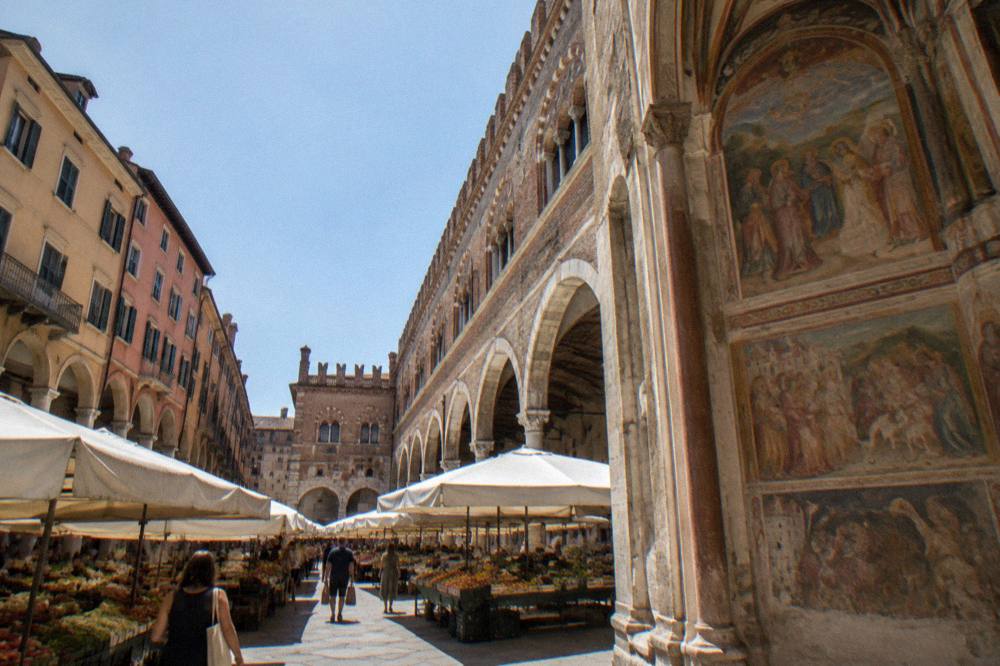
The overlap is the point: a visitor in Padua for the markets is already standing among the fresco cycles of Padova Urbs Picta, whose eight complexes include the Scrovegni Chapel, the Palazzo della Ragione and the Basilica of Saint Anthony. A combined ticket for the fresco sites, the Padova Urbs Picta Card, exists through the tourism board, but its price and inclusion list are unconfirmed: check the official museums site, and note that the Scrovegni Chapel always needs its own timed booking with its EUR 1 booking fee. The Urbs Picta card guide covers what is known.
For a longer stay built around the city, the guides to where to stay in Padua and Padua as a base for Venice cover the logistics. One Venice note matters for day trippers: the Venice day-tripper access fee trial ended on 27 July 2026, and no decision for 2027 had been announced, so do not budget for it on the strength of older articles. The Venice day trip guide keeps the reverse direction straight.
A market morning and a sight full afternoon are the natural shape of a day here, and for a fuller plan the overview of things to do in Padua pulls the whole city together.
Can A Tour Replace Or Extend A Market Visit?
A guided food tour can extend a market visit by putting the stalls in the hands of a local guide, and Padua's bookable options include a small-group street food walk through the centre, a private cooking demonstration with a meal in a local home, and a self-guided audio walking tour, all of which cover ground the markets occupy, though none replaces the official stall schedule, so the markets themselves remain free to browse independently at the hours the Comune publishes.
The street food walk, this site's featured tour for shopping and markets, moves through the centre in small groups and pairs the food traditions with the streets that hold them. It can be booked at Check availability. A cooking class is the other natural companion to a market shop: buying the ingredients at the stalls and then watching them become risotto ricco alla padovana or a bigoli dish is the full arc of Paduan food culture, and the food tour guide walks through the options.
Neither is a substitute for the antiques Sunday or the Saturday market, which run on the city's own calendar and cost nothing to attend. A reasonable plan for a food-minded visitor is a market morning on Saturday at Prato della Valle, the antiques market if the month's third Sunday falls in your stay, and a guided tasting route on another day.
What Should You Know About Weather And Timing For Market Days?
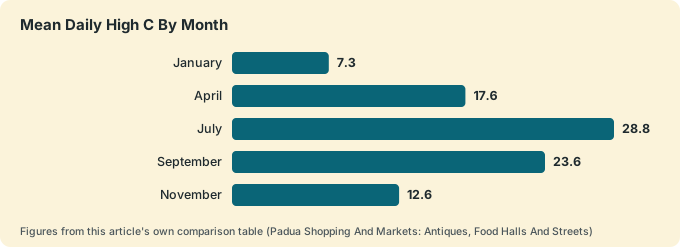
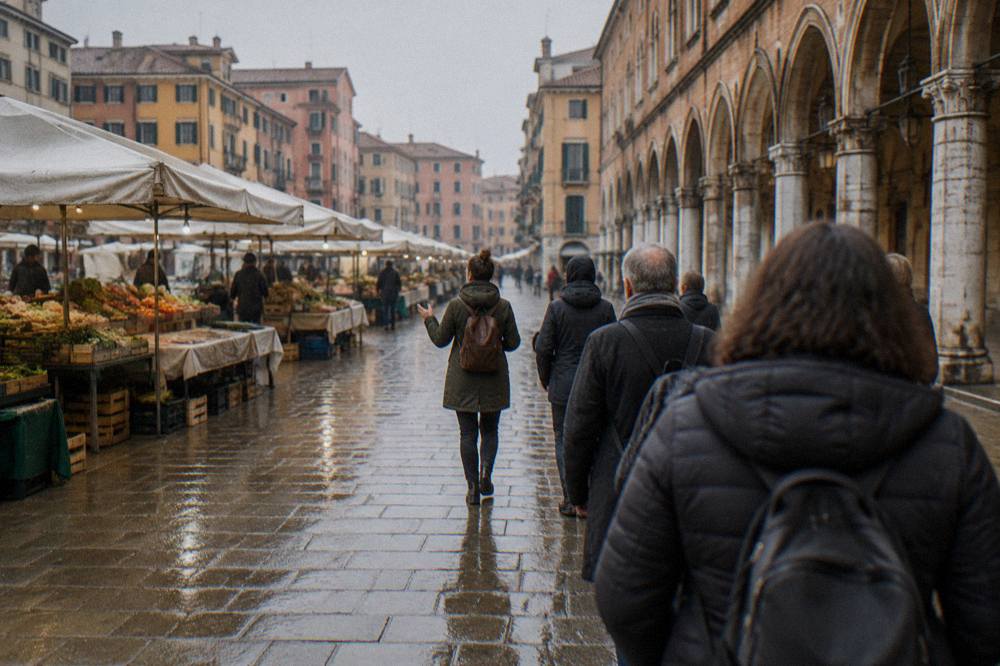
The ERA5 reanalysis for Padua, 1991 to 2020, puts July and August mean daily highs at 28.8 C, January at 7.3 C, and November as the month with the highest rain total at 114 mm, with September and October near 105 mm each, which matters for market planning because the Piazza delle Erbe stalls run to 20:00 on Saturdays and the antiques market runs to 20:00 on its Sundays, all outdoors.
The climate table below is the modelled record for the city, and it argues its own case: the market squares are open-air, so the rain months shape the experience more than the temperature does. The full picture, including what the model does and does not support, is in the Padua weather guide, and the seasonal trade-offs for the whole city are laid out in the best time to visit Padua.
| Month | Mean daily high C | Mean daily low C | Rain mm |
|---|---|---|---|
| January | 7.3 | -0.2 | 53.6 |
| April | 17.6 | 7.8 | 84.4 |
| July | 28.8 | 18.9 | 62.1 |
| September | 23.6 | 14.9 | 105.5 |
| November | 12.6 | 5.5 | 114.0 |
Source: ERA5 reanalysis, 1991 to 2020, a modelled grid cell for central Padua, not a weather-station record.
Common Questions About Shopping And Markets In Padua
What time do the markets open in Padua?
The Piazza delle Erbe market runs Monday to Friday 7:30 to 13:30 and Saturday 7:30 to 20:00, per the Comune di Padova. The Saturday market at Prato della Valle runs 8:00 to 19:00 in winter and 8:00 to 20:00 in summer.
When is the antiques market in Padua?
Every third Sunday of the month at Prato della Valle and via Umberto I, from 8:00 to 20:00, according to the Comune di Padova's antiques-market page.
What is Sotto il Salone?
It is Padua's permanent covered food market under the Palazzo della Ragione, between Piazza delle Erbe and Piazza della Frutta, selling local food products year round.
What should I buy in Padua?
Produce and flowers from the market stalls, local food products from Sotto il Salone, and antiques on the third Sunday. The tourism board's named local dishes are risotto ricco alla padovana, capon alla canevera and torta pazientina.
Is the Piazza delle Erbe market open on Sunday?
The Comune's schedule lists Monday to Saturday trading for Piazza delle Erbe, not Sunday. The antiques market is the regular Sunday event, on the third Sunday of the month.
Does Padua have a Christmas market?
A Fiera di Natale has run in the central squares in past seasons, but no dates for 2026 or 2027 are confirmed, so check the Comune di Padova's pages close to the season.
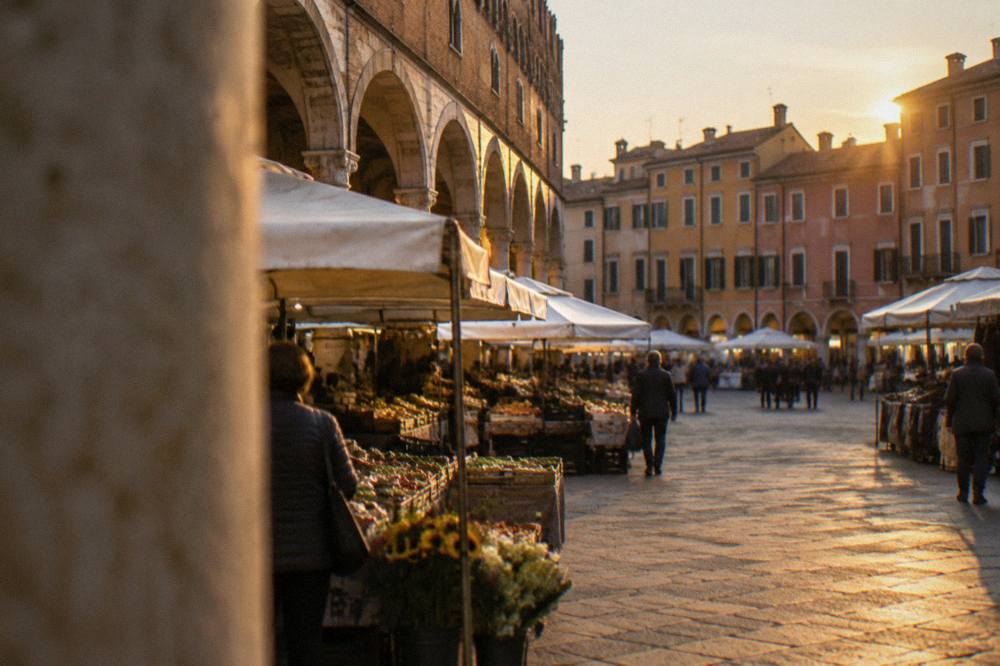
Padua's markets are the working heart of the city, from the 52 produce stalls of Piazza delle Erbe to the statues of Prato della Valle on antiques Sunday, and the Padua Travel Guide covers every square, sight and day trip around them.