Caffè Pedrocchi: The Café Without Doors
Caffè Pedrocchi is Padua's neoclassical café, opened in 1831 to a design by Giuseppe Jappelli and known for decades as the café without doors. Here is what the sources say about its history, its mint coffee and how to plan a visit.
Short answer
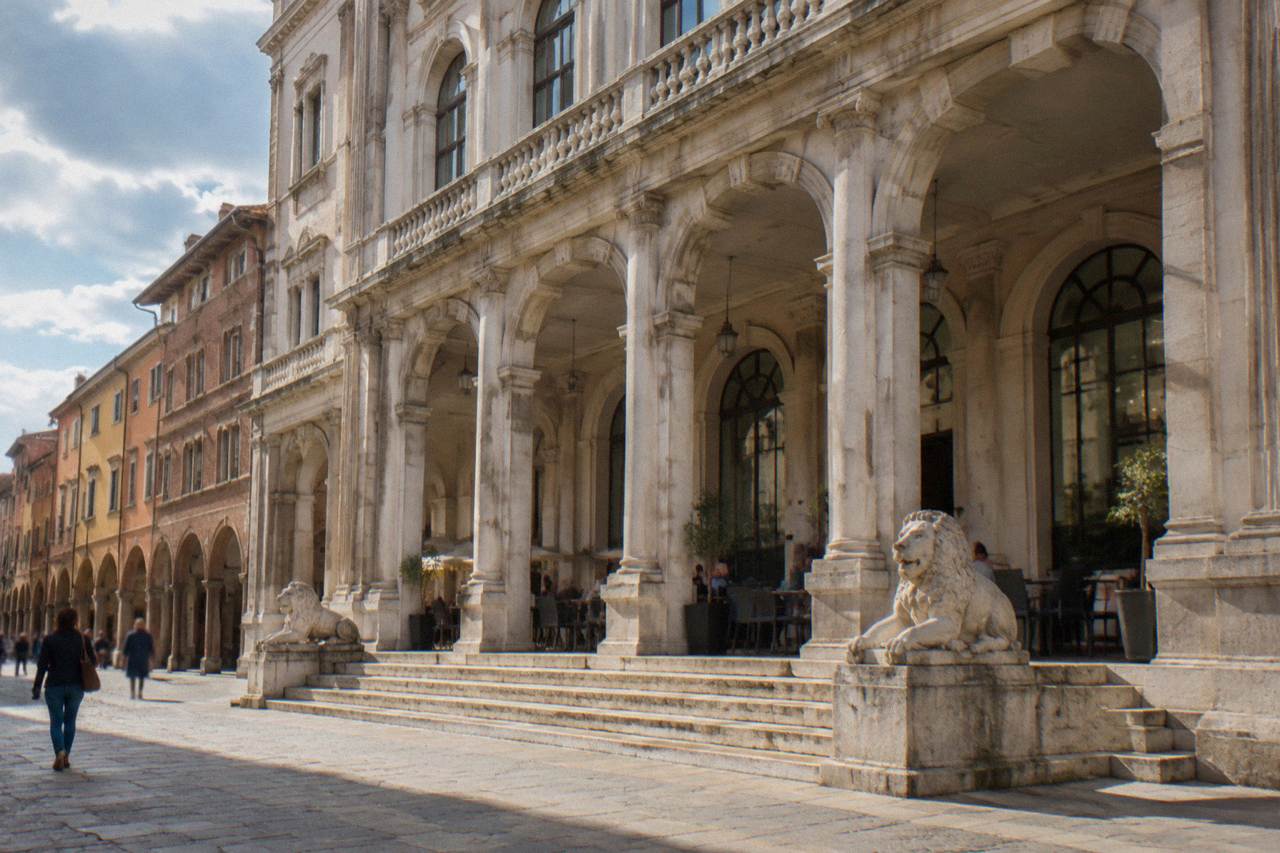
Caffè Pedrocchi opened in Padua in 1831, a neoclassical building by Giuseppe Jappelli that stayed open around the clock and was long known as the café without doors. Its signature drink is the caffè Pedrocchi, a coffee with mint, and the building also houses the Museo del Risorgimento, reported at EUR 5 full price, Tuesday to Sunday.
Caffè Pedrocchi is the neoclassical café at the heart of Padua (Italian: Padova), an inland city in the Veneto about 36 km in a straight line from Venice, built to a design by Giuseppe Jappelli and opened in 1831. The Padua tourism board records it as the café that ran for decades without ever locking up, the "caffè senza porte" whose doors stayed open to the street until 1916, and whose signature drink, a coffee with mint, still carries the café's name. This page gathers what the primary sources actually say about the building, its history and its museum, and how to fit a visit into a day in the city.
What Is Caffè Pedrocchi In Padua?
Caffè Pedrocchi is a historic café in the centre of Padua, opened in 1831 in a neoclassical building designed by the architect Giuseppe Jappelli, and it has served as a meeting point for the city's students, writers and political figures ever since. The Padua tourism board describes it as the café without doors, a name earned because it stayed open around the clock, and its signature drink remains the caffè Pedrocchi, a coffee prepared with mint. The building also contains the Museo del Risorgimento.
The café stands a short walk from the two squares that anchor Padua's historic centre, and it belongs to the same woven fabric of arcades, markets and university buildings that defines the centro storico. The tourism board's own pages give the essentials: an 1831 opening, a neoclassical design by Giuseppe Jappelli, and the nickname that stuck because the café kept no closing time and, in the tourism board's account, ran without doors to close until 1916. That detail is reported rather than carved in municipal stone, so treat it as the tourism board's telling rather than a measured fact.
What makes the building worth a planned stop rather than a glance is its double life. On the ground floor it works as a café in the grand European tradition, with rooms that carry the decoration of Jappelli's 1831 design. Upstairs, the Stabilimento Pedrocchi houses the Museo del Risorgimento, which the civic museums' site reports open Tuesday to Sunday, 9:30 to 12:30 and 15:30 to 18:00, at EUR 5 full price with reductions below that. Per the civic museums' listing, confirm current hours and prices on the museum's own page before a visit, since seasonal adjustments apply across the civic network.
Why Is Caffè Pedrocchi Called The Café Without Doors?
The nickname comes from the café's reported habit of never closing: the Padua tourism board's history of the building says Caffè Pedrocchi operated around the clock and had no doors to shut, a state that lasted until 1916. In that telling, a café that could not be locked became a fixture for students from the university, travellers arriving at odd hours and anyone who needed a table at any time, and the phrase café without doors outlived the practice itself.
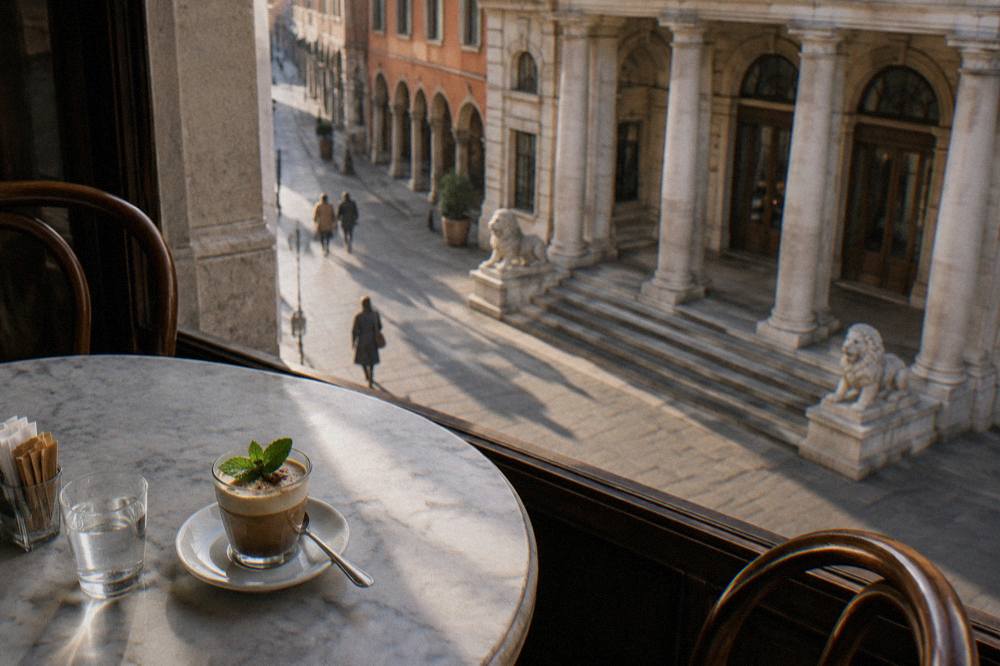
The detail belongs to the tourism board's narrative of the café, which is the source this site reports. Nothing in the municipal pages quantifies the arrangement beyond the 1916 endpoint, so the honest version is exactly that: reported, dated, and attached to the building's identity ever since. What the sources do anchor firmly is the world around the café. Padua's university, founded in 1222, sat a few streets away, Galileo held the chair of mathematics there from 1592 to 1610, and Elena Lucrezia Cornaro Piscopia took her doctorate in philosophy on 25 June 1678, the first woman university graduate in recorded history. A café without closing hours in a city of that student population had a natural constituency.
The nickname also ties the café to the political century it was born into. Students of the university participated in the 8 February 1848 uprising, one of the early Risorgimento risings, and the university's own heritage pages record the date. The café's rooms hosted that same currents-watching public, which is why the Museo del Risorgimento upstairs fits the building so well: the collection and the architecture document the same decades.
If the story of the doors is what draws you, the practical payoff today is smaller than the legend. The café operates as a café, with its own schedule, and no hours figure is published in the sources this site uses, so check the café's own contacts before planning an evening around it. The building's public face, the decorated rooms and the museum, is what a visitor can reliably plan around.
What Can You See Inside Caffè Pedrocchi Today?
Inside Caffè Pedrocchi a visitor finds the café's historic ground-floor rooms, still furnished in the style of Jappelli's 1831 design, the signature caffè Pedrocchi with mint on the drinks menu, and, on the upper floors of the Stabilimento Pedrocchi, the Museo del Risorgimento, reported open Tuesday to Sunday from 9:30 to 12:30 and 15:30 to 18:00 at EUR 5 full price.
The building is a working café and a civic museum at once, so a visit can mean a coffee, a museum ticket or both.
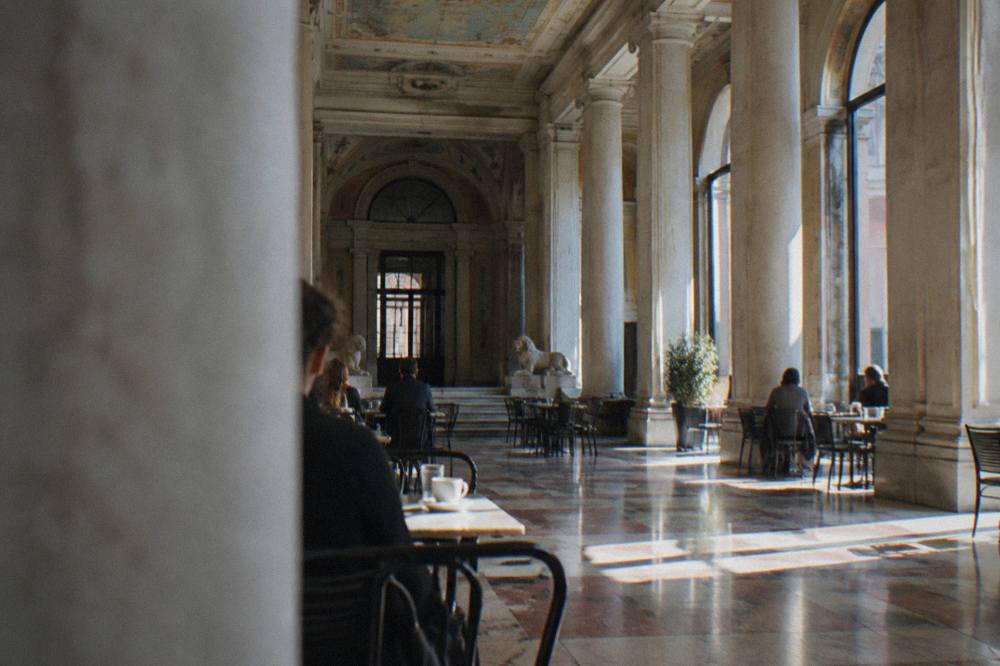
The café floors are the part that needs no ticket. The tourism board presents the rooms as the setting that made the building famous: grand interiors in the neoclassical manner of Jappelli's 1831 design, tables with a view of Padua's student traffic, and a drinks list that includes the house coffee with mint. This site prints no menu prices and no opening hours for the café itself, because the sources used here do not carry them; the café's own contacts page is the place to confirm both before you go.
The museum upstairs is documented more precisely, though still as a reported figure rather than a fetched one. The civic museums' listing gives the Museo del Risorgimento at the Stabilimento Pedrocchi Tuesday to Sunday, 9:30 to 12:30 and 15:30 to 18:00, EUR 5 full price with reduced rates below that. Note the split day: the museum closes in the early afternoon and reopens mid-afternoon, a pattern shared by several Padua civic sites, so a morning coffee followed directly by the museum works, while a long lunch in between does not.
| What | Where In The Building | Access | Reported Terms |
|---|---|---|---|
| Historic café rooms | Ground floor | Walk in as a customer | Hours and prices on the café's own page |
| Caffè Pedrocchi with mint | Café rooms | On the drinks menu | Price on the menu |
| Museo del Risorgimento | Stabilimento Pedrocchi, upper floors | Ticket | EUR 5 full, Tue to Sun, 9:30 to 12:30 and 15:30 to 18:00, per the civic museums' listing |
| Neoclassical facade and exterior | Via the side streets of the centre | Free, from the street | Always viewable |
For visitors stitching the café into a wider circuit, the building sits close to the rooms and squares that carry most of Padua's weight. The Scrovegni Chapel, with its timed-entry system of 25 people every 15 minutes, is a short walk to the north, and the Palazzo della Ragione and the Piazza delle Erbe market sit in the same central block. An itinerary built around one day in Padua usually places the café as a mid-morning stop between the two.
What Is The Caffè Pedrocchi Mint Coffee?
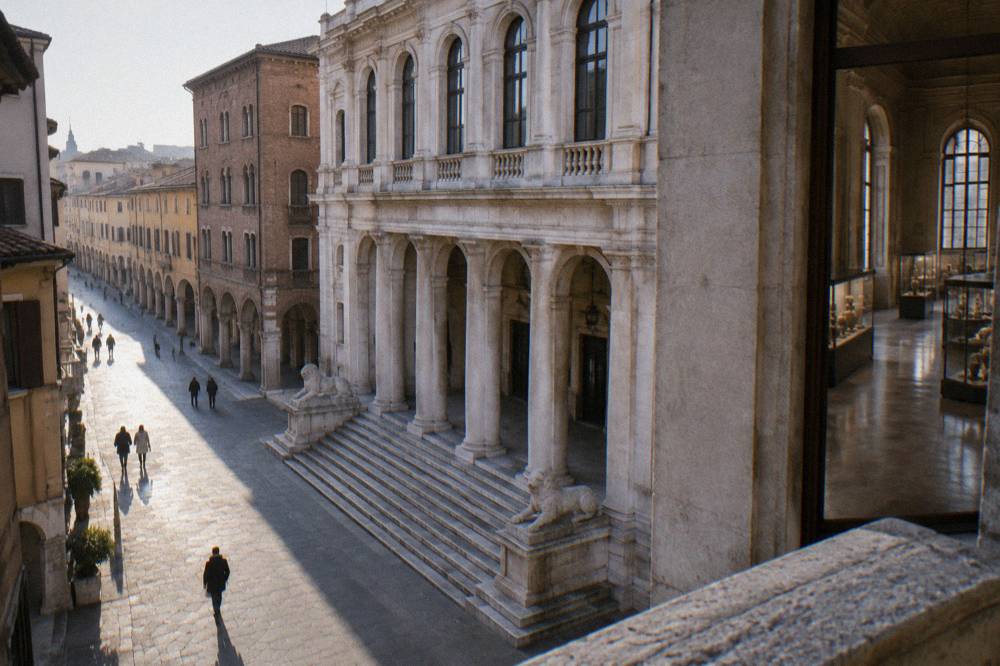
The caffè Pedrocchi is the café's signature drink, a coffee prepared with mint, and the Padua tourism board names it as the house specialty tied to the building's name. The board's pages describe it as the drink to order in the café's rooms, but they set no price and print no recipe, and this site adds none, so the honest description is a mint-flavoured coffee served in the rooms that gave it the name, with the current price on the café's own menu.
The tourism board's food pages give the café three linked facts: the 1831 opening, the Jappelli design, and the mint coffee as the signature. Beyond that, the sources stay quiet, and a responsible page stays quiet with them. No ranking, no tasting note, no claim about which version is definitive, because none of that appears in the primary material. What the sources do give is context: Padua sits inside an aperitivo culture the tourism board places around Piazza delle Erbe and Piazza dei Signori, and Aperol itself was created and first presented in Padua in 1919 by the Barbieri brothers, a fact reported by press histories and Wikipedia alike. The mint coffee belongs to the same city story, the café era in which Padua's drinks took on names and reputations.
Ordering it is a two-minute transaction inside the café rooms, which makes it one of the easiest historic experiences in the city to actually consume. You do not need a ticket, a booking or a time slot, only the café's opening schedule, which the café lists on its own contacts page. Pair it with a look at the rooms themselves: the decoration is the reason the building carries its reputation, and a coffee buys you time inside it.
For travellers who want the drink culture explained rather than just tasted, a guided option exists. The site's featured food walk, the Check availability link on this page leads to the operator's live listing, where the current price, schedule and cancellation terms are shown before you commit.
Where Does Caffè Pedrocchi Sit In Padua's History?
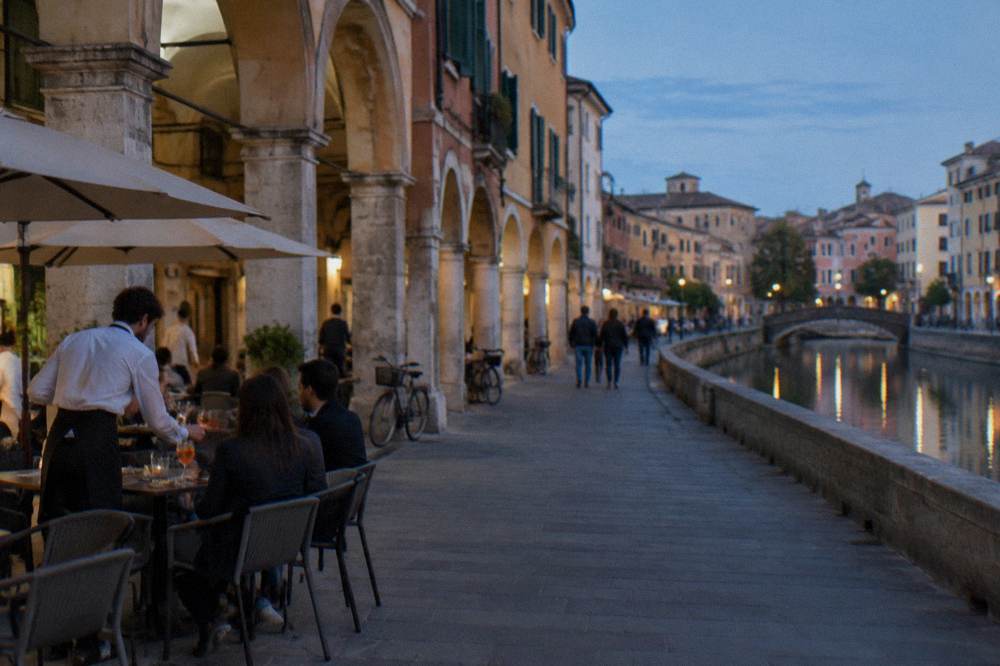
Caffè Pedrocchi opened in 1831, in the decades when Padua lived under Habsburg-era rule after the long Venetian period that ran from 1405 to 1797, and the café's history is inseparable from the Risorgimento: students of the university took part in the 8 February 1848 uprising, and the Museo del Risorgimento inside the building now collects that story. The university itself was founded in 1222, and the café became one of its institutions two streets away.
The timeline the sources support runs long, and the café occupies a precise point in it. Roman Patavium stood here, Livy was born in 59 BC, and the Antenor founding legend, reported by the university's history pages, gives the city a Trojan-age origin story that remains a legend rather than a record. The Carrara family lorded over the city from 1318 to 1405, when Venice took control and held it until 1797. The university grew through all of it, and by the time Jappelli's café rose in 1831 the city had been through Napoleonic upheaval and into Austrian administration, the political condition against which 1848's risings, Padua's among them on 8 February, were directed. Everything else covered here is indexed on Padua Travel Guide.
| Year | Event | Source Basis |
|---|---|---|
| 59 BC | Livy born in Roman Patavium | Reported, unipd.it history pages |
| 1222 | University of Padua founded | University's own profile |
| 1405 to 1797 | Venetian rule over Padua | Reported, Wikipedia |
| 1592 to 1610 | Galileo holds the chair of mathematics | University's own pages |
| 1678 | Elena Cornaro Piscopia's doctorate, 25 June | University's own pages |
| 1831 | Caffè Pedrocchi opens, designed by Giuseppe Jappelli | Reported, turismopadova.it |
| 1848 | Students join the 8 February uprising | University heritage pages |
| 1916 | End of the no-doors era, per the tourism board's account | Reported, turismopadova.it |
Placing the café on that line explains why it matters beyond its coffee. A café built for conversation in that city, in that political decade, was never just a café; the tourism board's own framing makes it a stage for the century that followed.
How Much Time Should You Allow For Caffè Pedrocchi In Padua?
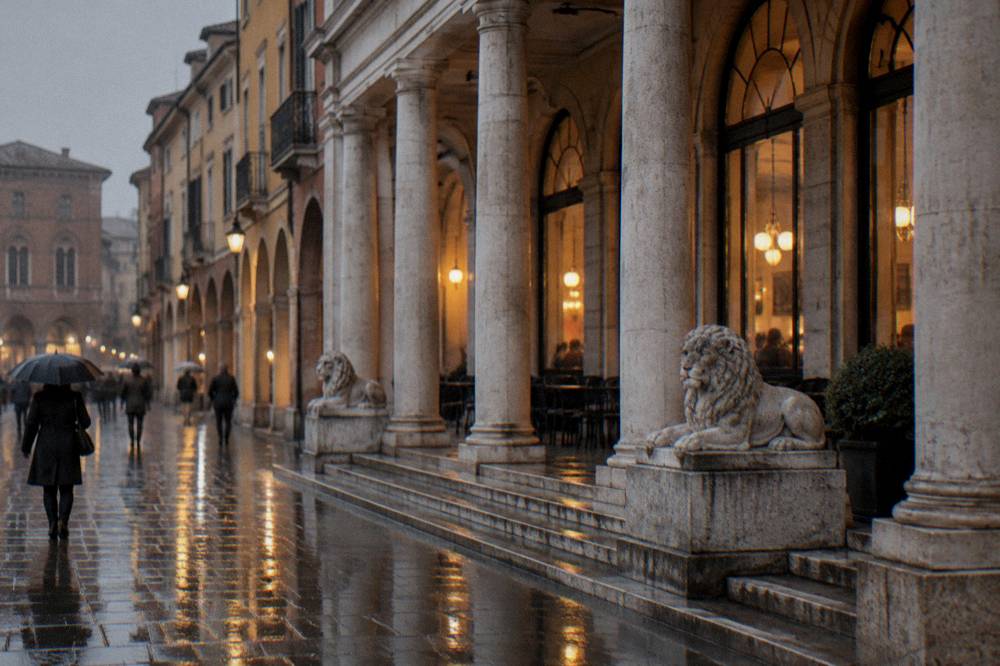
A coffee in the café rooms plus a look at the building's exterior takes under an hour, while adding the Museo del Risorgimento upstairs, with its reported split schedule of 9:30 to 12:30 and 15:30 to 18:00, stretches the visit to between one and two hours. The café rewards a slow half hour more than a rushed quarter, because the rooms themselves are the attraction, and the museum's morning or late-afternoon windows set the rhythm of the stop.
Planning around the museum's split day is the one structural constraint. The reported hours close the collection between 12:30 and 15:30, so a visitor who arrives after lunch faces a gap best filled by the market squares or Palazzo del Bo, whose guided historic tour the university prices at EUR 10 full with alternating Italian and English slots. Visitors planning a wider circuit will find the two-day Padua itinerary leaves room for both without rushing.
Season matters less here than at Padua's timed sights, since a café visit flexes around weather. For context, the ERA5 reanalysis, 1991-2020, gives Padua a January mean high of 7.3 C and July and August mean highs of 28.8 C, with November the month with the highest rain total at about 114 mm of rain. A café is a fair answer to a wet November morning; it is also a fair answer to a hot July afternoon, and no crowd prediction is offered here because none is sourced.
| Visit Shape | What It Includes | Time To Budget | Constraint |
|---|---|---|---|
| Coffee stop | Café rooms, mint coffee, facade | Under 1 hour | Café's own opening schedule |
| Coffee plus museum | Café rooms and the Museo del Risorgimento | 1 to 2 hours | Museum's split day, Tue to Sun |
| Full historic block | Café, museum, Palazzo della Ragione, Piazza delle Erbe | Half a day | Palazzo della Ragione closes some Mondays, per its listing |
| Rainy-day anchor | Café plus covered market under Palazzo della Ragione | 2 to 3 hours | Market days vary by square |
What Sights Sit Near Caffè Pedrocchi In Padua?
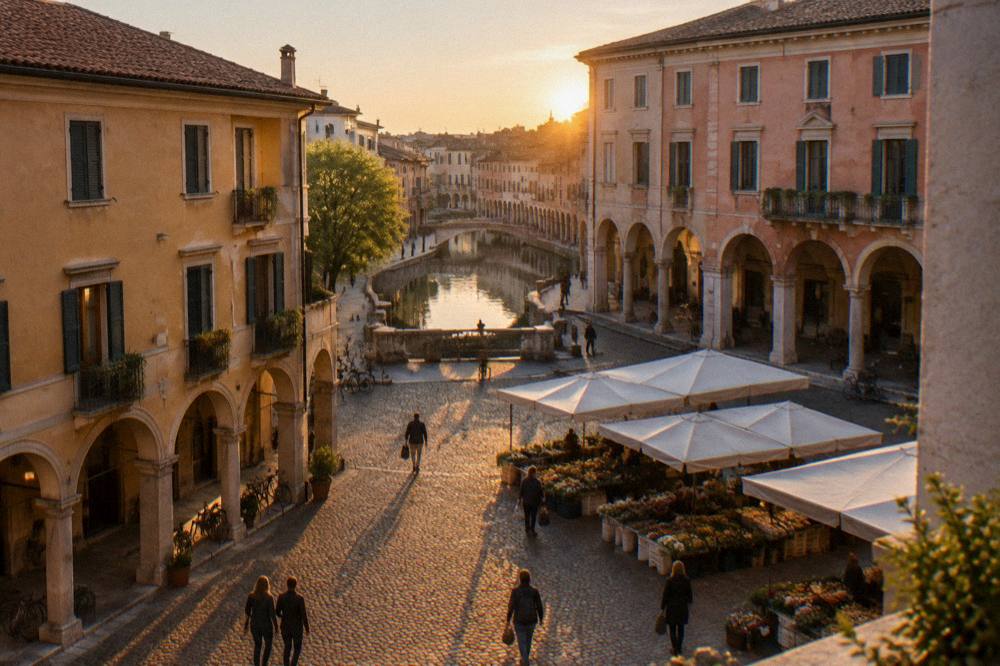
Caffè Pedrocchi sits in the block of central Padua that also holds Piazza delle Erbe and its market stalls, Piazza della Frutta, Palazzo della Ragione with its EUR 8 full-price ticket, and the university's Palazzo del Bo, with the Scrovegni Chapel and the Basilica of Saint Anthony a longer walk beyond them. The café works as a natural mid-point stop on almost any route through the centre, and no sight on that list needs a car to reach from it.
The nearest cluster needs no transport at all. The Piazza delle Erbe market runs Monday to Friday 7:30 to 13:30 and Saturday 7:30 to 20:00, per the Comune di Padova's market page, mostly fruit, vegetables and flowers across 52 stalls, with Piazza dei Frutti alongside it. Under Palazzo della Ragione sits the permanent Sotto il Salone food market, which the tourism board describes as a covered market of local specialities, and the palace itself carries the fourteenth-century frescoed hall that forms part of the city's UNESCO-listed Padova Urbs Picta inscription of 2021.
Further out but still walkable, the Scrovegni Chapel requires its own timed booking, with entries of at most 25 people every 15 minutes and a EUR 15 full daytime ticket that also covers the Musei Civici Eremitani and Palazzo Zuckermann, per the museums' price list. The chapel is closed 16 to 27 November 2026 for the annual fresco inspection, a fact the chapel's own site states plainly, so any autumn plan should check that window first. The Basilica of Saint Anthony is free to enter, with the Saint's tomb and the Chapel of Relics open to visitors, though no opening hours are published.
| Sight | Relationship To The Café | Entry Terms Per The Sources |
|---|---|---|
| Piazza delle Erbe market | Central square cluster | Free, Mon to Fri 7:30 to 13:30, Sat to 20:00 |
| Palazzo della Ragione | Same central block | EUR 8 full, EUR 6 reduced, Tue to Sun, per the museums' listing |
| Sotto il Salone market | Under Palazzo della Ragione | Market prices on the stalls |
| Palazzo del Bo | University historic seat | Guided tour EUR 10 full, alternating language slots |
| Scrovegni Chapel | Longer walk, north of the centre | EUR 15 full plus EUR 1 booking fee, timed entry only |
| Basilica of Saint Anthony | South-east of the centre | Free entry |
For anyone building the day around a guide rather than a map, the site's Padua walking tour page lays out the guided options, and the wider roundup at things to do in Padua places the café among the city's other stops.
Which Food And Drink Experiences In Padua Pair Well With Caffè Pedrocchi?
The natural pairings are a market-and-food walk through the squares the tourism board names, a cooking class built around the dishes the board itself lists, and a guided spritz experience in the city where Aperol was created in 1919, with each option bookable through the operator's live listing. The tourism board names risotto ricco alla padovana, capon alla canevera made with the gallina padovana and the torta pazientina as the city's signature dishes, alongside the standard local mentions of bigoli and baccala.
The food pages of the tourism board are thin but specific, and they are the authority this site reports. Those three dishes, the covered Sotto il Salone market, and the café culture around Piazza delle Erbe and Piazza dei Signori make up the documented food geography of the city. The board names the squares, not venues, and this page follows suit: no restaurant, bar or bakery names appear here, and no prices for meals or drinks, because the sources carry none.
| Experience | What The Sources Support | Where To Book |
|---|---|---|
| Spritz and aperitivo walk | Aperol created in Padua in 1919 by the Barbieri brothers, reported; aperitivo culture centred on Piazza delle Erbe and Piazza dei Signori | Operator's live listing |
| Market food walk | Piazza delle Erbe stalls, Sotto il Salone covered market | Operator's live listing |
| Cooking class | Dishes named by the tourism board: risotto ricco alla padovana, capon alla canevera, torta pazientina | Operator's live listing |
| Coffee at the café itself | The caffè Pedrocchi with mint, per the tourism board | On site |
A cooking class rounds the food side out. The home cooking demo with a shared meal is the site's related pick for this page, and the small-group market tour with a cooking class covers both halves of the same story in one booking. Prices, ratings and durations for every one of these render on the listings themselves rather than being typed here, and each carries its own cancellation terms before you pay.
Common Questions About Caffè Pedrocchi
Is Caffè Pedrocchi in Padua open every day?
The sources used by this site publish no opening hours for the café itself, so check the café's own contacts page before planning a visit. The Museo del Risorgimento inside the building is reported open Tuesday to Sunday, 9:30 to 12:30 and 15:30 to 18:00, closed Mondays.
What is the famous drink at Caffè Pedrocchi?
The signature drink is the caffè Pedrocchi, a coffee prepared with mint, named by the Padua tourism board as the café's house specialty. The current price is on the café's own menu.
Why was Caffè Pedrocchi called the café without doors?
Per the Padua tourism board's account, the café stayed open around the clock and had no doors to close, a practice the board dates to 1916. The nickname outlived the practice.
Who designed Caffè Pedrocchi and when did it open?
The building is a neoclassical design by Giuseppe Jappelli, opened in 1831, per the Padua tourism board.
Can you visit a museum inside Caffè Pedrocchi?
Yes. The Museo del Risorgimento occupies the Stabilimento Pedrocchi, reported at EUR 5 full price, Tuesday to Sunday, in a split morning and late-afternoon schedule. Confirm terms on the civic museums' own page before a visit.
Caffè Pedrocchi earns its place on a Padua itinerary as the one stop where the city's history, its university culture and its drink traditions share a single set of rooms, and the sources behind this page, from the tourism board to the civic museums' listing, support every practical detail of a visit.
