Free Walking Tour Padua: Tip-Based Walks Compared
Padua has no free or tip-based walking tour, so this page does the next best thing: a free self-guided route through the compact old centre, the sights that cost nothing, the stops that need a ticket, and the paid guided walks that cover the same ground with a local guide.
Short answer
There is no bookable free or tip-based walking tour of Padua. The old centre is compact enough to walk independently in a loop from Piazza delle Erbe to Prato della Valle, taking in free sights such as the Basilica of Saint Anthony and the markets, with paid stops like the Scrovegni Chapel booked separately.
Padua, the inland Veneto city about 36 km in a straight line from Venice, has no bookable free or tip-based walking tour: that format simply does not appear in the product roster for this city, and this page will not invent one, a meeting point or a tip amount. What Padua does have is one of the most walkable historic centres in northern Italy, where every major landmark sits within 3 km of the market squares, plus a set of paid guided walks that cover the same ground. The comparison below sets a free self-guided route against what a guide adds, and it separates the sights that cost nothing from the ones that need a timed ticket.
Is There A Free Walking Tour Of Padua?
No, there is no free or tip-based walking tour of Padua in the product roster, and no operator currently offers one as a bookable product. Padua's walkable old centre makes the format unnecessary for many travellers: the main squares, the Basilica of Saint Anthony, Prato della Valle and the university quarter all sit within a short walk of each other, and a self-guided loop costs nothing but shoe leather.
The paid guided alternatives, including the private city walk with a Scrovegni Chapel visit, cover the same streets with a licensed local guide.
The honest comparison, then, is not between two tour products but between walking Padua alone for free and walking it with a guide. Both are real options here, and this page lays out the evidence for each. The free route below follows the city's actual geography, west to east, from the Scrovegni Chapel and the Eremitani church through the market squares to the Basilica of Saint Anthony and Prato della Valle. For a fuller sight-by-sight treatment, the site's Padua walking tour guide covers the same streets with timings and detours.
What "free" buys you in Padua is genuinely substantial. Entry to the Basilica of Saint Anthony is free, per the Padova Urbs Picta visiting page, and the squares, markets, arcades and canal-ringed Prato della Valle cost nothing at all. What it does not buy is Giotto: the Scrovegni Chapel is timed-entry only, with no same-day online booking, and the daytime ticket costs EUR 15 full price plus a EUR 1 booking fee per the museums' own price list.
What Is The Best Free Self-Guided Walking Route In Padua?
The best free route is a west-to-east loop of about 3 km: start at the Scrovegni Chapel and Chiesa degli Eremitani, cross to Piazza delle Erbe and Piazza della Frutta with Palazzo della Ragione between them, continue to Caffe Pedrocchi and Palazzo del Bo, then finish at the Basilica of Saint Anthony, Prato della Valle and the Saturday market if the day fits. Every stretch is flat, arcaded in places, and walkable without any transport ticket.
Begin at the western edge of the old centre. The Scrovegni Chapel stands on the site of Padua's Roman amphitheatre, which is why it is also called the Arena Chapel; the "Arena" is Padua's own, never Verona's. Next door, the Chiesa degli Eremitani, part of the UNESCO Padova Urbs Picta inscription of 2021, lost Mantegna's Ovetari frescoes when the church was bombed in 1944, and the surviving fragments are part of the same fourteenth-century inscription story told across eight city complexes. Walking past both costs nothing; entering the chapel does.
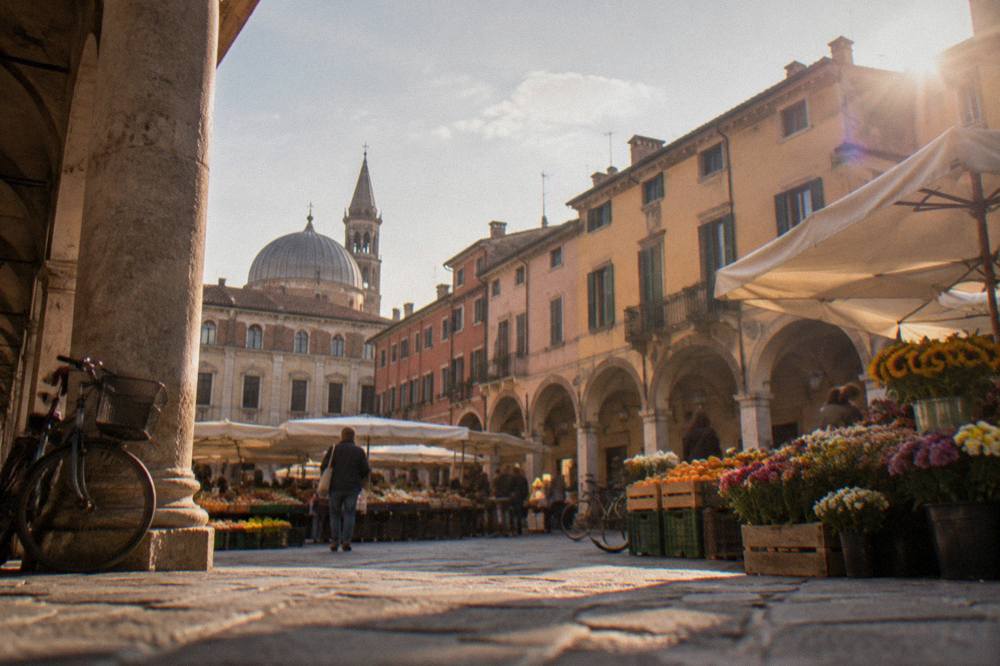
From there, head into the market heart. Piazza delle Erbe holds its fruit, vegetable and flower stalls Monday to Friday 7:30 to 13:30 and Saturday 7:30 to 20:00, per the Comune di Padova's market page, and Piazza della Frutta runs alongside it. Between the two squares sits Palazzo della Ragione, whose tiered roofline defines the city skyline; the Palazzo della Ragione guide explains what is inside. Under it, the Sotto il Salone covered market has served the city for eight centuries, per the Padua tourism board, and browsing it is free.
The middle stretch passes Caffe Pedrocchi, the neoclassical cafe opened in 1831 and described by the tourism board as the "caffe senza porte", the cafe without doors, until 1916. A few steps away, Palazzo del Bo is the historic seat of the university founded in 1222, where Galileo held the chair of mathematics from 1592 to 1610 and Elena Lucrezia Cornaro Piscopia took her doctorate in philosophy on 25 June 1678, the first woman graduate in recorded history. Seeing the building from the street is free; the anatomical theatre of 1594 needs a guided tour.
The eastern third is the devotional and monumental Padua. The Basilica of Saint Anthony, begun in 1232 a year after the Saint's death on 13 June 1231, admits visitors free, with Donatello's equestrian Gattamelata standing in the piazza outside. South of it, Prato della Valle is a vast oval space ringed by a canal and a double ring of numbered statues of famous people, declared communal space by the Venetian Senate in 1767 and reclaimed under Andrea Memmo, per the city's tourism page. The full Prato della Valle guide covers its layout.
| Stage of the free route | What you see | Entry cost |
|---|---|---|
| Scrovegni Chapel and Chiesa degli Eremitani | Chapel exterior, amphitheatre site, Eremitani church | Chapel timed ticket EUR 15 full, EUR 11 reduced, plus EUR 1 booking fee; church check on site |
| Piazza delle Erbe and Piazza della Frutta | Daily markets, arcades, Palazzo della Ragione exterior | Free |
| Caffe Pedrocchi and Palazzo del Bo | 1831 cafe exterior, historic university building | Free from outside |
| Basilica of Saint Anthony and Piazza del Santo | Basilica interior, Saint's tomb, Gattamelata statue | Free, dress suitable for a church |
| Prato della Valle | Canal, statue ring, Saturday market | Free |
Which Guided Walks In Padua Cover The Same Ground?
The guided alternatives in this roster are paid, not free or tip-based, and the closest match to the route above is a private city walking tour that includes a visit to the Scrovegni Chapel, combining the free-to-roam streets with the timed frescoes under one booking. Other options include a golf cart tour for travellers who cannot walk the loop, a guided Giotto chapel tour focused on the frescoes alone, and a small group walk that also includes chapel admission.
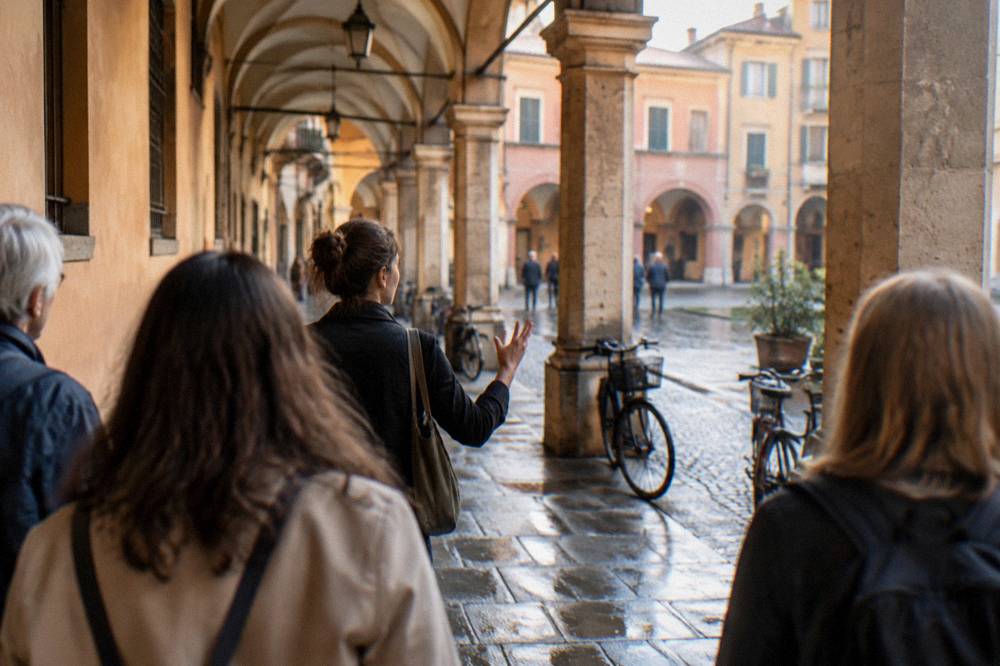
A guide changes the economics but also the content. The paid walks in the roster supply what a free wander cannot: the chapel booking itself, which is the single hardest ticket to arrange independently in Padua, and a local guide's commentary on the fourteenth-century fresco cycles. The Padua private city walking tour with a Scrovegni Chapel visit is the natural upgrade from the free route, and you can Check availability at the operator's live listing.
For travellers who want the frescoes with maximum depth, the guided Giotto tour and the evening admission option both appear in the picks band above, and the Scrovegni Chapel guide explains the timed-entry system in full. The chapel's own rules are strict: at most 25 people enter every 15 minutes, each visit lasts about 15 minutes inside after a pause in the climate-controlled waiting room, and late arrivals must rebook and pay again. Arrive 5 minutes before the slot printed on the ticket.
What Can You See In Padua For Free?
The free list is long: the Basilica of Saint Anthony and the Saint's tomb, Prato della Valle and its statue ring, the Piazza delle Erbe and Piazza della Frutta markets, the arcaded streets of the centro storico, the exterior of Caffe Pedrocchi and Palazzo del Bo, the Santo's piazza with Donatello's Gattamelata, and the city's canals and surviving gates, all at no charge. The Comune di Padova's market page confirms the market hours, and the basilica's entry is free per the Urbs Picta visiting page.
Free does not mean second-rate here. Padua's two UNESCO inscriptions, the Orto Botanico of 1997 and the fourteenth-century fresco cycles of 2021, both have ticketed cores, but the city around them is an open-air museum. The free things to do in Padua guide expands this list, and the centro storico guide maps the quarters. The Saturday market at Prato della Valle runs 8:00 to 19:00 in winter and 8:00 to 20:00 in summer per the Comune's page, and the antiques market fills Prato della Valle and via Umberto I on the third Sunday of each month.
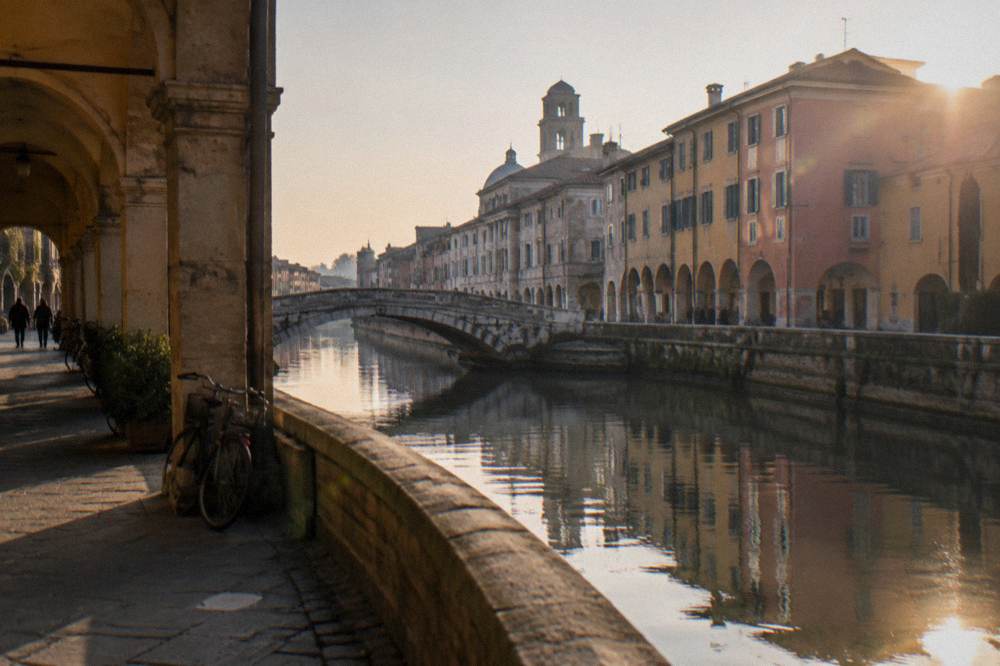
The canals deserve their own mention. Padua sits on the Bacchiglione, an inland river city, not a lagoon city, and the Padua canals guide traces the waterside stretches you can walk without a ticket. Porta Portello, also named Porta Ognissanti on the maps, is the riverside gate at the northern edge of the old town.
| Free sight | What the source says | Where |
|---|---|---|
| Basilica of Saint Anthony interior and tomb | Free entry, per the Padova Urbs Picta visiting page | East of the centre |
| Prato della Valle | Communal space declared by the Venetian Senate in 1767, canal and statue ring | South-east edge |
| Piazza delle Erbe market | Mon-Fri 7:30-13:30, Sat 7:30-20:00, Comune di Padova | Centre |
| Antiques market | Third Sunday monthly, 8:00-20:00, Comune di Padova | Prato della Valle and via Umberto I |
| Gattamelata by Donatello | Equestrian statue in Piazza del Santo, 1448 onward per the basilica sources | Piazza del Santo |
Which Stops On The Walk Cost Money?
Four stops on the free route charge admission: the Scrovegni Chapel at EUR 15 full price plus EUR 1 booking, the Orto Botanico at EUR 15 full price from 1 September 2026 with a EUR 12 winter rate, the Palazzo del Bo guided tour at EUR 10 full, and Palazzo della Ragione, listed at EUR 8 full with EUR 6 concessions per the civic museums' page. The chapel is the only one that is strictly timed, and none can be swapped for a free alternative.
Each of these is a genuine decision point on the walk. The chapel's daytime ticket also covers the Musei Civici Eremitani and Palazzo Zuckermann, which softens the price considerably: three institutions, one ticket, per the museums' own price list. The evening visit, Giotto sotto le stelle, runs 25 March to 1 November, 19:00 to 22:00 every 20 minutes, chapel only. The Orto Botanico guide covers the garden founded in 1545, the world's first university botanical garden in the university's own wording, and the Palazzo del Bo guide covers the 45-minute historical tour with its Italian and English slots.
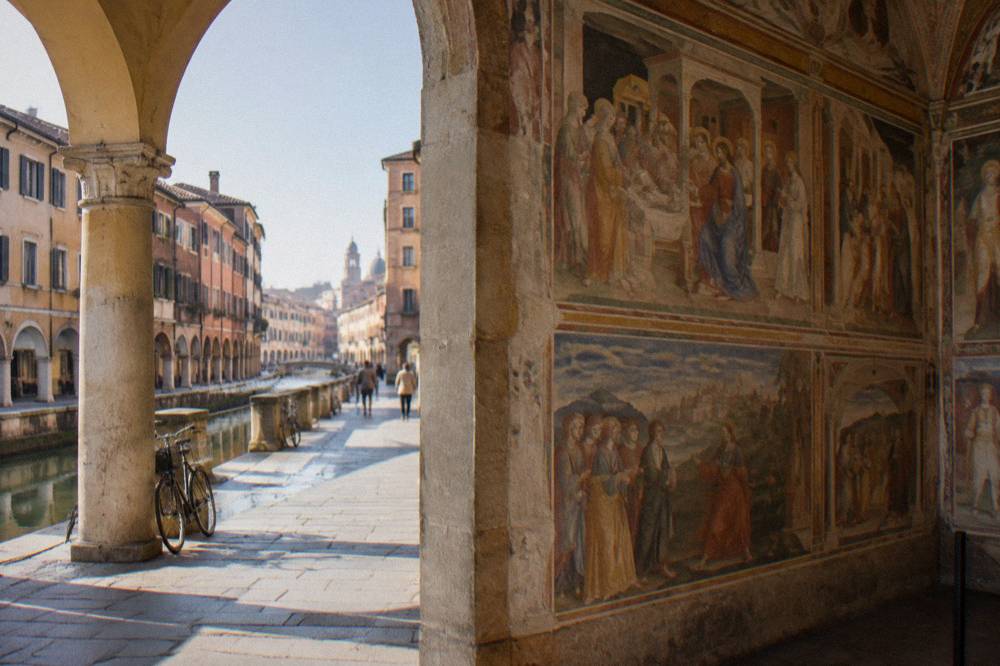
The Scrovegni closure of 16 to 27 November 2026 for the annual fresco inspection is worth flagging for anyone planning a late-autumn walk: the chapel's own site announces it, and no equivalent viewing exists elsewhere in the city. Book ahead at the chapel's own booking site, up to the day before by phone with a card, or accept the risk of the museum ticket office. More of these guides are collected on Padua Travel Guide.
| Ticketed stop | Full price | What the price includes | Source wording |
|---|---|---|---|
| Scrovegni Chapel, daytime | EUR 15 + EUR 1 booking fee | Chapel, Musei Civici Eremitani, Palazzo Zuckermann | The museums' price list |
| Orto Botanico | EUR 15 (EUR 12 Nov-Feb) | Garden entry, audioguide included | The garden's ticket page, from 1 Sept 2026 |
| Palazzo del Bo tour | EUR 10 | About 45-minute guided route, anatomical theatre | The university's tour page |
| Palazzo della Ragione | EUR 8 (EUR 6 concessions) | The hall, tickets at IAT Piazza delle Erbe 52 | The civic museums' page |
How Walkable Is Padua Without A Tour?
Padua is walkable enough that a tour is a choice rather than a necessity: the old centre is compact, every city-tier landmark lies within 3 km of the centre, and the main squares, basilica and Prato della Valle connect in a flat loop under that distance. The tram line SIR1 runs north to south for about 10.5 km with 26 stops when legs tire, and the 90-minute urban ticket costs EUR 1.70, bought digitally or by tapping a contactless card on board.
The walking question is really a comfort question. Summer walks face July and August mean daily highs of 28.8 C under the ERA5 reanalysis, 1991-2020, while January highs average 7.3 C, and November is the month with the highest rain total at 114 mm of rain. The arcades that line so many central streets give shade and cover, which is one reason the free route keeps to them where it can. The Padua accessibility guide addresses step-free planning in detail.
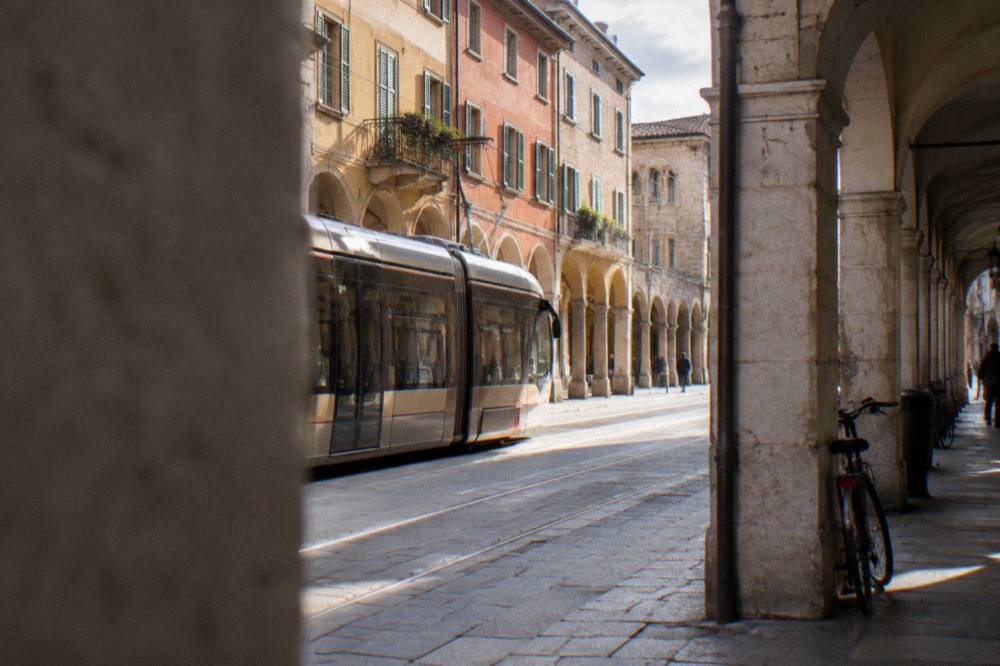
Transport on the walk is simple. The TU1 Orange Zone 90-minute ticket at EUR 1.70 covers bus and tram, per Busitalia's own fares page, and a contactless tap on board buys the same ticket. A second tram line, SIR3 from the station to Voltabarozzo, is in pre-service testing, with service targeted for the end of 2026; no opening date should be assumed. The getting around overview and the itinerary pages, including Padua in one day and Padua in two days, build the same walk into longer plans.
| Month | Mean high C | Mean low C | Rain mm |
|---|---|---|---|
| January | 7.3 | -0.2 | 53.6 |
| April | 17.6 | 7.8 | 84.4 |
| July | 28.8 | 18.9 | 62.1 |
| October | 18.4 | 10.6 | 105.4 |
| November | 12.6 | 5.5 | 114.0 |
Free Walking Tour Padua Versus A Paid Guide: Which Suits You?
A free self-guided walk suits travellers who are happy reading up in advance, who accept that the Scrovegni Chapel needs its own separate booking, and who want to spend nothing on guiding; a paid guided walk suits anyone who wants the chapel ticket bundled, wants a local's commentary on the fourteenth-century fresco cycles, or has a single day in the city and wants it structured. Neither option changes the underlying facts: the basilica is free either way, and the chapel is timed either way.
The money comparison is lopsided but honest. Walking the full route independently costs EUR 0 in guiding, plus EUR 15 for the chapel if you go inside, EUR 15 for the Orto Botanico from 1 September 2026, and EUR 10 for the Palazzo del Bo tour, all per the institutions' own pages. A guided walk adds the operator's fee and typically removes the booking burden. Food walkers can also fold the route into the Padua food tour options, which pair the same streets with tastings, and a boat alternative along the Brenta Riviera exists on the Brenta Riviera boat tour page for a different angle on the region.
For day-trippers from Venice, about 26 to 40 minutes away by regional train at a fare of about EUR 5, the self-guided loop is often the practical choice because it fits a half-day; the one day in Padua from Venice itinerary shows exactly how. For visitors spending a weekend based in Padua, with the Venice day trip one train ride away, a guided walk early in the stay can orient the rest of the visit.
Common Questions About Free Walking Tours In Padua
Is there a free walking tour of Padua?
No free or tip-based walking tour of Padua appears in the product roster. The practical free alternative is a self-guided loop of the old centre, which this page maps out, with paid guided walks covering the same ground for travellers who want a guide.
Can you see the Scrovegni Chapel for free?
No. Entry is by timed ticket only, EUR 15 full price plus a EUR 1 booking fee per the museums' price list, with at most 25 people admitted every 15 minutes and about 15 minutes inside. The daytime ticket also includes the Musei Civici Eremitani and Palazzo Zuckermann.
What is free to see in Padua?
The Basilica of Saint Anthony and the Saint's tomb, Prato della Valle with its canal and statue ring, the Piazza delle Erbe and Piazza della Frutta markets, the arcaded centro storico, Donatello's Gattamelata and the exterior of Caffe Pedrocchi and Palazzo del Bo are all free.
Is Padua easy to walk around?
Yes. The old centre is compact, every city-tier landmark lies within 3 km of the centre, and the walking route between the main squares, the basilica and Prato della Valle is flat. The tram and bus network, with a EUR 1.70 90-minute ticket, covers longer hops.
Do you need to book anything in advance for a self-guided walk?
Only the Scrovegni Chapel, which has no same-day online booking and admits timed slots booked in advance. The Orto Botanico and the Palazzo del Bo tour can also be planned ahead; everything else on the free route needs no booking.
How far is Padua from Venice for a day trip?
Padua lies about 36 km from Venice in a straight line, an inland city not on the lagoon, with regional trains taking about 26 to 40 minutes at a fare of about EUR 5. Venice is a straightforward day trip in either direction.
The comparison lands where it started: Padua's free walking tour is the city itself, walked on your own schedule, with a paid guide as the upgrade for the chapel and the commentary. Either way, the loop from the Eremitani to Prato della Valle is the spine of the visit, and the only genuinely urgent booking in the city is Giotto's fifteen minutes.