Padua Accessibility: Porticoes, Trams And Step-Free Sights
Padua is a compact inland city of arcaded streets, trams and timed-entry museums, and this guide sets out what the official sources say about getting around it with limited mobility, a wheelchair, a stroller or small children.
Short answer
Padua's old centre is compact with level porticoed streets, a tram line and EUR 1.70 bus tickets, but step-free access at individual sights is not confirmed anywhere in the official sources, so contact each venue before booking.
Padua (Padova), in the Veneto in northern Italy, is an inland city about 36 km in a straight line from Venice, built around market squares, porticoed streets and one of Italy's oldest universities. For a visitor planning around mobility, a stroller or sensory needs, the honest starting point is what the official sources actually say: the city is compact, its tram and bus network takes contactless payment, and its headline sights run on timed tickets, while specific step-free routes, lifts and ramps at the major monuments were not confirmed by any page used for this guide. This article lays out what is known, marks what needs a phone call, and never guesses. Where a figure matters, it comes from the venue, the transport operator or the city, and where a figure does not exist in those sources, the advice is simply to ask.
Is Padua Easy To Get Around With Limited Mobility?
Padua's historic centre is compact and largely level, with every major city landmark within 3 km of the central squares, and an urban tram and bus network whose 90-minute TU1 ticket costs EUR 1.70, payable by tapping a contactless card on board. What the official sources do not confirm is step-free access inside the monuments themselves, so the practical rule for this city is easy streets and a phone call ahead for each sight.
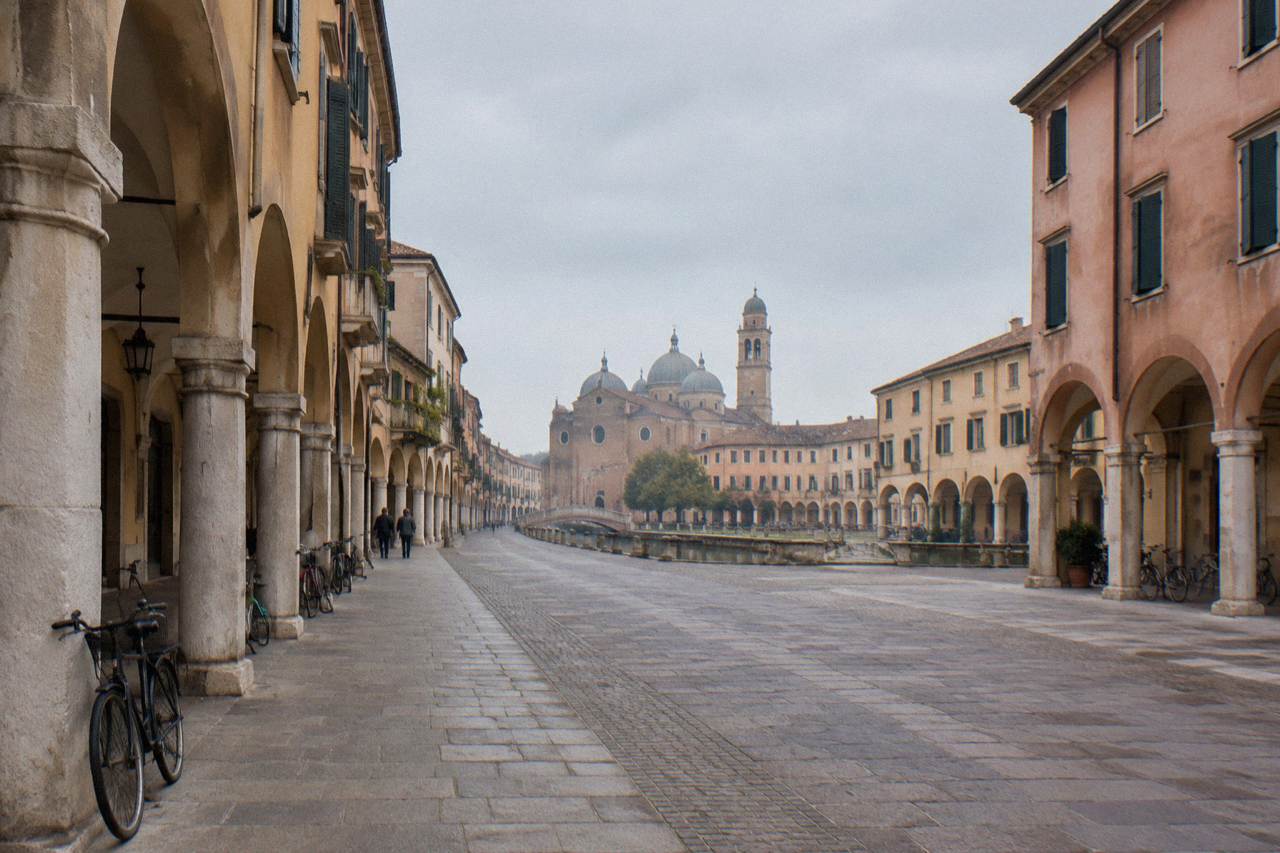
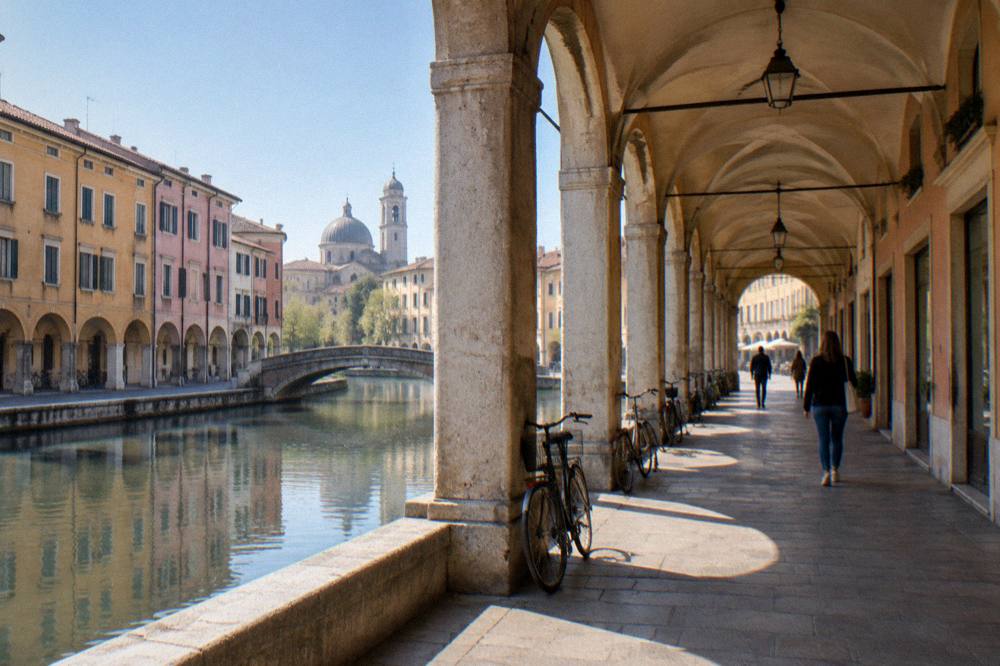
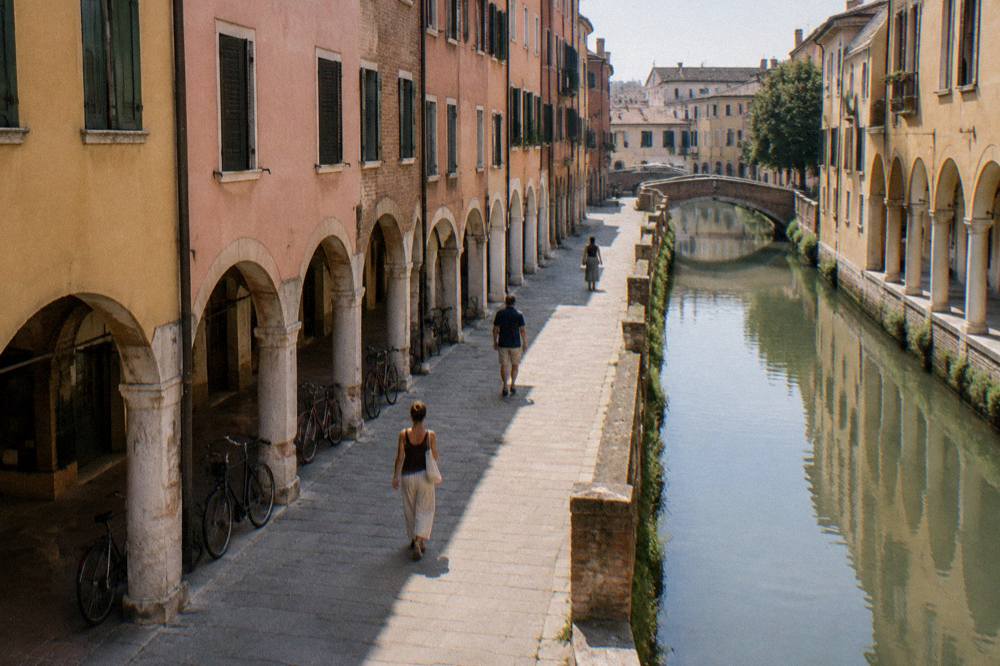
That combination, walkable fabric plus opaque buildings, is the core of Padua accessibility. The city's Roman-medieval core sits on flat terrain, and its famous porticoes give covered, continuous pavement along many central streets, which helps in rain and summer heat alike. The distances are short: the Scrovegni Chapel, Piazza delle Erbe, Palazzo della Ragione, the Basilica of Saint Anthony and Prato della Valle all sit inside a 3 km radius of the centre. No source used here gives walking minutes between named pairs of sights, so none are printed.
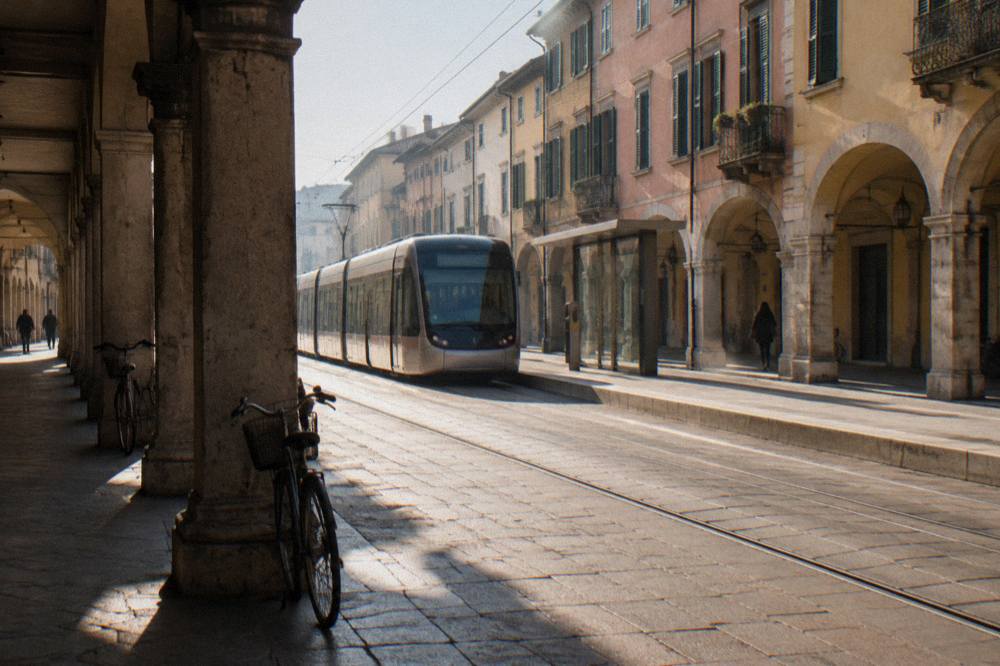
The transit system is run by Busitalia Veneto. Tram line SIR1 runs north to south for about 10.5 km with 26 stops, including the railway station. Tickets are digital, bought before boarding or paid by a single contactless tap on board, one tap per vehicle within the validity window. A new line, SIR3 from the station to Voltabarozzo, is in pre-service testing, with service targeted for the end of 2026, and no opening promise belongs on a planning page.
| Ticket | Zone | Price | Notes |
|---|---|---|---|
| TU1, 90 minutes | Orange Zone (city) | EUR 1.70 | Contactless tap accepted on tram and bus |
| TU1, daily | Orange Zone (city) | EUR 4.70 | Reported on the operator's fare page |
| TU2, 100 minutes | Blue Zone (conurbation) | EUR 2.00 | For trips beyond the city ring |
| Airport bus, one-way adult | Padova to Venice Marco Polo | EUR 13 | About 45 minutes, runs every 40 minutes |
| Airport bus, child to age 11 | Padova to Venice Marco Polo | EUR 6.50 | Same-day return EUR 23 |
For background on the city's shape before planning routes, the main things to do in Padua page maps the sights, and the getting around Padua guide covers tickets and tram lines in transport terms rather than accessibility terms.
Which Padua Sights Are Easiest To Plan Around?
The easiest Padua sights to plan around are the ones with published, timed systems and clear rules: the Scrovegni Chapel admits 25 people every 15 minutes, the Orto Botanico sells dated tickets from EUR 15, and the Basilica of Saint Anthony is free to enter, but none of the official pages confirm lifts, ramps or step-free routes, so accessibility at each monument is a question to put to the venue directly before booking.
This is the honest division in Padua: the streets give, the buildings withhold. There is no published access audit for the Scrovegni Chapel, Palazzo della Ragione, the Basilica, Palazzo del Bo or the Orto Botanico in the sources behind this page, and an accessibility guide that invents a ramp does real damage. What the sources do give is booking mechanics, and those mechanics are themselves an accessibility feature, because timed entry removes standing in open queues.
| Sight | Entry system | Price (full) | What is confirmed |
|---|---|---|---|
| Scrovegni Chapel | Timed, 25 people per 15 minutes, book ahead | EUR 15 plus EUR 1 booking fee | Climate-controlled waiting room, about 15 minutes inside, arrive 5 minutes early |
| Orto Botanico | Dated ticket, closed non-holiday Mondays | EUR 15 from 1 Sept 2026 | Audioguide included, fixed-time weekend guided tours |
| Basilica of Saint Anthony | Free entry, no visits during functions | Free | Tomb and Chapel of the Relics accessible |
| Palazzo del Bo (university) | Guided tour only, alternating Italian and English slots | EUR 10 | About 45 minutes, booking centre 049 827 3939 |
| Palazzo della Ragione | Timed entry, Tue to Sun | EUR 8 | Tickets sold at IAT Piazza delle Erbe 52 |
| Prato della Valle | Open square | Free | Canal with a double ring of numbered statues |
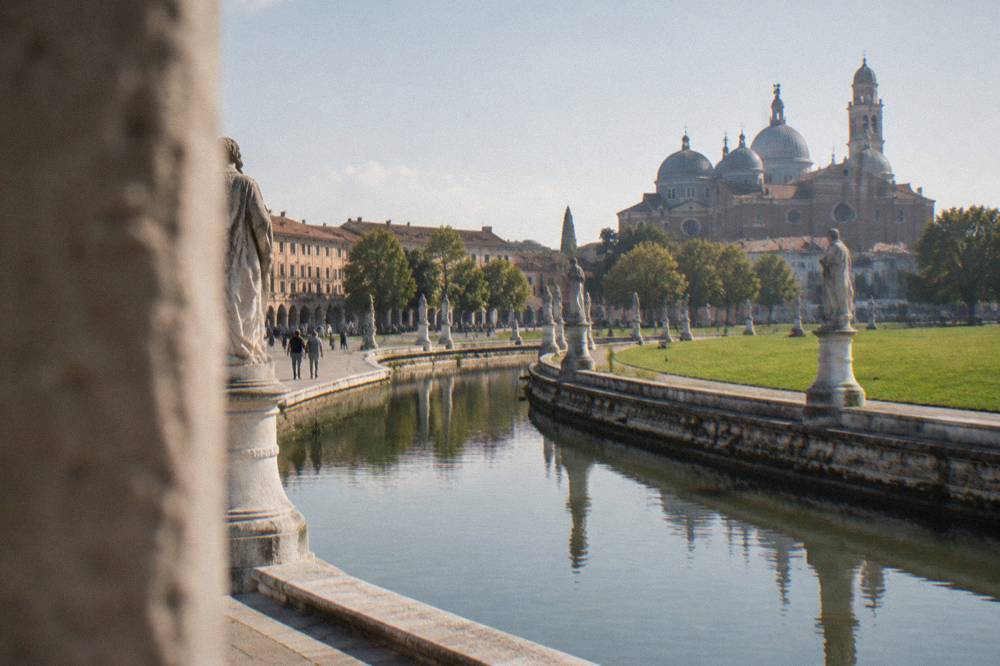
Prato della Valle deserves its own note for anyone planning with wheels, and not because of a size claim, which no source here supports. It is an open, flat public space with a canal and a double ring of numbered statues, declared communal space by the Venetian Senate in 1767. As a square it has no door, no ticket and no steps to name, which makes it the safest headline sight in the city for a first outing; the statue-lined island is reached by bridges, and their condition is a question for the city's tourism office rather than for a web page.
Two sister guides carry the detail for the two hardest-to-plan monuments: Scrovegni Chapel tickets explains the booking system, and the Padova Urbs Picta card page covers the multi-site ticketing question.
How Does The Scrovegni Chapel Work For A Visitor Who Needs Assistance?
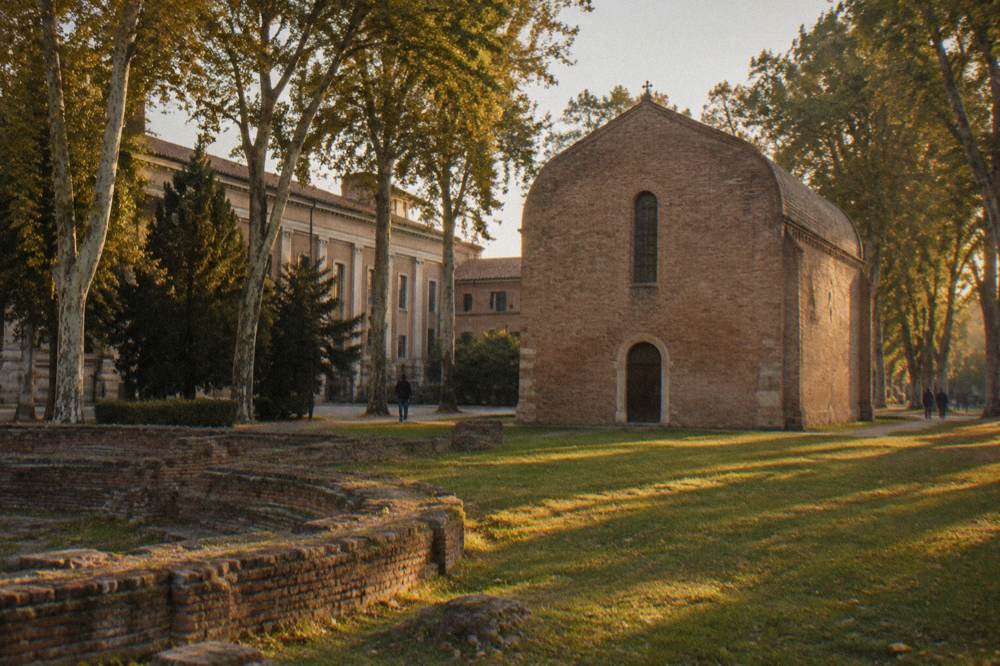
The Scrovegni Chapel runs on timed entry only, with 25 people admitted every 15 minutes, about 15 minutes inside, and a mandatory wait in a climate-controlled waiting room, with visitors asked to arrive 5 minutes before the slot printed on the ticket; late arrivals must rebook and pay again, and the chapel is closed 16 to 27 November 2026 for the annual fresco inspection.
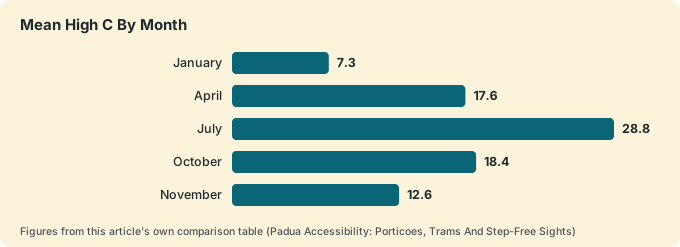
Every one of those rules comes from the chapel's own booking site, and each one matters doubly for a visitor with mobility or sensory needs. The waiting room replaces an outdoor queue, which helps in January's 7.3 C mean high or July's 28.8 C (ERA5 reanalysis, 1991-2020). The 15-minute visit is short enough to plan around stamina. The hard edges are the arrival rule, 5 minutes early, and the latecomer rule, rebook and repay, so build in buffer time. Same-day online booking does not exist; unbooked visitors are told to check availability at the museum ticket office in person.
The daytime ticket is not chapel-only: EUR 15 full also covers the Musei Civici Eremitani and Palazzo Zuckermann, which turns one timed slot into a three-site morning if energy allows. The evening ticket, "Giotto sotto le stelle", running 25 March to 1 November from 19:00 every 20 minutes, is chapel only. Giotto painted the cycle between 1303 and 1305, and it is the anchor of the UNESCO fourteenth-century fresco inscription, Padova Urbs Picta, listed in 2021.
What no page confirms is a lift, ramp or step-free route at the chapel. The right question to email or phone the venue is exactly that: describe the mobility aid or assistance needed and ask what the entry path involves. The booking line is +39 049 2010020.
How Accessible Are Trains And The Railway Station In Padua?
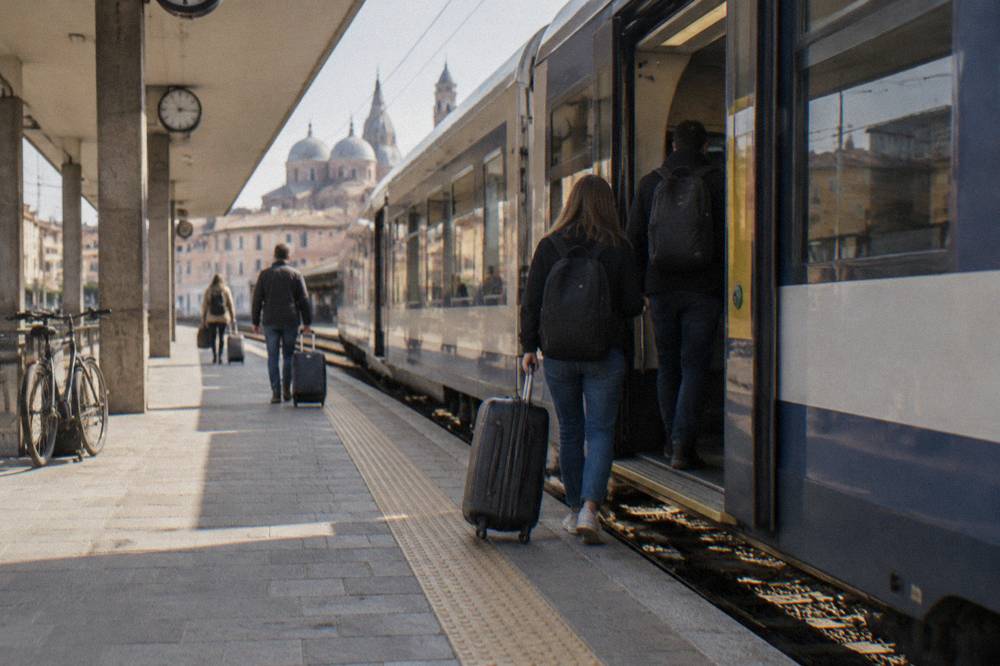
Padua's station is the region's rail hub, with regional trains taking about 26 to 40 minutes to Venice for about EUR 5, about 16 to 25 minutes to Vicenza for about EUR 6, 43 to 60 minutes to Verona and 28 to 60 minutes to Treviso, and the station has an official left-luggage office at platform 1, open daily 6:00 to 20:00 at EUR 5 per 6 hours.
Those journey times and fares are reported figures from rail listing services, rounded with "about", and should be confirmed on the operator's own site before travel. For accessibility specifically, the station is the entry point for every day trip in this guide, and its left-luggage office is a genuinely useful fact for a visitor who checks out in the morning and leaves in the evening. The tourist information office, IAT Stazione, sits at the exit of platform 1 and opens Monday to Saturday 9:00 to 19:00, Sundays and holidays 10:00 to 16:00.
Assistance on Italian trains is arranged through the rail operators' own channels, not through this site, and no claim about platform lifts or staffed help at Padova station is made here because no source used for this page states one. Ask the operator when booking. For the station itself in practical terms, the Padua train station guide covers facilities, and the how to get to Padua page covers arrival routes including the Venice airport to Padua bus at EUR 13 and about 45 minutes.
Which Day Trips From Padua Suit Slower Or Shorter Days?
The most forgiving day trips from Padua by distance are the Euganean Hills towns, Abano Terme at about 8 km and Montegrotto Terme at about 11 km in a straight line, Villa Pisani on the Brenta Riviera at about 11 km, Vicenza at about 30 km and Venice at about 36 km, all reachable by train or bus, though entry conditions at each destination follow that destination's own rules.
Straight-line distances are the only distances printed on this site; drive times are not given anywhere in the research. For a visitor managing energy, the practical ranking is: nearest first, and by mode. Venice is a train ride of about 26 to 40 minutes and a city of bridges, so it is close in kilometres and demanding underfoot. Vicenza, about 16 to 25 minutes by train, has its Teatro Olimpico at EUR 12 full entry with published hours. The Euganean Hills villages, Arqua Petrarca about 20 km and Monselice about 21 km, are hill towns, which means slopes. The rest of the planning pages sit on Padua Travel Guide.
| Destination | Straight-line distance | Train or bus from Padua | Reported journey time |
|---|---|---|---|
| Abano Terme | About 8 km | Bus | Not given in sources |
| Villa Pisani, Stra | About 11 km | Boat or road tour | Not given in sources |
| Vicenza | About 30 km | Train, about EUR 6 | About 16 to 25 minutes |
| Venice | About 36 km | Train, about EUR 5 | About 26 to 40 minutes |
| Verona | About 69 km | Train | About 43 to 60 minutes |
| Bologna | About 110 km | Train | Not given in sources |
One booked option covers the hills without any self-driving: a Prosecco Hills tour from Padua handles the driving into the hills wine country; Check availability if a seated, driven day in the Colli sounds like the right pace. Within the city, the Euganean Hills guide has the town-by-town detail.
Where Should You Stay In Padua For The Easiest Access?
The practical base for accessible Padua is the historic centre between the railway station and Piazza delle Erbe, because that corridor is flat, porticoed in stretches, served by tram line SIR1 and within 3 km of every major sight, and the tourist tax is capped at five consecutive nights per person per night, collected by the accommodation, with under-16s exempt.
No hotel on this site is named or rated, and no nightly price exists in the research. What can be said is structural: staying central collapses the need for transit entirely, and the porticoes mean that rain, which falls on Padua in every month of the ERA5 1991-2020 normals, peaking in November at 114.0 mm, does not have to end a walking day. The where to stay in Padua guide maps the districts, and Padua as a base for Venice covers the split-stay question.
When booking accommodation, the questions worth asking are the ones no source answers: lift dimensions, bathroom layout, threshold heights at the entrance, and the distance from the nearest tram stop. The city's tourism offices, IAT Stazione and IAT Centro at Piazza delle Erbe 52, are the local points for access information, and both publish phone and email contact.
| Month | Mean high C | Mean low C | Rain mm |
|---|---|---|---|
| January | 7.3 | -0.2 | 53.6 |
| April | 17.6 | 7.8 | 84.4 |
| July | 28.8 | 18.9 | 62.1 |
| October | 18.4 | 10.6 | 105.4 |
| November | 12.6 | 5.5 | 114.0 |
What Does Padua Accessibility Look Like For Families With Strollers?
For families, the confirmed prices are the Scrovegni family card at EUR 30 covering up to two adults and two under-18s plus EUR 1 per person for the chapel booking, Villa dei Vescovi at EUR 6 for ages 6 to 18 with under-6s free, and the airport bus child fare of EUR 6.50 to age 11, while stroller access inside the monuments follows the same rule as wheelchairs: unconfirmed in official sources, so ask before booking.
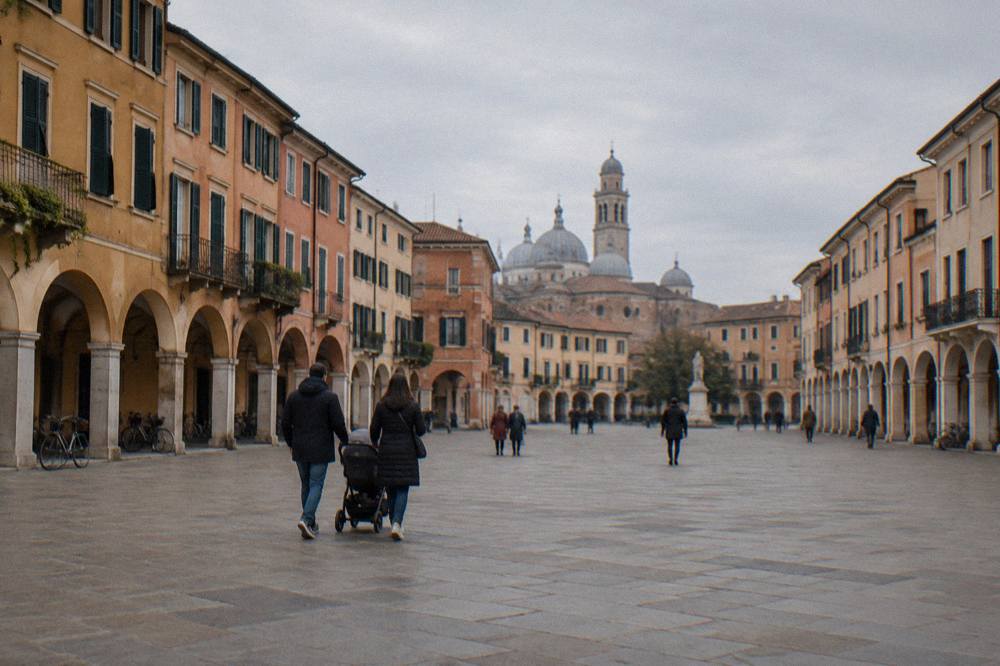
A stroller faces the same architecture a wheelchair faces, so everything in the sights section above applies: flat squares yes, confirmed interior routes no. The family card makes the chapel markedly cheaper for a family of four, and the same daytime ticket bundles the Musei Civici Eremitani and Palazzo Zuckermann, giving children a rain option indoors. The Padua with kids guide carries the family itinerary detail, and the free things to do in Padua page lists the no-ticket options, squares and markets among them, that cost nothing to abandon early if a day goes sideways.
The Saturday market on Prato della Valle, listed by the Comune di Padova at 8:00 to 20:00 in summer, is an open-air outing with no walls, no tickets and no closing time pressure, which is the shape of day that travels well with small children.
What Should You Check Before You Travel To Padua?
Before travelling, check four things with primary sources: chapel slot availability on the chapel's own booking site, since same-day online booking does not exist; each monument's access arrangements by phone or email, since no lift or ramp is confirmed in official pages; current train times and fares on the rail operator's site, since the figures here are reported approximations; and the weather picture, since Padua's rain is spread across every month in the 1991-2020 ERA5 normals, totalling 979.4 mm a year.
The itineraries help here. The Padua in the rain guide routes a wet day around the covered walks and the museum cluster, which is also, not coincidentally, a low-stamina route. The best time to visit Padua page and the Padua weather page give the climate context month by month, always as ERA5 reanalysis values rather than station records.
One dated caution belongs in every plan: the Scrovegni Chapel closes 16 to 27 November 2026 for its annual fresco inspection, and 2027 dates beyond the Padova Marathon on 18 April 2027 had not been announced. Build the chapel booking first, then the rest of the trip around it.
| Question to ask | Who to ask | Why it matters |
|---|---|---|
| Steps, lifts and ramps on the entry route | Each venue (chapel booking line 049 2010020) | No official page confirms access features |
| Assistance boarding trains | Rail operator when booking | Not stated in any source used here |
| Late-arrival rules for timed slots | Venue at booking | Chapel latecomers must rebook and repay |
| Hotel lift and bathroom layout | The accommodation | No hotel detail exists in the research |
Common Questions About Padua Accessibility
Is Padua wheelchair accessible?
The streets of the historic centre are compact, largely level and partly porticoed, and the tram and bus network takes a EUR 1.70 contactless tap. Interior access at the major monuments is not confirmed in official sources, so contact each venue about lifts and ramps before booking.
Is the Scrovegni Chapel accessible?
The chapel uses timed entry, a climate-controlled waiting room and a roughly 15-minute visit, all of which help with planning. No source confirms a ramp, lift or step-free route inside, so describe your needs to the booking line, +39 049 2010020, before reserving.
Can you get around Padua without walking far?
Yes, within limits. Tram SIR1 runs about 10.5 km north to south with 26 stops, the 90-minute TU1 ticket is EUR 1.70, and a same-day return to Venice Marco Polo airport by bus is EUR 23. The sights cluster within 3 km of the centre, and a hop-on hop-off sightseeing tour is one of the bookable options.
Does Padua have accessible taxis?
No taxi fare or accessible-taxi service appears in the sources behind this guide, so arrange any vehicle directly with a local operator and confirm the vehicle type when booking.
Is Padua good for visitors with strollers?
The squares and porticoed streets work well, the Scrovegni family card is EUR 30 for two adults and two under-18s, and Prato della Valle's Saturday market is an open, ticket-free outing. Interior routes at monuments are unconfirmed, so ask ahead as you would for a wheelchair.
What is the best time of year for accessible travel in Padua?
No crowd or availability prediction belongs on this page. For weather only: the ERA5 1991-2020 normals give July and August mean highs of 28.8 C, January a mean high of 7.3 C, and November the year's highest rain total at 114.0 mm. The chapel closes 16 to 27 November 2026 for its annual inspection.
