Padua Canals And The River Walks
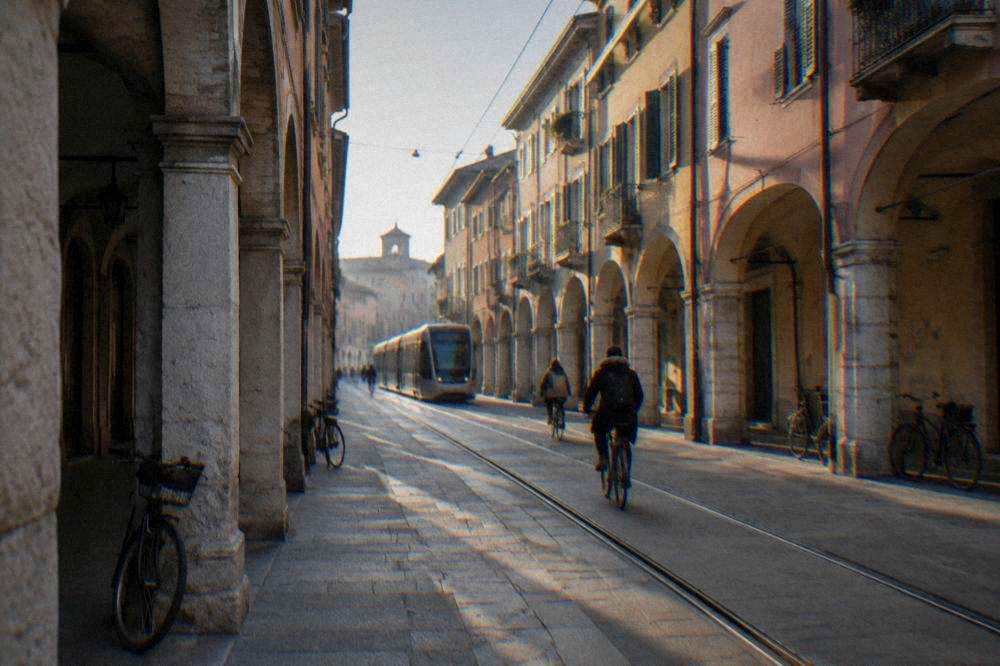
Padua is an inland city on the Bacchiglione and its canals, about 36 km in a straight line from Venice, and its water side rewards a slow loop on foot from the Portello to Prato della Valle.
Short answer
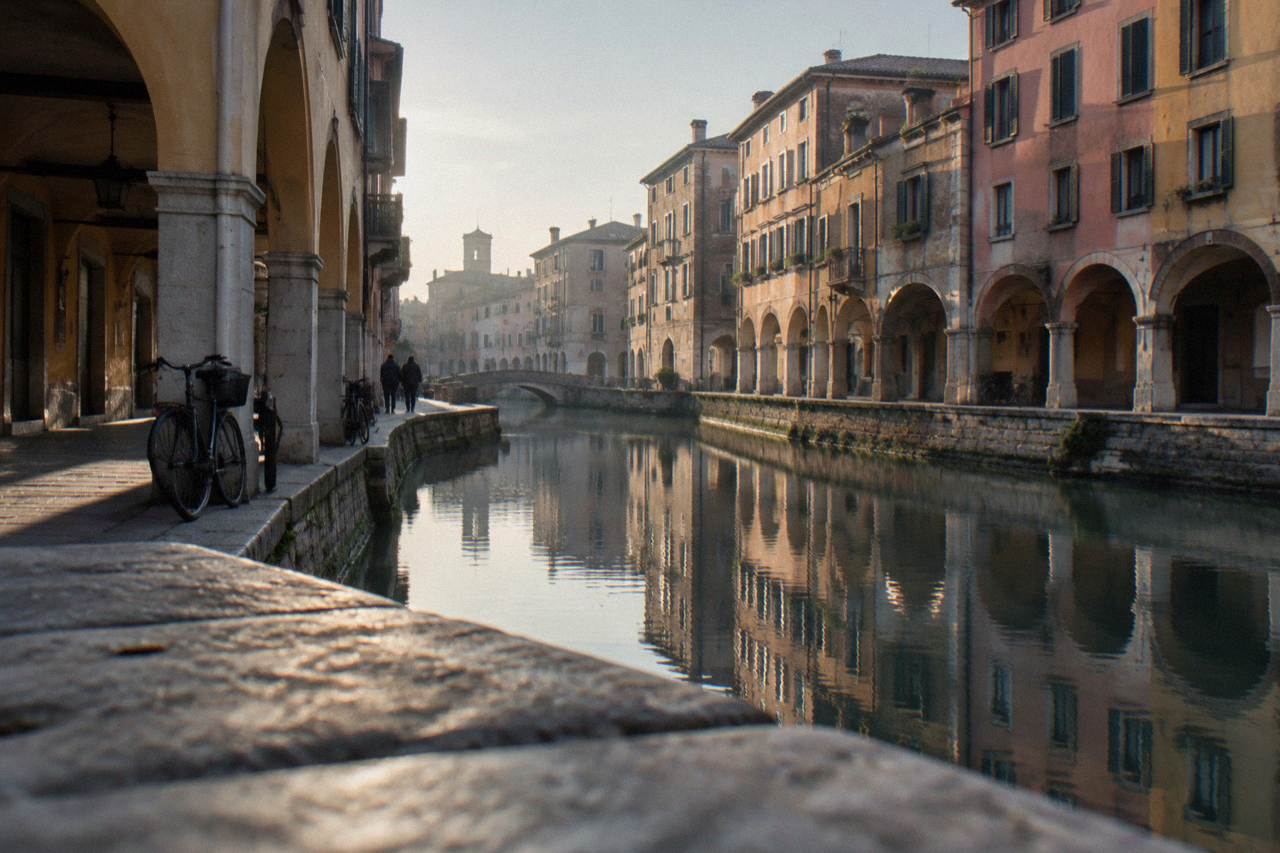
Padua's canals belong to the Bacchiglione river system, which loops through the city and historically linked it to Venice by the Piovego and the Brenta. The key walks are the Sacca and Portello stretch along the old river port, the canal ring at Prato della Valle, and the riverside path leading toward the Brenta Riviera villas, reached on guided boat and minibus tours.
Padua (Italian: Padova) sits in the Veneto, northern Italy, on the Bacchiglione and its canals, an inland university city about 36 km in a straight line from Venice. The water is not the first thing guidebooks sell, which is odd given that the city grew around a river port whose gate, the Portello, still faces the water, and that a boat route to Venice along the Brenta Riviera villas still runs between March and October. This page walks the whole water side of the city: the canal loop, the river walks you can actually follow on foot, the Portello, the canal-ringed Prato della Valle, and the day trips that put you on the water toward Venice. For the full sight list, start with things to do in Padua, and for rain planning see the companion Padua weather guide.
What Are The Padua Canals And Where Do They Run?
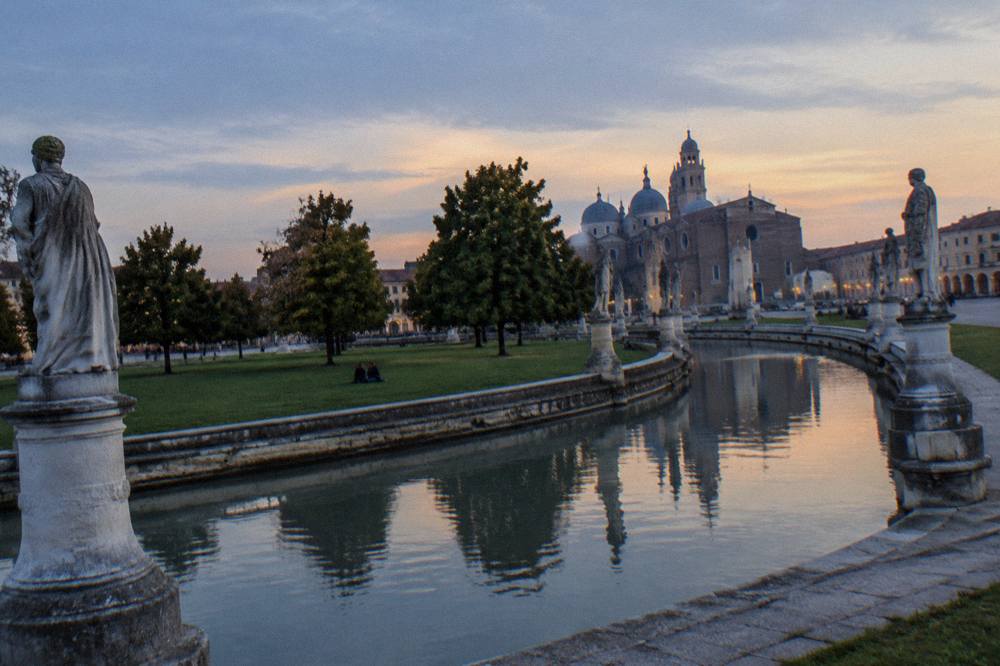
The Padua canals are arms of the Bacchiglione river system, which enters the city from the southwest, loops through the old centre and leaves toward the northeast, where it historically met the Piovego, a canal cut that carried boat traffic toward the Brenta and on to Venice. The Portello gate on Via Portello is the clearest surviving trace of that river port, and Prato della Valle is the other must-see water feature, a square surrounded by a canal with a double ring of statues of famous people.
The city's identity is bound up with its water in a way that is easy to miss from Piazza delle Erbe. Padua was a river port long before it was a railway hub, and the barges that carried stone, grain and goods to and from the Venetian Republic used exactly the route that the modern Il Burchiello boat cruise now runs in reverse: from Padua along the Brenta Riviera, past the villas the Venetian nobility built to face the water, to Venice. Il Burchiello runs between March and October in both directions, per its own site, which notes the cruise follows the Brenta between Padua and Venice past the Riviera villas.
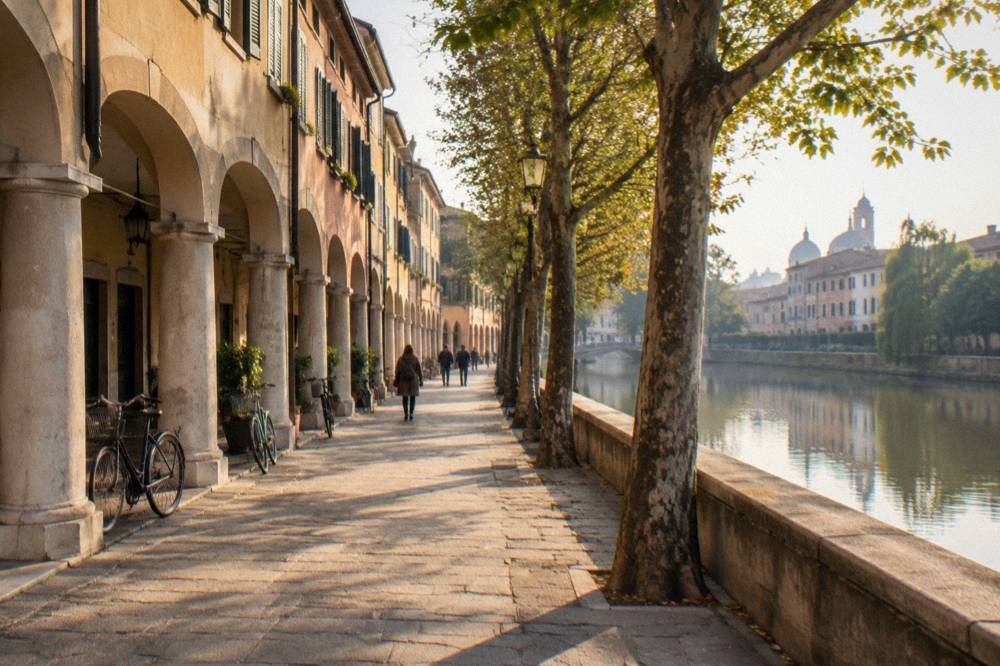
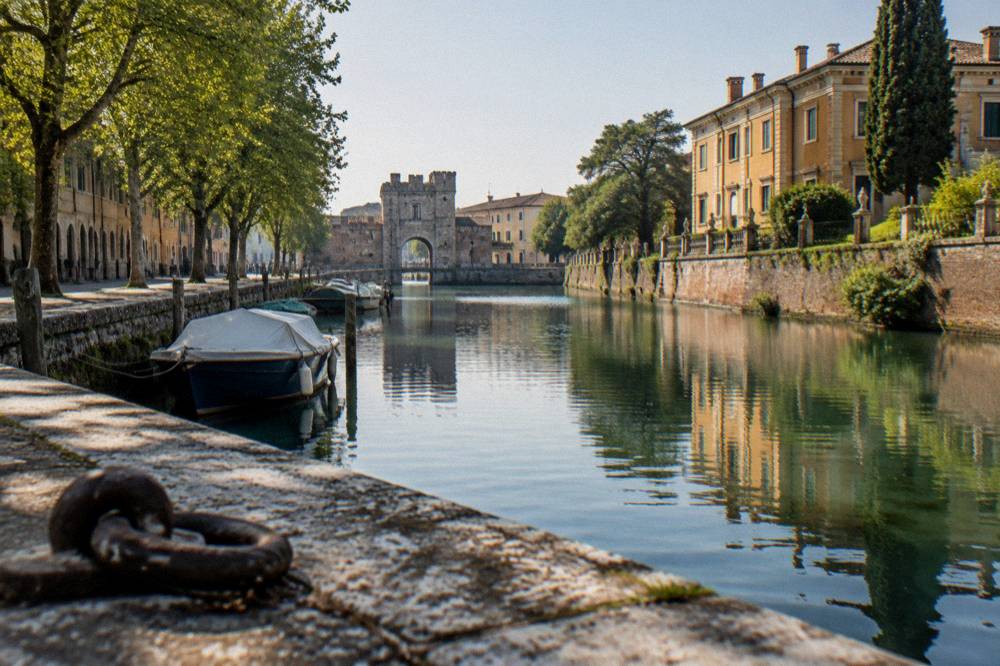
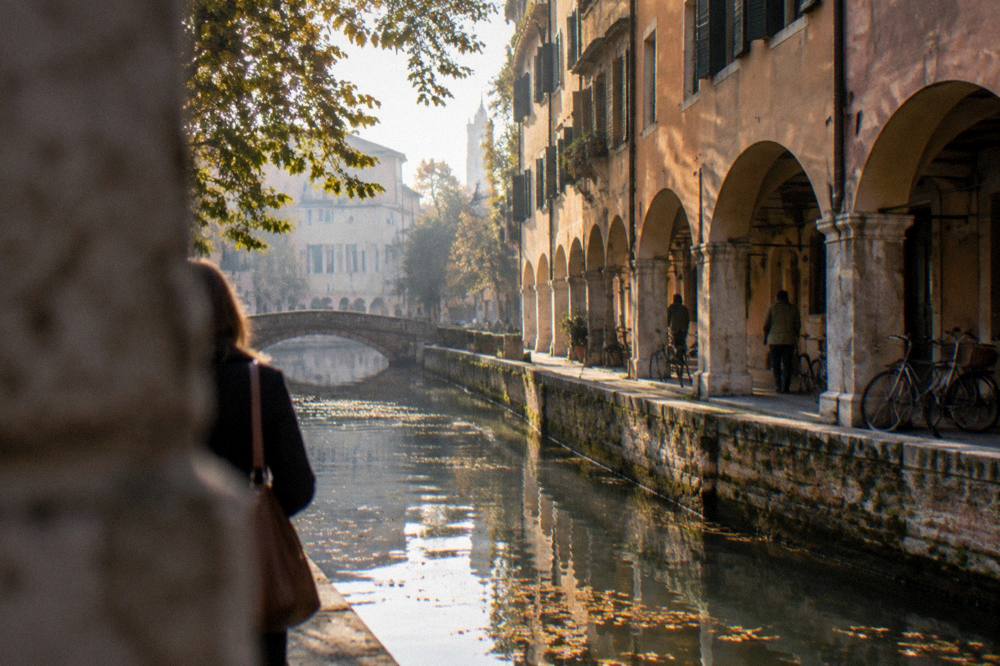
The canal ring inside the city is smaller and quieter than anything in Venice, and that is the point. There are no vaporetti here. The water runs under low bridges beside arcaded streets, and the two stretches worth planning around are the Portello, where the old river gate opens onto the water, and Prato della Valle, where the canal is the square. The Comune di Padova's own heritage pages record that the Venetian Senate declared Prato della Valle communal space in 1767 and the ground was reclaimed under Andrea Memmo, giving the square its present island-and-canal form.
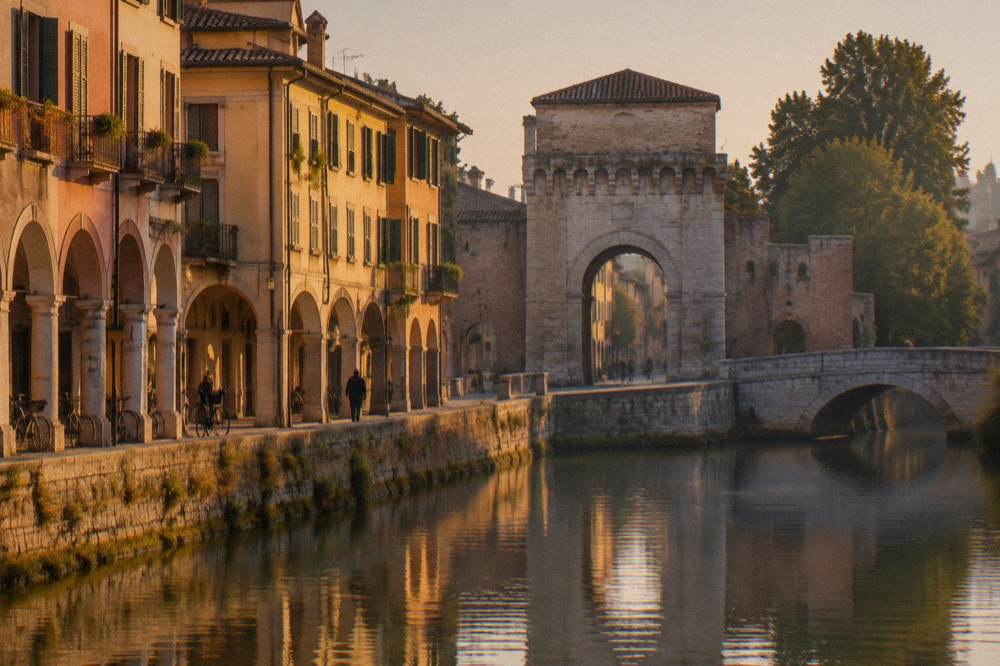
One naming trap first: Porta Portello and Porta Ognissanti are the same gate, and maps use both names. The Portello area guide covers the district in detail. The gate faces the water where the historic river port stood, and the broad riverside space in front of it is one of the few places in the centre where the city's relationship with its river is completely visible: gate, water, and the line of the old towpath heading out of town.
Which River Walks Can You Follow In Padua?
The two walks that define Padua's water side are the Portello stretch, a short riverside loop from the old river gate along the Sacca and the line of the old towpath, and the Prato della Valle circuit, one full lap of the canalised square on the statue ring, with the Saturday market adding stalls across the whole space on market days.
Between them, the two cover the city's river past in under an hour of easy, flat walking, and the old town is compact enough that every main sight lies within a short walk of the market squares.
Start at the Portello. The gate itself is the landmark: a riverside city gate facing the water, the point where goods once moved between barges and the city. The walk along the water here is short and flat, and it connects naturally toward the Piovego side of town if you want to extend it. There is no better single spot in Padua for understanding that this was a working river port.
Prato della Valle is the second walk, and it could not be more different. Instead of a working river you get a formal canal laid as a ring around an island, with a double row of statues of famous people facing the water. The Comune di Padova's market page lists the Saturday market here, non-food and plants and flowers and fruit and vegetables, 8:00 to 19:00 in winter and 8:00 to 20:00 in summer, and the antiques market fills Prato della Valle and via Umberto I on every third Sunday of the month. Time a lap of the canal to either of those and the square does something few water spaces do: it becomes a market around a canal.
| Walk | What it is | Best moments | Water you follow |
|---|---|---|---|
| Portello and the Sacca | Riverside loop at the old river port, from the gate along the water | The gate facing the canal, the old towpath line | Bacchiglione system at the historic port |
| Prato della Valle circuit | One lap of the canalised square on the statue ring | Saturday market, third-Sunday antiques market, the island | The square's own canal ring |
| Riviera del Padovano | Towpath walking out of the city toward the Euganean plain | Long flat stretches, villas and gardens further out | Bacchiglione toward Abano Terme, about 8 km in a straight line |
For rainy days, the museum side of the city absorbs weather well: the Scrovegni Chapel tickets guide covers the timed-entry rules, and the astronomy museum at La Specola sits on a river terrace of its own.
Can You Take A Boat From Padua To Venice?
Yes, but not as a commuter service: the scheduled boat link between Padua and Venice is the Il Burchiello cruise, which runs March to October along the Brenta Riviera with departures in both directions, and its own site is the place to confirm the current timetable and price before you book.
A guided alternative is the Padua to Venice boat cruise of the Brenta Riviera, a full-day product on this site's roster, and for a same-day return by land the train takes about 26 to 40 minutes with a regional fare of about EUR 5.
Il Burchiello is the historic name worth knowing. Its route follows the Brenta past the villas that the Venetian aristocracy built along the water between Padua and the lagoon, the same corridor the barges used when Padua's river port was working. The cruise's own pages confirm the March to October season and both directions; the price is on the operator's site, so check the current fare there before planning a day around it.
The day-trip version sold through this site's listings is a different animal from the historic cruise boat: a full-day product that pairs the Brenta Riviera villas with transport from Padua, reviewed by travellers who have taken it. The listing carries its own price, rating and duration, rendered automatically on the tour card, and the tour page on this site describes what the day covers: villa architecture, the Brenta corridor, and the connection between Padua's river port and the Venetian Republic that built the villas.
One 2026 fact matters for anyone combining Padua with a Venice day: the Venice day-tripper access fee trial ended on 27 July 2026, per Venezia Unica, and no 2027 decision had been announced. Do not plan around paying it. The fuller picture, including the airport bus and the train options, is in the Venice to Padua guide and the page on using Padua as a base for Venice.
| Route | Mode | Time | Fare |
|---|---|---|---|
| Padua to Venezia Santa Lucia | Regional train | About 26 to 40 minutes | About EUR 5 |
| Padua to Venice Marco Polo airport | Busitalia airport bus, every 40 minutes, 54 runs a day | About 45 minutes | EUR 13 one-way adult, EUR 6.50 child |
| Padua to Venice along the Brenta | Il Burchiello boat cruise, March to October, both directions | Full day | Price on the operator's site |
| Inside Padua | Urban bus and tram TU1, 90 minutes | 90 minutes per ticket | EUR 1.70, or tap a contactless card on board |
What Is There To See Near The Portello?
The Portello district clusters around the old river gate at Via Portello, the surviving face of Padua's historic river port, with the riverside space in front of the gate, the walk along the Sacca, and a cluster of university-quarter sights within a short flat walk, including the Basilica of Saint Anthony and Prato della Valle. The gate itself, also named Porta Ognissanti on some maps, is the anchor, and the water in front of it is the reason the district exists at all.
Walk the district as a triangle: the gate and the water first, then the Santo, then Prato della Valle. The Basilica of Saint Anthony, begun in 1232 a year after the Saint's death on 13 June 1231, keeps his tomb and the Chapel of the Relics, and entry is free, per the Urbs Picta visitors' page; the dress rule is simply that clothing be suitable for a church environment. The Saint Anthony of Padua guide covers the basilica, and the feast of 13 June, with the Tredicina that ran 31 May to 12 June in 2026 as the latest edition, brings a procession through these same streets.
From the Santo it is a short walk across to Prato della Valle and its canal ring, which closes the triangle. What holds the triangle together is water: the river port made this corner of the city rich enough to build the basilica quarter and grand enough to need the great square, and the canal at Prato della Valle is the formal, 1767-and-after expression of the same river that the Portello faces in its working clothes.
For travellers who want the water tied to the city's darker corners, the Padua hidden gems guide picks up where this one stops, and the free-walking-tour question is answered on the free walking tour page.
How Do The Canals Connect To The Brenta Riviera Villas?
The connection is the reason the villas exist: the Brenta was the working waterway between Padua and Venice, and the Venetian nobility built villas along it because they moved between city and countryside by boat, so a Brenta Riviera day trip from Padua follows the same corridor the river port served. Villa Pisani at Stra, about 11 km in a straight line from Padua, is the headline villa, and its own site describes its maze as among the most important in Europe, with timed, limited access announced on site.
Villa Pisani is the one to plan around. Its park maze has restricted entry with announced timed access, per the villa's official site, and the price is on the official ticket page, so check the current figure there before booking. The villa sits at Stra on the Brenta, and the boat cruise and the guided minibus tours both serve the corridor, one on the water, one beside it. The rest of the planning pages sit on Padua Travel Guide.
The guided option featured on this page is the Tour to the Venetian Villas and the Brenta Riviera from Padua, a day trip that covers the villa architecture of the Brenta corridor with transport from Padua; its price, rating and duration render on the tour card from the operator's listing. If the day appeals, you can Check availability on the operator's live listing, where free cancellation terms are shown before payment. The University of Padua guide explains the other half of the story: the city that the river served was, from 1222, one of Italy's oldest universities, and the villas' patrons were of the same Venetian world that taxed and traded through the Portello.
| Day trip from Padua | Straight-line distance | What the water angle is |
|---|---|---|
| Villa Pisani, Stra | About 11 km | Villa and maze on the Brenta, the historic boat corridor to Venice |
| Abano Terme | About 8 km | Thermal town on the Bacchiglione plain below the Euganean Hills |
| Montegrotto Terme | About 11 km | Thermal springs at the foot of the Euganean Hills |
| Arqua Petrarca | About 20 km | Hill village above the Euganean canal plain |
| Venice | About 36 km | The lagoon city at the far end of the Brenta corridor |
| Vicenza | About 30 km | Palladio's city, about 16 to 25 minutes by regional train |
When Is The Best Time Of Year For The Water Side Of Padua?
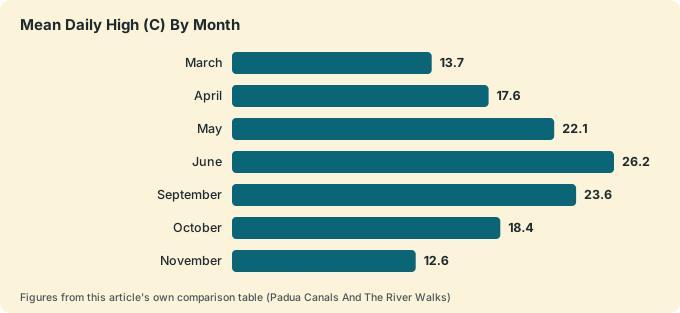
The climate record, ERA5 reanalysis for 1991-2020, puts July and August mean daily highs at 28.8 C and the January mean daily low at -0.2 C, with November the month carrying the highest rain total at 114.0 mm and January the lowest at 53.6 mm, so river walks and boat days sit most comfortably in the shoulder months, while the Scrovegni Chapel's timed system keeps the city's indoor half workable in any weather.
The chapel closes 16 to 27 November 2026 for its annual fresco inspection, which matters if a wet November visit was the plan.
Print the numbers and decide for yourself. The reanalysis table below is the whole climate story this site will tell: modelled normals, not a station record, and no sunshine figures exist in it. What it shows is a continental northern Italian pattern, cold damp winters, hot summers, and a wet autumn that peaks in November.
| Month | Mean daily high (C) | Mean daily low (C) | Rain (mm) |
|---|---|---|---|
| March | 13.7 | 3.9 | 67.2 |
| April | 17.6 | 7.8 | 84.4 |
| May | 22.1 | 12.4 | 99.7 |
| June | 26.2 | 16.6 | 81.0 |
| September | 23.6 | 14.9 | 105.5 |
| October | 18.4 | 10.6 | 105.4 |
| November | 12.6 | 5.5 | 114.0 |
The boat season does the deciding for you on the water side: Il Burchiello runs March to October, so the cruise calendar and the shoulder-month climate overlap neatly. The full month-by-month picture, including the winter lows, is in the best time to visit Padua guide.
How Do You Get Around Padua Without A Car?
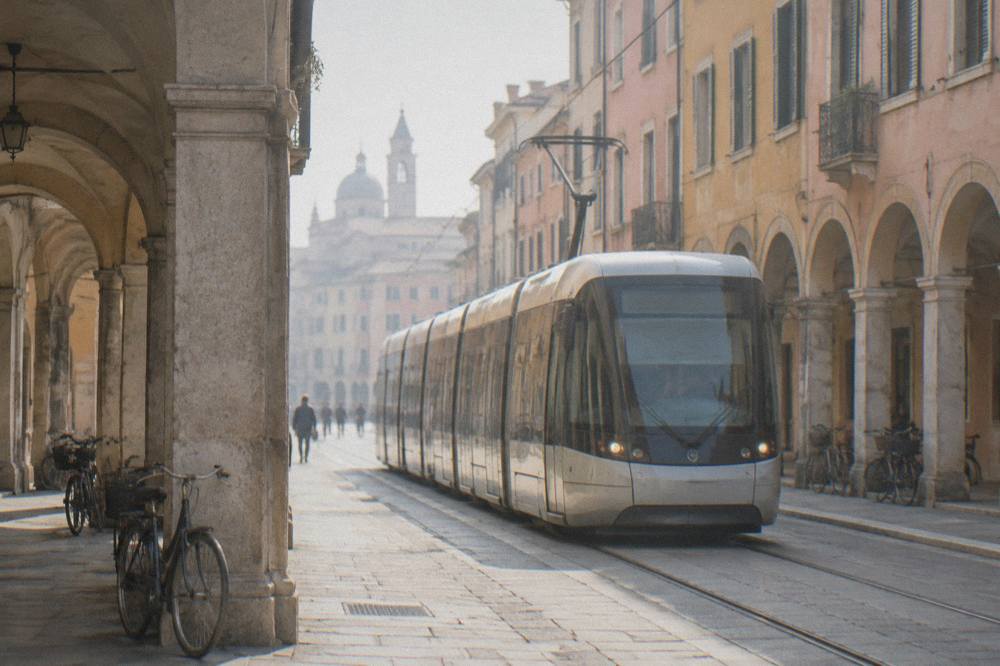
The urban bus and tram TU1 ticket for the Orange Zone costs EUR 1.70 for 90 minutes, bought digitally before boarding or by tapping a contactless card on board tram and bus, per Busitalia's own fares page, and a reported daily ticket is EUR 4.70; tram line SIR1 runs north to south across about 10.5 km with 26 stops, while the new SIR3 line is still in pre-service testing, with no opening date to rely on.
For this page's walks none of that is needed: the old town is compact and every main sight lies within a short walk of the market squares.
The tram deserves one honest paragraph. SIR1 exists and runs; SIR3, from the station toward Voltabarozzo, was in testing with service targeted for the end of 2026, per local press reports, and no traveller should build a plan on it. The station itself, the left-luggage office on platform 1 open daily 6:00 to 20:00 at EUR 5 per 6 hours, and the airport bus are covered in the Padua train station guide and the Venice airport to Padua page.
Cycling is the other river option, since towpaths are flat by definition, but this site names no bike-share operator or tariff, because the available figures are older and the operator status is unclear; ask at the IAT tourist office, at the station exit from platform 1 or at Piazza delle Erbe 52, for the current scheme. Driving into the centre is covered, with the caution it deserves, in the Padua ZTL and parking guide.
Where Should You Stay To Be Near The Water In Padua?
The central answer is the area between the Portello, Piazza delle Erbe and Prato della Valle, which places every walk on this page, the basilica and the Scrovegni Chapel within a flat stroll of each other, while the station side shortens the Venice and airport connections and the Abano and Montegrotto thermal towns, about 8 and 11 km in a straight line away, trade the city canals for spa water.
The tourist tax applies citywide, collected by the accommodation, capped at five consecutive nights, and its rates are on the Comune's own tax page.
The choice is really between three postures. Stay central and the canal loop, the Portello and Prato della Valle are all walking distance, and the evening life of the market squares, the spritz culture the tourism board itself promotes on its enogastronomia pages, is on the doorstep. Stay near the station and the trade is walking charm for train convenience: Venice in about 26 to 40 minutes, the airport bus at EUR 13. Stay in the thermal towns and you have exchanged Padua's canals for the Euganean spa basin, a different water entirely.
| Area | Water you get | Trade-off |
|---|---|---|
| Centre, Piazza delle Erbe side | Market squares, canal lanes, evening piazza life | Hotel demand is highest in the historic core |
| Portello and riverside | The old river port and the towpath walks | A short walk to the basilica and Prato della Valle |
| Station and Arcella | Direct trains, airport bus, left-luggage office | Less of the arcaded old-town character |
| Abano Terme, about 8 km away | Thermal spa water on the Euganean plain | Commuting in for the city sights |
The full neighbourhood breakdown, including what each area costs in character if not in printed rates, is in the where to stay in Padua guide, and the arrival logistics start at how to get to Padua.
Common Questions About The Padua Canals
Is Padua built on canals like Venice?
No. Padua is an inland city on the Bacchiglione and its canals, about 36 km in a straight line from Venice, with a canal ring at Prato della Valle and the old river port at the Portello, but it has no lagoon and no vaporetti.
Can you take a boat from Padua to Venice?
Yes, seasonally. Il Burchiello runs a boat cruise between Padua and Venice along the Brenta Riviera villas from March to October in both directions, with the price and timetable on its own site. The train takes about 26 to 40 minutes at a regional fare of about EUR 5.
What is the Portello in Padua?
The Portello is a riverside city gate, the surviving face of Padua's historic river port, also named Porta Ognissanti on some maps. The space in front of it and the walk along the Sacca are the clearest place to see the city's relationship with its river.
Is there a canal at Prato della Valle?
Yes. Prato della Valle is a square surrounded by a canal with a double ring of statues of famous people, declared communal space by the Venetian Senate in 1767 and reclaimed under Andrea Memmo. The Saturday market runs 8:00 to 19:00 in winter and 8:00 to 20:00 in summer.
Do you need a ticket for the river walks in Padua?
No. The Portello, the Sacca walk and the Prato della Valle circuit are public open space. The ticketed sights on this page are the Scrovegni Chapel, a timed-entry visit at EUR 15 full plus a EUR 1 booking fee, and the Brenta villas and boat cruise, whose prices sit on their own official pages.
What is the closest water day trip from Padua?
The Brenta Riviera. Villa Pisani at Stra lies about 11 km in a straight line from Padua on the historic boat corridor to Venice, and guided tours from Padua cover the villas of the river with transport included.
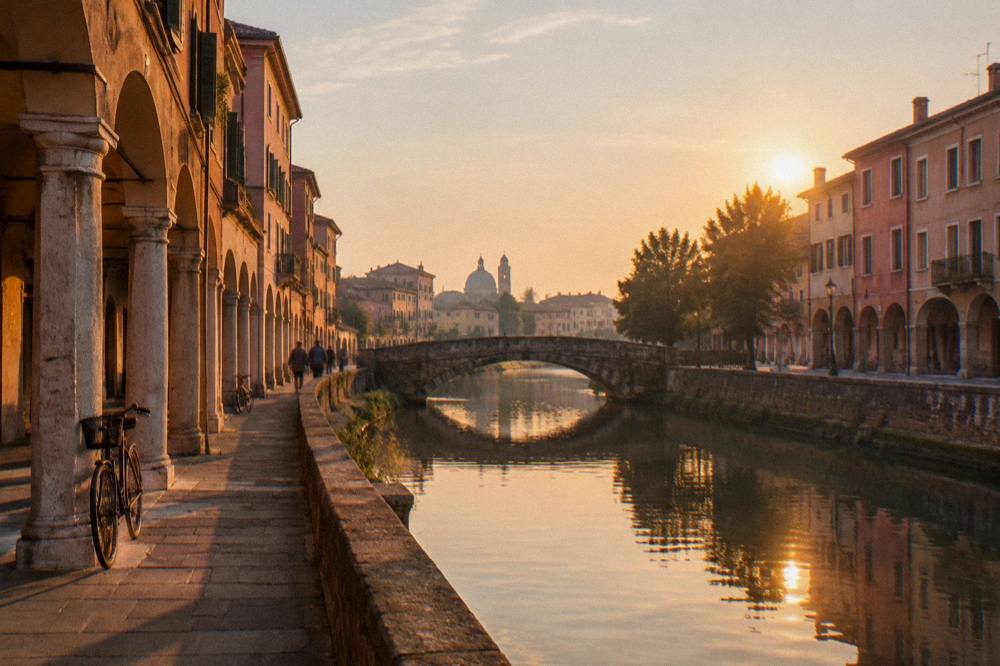
The water side of Padua is a one-day story told slowly: a gate, a canal ring, a towpath and a boat corridor that once carried the city's wealth to the lagoon. Walk the Portello in the morning, lap Prato della Valle, and give the Brenta a full day of its own.