Padua Hidden Gems: Courtyards, Canals And Quiet Corners
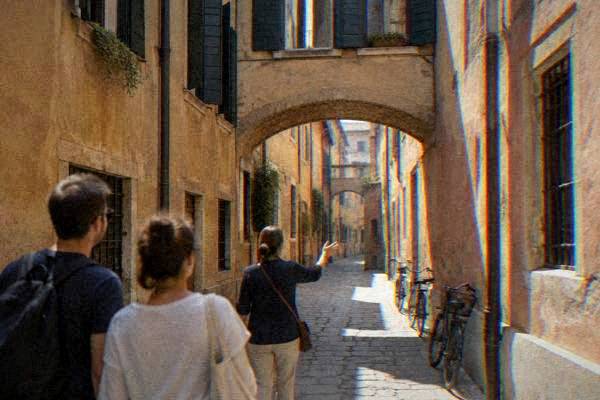
Padua, the inland Veneto city about 36 km in a straight line from Venice, keeps its quieter corners close: canal-side walks, small museums, university halls and Euganean Hills villages that the day-trip rush passes by.
Short answer
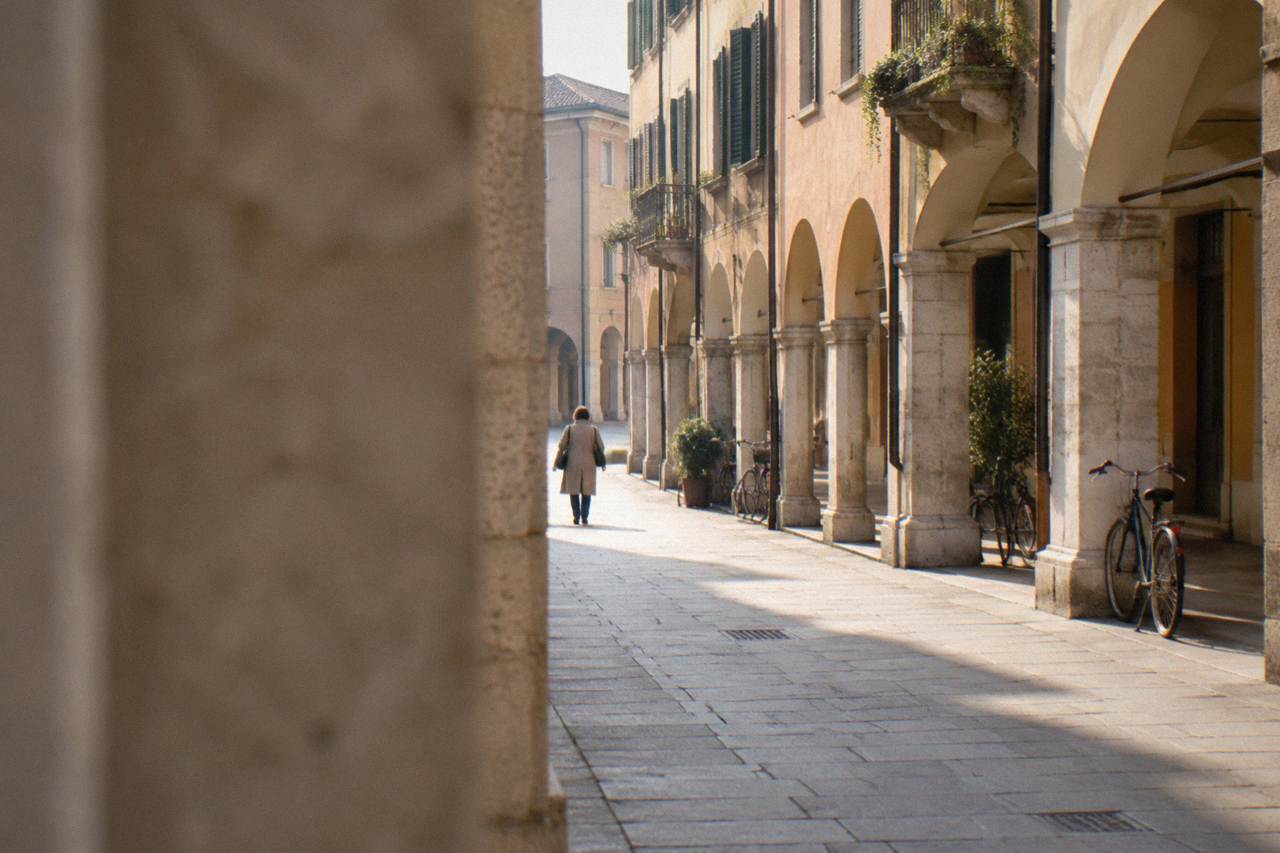
Padua's hidden gems sit within walking distance of the centre: the Canale di Santa Chiara and Sacca riverbank, Oratorio di San Giorgio, Oratorio di San Michele, the Loggia and Odeo Cornaro, Torre dell'Orologio, the Portello river gate and the Euganean Hills villages about 8 to 26 km south.
Padua hides in plain sight. The city in the Veneto, northern Italy, an inland place about 36 km in a straight line from Venice, is on the map for Giotto's frescoes in the Scrovegni Chapel and the Basilica of Saint Anthony, and those two draw the crowds. What the schedules leave behind is a whole second city: a canal with moored barges behind the railway station, oratories with fourteenth-century fresco cycles that belong to the same UNESCO inscription as the chapel, a clock tower you can only enter with a booking, and hill villages under an hour to the south. This guide walks through those quieter corners, with the ticket prices, hours and distances the sources actually state.
What Are Padua's Hidden Gems Beyond The Famous Sights?
Padua's hidden gems cluster into four groups: two frescoed oratories and the Battistero that share the 2021 Padova Urbs Picta UNESCO inscription with the Scrovegni Chapel, the canal and riverbank walks north and west of the centre, small civic monuments such as the Loggia and Odeo Cornaro and the Torre dell'Orologio, and the Euganean Hills villages 8 to 26 km south of the city. Each sits within a short walk or a single bus or train hop of Piazza delle Erbe, and each has a stated ticket or access rule worth knowing before arrival.
The framing matters for planning. Padua holds two UNESCO World Heritage listings: the Orto Botanico, inscribed in 1997, and the fourteenth-century fresco cycles of Padova Urbs Picta, inscribed in 2021 across eight complexes in the old centre. The Scrovegni Chapel is the famous one. The other complexes, listed by the UNESCO decision, are the Chiesa dei Santi Filippo e Giacomo agli Eremitani, Palazzo della Ragione, the Cappella della Reggia Carrarese, the Battistero della Cattedrale, the Basilica e Convento di Sant'Antonio, the Oratorio di San Giorgio and the Oratorio di San Michele. A visitor who books the chapel and nothing else sees one eighth of an inscription.
For first-timers still assembling the basics, the site's things to do in Padua overview covers the headline sights, and the Scrovegni Chapel tickets guide explains the timed-entry system: 25 people every 15 minutes, about 15 minutes inside, booked ahead, with the chapel closed 16 to 27 November 2026 for the annual fresco inspection. This page takes the opposite route and starts where the schedules end.
Which Quiet Corners Of Padua's Historic Centre Deserve A Slow Morning?
The quiet corners that reward a slow morning are Oratorio di San Giorgio and Oratorio di San Michele, both part of the UNESCO fresco inscription, the Battistero della Cattedrale with Giusto de' Menabuoi's frescoes, the Chiesa degli Eremitani with what survives of Mantegna's Ovetari cycle, and the Loggia and Odeo Cornaro, a EUR 5 Renaissance loggia and odeon with seasonal hours. None needs a timed slot booked weeks ahead, and three of them sit within a few minutes' walk of the Scrovegni Chapel itself.
The Chiesa degli Eremitani is the easiest addition, because the daytime Scrovegni ticket already includes the Musei Civici Eremitani in the same square. The church next door was bombed in 1944 and Mantegna's Ovetari frescoes were largely destroyed, but the fragments and the restored interior belong to the story the UNESCO inscription tells, and entry to the church itself is not a separate ticketed event in the way the museums are.
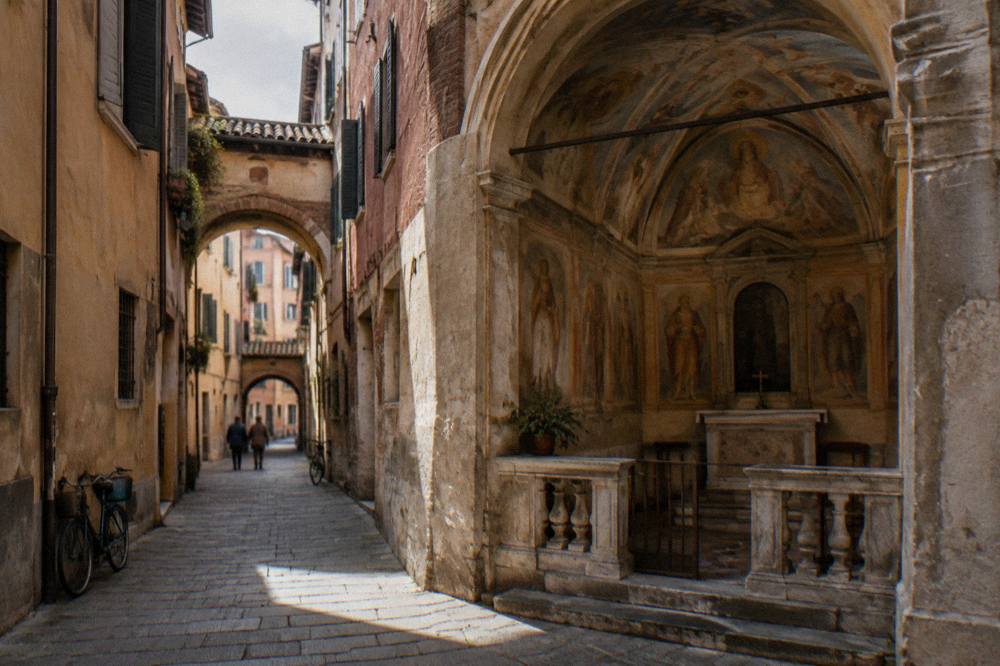
The Oratorio di San Giorgio and Oratorio di San Michele belong to the same UNESCO inscription and sit near the Basilica of Saint Anthony, whose own history and tomb the site covers in the Saint Anthony of Padua guide. Their hours are seasonal and restricted: the practical move is to treat them as a pair with the Basilica and check current opening days locally before planning a morning around them, because the published sources carry no fixed hours for either oratory.
The civic list beyond UNESCO has its own quiet prizes. Palazzo Zuckermann on Corso Garibaldi 33 holds the applied arts collection and the Museo Bottacin, open Tuesday to Sunday 10:00 to 19:00, and it is covered by the same daytime Scrovegni ticket. The Museo del Risorgimento inside the Stabilimento Pedrocchi is a EUR 5 museum, open Tuesday to Sunday 9:30 to 12:30 and 15:30 to 18:00, attached to the Caffè Pedrocchi that opened in 1831 and, by its own account, kept unhinged doors through the night.
| Quiet corner | What it is | Entry | Hours stated in the sources |
|---|---|---|---|
| Chiesa degli Eremitani | Church bombed 1944; Mantegna's Ovetari frescoes largely destroyed | Part of the UNESCO complex; museum next door via Scrovegni ticket | Museum daily 9:00 to 19:00 |
| Oratorio di San Giorgio | Frescoed oratory in the Padova Urbs Picta inscription | Seasonal access | No fixed hours in the sources; check locally |
| Oratorio di San Michele | Frescoed oratory in the same inscription | Seasonal access | No fixed hours in the sources; check locally |
| Battistero della Cattedrale | Menabuoi frescoes, UNESCO complex | Ticketed; check the current price on the official ticket page before booking | No fixed hours in the sources |
| Palazzo Zuckermann | Applied arts and Museo Bottacin | Included in the daytime Scrovegni ticket | Tue to Sun 10:00 to 19:00 |
| Museo del Risorgimento | Risorgimento museum at the Caffè Pedrocchi site | EUR 5 full | Tue to Sun 9:30 to 12:30, 15:30 to 18:00 |
| Loggia and Odeo Cornaro | Renaissance loggia and odeon | EUR 5 full, EUR 4 and EUR 3 reduced | Seasonal, Apr to Sep and Oct to Mar bands |
The Loggia and Odeo Cornaro deserves its line of explanation. The padovamusei tariffs list it at EUR 5 full with reduced rows, in seasonal hour bands, and groups are capped at 25 every 30 minutes with booking recommended. It is the clearest example of the pattern: a genuinely significant monument run on small numbers, which is exactly what a "hidden gem" claim should rest on.
A golf-cart tour is one way to stitch these dispersed corners into one loop without walking the full distance, and the operator's listing describes a route around the city's sights from a seated vantage. For a visitor who plans to link the oratories, the Zuckermann and the riverbank in a single day, it saves the cross-centre legs.
Where Are Padua's Canals And Riverside Walks?
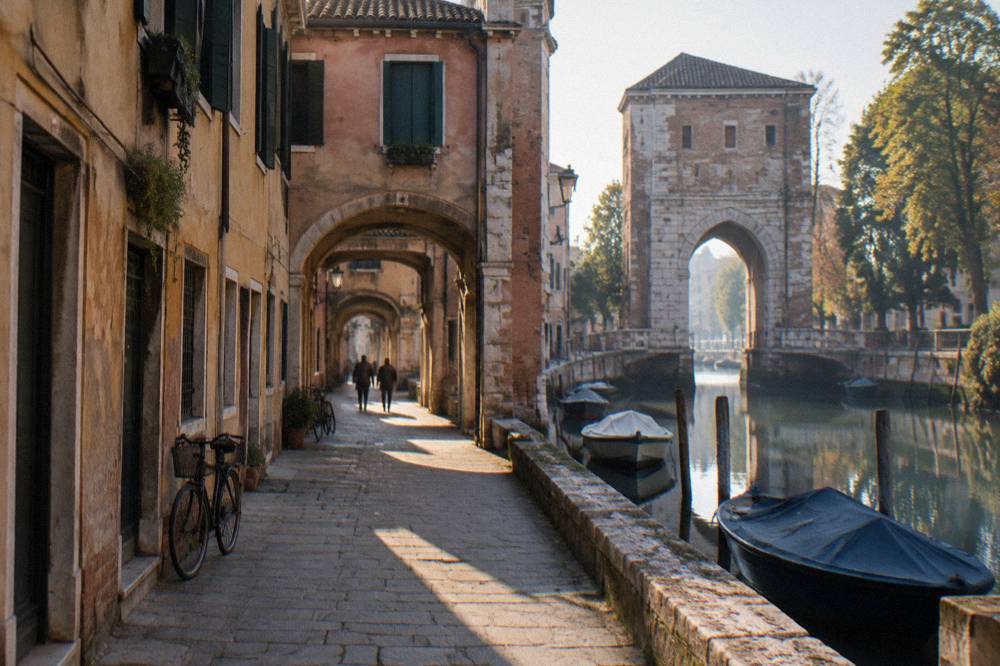
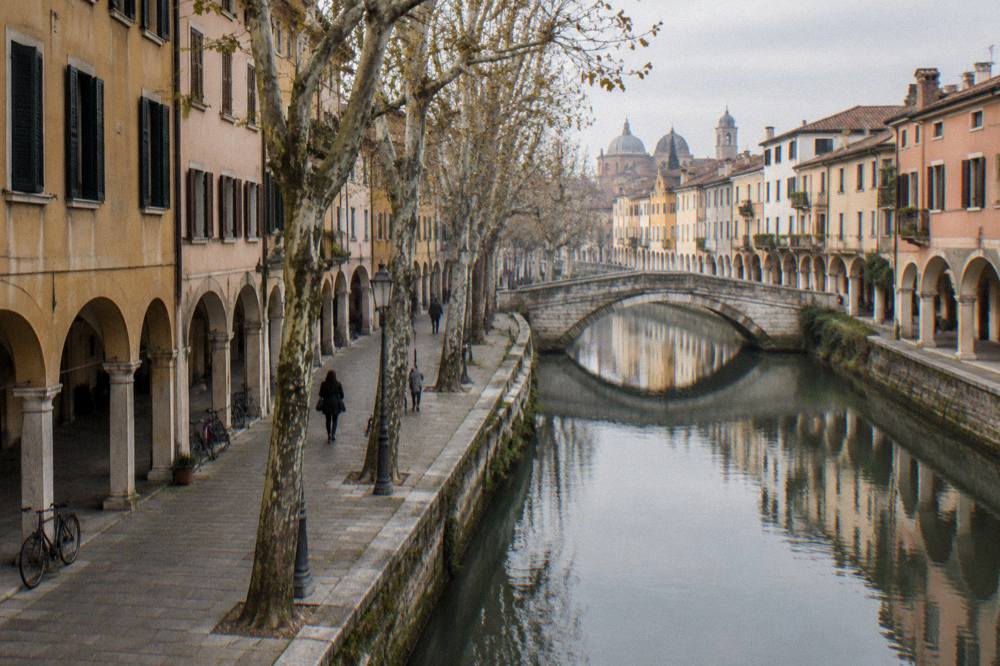
Padua's waterways are real but inland: the Canale di Santa Chiara behind the railway station, the Piovego and the Sacca reaching Porta Portello, the river gate also called Porta Ognissanti, and the naviglio stretch that once carried boat traffic toward the Brenta and the lagoon. The city sits on the Bacchiglione and its canals, roughly 36 km in a straight line from Venice, and the riverside is walkable without a ticket, which makes it the cheapest corner of this guide.
The name question is worth settling once. The gate at the end of the river wall is "Porta Portello" in English-language guides and "Porta Ognissanti" in the mapping data, and they are the same gate. Around it the walls and the water give the quietest long walk inside the ring road: no ticket, no queue, no booking, and the site's Padua canals guide maps the full route and the history of the naviglio.
What the sources support about the water is structural. Padua is not on the Venice lagoon and has no seafront; its canals belong to the Bacchiglione system, and the historic boat link toward Venice runs along the Brenta Riviera villas rather than through open lagoon. The Il Burchiello cruise between Padua and Venice runs March to October in both directions along that route, and a companion guide on the Brenta Riviera boat trip covers it.
| Water corner | Where | What the sources state |
|---|---|---|
| Canale di Santa Chiara | Behind Padova station | Moored barges and canal-side path along the historic waterway |
| Porta Portello (Porta Ognissanti) | North-east edge of the walls | River gate; the two names are the same gate |
| Sacca and Piovego banks | East of the centre | Rivers of the Bacchiglione system; walkable, unticketed |
| Il Burchiello route | Padua to Venice via the Brenta | Boat cruise March to October, both directions; price on the operator's page |
The riverside also solves the timing problem of a Padua day. The Scrovegni Chapel gives each visitor about 15 minutes inside, on a timed slot, and the Orto Botanico's fixed-time guided tours run at set weekend hours. Between bookings, the canal banks are the flexible hours, and the ERA5 reanalysis for Padua, 1991-2020, gives November as the month with the highest rain total at 114.0 mm and January the lowest at 53.6 mm, which is worth knowing before planning a walking afternoon.
What Secret University Sights Does Padua Hide Inside Palazzo Del Bo?
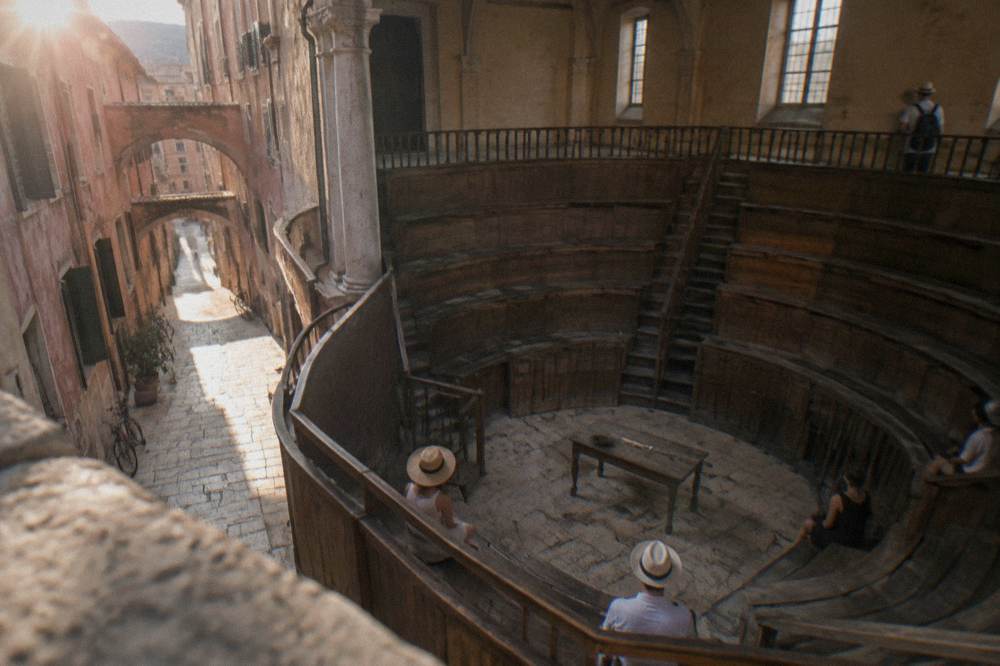
Palazzo del Bo, the historic seat of the university founded in 1222, hides a 1594 anatomical theatre described by the university as the first permanent one, Galileo's chair in the Sala dei Quaranta from his 1592 to 1610 years teaching mathematics, and the statue of Elena Lucrezia Cornaro, awarded her philosophy doctorate on 25 June 1678 as the first woman university graduate. The "Giro storico" guided visit costs EUR 10 full, EUR 8 reduced, EUR 6 for ages 6 to 25 and EUR 5 for school groups, lasts about 45 minutes, and runs in alternating Italian and English slots booked through the university centre on 049 827 3939.
The university's own pages are the source for all of it, and the detail that matters for a visit is the slot structure: the alternating language timetable means an English-language visit is a specific time, not any time. The route covers the Aula Magna, Galileo's chair, the anatomical theatre, the Medicine and Law halls and the Cornaro statue, and the university notes that not every room is guaranteed every day.
Galileo's own words survive in the university's account: he called his Padua years, from arrival in 1592 to departure in 1610, "the best eighteen years of all my life", and it was in Padua that the Sidereus Nuncius came out in 1610. The University of Padua guide and the Galileo in Padua guide carry the full story; here the point is that the Bo is a working university building you cannot simply wander, and the booking is the hidden-gem barrier that keeps the courtyard quiet.
There is also a combined route. The university sells an integrated "Padova Citta della Scienza" ticket covering Palazzo del Bo, the Orto Botanico and the Museo della Natura e dell'Uomo, which pairs two of this page's stops with the garden founded in 1545 and inscribed by UNESCO in 1997. For a visitor whose interests run to science rather than frescoes, that trio is a full day by itself.
Which Small Museums In Padua Do The Guidebooks Skip?
The small museums worth seeking out are the Museo Bottacin inside Palazzo Zuckermann, coins and applied arts covered by the Scrovegni daytime ticket, the Museo del Risorgimento at EUR 5, the Torre dell'Orologio, free but only with a mandatory booking on set days, and La Specola, the historic observatory whose tour arrangements must be confirmed before a visit. Each has a stated or checkable access rule, and none carries the booking pressure of the chapel.
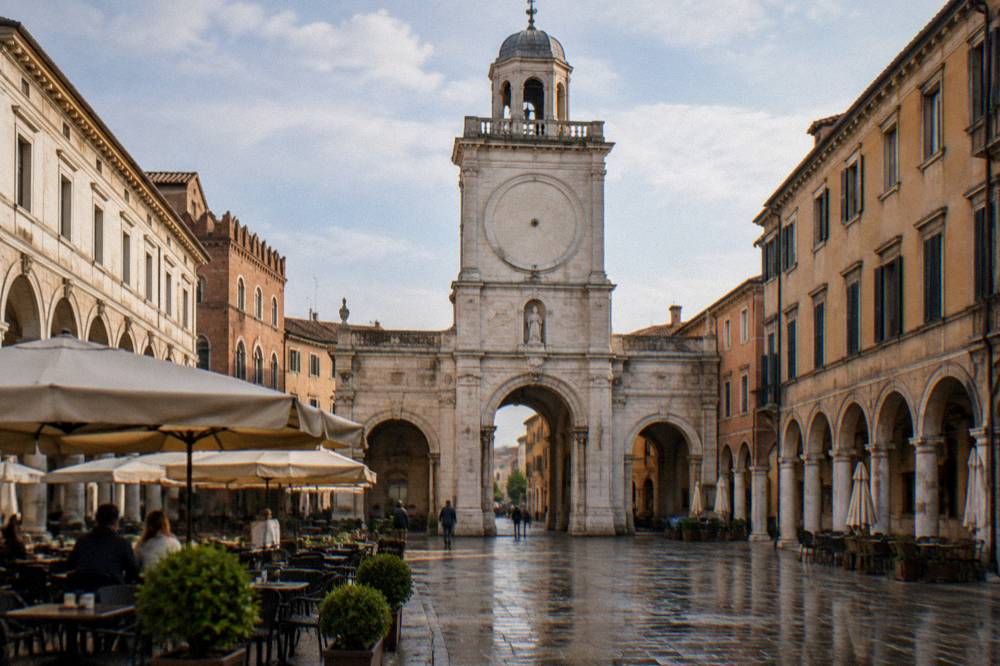
The Torre dell'Orologio is the best example of a true hidden gem, in the strict sense of a sight that cannot simply be entered. The civic museums' tariff list shows it as free with mandatory booking on specific days, Wednesdays, Fridays and Saturdays, arranged through Legambiente Salvalarte at salvalarte@legambientepadova.it. The clock tower over Piazza dei Signori is one of the most visible objects in the city and one of the least enterable, which is the whole point. Everything else covered here is indexed on Padua Travel Guide.
La Specola, the Specola tower observatory associated with the university's astronomy tradition, has no tour details in the current sources, so the honest instruction is to check the current arrangements with the tourism office before planning around it. The same discipline applies to the Cathedral and Baptistery ticket price: the Baptistery's Menabuoi frescoes are firm, the price is not in the sources, so check the official ticket page before booking.
| Small museum | Collection or sight | Access per the civic tariff list |
|---|---|---|
| Museo Bottacin, Palazzo Zuckermann | Coins and applied arts | Included in the daytime Scrovegni ticket; Tue to Sun 10:00 to 19:00 |
| Museo del Risorgimento | Risorgimento collections at the Pedrocchi site | EUR 5 full; Tue to Sun mornings and afternoons |
| Torre dell'Orologio | Clock tower over Piazza dei Signori | Free, mandatory booking, set days, via Legambiente |
| La Specola | Historic observatory tower | Arrangements to be confirmed with the tourism office |
| Palazzo della Ragione | Great hall and market floor | EUR 8 full, EUR 6 concession; Tue to Sun 9:00 to 19:00 |
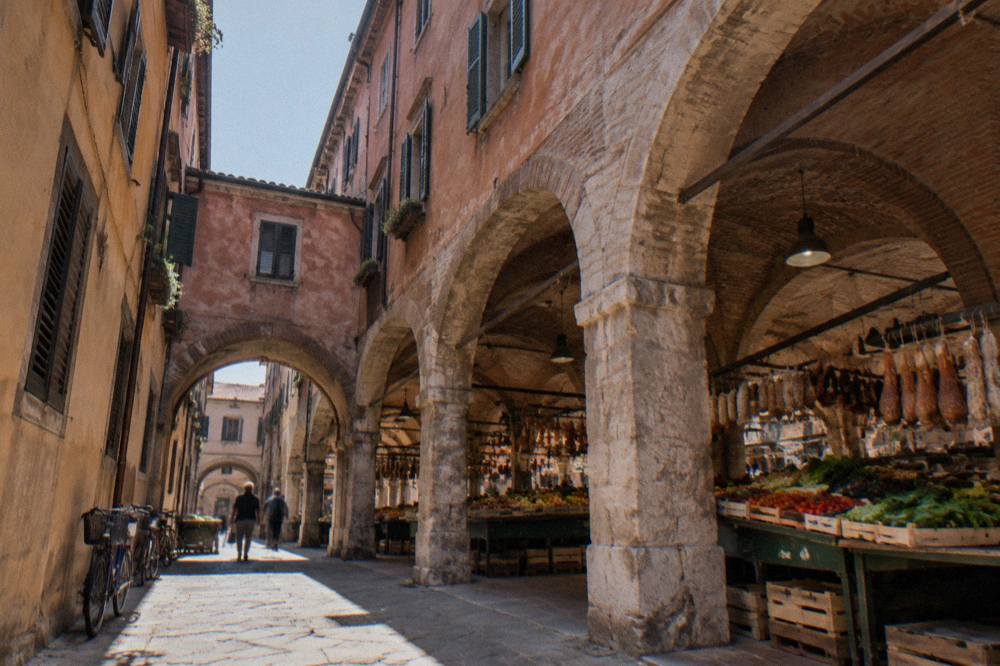
Palazzo della Ragione is on the list with a caveat: it is hardly hidden, but its EUR 8 ticket is sold at the IAT office at Piazza delle Erbe 52 rather than only at the door, a detail many visitors miss. The Palazzo della Ragione guide covers the hall and the Sotto il Salone market beneath it, a permanent covered food market the tourism board describes as running for eight centuries under the great hall.
What Hidden Gems Lie Just Outside Padua In The Euganean Hills?
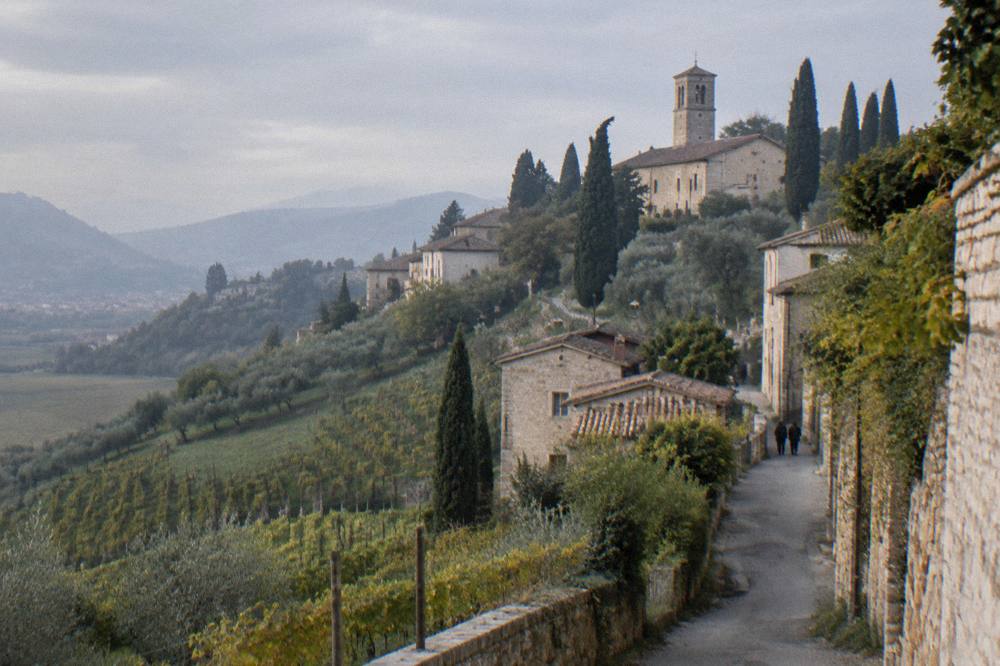
The Euganean Hills hide Arqua Petrarca, a hill village about 20 km south of Padua in a straight line with a Casa del Petrarca at EUR 6 full, Villa dei Vescovi at Luvigliano di Torreglia, a FAI Renaissance villa at EUR 11 adults, Abano Terme about 8 km and Montegrotto Terme about 11 km, and Monselice and Este at 21 and 26 km. All are day trips from the city by bus or a short regional hop, and the hills are the green counterweight to Padua's arcades.
Villa dei Vescovi is the pick for a quiet half day. The FAI, which runs it, lists adults EUR 11, ages 6 to 18 and students to 26 at EUR 6, under-6s free and a family ticket EUR 28, with seasonal openings in bands from spring to December. The villa sits above the hills at Torreglia, and this site pairs it with the Valsanzibio garden on a dedicated tour: Check availability on the operator's live listing.
Arqua Petrarca is the village version of the same quiet. The Casa del Petrarca charges EUR 6 full, EUR 4 reduced and EUR 3 for school groups, opens March to October 9:00 to 12:00 and 15:00 to 18:30 with winter hours shorter, and closes non-holiday Mondays plus 8 December, 25 and 26 December and 1 January. The village around it is small enough that the walk and the house fill a morning together.
| Hills corner | Straight-line distance from Padua | Entry stated by the operator |
|---|---|---|
| Abano Terme | about 8 km | Spa town; spa prices not in the sources |
| Montegrotto Terme | about 11 km | Spa town; spa prices not in the sources |
| Villa dei Vescovi, Torreglia | about 10 km | EUR 11 adults, EUR 6 reduced, family EUR 28 |
| Arqua Petrarca | about 20 km | Casa del Petrarca EUR 6 full, EUR 4 reduced |
| Monselice | about 21 km | Castle details not in the sources |
| Este | about 26 km | Town visit unticketed |
The hills also carry the wine angle. The Euganean Hills produce their own DOC wines, and a winery visit with tasting is a half-day format this site covers through a hills trip, with the operator's listing carrying the price and times. Pair the villa in the morning with a cellar in the afternoon and the day stops being a Padua day without ever needing a car of your own, since the Colli bus lines reach the main towns, with the current timetable to be checked on the Busitalia planner before travel.
Where Does Padua Hide Its Food And Spritz Corners?
Padua's quiet food corners are Sotto il Salone, the covered market under Palazzo della Ragione that the tourism board describes as running for eight centuries, the Piazza delle Erbe and Piazza dei Frutti stalls, Mon to Fri 7:30 to 13:30 and Saturdays to 20:00 for the Erbe market, and the spritz culture rooted in Aperol, created in Padua in 1919 by the Barbieri brothers. None of it is ticketed, and the market hours come from the Comune di Padova's own market page.
The three local recipes the tourism board names are risotto ricco alla Padovana, cappone alla canevera using gallina padovana, and torta pazientina, and the what to eat in Padua guide runs through them. The hidden-gem angle is the timing: Piazza della Frutta's food stalls run 8:00 to 14:00 Monday to Wednesday and to 19:00 Thursday to Saturday, so the late-afternoon version of the market exists only on the Thursday-to-Saturday side of the week.
The spritz story is genuinely Paduan. Aperol was presented in the city in 1919 by the Barbieri brothers, and the modern Aperol Spritz grew out of the Veneto's spritz tradition, which the sources trace to Austrian soldiers diluting local wine. The spritz in Padua guide covers where the ritual fits an evening, and the operator listings on this site include spritz walks through the centre for visitors who want the ritual explained rather than just poured.
| Market or food corner | Stated hours (Comune di Padova) | Notes |
|---|---|---|
| Piazza delle Erbe | Mon to Fri 7:30 to 13:30, Sat 7:30 to 20:00 | 52 stalls, fruit, vegetables, flowers |
| Piazza della Frutta, food | Mon to Wed 8:00 to 14:00, Thu to Sat 8:00 to 19:00 | Food stalls |
| Piazza della Frutta, non-food | Tue to Fri 8:00 to 14:00, Sat 8:00 to 19:00 | Non-food stalls |
| Prato della Valle Saturday market | Winter 8:00 to 19:00, summer 8:00 to 20:00 | Plants, flowers, fruit and vegetables |
| Antiques market, Prato della Valle and via Umberto I | Every third Sunday of the month | Antiques stalls |
The antiques market is the sleeper entry. Every third Sunday of the month, Prato della Valle and via Umberto I fill with antiques stalls, and the square that hosts the Saturday market and the canal with its double ring of statues, declared communal space by the Venetian Senate in 1767 and reclaimed under Andrea Memmo, becomes a browsing circuit. The Prato della Valle guide covers the square without the size figures the sources do not carry.
When Should You Visit Padua's Hidden Corners?
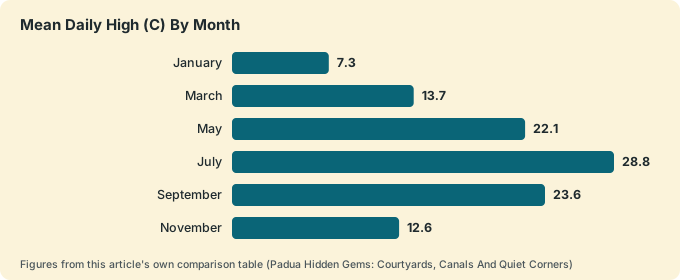
The ERA5 reanalysis for Padua, 1991-2020, shows July and August mean daily highs of 28.8 C, January a mean high of 7.3 C and a mean low of minus 0.2 C, November the highest monthly rain total at 114.0 mm and January the lowest at 53.6 mm, which makes spring and early autumn the seasons the numbers favour for walking days, and the chapel's 16 to 27 November 2026 closure the one fixed date to plan around. The hidden corners are mostly outdoor or small-room sights, so the rainfall matters more than for museum-heavy itineraries.
The numbers deserve a table, because the pattern is not the one visitors expect from northern Italy's summer reputation: September and October both sit around 105 mm of rain, close behind November's 114.0 mm, while the summer months fall to 62.1 mm in July and 78.7 mm in August.
| Month | Mean daily high (C) | Mean daily low (C) | Rain (mm), ERA5 1991-2020 |
|---|---|---|---|
| January | 7.3 | -0.2 | 53.6 |
| March | 13.7 | 3.9 | 67.2 |
| May | 22.1 | 12.4 | 99.7 |
| July | 28.8 | 18.9 | 62.1 |
| September | 23.6 | 14.9 | 105.5 |
| November | 12.6 | 5.5 | 114.0 |
The fixed calendar items a planner can rely on are few and firm: the Scrovegni Chapel closes 16 to 27 November 2026 for the annual fresco inspection by the Istituto Centrale per il Restauro; the Orto Botanico switches to winter hours and the EUR 12 winter full ticket from November; the Tredicina, the thirteen days before the feast of Saint Anthony, ran 31 May to 12 June in 2026 with the feast on 13 June; and the Padova Marathon finishes at Prato della Valle on 18 April 2027. The best time to visit Padua guide and the Padua weather guide expand on both the climate table and the calendar.
One warning worth repeating from the transport side: the Venice day-tripper access fee trial ended on 27 July 2026 and no 2027 decision had been announced, so a Padua-based visitor planning a Venice day should check the current position rather than assume a charge. The Padua as a base for Venice guide covers the train-and-stay logic.
Getting to the hidden corners needs only two fares the sources state. The urban TU1 ticket is EUR 1.70 for 90 minutes, or a contactless card tap on board, and the Busitalia airport bus between Padua and Venice Marco Polo is EUR 13 one way, about 45 minutes. Trains reach Venice in about 26 to 40 minutes and Vicenza in about 16 to 25, with a regional fare of about EUR 5 to Venice and about EUR 6 to Vicenza. The getting around Padua guide has the full picture, including the SIR1 tram and the SIR3 line still in testing, for which no opening date should be promised.
Common Questions About Padua's Hidden Gems
What are the true hidden gems in Padua?
The Oratorio di San Giorgio and Oratorio di San Michele, both in the 2021 Padova Urbs Picta UNESCO inscription, the Torre dell'Orologio, free but bookable only on set days, the canal walks at Porta Portello and the Canale di Santa Chiara, and Villa dei Vescovi in the Euganean Hills at EUR 11 adults.
Can you visit Padua's UNESCO fresco sites without the Scrovegni Chapel?
Yes. The Padova Urbs Picta inscription covers eight complexes, including the Battistero della Cattedrale, Palazzo della Ragione and the two oratories. A combined card for the fresco sites exists; check the current price and coverage on the official museums site before buying, because the chapel still needs its own timed booking with a EUR 1 fee.
Is Padua good for a quiet trip compared with Venice?
Padua is an inland city about 36 km in a straight line from Venice, reached by train in about 26 to 40 minutes. Its quiet corners, canal banks, small museums and hill villages, sit outside the Venice day-trip circuit, and the sources here support no ranking between the two cities.
How do you reach the Euganean Hills from Padua?
Abano Terme is about 8 km and Montegrotto Terme about 11 km from Padua in a straight line, Arqua Petrarca about 20 km. The Colli bus lines serve the main towns; check the Busitalia planner for current times before travel. The urban TU1 ticket at EUR 1.70 covers 90 minutes inside the city.
Are Padua's markets worth visiting?
The Comune di Padova's own page gives the hours: Piazza delle Erbe Mon to Fri 7:30 to 13:30 and Saturday to 20:00, the Saturday market at Prato della Valle winter 8:00 to 19:00 and summer 8:00 to 20:00, and an antiques market at Prato della Valle and via Umberto I every third Sunday of the month.
What does the Scrovegni ticket include besides the chapel?
The daytime ticket, EUR 15 full plus the EUR 1 chapel booking fee, also covers the Musei Civici Eremitani and Palazzo Zuckermann. The evening "Giotto sotto le stelle" visit, 25 March to 1 November, is chapel only.
The quiet corners hold up on their own terms: frescoed oratories inside a UNESCO inscription, a clock tower with a booking list, a river gate with two names, a villa in the hills and a covered market that has run under the same hall for eight centuries. Book the chapel, then spend the rest of the time here.