Loggia And Odeo Cornaro: A Renaissance Garden Theatre
The Loggia and Odeo Cornaro in Padua is a small frescoed complex of loggia, garden and covered hall built for private theatre and music, now open as one of the city's civic museums, at EUR 5 full price with seasonal hours.
Short answer
The Loggia and Odeo Cornaro stands in central Padua, in the Veneto, northern Italy. Admission is EUR 5 full price, per the padovamusei.it listings, hours are seasonal, and groups enter at most 25 people every 30 minutes. It is not one of the eight Padova Urbs Picta UNESCO sites.
Padua (Italian: Padova) is an inland city in the Veneto, northern Italy, about 36 km in a straight line from Venice, and among its quieter civic monuments is the Loggia and Odeo Cornaro, a small complex of loggia, garden and a covered hall built around theatre and music. The site is modest in scale, a short walk from the city's famous squares, and it holds a precise place in the civic museum listings of Padua Travel Guide coverage: EUR 5 full price, seasonal opening hours, and a visit measured in fractions of an hour.
What Is The Loggia And Odeo Cornaro In Padua?
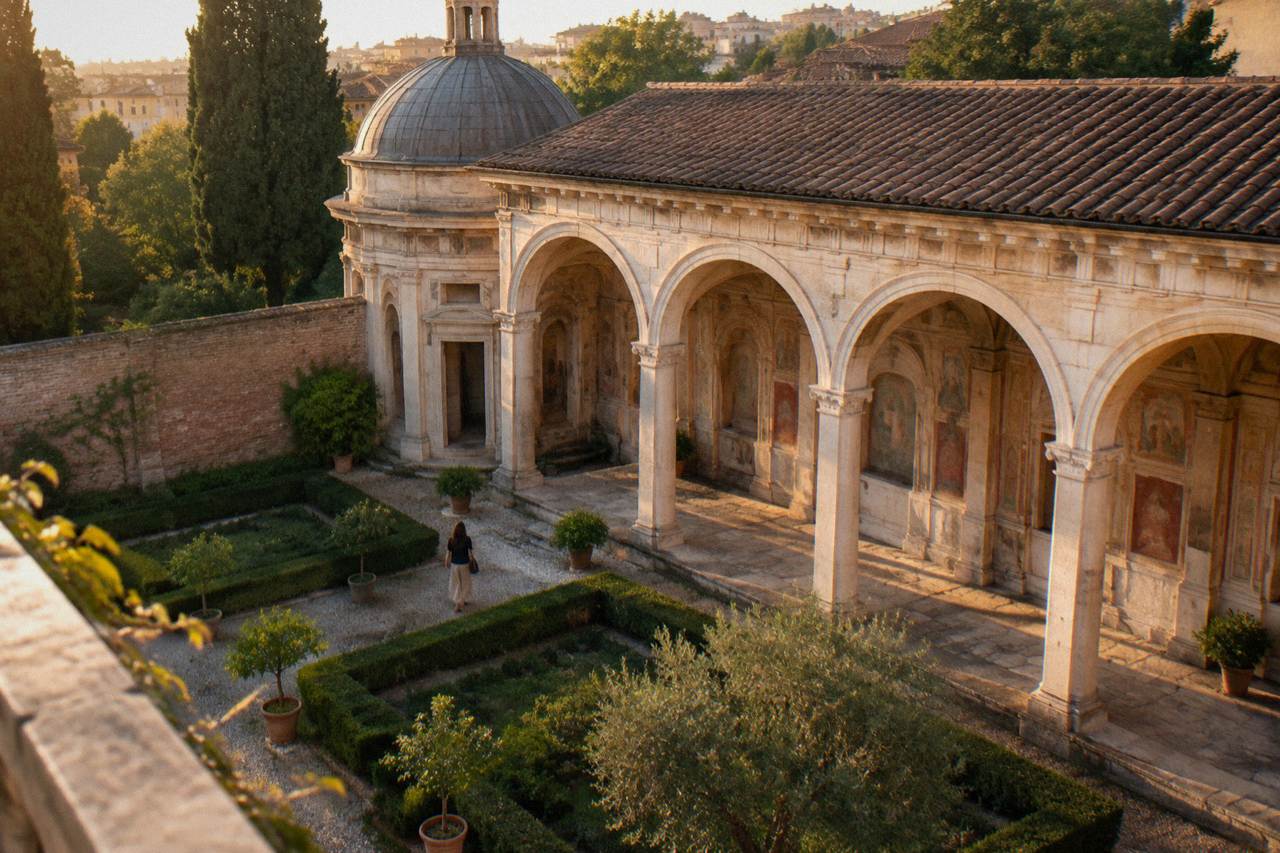
The Loggia and Odeo Cornaro is a small Renaissance complex in central Padua consisting of an open loggia, a garden and the Odeo, a covered hall built for music and spoken performance, today managed as one of the city's civic museums. Per the padovamusei.it listings it is ticketed at EUR 5 full price with seasonal hours, and visits run in groups of at most 25 people every 30 minutes. It was designed as a private setting for performance and conversation rather than as a public monument, which is why the interiors reward attention in a way the plain street front does not promise.
The complex belongs to the world of Paduan aristocratic leisure. It was conceived for a cultivated household that hosted performances, debates and music in rooms decorated with frescoes and classical inscriptions, a use that survived in the building's layout: a loggia open to the garden on one side and a more intimate Odeo, meaning a hall for song, beyond it. Padua in that period was a Venetian city, under Venetian rule from 1405 to 1797, and its elite built along the lines of the mainland villas and palaces of the Veneto, of which the Brenta Riviera houses are the best-known examples.
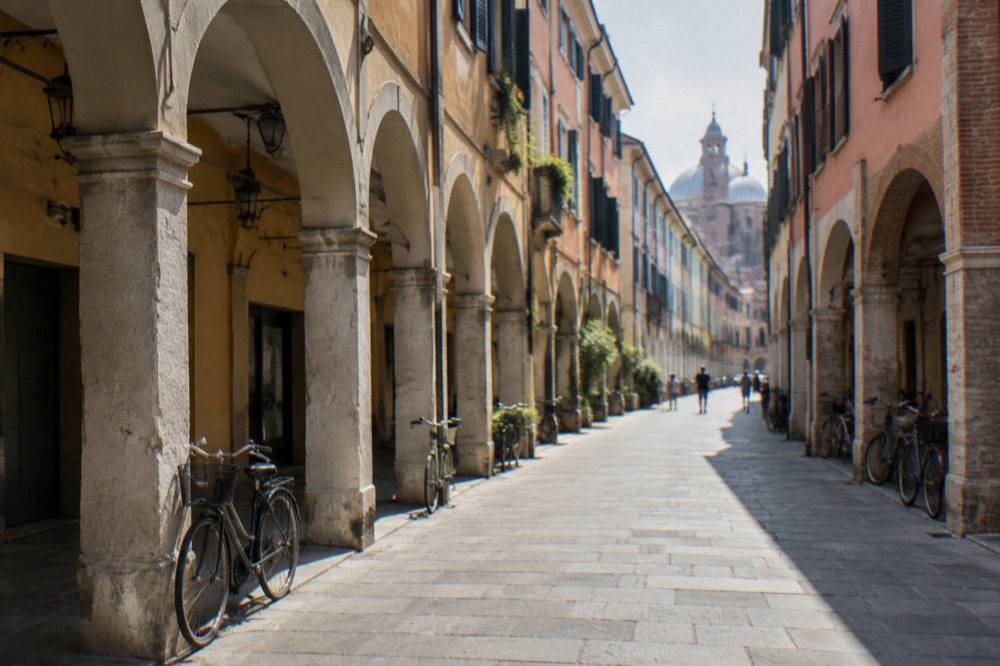
What the visitor sees today is the layered result: frescoed surfaces, architectural framing modeled on classical antiquity, and a garden space that ties the two halls together. The building is not large. That smallness is its character, and it makes the site a natural pairing with the Palazzo della Ragione and the Piazza delle Erbe market area nearby, both a few minutes away on foot through the arcaded centre described in the centro storico guide.
What Does A Ticket To The Loggia And Odeo Cornaro Cost?
Admission to the Loggia and Odeo Cornaro is EUR 5 full price, per the padovamusei.it listings, with reduced rates of EUR 4 and EUR 3 published on the same page, and groups enter at most 25 people every 30 minutes, with booking recommended. The figure should be confirmed before a visit, because civic museum tariffs are periodically revised. For comparison within the same listings, Palazzo della Ragione costs EUR 8 full, the Scrovegni Chapel combination ticket costs EUR 15 full plus a EUR 1 booking fee, and the Museo del Risorgimento at the Stabilimento Pedrocchi costs EUR 5 full.
The Loggia and Odeo sits at the inexpensive end of Padua's civic museum range. A useful way to read the price list:
| Civic museum site (padovamusei.it) | Full price | Notes |
|---|---|---|
| Loggia and Odeo Cornaro | EUR 5 | Reduced EUR 4 / EUR 3, seasonal hours, groups of at most 25 every 30 minutes |
| Museo del Risorgimento, Stabilimento Pedrocchi | EUR 5 | Tuesday to Sunday, split morning and afternoon hours |
| Palazzo della Ragione | EUR 8 | Reduced EUR 6, tickets sold at IAT Piazza delle Erbe 52 |
| Musei Civici Eremitani (museums only) | EUR 11 | Reduced EUR 9 |
| Musei plus Scrovegni Chapel | EUR 15 | Reduced EUR 11, plus EUR 1 chapel booking fee |
| Torre dell'Orologio | Free | Mandatory booking on set days, Legambiente Salvalarte |
Confirm the current price on the official ticket page before booking, since tariffs can change. The Scrovegni Chapel deserves separate planning entirely: entry is timed, at most 25 people every 15 minutes, about 15 minutes inside, booked in advance, and the chapel is closed 16 to 27 November 2026 for the annual fresco inspection. The Scrovegni Chapel guide covers that booking system in detail.
If the plan is to fill a full day rather than one stop, a guided walk bundles the centre's landmarks into a single route.
When Is The Loggia And Odeo Cornaro Open In Padua?
The Loggia and Odeo Cornaro keeps seasonal opening hours, split into an April to September season and an October to March season, per the padovamusei.it listings, with groups admitted at most 25 every 30 minutes and booking recommended. The exact days and times belong to the current season's schedule, so check the museum's own page before setting out, and winter visitors should confirm. The exact days and times belong to the current season's schedule, so the museum's own site is the reference to check before setting out. Winter visitors in particular should confirm, because seasonal sites in Padua shorten or suspend hours between seasons.
Seasonality is a fixed feature of this site, not an inconvenience of a given year. The pattern follows the wider rhythm of the Veneto's visiting year: the ERA5 reanalysis, 1991-2020, puts January's mean high at 7.3 C and July and August at 28.8 C, with November the month with the highest rain total at 114.0 mm, and small garden-facing monuments schedule their openings around exactly that curve. Visitors combining the Loggia with the Orto Botanico should note the garden runs its own seasonal calendar too, with hours shifting again from 24 October 2026.
Because the site is compact and entry is metered in half-hour group slots, the practical advice is simple: pick a date, check the museum's own page for that season, and book if the page recommends it. That is also the honest answer for anyone hoping to bundle several small civic sites into one morning, since their seasons do not move in lockstep.
| Padua civic site | Opening pattern | Where to confirm |
|---|---|---|
| Loggia and Odeo Cornaro | Seasonal, two seasons per year, groups of at most 25 every 30 minutes | padovamusei.it and the museum's own page |
| Musei Civici Eremitani | Monday to Sunday, 9:00 to 19:00 | padovamusei.it |
| Palazzo Zuckermann | Tuesday to Sunday, 10:00 to 19:00, last entry 45 minutes before closing | padovamusei.it |
| Orto Botanico | Seasonal, closed non-holiday Mondays, closed 25 December 2026, open 8 December 2026 | ortobotanico1545.it |
| Scrovegni Chapel | Year round 9:00 to 19:00, timed entry, closed 16 to 27 November 2026 | cappelladegliscrovegni.it |
How Long Does A Visit To The Loggia And Odeo Cornaro Take?
A visit to the Loggia and Odeo Cornaro takes roughly half an hour, set by the entry system itself: per the padovamusei.it listings, groups of at most 25 people enter every 30 minutes, so the building is visited in short, metered batches rather than at an open pace. Add time to find the entrance and to read the frescoes and inscriptions, and the realistic budget is 30 to 45 minutes on site. That makes it a stop between larger sights, not a morning's destination.
The short visit length shapes how the site fits an itinerary. In a one-day plan built around the Scrovegni Chapel, the Eremitani museums and the Basilica of Saint Anthony, the Loggia works as the small extra stop near the squares. In a two-day plan it can sit alongside the Torre dell'Orologio, which is free with mandatory booking on set days, or the MUSME medical history museum, whose own price and hours should be checked on its site before a visit.
Visitors who prefer a narrative over a checklist can leave the pacing to a guide. A private guided walk of the city's top sights, with Check availability on the operator's live listing, pairs well with the Loggia's location in the heart of the centre.
What Can You See Inside The Loggia And The Odeo?
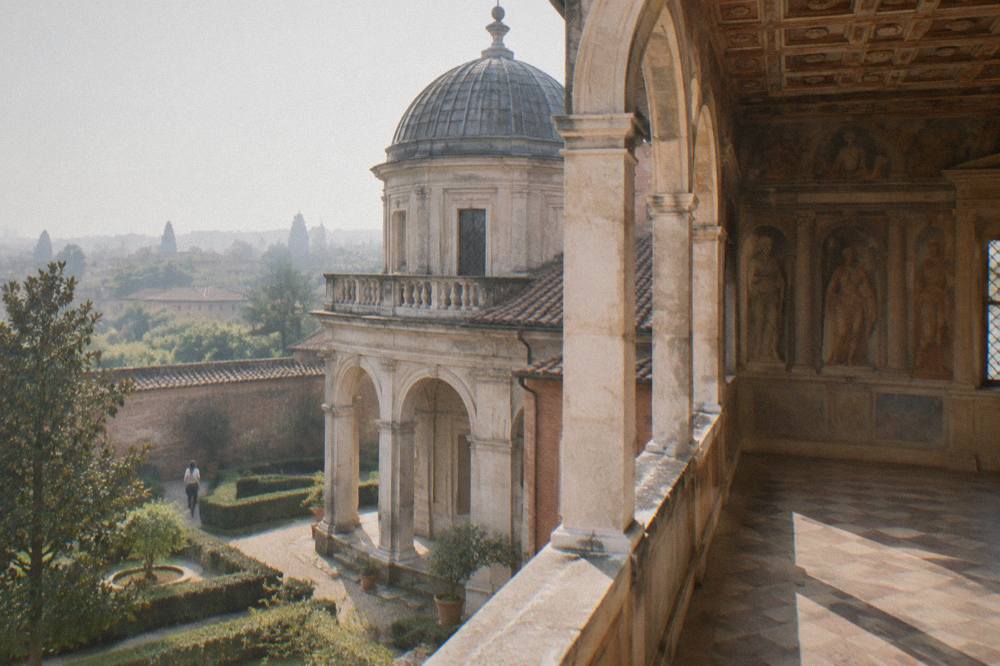
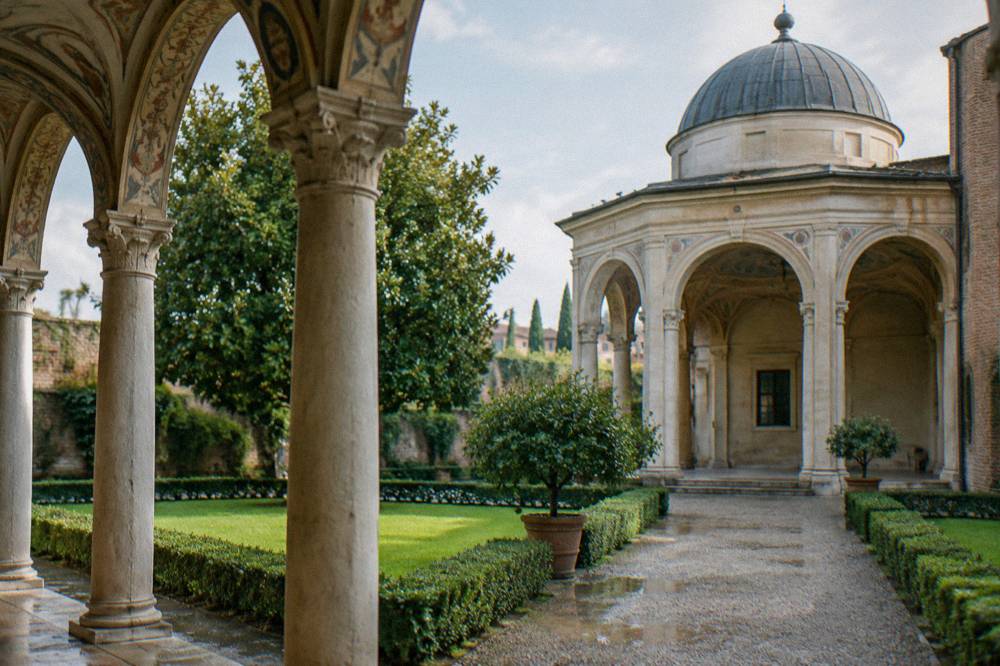
Inside, the visit covers three connected experiences: the open loggia with its classical architecture and frescoed surfaces, the garden that the loggia frames, and the Odeo, an intimate covered hall whose frescoes, inscriptions and proportions were built around music and spoken performance. The interiors are decorated rather than furnished, so the content is the architecture and wall painting themselves. Descriptions of specific artworks should be checked against the museum's own materials, since the wall cycles are the subject of specialist literature.
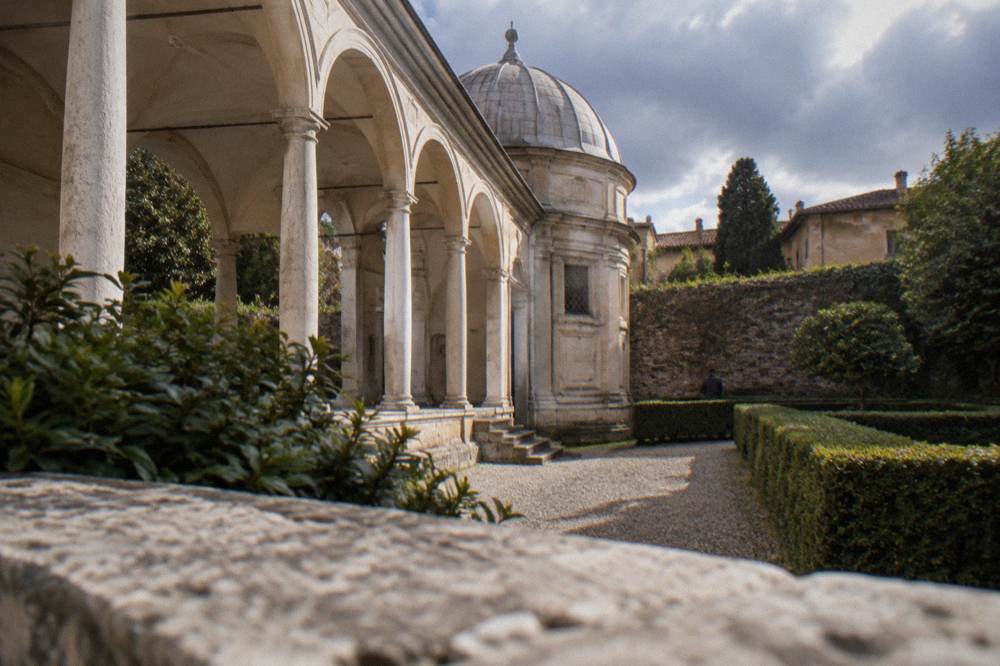
The loggia is the public-facing gesture of the complex, a row of arches and pilasters that borrows the language of Roman antiquity, the same vocabulary that shaped elite building across the Veneto under Venetian rule from 1405 to 1797. The Odeo is the opposite: enclosed, inward, tuned for the voice. Visitors interested in this performance-and-music strand of Renaissance culture will find the Palazzo del Bo anatomical theatre a striking counterpoint, a purpose-built audience hall of 1594 a short distance away, on a guided route that also includes Galileo's chair in the Sala dei Quaranta.
Photography rules, bag policies and access conditions are set by the museum and should be confirmed on its own site. The building is historic and compact, so visitors with specific mobility needs should ask the museum directly about access before booking a slot.
Is The Loggia And Odeo Cornaro Part Of The UNESCO Listing?
No, the Loggia and Odeo Cornaro is not one of the eight monuments of the Padova Urbs Picta UNESCO inscription of 2021, which covers Padua's fourteenth-century fresco cycles, nor is it part of the Orto Botanico inscription of 1997. The complex is a civic museum site in its own right, and the frescoes inside it belong to a later, private-building tradition rather than to the fourteenth-century cycle that UNESCO inscribed. Padua's two UNESCO listings are distinct and should never be merged into one.
The eight Urbs Picta sites, for clarity:
| The eight Padova Urbs Picta sites (inscribed 2021) | In this guide's coverage |
|---|---|
| Cappella degli Scrovegni | Scrovegni Chapel guide |
| Chiesa dei Santi Filippo e Giacomo agli Eremitani | Chiesa degli Eremitani guide |
| Palazzo della Ragione | Palazzo della Ragione guide |
| Cappella della Reggia Carrarese | Covered in the centro storico walking route |
| Battistero della Cattedrale | Duomo e Battistero guide |
| Basilica e Convento di Sant'Antonio | Basilica di Sant'Antonio guide |
| Oratorio di San Giorgio | Oratorio di San Giorgio guide |
| Oratorio di San Michele | Mentioned in the Urbs Picta itinerary coverage |
The distinction matters for itinerary planning. A visitor chasing the UNESCO fresco cycles follows the list above, in which the Scrovegni Chapel, painted by Giotto between 1303 and 1305, is the anchor. A visitor interested in Padua's performance culture, private patronage and garden architecture adds the Loggia and Odeo, accepting its separate EUR 5 ticket and seasonal calendar. The full index of guides sits on Padua Travel Guide.
Where Is The Loggia And Odeo Cornaro And How Do You Get There?
The Loggia and Odeo Cornaro stands inside Padua's historic centre, within the area bounded by the city's Renaissance-era walls, a short walk from Piazza delle Erbe and the other central squares, and reachable by city bus or tram on a EUR 1.70 ticket valid for 90 minutes. The site's own address and entrance details are on the museum's page and should be checked there, since entrance doors for small civic monuments are not always on the main front.
Padua's urban transport is a single tariff zone for the city core. Per Busitalia's own pages, the TU1 90-minute ticket costs EUR 1.70, can be bought in the Busitalia Veneto app before boarding, or paid by tapping a contactless card on board, and a day ticket costs EUR 4.70. Tram line SIR1 runs north to south across the city; a second tram line, SIR3, is in testing with service targeted for the end of 2026, and no opening date should be assumed. Visitors arriving by train at Padova station will find the IAT tourist office at the exit of platform 1, open Monday to Saturday 9:00 to 19:00 and Sundays 10:00 to 16:00.
| Way to arrive | Ticket | Notes |
|---|---|---|
| City bus or tram, TU1 zone | EUR 1.70 for 90 minutes | Contactless tap on board, or app purchase before boarding |
| Day ticket, TU1 | EUR 4.70 | Worth it once three or more rides stack up in a day |
| On foot from the station | Free | The centre is compact and arcaded |
| Airport bus from Venice Marco Polo | EUR 13 one-way, adult | About 45 minutes, per Busitalia, up to 54 runs a day |
| Regional train from Venice | About EUR 5, about 26 to 40 minutes | Frequent departures, per the published schedules |
Anyone driving should know that Padua's historic core sits inside a limited traffic zone, and parking arrangements are best confirmed before travel; the walls themselves are covered in the mura di Padua guide, which also maps the gates, including Porta Portello, named Porta Ognissanti on open mapping data, the same gate under two names.
What Else Is Near The Loggia And Odeo Cornaro?
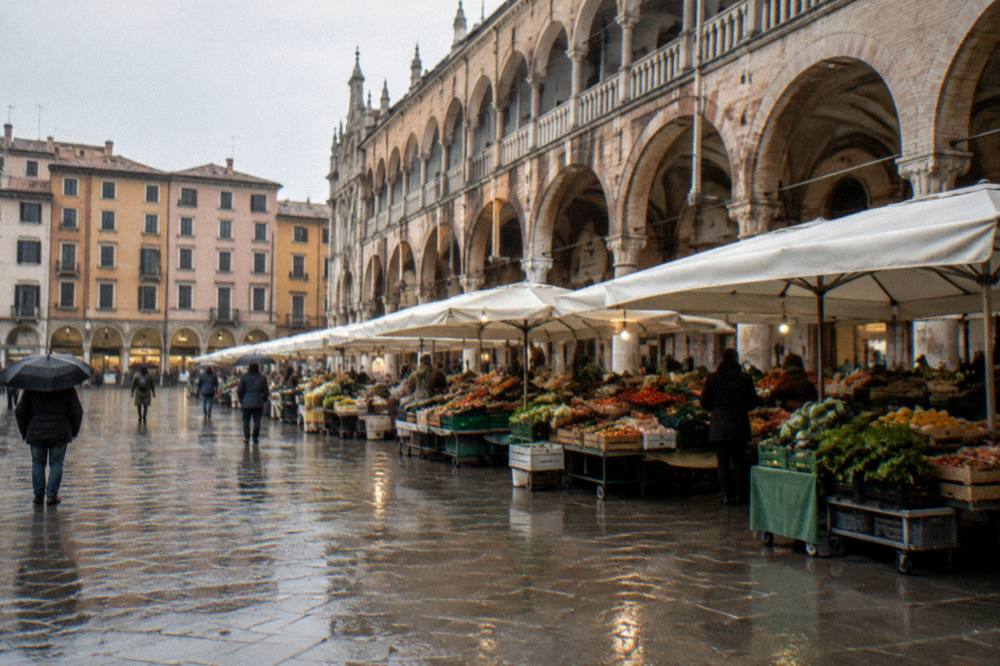
The Loggia and Odeo Cornaro sits in a district dense with major sights, and a walk of a few minutes reaches the Piazza delle Erbe market, Palazzo della Ragione, the Caffe Pedrocchi building of 1831, and the university quarter around Palazzo del Bo, so the visit slots naturally into a circuit of the centre. The Basilica of Santa Giustina and the Prato della Valle square lie a little further out, toward the southeast of the centre, both walkable.
A compact cluster walk, using only sites this site covers in depth:
| Nearby stop | What it offers | Pairing logic |
|---|---|---|
| Piazza delle Erbe and Piazza dei Frutti | Daily food and flower markets, Saturday until 20:00 | Combine with the morning Loggia slot |
| Palazzo della Ragione | Great hall and Sotto il Salone market beneath | Same ticket office at IAT Piazza delle Erbe 52 |
| Caffe Pedrocchi | The 1831 coffee house, "caffè senza porte" until 1916 | Stop for a coffee after the museums |
| Palazzo del Bo | Guided route with the 1594 anatomical theatre | Book the 45-minute tour, alternating Italian and English slots |
| Torre dell'Orologio | Free entry, mandatory booking on set days | Small add-on when days align |
The market hours are published by the Comune di Padova: Piazza delle Erbe runs Monday to Friday 7:30 to 13:30 and Saturday 7:30 to 20:00, and the antiques market fills Prato della Valle and via Umberto I on the third Sunday of each month. Timing a Loggia visit against those market days gives a morning a natural shape.
Should You Visit The Loggia And Odeo Cornaro Or Skip It?
The Loggia and Odeo Cornaro is worth a visit for travellers with a second half-day in Padua, an interest in Renaissance interiors, music history or garden architecture, or a schedule that leaves a 45-minute gap near the centre, and it is a reasonable skip for a one-day visitor whose time is consumed by the Scrovegni Chapel, the Basilica of Saint Anthony and the Orto Botanico. At EUR 5 and with metered 30-minute entry, the cost of the visit in money and time is small, and the decision is really about depth versus breadth.
For breadth, the site's one day in Padua itinerary sequences the headline sights. For depth, the two days in Padua plan is where a monument of this scale earns its slot, alongside other seasonal and bookable stops such as the Oratorio di San Giorgio and the Torre dell'Orologio. Visitors basing themselves in Padua for the region can also read the wider case in is Padua worth visiting, and the city's role as an inland base about 36 km in a straight line from Venice is covered in the Venice day-trip material.
An evening plan is an alternative shape: the Scrovegni Chapel runs evening visits, "Giotto sotto le stelle", 25 March to 1 November, from 19:00 to 22:00 every 20 minutes, chapel only, so a late afternoon Loggia slot can be chained into a night fresco visit in the warmer half of the year.
What About Food And Drink Near The Loggia And Odeo Cornaro?
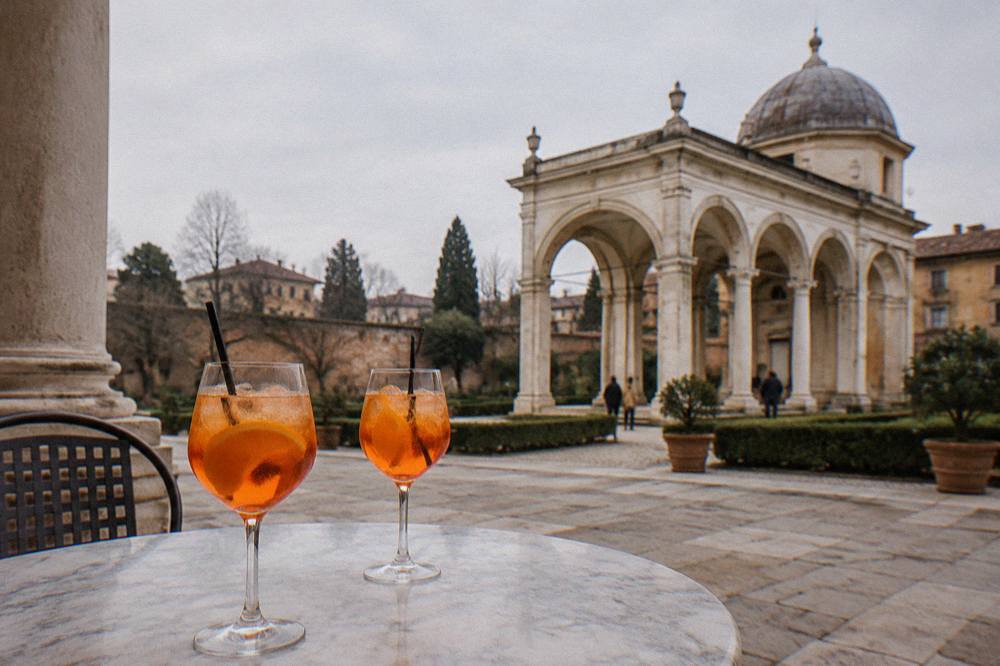
The area around the Loggia and Odeo Cornaro is one of Padua's eating districts, anchored by the squares of Piazza delle Erbe and Piazza dei Signori, where the evening aperitivo culture of the Veneto plays out around spritz and cicchetti, and Aperol itself was created in Padua in 1919 by the Barbieri brothers. The city's named dishes, per the tourism board, include risotto ricco alla Padovana, capponi alla canevera and torta pazientina, and the Sotto il Salone market under Palazzo della Ragione sells local products in what the board describes as a covered market of some eight centuries.
Individual restaurant and bar names are outside what this site publishes, and the practical advice is to wander the squares and read the boards. Two structured options exist for travellers who want the food scene explained rather than discovered: a market-to-osteria food tour with multiple tastings, and a guided spritz walk built around the aperitivo tradition the city claims a hand in inventing.
For visitors who want the food story with the cooking attached, hands-on classes in Padua cover market shopping and preparation, and the site's food tour coverage lists the current options. The one fixed fact worth carrying into the evening: the emergency number in Italy is 112, and the tourist offices at the station and Piazza delle Erbe 52 handle practical questions during their published hours.
How Does The Loggia And Odeo Cornaro Fit A Longer Veneto Trip?
The Loggia and Odeo Cornaro fits a longer Veneto trip as a half-hour cultural stop inside a Padua stay of one to three days, with Padua itself serving as an inland base from which Venice is about 26 to 40 minutes by regional train at about EUR 5, Vicenza 16 to 25 minutes at about EUR 6, and Verona 43 to 60 minutes, per the published schedules. Travellers on a regional circuit can treat Padua as the overnight anchor and the day trips as spokes, leaving museum hours in the city for late afternoons.
The regional roll call from Padua's doorstep: the Euganean Hills towns of Arqua Petrarca and Monselice, the spa towns of Abano and Montegrotto Terme, the Brenta Riviera villas including Villa Pisani at Stra, and the art cities of Vicenza, Verona, Treviso and Bologna, the last about 110 km away in a straight line. Bologna is also, per the university's own history pages, the seat of the university founded before Padua's own of 1222, which makes the two cities a natural pairing for anyone following the history of Italian universities, from Padua's Palazzo del Bo with its 1594 anatomical theatre to Bologna's older foundations.
Whatever the circuit's shape, the booking that governs everything else in Padua is the Scrovegni Chapel's timed entry, and it should be secured before the rest of the itinerary is fixed. With that anchor in place, small seasonal sites like the Loggia and Odeo Cornaro fill the gaps around it at low cost and short notice, provided the museum's own seasonal calendar is checked for the dates of the visit.
Common Questions About The Loggia And Odeo Cornaro
How much does the Loggia and Odeo Cornaro cost?
Admission is EUR 5 full price, per the padovamusei.it listings, with reduced rates of EUR 4 and EUR 3 on the same page. Confirm the current price on the official ticket page before booking.
When is the Loggia and Odeo Cornaro open?
Hours are seasonal, with an April to September season and an October to March season, and groups enter at most 25 people every 30 minutes, with booking recommended. Check the museum's own site for the season covering your dates.
How long does a visit to the Loggia and Odeo Cornaro take?
Plan for 30 to 45 minutes. Entry runs in groups of at most 25 every 30 minutes, so the visit is metered rather than open-ended.
Is the Loggia and Odeo Cornaro part of the UNESCO World Heritage listing?
No. Padua's two UNESCO listings are the Orto Botanico, inscribed in 1997, and the fourteenth-century fresco cycles of Padova Urbs Picta, inscribed in 2021, whose eight sites are listed separately and do not include the Loggia and Odeo Cornaro.
Where in Padua is the Loggia and Odeo Cornaro?
It stands inside the historic centre, a short walk from Piazza delle Erbe and Palazzo della Ragione, within the ring of the old walls, reachable on the EUR 1.70 90-minute urban ticket by bus or tram.
