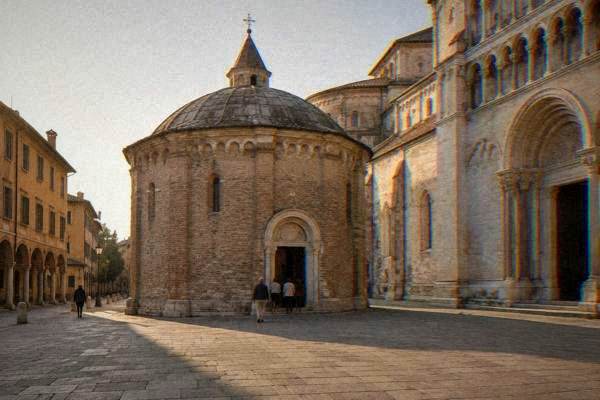
Padua Cathedral And Baptistery: The Painted Dome
Padua Cathedral and its next-door Baptistery sit at the quiet eastern edge of the old centre, and the Baptistery's interior is one of the eight frescoed complexes of the Padova Urbs Picta UNESCO inscription of 2021.
Short answer
The Padua Cathedral complex pairs a restrained cathedral with a Baptistery whose dome and walls carry Giusto de' Menabuoi's fourteenth-century fresco cycle, part of the UNESCO-listed Padova Urbs Picta. Check the current price and hours on the official ticket page before booking.
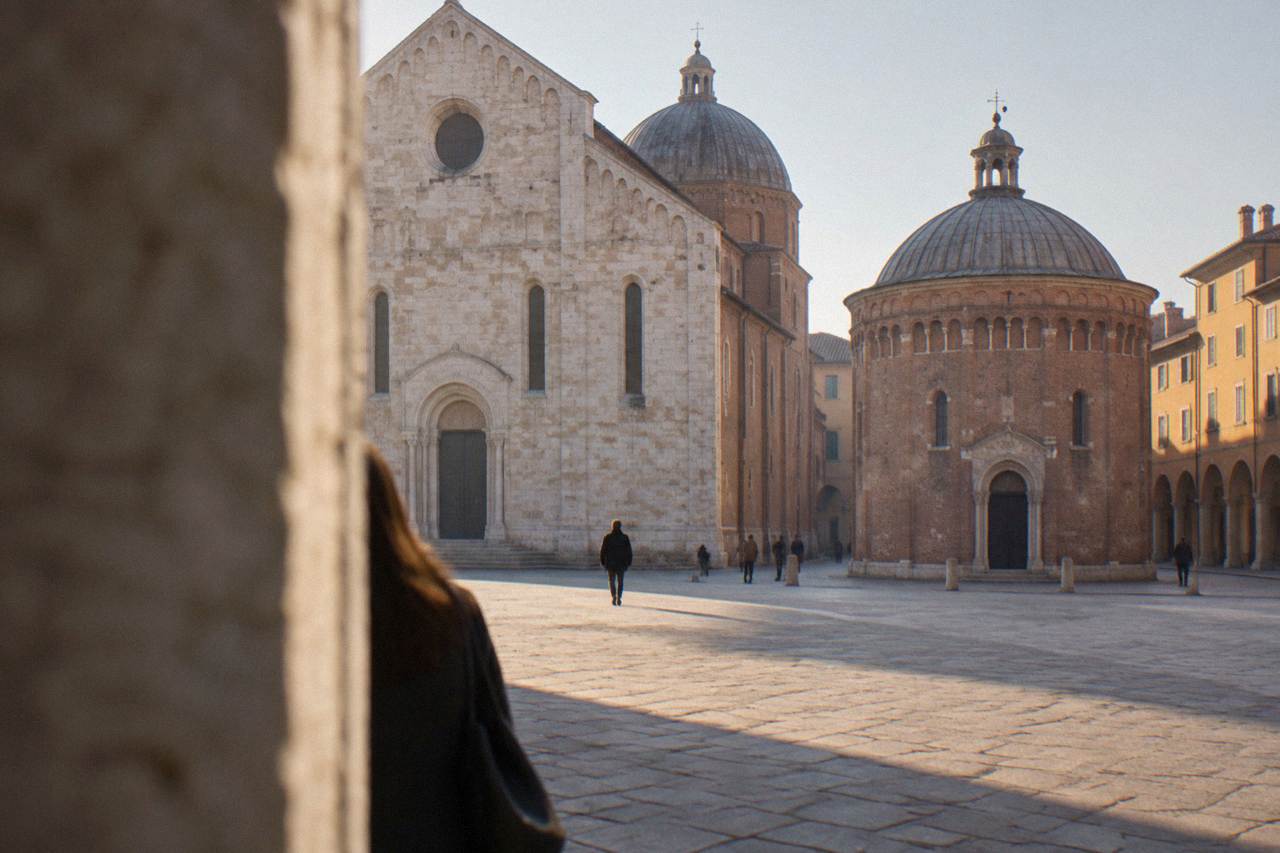
The Padua Cathedral complex stands on the east side of the old centre of Padua (Padova), in the Veneto, northern Italy, an inland city about 36 km in a straight line from Venice. What the cathedral building itself keeps deliberately plain, the Baptistery next door answers in full colour: a dome and wall cycle of frescoes by Giusto de' Menabuoi that form one of the eight complexes of the Padova Urbs Picta UNESCO World Heritage inscription, added to the list in 2021. This guide from the Padua Travel Guide editorial desk sets out what the complex contains, how the frescoes read, how the visit works in practice, and how the site fits a day in the city alongside the Scrovegni Chapel and Piazza delle Erbe.
What Are The Padua Cathedral And The Baptistery?
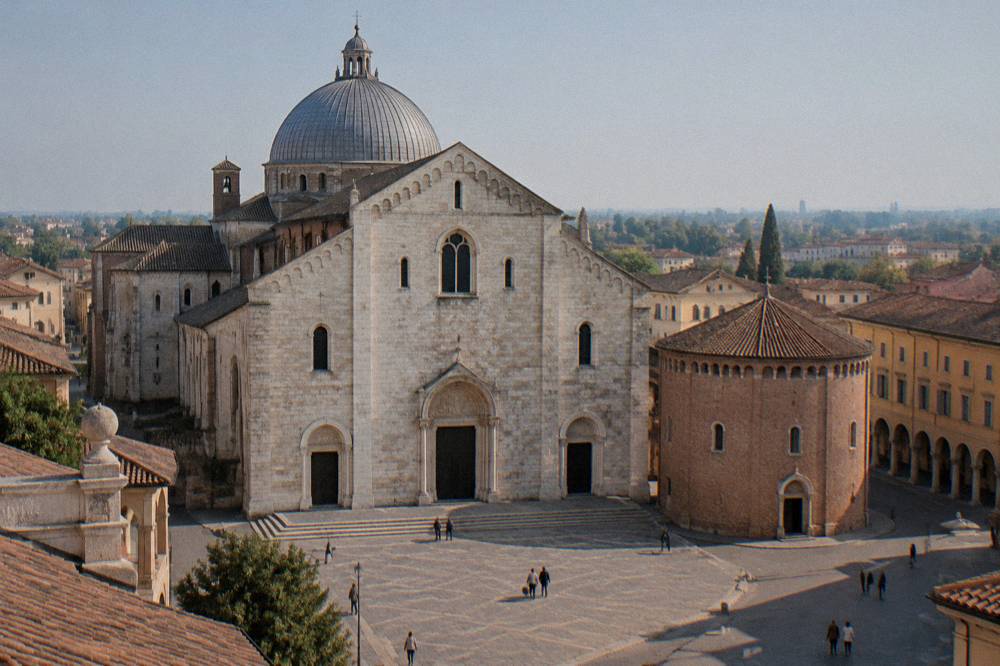
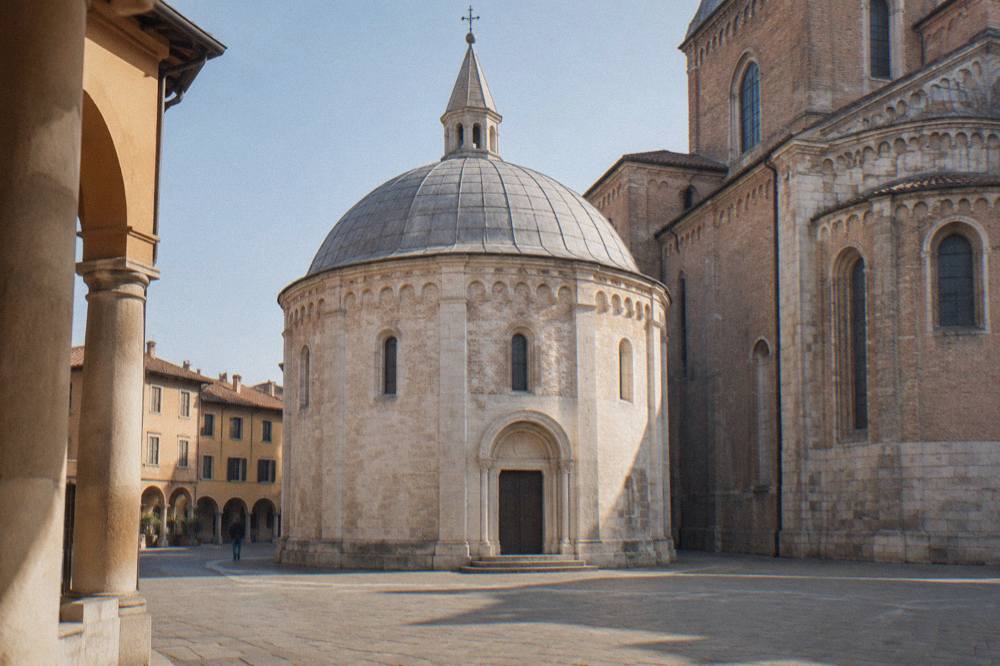
The Padua Cathedral, the Duomo di Padova, is the mother church of the diocese and the seat of the Bishop of Padua, while the Baptistery, standing immediately beside it, is a separate building whose interior is entirely covered with a fourteenth-century fresco cycle by Giusto de' Menabuoi. The two buildings share one quiet square on the east edge of the historic centre, a short walk from Piazza delle Erbe. Together they form the cathedral complex that most city itineraries treat as a single stop.
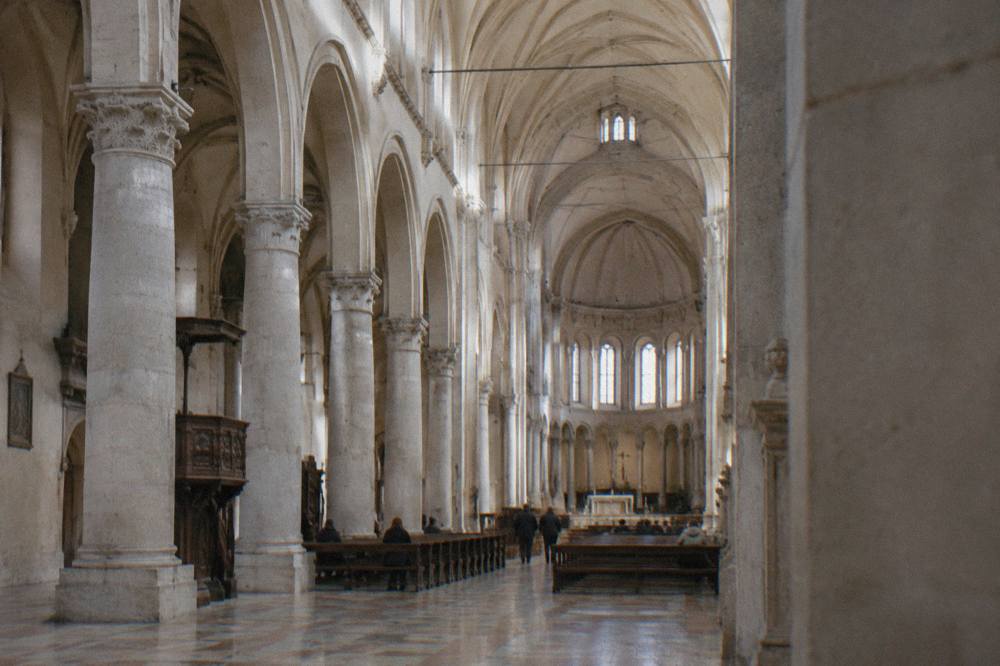
The cathedral is the church you would expect of a bishop's seat: a wide nave, a calm stone interior, and an architectural seriousness that gives nothing away for free. The Baptistery is the opposite in temper. Its interior is a single painted room, with scenes from the life of Saint John the Baptist, the life of Christ, and a Last Judgement arranged around the dome, and it was inscribed as part of the UNESCO listing "Padova Urbs Picta" in 2021, a listing that covers eight frescoed complexes in the old centre of Padua. The others are the Cappella degli Scrovegni, the Chiesa dei Santi Filippo e Giacomo agli Eremitani, the Palazzo della Ragione, the Cappella della Reggia Carrarese, the Basilica e Convento di Sant'Antonio, the Oratorio di San Giorgio and the Oratorio di San Michele.
For a visitor planning a route, the complex sits usefully between two of the city's anchors. The Scrovegni Chapel and the Musei Civici Eremitani lie to the north, and Piazza delle Erbe with the Palazzo della Ragione lies at the centre of the old town, so the cathedral group slots naturally into a walk described in more detail in one day in Padua.
Who Painted The Baptistery And What Do The Frescoes Show?
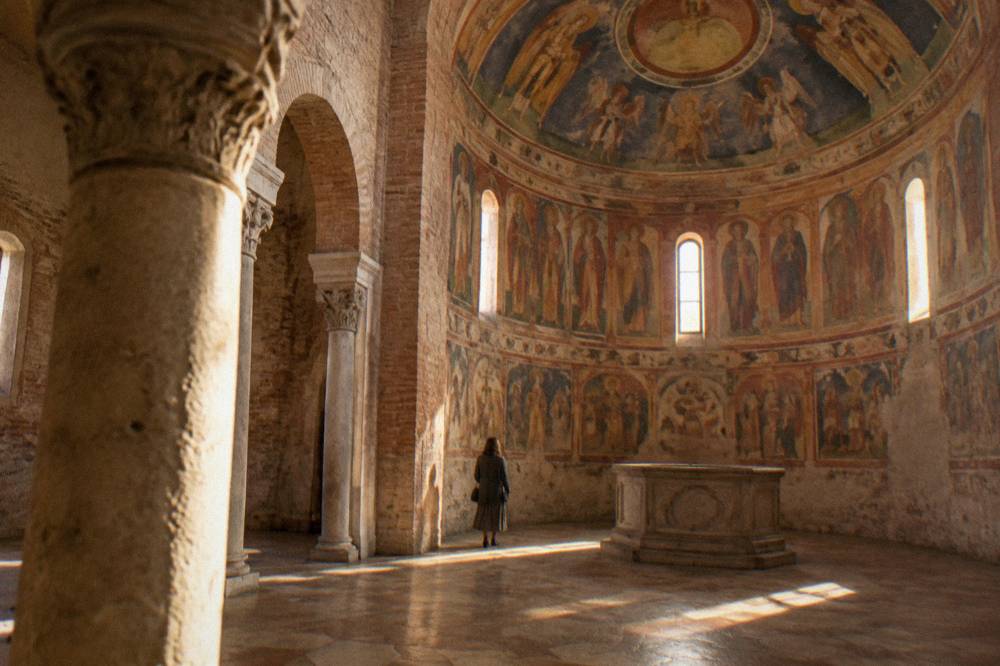
The Baptistery's frescoes are the work of Giusto de' Menabuoi, a painter who finished the cycle in the fourteenth century, and they show the story of salvation across the whole interior: scenes from Genesis and the life of Saint John the Baptist on the walls, the life of Christ rising through the tiers, and a dome centred on Christ in glory. The cycle is one of the reasons UNESCO inscribed Padua's fourteenth-century frescoes in 2021 under criterion (ii), which recognises the spread of artistic ideas.
Menabuoi's dome is the moment the room is built around. The viewer stands under a painted heaven: a central Christ, ranks of saints and angels radiating outward, and the whole surface organised so that the architecture of the real dome disappears into the illusion. Below the dome, the tiers of fresco descend through the narrative cycles, and the walls near the entrance carry the Last Judgement. The painter's handling of the dome, a great wheel of figures turning around a mandorla, is the image reproduced whenever the Baptistery is illustrated, and it is the single thing to give your eyes time to when you are inside, because the room is small and the whole cycle is visible from one spot.
The painting belongs to the same century as Giotto's work in the Scrovegni Chapel, painted between 1303 and 1305, and UNESCO's 2021 decision treats the whole group of eight Paduan complexes as one story: how a new figurative language developed in Padua and then travelled. That framing is worth knowing before a visit, because it turns a stop at the Baptistery from an add-on into a second chapter of the same book. The Scrovegni Chapel guide covers the first chapter, and the wider fresco trail is drawn out in the Padova Urbs Picta UNESCO guide.
How Much Time Should You Allow For The Cathedral Complex?
A realistic allowance for the Padua Cathedral complex is thirty to forty-five minutes: the cathedral itself is a walk-through of ten to fifteen minutes, and the Baptistery rewards twenty to thirty minutes, since the fresco cycle is compact but dense and reads best when you stand and work upward from the walls to the dome. Visitors who want the guided version, which adds the Museum of the Diocese, should plan for a longer slot and check the current price on the official ticket page before booking.
The practical rhythm matters more here than at Padua's bigger sights. The Scrovegni Chapel runs timed entries of at most 25 people every 15 minutes, with about 15 minutes inside, and it is closed 16 to 27 November 2026 for the annual fresco inspection, so it is the appointment that shapes a day in Padua, not the cathedral. A sensible sequence is to book the Scrovegni slot first, then use the hour around it for the cathedral group, the Chiesa degli Eremitani beside the chapel, or the Piazza delle Erbe market squares. The spacing is generous: everything in the historic centre sits within a walk of a quarter of an hour.
| Sight | What You See | Rough Time On Site | Booking Character |
|---|---|---|---|
| Padua Cathedral | Bishop's church, nave and side chapels | 10 to 15 min | Walk in |
| Baptistery | Menabuoi fresco cycle and painted dome | 20 to 30 min | Ticketed, check official page |
| Museum of the Diocese | Religious art and objects of the diocese | 30 to 45 min | Usually bundled with Baptistery |
| Scrovegni Chapel | Giotto cycle, 1303 to 1305 | About 15 min inside | Timed entry, book ahead |
| Chiesa degli Eremitani | Church with Mantegna fresco remains | 10 to 15 min | Walk in |
The complex also connects to the civic museum circuit on the north side. The Scrovegni daytime ticket at EUR 15 full, EUR 11 reduced, plus EUR 1 booking fee, also covers the Musei Civici Eremitani and Palazzo Zuckermann, while the evening "Giotto sotto le stelle" ticket, 25 March to 1 November, is chapel only. Those prices belong to the museum system, not the cathedral, so treat them as a separate line in the budget rather than a bundle that includes the Baptistery.
What Is There To Do Near The Padua Cathedral?
The streets around Padua Cathedral hold a tight cluster of the city's main sights: Piazza delle Erbe and the Palazzo della Ragione ten minutes west, the Scrovegni Chapel and the Eremitani complex ten to fifteen minutes north, the Caffe Pedrocchi between them, and the Basilica of Saint Anthony beyond the centre to the south, so the cathedral group sits at the hub of nearly every walking route in Padua. The Prato della Valle square and its canal ring lie a further walk south past the Santo.
The best way to use the position is to think in three short legs. North from the cathedral are the Chiesa degli Eremitani, the Scrovegni Chapel and the Musei Civici Eremitani, which together fill a morning. West and central are Piazza delle Erbe, Piazza dei Frutti and the Palazzo della Ragione, the market and civic heart of the city, covered in the Piazza delle Erbe guide and the Palazzo della Ragione guide. South, past the university's Palazzo del Bo and the Caffe Pedrocchi of 1831, are the Basilica of Saint Anthony, begun in 1232, and the great Prato della Valle, declared communal space by the Venetian Senate in 1767. The full circuit is drawn in things to do in Padua.
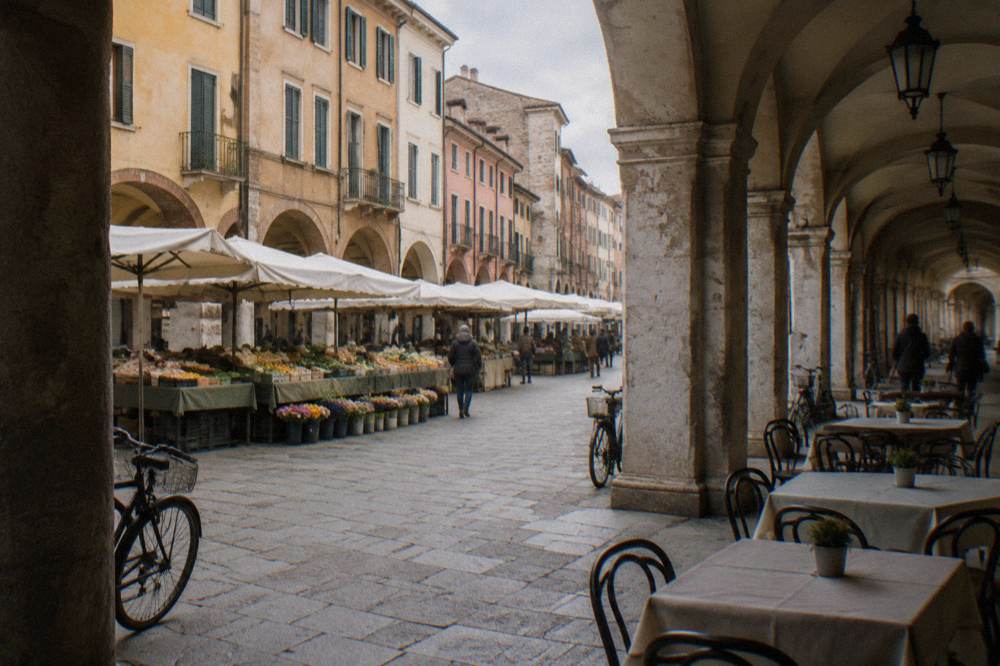
For travellers who prefer not to plan the walk themselves, a Padua walking tour covers the cathedral quarter with the other centre sights, and a ticketed Baptistery visit can be arranged through the operator's live listing: Check availability.
How Does The Baptistery Fit The UNESCO Urbs Picta Trail?
The Baptistery is one of eight buildings in the Padova Urbs Picta UNESCO inscription of 2021, alongside the Scrovegni Chapel, the Eremitani church, the Palazzo della Ragione, the Reggia Carrarese chapel, the Basilica of Saint Anthony and the oratories of San Giorgio and San Michele, so a visit to the Baptistery is one stop on a defined fresco trail across the old centre. The whole trail is walkable, and its buildings lie within the historic core bounded by the city walls.
UNESCO's citation concerns the fourteenth-century fresco cycles as a group, and that framing rewards the visitor who sees more than one. Giotto's chapel shows the revolutionary end of the story; Menabuoi's Baptistery shows the language applied to a domed space; the Palazzo della Ragione carries fresco into a civic hall; the Oratorio di San Giorgio and Oratorio di San Michele extend it into small private chapels. The Oratorio di San Giorgio guide and the Chiesa degli Eremitani guide cover two of the nearer stops.
| Frescoed Site | Position On The Trail | Signature Work |
|---|---|---|
| Baptistery of the Cathedral | At the cathedral | Menabuoi cycle on walls and dome |
| Cappella degli Scrovegni | 10 to 15 min north | Giotto cycle, 1303 to 1305 |
| Chiesa degli Eremitani | Beside the Scrovegni Chapel | Mantegna fresco remains |
| Palazzo della Ragione | 10 min west | Civic hall frescoes |
| Basilica e Convento di Sant'Antonio | South of centre | Santo complex frescoes |
| Oratorio di San Giorgio | Near the Santo | Fourteenth-century cycle |
| Oratorio di San Michele | Near the Santo | Fourteenth-century cycle |
| Cappella della Reggia Carrarese | Centre, near the river | Carrarese palace chapel |
One planning note belongs here. A combined ticket for the Urbs Picta sites exists in tourist versions, but its price, validity and inclusion list change, so check the official museums site before counting on it, and remember that the Scrovegni Chapel always needs its own timed booking regardless of any card.
When Is The Best Time Of Day To Visit The Cathedral Quarter?
Mid-morning and late afternoon are the two windows that sit best with the rest of Padua: mid-morning lets you follow the Baptistery with the Scrovegni slot and the Eremitani museums before lunch in Piazza delle Erbe, while late afternoon leaves the fresco rooms after the daytime bookings thin and leaves the evening free for the Piazza delle Erbe scene. Check the current hours for both buildings on the official ticket page before setting the plan, since neither is tied to the museum system's published timetable.
Climate is worth folding in. The ERA5 reanalysis, 1991-2020, gives Padua a July and August mean daily high of 28.8 C and a January mean daily high of 7.3 C, with November the month carrying the highest rain total at 114.0 mm and September and October close behind at about 105 mm each. A fresco itinerary is therefore a good fit for the wetter months, because the whole trail is a chain of interiors a few minutes' walk apart, and the arcades of the historic centre cover much of the walking between them. The Padua in the rain guide and the best time to visit Padua guide take the seasonal question further.
| Month | Mean High (C) | Mean Low (C) | Rain (mm) | Suitability For The Fresco Trail |
|---|---|---|---|---|
| Jan | 7.3 | -0.2 | 53.6 | Indoor trail, cold outside |
| Mar | 13.7 | 3.9 | 67.2 | Good walking weather |
| May | 22.1 | 12.4 | 99.7 | Warm, sightseeing outdoors |
| Jul | 28.8 | 18.9 | 62.1 | Hot, interiors welcome |
| Sep | 23.6 | 14.9 | 105.5 | Mixed, rain about |
| Nov | 12.6 | 5.5 | 114.0 | Highest rain total, indoor plan |
Is The Padua Cathedral Complex Good For Families And Short Visits?
Yes, the cathedral complex suits families and short visits because it is compact, free of long approaches, and pairs a quick cathedral walk-through with a single-room Baptistery that children can read as a picture story rising from the walls to the dome, and because the complex sits two minutes from Piazza delle Erbe, where the market stalls and the cafes give an easy reward afterwards. For a half-day city visit, the pairing of the Baptistery with the Scrovegni Chapel makes a coherent two-stop art itinerary.
For families, the trick is to give the frescoes a narrative handle: the dome as heaven, the walls as the story moving toward it, the Last Judgement as the ending. The room rewards that kind of reading, and there is no long queue culture to manage. The wider family angles, from the Palazzo del Bo's anatomical theatre of 1594 to the hop-on hop-off bus, are collected in the Padua with kids guide.
For travellers with only a few hours, the honest minimum is the Scrovegni Chapel, the Baptistery, and a loop through Piazza delle Erbe and the Palazzo della Ragione. That is the core of one day in Padua, and it fits the window of a stop between trains at Padova station, which connects by tram SIR1 and urban buses on a EUR 1.70 90-minute ticket. Travellers arriving with luggage can use the station left-luggage office at platform 1, daily 6:00 to 20:00, at EUR 5 per 6 hours.
What Should You Know Before You Go To The Padua Cathedral?
Before visiting the Padua Cathedral, know three things: the Baptistery is a ticketed site and its price and hours should be checked on the official ticket page rather than assumed, the cathedral is a working bishop's church so dress and behaviour should suit a place of worship, and neither building operates the timed-entry system of the Scrovegni Chapel, so the cathedral visit can be fitted around the fixed Scrovegni booking rather than the reverse. Comfortable shoes matter, since the whole trail is on foot.
A few practical points round this out. Padua is inland, so no boat arrival, no lagoon, and Venice is a day trip of about 26 to 40 minutes by regional train for about EUR 5, an option covered in the Venice guide. The city's tourist tax exists, is collected by your accommodation, is capped at five consecutive nights, and its rate depends on the category of the structure. The emergency number in Italy is 112. Tap water in Padua meets municipal standards, and the historic centre's free PADOVAweb network covers the main squares.
| Practical Item | Detail |
|---|---|
| Baptistery ticket | Ticketed site, check the official page for price and hours |
| Cathedral access | Working church, dress suitable for a place of worship |
| Scrovegni booking | Timed entry, at most 25 people every 15 minutes, book ahead |
| Urban transport | EUR 1.70 for 90 minutes, contactless tap accepted on board |
| Left luggage | Station platform 1, daily 6:00 to 20:00, EUR 5 per 6 hours |
| Tourist tax | Collected by accommodation, capped at five consecutive nights |
| Emergency number | 112 |
Which Other Sights Should You Combine With The Cathedral?
The strongest combinations with the Padua Cathedral are the Scrovegni Chapel and Eremitani complex to the north, which share the UNESCO fresco story and can be booked on one timetable, the Palazzo della Ragione and the two market squares at the centre, and the Basilica of Saint Anthony with Prato della Valle to the south, which together make a full but unhurried day; a second day can add the Orto Botanico of 1545, the Palazzo del Bo, or a day trip to the hills.
The southern leg deserves its own morning. The Basilica of Saint Anthony, begun in 1232, a year after the Saint's death on 13 June 1231, holds his tomb and is free to enter, and Prato della Valle beyond it, reclaimed under Andrea Memmo after the Venetian Senate declared it communal space in 1767, is a canal-ringed square with a double ring of numbered statues. The Basilica of Saint Anthony guide and the Prato della Valle guide cover both in detail. Beyond the city, the Euganean Hills guide and the Brenta Riviera guide open the wine hills and the villa river.
For the second half of a fresco-first trip, the smaller Urbs Picta stops, the Oratorio di San Michele and the Reggia Carrarese chapel, reward the visitor who has already stood under Menabuoi's dome, because they show the same century's painting in intimate spaces that the big halls cannot match.
Common Questions About The Padua Cathedral And Baptistery
What is the Padua Cathedral?
The Padua Cathedral, or Duomo di Padova, is the mother church and the seat of the Bishop of Padua, standing on the east side of the old centre of Padua in the Veneto. Its plain interior contrasts with the fully frescoed Baptistery beside it.
Who painted the Padua Baptistery?
The Baptistery's interior frescoes are by Giusto de' Menabuoi, painted in the fourteenth century, and the building is one of the eight complexes of the UNESCO-listed Padova Urbs Picta inscription of 2021.
Is the Padua Baptistery part of UNESCO?
Yes. The Battistero della Cattedrale is one of the eight fourteenth-century frescoed complexes that make up the Padova Urbs Picta UNESCO World Heritage inscription, added to the list in 2021.
How long does a visit to the Padua Cathedral and Baptistery take?
Allow roughly thirty to forty-five minutes for the two buildings together: about ten to fifteen minutes in the cathedral and twenty to thirty minutes in the Baptistery to take in the fresco cycle and the dome.
Do you need tickets for the Padua Baptistery?
The Baptistery is a ticketed site. Check the current price and opening arrangements on the official ticket page before booking, and note that it is separate from the civic museum ticket that covers the Scrovegni Chapel, the Musei Civici Eremitani and Palazzo Zuckermann.
What is the cathedral baptistery in Padua?
It is the freestanding baptistery beside Padua Cathedral, famous for the complete fresco cycle by Giusto de' Menabuoi that covers its walls and dome. The full answer is in the site's dedicated page on the question: what the cathedral baptistery in Padua is.