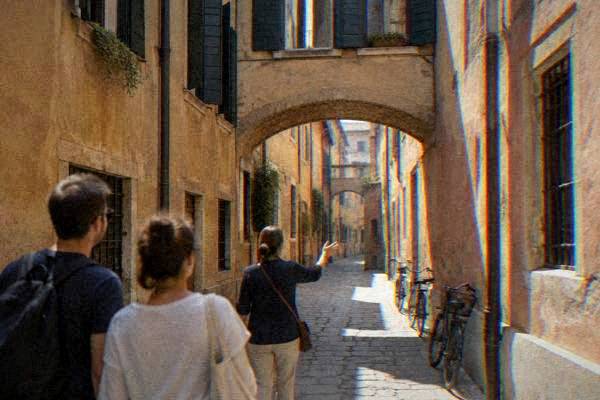
Portello: The Old River Port And Student Quarter
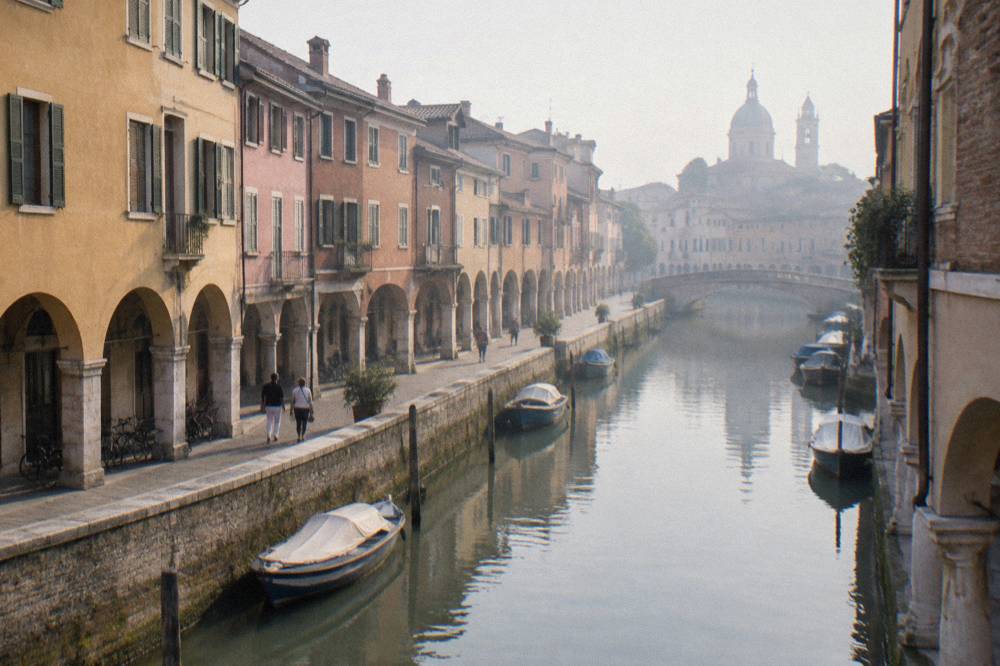
Portello sits on Padua's inner canal ring, where the old river port, a surviving city gate and the university's student life meet a short walk north of the market squares.
Short answer
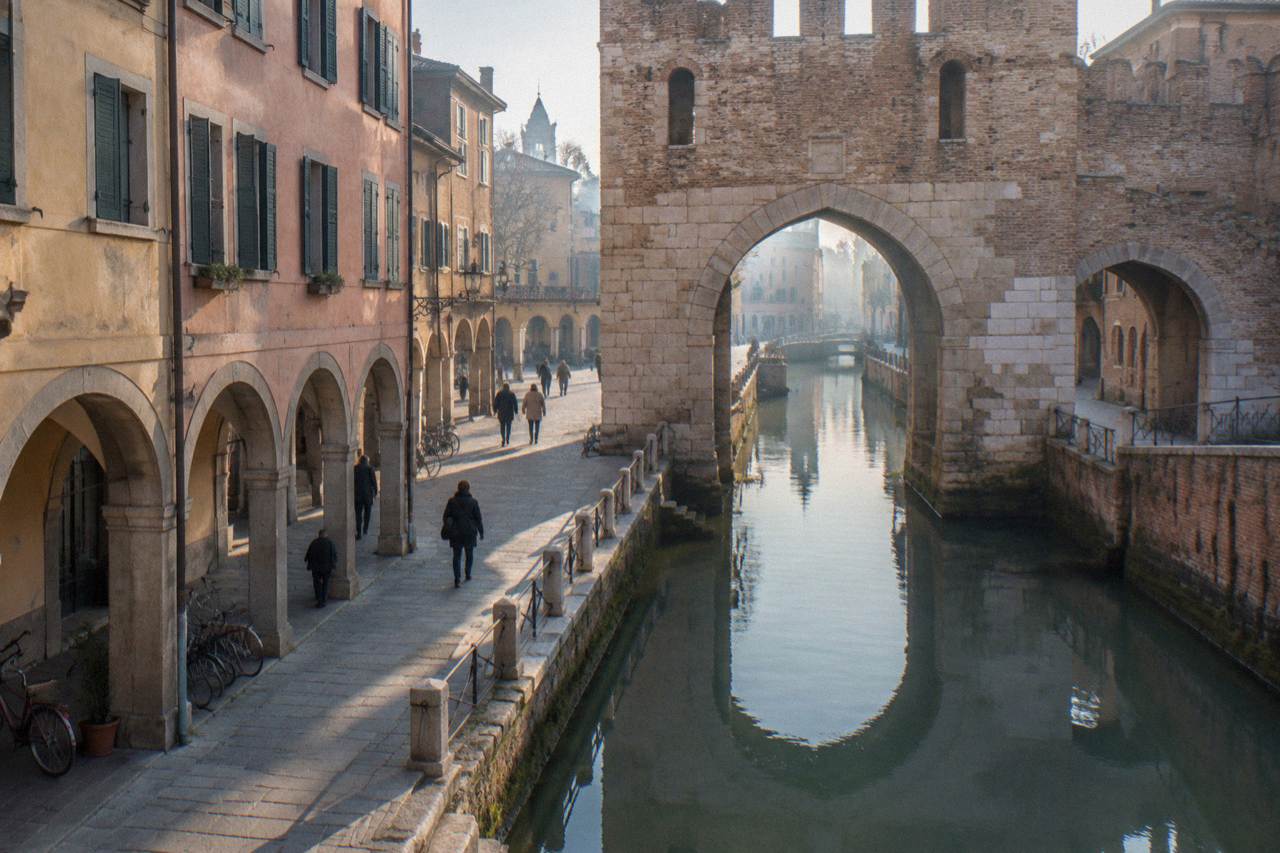
Portello is the quarter of Padua around Porta Portello, the city gate also named Porta Ognissanti, on the Naviglio Interno canal ring. It lies just outside the historic centre, close to the university buildings and the Santo, and is reached on foot from Piazza delle Erbe in a few minutes.
Portello is the quarter of Padua (Padova), in the Veneto in northern Italy, that grew around the city's old river port on the inner canal ring, and its landmark is Porta Portello, the gate that OSM also records under the name Porta Ognissanti: two names, one gate. The quarter sits at the northern edge of the historic centre, between the arcaded streets around the market squares and the university district, and the canal that runs past the gate is part of the Naviglio Interno, the waterway ring described in the Padua canals guide. This page sets out what the quarter is, what you can see there, and how it fits into a visit, drawing on the city's own pages and other reliable sources.
Where Is The Portello Quarter In Padua?
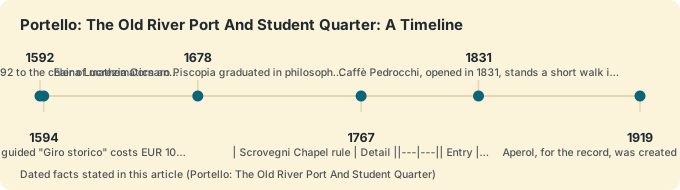
Portello is the area of Padua immediately north of the historic centre, centred on Porta Portello, the gate also listed as Porta Ognissanti, where the Naviglio Interno canal ring meets the line of the old city walls. It sits between the centro storico and the station side of the city, a level walk of a few minutes from the market squares and close to the university district that stretches toward the Santo and Prato della Valle.
The city's areas, as this site maps them, run from the centro storico around Piazza delle Erbe, through the Jewish ghetto, Portello, the Santo and Prato della Valle quarter, to the station and Arcella side. Portello is the link between the first and the last of those: the canal that gave the quarter its role as a river port still frames it, and the gate is the piece of the walls that anchors it on the map. The walls themselves are covered on the site's Padua map and the mura pages.
What gives the quarter its character is the university. Padua's Studium Patavinum was founded in 1222, and the university reports about 76,000 students in the 2026/27 academic year. The streets between Portello and the historic centre carry that student population daily, and the evening scene in the nearby piazzas, with the spritz culture the Veneto is known for, is part of what the quarter is today. Aperol, for the record, was created in Padua in 1919 by the Barbieri brothers, a fact the city's food and drink pages repeat often, so the aperitivo around here is not an import.
For orientation, the distances that follow are straight-line kilometres from the centre of Padua, as computed for this site's places file. They are not walking or driving distances.
| Place | Straight-line distance from Padua centre |
|---|---|
| Abano Terme | about 8 km |
| Montegrotto Terme | about 11 km |
| Vicenza | about 30 km |
| Venice | about 36 km |
| Treviso | about 41 km |
| Verona | about 69 km |
What Can You See Around Portello In Padua?
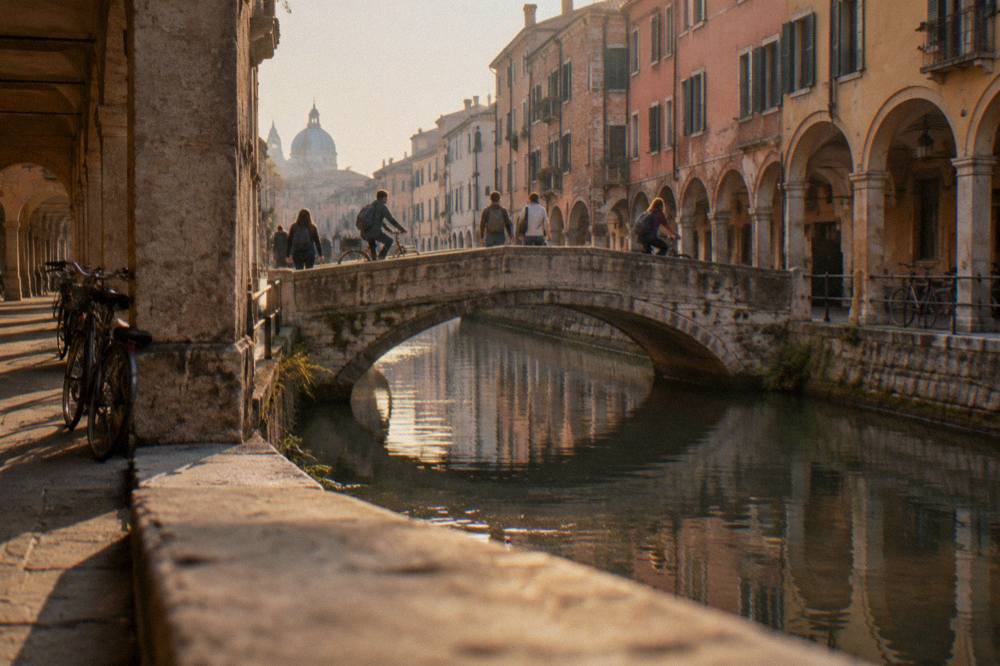
The one landmark that defines the quarter is Porta Portello itself, the surviving gate on the canal ring, listed in mapping data under both its Italian names, Porta Portello and Porta Ognissanti. Around it sit the Naviglio Interno canal, the towpath walks that follow the water, the northern stretch of the centro storico and, within a short level walk, Piazza delle Erbe, the Scrovegni Chapel and the Eremitani complex.
The gate is the best photographic stop in the quarter. The site's constraints confirm only that the two names refer to the same gate and that it stands on the canal ring, so treat any grander story about its date or architect with caution and enjoy it as a piece of the walls. From the gate, the canal path runs in both directions and connects into the routes described on the canals page.
South of the quarter, the centro storico opens up. The Piazza delle Erbe market runs Monday to Friday 7:30 to 13:30 and Saturday 7:30 to 20:00, with 52 stalls of fruit, vegetables and flowers, per the Comune di Padova's market page, and the Palazzo della Ragione stands between it and Piazza dei Frutti. The Scrovegni Chapel and the Eremitani church are a short walk from Portello's side of the centre, and the chapel's rules matter here: entry is timed only, with groups of at most 25 people admitted every 15 minutes, booked in advance, and the chapel is closed 16 to 27 November 2026 for the annual fresco inspection.
The chapel visit itself is short but strict, and the rules below are the chapel's own, from its booking and hours pages.
| Scrovegni Chapel rule | Detail |
|---|---|
| Entry | Timed slots, max 25 people every 15 minutes |
| Time inside | about 15 minutes |
| Arrival | 5 minutes before the slot shown on the ticket |
| Latecomers | Must rebook and pay again |
| Booking | Advance booking online or by phone; no same-day online booking |
| Evening visits | 25 March to 1 November, 19:00 to 22:00, every 20 minutes, chapel only |
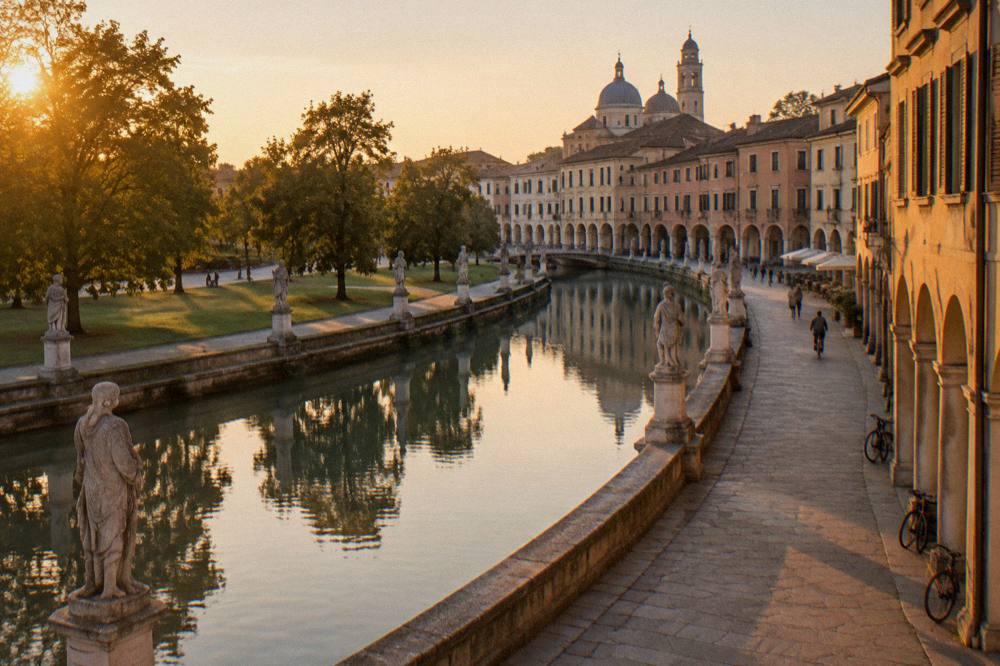
West and south of the quarter, the student and religious city takes over: the Basilica of Saint Anthony is free to enter, and Prato della Valle, with its canal and double ring of statues, was declared communal space by the Venetian Senate in 1767. The Palazzo del Bo guided "Giro storico" costs EUR 10 full for ages 26 to 64, EUR 8 reduced and EUR 6 for ages 6 to 25, lasts about 45 minutes and includes the anatomical theatre of 1594 and Galileo's chair in the Sala dei Quaranta, with alternating Italian and English slots, per the university's own tariff page.
How Does Portello Connect To The Rest Of Padua?
Portello is a walking quarter: the historic centre, the Scrovegni Chapel, the Santo and Prato della Valle are all within a level stroll, and the urban ticket that covers Padua's buses and the SIR1 tram costs EUR 1.70 for 90 minutes, or you can tap a contactless card on board. The station is on the same flat grid a short way north, and from there regional trains reach Venice in about 26 to 40 minutes and Vicenza in about 16 to 25 minutes.
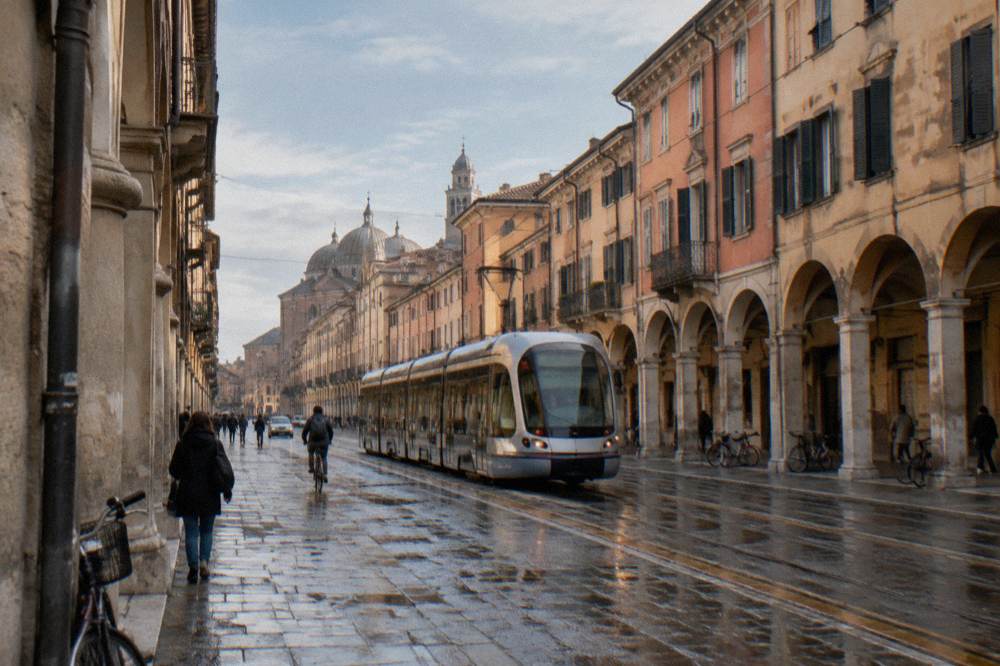
The tram is the practical spine. SIR1 runs north to south through the city, and a second line, SIR3 from the station toward Voltabarozzo, is in pre-service testing with service targeted for the end of 2026, but no opening date should be promised. Tickets are digital, bought before boarding through the Busitalia Veneto app or at ticket shops, and the contactless tap on board charges the same EUR 1.70 for the 90-minute TU1 city ticket.
| Transport in Padua | Figure |
|---|---|
| Urban TU1 ticket, 90 minutes | EUR 1.70 |
| Urban daily ticket | EUR 4.70 |
| Venice Marco Polo airport bus, one way | EUR 13, about 45 minutes |
| Regional train to Venice | about 26 to 40 minutes |
| Regional train to Vicenza | about 16 to 25 minutes, about EUR 6 |
| Station left luggage, platform 1 | EUR 5 per 6 hours, daily 6:00 to 20:00 |
The airport bus is worth flagging for anyone sleeping near Portello: the Busitalia Padova to Venezia Aeroporto service runs every 40 minutes, 54 times a day between 05:30 and 22:50 from Padua, and costs EUR 13 one way for an adult, EUR 6.50 for a child up to 11, or EUR 23 same-day return, per the operator's page. If you are arriving with bags and a few hours to spare, the station's left-luggage office on platform 1 is open daily 6:00 to 20:00 at EUR 5 per 6 hours, though the tourism page that lists it dates from 2024, so confirm on the day.
Why Is Portello Called The Student Quarter?
Portello earned the student label by geography rather than by a campus: it lies on the walking route between the historic centre's university buildings and the areas where Padua's roughly 76,000 students live, drink and eat, and the university, founded in 1222, is among the oldest in Italy. The streets around the gate and the canal carry that population every day of the academic term, and the quarter's bars and evening piazzas serve it.
The university's own history pages carry the milestones. Galileo arrived in 1592 to the chair of mathematics and stayed until 1610, years he called "the best eighteen years of all my life". Elena Lucrezia Cornaro Piscopia graduated in philosophy on 25 June 1678, the first woman to take a university degree on record. The anatomical theatre dates from 1594 and the Orto Botanico from 1545, the latter a UNESCO World Heritage site since 1997, joined in 2021 by the fourteenth-century fresco cycles of Padova Urbs Picta across eight complexes in the old centre.
None of that history sits inside Portello's boundaries, but all of it walks through the quarter. The graduation tradition is visible here too: students celebrate with decorated posters and processions, a custom the university's pages note without pinning dates to it. For a visitor, the practical effect is a quarter that is lively in the evenings and quiet in the early morning, with the spritz culture of the Veneto in full view in the piazzas a few streets south.
What Is There To Do In Portello And Around It In The Evening?
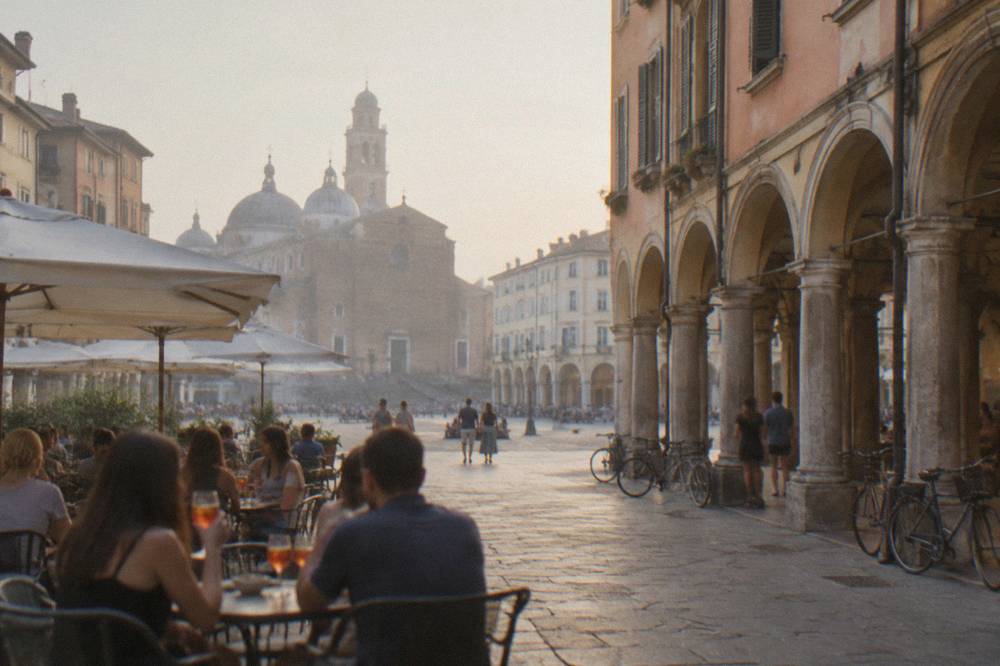
The evening offer around Portello is the aperitivo and spritz scene of the nearby piazzas, with Aperol created in Padua itself in 1919, plus evening visits to the Scrovegni Chapel between 25 March and 1 November from 19:00 to 22:00, and the arcaded streets of the centro storico lit and open late. The quarter itself is a place to stroll the canal and the gate rather than a nightlife district with a sourced list of venues.
This site names no bars or restaurants, and no aperitivo hours are given for the piazzas. What can be stated is what the sources say: the tourism board's enogastronomia pages present Piazza delle Erbe and Piazza dei Signori as the evening scene of the city, with spritz and aperitivo culture and the botteghe around them. Caffè Pedrocchi, opened in 1831, stands a short walk into the centre and its mint coffee is its signature, though its hours belong to its own page. Everything else covered here is indexed on Padua Travel Guide.
For a booked evening, an evening tour that includes chapel admission is the strongest fit, and the operator's live listing carries the current details. A guided spritz walk is the other natural pairing for this quarter, since the drink's history is local.
How Does Portello Fit Into A Day In Padua?
Portello works best as the first or last stop of a walking day: start at the gate and the canal, walk south through Piazza delle Erbe and Palazzo della Ragione, continue to the Basilica of Saint Anthony and Prato della Valle, and finish with a timed Scrovegni Chapel slot booked in advance. That loop is level, needs no transport inside the city, and matches the itineraries this site publishes for one and two days in Padua.
The site's one day in Padua itinerary and the two day version both use the same geography: the market squares at the heart, the chapel and Eremitani to the north, the Santo and Prato to the south. Portello slots in at the northern end, beside the canal, either on the way in from the station side or as a detour before a chapel slot. Visitors coming from Venice for the day can follow the one day from Venice plan, which the train times make easy: about 26 to 40 minutes each way on a regional service at about EUR 5.
| Stop on the loop | What the sources state |
|---|---|
| Porta Portello | Gate on the canal ring, also named Porta Ognissanti |
| Piazza delle Erbe market | Mon to Fri 7:30 to 13:30, Sat 7:30 to 20:00, 52 stalls |
| Palazzo della Ragione | Tue to Sun 9:00 to 19:00, EUR 8 full, EUR 6 concession |
| Basilica of Saint Anthony | Free entry, dress suitable for a church |
| Orto Botanico | EUR 15 full from 1 September 2026, EUR 12 in winter, closed non-holiday Mondays |
| Scrovegni Chapel | EUR 15 full plus EUR 1 booking fee, timed entry, about 15 minutes inside |
Two booking facts shape the day. The Scrovegni Chapel admits at most 25 people every 15 minutes and requires advance booking, with no same-day online booking, so the slot fixes the order of the walk. The Orto Botanico's new tariffs apply from 1 September 2026: EUR 15 full, EUR 12 in winter from November to February, EUR 10 reduced for visitors 65 and over, per the garden's ticket page.
What Day Trips Work From The Portello Side Of Padua?
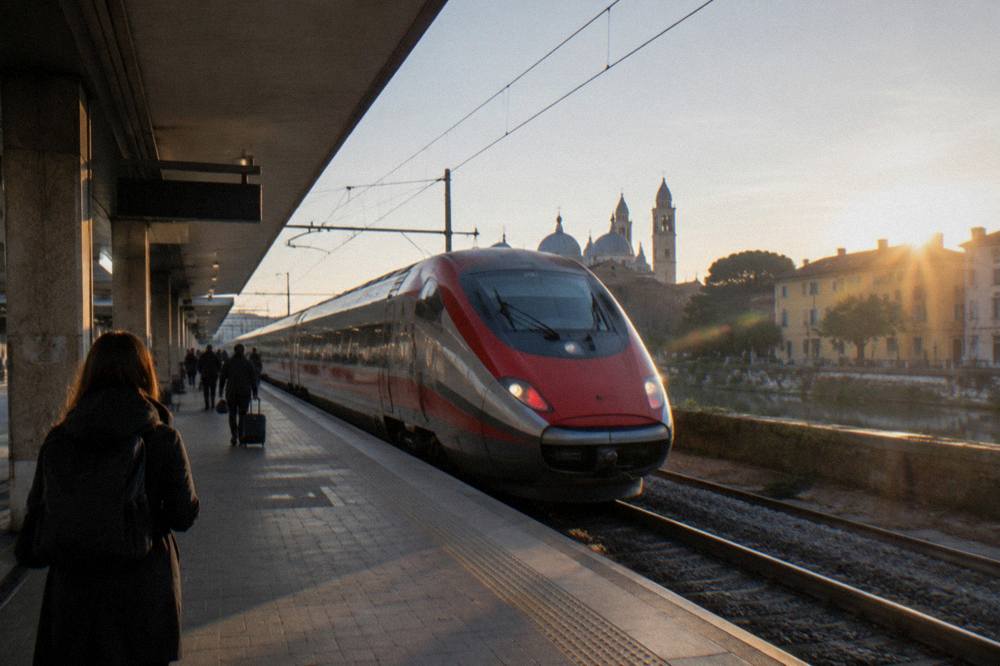
The station, a short walk or one tram stop from Portello, puts the whole Veneto in range: Venice in about 26 to 40 minutes, Vicenza in about 16 to 25 minutes, Verona in about 43 to 60 minutes and Treviso in about 28 to 60 minutes on regional trains, with the Euganean Hills spa towns of Abano Terme and Montegrotto Terme 8 and 11 km away in a straight line. Padua's inland position makes it a rail hub rather than a boat hub, and the day trips run outward from there.
The Venice day-tripper access fee deserves one clear sentence: the 2026 trial ended on 27 July 2026 and the fee does not apply after that date, with no 2027 decision published, so check the Venice authorities' own pages before assuming anything. Closer to home, the Euganean Hills towns, Arqua Petrarca and the Brenta Riviera villas are covered in this site's day-trip guides, and Casa del Petrarca in Arqua Petrarca costs EUR 6 full and EUR 4 reduced, closed non-holiday Mondays, per the village's own page.
The one destination that starts from the water side of the city's history is the Brenta Riviera: Il Burchiello runs a boat cruise between Padua and Venice along the villas from March to October in both directions, per the operator's site, with the price on its own listing. The Verona guide covers the city 69 km away in a straight line, reached in about 43 to 60 minutes by train.
Should You Stay In Portello Or Just Visit?
Portello suits visitors who want a quiet, local base a few minutes' walk from the market squares, at the price of staying just outside the centro storico; the city's own guidance is that the areas ring the centre, and no neighbourhood has a sourced price level or character ranking, so the choice comes down to position. No hotel prices, names or amenities were published for this quarter, so compare current rates at booking.
What the quarter offers a stayer is fixed: the canal, the gate, the student streets and a level walk to everything in the centre. What it does not offer is a list of hotels or restaurants, and this site prints none. The tourist tax applies across the city: it is collected by the accommodation, charged per person per night, capped at five consecutive nights, with under-16s and hostel guests exempt, per the Comune di Padova's tax page. The IAT tourist offices can help in person: the station office at the exit of platform 1 runs Monday to Saturday 9:00 to 19:00 and Sunday 10:00 to 16:00, and the centre office is at Piazza delle Erbe 52.
The wider question, whether Padua itself is the right base, is argued on the things to do in Padua page, and this site's answer is generally yes: the city is compact, the rail links are fast, and the sights, from the Scrovegni Chapel to the La Specola observatory tower, sit inside one walkable grid.
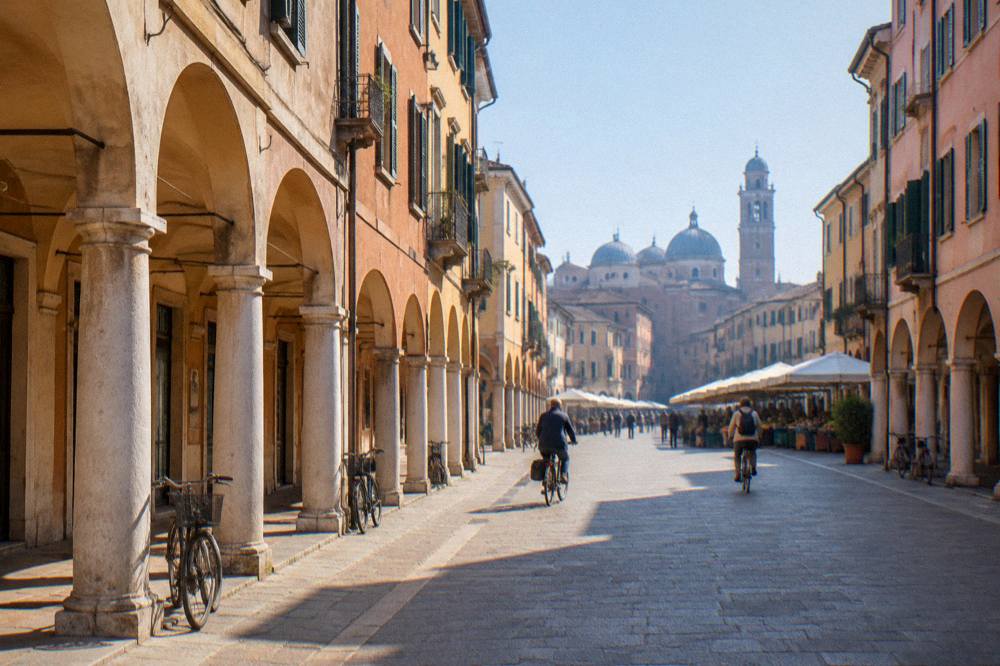
For independent explorers, the self-guided scavenger hunt walk that covers the city's landmarks pairs naturally with this quarter: it runs on your own schedule, and the route's landmarks sit inside the same loop described above. Check availability for the dates you want, pay attention to the chapel's timed-entry rules if a chapel visit is part of the plan, and remember that the gate, the canal and the student piazzas cost nothing at all to wander.
Common Questions About Portello In Padua
Is Porta Portello the same as Porta Ognissanti?
Yes. Porta Portello and Porta Ognissanti are two names for the same gate on Padua's inner canal ring; mapping data lists both names for one structure.
How far is Portello from the centre of Padua?
Portello sits at the northern edge of the historic centre, a level walk of a few minutes from Piazza delle Erbe. No exact walking time was published in the sources for this route.
Is Portello a good area to stay in Padua?
It is a quiet, local base close to the centre and the university district. Compare current options at booking.
What is the best way to get to Portello?
On foot from the centre, or by tram and bus with the EUR 1.70 90-minute urban ticket, which can also be paid by tapping a contactless card on board.
Can you walk along the canal at Portello?
Yes, the Naviglio Interno canal ring runs past the gate and the towpaths connect into longer canal routes described on this site's Padua canals guide.
Is Portello close to the Scrovegni Chapel?
Yes, the chapel and the Eremitani complex are a short walk from the Portello side of the centre. Remember that entry is timed, booked in advance, at most 25 people every 15 minutes, and the chapel is closed 16 to 27 November 2026.