The Jewish Ghetto: Lanes, Synagogue And Museum
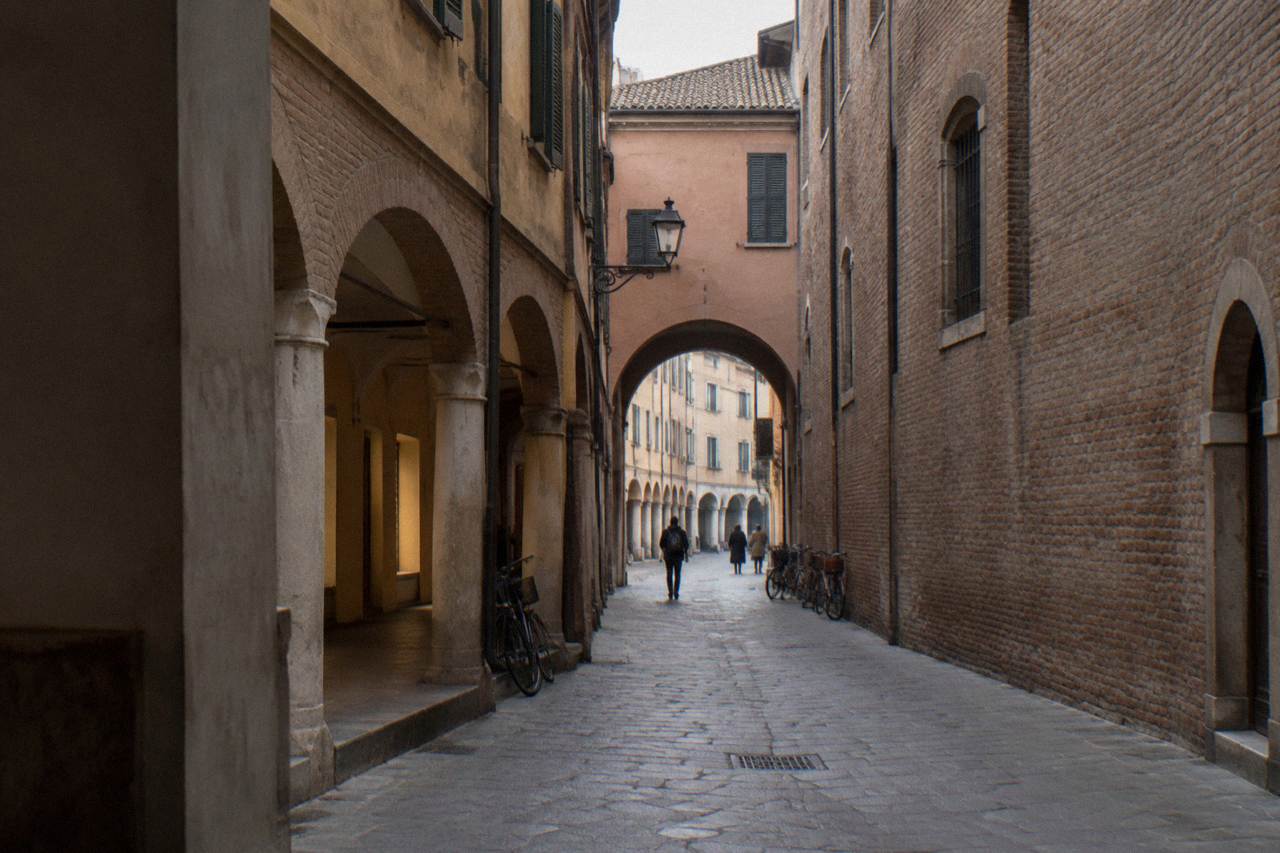
Padua's Jewish ghetto is a knot of narrow lanes at the heart of the historic centre, a few steps from Piazza delle Erbe, and this guide covers what the quarter holds and how to visit it.
Short answer
The Jewish ghetto of Padua lies inside the historic centre, a short walk from Piazza delle Erbe and Palazzo della Ragione. It is a compact district of narrow lanes best explored on foot, combined with the markets, the Duomo and the Scrovegni Chapel, all within the same corner of the city.
Padua, called Padova in Italian, is an inland city in the Veneto about 36 km in a straight line from Venice, and one of the most quietly walkable corners of it is the old Jewish ghetto, a tight web of lanes set between the Piazza delle Erbe market quarter and the Duomo. The quarter gives its name to this guide, but the visit itself stretches well beyond a couple of streets: the ghetto sits at the point where markets, the Cathedral complex, Palazzo della Ragione and the Scrovegni Chapel all come within a few minutes of one another on foot. This page walks through where the quarter is, what the lanes hold, how its history fits into the story of the city, and how to plan a route that takes it in without losing the rest of the day.
Where Is The Jewish Ghetto In Padua?
The Jewish ghetto of Padua sits inside the historic centre, in the block of narrow lanes between the Piazza delle Erbe and Piazza della Frutta markets and the Duomo, roughly midway between Palazzo della Ragione and the Scrovegni Chapel on foot. The quarter is small enough that a slow walk through its lanes takes minutes rather than hours, and everything in this guide's route around it, from the markets to the Cathedral, the Baptistery and the Eremitani church, sits within the same walkable district of the city. Padua itself is flat and compact, an inland city of arcaded streets, so the ghetto works either as a destination of its own or as a short detour on a wider loop.
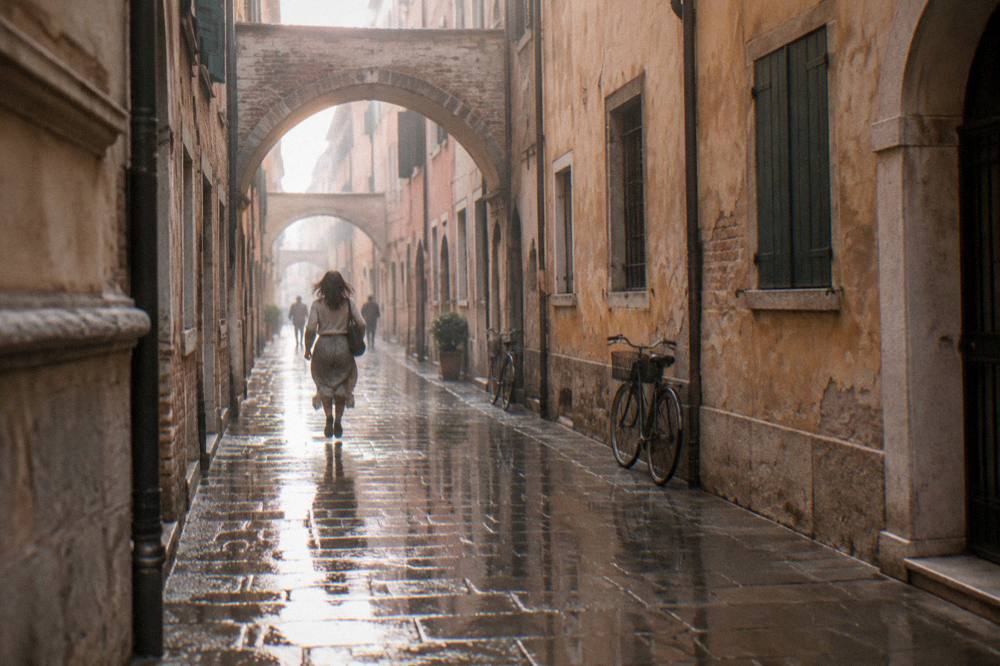
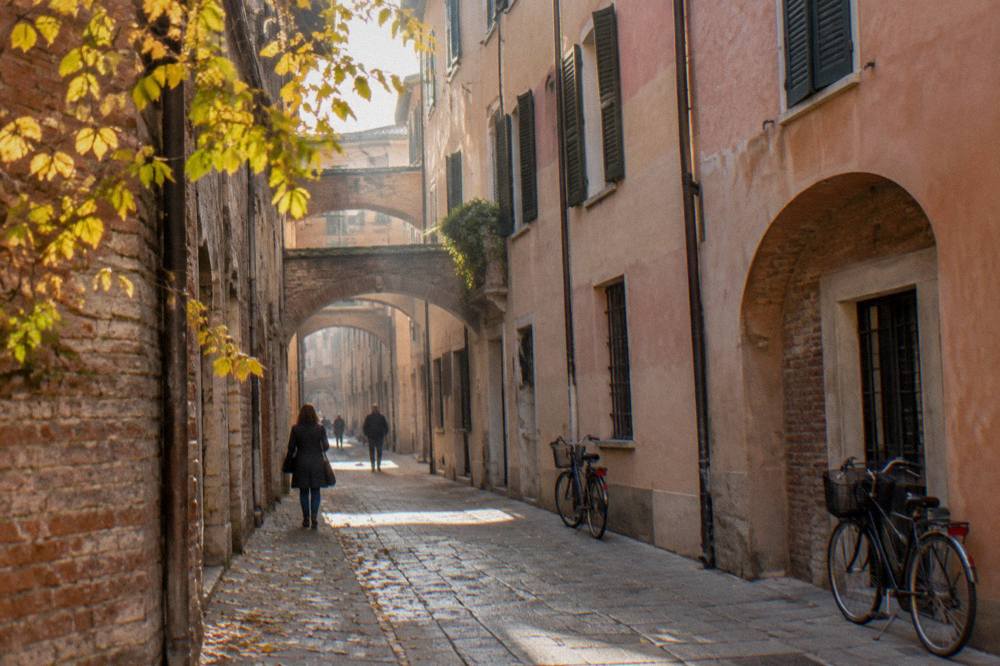
The lanes themselves are the attraction. This is a district of tall, close-built houses, narrow passages and sudden small squares, the kind of street fabric that the arcaded main squares hide from view a hundred metres away. Nothing here needs a ticket. The quarter reads best as a piece of urban fabric: walk the lanes slowly, look up at the upper floors where the street widths squeeze tightest, and let the contrast with the open loggia of Palazzo della Ragione two streets over do the explaining.
Orientation is simple. Arrive at Piazza delle Erbe, the daily market square, and the ghetto lanes begin in the blocks just behind the market stalls. The Duomo and its Baptistery lie a short walk north, and the Eremitani church and the Scrovegni Chapel sit a few minutes further on beyond them. The whole loop, market to chapel and back, is a morning's walk at an unhurried pace, and it is the spine of the one day in Padua itinerary this site publishes. For the fuller character of the surrounding district, see the site's historic centre guide.
What Can You See In The Ghetto Lanes Today?
The ghetto today is a residential quarter of narrow lanes and small squares with no ticketed attractions of its own inside its street block: its sights are the streetscape, the memorials and inscriptions, and the museums and churches that ring it, chiefly the Duomo, the Baptistery with its frescoes, and the Musei Civici Eremitani. There is no single monument to queue for, which is exactly why it rewards a different kind of attention. The quarter is read on foot, lane by lane, and it pairs naturally with the market squares it backs onto and the Cathedral complex at its edge.
For the ticketed sights around it, the practical numbers are these:
| Sight near the ghetto | Position on the route | Admission | Hours to plan around |
|---|---|---|---|
| Musei Civici Eremitani, Piazza Eremitani 8 | North of the Duomo, on the way to the Scrovegni Chapel | Included in the Scrovegni daytime ticket, EUR 11 museums only | Monday to Sunday 9:00 to 19:00 |
| Palazzo Zuckermann, Corso Garibaldi 33 | Opposite the Eremitani complex | Included in the Scrovegni daytime ticket | Tuesday to Sunday 10:00 to 19:00, last entry 45 minutes before closing |
| Scrovegni Chapel | Beyond the Eremitani, on the old amphitheatre site | EUR 15 full, EUR 11 reduced, plus EUR 1 booking fee | Daily 9:00 to 19:00, timed entry, last slot 18:45 |
| Palazzo della Ragione | South of the ghetto, between the two market squares | EUR 8 full, EUR 6 concession | Tuesday to Sunday 9:00 to 19:00 |
| Duomo and Baptistery | At the northern edge of the quarter | Check the current price on the official ticket page before booking | Varies by season and services |
Two of those need forward planning. The Scrovegni Chapel is timed entry only, at most 25 people every 15 minutes, with about 15 minutes inside after a spell in the climate-controlled waiting room; the chapel's own booking page says to arrive five minutes before the slot on the ticket, and latecomers must rebook and pay again. There is no same-day online booking, so anyone turning up without a reservation should check availability at the museum ticket office in person. The chapel is also closed 16 to 27 November 2026 for the annual fresco inspection. The evening visits, Giotto sotto le stelle, run 25 March to 1 November from 19:00 to 22:00 and cover the chapel only.
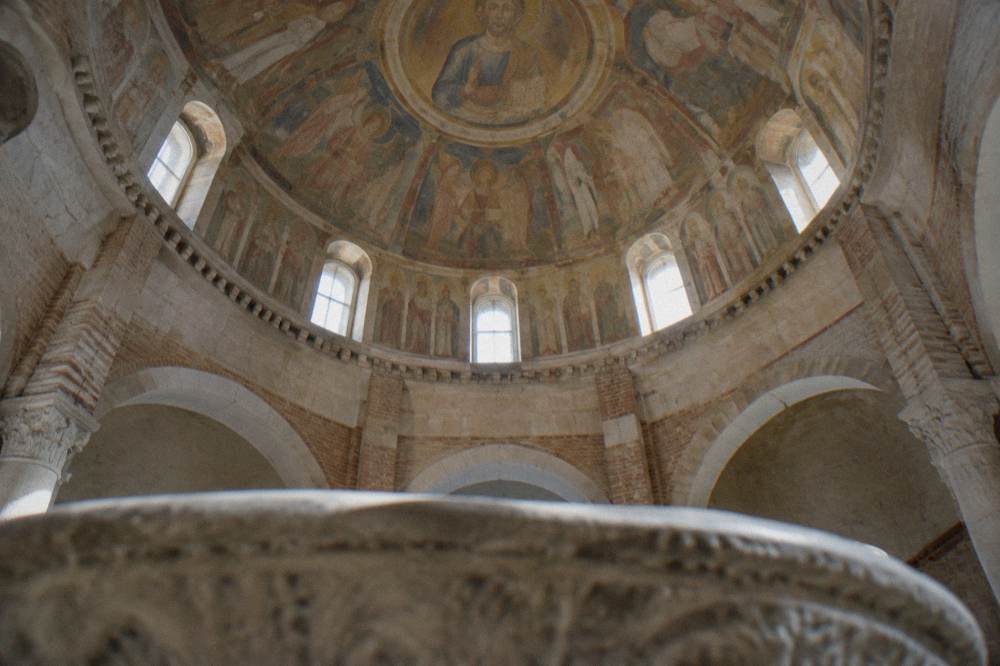
The Duomo and its Baptistery hold the fresco cycle painted by Giusto de' Menabuoi, one of the eight complexes of Padua's fourteenth-century fresco cycles inscribed by UNESCO in 2021 as Padova Urbs Picta. That inscription is the city's second UNESCO listing after the Orto Botanico in 1997, and the Baptistery is one of the easiest of the eight to overlook, sitting as it does a few lanes from the market crowd. A ticket that bundles the Baptistery with the Museum of the Diocese is one of this site's featured picks for exactly this route, and the solo card below shows it.
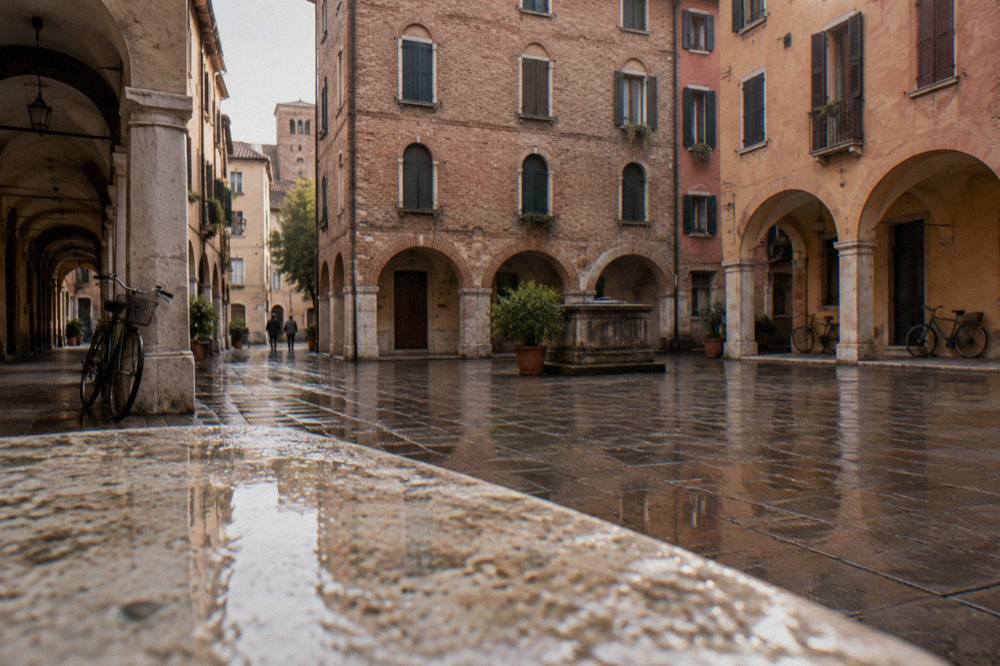
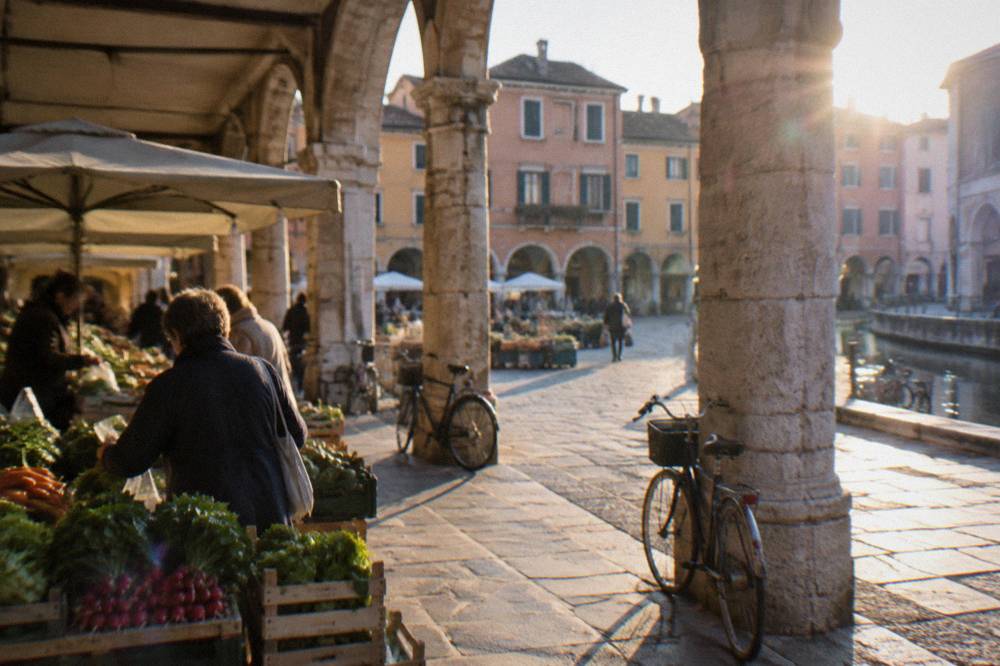
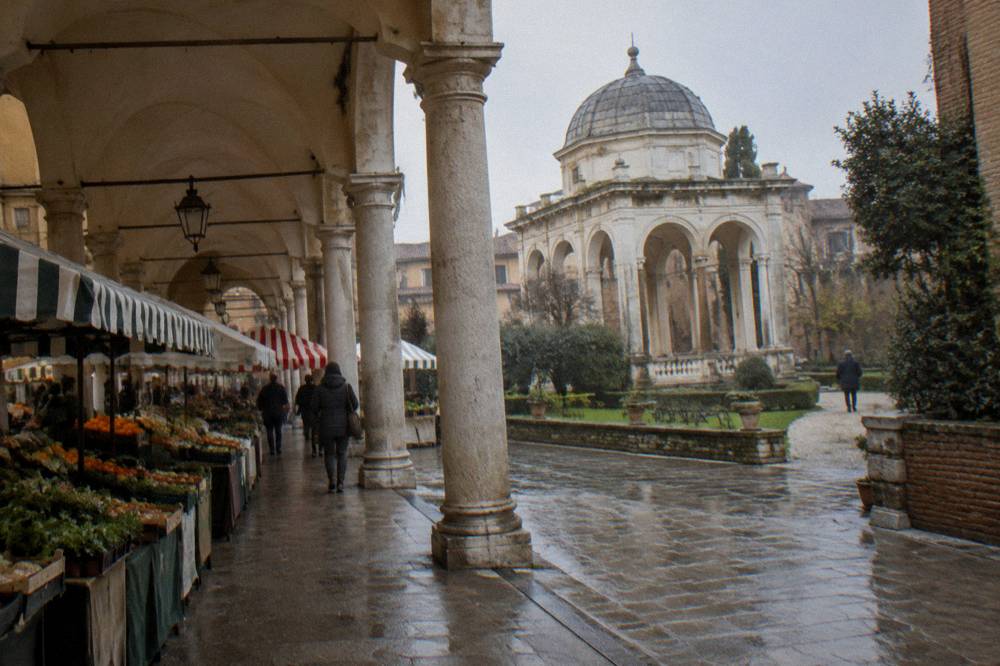
The lanes also reward a second visit at a different hour. In the morning the surrounding squares belong to the market; by early afternoon the stalls are gone and the quarter settles back into itself. The Comune di Padova's markets page sets the pattern: food trading at Piazza della Frutta from 8:00, the Erbe stalls until 13:30 on weekdays and until 20:00 on Saturday. Plan the lanes around whichever version of the squares you want.
How Does The Ghetto Fit Into A Day In Padua?
The ghetto slots most naturally into the middle of a city-centre loop: market squares first, then the lanes and the Duomo, then the Eremitani and the Scrovegni Chapel, a sequence that covers the quarter and the city's fourteenth-century fresco heritage in a single morning with only two timed commitments, the chapel slot and lunch. Starting from Piazza delle Erbe when the stalls open gives the market at full stretch, and the ghetto lanes immediately after absorb whatever the crowd doesn't. The Duomo and Baptistery come next, then the short walk north to the Eremitani church and the chapel reservation.
The timing question is the chapel. Because entries run every 15 minutes with a hard arrival rule, book the slot first and build the morning backwards from it. The daytime ticket's museum inclusions, the Musei Civici Eremitani and Palazzo Zuckermann, are flexible around that anchor since they take the same ticket. Anyone working from Venice for the day should read this site's one day in Padua from Venice plan, which front-loads exactly this district.
A reasonable shape for the day looks like this:
| Time block | Where | What it covers |
|---|---|---|
| Morning, market hours | Piazza delle Erbe and Piazza della Frutta | The 52-stall market, breakfast, the southern edge of the quarter |
| Late morning | The ghetto lanes and the Duomo quarter | The lanes on foot, the Cathedral and the Baptistery frescoes |
| Midday | Around Piazza delle Erbe | Lunch in the arcaded streets bordering the quarter |
| Early afternoon | Eremitani church, then the booked slot | The Ovetari chapel remains, then the Scrovegni Chapel and the included museums |
| Late afternoon | Palazzo della Ragione and Piazza dei Signori | The great hall, the covered Sotto il Salone market beneath it |
For visitors who prefer structure to self-direction, a guided walk of the historic centre covers the same district with a local's commentary. The Padua walking tour page on this site explains what a guided version of the loop includes. The trio of options below is the shortlist for this route, from a ticket-and-museum pick to a self-guided hunt and a food-led walk.
One pairing deserves a special mention. The market-to-osteria food walk below starts where this route starts, at the market squares beside the ghetto, and folds the quarter into a tasting route through the same streets. For a visitor whose main interest in Padua is food, it is the most direct way to see the lanes without abandoning lunch. The operator's live listing carries the current price, dates and inclusions.
For visitors who want the Baptistery and Diocese Museum handled in advance, the button below checks availability for that ticket.
What Is The History Behind Jewish Padua?
Jewish Padua is part of a city story that runs through the university founded in 1222 and the long Venetian rule from 1405 to 1797, and the ghetto itself belongs to that Venetian period, when the community's life was concentrated into the lanes this guide walks; the specific dates of the ghetto's establishment and the current standing of its synagogue are questions this site's sources do not settle, so check with the city's tourism offices at Piazza delle Erbe 52 for guided heritage visits. What the dated record does give is the frame around the quarter. Padua spent 1405 to 1797 under Venice, with the Carrara lordship immediately before it, from 1318 to 1405, and it was within that Venetian world that the segregated quarters of the region's cities, Venice's own ghetto among them, took the shape they hold today.
The university matters to this history as much as the state does. Padua's Studium Patavinum was founded in 1222, and the university counts among its milestones the anatomical theatre of 1594 and the graduation of Elena Lucrezia Cornaro Piscopia in philosophy on 25 June 1678, recorded by the university as the first woman to graduate. A city with a four-century-old medical school drew students and teachers from across Europe, and Jewish physicians and scholars are part of that documented academic world; the university's own heritage pages carry the record.
The wider timeline of the city, as this site's sources date it:
| Year | Event in Padua's record |
|---|---|
| 1222 | The Studium Patavinum, the university, is founded |
| 1231 to 1232 | Saint Anthony dies in 1231; the basilica's construction begins in 1232 |
| 1303 to 1305 | Giotto paints the Scrovegni Chapel cycle |
| 1318 to 1405 | The Carrara lordship of Padua |
| 1405 to 1797 | Padua under Venetian rule |
| 1545 | The Orto Botanico, the world's first university botanical garden, is founded |
| 1594 | The first permanent anatomical theatre is inaugurated |
| 1678 | Elena Cornaro Piscopia graduates in philosophy |
| 1997 and 2021 | UNESCO inscriptions: the Orto Botanico, then Padova Urbs Picta |
For the quarter's own story, the right move is to ask at the source. The IAT Centro tourism office at Piazza delle Erbe 52 sits at the edge of the district and opens 9:00 to 19:00 every day; its staff can say what guided visits of the Jewish heritage sites are currently running and what the museum situation is. This site's Padua history guide carries the fuller city timeline for readers who want the wider frame.
What Lies Immediately Around The Ghetto?
Everything that makes Padua famous sits within a short walk of the ghetto: the Scrovegni Chapel and the Eremitani church to the north, Palazzo della Ragione and the two market squares to the south, the Duomo at the quarter's edge, and Caffe Pedrocchi a few lanes beyond, with the Basilica of Saint Anthony and Prato della Valle a longer but flat walk southeast. The quarter is, in effect, the hinge of the historic centre, and that is the practical argument for staying in or near it.
Distances worth knowing, measured in straight-line kilometres from the city centre:
| Place | Straight-line distance from central Padua | Why it fits the route |
|---|---|---|
| Scrovegni Chapel | Within the historic centre, a few minutes' walk | Timed-entry frescoes, the city's headline sight |
| Basilica of Saint Anthony | Southeast of the centre on foot | Free entry, the Saint's tomb |
| Prato della Valle | Southeast, beyond the basilica | Canal-ringed square, Saturday market |
| Venice | 36 km | Day trip by train, about 26 to 40 minutes |
| Vicenza | 30 km | Day trip by train, about 16 to 25 minutes |
| Abano Terme | 8 km | Thermal town in the Euganean Hills |
| Arqua Petrarca | 20 km | Hill village, Casa del Petrarca at EUR 6 full |
Closer to hand, the Duomo and Baptistery stand at the quarter's northern edge, and the Baptistery's fresco interior is one of the eight Padova Urbs Picta sites. Caffe Pedrocchi, the coffee house that opened in 1831, sits a short walk south, and the Scrovegni Chapel anchors the route's northern end. Anyone with a second day should read the two days in Padua plan, which moves at half the pace.
The scavenger-hunt walk above is the budget option for this exact district: it turns the market squares, the lanes and the landmark frontages into a self-guided trail, and the operator's listing shows the current price. For travellers combining the quarter with the Duomo ticket, the same listing family covers the Baptistery and the Museum of the Diocese, and the inline link here goes straight to live availability: Check availability.
When Is The Best Time To Walk The Ghetto And The Centre?
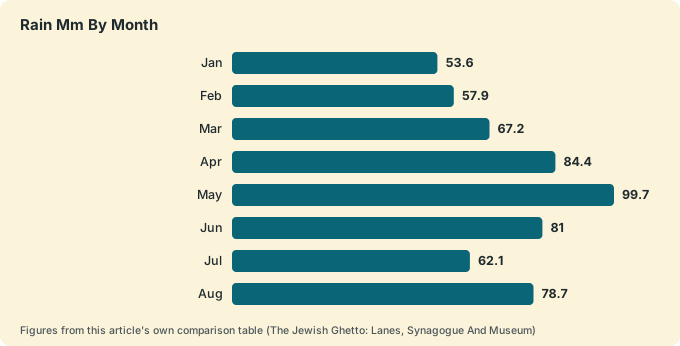
The climate numbers for Padua, from the ERA5 reanalysis for 1991-2020, put July and August at a mean daily high of 28.8 C and January at a mean high of 7.3 C with a mean low of -0.2 C, and November carries the highest monthly rainfall total at 114 mm, so spring and early autumn offer the most comfortable walking conditions for a district that is best seen on foot. The quarter itself is open streets, so there is no season when it closes; what changes is the comfort of the loop around it and the state of the market squares that border it.
The monthly picture, ERA5 reanalysis, 1991-2020:
| Month | Mean high C | Mean low C | Rain mm |
|---|---|---|---|
| Jan | 7.3 | -0.2 | 53.6 |
| Feb | 9.4 | 0.6 | 57.9 |
| Mar | 13.7 | 3.9 | 67.2 |
| Apr | 17.6 | 7.8 | 84.4 |
| May | 22.1 | 12.4 | 99.7 |
| Jun | 26.2 | 16.6 | 81.0 |
| Jul | 28.8 | 18.9 | 62.1 |
| Aug | 28.8 | 19.2 | 78.7 |
| Sep | 23.6 | 14.9 | 105.5 |
| Oct | 18.4 | 10.6 | 105.4 |
| Nov | 12.6 | 5.5 | 114.0 |
| Dec | 7.8 | 0.7 | 69.9 |
Two seasonal notes follow from the calendar rather than the climate. The Scrovegni Chapel closes 16 to 27 November 2026 for its annual fresco inspection, which removes the route's anchor for those two weeks. And the Orto Botanico's winter tariff, EUR 12 full from November to February against EUR 15 from 1 September 2026, is the one price in this district that moves with the season, per the garden's own ticket page. For a full seasonal read, see the site's best time to visit Padua guide.
How Do You Get To The Ghetto?
The ghetto is reached on foot from anywhere in Padua's historic centre, and the practical fares are these: the urban TU1 ticket at EUR 1.70 for 90 minutes, the airport bus from Venice Marco Polo at EUR 13 one-way taking about 45 minutes, and regional trains of about 26 to 40 minutes from Venice Santa Lucia at roughly EUR 5, with Padova station a tram or bus ride, or a 20-minute walk, from the market quarter. The tram's SIR1 line runs north to south through the city, and a contactless bank card can be tapped on board for the EUR 1.70 urban fare, per the transit operator's own ticket page.
From the station, the IAT tourist office at the exit of platform 1 opens Monday to Saturday 9:00 to 19:00 and Sundays 10:00 to 16:00, and it is the place for a paper map before setting off. The walk from the station into the centre is flat and arcaded for most of its length. Anyone arriving from Venice for the day should read the site's Venice to Padua planning page, and day-trippers should note that Venice's 2026 day-tripper access fee trial ended on 27 July 2026, with no decision for 2027 published.
Luggage is worth solving before the walk: the station's left-luggage office at platform 1 opens daily 6:00 to 20:00 at EUR 5 per 6 hours, per the tourism board's own page.
Where Should You Stay To Be Near The Ghetto?
The district to book is the historic centre itself: staying in the streets around Piazza delle Erbe puts the ghetto lanes, both market squares, Palazzo della Ragione and the Duomo within a five-minute walk, and the Scrovegni Chapel and the station within about twenty, which is the whole of this guide's route on foot. This site prints no hotel rates and no addresses; the where to stay in Padua guide covers the trade-offs between the centre, the station district around Arcella, and the Santo and Prato quarter to the southeast.
One recurring cost is fixed by the city: Padua charges a tourist tax per person per night, collected by the accommodation, capped at five consecutive nights, with under-16s and hostel guests exempt, per the Comune di Padova's tax page. Rates vary by category of accommodation, so the number comes from the booking, not from a published table.
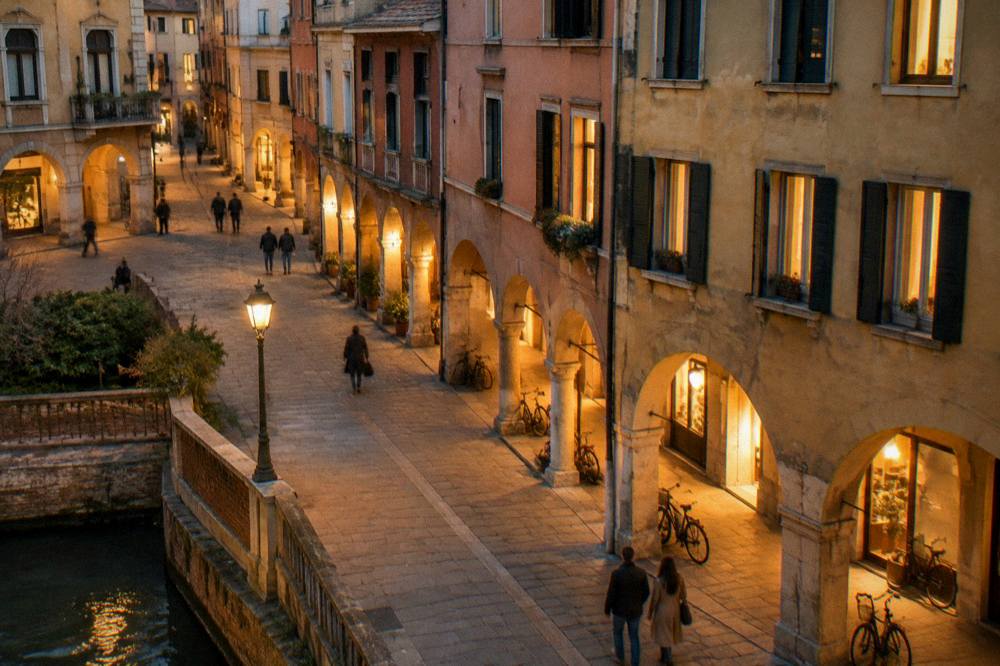
Evenings in the quarter belong to the squares around it. The tourism board's enogastronomia pages describe the Piazza delle Erbe and Piazza dei Signori as the centre of the city's evening spritz culture, and Aperol itself was created in Padua in 1919 by the Barbieri brothers, per press accounts of the drink's history. The site's spritz in Padua guide takes that thread further.
Before the closing questions, the shortlist once more, covering the ticket, the self-guided trail and the food walk that together dress this route.
Common Questions About The Jewish Ghetto In Padua
Where is the Jewish ghetto in Padua?
In the block of narrow lanes between Piazza delle Erbe and the Duomo, inside the historic centre, a few minutes on foot from Palazzo della Ragione and about ten from the Scrovegni Chapel.
Is the Jewish ghetto in Padua free to visit?
The lanes themselves are public streets with no admission. The surrounding sights have their own tickets, and the Baptistery and Diocese Museum ticket price is on the operator's live listing.
How much time does the Jewish ghetto in Padua take?
The lanes take a short walk of minutes; a loop that adds the markets, the Duomo and the Scrovegni Chapel with its timed reservation is a half-day plan, as laid out in the itinerary table above.
Can you visit a synagogue in the Padua ghetto?
The current standing of the quarter's synagogue is not settled in this site's sources; ask at the IAT tourist office at Piazza delle Erbe 52, open 9:00 to 19:00, about guided Jewish heritage visits during your stay.
What is near the Jewish ghetto in Padua?
Piazza delle Erbe and Piazza della Frutta, Palazzo della Ragione and the Sotto il Salone market, the Duomo and Baptistery, Caffe Pedrocchi, and, a little further, the Eremitani church and the Scrovegni Chapel.
How do you get to the Jewish ghetto from Padua station?
On foot in about twenty minutes, or by tram or bus with the EUR 1.70 urban 90-minute ticket, which can also be paid by tapping a contactless card on board, per the transit operator's ticket page.
The ghetto quarter is small, and that is its use: it sits at the centre of the things to do in Padua like a knot, five lanes that hold the city's market life, its Cathedral and its headline frescoes within one flat walk of each other. Book the chapel slot, check availability on the Baptistery ticket with Padua Travel Guide's pick above, and give the lanes the slow half hour they earn.
