Padua History: Romans, Carraresi And Venice
Padua (Padova) is an inland city in the Veneto, northern Italy, about 36 km in a straight line from Venice, and its documented story runs from a Trojan founding legend through Roman Patavium, a university founded in 1222, Giotto's frescoes of 1303 to 1305, the Carrara lordship of 1318 to 1405 and nearly four centuries under Venice.
Short answer
Padua's documented history centres on Roman Patavium, the university founded in 1222, Saint Anthony's death in 1231 and the basilica begun in 1232, Giotto's Scrovegni Chapel cycle of 1303 to 1305, Carrara rule from 1318 to 1405 and Venetian rule from 1405 to 1797.
Padua (Italian: Padova) is an inland city in the Veneto, northern Italy, about 36 km in a straight line from Venice, and its documented history is unusually dense for a city of its size: a founding legend recorded in Roman epic, the birthplace of a major Roman historian, a university founded in 1222 that taught Galileo, a fresco cycle by Giotto painted between 1303 and 1305, a lordly dynasty toppled by Venice in 1405, and nearly four centuries as a mainland possession of the Venetian Republic. The University of Padua's own history pages frame the city as a place where Studium Patavinum grew into one of the great European schools, and the UNESCO list confirms the physical residue: two separate World Heritage inscriptions, the Orto Botanico of 1545 (inscribed 1997) and the fourteenth-century fresco cycles of Padova Urbs Picta (inscribed 2021). This page assembles the dated record in one place, era by era, using only what the university, the city and the UNESCO listings state. For the practical side of seeing it all, things to do in Padua covers the sights district by district.
What Is The Short Version Of Padua History?
Padua's documented past runs from a legendary Trojan founding and the Roman municipium of Patavium, through the university of 1222 and Saint Anthony's death in 1231, to Giotto's chapel frescoes of 1303 to 1305, Carrara rule from 1318 to 1405, Venetian rule from 1405 to 1797, and the Risorgimento years of the Caffè Pedrocchi of 1831 and the university's 1848 uprising in the record. Each of those dates is stated by the University of Padua, the chapel's own site, the Comune di Padova or the UNESCO listing, and each still has a physical anchor you can stand in front of today.
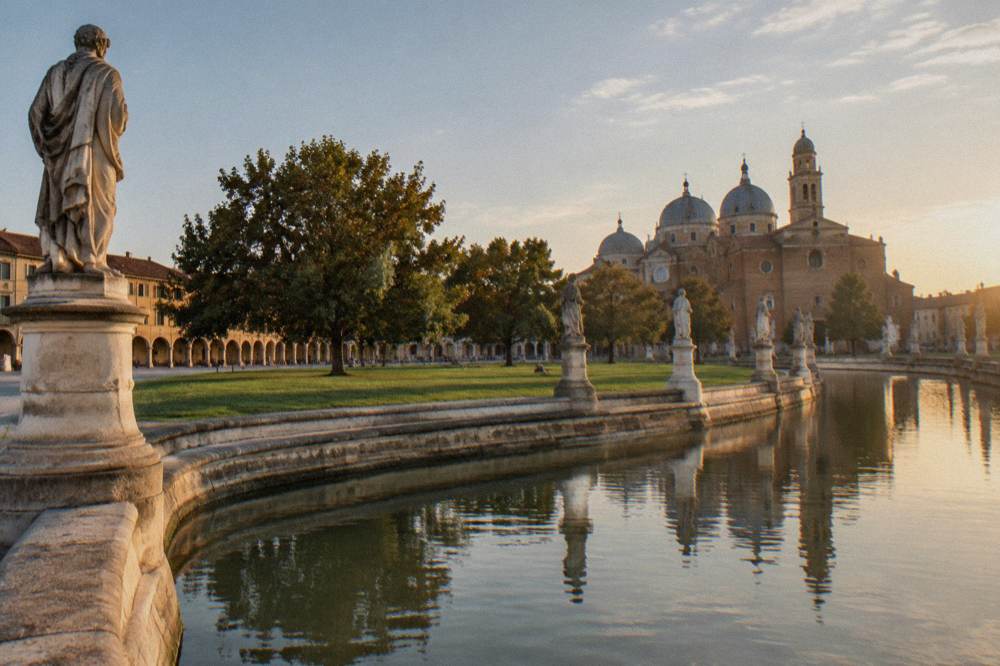
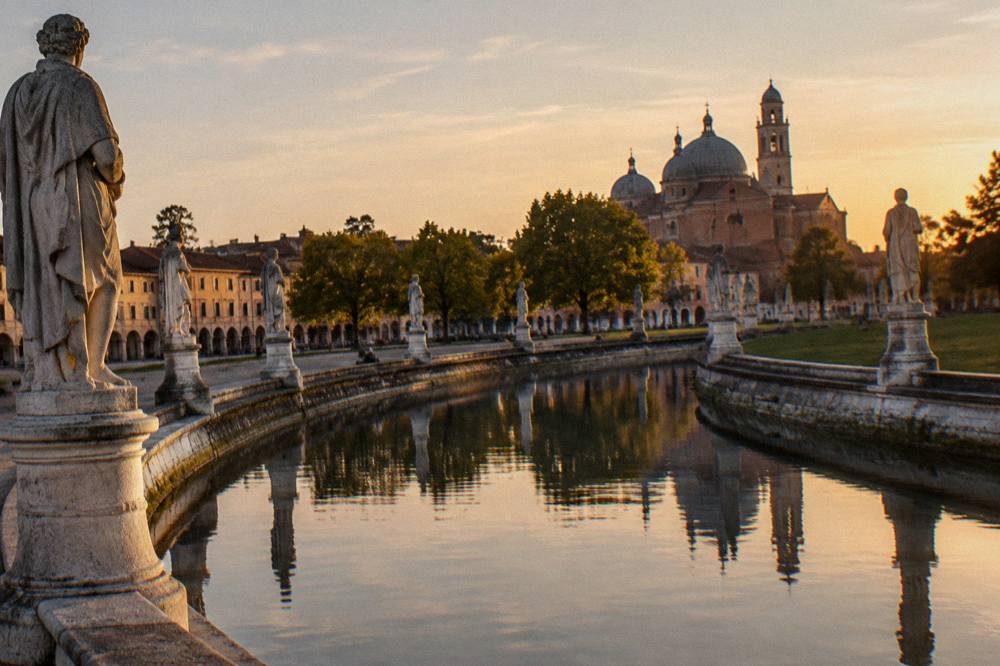
The value of the long version is that it explains the city's layout. The Scrovegni Chapel stands on the site of Padua's Roman amphitheatre, which is why it is also called the Arena Chapel, and the "Arena" is Padua's own, never Verona's. Prato della Valle, the vast oval at the southern edge of the centre, carries a canal and a double ring of numbered statues of famous people and was declared communal space by the Venetian Senate in 1767, reclaimed under Andrea Memmo. The Eremitani church, steps from the Scrovegni, is part of the same UNESCO fresco inscription as eight complexes across the old centre.
The University of Padua reports its founding in 1222 and describes the Orto Botanico, founded in 1545, as the world's first university botanical garden, a claim that sits at the heart of its 1997 UNESCO inscription. The anatomical theatre of 1594, Elena Lucrezia Cornaro Piscopia's philosophy doctorate of 25 June 1678 (the university calls her the first woman university graduate in recorded history) and Galileo's eighteen years in the city complete a record that few cities of about 208,000 residents can match.
Who Founded Padua: The Antenor Legend And Roman Patavium?
Padua's traditional founding story names the Trojan prince Antenor as the city's founder in 1183 BC, a legend transmitted through Virgil's Aeneid and retold by the University of Padua's own history pages, while the documented Roman city, Patavium, was a municipium by 45 BC and the birthplace of the historian Livy in 59 BC. The legend is given as a legend, not as archaeology: the university presents Antenor as tradition, and no source in the record upgrades it to fact.
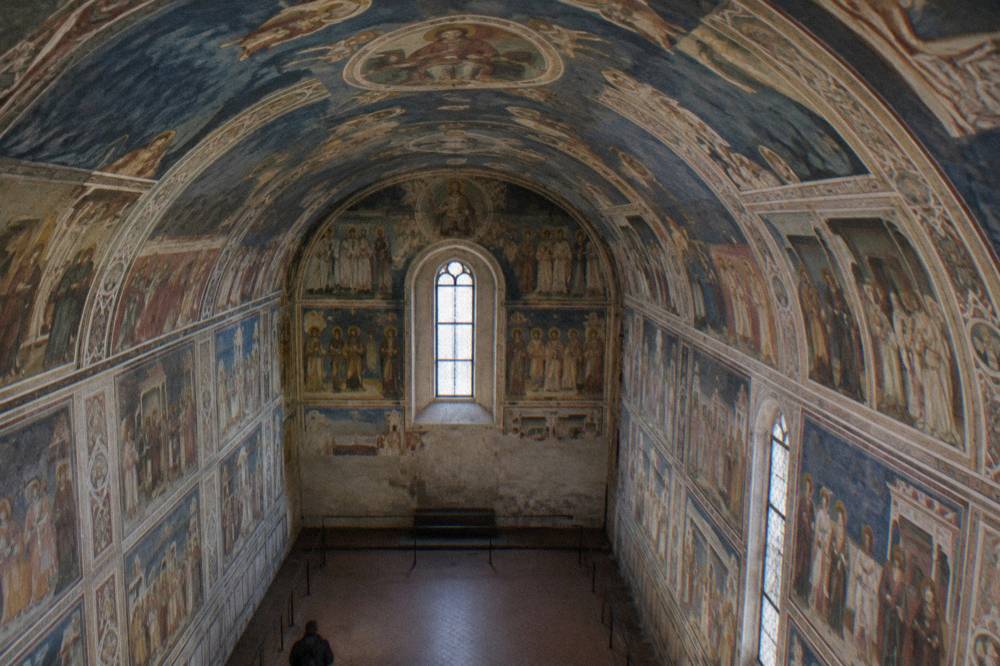
The Roman centuries left the strongest single physical trace in the city's naming. Ruins of the amphitheatre of Roman Patavium remain, and it is on that arena's site, land Enrico degli Scrovegni purchased on 3 February 1300 including the amphitheatre remains, that the chapel that carries his name was built. The chapel's own history page says Giotto then painted the cycle "in just two years, between 1303 and 1305". So the two ends of Padua's story, Roman and Giotto-era, physically overlap on one plot of ground, which is the single most useful fact for understanding the city.
| Era | What the record states | Where it comes from |
|---|---|---|
| Legendary founding | Antenor, Trojan prince, 1183 BC, per tradition in Virgil's Aeneid | University of Padua history pages |
| Roman Patavium | Municipium since 45 BC | University of Padua history pages |
| Livy | Born in Patavium in 59 BC | University of Padua history pages |
| Amphitheatre | Ruins remain; post-452 AD destructions noted | University of Padua history pages |
| Arena Chapel site | Land purchased 3 February 1300, including amphitheatre remains | The chapel's own history page |
Livy's connection matters beyond biography. The historian of Rome's rise was a Paduan, and the city's Roman past is the reason a fourteenth-century banker's chapel is called the Arena Chapel at all. When you book the Scrovegni, timed entry only, at most 25 people every 15 minutes and about 15 minutes inside, you are walking onto a site with roughly two millennia of documented use. The full visiting rules, prices and the 16 to 27 November 2026 closure for the annual fresco inspection are covered in Scrovegni Chapel tickets, and the fresco inscription behind the whole quarter is unpacked in Padova Urbs Picta UNESCO.
How Did The University Of 1222 Change Padua?
The Studium Patavinum, founded in 1222 by students and teachers who arrived from Bologna, turned Padua into a university city permanently: the University of Padua reports roughly 76,000 students in the 2026/27 academic year against a resident population of about 208,000, and its dated milestones include the Orto Botanico of 1545, the anatomical theatre of 1594 and Elena Cornaro's doctorate of 1678. The university describes itself as among the oldest in Italy, using its own wording rather than any ranking claim.
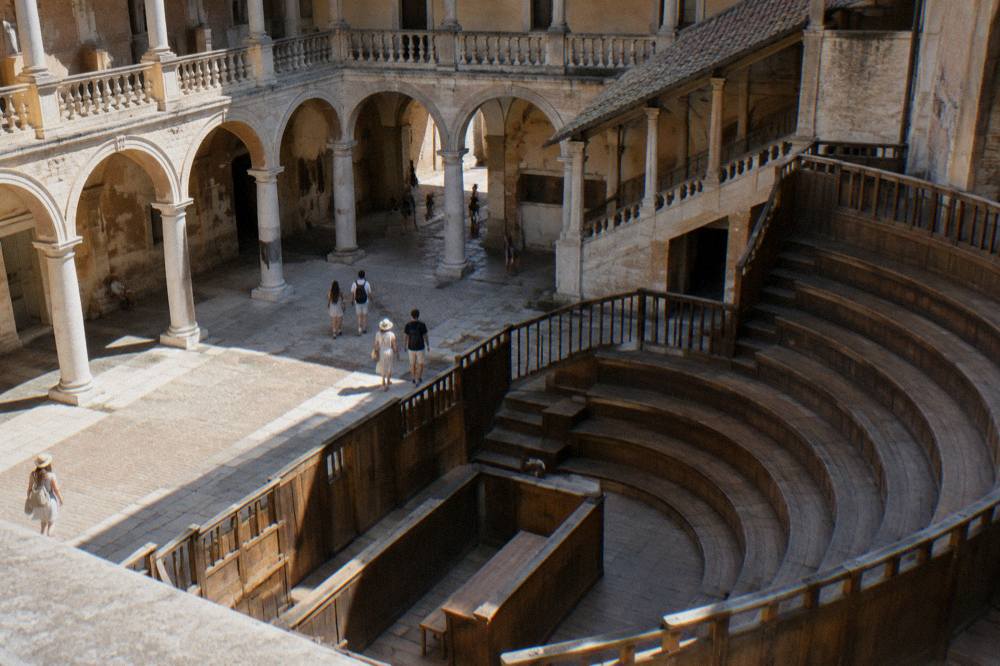
The 1222 founding is the pivot of the whole city story. Before it, Padua was a Roman survivor with a commune; after it, Padua was a place where knowledge was produced at scale, and the city's economy, building stock and reputation followed. The anatomy theatre of 1594 in Palazzo del Bo, the first permanent anatomical theatre in the university's own words, drew medical students across Europe. Galileo arrived in 1592 to the chair of mathematics and stayed until 1610, years he described in a letter quoted by the university as "the best eighteen years of all my life". The Sidereus Nuncius, his 1610 star-messenger, belongs to those Padua years.
| Year | University milestone | Stated by |
|---|---|---|
| 1222 | Studium Patavinum founded, arrivals from Bologna | University of Padua |
| 1545 | Orto Botanico founded, first university botanical garden | University of Padua |
| 1592 | Galileo takes the chair of mathematics | University of Padua |
| 1594 | First permanent anatomical theatre inaugurated | University of Padua |
| 1610 | Galileo's Sidereus Nuncius closes his Padua years | University of Padua |
| 1678 | Elena Cornaro Piscopia's philosophy doctorate, 25 June | University of Padua |
The Orto Botanico deserves its own paragraph because it is the university's clearest living artefact: still on its original purpose, still a working garden, inscribed by UNESCO in 1997. Tickets moved to EUR 15 full for visitors aged 26 to 64 from 1 September 2026, EUR 12 full in winter (November to February), with reductions for visitors 65 and over. The garden closes on non-holiday Mondays and keeps seasonal hours, so check the current price on the official ticket page before booking. The rest of the university's buildings and stories, from the anatomical theatre to Galileo's chair in the Sala dei Quaranta, are covered in University of Padua.
When Did Saint Anthony And Giotto Define Medieval Padua?
Saint Anthony died in Padua on 13 June 1231 in Arcella, the basilica carrying his name was begun in 1232, one year after his death, and Giotto painted the Scrovegni Chapel cycle between 1303 and 1305, so within a single lifetime Padua acquired both its great pilgrimage church and the fresco cycle that anchors its modern UNESCO inscription. Every date in that sentence is stated by the basilica, the chapel or the UNESCO listing.
The two buildings belong to the same era but to different worlds. The Basilica of Saint Anthony is a pilgrimage church: entry is free, the Saint's tomb and the Chapel of the Relics are accessible, and Donatello's main altar work stands in the presbytery, with his equestrian Gattamelata statue of Erasmo da Narni in the piazza outside. The chapel's own regulation page asks only that a dress code be suitable to a church environment. The Scrovegni Chapel, by contrast, is a controlled museum visit: reservation required, no same-day online booking, entry through a climate-controlled waiting room, with visitors asked to arrive five minutes before the slot on the ticket.
| UNESCO complex of Padova Urbs Picta | Inscription role |
|---|---|
| Cappella degli Scrovegni | Fourteenth-century fresco cycle, Giotto 1303 to 1305 |
| Chiesa dei Santi Filippo e Giacomo agli Eremitani | Fresco complex, UNESCO listing |
| Palazzo della Ragione | Frescoed civic hall, UNESCO listing |
| Cappella della Reggia Carrarese | Fresco complex, UNESCO listing |
| Battistero della Cattedrale | Fresco complex, UNESCO listing |
| Basilica e Convento di Sant'Antonio | Fresco complex, UNESCO listing |
| Oratorio di San Giorgio | Fresco complex, UNESCO listing |
| Oratorio di San Michele | Fresco complex, UNESCO listing |
The Padova Urbs Picta inscription, proclaimed on Saturday 24 July 2021 under criterion (ii), covers those eight complexes, and it reframes how the city should be read: not as one chapel plus assorted churches, but as a single fourteenth-century painted programme. The person behind the chapel, Enrico degli Scrovegni, dedicated it to Santa Maria della Carità; the pack gives his name, his land purchase and no motive. Giotto's cycle covers the Stories of the Life of the Virgin and Christ, the Vices and Virtues and the Last Judgment on the counter-facade. The saint's own story, the annual Tredicina that ran 31 May to 12 June in 2026 with the feast on 13 June, is told in Saint Anthony of Padua.
A guided loop is the practical way to see both worlds in one morning, and the related Check availability link sits beside the local guide highlights walk page for exactly that decision.
Who Were The Carraresi And What Did Venice Change After 1405?
The Carraresi family were lords of Padua from 1318, when Jacopo I took power, until 1405, when Venice defeated the Carrara lordship and annexed the city, holding it until 1797, and that single change of ruler in 1405 set Padua's political identity for the next four centuries as Venice's mainland possession. Both the lordship dates and the Venetian annexation are reported with those exact years in the record.
Carrara Padua was the era in which the city's painted programme and its civic mythology took shape: the Reggia Carrarese, the rulers' palace complex, is one of the eight UNESCO fresco sites, and the fourteenth-century cycles the inscription celebrates were painted under Carrara patronage. The defeat of 1405 did not end the building: it redirected it. Venice ruled Padua through the early modern period as part of its terraferma, and the most visible Venetian-era mark on the city today is Prato della Valle, its canal and double ring of numbered statues standing on ground the Venetian Senate declared communal space in 1767, reclaimed under Andrea Memmo; a 1775 redesign date for the square is reported with lower confidence and is best left as the Senate's own declaration instead.
The fall of Venice in 1797, the same year the Republic ended, closes the era. What followed belongs to the years around 1831 and 1848: the Caffè Pedrocchi opened in 1831, the neoclassical cafe that the tourism board describes as staying open around the clock in its early fame, and on 8 February 1848 Paduan students joined the Risorgimento uprising, a date the university's own heritage pages record. The reported bombing of the Eremitani church in 1944, which largely destroyed Mantegna's Ovetari frescoes, is stated only as reported.
| Period | Rulers of Padua | Years in the record |
|---|---|---|
| Carrara lordship | Carraresi, from Jacopo I | 1318 to 1405 |
| Venetian rule | Republic of Venice | 1405 to 1797 |
Venice remains the constant comparison for visitors, and the modern link is fast: the distance is about 36 km in a straight line, trains from Padova to Venezia Santa Lucia take about 26 to 40 minutes, and Venice to Padua covers the connection in detail. Anyone weighing the two cities as a base can read is Padua worth visiting from Venice for the trade-offs.
Where Can You Still See Padua History In The Streets?
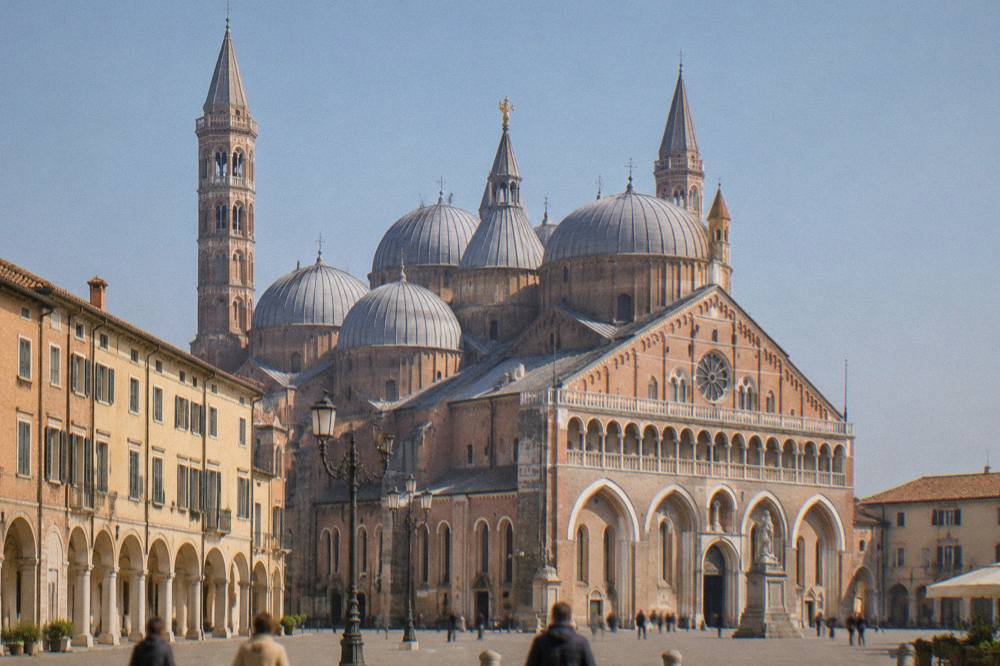
You can see Padua's documented history in five places in the old centre: the Scrovegni Chapel on its Roman arena site, the Basilica of Saint Anthony begun in 1232, the Eremitani complex, Palazzo della Ragione with its market squares, and Prato della Valle with its statue-ringed canal, together with the Palazzo del Bo and the Orto Botanico, all within walking distance of each other. The historic centre is compact and arcaded, built around these anchors rather than scattered across suburbs.
Start with the two that carry the city's name abroad. The Scrovegni Chapel runs timed visits of about 15 minutes for at most 25 people per slot, bookable ahead at the chapel's own booking site or by phone at +39 049 2010020 up to the day before; the daytime ticket, EUR 15 full plus a EUR 1 booking fee, also covers the Musei Civici Eremitani and Palazzo Zuckermann. The Basilica of Saint Anthony is free to enter, with the tomb and relics accessible; its opening hours are not printed on this site, so check the basilica's own page before a timed visit. Donatello's Gattamelata stands outside, and the Scrovegni's own quarter, the Eremitani, holds the Ovetari chapel cycle within the UNESCO inscription.
Then the civic layer. Palazzo della Ragione, the frescoed hall between Piazza delle Erbe and Piazza della Frutta, is a UNESCO Urbs Picta site and costs EUR 8 full, EUR 6 reduced, with tickets sold at the IAT office at Piazza delle Erbe 52. Underneath it runs Sotto il Salone, the covered food market the tourism board describes as eight centuries old. The squares above host the daily markets the Comune di Padova schedules: Piazza delle Erbe Monday to Friday 7:30 to 13:30 and Saturday 7:30 to 20:00, with the antiques market on Prato della Valle and via Umberto I every third Sunday of the month. For the full sight-by-sight breakdown, see things to do in Padua.
How Does The Padua Of 1831 And 1848 Show Today?
The Padua of 1831 and 1848 shows in two named places and one recorded date: the Caffè Pedrocchi, opened in 1831 on a design by Giuseppe Jappelli and still operating beside the Musei Civici complex, and the 8 February 1848 student uprising that the university's heritage pages record as the city's Risorgimento moment, with the Museo del Risorgimento at the Stabilimento Pedrocchi holding the period material. The cafe's signature drink, the mint-based caffè Pedrocchi, is named by the tourism board as part of that legacy.
The Pedrocchi quarter is the hinge between the historic centre and the modern city. The neoclassical cafe sits a few minutes from Palazzo del Bo, and the Risorgimento museum at the same address keeps hours Tuesday to Sunday, 9:30 to 12:30 and 15:30 to 18:00, with a EUR 5 full ticket per the museums' own price list. The tourism board records that the cafe ran without doors in its early fame, an image of a public room rather than a private business, though the practical detail for a visit is simply that it opens in the morning and runs late into the evening; check the current hours on the cafe's own page.
The university's role in those years continued its older pattern: students in the streets rather than only in the lecture halls. The 1848 date is one of the few street-level political events in the whole dated record, and it belongs to the same institution that gave the city 1222, 1594 and 1678. That continuity, a university present in the city's record for eight centuries, is the reason Padua's history reads as a single story rather than a sequence of unrelated eras. For weather and timing, the Padua weather page carries the month-by-month figures.
What Climate Shaped Padua's History?
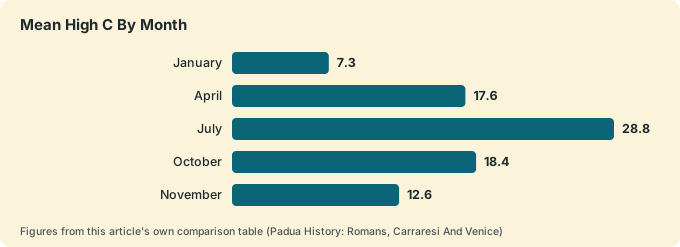
Padua's climate, per the ERA5 reanalysis 1991-2020 for the city's grid cell, is continental northern Italian: a January mean high of 7.3 C with a mean low of -0.2 C, July and August mean highs of 28.8 C, and November the month carrying the highest rain total at 114.0 mm. These are modelled climate normals, not a weather-station record, and they describe the same plain the historical record shows, damp in autumn, cold in winter, hot in summer.
The historical resonance is indirect but real. A city on a damp plain with rivers, the Bacchiglione and its canals, built arcades for a reason, and the markets that have run in the same squares for centuries moved under cover in Sotto il Salone. Snow is part of the modern record too: a long climate series published for Padua counts about 4.4 snowy days per year across 1995 to 2024, down from about 10.4 in the 1785 to 1814 window, with seasons of no snow at all not uncommon.
| Month | Mean high C | Mean low C | Rain mm |
|---|---|---|---|
| January | 7.3 | -0.2 | 53.6 |
| April | 17.6 | 7.8 | 84.4 |
| July | 28.8 | 18.9 | 62.1 |
| October | 18.4 | 10.6 | 105.4 |
| November | 12.6 | 5.5 | 114.0 |
None of this is a reason to time a visit around history; it is context. The full month table and the seasonal arguments sit in best time to visit Padua. What the climate record does confirm is that the fresco cycles, painted in two years of work between 1303 and 1305, have survived on interior walls in a city whose air has stayed damp for seven centuries, which is a large part of why the chapel now limits entry to 15 timed minutes for small groups.
How Do You Plan A Visit Around Padua's History?
Plan a history-first visit around three fixed bookings and one free anchor: the Scrovegni Chapel slot (timed, booked ahead, EUR 15 full plus EUR 1 fee, with the museums included in the daytime ticket), the Palazzo del Bo guided tour (EUR 10 full, about 45 minutes, alternating Italian and English slots), and the Orto Botanico (EUR 15 full from 1 September 2026), with the Basilica of Saint Anthony free to enter and Prato della Valle, the markets and the squares open without tickets. Check each official page for current hours before locking a day.
The order matters less than the geography. The chapel, the Eremitani complex and Palazzo Zuckermann share one corner by the gardens; Palazzo del Bo and Caffè Pedrocchi sit together on the cafe side of the centre; the Basilica, Prato della Valle and the Santo quarter form a southern cluster that links naturally to the Euganean Hills day trips, Arqua Petrarca about 20 km in a straight line, with Casa del Petrarca at EUR 6 full. A single well-placed base covers it: where to stay in Padua maps the districts against these clusters, and how to get to Padua covers arrival, including the airport bus from Venice Marco Polo at EUR 13 one-way and about 45 minutes.
| Historic site | Ticket situation | Booking source |
|---|---|---|
| Scrovegni Chapel | EUR 15 full plus EUR 1 fee, timed, includes museums by day | The chapel's own booking site |
| Basilica of Saint Anthony | Free entry | Check the basilica's own page |
| Palazzo del Bo tour | EUR 10 full, about 45 minutes, timed slots | University booking centre |
| Orto Botanico | EUR 15 full from 1 Sept 2026, EUR 12 winter | The garden's own ticket page |
| Palazzo della Ragione | EUR 8 full, EUR 6 reduced | IAT, Piazza delle Erbe 52 |
| Museo del Risorgimento | EUR 5 full | Museums' own price list |
One planning caution closes the section: the chapel closes 16 to 27 November 2026 for the annual fresco inspection by the Istituto Centrale per il Restauro, so a late-November history trip should check the chapel's calendar first and build the rest of the itinerary around the university and basilica clusters on those days. For a full day-by-day sequence, one day in Padua from Venice and the Padua train station arrival guide handle the logistics.
Common Questions About Padua History
How old is Padua?
The founding legend gives 1183 BC and the Trojan prince Antenor, transmitted through Virgil's Aeneid and retold by the University of Padua as tradition. The documented Roman city, Patavium, was a municipium by 45 BC, and Livy was born there in 59 BC. No source in the record states a founding date, and the legend is presented as a legend.
When was the University of Padua founded?
In 1222, as the Studium Patavinum, by students and teachers who arrived from Bologna, per the University of Padua's own history pages. The university describes itself as among the oldest in Italy rather than claiming any single ranking.
When did Venice take over Padua?
In 1405, when the Carrara lordship that had held the city from 1318 was defeated and Padua was annexed by the Republic of Venice, which held it until 1797.
When did Giotto paint the Scrovegni Chapel?
Between 1303 and 1305, in two years of work per the chapel's own history pages. Enrico degli Scrovegni purchased the land, the site of Padua's Roman amphitheatre, on 3 February 1300.
What is Padova Urbs Picta?
It is Padua's second UNESCO World Heritage inscription, proclaimed on 24 July 2021, covering eight fourteenth-century frescoed complexes in the old centre, from the Scrovegni Chapel and the Eremitani church to the Battistero and the Basilica di Sant'Antonio.
Was Galileo in Padua?
Yes. He held the chair of mathematics from 1592 to 1610, years he described as the best eighteen of his life, and his Sidereus Nuncius of 1610 belongs to that Padua period, per the University of Padua's own Galileo pages.
The story of Padua Travel Guide runs through every era on this page, and the practical pages linked above turn each date into a visit.
