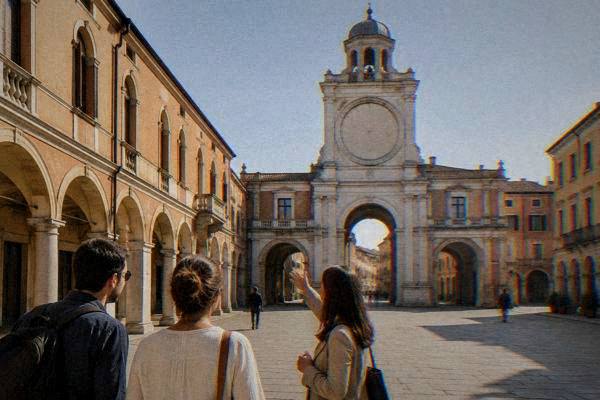
Galileo In Padua: The Eighteen Years And Where To Find Them
Galileo Galilei arrived in Padua in 1592 to take the chair of mathematics at the University of Padua, stayed until 1610, and later called them the best eighteen years of all his life. Much of what he knew is still standing, and a guided tour of Palazzo del Bo walks straight through it.
Short answer
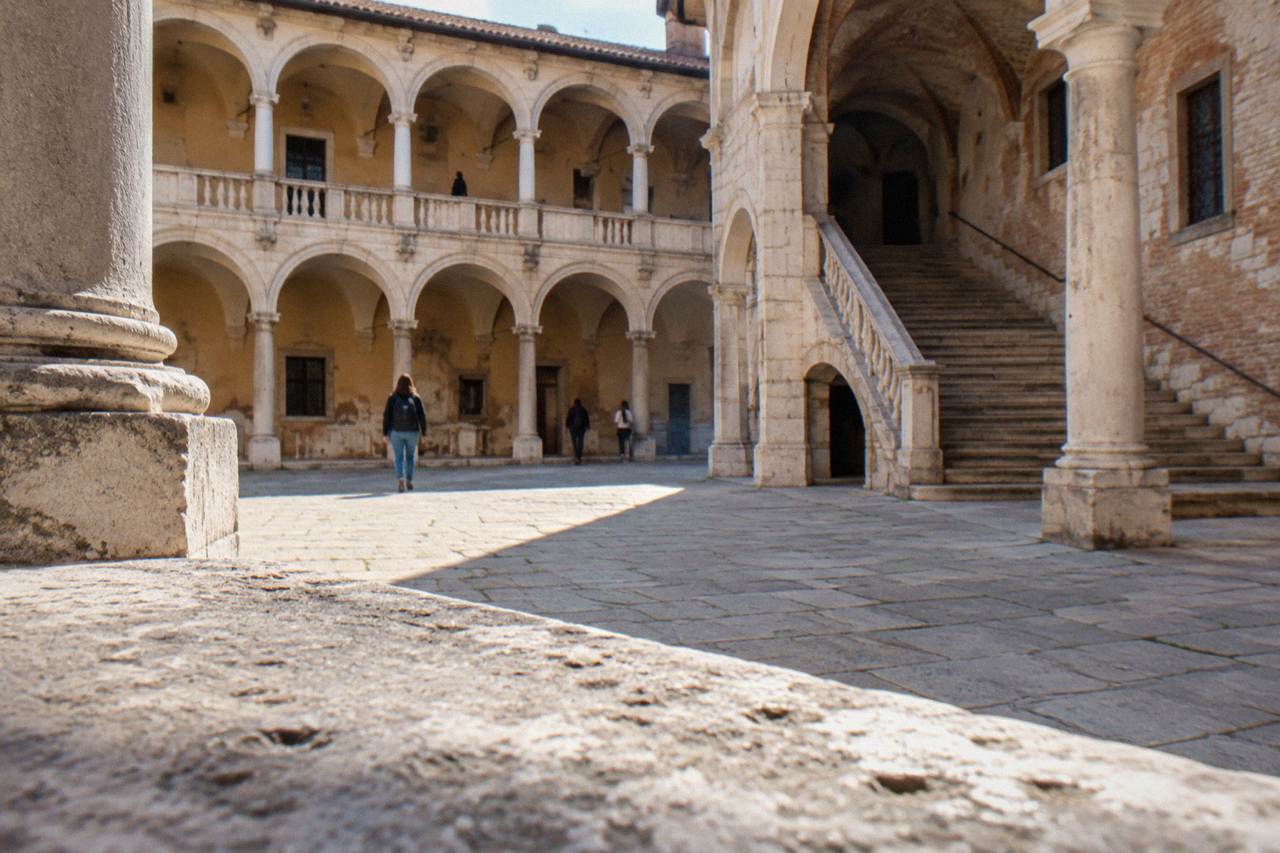
Galileo taught mathematics at the University of Padua from 1592 to 1610, years he later described as the best eighteen of his life. His lectern, the Sala dei Quaranta, the 1594 anatomical theatre and the Aula Magna survive inside Palazzo del Bo, which can be visited on a guided tour of about 45 minutes, full price EUR 10, booked through the university's centre at 049 827 3939.
Galileo Galilei spent the central stretch of his working life in Padua (Padova), the inland university city in the Veneto about 36 km in a straight line from Venice, and he did not describe those years modestly. The University of Padua's own history pages quote him calling his time in the city, from 1592 to 1610, "the best eighteen years of all my life". He arrived to take the chair of mathematics, he stayed through the period that produced Sidereus Nuncius in 1610, and the building where he taught, Palazzo del Bo, still stands at the heart of the city and can be walked through today on a guided route that passes his chair.
This guide gathers what the primary sources say about Galileo's Padua years and turns it into a visit: the dates, the rooms inside Palazzo del Bo, the anatomical theatre of 1594, the ticket and booking details for the guided tour, and a workable walking day that links the university quarter to the Scrovegni Chapel and the Basilica of Saint Anthony. For the wider frame of the institution he joined, see the companion page on the University of Padua, and for the city's other giant of the era, Giotto, the fourteenth-century fresco cycles listed by UNESCO in 2021.
When Was Galileo In Padua?
Galileo held the chair of mathematics at the University of Padua from 1592 to 1610, eighteen years that the university's own history pages say he later described as the best of his entire life. He arrived at a university founded in 1222, one of the oldest in Europe, in a city already operating the world's first permanent anatomical theatre, inaugurated in 1594, two years after he took up his post. Sidereus Nuncius, the book of his telescopic discoveries, is dated 1610, his final Padua year.
The dates come from the university itself. The University of Padua's Galileo pages state plainly that he arrived in 1592 to the chair of mathematics and remained until 1610, and they quote his own verdict on the period. That places his Padua years between two fixed points in the institution's history: the anatomical theatre of 1594, which he would have known as a working teaching space, and the degree of Elena Lucrezia Cornaro Piscopia in 1678, which came after his departure but belongs to the same institutional story the guided tour tells.
| Year | Event | Source wording |
|---|---|---|
| 1222 | Studium Patavinum founded | University of Padua history pages |
| 1545 | Orto Botanico founded, the first university botanical garden | University of Padua profile |
| 1592 | Galileo arrives to the chair of mathematics | University of Padua Galileo pages |
| 1594 | First permanent anatomical theatre inaugurated | University of Padua profile |
| 1610 | Sidereus Nuncius published; Galileo leaves Padua | University of Padua Galileo pages |
| 1678 | Elena Cornaro Piscopia graduates in philosophy, 25 June | University of Padua |
What makes the Padua chapter unusually visitable is that the institution never moved. Palazzo del Bo is still the historic seat, the anatomical theatre of 1594 is still inside it, and the university still runs a guided "Giro storico" that includes Galileo's chair in the Sala dei Quaranta on its route. A traveller following Galileo in Padua is not reconstructing a lost site from a plaque; the route is bookable, priced and described on the university's own pages.
What Can You See Of Galileo At Palazzo Del Bo Today?
The guided "Giro storico" of Palazzo del Bo passes the Aula Magna, Galileo's chair in the Sala dei Quaranta, the anatomical theatre of 1594, the Medicine and Law halls and the statue of Elena Cornaro, in a walk of about 45 minutes led in alternating Italian and English slots, though the university notes that not every room is guaranteed every day.
Tickets run EUR 10 full price for ages 26 to 64, EUR 8 for over-65s and teachers, EUR 6 for ages 6 to 25 and EUR 5 for school groups, booked through the centre at 049 827 3939.
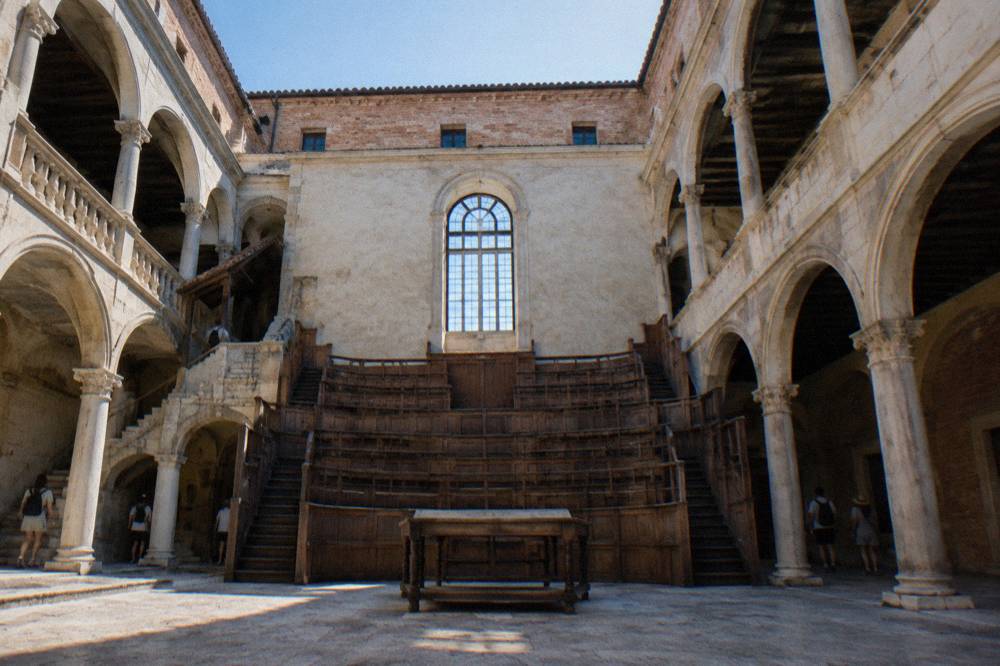
The chair is the object people come for. The Sala dei Quaranta holds the lectern associated with Galileo's teaching years, and the university's tour description lists it by name as part of the standard route. The anatomical theatre nearby is a small, steeply banked wooden room built for public dissections in medical teaching, inaugurated in 1594 while Galileo was teaching in the same building. The statue of Elena Cornaro Piscopia, who graduated in philosophy on 25 June 1678 as the first woman on record to take a university degree, stands in the same complex and closes the institutional story the tour tells.
| Palazzo del Bo tour detail | Figure |
|---|---|
| Full ticket, ages 26 to 64 | EUR 10 |
| Reduced, 65+, teachers, mixed groups of 10 to 30 | EUR 8 |
| Special reduced, ages 6 to 25 | EUR 6 |
| School groups | EUR 5 |
| Duration | About 45 minutes |
| Languages | Alternating Italian and English slots |
| Booking centre | 049 827 3939 |
One practical note from the university's own page: the route includes the rooms listed above but not every room every day, so if the anatomical theatre or a particular hall is the reason for the visit, confirm at booking. An integrated ticket called "Padova Citta della Scienza" also exists, combining Palazzo del Bo with the Orto Botanico and the Museo della Natura e dell'Uomo, and it suits a day built around the university's scientific history. The Orto Botanico half of that ticket is the garden founded in 1545 and inscribed by UNESCO in 1997, with a full ticket of EUR 15 after the tariff change of 1 September 2026.
How Does A Galileo Visit Fit Into One Day In Padua?
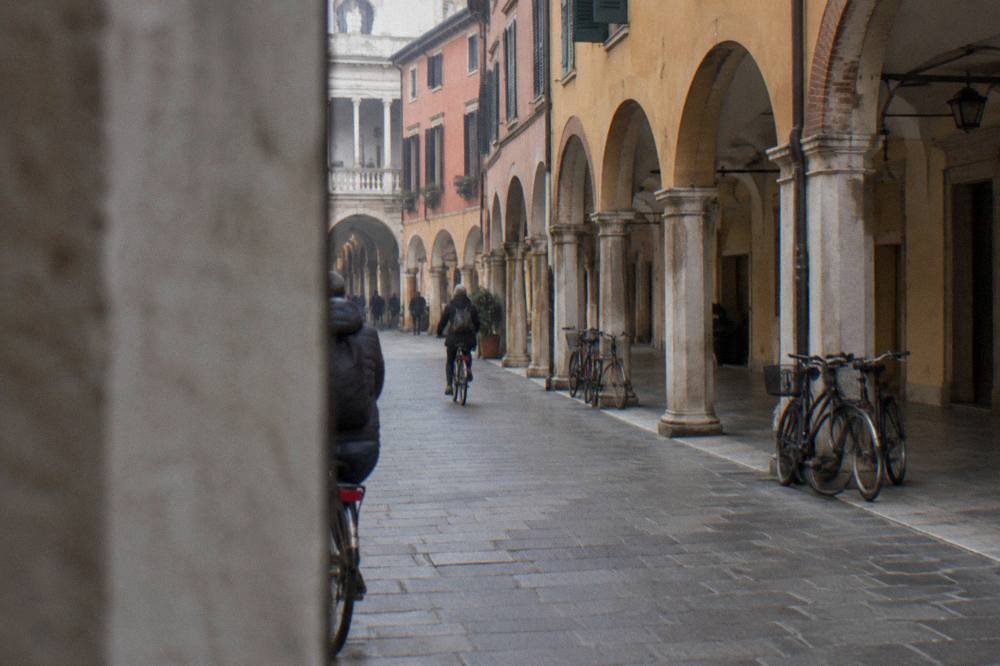
A workable Galileo day in Padua pairs a morning slot at Palazzo del Bo with the Orto Botanico a short walk away, then crosses the historic centre to Piazza delle Erbe, Palazzo della Ragione and the Scrovegni Chapel, whose timed entry admits at most 25 people every 15 minutes and must be booked in advance, and ends at the Basilica of Saint Anthony, which the sources list as free to enter.
The whole loop is walkable, and the urban transport ticket, EUR 1.70 for 90 minutes, covers any leg you would rather ride.
The order matters mostly because of the Scrovegni Chapel. Entry there is timed, with groups of at most 25 every 15 minutes, about 15 minutes inside the chapel after a stop in the climate-controlled waiting room, and same-day online booking does not exist, so the chapel slot should anchor the timetable and the Bo tour arranged around it. The daytime Scrovegni ticket, EUR 15 full plus a EUR 1 booking fee, also covers the Musei Civici Eremitani and Palazzo Zuckermann, which makes it a natural pairing with the Bo morning for a day of interiors.
| Time | Place | Why it belongs on a Galileo day |
|---|---|---|
| Morning | Palazzo del Bo | Guided route with Galileo's chair and the 1594 anatomical theatre |
| Late morning | Orto Botanico | The university garden founded 1545, UNESCO listed 1997 |
| Midday | Piazza delle Erbe and Palazzo della Ragione | Market square and the great hall, EUR 8 full price |
| Afternoon | Scrovegni Chapel, timed slot | Giotto's frescoes of 1303 to 1305, timed entry only |
| Late afternoon | Basilica of Saint Anthony | Free entry, tomb of the Saint, Donatello's works |
For travellers who would rather have a guide for the whole loop than a guide for one building, a themed walk is the efficient choice. The Padua: St Anthony's life Tour with Option to Camposampiero covers the Santo and the city's religious layer with an extension toward Camposampiero, and it sits well on the day after a Bo-focused morning, or you can Check availability alongside the rest of your planning.
Why Did Galileo's Padua Years Matter So Much?
The University of Padua's history pages say Galileo himself called 1592 to 1610 the best eighteen years of all his life, a period that ended with Sidereus Nuncius, the 1610 book of his telescopic observations, and it fell inside an institution that had been running since 1222 and had inaugurated the first permanent anatomical theatre in 1594. The combination of a mathematics chair, a medical school with public dissections and a botanical garden founded in 1545 made Padua, in that period, one of the working centres of European science.
The university's own framing is the safest guide to why the years mattered. Its profile page lists the founding of 1222, the Orto Botanico of 1545, the anatomical theatre of 1594 and Galileo's chair together as the milestones of a single institution. Galileo's Padua was a place where mathematics, medicine and natural science were taught within a few hundred metres of each other, and the guided tour of Palazzo del Bo today makes that geography physical: the mathematics halls, the Medicine and Law halls and the anatomical theatre are all inside one building.
The "best eighteen years" quote deserves its own care, because it is the sentence every Galileo itinerary leans on. The university attributes it directly to Galileo describing his Padua period, and it is the reason this page's title says "the eighteen years". What the sources do not do is explain the motive behind the remark, and this page will not add one. What they do give is the sequence: arrival in 1592, the chair of mathematics, the anatomical theatre already or soon in use two years into his stay, and the departure year of 1610 marked by Sidereus Nuncius.
What Was The Anatomical Theatre Galileo Knew?
The anatomical theatre at Palazzo del Bo, inaugurated in 1594, was the first permanent anatomical theatre in the world, built for public dissections in the teaching of medicine, and it stands today inside the building as one of the stops on the guided route Galileo visitors follow. The University of Padua's profile page names it directly as a first, and the tour description of the "Giro storico" lists the theatre among the rooms on the standard itinerary, alongside the Aula Magna and the Sala dei Quaranta.
A visit answers the practical questions quickly. The room is small, steep and built of wood, with the standing galleries crowded around a central space where the dissection table sat, and it survives inside Palazzo del Bo as part of the university's historic seat. The theatre belongs to the same institutional chapter as Galileo in the narrow sense that it opened in 1594, two years into his stay, and in the broader sense that the medical faculty it served was one of the reasons a mathematics chair in Padua sat inside such a dense scientific environment.
For readers who want the institutional context in depth, the companion guide to the University of Padua carries the full timeline from 1222 to Elena Cornaro's degree of 1678, and the practical pages on getting around Padua and the train station cover arrival from Venice, Vicenza or the airports.
Where Else In Padua Does The Story Continue?
The Galileo story continues in three directions in Padua: the Orto Botanico, founded in 1545 and inscribed by UNESCO in 1997, which shares the "Padova Citta della Scienza" integrated ticket with Palazzo del Bo; the fourteenth-century fresco cycles of the Padova Urbs Picta listing, inscribed in 2021, which give the city its second UNESCO site; and the Basilica of Saint Anthony, free to enter, whose construction began in 1232, a year after the Saint's death on 13 June 1231. Each of these belongs to a different century from Galileo, and together they explain what kind of city he moved to.
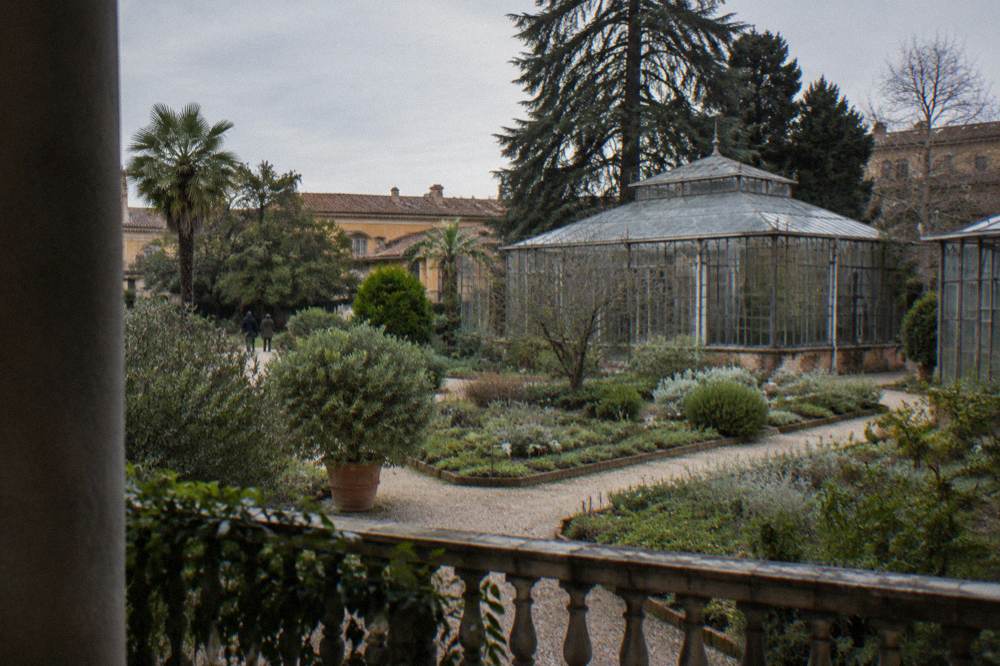
The Orto Botanico is the closest companion piece. The university calls it the world's first university botanical garden, founded in 1545, and its tickets moved to EUR 15 full for ages 26 to 64 from 1 September 2026, with a winter full ticket of EUR 12 for November to February. The garden's hours run Tuesday to Sunday and holidays, closed on non-holiday Mondays, and the visit includes an audioguide, with fixed-time guided tours at weekends.
| Site | Entry figure | Note from the official pages |
|---|---|---|
| Palazzo del Bo tour | EUR 10 full | About 45 minutes, alternating IT and EN slots |
| Orto Botanico | EUR 15 full from 1 Sept 2026 | EUR 12 winter full, Nov to Feb |
| Scrovegni Chapel | EUR 15 full plus EUR 1 booking fee | Timed entry, also covers Musei Civici Eremitani |
| Palazzo della Ragione | EUR 8 full | Tue to Sun 9:00 to 19:00 |
| Basilica of Saint Anthony | Free entry | Tomb and Chapel of the Relics |
The Basilica of Saint Anthony rounds out the city Galileo knew from the outside. The basilica's own pages describe free entry, the tomb of the Saint and the Chapel of the Relics, and Donatello's works in and around the sanctuary, including the equestrian Gattamelata in the piazza outside. The annual Tredicina ran 31 May to 12 June in 2026 with the feast on 13 June, and the construction date of 1232 sits three and a half centuries before Galileo's arrival, a reminder that his Padua was already an old university town.
How Do You Plan The Practical Side Of A Galileo Trip To Padua?
The practical spine of a Galileo trip is simple: book the Palazzo del Bo tour through 049 827 3939 at EUR 10 full, book the Scrovegni Chapel slot in advance because same-day online booking does not exist, and use the EUR 1.70 ninety-minute urban ticket for any bus or tram leg, with the airport bus from Venice Marco Polo at EUR 13 one way in about 45 minutes.
The city itself is compact and walkable, and the tourist offices at the station and Piazza delle Erbe 52 carry printed help.
The transport figures that can be stated with confidence are few and specific. The Busitalia airport link between Padua and Venice Marco Polo runs EUR 13 one way for an adult, about 45 minutes, with departures every 40 minutes across the day. Inside the city, the TU1 ticket covers 90 minutes at EUR 1.70, and a contactless card can be tapped on board at the same fare. Trains connect Padua onward: about 26 to 40 minutes to Venezia Santa Lucia at a regional fare of about EUR 5, and 16 to 25 minutes to Vicenza at about EUR 6. The tram line SIR1 runs north to south; the SIR3 line is still in pre-service testing, so no opening promise belongs in a plan.
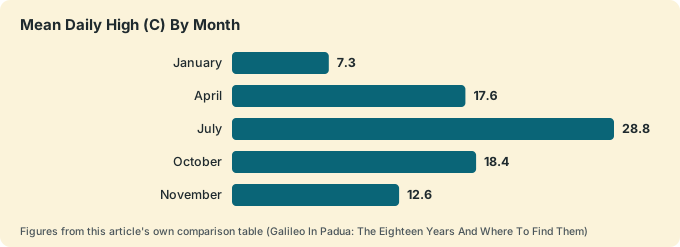
Weather shapes the day less than it does in most Italian cities of the plain, but it still shapes it. The ERA5 reanalysis, 1991-2020, puts the January mean daily high at 7.3 C and the July and August mean highs at 28.8 C, with November carrying the year's highest rain total at 114.0 mm. The monthly detail and season-by-season advice live on the Padua weather and best time to visit Padua pages.
| Month | Mean daily high (C) | Mean daily low (C) | Rain (mm) |
|---|---|---|---|
| January | 7.3 | -0.2 | 53.6 |
| April | 17.6 | 7.8 | 84.4 |
| July | 28.8 | 18.9 | 62.1 |
| October | 18.4 | 10.6 | 105.4 |
| November | 12.6 | 5.5 | 114.0 |
The climate row above is labelled the way the data demands: ERA5 reanalysis, 1991-2020, a modelled grid cell rather than a weather station record, with temperature and precipitation only. For a Galileo itinerary, which is almost entirely indoors, the main seasonal effect is the November rain total and the chapel's own calendar, including the closure of 16 to 27 November 2026 for the annual fresco inspection.
What About Galileo, Padua And The Wider Region?
Galileo's Padua sits inside a region of short train hops: Venice about 36 km away in a straight line and 26 to 40 minutes by rail, Vicenza 30 km with the Teatro Olimpico at EUR 12 full price, and the Euganean Hills within reach for Villa dei Vescovi at EUR 11 or Arqua Petrarca's Casa del Petrarca at EUR 6.
None of these is a Galileo site in the strict sense, but each belongs to the Veneto the university drew its students from, and each is a documented day trip from Padua.
The day-trip layer works because the base is convenient. Venice is close enough that plenty of travellers split their stay, a pattern the guide to Padua as a base for Venice covers in detail. One point that page family keeps current and that a 2026 visitor needs: the Venice day-tripper access fee trial ended on 27 July 2026, and no decision for 2027 had been announced, so a day trip from Padua does not carry a charge to plan around on current information.
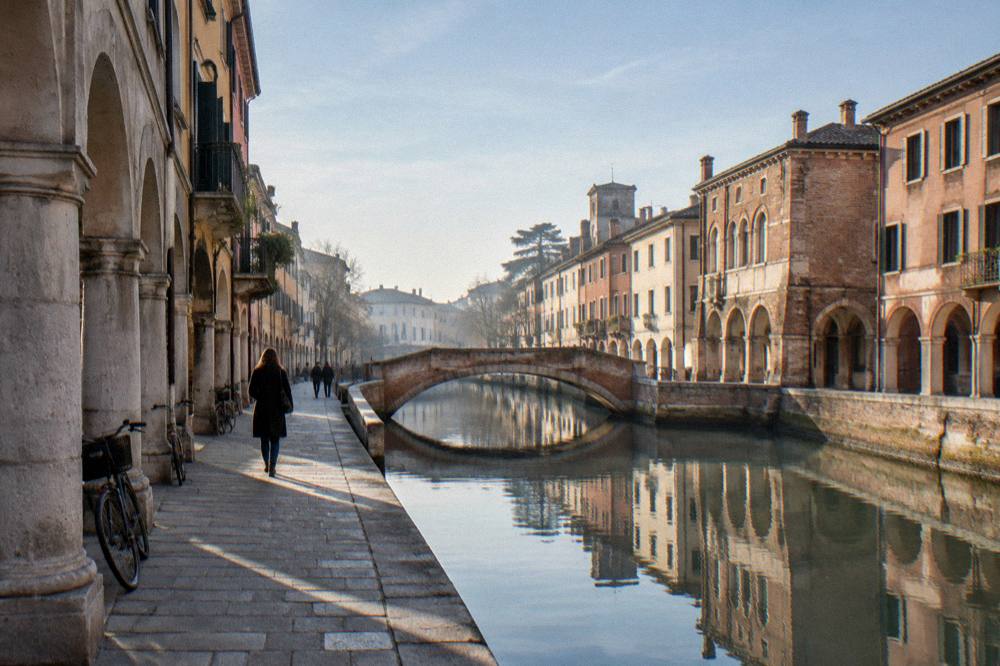
For a slower finish to a history-heavy trip, the boat is the alternative to the train. A cruise along the Brenta Riviera from Padua toward Venice passes the villa-lined river of the Venetian republic that ruled Padua from 1405 to 1797, the period into which Galileo's whole stay falls, and Il Burchiello runs the route in both directions between March and October.
Is A Guided Tour Or An Independent Visit Better For Galileo Padua?
Palazzo del Bo cannot simply be wandered: the university runs it as a guided "Giro storico" of about 45 minutes with booked slots in alternating Italian and English, EUR 10 full price, so inside the building itself the question answers itself and the tour is the only route. The choice is really about the city around it, where a themed walk can connect the Bo, the Santo and the squares in one narrative, or an independent day can move at the pace the timed Scrovegni slot sets.
The economics are not the deciding factor, since the Bo tour at EUR 10 full is priced like a museum ticket rather than a private experience. The deciding factor is depth versus freedom. The guided Bo route gives the rooms, the chair and the theatre with the university's own commentary; a themed city walk gives the connections between the university, the Basilica and the civic core; an independent day gives full control of the timetable, which matters most to travellers holding a fixed Scrovegni slot and a Bo tour booking on the same date.
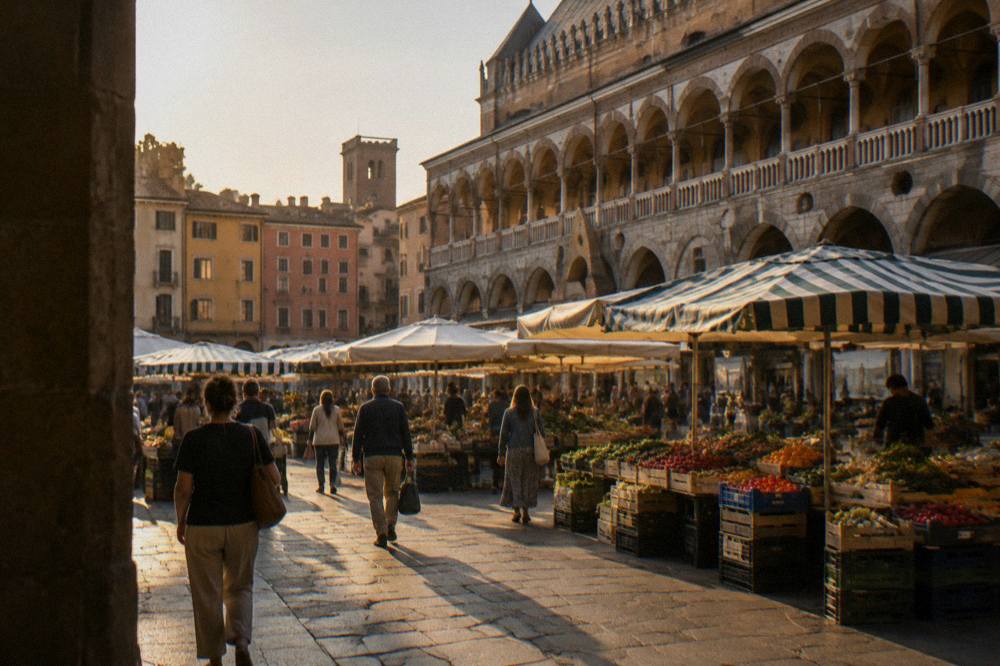
Budget travellers have a cheap floor for the city layer: the historic centre walk needs no ticket at all, and the self-guided and scavenger-style options on the roster run from a few dollars. The page on Padua on a budget works through the free tier, including the Basilica's free entry and the city's market squares, whose stall days the Comune publishes, including Piazza delle Erbe from Monday to Saturday and the Saturday market at Prato della Valle.
What Remains Of Galileo's Padua For A Visitor Today?
What remains is unusually concrete: the chair in the Sala dei Quaranta, the anatomical theatre of 1594, the Aula Magna and the Medicine and Law halls, all inside Palazzo del Bo on a bookable guided route; the Orto Botanico of 1545 a short walk away on a shared "Padova Citta della Scienza" ticket; and a university still enrolling about 76,000 students per the university's own current figures, which keeps the quarter Galileo taught in a living one rather than a museum street.
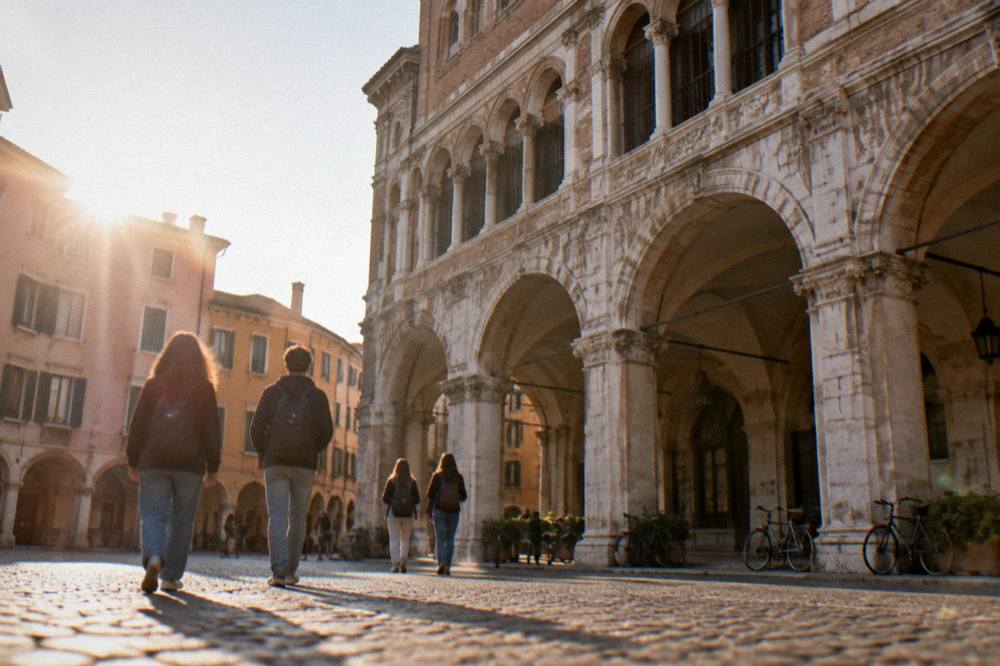
That last point changes the feel of a visit more than any single object. The university's pages put the current student body at about 76,000, and the city's population at about 208,000, so the institution Galileo joined remains the dominant presence in the centre, its graduation celebrations and market squares keeping the streets around the Bo active through the academic year. The central Padua and Piazza delle Erbe pages cover that street life in detail.
The wider planning set fills in around it: where to stay in Padua for the neighbourhood question, how to get to Padua for arrival, and the Padua Travel Guide home page for the full sight list. For the eating half of any day, what to eat in Padua covers the local dishes the sources name, from bigoli to torta pazientina, and a spritz in the evening follows a thread the city can genuinely claim, since Aperol was created in Padua in 1919 by the Barbieri brothers.
Common Questions About Galileo In Padua
How long was Galileo in Padua?
Eighteen years, from 1592, when he arrived to take the chair of mathematics at the University of Padua, until 1610, the year Sidereus Nuncius was published. The university's history pages quote him calling them the best eighteen years of all his life.
Can you visit where Galileo taught in Padua?
Yes. Palazzo del Bo, the historic seat of the University of Padua, runs a guided "Giro storico" of about 45 minutes that includes the Aula Magna, Galileo's chair in the Sala dei Quaranta, the anatomical theatre of 1594 and the Medicine and Law halls. The full ticket is EUR 10, booked through the centre at 049 827 3939.
Is Galileo's chair still in Padua?
Yes. The lectern associated with Galileo stands in the Sala dei Quaranta inside Palazzo del Bo, and the university's tour description lists it by name on the standard guided route.
What did Galileo publish while in Padua?
Sidereus Nuncius, dated 1610, his final year in the city, carrying the telescopic observations of that Padua period. The University of Padua's Galileo pages give the dates of his stay and the book together.
When was the anatomical theatre at Palazzo del Bo built?
It was inaugurated in 1594, which the University of Padua describes as the first permanent anatomical theatre, built two years into Galileo's stay and still visitable today inside Palazzo del Bo.
How much does the Palazzo del Bo tour cost?
EUR 10 full price for ages 26 to 64, EUR 8 reduced for over-65s and teachers, EUR 6 for ages 6 to 25 and EUR 5 for school groups, for a guided walk of about 45 minutes in alternating Italian and English slots. An integrated "Padova Citta della Scienza" ticket also combines the Bo with the Orto Botanico and the Museo della Natura e dell'Uomo.
The eighteen years are the spine of the story, but the visit they add up to is short and dense: one building, one garden, one chapel with a timed slot, and a city small enough to walk between all of them. Book the Bo tour and the chapel slot first, let everything else fall around them, and Padua's scientific century arrives intact.