Is Padua Worth Visiting?
A clear answer to whether Padua is worth visiting, with what the city offers, its two UNESCO listings, costs, and how it compares with Venice as a base in the Veneto.
Padua (Italian: Padova) is a city in the Veneto, northern Italy, an inland place of arcaded streets and market squares about 36 km in a straight line from Piazza San Marco in Venice. It holds two UNESCO World Heritage listings, the Orto Botanico and the fourteenth-century fresco cycles of Padova Urbs Picta, and it has been a university town since 1222. That combination, Renaissance painting, a major pilgrimage basilica and a working student city, is the short version of the case for going. The longer version, including costs, timing and the trade-offs against simply staying in Venice, is laid out below by this Padua Travel Guide editorial desk from what the official sources state.
Is Padua Worth Visiting?
Yes, Padua is worth visiting, and the reasons are concrete rather than vague: Giotto's fresco cycle in the Scrovegni Chapel, painted between 1303 and 1305, the Basilica of Saint Anthony with free entry, the Orto Botanico founded in 1545, and Palazzo del Bo, where Galileo taught from 1592 to 1610, all sit inside a compact, walkable centre. The city also carries two separate UNESCO listings and sits about 26 to 40 minutes from Venice by regional train.
The Scrovegni Chapel alone draws travellers who care about early Renaissance painting. The chapel's own site states Giotto painted the cycle "in just two years, between 1303 and 1305", and entry is timed, with at most 25 people admitted every 15 minutes and about 15 minutes inside. The daytime ticket, 15 EUR full price plus a 1 EUR booking fee, also covers the Musei Civici Eremitani and Palazzo Zuckermann, which widens the value of a single visit.
Beyond the chapel, the fourteenth-century fresco cycles of Padova Urbs Picta were inscribed by UNESCO in 2021 across eight complexes, including the Scrovegni Chapel, Palazzo della Ragione, the Battistero della Cattedrale and the Basilica e Convento di Sant'Antonio. The Orto Botanico, founded in 1545 and described by the university as the world's first university botanical garden, was inscribed separately in 1997. Few mid-sized Italian cities hold two listings.
For context on the name, the English "Padua" and the Italian "Padova" are the same place, a point this site covers in Are Padua And Padova The Same Place?.
What Makes Padua Worth The Trip?
The case rests on three things: art of the first rank, a university identity that shapes the whole city, and a historic centre that works on foot. The Scrovegni Chapel and the eight Padova Urbs Picta sites supply the art, a university founded in 1222 with about 76,000 students reported for the 2026/27 academic year supplies the atmosphere, and an arcaded core running from Piazza delle Erbe to Prato della Valle supplies the walk.
The university is not a footnote. Palazzo del Bo holds the anatomical theatre inaugurated in 1594, the first permanent one, and Galileo held the chair of mathematics there from 1592 to 1610, years he later called the best eighteen of his life, per the university's own history pages. Elena Lucrezia Cornaro Piscopia took her doctorate in philosophy there on 25 June 1678, the first woman university graduate in recorded history. Guided tours of Palazzo del Bo run on alternating Italian and English slots and cost 10 EUR full price, per the university's booking page.
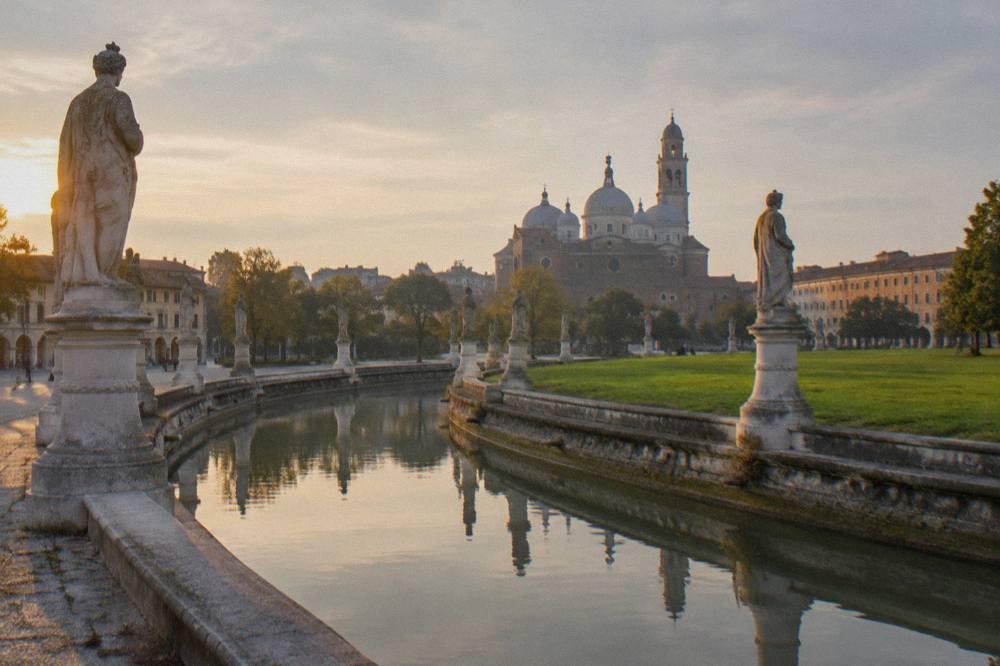
Prato della Valle, ringed by a canal and a double ring of numbered statues, was declared communal space by the Venetian Senate in 1767 and later reclaimed under Andrea Memmo, per the city's tourism site. The Basilica of Saint Anthony, begun in 1232, a year after the saint's death on 13 June 1231, keeps his tomb and relics and is free to enter, per the Padova Urbs Picta visitor page. On the food side, Aperol was created in Padua in 1919 by the Barbieri brothers, and the spritz culture of the Veneto runs through the evening squares, themes explored in What Food Is Padua Known For?.
A guided introduction suits a first visit, and a private walk is the most direct one: the Check availability link shows the live listing for the Private City Walking Tour, which pairs the centre's highlights with a Scrovegni Chapel visit.
How Many Days Does Padua Need?
Two days is the realistic answer for the core sights: one for the Scrovegni Chapel, the Eremitani complex, Piazza delle Erbe, Palazzo della Ragione and the Basilica of Saint Anthony, and a second for Palazzo del Bo, the Orto Botanico and Prato della Valle, plus the evening piazza scene. One day covers the essentials if the Scrovegni slot is booked ahead, because timed entry, at most 25 people every 15 minutes, makes the schedule for you.
The timing constraint is real. The chapel is open 9:00 to 19:00 with the last entry at 18:45, and visitors are asked to arrive five minutes before their slot; late arrivals must rebook and pay again, per the chapel's own how-to-visit page. There is no same-day online booking: unbooked visitors are told to check availability at the museum ticket office. The chapel is also closed 16 to 27 November 2026 for the annual fresco inspection, a fixed window worth planning around.
| Sight | Entry | Notes from the official pages |
|---|---|---|
| Scrovegni Chapel + Musei Civici Eremitani + Palazzo Zuckermann | 15 EUR full, 11 EUR reduced, plus 1 EUR booking fee | Timed entry, about 15 minutes inside; residents 5 EUR |
| Basilica of Saint Anthony | Free | Tomb and Chapel of the Relics; dress suitable for a church |
| Palazzo del Bo guided tour | 10 EUR full, 8 EUR reduced, 6 EUR ages 6 to 25 | About 45 minutes; alternating Italian and English slots |
| Orto Botanico | 15 EUR full from 1 Sept 2026; 12 EUR winter, Nov to Feb | Reduced 10 EUR (65+, teachers, province residents) |
| Palazzo della Ragione | 8 EUR full, 6 EUR concessions | Tue to Sun 9:00 to 19:00, per the museums' price list |
This site has a fuller breakdown in How Many Days Do You Need In Padua?. If the question behind the question is whether Padua can be a base for the region, it can: regional trains reach Venice in about 26 to 40 minutes, Vicenza in 16 to 25 and Verona in 43 to 60, per published timetables.
Is Padua A Better Base Than Venice?
Padua works well as a calmer, cheaper-feeling base for the Veneto, and the arithmetic supports it: the regional train to Venice takes about 26 to 40 minutes and costs about 5 EUR, while Padua's own sights do not require the logistics of a lagoon city. Venice's 2026 day-tripper access fee trial ended on 27 July 2026, and no 2027 decision had been announced, so that fee is not a reason to choose either way.
The Venice fee point matters because outdated advice still circulates. Venezia Unica, the official operator, states the 2026 trial closed on 27 July 2026 and the fee does not apply thereafter. A day-tripper from Padua should simply check the official page before travelling rather than assume a charge.
Distances are straight-line figures from mapping data: Venice 36 km, Vicenza 30, Verona 69, Abano Terme 8, Arqua Petrarca 20. The train times above come from published timetables and are described with "about" because they vary by service. The airport connection is direct: the Busitalia coach between Padua and Venice Marco Polo costs 13 EUR one way and takes about 45 minutes, per Busitalia's own page. Storing bags between checkout and a train is handled at the station's left-luggage office on platform 1, daily 6:00 to 20:00 at 5 EUR per 6 hours, per the city's tourism site. For the comparison with Verona specifically, see Which City Is Better To Visit, Verona Or Padua?, and for the Venice angle, Is Padua Worth Visiting From Venice?.
What Should You Not Miss In Padua?
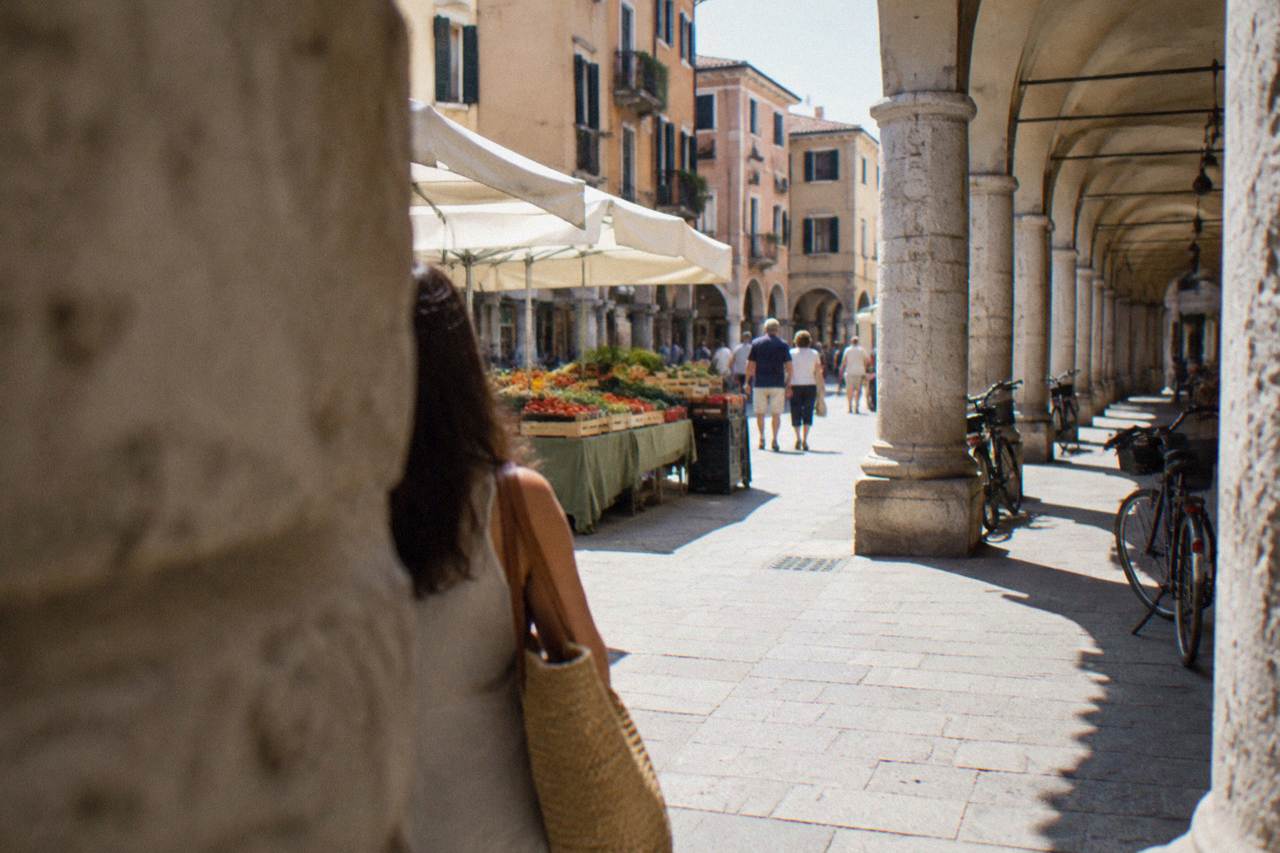
The four anchors are the Scrovegni Chapel, the Basilica of Saint Anthony, Palazzo del Bo and the Orto Botanico, with Piazza delle Erbe, Prato della Valle and Caffe Pedrocchi, opened in 1831, filling out a day. The markets give the centre its rhythm: Piazza delle Erbe runs Monday to Friday 7:30 to 13:30 and Saturday 7:30 to 20:00, per the Comune di Padova's market page, and the antiques market fills Prato della Valle and via Umberto I on the third Sunday of each month.
Sotto il Salone, the permanent market under Palazzo della Ragione, described by the tourism board as eight centuries of covered trading, is where the food identity of the city is most visible. The three recipes the tourism board names as Padua's own are risotto ricco alla Padovana, cappone alla canevera and torta pazientina. Evening life concentrates on Piazza delle Erbe and Piazza dei Signori, where the spritz tradition has a local claim: Aperol was created in Padua in 1919.
The Scrovegni Chapel deserves the most preparation of anything in the city. Beyond the timed-entry rules, the evening programme, "Giotto sotto le stelle", runs 25 March to 1 November from 19:00 to 22:00 every 20 minutes, chapel only, per the chapel's opening-hours page. The fresco cycle covers the Stories of the Life of the Virgin and Christ, the Vices and Virtues and the Last Judgment on the counter-facade. The chapel's nickname, the Arena Chapel, comes from the Roman amphitheatre whose remains lie beneath the site, Padua's own arena, not Verona's, as explained in Why Is The Scrovegni Chapel Also Called The Arena Chapel?.
When Should You Visit Padua?
The climate normals point to spring and early autumn: the ERA5 reanalysis for Padua, 1991-2020, shows July and August mean daily highs of 28.8 C, January the lowest mean low at -0.2 C, and November the highest monthly rain total at 114 mm, so April to June and September offer milder figures. These are modelled reanalysis values, not a weather-station record, and any month works with the right clothing.
| Month | Mean high C | Mean low C | Rain mm |
|---|---|---|---|
| January | 7.3 | -0.2 | 53.6 |
| April | 17.6 | 7.8 | 84.4 |
| July | 28.8 | 18.9 | 62.1 |
| October | 18.4 | 10.6 | 105.4 |
| November | 12.6 | 5.5 | 114.0 |
Events can anchor a date. The Tredicina, the thirteen days before the feast of Saint Anthony, ran 31 May to 12 June in 2026 with the feast and procession on 13 June, per the basilica's own site, an annual cycle with no 2027 date published. The Sherwood Festival ran 10 June to 12 July in 2026, the Salone dei Sapori food event 11 to 18 October 2026, and the Padova Marathon is fixed for 18 April 2027, starting at the Stadio Euganeo and finishing at Prato della Valle, per the marathon's site. Snow is rare but real: a long climate series shows the 1995 to 2024 period averaged about 4.4 snowy days per year.
Practical costs are modest and mostly fixed. The urban bus and tram ticket is 1.70 EUR for 90 minutes, per Busitalia's fare page, and a contactless card can be tapped on board. The tourist tax exists, is collected by the accommodation and is capped at five consecutive nights; the Comune di Padova's tax page holds the current categories, so check it before booking. Tap water is reported safe citywide.
Common Questions About Padua
Is Padua Worth Visiting?
Yes. The city holds two UNESCO listings, Giotto's 1303 to 1305 fresco cycle, the Basilica of Saint Anthony, the 1545 Orto Botanico and Galileo's university, all in a compact centre about 26 to 40 minutes from Venice by regional train.
Is Padua cheaper than Venice?
No price comparison between the two cities appears on the official pages this site reports from. What is fixed: the regional train between them costs about 5 EUR, Padua's urban ticket is 1.70 EUR for 90 minutes, and the Scrovegni daytime ticket is 15 EUR plus a 1 EUR booking fee, covering two further museums.
Can you visit Padua as a day trip from Venice?
Yes. Published timetables show regional trains taking about 26 to 40 minutes each way at a fare of about 5 EUR. Book the Scrovegni Chapel slot in advance, because entry is timed and there is no same-day online booking.
Is Padua walkable?
Yes, the historic centre is compact and the main sights from Piazza delle Erbe to Prato della Valle sit within walking distance of each other; the tram line SIR1 and urban buses at 1.70 EUR for 90 minutes cover longer hops.
Do you need to book the Scrovegni Chapel in advance?
Yes. The chapel's own site states entry is limited to 25 people every 15 minutes, booking is required, and unbooked visitors must check availability at the museum ticket office. The chapel is closed 16 to 27 November 2026 for its annual fresco inspection.
For anyone weighing the trip, the evidence is straightforward: a city of about 208,000 residents and about 76,000 students, two UNESCO inscriptions, a free-entry basilica and a university founded in 1222, all reachable from Venice in under an hour, makes the question answer itself.
