Are Padua And Padova The Same Place?
Yes, Padua and Padova are the same city in the Veneto, northern Italy: Padua is the English name, Padova the Italian one. Here is where each name comes from and which one to use on tickets and signs.
Padua and Padova are the same place, and the confusion is understandable: guidebooks, train tickets and news reports switch between the two spellings without explaining why. The short answer is language. "Padua" is the English name of the city, "Padova" is the Italian name, and both refer to the same inland city in the Veneto, northern Italy, about 36 km in a straight line from Piazza San Marco in Venice. It sits on the Bacchiglione and its canals, it is home to Giotto's frescoes in the Scrovegni Chapel, the Basilica of Saint Anthony and a university founded in 1222, and it holds two UNESCO World Heritage listings. Nothing about the city changes depending on which name you use, though some practical details, like what to type into a ticket machine, do depend on knowing both.
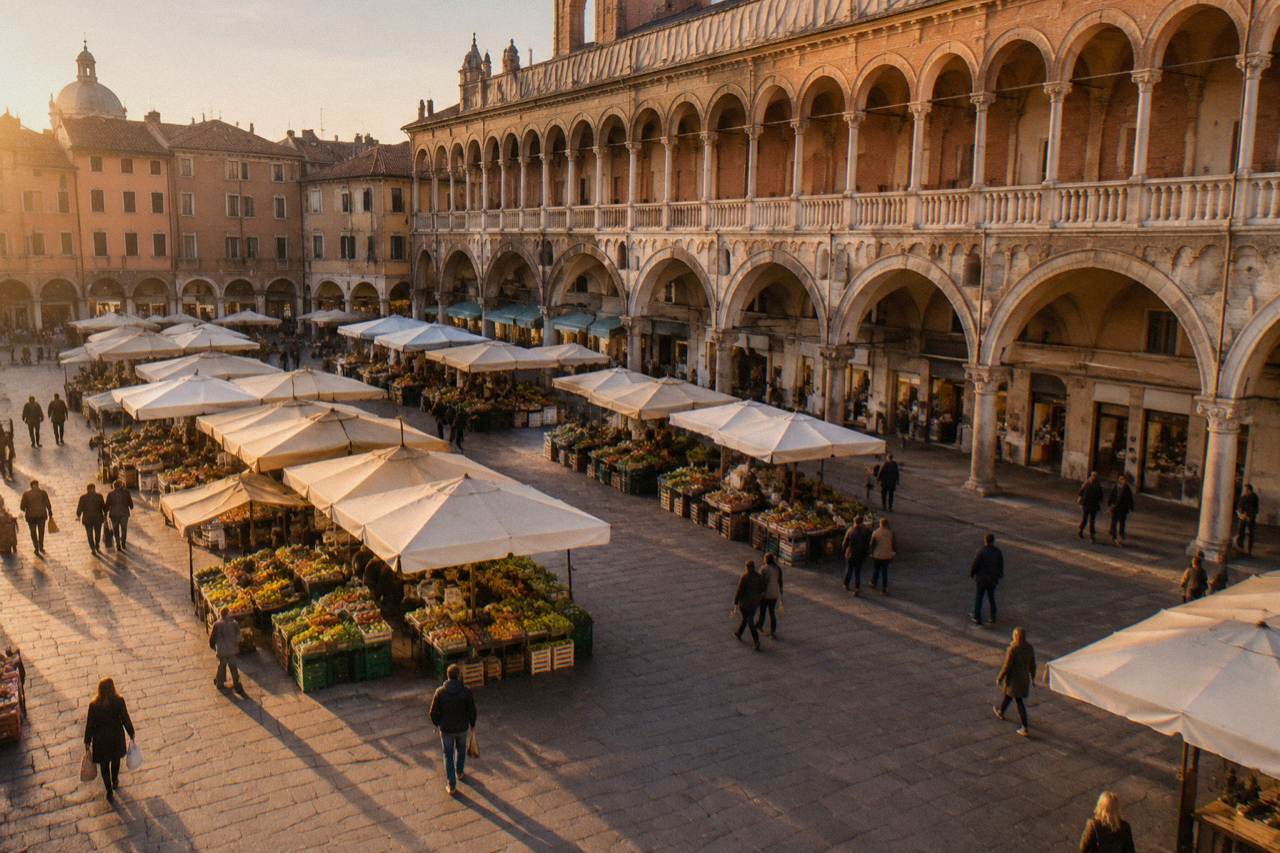
Are Padua And Padova The Same Place?
Yes, Padua and Padova are exactly the same city in the Veneto, northern Italy. "Padua" is the English exonym, the name English speakers use, while "Padova" is the Italian name, what Italians themselves say and what appears on Italian signs, timetables and official documents. Both names point to one inland city about 36 km in a straight line from Venice, with the same station, the same piazzas and the same UNESCO-listed sights.
The two names have coexisted for centuries, and both descend from the city's Latin name, Patavium, from Roman times. English absorbed the name through Latin and French and settled on "Padua"; Italian evolved the same root into "Padova". So there was never a renaming, a split or a second town: the difference is purely one of language, the same relationship as "Rome" and "Roma", or "Venice" and "Venezia", or "Florence" and "Firenze".
This matters in practice because Italy's official systems use the Italian name. Buy a train ticket and the departure board reads "Padova". Search an Italian museum's website and the domain will usually contain "padova". Read an English-language guide and it will say "Padua" throughout. Once you accept that both spellings are the same city, nothing else about planning a trip changes, and a good starting point is the site's overview of things to do in Padua.
Where Does Each Name Come From?
Both "Padua" and "Padova" grow out of Patavium, the city's name in Roman times, when it was a Roman municipium. Per the University of Padua's own history pages, the founding legend traces the city to the Trojan prince Antenor in 1183 BC, and the historian Livy was born there in 59 BC. English took its form through Latin, Italian kept its own, and the city kept both.
The Roman layer of the name is still visible in the city itself. The Scrovegni Chapel is also called the Arena Chapel because it stands on the site of Padua's Roman amphitheatre, and ruins of that amphitheatre remain, per the university's history pages. So the ancient name, the medieval chapel and the modern city all belong to one continuous place, whoever spells it.
Later history kept the single city under one name at a time in one language at a time. The Carraresi lordship ran the city from 1318 to 1405, then Venice ruled it from 1405 until 1797, and through all of it the city was Padua in English documents and Padova in Italian ones. Nobody ever governed two separate cities called Padua and Padova, because there was only ever one.
| Language or period | Name used | Where you will see it |
|---|---|---|
| English | Padua | Guidebooks, English news, this site |
| Italian | Padova | Station signs, tickets, Italian websites |
| Latin, Roman era | Patavium | Classical texts, university history pages |
| Local usage | Padova, with a Veneto dialect also used locally | Everyday speech in the city |
How Do Italians Say Padua?
Italians say "Padova", with the stress on the first syllable: PA-do-va. The language of the city is Italian, and a Veneto dialect is also used locally, per the tourism board's own pages. "Padua" is not wrong, it is simply English, and Italian speakers will recognise it, but every sign, announcement and menu in the city itself uses the Italian form.
The pronunciation is worth one practice run before you travel, because Italian is spoken as it is written. Pa-DO-va with the stress on the middle would sound odd; PA-do-va is the Italian way. The English "PAD-you-ah" is a fully accepted English pronunciation, and nobody in the city will be confused by it, but you will hear "Padova" from the moment your train approaches the station.
There is a related question with its own answer on this site: how do Italians say Padua, and alongside it what language is spoken in Padua. The short version of both is the same as here: Italian is the language, Padova is the name, and the dialect is a local colour on top, not a separate city.
A first walk through the historic center is a good way to connect the names with the ground they describe. The Padua: Discover the Historic Center walk covers the core of the city with a guide, and Check availability before you lock in a day.
Which Name Appears On Tickets, Signs And Timetables?
In Italy, "Padova" is the name that appears on tickets, departure boards, road signs and official websites, so that is the spelling to search and type when booking. The railway station is signed Padova, Italian museum sites use padova in their domains, and the comune's own web address is comune.padova.it. English-language booking pages may show "Padua", but they resolve to the same place.
This is the one place where the two-name situation has a practical edge. If a ticket machine or an operator's search field rejects "Padua", typing "Padova" fixes it, and the station you want is Padova, on the Venice to Milan line. Trains from there reach Venezia Santa Lucia in about 26 to 40 minutes on regional services, with a regional fare of about 5 EUR, per schedule aggregators; check exact times and fares when you book.
The same rule applies to addresses and navigation. Postal addresses in the city read "Padova" followed by the postcode, and the tourist offices run by the city's tourism board list their locations under the Italian name, including the office at the station and the one at Piazza delle Erbe 52. English-language guides, including this one, use "Padua" for readability, and the city's English-language tourism materials do the same.
Is Padova Also A Province And A Region?
Padova is both a city and the capital of a province, the province of Padova, within the Veneto region, and "Veneto" is the region's name in both languages. So "Padova" can refer to the city or to the wider province around it, while "Padua" in English almost always means the city itself. The region, the province and the city are nested, not rival places.
The nesting goes: Italy, then the Veneto region, then the province of Padova, then the city of Padova, which is Padua. This is why a hotel in a small town outside the city can carry a "Padova" address without being in the city, and why regional transport is run at the Veneto level. The city itself is compact and walkable, a question covered in detail in is Padua walkable, and its population was about 208,000 on 1 January 2026, per aggregated ISTAT data.
The university adds another layer of identity, and another number. Founded in 1222, among Italy's oldest by its own wording, it reported about 76,000 students for the 2026/27 academic year, per the university's own pages. That student weight is part of why the city feels the way it does, and it is the same city whether the enrollment figures are published under Padova or Padua. Everything else covered here is indexed on Padua Travel Guide.
| Fact about the city | Figure | Note |
|---|---|---|
| Population, 1 January 2026 | About 208,000 | Aggregated ISTAT data |
| University founded | 1222 | Among Italy's oldest, per the university |
| Students, 2026/27 | About 76,000 | Per the university's own pages |
| Straight-line distance to Venice | About 36 km | Computed from geographic data |
| UNESCO listings | Two | Orto Botanico, 1997; Padova Urbs Picta, 2021 |
Does The Name Difference Affect Day Trips From Padua?
No, because every day trip starts from the same city under either name, and the distances and times are fixed: Venice is about 36 km in a straight line, Vicenza about 30 km, Verona about 69 km, all computed from geographic data. Regional trains from Padova reach Venezia Santa Lucia in about 26 to 40 minutes and Vicenza in about 16 to 25 minutes, per schedule aggregators.
The trick is simply to search for the Italian names of the destinations too. Venezia, Vicenza, Verona, Treviso: these are the forms the Italian booking systems use, exactly as Padova is the form for the city you are leaving from. The direct Busitalia airport coach between Padova and Venice Marco Polo costs 13 EUR one way for an adult and takes about 45 minutes, per the operator's own page, and it is signed with the Italian names at both ends.
One warning that matters more than spelling: Padua is inland, not on the Venice lagoon. It is an inland city on the Bacchiglione, and Venice is a separate place a train ride away. The question of how far Padua is from Venice has its own page, as does where Padua is in Italy, and both keep the geography straight. Also worth knowing: Venice's 2026 day-tripper access fee trial ended on 27 July 2026, and no decision for 2027 had been announced, per Venezia Unica, so a day trip from Padua carries no access charge on the current published rules.
| Destination from Padua | Straight-line distance | Train time, regional, reported |
|---|---|---|
| Venice (Venezia S. Lucia) | About 36 km | About 26 to 40 minutes |
| Vicenza | About 30 km | About 16 to 25 minutes |
| Verona | About 69 km | About 43 to 60 minutes |
| Treviso | About 41 km | About 28 to 60 minutes |
The Euganean Hills sit closer still: Abano Terme about 8 km in a straight line, Montegrotto Terme about 11 km, Arqua Petrarca about 20 km. Whether the guidebook spells the base "Padua" and the timetable spells it "Padova", the hills are the same hills.
One City, Two UNESCO Listings
Whichever name you use, the city carries two separate UNESCO World Heritage listings: the Orto Botanico, inscribed in 1997, and Padova Urbs Picta, the fourteenth-century fresco cycles, inscribed in 2021 across eight complexes in the old centre. The second listing is registered under the Italian name, which is one more reason both spellings appear in official records.
The eight Urbs Picta complexes include the Scrovegni Chapel, the Church of the Eremitani, Palazzo della Ragione, the Baptistery of the Cathedral, the Basilica and Convent of Sant'Antonio, the Oratory of San Giorgio and more, all frescoed in the fourteenth century. Giotto painted the Scrovegni cycle between 1303 and 1305, per the chapel's own site, and the chapel is timed entry only, with at most 25 people admitted every 15 minutes and booking required in advance. It is closed 16 to 27 November 2026 for the annual fresco inspection.
The Orto Botanico, founded in 1545 and described by the university as the world's first university botanical garden, saw its ticket rise to 15 EUR full price from 1 September 2026, per the garden's own tariff page. All of this belongs to the single city, under either of its names, and the details of why the chapel is famous are covered at why the Scrovegni Chapel is famous.
So Which Name Should You Use In Padua?
Use whichever comes naturally, and switch to "Padova" when an Italian system asks for it: say "Padua" in English conversation and "Padova" at ticket machines, on Italian websites and when reading signs. There is no etiquette penalty for either name, because they are the same word for the same city, and locals use the Italian form every day. Book tours and trains with the Italian spelling if a search fails.
In practice the division of labour is simple. English-language guides, this site included, say Padua. Italian railway platforms, bus destinations, museum domains and street signs say Padova. The city's tourism materials publish in English under "Padua" and in Italian under "Padova" without any contradiction, because there is nothing to contradict: one city, one set of sights, two spellings. For whether the trip is worth it at all, see is Padua worth visiting, and for the length of a first visit, how many days you need in Padua.
If Venice is also on the itinerary, the pairing question has its own treatment in is Padua worth visiting from Venice. The two cities are 36 km apart in a straight line, and the name of the inland one changes with the language, nothing else.
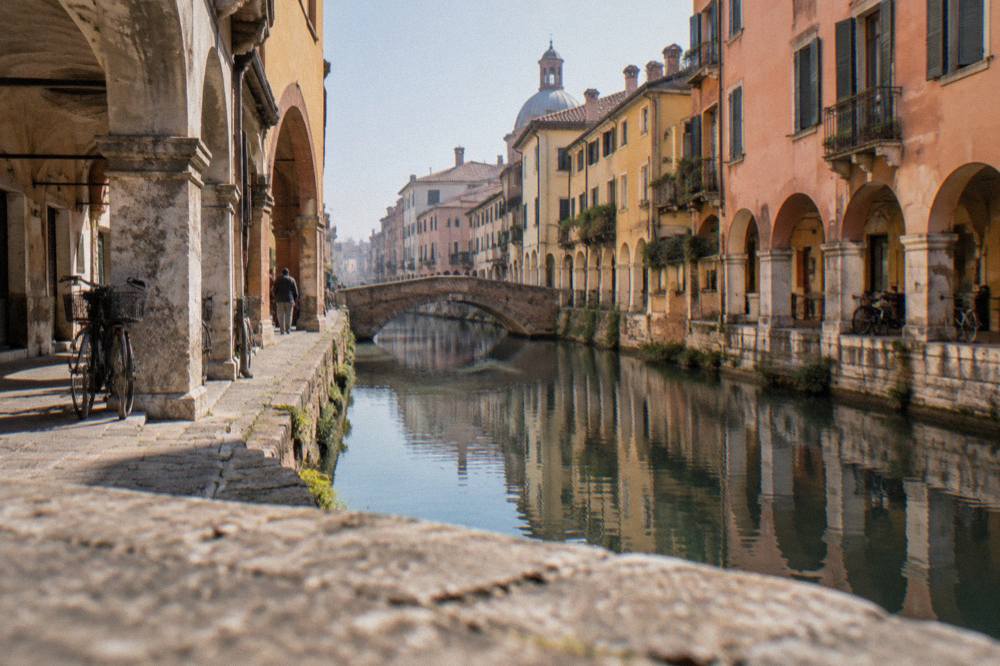
Common Questions About The Padua And Padova Name
Are Padua And Padova The Same Place?
Yes. Padua is the English name and Padova the Italian name for the same inland city in the Veneto, northern Italy, about 36 km in a straight line from Venice. Same station, same piazzas, same UNESCO listings, one city.
How Do Italians Say Padua?
Italians say "Padova", stressed on the first syllable: PA-do-va. The city's language is Italian, with a Veneto dialect also used locally.
Why Do English Speakers Say Padua?
English took its name from the city's Latin name, Patavium, through Latin and French, while Italian evolved the same root into Padova. Both spellings describe one place.
Which Spelling Should I Use When Booking Trains?
Use "Padova" in Italian booking systems and search fields, because that is how the station and timetables are signed. English-language booking pages may show "Padua" and resolve to the same station.
Is Padova A Province Or Just A City?
Both. Padova is a city and the capital of the province of Padova, inside the Veneto region. The city itself is the place English speakers call Padua.
Does The City Have Two UNESCO Sites Under One Name?
Yes. The Orto Botanico was inscribed in 1997 and Padova Urbs Picta, the fourteenth-century fresco cycles across eight complexes, in 2021. Both listings belong to the single city, whichever spelling you use.
