The Feast Of Saint Anthony In Padua On 13 June
Every 13 June Padua marks the feast of its most famous saint with a procession, thirteen days of services and a city centre given over to pilgrims. Here is what the event involves and how to plan around it.
Short answer
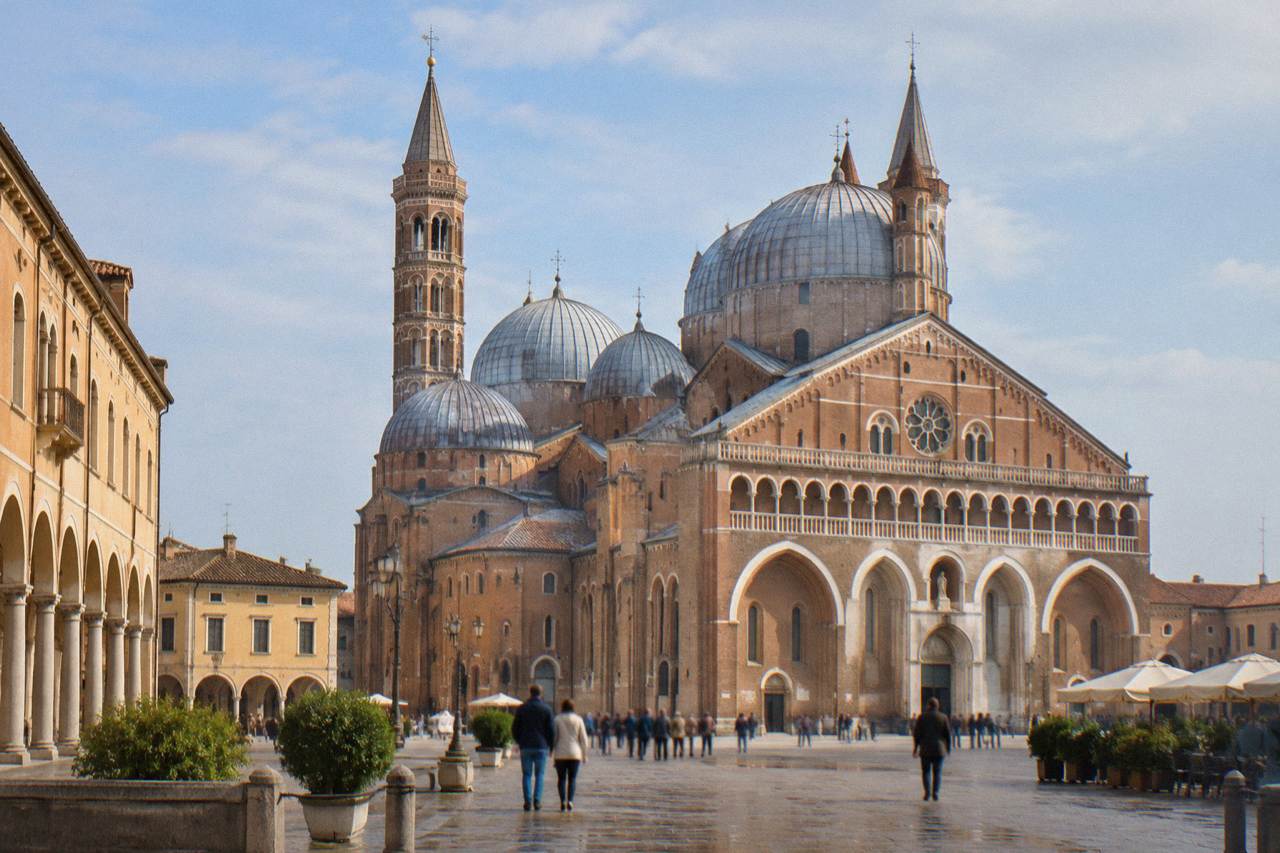
The Feast of Saint Anthony falls on 13 June each year in Padua, Veneto, and is the city's principal religious celebration. It is preceded by the Tredicina, thirteen days of services at the Basilica of Saint Anthony; the 2026 edition ran 31 May to 12 June with the feast on 13 June.
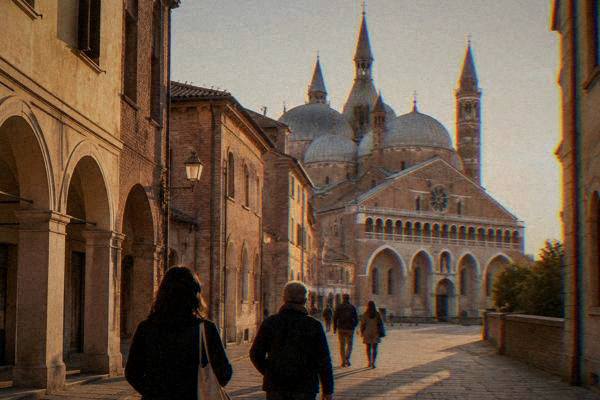
Padua (Padova), an inland city in the Veneto about 36 km in a straight line from Venice, keeps one date above all others on its civic calendar: 13 June, the feast of Saint Anthony. The day belongs to the Basilica of Saint Anthony, known simply as the Santo, where the saint's tomb stands, and it draws pilgrims and visitors into the streets around Piazza del Santo and Prato della Valle. The feast is the end point of the Tredicina, thirteen days of preparatory services at the basilica, and the 2026 edition ran from 31 May to 12 June with the principal celebrations on 13 June itself. This guide sets out what the event involves, what the sources say about the basilica, and how to plan a trip to Padua around it.
Who Was Saint Anthony Of Padua?
Saint Anthony of Padua was a Franciscan friar and preacher who died at Arcella, on the edge of Padua, on 13 June 1231, one year before construction of the Basilica of Saint Anthony, which holds his tomb, began in 1232. His tomb has made the city a pilgrimage destination, and the 13 June feast marking his death is its principal religious event. Although he is inseparable from the city's name, the link was brief and final: he died at Arcella, on the edge of Padua, and his tomb has made the city a pilgrimage destination ever since. The feast on 13 June marks the anniversary of his death, and the basilica built for him is today one of the eight complexes in Padua's UNESCO-listed fourteenth-century fresco cycles, inscribed in 2021 as Padova Urbs Picta.
The details the sources give are spare and worth keeping to. Anthony died on 13 June 1231. The Basilica of Saint Anthony, begun in 1232, holds his tomb in the Chapel of Saint Anthony and the Chapel of the Relics, per the basilica's own materials. Donatello's high altar inside and the Gattamelata equestrian statue in the piazza outside are both reported by the sources this site relies on. For a fuller account of the man and the devotions around him, see the site's dedicated guide to Saint Anthony of Padua, and for the question visitors ask at the tomb itself, Is Saint Anthony Buried In Padua? answers it directly.
What makes the June date distinctive is scale. Padua's calendar has markets, a marathon and a summer festival, but the feast of the Santo is the city's principal religious event, and it is structured: thirteen days of build-up, then a single day of procession and celebration centered on the basilica. The event is anchored to a fixed date, which shapes everything about visiting Padua in early June.
What Is The Feast Of Saint Anthony In Padua?
The Feast of Saint Anthony is Padua's annual celebration of its patron saint on 13 June, consisting of the Tredicina, thirteen days of services at the Basilica of Saint Anthony from 31 May to 12 June, followed on 13 June by the principal feast with a procession of the saint's statue and relics. The 2026 edition followed exactly that shape: the Tredicina ran 31 May to 12 June, and the feast fell on 13 June, per santantonio.org, the basilica's own site. It is an annual event, and the 2026 dates are the latest edition; a 2027 programme had not been announced.
The Tredicina, whose name simply means "thirteen days", is the devotional heart of the fortnight. Each day brings services at the basilica, and the atmosphere around Piazza del Santo builds toward the feast. On 13 June itself the basilica's programme centres on a procession in which the statue of the saint and the relics are carried through the area around the basilica. The saintantonio.org event pages are the place to confirm each year's schedule, since the structure repeats but the details are published per edition.
For visitors, the feast has a practical dimension beyond the liturgy. The squares around the basilica, Prato della Valle and the streets linking them fill with pilgrims and stalls, and the whole Santo quarter becomes the centre of gravity for the city. A walking tour can give that quarter structure: the St Anthony's life tour, with an option to extend to Camposampiero, follows the saint's story through Padua with a local guide, and it can be checked via Check availability.
What Happens During The Tredicina And On 13 June In Padua?
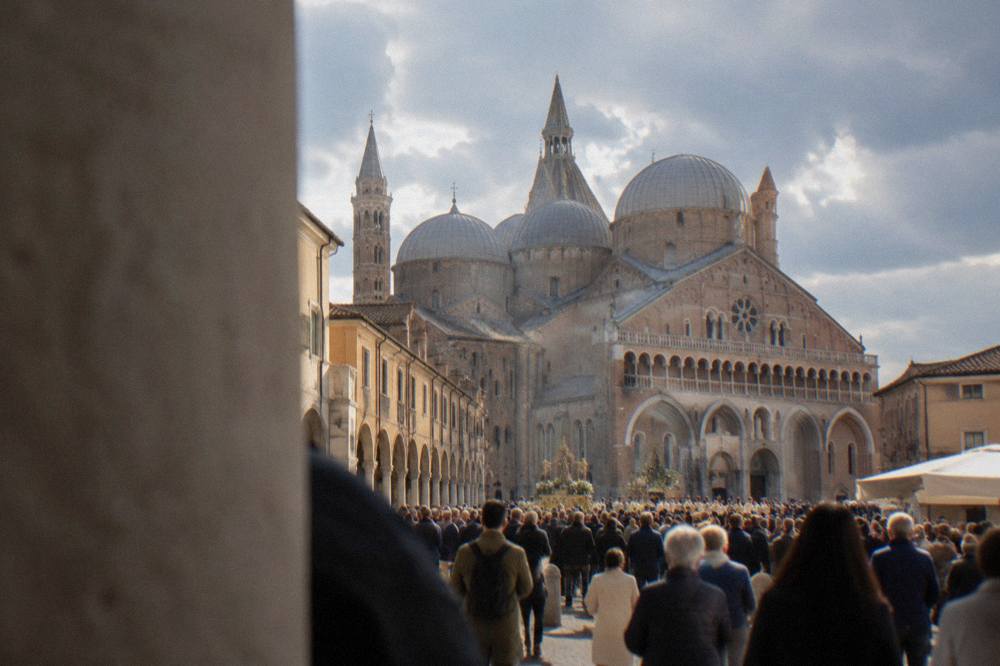
During the Tredicina, 31 May to 12 June in the 2026 edition, the Basilica of Saint Anthony holds daily services building toward the feast, and on 13 June the city marks the feast itself with solemn celebrations and a procession of the saint's statue and relics through the streets around the basilica. The procession is the public centrepiece: the statue and relics are carried outward from the Santo, and the route serves the streets of the Santo quarter rather than a fixed secular parade course. The basilica's own site publishes the programme for each edition.
The rhythm of the fortnight is easy to grasp even for a visitor with no religious purpose. The Tredicina fills the basilica with services for thirteen days; the feast closes them. Around the liturgy, the city carries on: the Piazza delle Erbe market runs Monday to Friday 7:30 to 13:30 and Saturday 7:30 to 20:00, per the Comune di Padova, and the antiques market fills Prato della Valle and via Umberto I on the third Sunday of each month. Early June can therefore put a saint's feast, a medieval market square and an antiques market in the same walk.
What the sources support about the day, in short:
| Element | What the sources say | Where it happens |
|---|---|---|
| Tredicina | Thirteen days of services, 31 May to 12 June in 2026 | Basilica of Saint Anthony |
| Feast day | 13 June, anniversary of the saint's death in 1231 | Citywide, centered on the Santo |
| Procession | Statue of the saint and relics carried in procession on the feast | Streets around the basilica |
| Basilica entry | Free, per padovaurbspicta.org | Piazza del Santo |
| Tomb and relics | Chapel of Saint Anthony and Chapel of the Relics inside | Interior of the basilica |
One planning note matters more than any other: the feast draws pilgrims, and the basilica is a working church whose schedule bends around services. Hours change around functions, and the basilica's own site is the reference for when the church is open to sightseers on any given day of the Tredicina. Treat the feast fortnight as a time to plan the rest of Padua around the Santo, not the other way round.
How Do You Visit The Basilica Of Saint Anthony During The Feast?
Entry to the Basilica of Saint Anthony is free, and during the feast fortnight the visit is shaped by the service schedule: the basilica's opening hours change around liturgical functions, so check the basilica's own site before going, and dress suitable for a church environment applies. The basilica holds the saint's tomb and the Chapel of the Relics, and those are the two points pilgrims come for. No ticket, no timed slot: this is one of the few major sights in Padua that costs nothing to enter.
The practical cautions are few but firm. The sources available to this site do not publish fixed opening hours for the basilica, and printing an "open from" time would mislead: hours vary, and during the Tredicina the church is in near-constant liturgical use. The dress code, per santantonio.org, is that clothing be suitable to a church environment. Photography and sightseeing yield to services when they are in progress. The full sightseeing picture around the basilica, including Donatello's altar and the Gattamelata outside, is covered in the site's guide to the Basilica di Sant'Antonio.
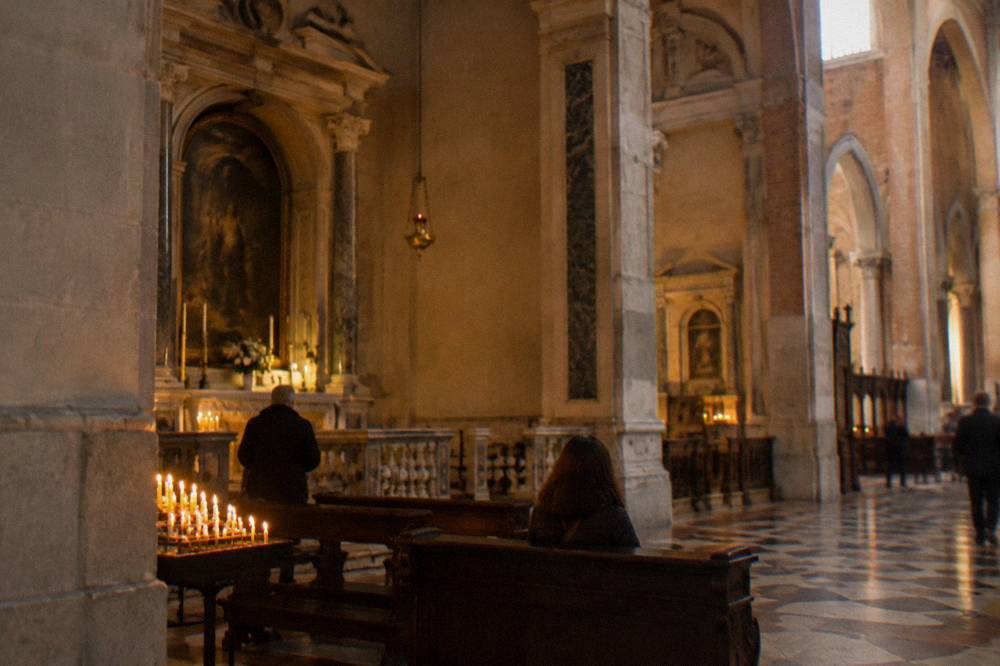
The basilica is also an art monument inside a UNESCO inscription. It is one of the eight complexes of Padova Urbs Picta, the fourteenth-century fresco cycles inscribed in 2021, which gives the Santo a second identity beyond pilgrimage: a visitor can come for the feast and leave having seen part of a World Heritage ensemble. The broader fresco itinerary across the city is mapped in Padova Urbs Picta UNESCO, and a combined ticket for the fresco sites, discussed in the Urbs Picta card guide, still requires the Scrovegni Chapel's own timed booking.
What Is The Connection Between Saint Anthony And Padua's Other Sights?
Saint Anthony's Padua overlaps almost entirely with the historic centre: the basilica stands beside Prato della Valle, the Orto Botanico lies a short walk south, and the Scrovegni Chapel, the university and the market squares are all within the same compact city, so a feast-day visit can carry a full sightseeing itinerary. The Santo quarter is not a shrine on a hill; it is woven into the centre of a city of about 208,000 residents and roughly 76,000 students, and the walk from the basilica to Piazza delle Erbe passes through the heart of it.
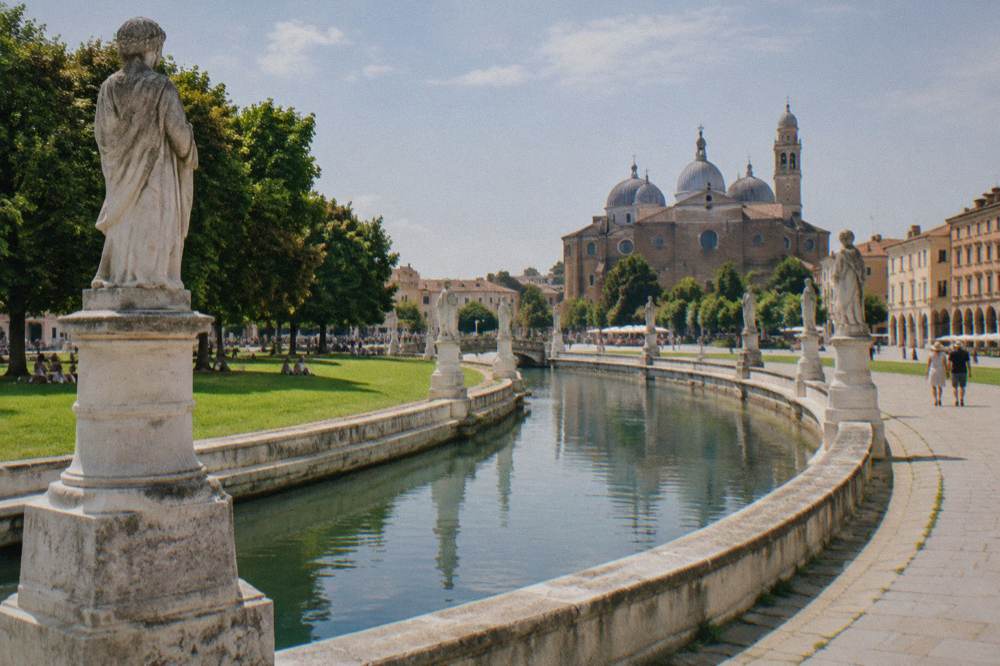
The nearest landmark is Prato della Valle, the great oval square surrounded by a canal and a double ring of statues of famous people, declared communal space by the Venetian Senate in 1767. During the feast the square does double duty: the Saturday market and the third-Sunday antiques market are fixtures there, and the basilica's procession territory touches its edge. From Prato della Valle the Orto Botanico, the botanical garden founded in 1545 and inscribed by UNESCO in 1997, is steps away; its ticket is EUR 15 full price from 1 September 2026, EUR 12 in winter. Other pages covering the same trip are gathered on Padua Travel Guide.
The other anchor is the Scrovegni Chapel, Giotto's fresco cycle painted between 1303 and 1305, which shares the June calendar with the feast but runs on a completely different system: timed entry, at most 25 people every 15 minutes, about 15 minutes inside, booked in advance, with no same-day online booking. The daytime ticket, EUR 15 full plus a EUR 1 booking fee, also covers the Musei Civici Eremitani and Palazzo Zuckermann. Booking logistics are laid out in Scrovegni Chapel Tickets. A June trip can therefore hold a saint's feast and Giotto in the same two days, provided the chapel slot is reserved first.
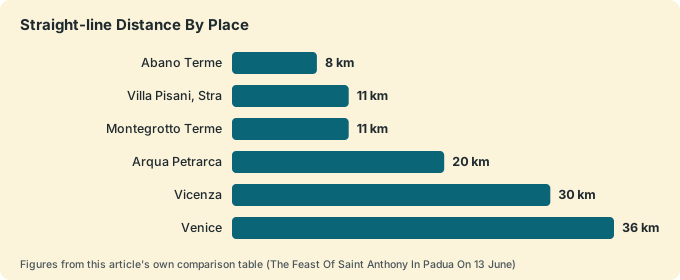
Straight-line distances from central Padua to the places a feast-week visitor might add:
| Place | Straight-line distance | What it is |
|---|---|---|
| Abano Terme | 8 km | Thermal town in the Euganean Hills |
| Villa Pisani, Stra | 11 km | Brenta Riviera villa with a noted maze |
| Montegrotto Terme | 11 km | Thermal town in the Euganean Hills |
| Arqua Petrarca | 20 km | Hill village, Petrarch's house |
| Vicenza | 30 km | Palladio's city, train about 16 to 25 minutes |
| Venice | 36 km | Lagoon city, train about 26 to 40 minutes |
What Is The Weather Like In Padua In June?
June in Padua, per the ERA5 reanalysis for 1991 to 2020, averages a mean daily high of 26.2 C with a mean overnight low of 16.6 C and about 81 mm of rain across the month, warm and humid but not the peak of summer heat, which comes in July and August at 28.8 C. The figures are modelled climate normals for the grid cell at the centre of Padua, not a weather-station record, and they describe the month the feast falls in: warm days, mild nights, and rain that can arrive in heavy spells.
The comparison with neighbouring months is what makes June attractive for a visit. The mean high steps up from 22.1 C in May to 26.2 C in June and 28.8 C in July and August, while rainfall runs at 99.7 mm in May, 81.0 mm in June and 62.1 mm in July. In other words the ERA5 normals put June between spring rain and summer heat on both axes. Nothing in the data predicts conditions for a specific 13 June, and no sunshine figures are printed because the reanalysis does not supply them as a measured record.
| Month | Mean high C | Mean low C | Rain mm |
|---|---|---|---|
| May | 22.1 | 12.4 | 99.7 |
| June | 26.2 | 16.6 | 81.0 |
| July | 28.8 | 18.9 | 62.1 |
| August | 28.8 | 19.2 | 78.7 |
| September | 23.6 | 14.9 | 105.5 |
For packing, the normals suggest light clothing with a layer for the evening procession and something for rain. The fuller monthly picture, including the months with the highest and lowest rainfall, is in Padua Weather, and the timing question more broadly is covered in The Best Time To Visit Padua.
How Do You Plan A Trip To Padua Around The Feast?
To plan a trip around the feast, fix 13 June as the anchor, book the Scrovegni Chapel's timed slot and accommodation early, arrive during the Tredicina if you want the devotional build-up, and use Padua's trains and the EUR 1.70 urban ticket to move between the Santo quarter, the station and day trips. The feast is date-locked, so everything else negotiates around it: the chapel slot, the basilica's service schedule and the day-trip calendar all bend to the thirteenth of June.
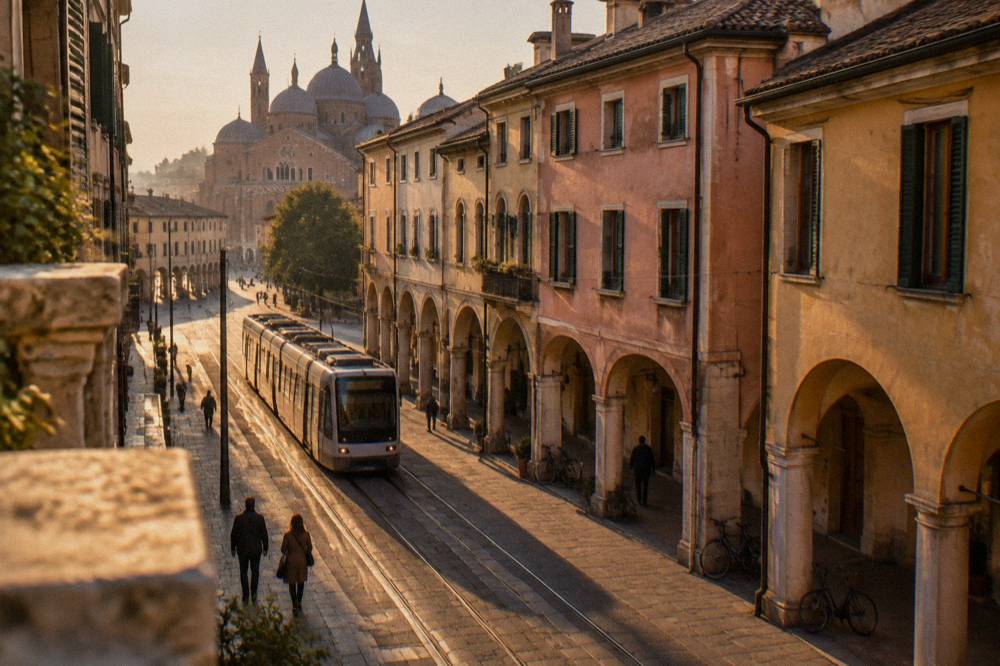
Transport inside the city is simple. The urban TU1 ticket costs EUR 1.70 for 90 minutes, or a contactless card can be tapped on board the tram and buses; tram line SIR1 runs north to south through the city. The airport bus from Venice Marco Polo costs EUR 13 one way, about 45 minutes, with 54 runs a day. Trains reach Venice in about 26 to 40 minutes and Vicenza in about 16 to 25, so a feast-week base in Padua can carry the lagoon city and the Palladian one without changing hotels, an idea developed in Padua As A Base For Venice.
A sample frame for the days around the feast, using only fixed, sourced times:
| Day | Focus | Fixed facts that shape it |
|---|---|---|
| Two days before 13 June | Tredicina services at the Santo; Prato della Valle and Orto Botanico | Basilica entry free; Orto Botanico EUR 15 full from 1 Sept 2026 |
| Eve of the feast | Scrovegni Chapel and Musei Civici Eremitani | Timed entry, EUR 15 plus EUR 1 fee, book ahead |
| 13 June | Feast: procession and basilica celebrations | Programme per santantonio.org for each edition |
| Day after | Day trip by train | Venice about 26 to 40 min, Vicenza about 16 to 25 min, regional fares about EUR 5 and EUR 6 |
Accommodation planning should note the tourist tax: it exists, is collected by the accommodation, applies per person per night and is capped at five consecutive nights, with under-16s exempt. No rate is given here. Where to base yourself, quarter by quarter, is covered in Where To Stay In Padua.
What Should You Eat And Drink In Padua During The Feast?
Padua's table in June runs to bigoli pasta, baccalà, dishes built on gallina padovana chicken and the torta pazientina, with the bars of Piazza delle Erbe and Piazza dei Signori serving the spritz culture of the Veneto, and Aperol itself created in Padua in 1919 by the Barbieri brothers. The last point is the one worth dropping at the bar: the aperitif most associated with Italy was presented at the Padua fair by the Barbieri brothers, Luigi and Silvio, per press accounts and reference works, which gives the city a claim on the spritz no other town can make.
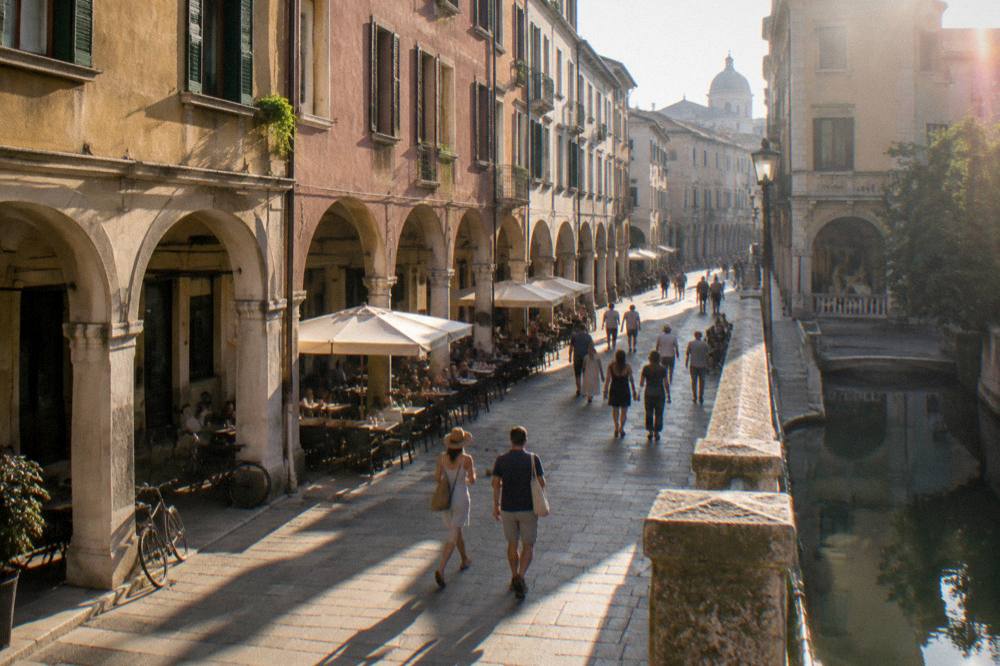
The feast does not carry a specific food tradition the sources name, but June puts the market squares at their fullest. Piazza delle Erbe holds 52 stalls of fruit, vegetables and flowers on its weekday schedule, and the permanent Sotto il Salone market under Palazzo della Ragione sells local products year round. The named local dishes and the market culture are unpacked in What To Eat In Padua, and the aperitivo hour in the squares gets its own treatment in Spritz In Padua.
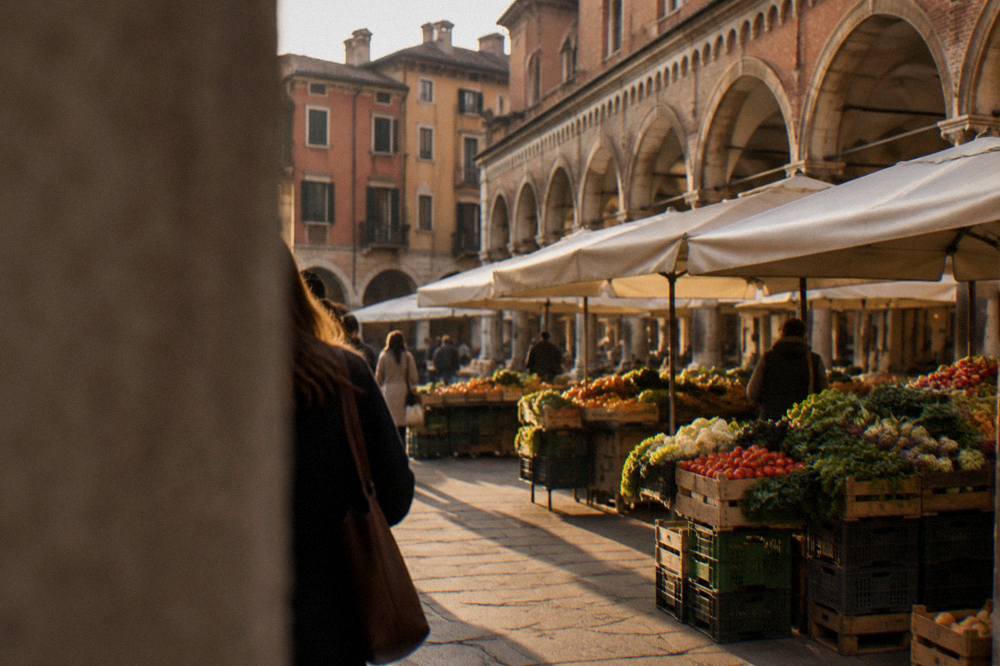
A tasting walk is a good fit for a feast week, since the food culture and the religious calendar share the same streets. Beyond the tours listed below, the site's broader inventory, including food and wine walks through the Euganean Hills, is linked from things to do in Padua.
What Else Happens In Padua In June?
June in Padua is anchored by the Tredicina and the feast of 13 June, and the 2026 season also carried the Sherwood Festival from 10 June to 12 July at Park Nord near Stadio Euganeo, making mid-June one of the fuller stretches of the city's year. The two events sit at opposite ends of the register, devotion at the Santo and open-air concerts at the northern edge, and a visitor in the feast week can encounter both without planning either.
The fixed dates worth knowing, all from the events calendar:
| Event | 2026 dates | Source |
|---|---|---|
| Tredicina | 31 May to 12 June | Annual; 2026 edition as listed by santantonio.org |
| Feast of Saint Anthony | 13 June | Annual, fixed date |
| Sherwood Festival | 10 June to 12 July | 2026 edition at Park Nord Stadio Euganeo |
| Padova Marathon | 18 April 2027 | Announced date, start Stadio Euganeo, finish Prato della Valle |
The marathon belongs to spring rather than the feast, but its finish line at Prato della Valle shows how the same square serves the city's civic and religious life in turn. No 2027 dates for the Tredicina beyond the fixed feast day, and no 2027 Sherwood programme, had been announced. The year's full calendar, including autumn's Salone dei Sapori food week, is gathered in the site's events coverage.
How Does The Feast Compare With Other Reasons To Visit Padua?
The feast is one of four strong reasons to time a Padua trip deliberately, alongside the Scrovegni Chapel's timed-entry system, the June climate window and the city's role as a rail base for Venice, Vicenza and Verona, and the feast is the only one of the four fixed to a single calendar date. Giotto's chapel can be booked for any week of the year; the feast cannot. That makes 13 June both the best and the least flexible date in the city's visitor calendar.
For a first-time visitor, the feast week works as a multiplier. The basilica is free to enter at any time of year, but in the Tredicina fortnight it is in its fullest liturgical use, and the procession gives the Santo quarter an animation no other week supplies. The trade-off is straightforward: the basilica's sightseeing hours compress around services, and the quarter around Piazza del Santo fills. The basilica's own site is the reference for each edition's schedule, and a flexible itinerary absorbs the feast rather than fighting it.
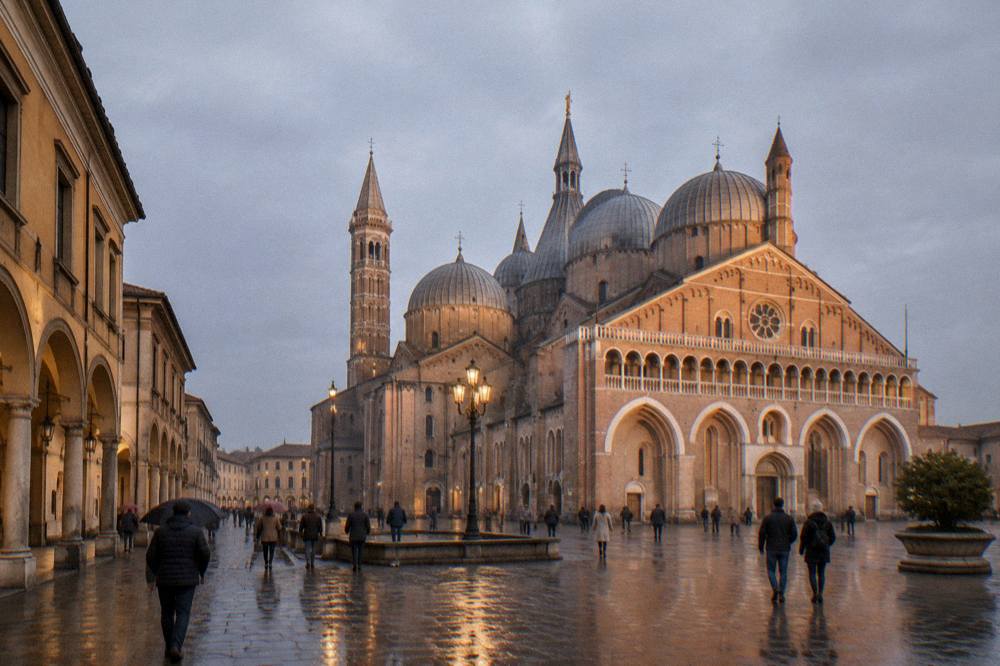
Repeat visitors use the feast differently. Some come for the liturgy and build the city around it; others treat 13 June as one tile in a Veneto itinerary, using Padua's trains and the airport bus to move through the region. Both approaches work on the same infrastructure: the station, the tram, the EUR 1.70 urban ticket and a compact centre that joins the Santo, Prato della Valle, the Scrovegni Chapel and the university quarter on foot. The itineraries that knit those pieces together are laid out in the site's day-plan guides, from a single day to a full Veneto week.
Common Questions About The Feast Of Saint Anthony In Padua
When is the feast of Saint Anthony in Padua?
The feast falls on 13 June every year. It is preceded by the Tredicina, thirteen days of services at the Basilica of Saint Anthony; the 2026 edition ran 31 May to 12 June, with the principal celebrations on 13 June.
What is the Tredicina in Padua?
The Tredicina, "thirteen days", is the period of preparatory services at the Basilica of Saint Anthony leading up to the feast on 13 June. In 2026 it ran from 31 May to 12 June, per the basilica's own site.
Is the Basilica of Saint Anthony free to enter?
Yes, entry to the Basilica of Saint Anthony is free, per padovaurbspicta.org. The basilica holds the saint's tomb and the Chapel of the Relics, and hours change around services, so check the basilica's own site before a visit.
What happens on 13 June in Padua?
The feast day brings solemn celebrations at the Basilica of Saint Anthony and a procession in which the statue of the saint and the relics are carried through the streets around the basilica. The programme for each edition is published by the basilica.
Is Saint Anthony really buried in Padua?
The saint died in Padua on 13 June 1231, and his tomb stands in the Chapel of Saint Anthony inside the basilica, with the Chapel of the Relics alongside it. The full answer, with the details the sources give, is in the site's page on whether Saint Anthony is buried in Padua.
Is June a good time to visit Padua?
The ERA5 reanalysis for 1991 to 2020 gives June a mean daily high of 26.2 C, a mean low of 16.6 C and about 81 mm of rain, between the wetter May and the hotter July and August. The feast on 13 June adds a fixed event to whatever the weather does.
The feast of Saint Anthony gives Padua its one unmovable date, and everything else in a June visit, the Giotto slot, the market mornings, the train to Venice, arranges itself around it. Book the chapel, check the basilica's schedule for the edition you attend, and let the thirteenth of June set the tempo of the trip.