What Is Padua Famous For?
Padua is famous for Giotto's Scrovegni Chapel, the Basilica of Saint Anthony, one of Italy's oldest universities and two UNESCO listings. Here is what the city is known for.
Padua (Italian: Padova) is an inland city in the Veneto, northern Italy, about 36 km in a straight line from Piazza San Marco in Venice, and it is famous for a short and definite list of things: Giotto's fresco cycle in the Scrovegni Chapel, painted between 1303 and 1305; the Basilica of Saint Anthony, begun in 1232; a university founded in 1222 that counts Galileo among its teachers; and the Orto Botanico, the botanical garden founded in 1545. The city holds two UNESCO World Heritage listings of its own, and it works as a base for Venice, the Euganean Hills, Vicenza and Verona. This page sets out each of those claims with the figures the official sources give.
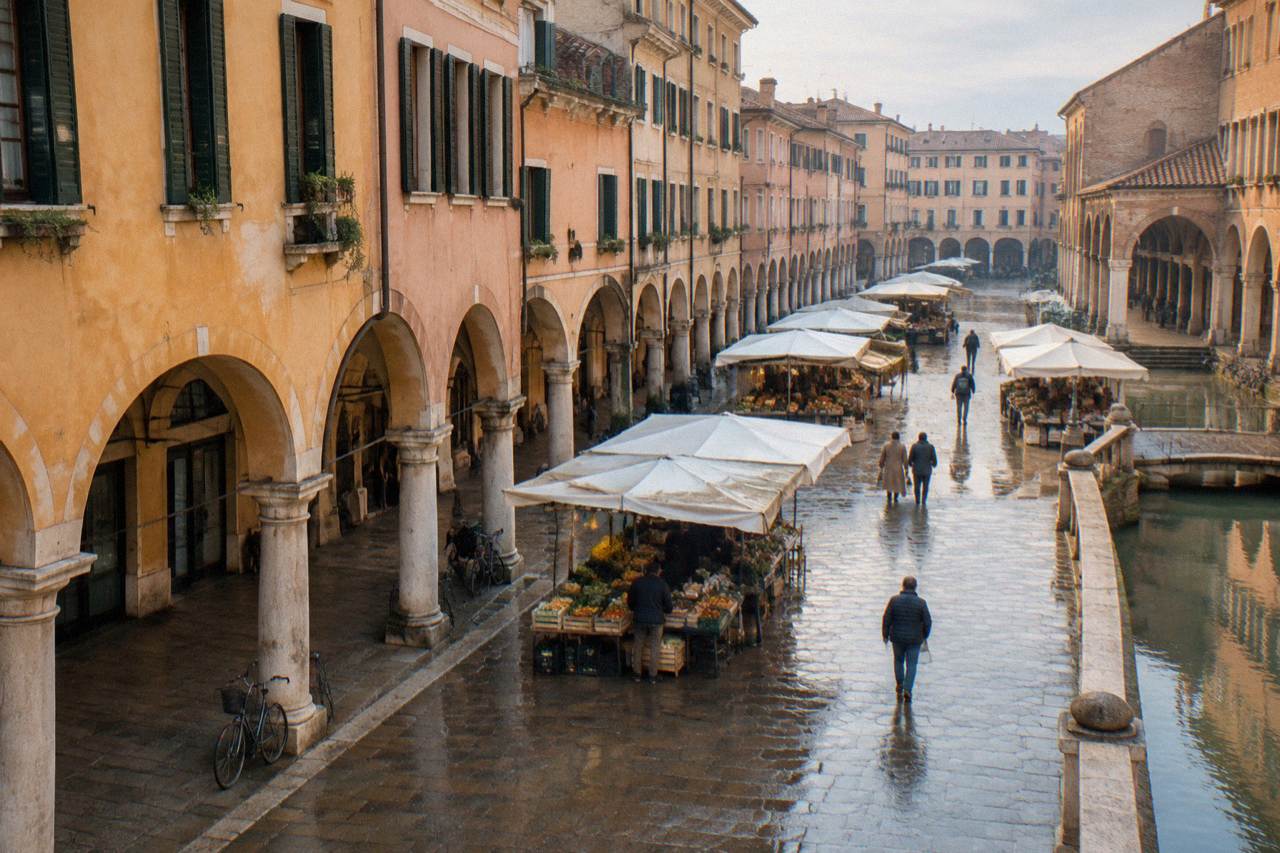
What Is Padua Famous For?
Padua is famous above all for Giotto's frescoes in the Scrovegni Chapel, painted 1303 to 1305, for the Basilica of Saint Anthony, for a university founded in 1222, and for the Orto Botanico, the botanical garden founded in 1545. The city carries two UNESCO listings: the Orto Botanico, inscribed in 1997, and the fourteenth-century fresco cycles of Padova Urbs Picta, inscribed in 2021.
That list is what the institutional sources themselves lead with. The chapel's own site gives the two-year painting window, 1303 to 1305, and the University of Padua's own pages give the 1222 founding and the 1545 garden. The two UNESCO inscriptions are on the World Heritage Centre's list: the garden as site 824, the fresco cycles as site 1623. Everything else the city is known for, the Santo, Prato della Valle, Caffè Pedrocchi, the spritz, sits downstream of that core four.
A note on geography, because it is the single thing guidebooks get wrong: Padua is not on the Venice lagoon, not on the sea and not on a lake. It is an inland city of arcaded streets on the Bacchiglione, and Venice is a day trip by train. If you are weighing the two cities against each other, the page on whether Padua is worth visiting covers the case for staying here rather than there.
Why Is The Scrovegni Chapel Famous?
The Scrovegni Chapel is famous because Giotto frescoed its interior in just two years, between 1303 and 1305, with cycles on the Life of the Virgin, the Life of Christ, the Vices and Virtues and the Last Judgment. It is the anchor of the 2021 UNESCO inscription Padova Urbs Picta, which covers eight frescoed complexes in the old centre, and entry is timed and booked ahead.
The chapel's own site states the painting dates plainly, and the UNESCO listing of 2021 groups the chapel with seven other fourteenth-century sites: the church of the Eremitani, Palazzo della Ragione, the Reggia Carrarese chapel, the Baptistery, the Basilica and Convent of Sant'Antonio, the Oratorio di San Giorgio and the Oratorio di San Michele. The chapel is also called the Arena Chapel because it stands on the site of Padua's Roman amphitheatre; it has nothing to do with the Verona arena. The name behind it, Enrico degli Scrovegni, and the land purchase of 3 February 1300, are documented on the chapel's own history pages.
Visiting is strictly controlled, and this is the part to plan around. The chapel's booking page sets entries of at most 25 people every 15 minutes, about 15 minutes inside, and arrival five minutes before the slot; late arrivals are not admitted and must rebook and pay again. There is no same-day online booking. The daytime ticket, 15 EUR full plus a 1 EUR booking fee, also covers the Musei Civici Eremitani and Palazzo Zuckermann. The chapel is closed 16 to 27 November 2026 for the annual fresco inspection. The dedicated pages on why the chapel is famous and how long a visit takes go deeper.
The Basilica Of Saint Anthony
The Basilica of Saint Anthony, usually called the Santo, is famous as the shrine of Saint Anthony of Padua, who died in the city on 13 June 1231. Construction began in 1232, the year after his death, and the basilica keeps his tomb and relics. Entry is free, and the feast on 13 June, with the preceding Tredicina, is the city's principal religious event.
The Tredicina ran 31 May to 12 June in 2026 with the feast day on 13 June, per the basilica's own site; it is an annual event and no 2027 date had been announced. Donatello's work in the basilica, including the main altar, and the Gattamelata equestrian statue outside in Piazza del Santo, are part of what draws people to the complex. The basilica is one of the eight buildings inside the Urbs Picta UNESCO inscription, so a visitor interested in the fresco cycles passes through it anyway. Hours are not listed in this article: check the basilica's own site before a visit. The question of whether Saint Anthony is buried in Padua has its own page.
The University Of Padua: Galileo, Galilei And A First Woman Graduate
The University of Padua, founded in 1222, is famous for Galileo, who held the chair of mathematics from 1592 to 1610 and called them the best eighteen years of his life, for the anatomical theatre of 1594, and for Elena Lucrezia Cornaro Piscopia, who graduated in philosophy on 25 June 1678 as the first woman university graduate. The university describes itself as among the oldest in Italy.
The university's own heritage pages carry all three claims. Galileo's Padua years, 1592 to 1610, produced the Sidereus Nuncius of 1610, and his chair survives in the Sala dei Quaranta in Palazzo del Bo, which visitors see on the guided historical tour. The same tour takes in the anatomical theatre of 1594 and the statue of Elena Cornaro. The university reported about 76,000 students in the 2026/27 academic year, which shapes the city's markets, bars and evening squares. Rather than "the oldest university", which the sources do not support, the university's own wording is that it was founded in 1222, making it among the oldest in the country. The university history and Galileo in Padua pages expand on this.
The Orto Botanico And Padua's Two UNESCO Listings
The Orto Botanico, founded in 1545, is famous as the world's first university botanical garden in the university's own description, and it was inscribed by UNESCO in 1997. Together with the Padova Urbs Picta fresco inscription of 2021, it gives Padua two separate World Heritage listings, which is the base of the city's standing as an art-and-science destination.
The garden's own tariff page set new prices from 1 September 2026: 15 EUR full for visitors aged 26 to 64, 12 EUR full in winter from November to February, with reductions to 10 EUR and 8 EUR. It is closed on non-holiday Mondays, and audioguides are included. A combined "Padova Citta della Scienza" ticket exists that bundles the garden with Palazzo del Bo and the Museum of Nature and Man. The Orto Botanico guide carries the hours detail, and the Urbs Picta UNESCO page explains what the 2021 inscription covers.
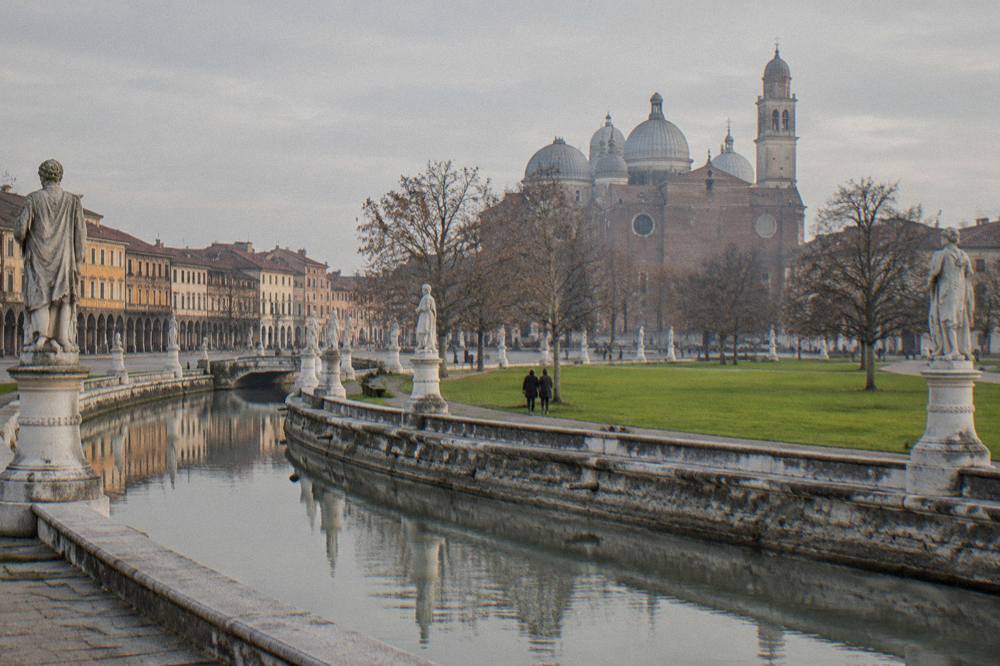
Prato Della Valle, The Piazzas And The Markets
Prato della Valle is famous for its canal and double ring of numbered statues of famous figures, on a space the Venetian Senate declared communal in 1767 and that Andrea Memmo reclaimed. Padua's squares are equally part of its identity: Piazza delle Erbe, Piazza dei Frutti and the hall of Palazzo della Ragione host daily markets whose hours the Comune publishes.
The Comune's market page gives the hours: Piazza delle Erbe runs Monday to Friday 7:30 to 13:30 and Saturday 7:30 to 20:00 with 52 stalls of fruit, vegetables and flowers; Piazza dei Frutti has food stalls Monday to Wednesday 8:00 to 14:00 and Thursday to Saturday 8:00 to 19:00; and Prato della Valle itself hosts a Saturday market, 8:00 to 19:00 in winter and 8:00 to 20:00 in summer. An antiques market fills Prato della Valle and via Umberto I on the third Sunday of each month. No area figure or ranking for the square is confirmed. Under Palazzo della Ragione sits Sotto il Salone, the permanent covered food market, and the 2026 Salone dei Sapori food event ran there 11 to 18 October.
| Market | Where | Days and hours per the Comune |
|---|---|---|
| Piazza delle Erbe | Historic centre | Mon to Fri 7:30 to 13:30, Sat 7:30 to 20:00 |
| Piazza dei Frutti (food) | Historic centre | Mon to Wed 8:00 to 14:00, Thu to Sat 8:00 to 19:00 |
| Saturday market | Prato della Valle | Sat 8:00 to 19:00 winter, 8:00 to 20:00 summer |
| Antiques market | Prato della Valle and via Umberto I | Third Sunday of the month, 8:00 to 20:00 |
Food, Spritz And Caffè Pedrocchi
Padua's food fame rests on dishes the city's tourism board itself names, risotto ricco alla Padovana, capponi alla canevera and torta pazientina, on the claim that Aperol was created in Padua in 1919 by the Barbieri brothers, and on Caffè Pedrocchi, the neoclassical cafe opened in 1831 that was known for decades as the cafe without doors.
The tourism board's gastronomy pages list those three patented recipes, and press accounts place Aperol's presentation at the Padua fair in 1919 by Luigi and Silvio Barbieri. The spritz culture that follows, the evening ritual in Piazza delle Erbe and Piazza dei Signori, is described in the board's enogastronomia section. Caffè Pedrocchi, built by Giuseppe Jappelli and opened in 1831, kept the nickname "caffe senza porte" until 1916 because it never closed, and its signature drink remains the caffè Pedrocchi alla menta. The Museo del Risorgimento inside it charges 5 EUR full, per the civic museums' tariff page. For the food itself, the page on what food Padua is known for is the dedicated answer.
| Claim to fame | Figure the sources give |
|---|---|
| Scrovegni Chapel frescoes | Painted 1303 to 1305 by Giotto |
| University founded | 1222 |
| Orto Botanico founded | 1545, UNESCO 1997 |
| Urbs Picta UNESCO inscription | 2021, eight complexes |
| Anatomical theatre | 1594 |
| First woman graduate | Elena Cornaro, 25 June 1678 |
| Aperol created in Padua | 1919, Barbieri brothers |
| Caffè Pedrocchi opened | 1831 |
Padua As A Base: Venice, The Hills And The Villas
Padua is famous among travellers as a base for the Veneto: Venice lies about 36 km away in a straight line with regional trains taking about 26 to 40 minutes, the Euganean Hills start about 8 km out at Abano Terme, and Vicenza, Verona and the Brenta Riviera villas are all day trips. The city's two listings and its rail links are why the base strategy works.
The airport bus to Venice Marco Polo runs 54 times a day, every 40 minutes, for 13 EUR one way and about 45 minutes, per the operator's own page. Inside the city the urban ticket is 1.70 EUR for 90 minutes, valid on the tram as well as buses. Il Burchiello, the boat cruise along the Brenta Riviera villas between Padua and Venice, runs March to October in both directions. The pages on how far Padua is from Venice and on staying in Padua to visit Venice cover the mechanics, and a guided circuit of the city itself, with the chapel area and the historic squares, can be checked through Check availability on the operator's live listing.
Common Questions About What Padua Is Famous For
What Is Padua Famous For?
Padua is famous for Giotto's Scrovegni Chapel frescoes of 1303 to 1305, the Basilica of Saint Anthony, the university founded in 1222, and the Orto Botanico of 1545, plus two UNESCO listings: the garden from 1997 and the fourteenth-century fresco cycles from 2021.
Is Padua Or Padova The Same Place?
Yes. Padua is the English name and Padova the Italian one for the same city in the Veneto. The page on whether Padua and Padova are the same place gives the full answer.
Is The Scrovegni Chapel Hard To Get Into?
Entry is timed and booked ahead: at most 25 people every 15 minutes, about 15 minutes inside, and no same-day online booking. The daytime ticket also includes the Musei Civici Eremitani and Palazzo Zuckermann.
How Many UNESCO Sites Does Padua Have?
Two: the Orto Botanico, inscribed in 1997, and Padova Urbs Picta, the fourteenth-century fresco cycles across eight complexes, inscribed in 2021.
What Is The Most Famous Church In Padua?
The Basilica of Saint Anthony, the Santo, which holds the saint's tomb and relics and was begun in 1232, a year after his death. Entry is free.
Can You Visit Venice From Padua?
Yes, by train in about 26 to 40 minutes on regional services, or by the airport bus route if your destination is Marco Polo. Padua is an inland city about 36 km in a straight line from Venice.
The short version, in the sources' own words: a chapel painted in two years, a basilica begun one year after a saint's death, a university of 1222 with Galileo's chair and a 1594 anatomical theatre, and a garden of 1545, all inside a walkable inland city that the editorial desk at Padua Travel Guide covers page by page.
