Did Giotto Paint The Scrovegni Chapel?
Giotto frescoed the Scrovegni Chapel in Padua between 1303 and 1305. Here is what the chapel's own site, UNESCO and the city's records say about the cycle and how to see it.
The Scrovegni Chapel in Padua (Padova), in the Veneto in northern Italy, carries the most argued-about fresco cycle of the late Italian Middle Ages, and the attribution is not actually in doubt. The chapel's own site states that Giotto painted the cycle "in just two years, between 1303 and 1305", and UNESCO repeated the attribution when it inscribed Padua's fourteenth-century fresco cycles, the Padova Urbs Picta group of eight complexes, on the World Heritage List in 2021. What historians debate is the surrounding detail: which parts of the workshop Giotto touched himself, and how the commission came about. This page lays out what the primary sources say, what the cycle contains, and how the timed-entry system works for seeing it in person. For the wider picture of the city around the chapel, the Padua Travel Guide covers the squares, markets and museums that surround it.
Did Giotto Paint The Scrovegni Chapel?
Yes. Giotto painted the fresco cycle of the Scrovegni Chapel in Padua between 1303 and 1305, a dating given verbatim by the chapel's own site, and UNESCO's 2021 inscription of the Padova Urbs Picta fresco cycles names the chapel as part of that listing under criterion (ii). The attribution to Giotto himself is not disputed in the sources; what scholarship discusses is the role of his workshop in executing parts of so large a cycle in two years.
The sentence to hold on to is the chapel's own: the cycle was painted "in just two years, between 1303 and 1305". That is fast for a decorative programme covering every interior wall of a rectangular hall, and it is the reason specialists assume a workshop around Giotto rather than Giotto's hand alone on every square metre. The sources used on this page do not itemise which scenes were delegated, so the page does not either. What the sources do give is the shape of the commission, the identity of the patron, the site with its buried Roman structure, and the modern visiting regime that controls who stands in front of the frescoes and for how long.
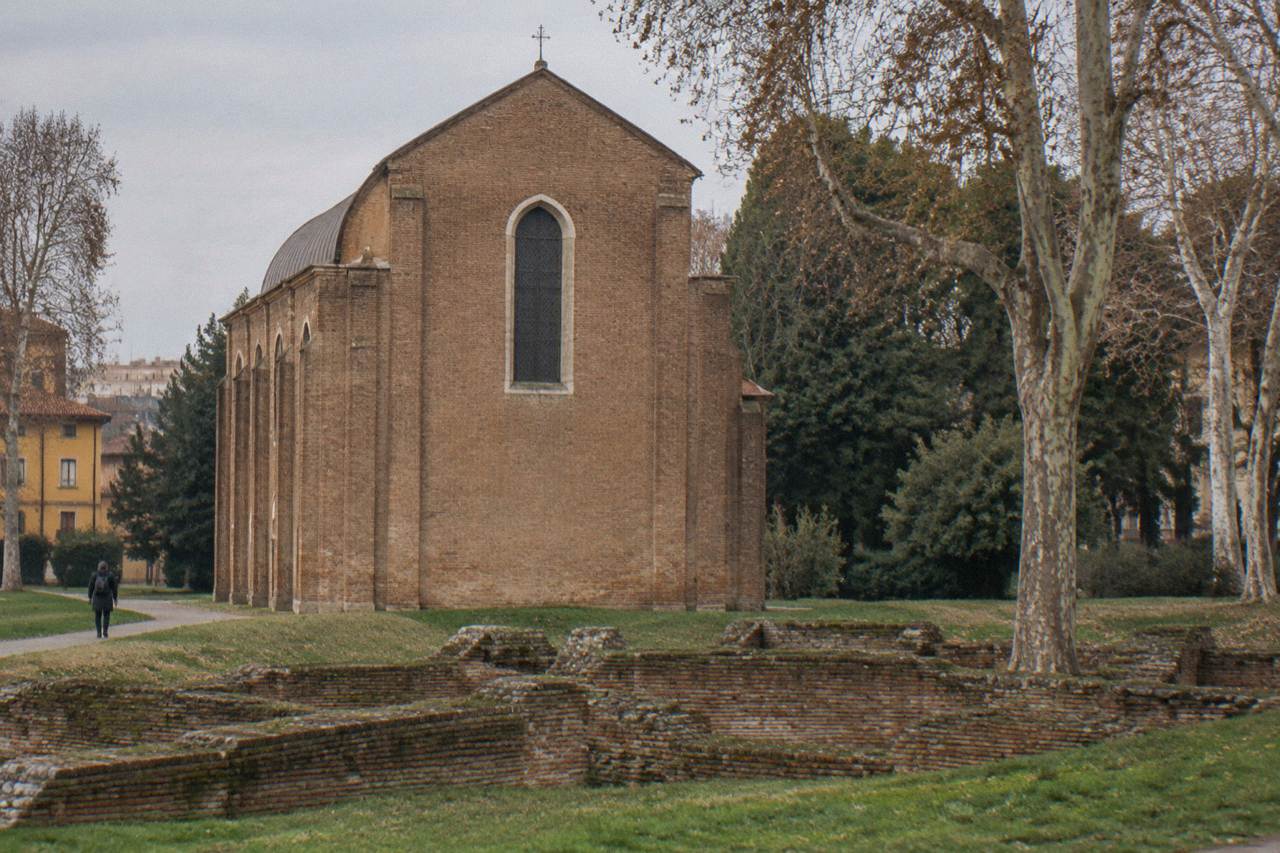
The commission context is reported rather than bare fact. Enrico Scrovegni bought the land in 1300, on a site that included the remains of Padua's Roman amphitheatre, and the chapel is also called the Arena Chapel for that reason. The amphitheatre in question is Padua's own Roman arena, never the Arena di Verona, which is a different building in a different city. For the naming story in full, see why the chapel is also called the Arena Chapel, and for the funding question, who paid for the Arena Chapel.
How Do The Sources Date Giotto's Work In Padua?
The chapel's own site gives the painting dates as 1303 to 1305, the land purchase by Enrico Scrovegni is reported as 3 February 1300, and UNESCO's World Heritage inscription of the fourteenth-century fresco cycles came on 24 July 2021, proclaimed on a Saturday by the city's own announcement. Those four dates, 1300, 1303, 1305 and 2021, are the load-bearing chronology any visitor will meet in the chapel's printed material.
Between those anchors sit a few supporting facts. Padua's university had already been founded in 1222, and the city was under the rule of the Carraresi family for much of the period, though the sources for this page do not tie Giotto's commission to that politics, and no motive is printed beyond what the chapel's site reports. The chapel was dedicated to Santa Maria della Carità, per the same reported material.
| Date | Event | Source basis |
|---|---|---|
| 1300 | Enrico Scrovegni buys the land including Roman amphitheatre remains | Reported by the chapel's own site |
| 1303-1305 | Giotto paints the fresco cycle | The chapel's own site, quoted verbatim |
| 2021 | UNESCO inscribes Padova Urbs Picta, eight fresco complexes | UNESCO list 1623, city proclamation 24 July 2021 |
The UNESCO listing matters for more than the chapel. Padua carries two World Heritage inscriptions: the Orto Botanico, inscribed in 1997, and the fourteenth-century fresco cycles of 2021, which span the Scrovegni Chapel, the Eremitani church, Palazzo della Ragione, the Reggia Carrarese chapel, the Cathedral Baptistery, the Basilica and Convent of Saint Anthony, the Oratorio di San Giorgio and the Oratorio di San Michele. Giotto's cycle is the anchor of the second listing. The full context is in why the Scrovegni Chapel is famous.
The eight complexes are all within the old centre, which is one reason the 2021 inscription was framed around the fresco cycles as a group rather than around a single monument. The Scrovegni Chapel sits at the north-west edge of the historic core, beside the Eremitani church and the civic museums, and the whole set can be walked between without transport beyond the city's own streets. The chapter of the listing that names Giotto's cycle as part of a broader flowering of fourteenth-century painting in Padua is what ties a two-year painting campaign to a citywide phenomenon, and it is the reason a visitor who arrives for one chapel ends up chasing frescoes across half a dozen buildings.
What Did Giotto Paint Inside The Scrovegni Chapel?
The cycle covers the Stories of Joachim and Anne, the Life of the Virgin and the Life of Christ, the Vices and Virtues as a ranked panel series, and a Last Judgment filling the counter-façade, the wall a visitor faces when looking back at the entrance. That programme is listed by the chapel's own site and by UNESCO's nomination material, and it fills the walls, vault and entrance wall of a single nave in a fixed order.
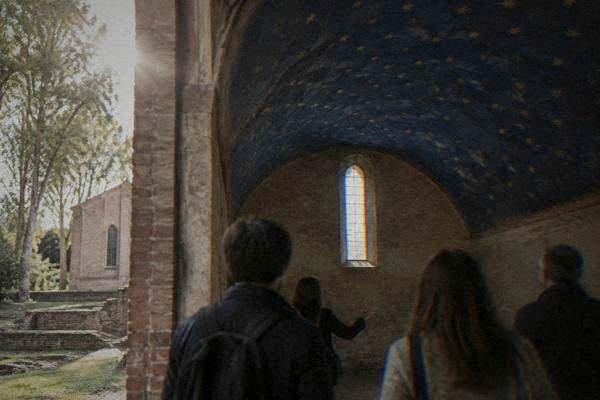
The narrative scenes run along the side walls in framed panels, with the Vices and Virtues painted as full-length figures beneath them. The deep blue of the vault and the sky backgrounds is the colour visitors remember, and it is original to the scheme rather than a later restoration choice, per the chapel's material. The chapel's own visit rules give about 15 minutes inside, which is enough to walk the nave once and read the main panels with preparation, but not enough to study everything; a planning guide for the timing question is at how long it takes to visit the Scrovegni Chapel.
Reading the cycle in order helps, because the panels were designed to be read in sequence, starting from the Stories of Joachim and Anne high on the right wall, moving through the Life of the Virgin and into the Life of Christ, and ending at the Last Judgment on the entrance wall. The Vices and Virtues sit at eye level as a moral baseline under the narrative, a structure the nomination material describes as an integrated programme rather than a collection of separate pictures. Knowing that order before arrival is the single most useful preparation, given that the clock starts when the door to the nave opens and the fifteen minutes cannot be extended.
Because the interior time is short, many readers book a guided visit that handles the timed reservation and explains the cycle on site. One option is a guided tour built around Giotto's chapel: Check availability. The attraction page for the chapel itself is at Cappella degli Scrovegni.
Why Is The Chapel Called The Arena Chapel In Padua?
Because it stands on the site of Padua's own Roman amphitheatre, whose remains were part of the land Enrico Scrovegni bought in 1300, and the arena in the name is that Roman structure, not the Arena di Verona opera house and not anything connected with Venice or its lagoon. Padua is an inland city about 36 km in a straight line from Venice, and the chapel's nickname is purely local archaeology.
The double name confuses searchers because Verona's Arena is the more famous building with the same word in it. Nothing about Giotto's chapel refers to Verona. The ruins of the Roman amphitheatre remain from Roman Padua, a city that was a municipium and the birthplace of Livy, per the university's history pages, and the chapel's nickname preserves that buried structure.
Visitors who want the Arena name explained in one more place can pair this page with the city overview at what Padua is famous for, which sets the chapel beside the Basilica of Saint Anthony, the university founded in 1222 and the Orto Botanico of 1545. The Eremitani church, the nearest of the other Urbs Picta complexes to the chapel, has its own page at Chiesa degli Eremitani.
How Can You See Giotto's Frescoes Today?
Entry to the Scrovegni Chapel is timed only, in groups of at most 25 people every 15 minutes in the daytime, with about 15 minutes inside after a wait in a climate-controlled waiting room, and the daytime ticket costs EUR 15 full, EUR 11 reduced and EUR 5 for residents, plus a EUR 1 booking fee for the chapel. Arrive 5 minutes before the slot; late arrivals must rebook and pay again.
The daytime ticket also covers the Musei Civici Eremitani and Palazzo Zuckermann, so the EUR 15 is a three-site ticket rather than a chapel-only one. Evening visits under the "Giotto sotto le stelle" programme run from 25 March to 1 November, 19:00 to 22:00, every 20 minutes, and cover the chapel only. The chapel is open 9:00 to 19:00 with last entry at 18:45, and it closes for the annual fresco inspection from 16 to 27 November 2026, so it is not open every day of the year. Online same-day booking does not exist; unbooked visitors should check availability at the Museum ticket office. The booking mechanics are laid out in the Scrovegni Chapel tickets guide.
| Visit | Times and slots | Ticket scope |
|---|---|---|
| Daytime | 9:00-19:00, last entry 18:45, 25 people every 15 min | Chapel plus Musei Civici Eremitani and Palazzo Zuckermann, EUR 15 full |
| Evening (25 Mar-1 Nov) | 19:00-22:00, every 20 min, last entry 21:20 | Chapel only, separate ticket |
| Annual closure | 16-27 November 2026 | Fresco inspection, no visits |
The climate-controlled waiting room is not an ornament; it is the mechanism that protects the frescoes, holding each group before entry so that humidity and dust from outside are reduced before the door to the nave opens. That is also why latecomers are not simply squeezed into a later slot: the slot schedule is the protection, and a missed slot means a new paid booking. Advance slots are bookable well ahead through the chapel's own channels, and the chapel's site lists the call centre number for anyone who prefers to book by phone up to the day before.
Planning the rest of the day around the timed slot is easier than planning the day first and squeezing the chapel in, because the slot is fixed at booking. The one-day itinerary at Padua in one day sequences the chapel, the Basilica and the historic centre in an order that works with the reservation system, and readers deciding whether the city justifies the trip can start from is Padua worth visiting.
Common Questions About Giotto And The Scrovegni Chapel
Did Giotto Paint The Scrovegni Chapel?
Yes. The chapel's own site states Giotto painted the cycle between 1303 and 1305, and UNESCO's 2021 inscription of Padua's fourteenth-century fresco cycles carries the same attribution for the chapel.
How Long Did Giotto Take To Paint It?
The chapel's own site says "in just two years, between 1303 and 1305". A cycle of that scale in two years implies a workshop around Giotto rather than his hand alone on every scene.
Who Commissioned The Chapel?
Enrico Scrovegni, who bought the land in 1300, on a site that included the remains of Padua's Roman amphitheatre. The chapel was dedicated to Santa Maria della Carità.
Why Is It Called The Arena Chapel?
Because it stands on the site of Padua's Roman amphitheatre. The arena in the name is Padua's own, not the Arena di Verona.
Can You Just Walk In?
No. Entry is timed, at most 25 people every 15 minutes, with about 15 minutes inside. Book ahead; there is no online same-day booking, and the chapel is closed 16 to 27 November 2026 for the annual fresco inspection.
Is The Chapel Part Of A UNESCO Site?
Yes. It is the anchor of Padova Urbs Picta, the city's fourteenth-century fresco cycles inscribed in 2021, alongside seven other complexes. Padua's Orto Botanico holds a separate 1997 inscription.
The attribution question has a short answer and a long tail. Giotto painted the cycle between 1303 and 1305; the workshop, the patron and the Roman arena under the grass are the parts worth reading before a visit, because the fifteen minutes inside go quickly and the reservation, not the walk, is what decides the day.